Rice Rediscovered

merlin_133382781_2e684dde-7527-4a19-8880-d577f8e40ec9-jumbo

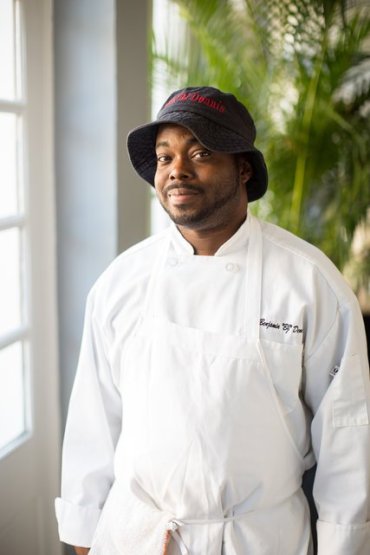
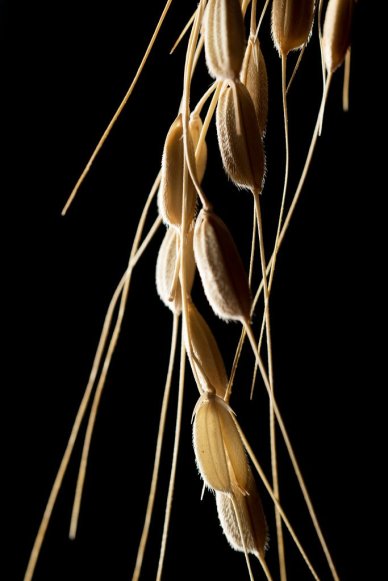
Upland red bearded rice, which grows in the Moruga district in Trinidad, turned out to be a missing culinary link between enslaved people in coastal Georgia and a group of slaves who were able to buy their freedom by fighting for the British in the War of 1812. Credit Karsten Moran for The New York Times

Peru’s Rendering Of The Best Idea

20SCI-AMAZON1-jumbo

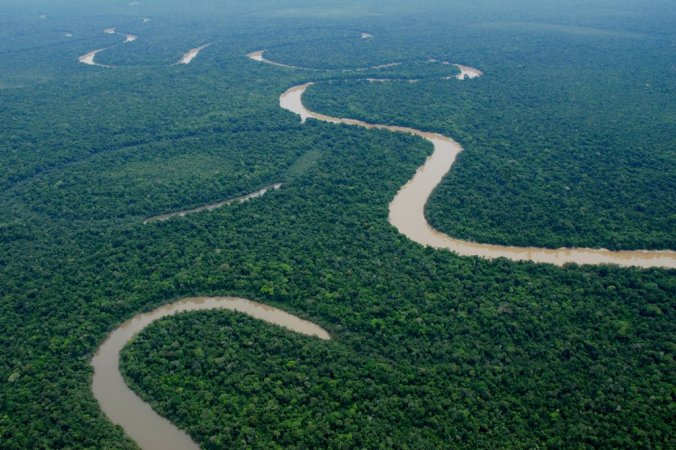
The Yaguas River of the Yaguas National Park in Peru, one of the Western Hemisphere’s newest national parks. Credit Álvaro del Campo/The Field Museum

Indonesian Seaweed Farming

Seaweed-harvesting-Takalar-4-e1518046448442-1260x708

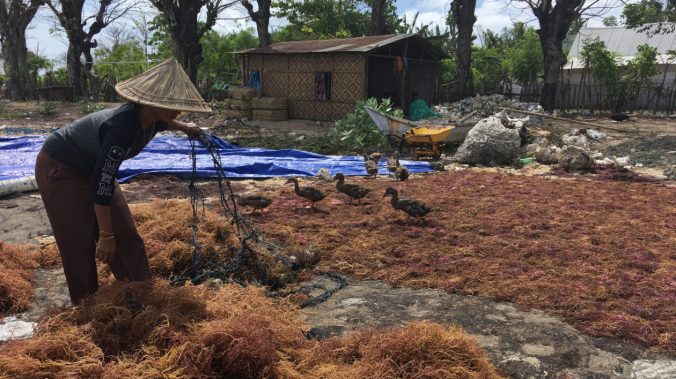
Seaweed harvesting in Takalar, Indonesia. Photo © Tiffany Waters / The Nature Conservancy

The subject of seaweed farming, which we sometimes refer to as kelp farming, is of keen interest to us because of the relationship to conservation; our thanks to Tiffany Waters at Cool Green Science:

Seaweed Farming: A Gateway to Conservation and Empowerment

Seaweed-seedlings-Takalar-2-1260x708

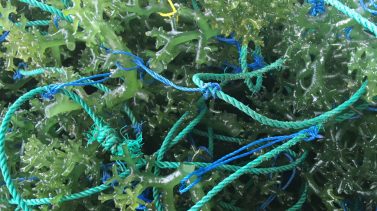
Seaweed seedlings. Photo © Tiffany Waters / The Nature Conservancy

“What does your husband do while you’re working on the seaweed lines?”, we ask. She laughs and says in Bahasa, “He does the cooking and the cleaning.”

It’s day 6 of our field visit to Indonesia and we’re in Takalar visiting our fifth island and third seaweed farm of the trip. On the brink of the ‘extreme season,’ stifling hot is an understatement, but the light breeze from the Flores Sea provides a welcome break from the three flights and 2-hour van trip that brought us here. Continue reading

The Pests That Make Cacao Productive

midge-flower-min

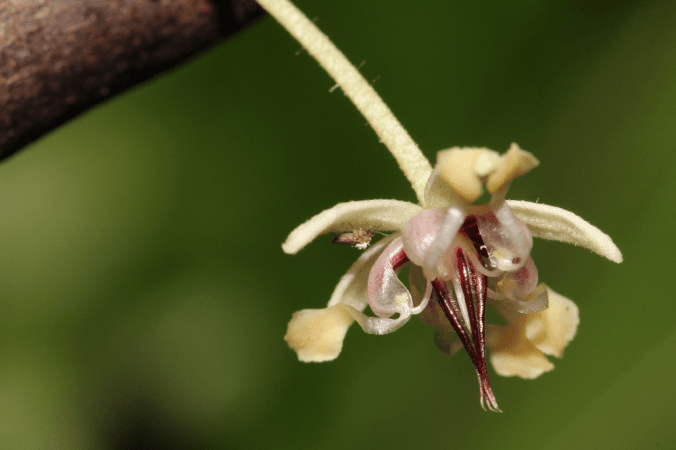
Forcipomyia spp. pollinating a cacao flower. Goodman Cacao Estate, Killaloe, Australia, 2017. Credit: Samantha J. Forbes

This 12-minute primer on Soundcloud gives a reason to appreciate these otherwise very annoying pests:

Chocolate: Brought To You By Bugs

midge-min

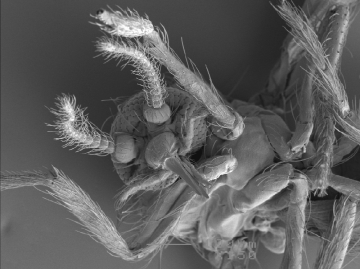
Forcipomyia spp. SEM image. Goodman Cacao Estate, Killaloe, Australia, 2017. Credit: Samantha J. Forbes

Chocolate starts as a beautiful yellow and cream-colored blossom, with blushes of pink and magenta. The flowers, sprouting straight from the bark of the cacao tree, are no bigger than a dime—and they’re pollinated by something much smaller: a barely visible fly related to biting no-see-ums, or midges. Continue reading

Rules Of Experiencing Nature, Reconsidered

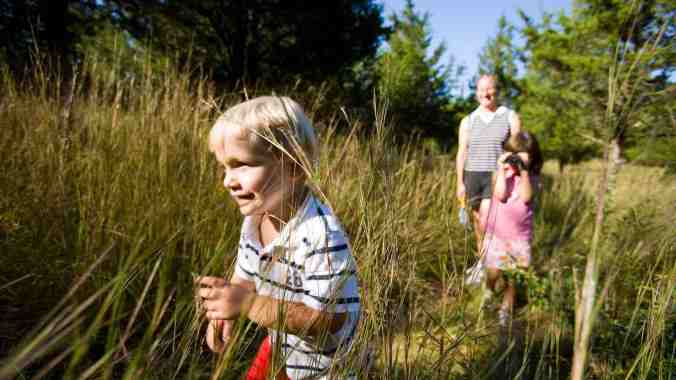
tnc_76472733_preview_cropped

A woman and her young children hike through a grassy field in Pleasant Valley Preserve near the Eightmile River in Lyme, Connecticut. Photo © Jerry Monkman

Just when we thought we knew what we were doing out in nature, this:

Why Staying on the Trail Is Bad for Nature

Stay on the trail. Look, don’t touch. Take only photographs, leave only footprints.

These and similar rules have become a standard component of a refined environmental ethic; any reasonable outdoor education class is going to emphasize them.

I have a confession to make: As a kid I violated every one of those rules, frequently and without guilt. It made me a conservationist. Continue reading

Intact Coral And Its Above-Water Counterparts


Coral

Heron Island and its hundreds of species have so far been spared the worst of the crisis. But scientists there fear what the future may hold.  Illustration by Lily Padula

Helen Sullivan, founding editor of the South African literary magazine Prufrock, shares a short essay for the environmentally-minded:

On a recent trip to Heron Island, a speck of sand and foliage on the southern end of Australia’s Great Barrier Reef, I found myself on a walking tour of the local birdlife. My group’s guide was young, determinedly friendly, and seemed to feel not a little trapped. She looked as though she might, at any moment, reconsider everything and run as far as she could—which is to say, not very far: Heron is just half a mile long. We began with the egrets, which inspired the island’s not altogether accurate name, and which are born either black or white; our guide pointed out monochrome pairs roosting together in the trees. Then it was on to the buff-banded rails, which reminded me of thin, shifty, omnivorous quails. Beneath a Pisonia tree, also known as a grand devil’s-claws, we encountered a rowdy group of white-capped noddies. (The caps, our guide told us cheerfully, were to stop the birds’ brains from overheating in the sun.) Noddies, which feed on fish and make their nests by glueing together fallen Pisonia leaves, lead perilous lives. The trees’ seeds are sticky, often adhering to the birds’ charcoal-feathered bodies. Sometimes, a noddie will get covered in so many seeds that it can no longer fly, and so it falls to the ground and starves to death, its carcass fertilizing the nutrient-poor sand in which the Pisonia grows. “The noddies have a really special relationship with the devil’s-claws,” our guide said.

Heron Island is also home to the Barrier Reef’s oldest research station, where Sophie Dove, a biology professor at the University of Queensland, has lately been studying the effects of climate change on corals. Though she was off on the mainland when I visited, we caught up a few days later. Continue reading

The Idea Gets Greater, In Chile

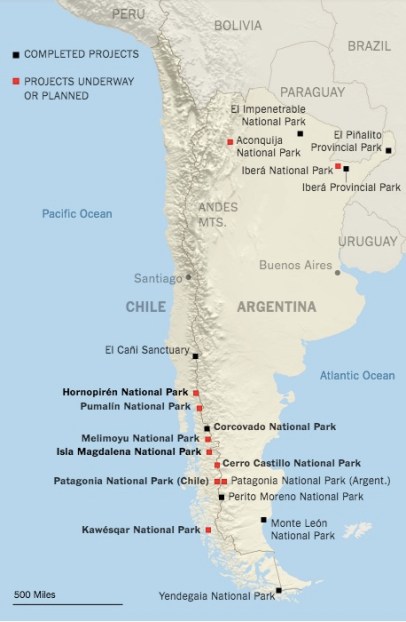
webTHOMPKINSmap-460

Protecting More Wilderness
Map shows the scope of Tompkins Conservation park projects in Chile and Argentina. Eight Chilean parks, shown in boldface, comprise the latest expansion of wilderness areas, an area roughly twice the size of Massachusetts. Source: Tompkins Conservation. By The New York Times

When the news was first reported, just the facts were enough. Then yesterday we had some commentary that made us think more on how important this news really was, from a global perspective. Now, the story behind the facts, and this op-ed by Kristine McDivitt Tompkins echoes the greatest idea:

We need a new story about the Earth that isn’t just a litany of alarming statistics about crashing wildlife populations, polluted air and water, and climate chaos. We need a story that reminds us that the continuing degradation of landscapes and the seas is not necessarily a one-way street toward irreversible destruction.

On Monday we began to write such a story with the government of Chile. Under the wide skies of the new Patagonia National Park, President Michelle Bachelet and I formalized the largest-ever expansion of a national park system prompted by a donation of private land. Continue reading

The Greatest Idea, In Peril

5700

America’s public lands belong to all of us. We owe it to ourselves to save them

A truly noble idea – one deeply democratic in its inspiration and one that honors the human need to be in relationship to awe and majesty.

America’s public lands.

This idea was seeded by early American settlers, who came here to escape a class system in Europe that excluded them from land – owning it, hunting on it, surviving on it. Conservation was articulated as a national endeavor by hunters and foresters with the unique discernment that our game and timber resources were not boundless, and required professional management to remain bountiful.

This was a hard-won national ethos. From the pitch battles for their existence, our public lands were imbued with moral standing and national sanction: the idea that they “belong” to all of us. Continue reading

Species Replenishment Story

Sawfish-Grubbs2-1260x708

Pregnant female sawfish found by Dr. Dean Grubbs and team at Andros Island. Photo © Dean Grubbs

Thanks to Ted Williams at Cool Green Science:

Recovery: Smalltooth Sawfish Flickering Back

Andrea-Kroetz-credit-sawfish

What goes down April 12, 2017 on a Sanibel, Florida beach is both encouraging and discouraging.

Angler and shark tagger Elliot Sudal hooks something huge. A crowd gathers including Vice President Mike Pence accompanied by his entourage of Secret Service agents who rifle through Sudal’s tackle box. Not surprisingly, they find (and temporarily confiscate) knives. But Sudal, seated and straining on the rod with blistered hands, is hardly a threat. Pence safely takes photos, then poses for a photo next to the embattled Sudal. Continue reading

Smaller Footprints, Step By Step

5120x

Thanks to Chris Goodall for this quick check-list, mostly relevant to northern clime folks:

How to reduce your carbon footprint

From cutting down on meat to contacting your local representatives and investing in clean energy, here are 15 ways to help reduce global carbon emissions Continue reading

Coy-Wolf Co-Habitation

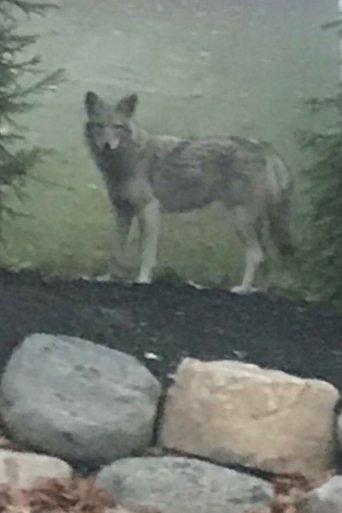
00coyote3-blog427

The Clarkstown Police Department posted a photograph of what they called a coywolf on Facebook last month. Credit via Clarkstown Police Department

Thanks to the New York Times for the local story follow-up to yesterday’s Yale360 globally-generalizable item on a related theme (click here or on the image to the right to go to the source):

CONGERS, N.Y. — Of all the coyotes that roam Dr. Davies Farm, looking for prey on this apple-picking orchard less than an hour from New York City, manager James Higgins says one of the pack stands out: Bigger and with more gray fur than its mates, this wolflike canine is a reason, Mr. Higgins says, there are fewer deer nibbling at Dr. Davies’s stock.

“We love having him here,” Mr. Higgins said as he drove around the property on an ad hoc coyote safari. There were no sightings, but Mr. Higgins ventured a profile of the creature: aloof, calm, uninterested in people.

“Anytime he sees any kind of human activity, he bolts,” Mr. Higgins said. “As long as he stays in his space and we stay in ours, everyone works in harmony.” Continue reading

Half-Earth Is Not Happening, But Co-Habitation Is


luisa-rivera-yale-e360_web

LUISA RIVERA / YALE E360

Thanks to Richard Conniff, whose articles about the intersection between humans and other species, and about how our museums shape our views we have shared from various sources, including this recent one from Yale360:

Habitat on the Edges: Making Room for Wildlife in an Urbanized World

Efforts to protect biodiversity are now focusing less on preserving pristine areas and more on finding room for wildlife on the margins of human development. As urban areas keep expanding, it is increasingly the only way to allow species to survive.

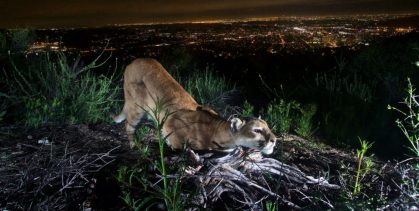
FemaleMountainLion_VerdugosMountainsGlendaleLA_NPS_web2

A female mountain lion in the Verdugos Mountains, north of Los Angeles. Also known as cougars, these animals are an increasingly common sight in the mountains surrounding Southern California’s cities. NATIONAL PARK SERVICE

One morning not long ago, in the southern Indian state of Karnataka, I traveled with a Wildlife Conservation Society biologist on a switchback route up and over the high ridge of the Western Ghats. Our itinerary loosely followed the corridor connecting Bhadra Tiger Reserve with Kudremakh National Park 30 miles to the south. Continue reading

Undoing Dams, Animals Pitch In

ap_498416275898

Since 2014, Washington’s Elwha River has flowed freely through what once was Lake Mills and the Glines Canyon Dam. But the site still leaves a barren scar in Olympic National Park. Now, a human- and bird-led effort is turning it green again. Photo: Elaine Thompson/AP

Conservation is sometimes in the hands of animals, as this story in the current Audubon magazine illustrates:

Birds Are Helping to Plant an Entire Lost Landscape in Olympic National Park

After the largest dam removal in U.S. history, scientists, Native Americans, and wild animals are working together to restore the heart of the Elwha.

ap_081210040812

The Elwha Valley and Glines Canyon Dam prior to demolition. Photo: Elaine Thompson/AP

It’s a scorching August day in the Elwha Valley, and it only feels bleaker as we peer into the 200-foot void of Glines Canyon Dam. A sputtering trail of water marks the concrete lip where, for nearly a century, two hulking braces trapped logs, rocks, and sediments as they washed down from the mountains of northern Washington, forming a reservoir that was six times deeper than a competition-diving pool. At its height, the dam churned out 13.3 megawatts of hydroelectricity, enough to power 14,000 homes and a local paper mill. But it also seriously altered the Elwha River’s ecology, along with that of surrounding Olympic National Park. Endangered chinook salmon were cut off from their spawning sites; fish-eating birds and otters suffered; and estuaries became more brackish and shallow. Finally, in 1992, the U.S. government issued the order to destroy Glines Canyon Dam and the nearby Elwha Dam. Yet it wasn’t until two decades later when the water was completely freed. Continue reading

Vote Early, Vote Often

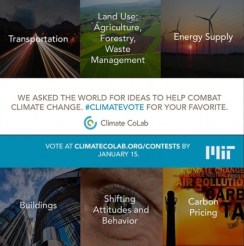
Voting open for crowdsourced climate change innovations

MIT Climate CoLab allows the public to vote for promising crowdsourced ideas on how to tackle climate change.

Annalyn Bachmann | MIT Climate CoLab

MIT-CCl-02_0.jpgThis is better than democracy, and as important as any citizen science initiative we know of, so we hope you will contribute:
MIT Climate CoLab has opened a public voting period to select the top innovative ideas on how to tackle climate change. A project of the MIT Center for Collective Intelligence, Climate CoLab is an online platform where over 90,000 community members from around the world work together to develop and select proposals to help solve this massive, complex issue. Continue reading

Precious Plumage

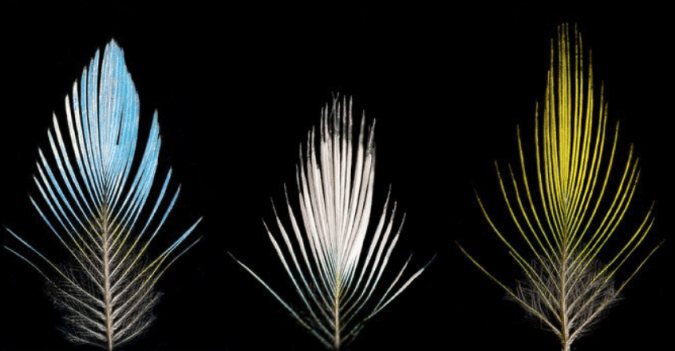
From left, the feathers of an opal-crowned manakin, a snow-capped manakin and the golden-crowned manakin. Credit University of Toronto Scarborough via NYTimes

Out of the roughly 250 bird families in the world, manakins (Pipridae family) are probably my favorite, because they’re like birds of paradise (Paradisaeidae family), except you don’t have to take a helicopter to remote areas of Papua New Guinea to see them. Almost all manakins are colorful––or at least the males are; females normally being a drab green––and they often have interesting behavior as well. I saw my first manakins in Ecuador, where two flashy species had some fun sounds to go along with their calls, but most of my exposure to the family has been in Costa Rica, where I did my best to record a Long-tailed Manakin lek.

Continue reading

Taste The Place, Yemen & Coffee In Michigan

img-8850_wide-96d9a5de4dcfc1e98058e4be37f9940b92363736-s1300-c85.jpg

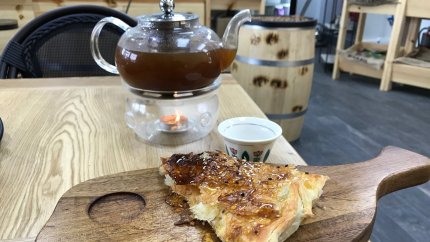
A traditional pot of Yemeni coffee, mixed with cardamom and ginger, is served with a Yemeni sweet honey bread at a new Yemeni coffee shop in Dearborn, Mich. Owner Ibrahim Alhasbani sees himself as part entrepreneur, part cultural ambassador for his home country. Zahir Janmohamed

The salt, at National Public Radio (USA) has a story today about coffee, entrepreneurship and cultural illumination that is about tasting the place, a once and future key theme of our pages:

The 35-year-old owner of a new Yemeni coffee shop in Dearborn, Mich., never imagined he would enter the coffee business. Ibrahim Alhasbani was born in Yemen and grew up on a coffee farm outside the country’s capital city of Sana.

p1040537_wide-61e96f7114c07339e46dbc8eb78417f3c6facfd4-s1300-c85

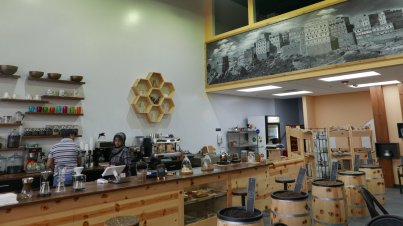
A view inside Qahwah House, a Yemeni coffee house in Dearborn, Mich. The city has a high concentration of Arabs and Arab Americans (qahwah means coffee in Arabic). Zahir Janmohamed

“I had enough coffee in my life,” Alhasbani says. “But when I moved to America and the problems started back home, I told myself I have a chance to show that Yemeni coffee is really good and that Yemen is more than just violence and war.”

A couple of months ago, he opened Qahwah House in Dearborn, a city with a high concentration of Arabs and Arab Americans (qahwah means coffee in Arabic). Continue reading

Water Independence, A Trend Worth Watching In 2018

03Water8-master675.jpg

At Opal Springs Water Company in Oregon, raw water is prepared for shipping to the company Live Water. Credit Leah Nash for The New York Times

Closing out 2017, a note on water. Nellie Bowles wrote this story, Unfiltered Fervor: The Rush to Get Off the Water Grid, for the Food section of the New York Times. It could just as well have been in either the Science or the Tech section.

One new technology allows anyone, in dry or humid climates, to produce and store their own drinking water. The story is in the Food section presumably because it is a luxury for the improvement of your drinking pleasure; but the implications for natural resource management are interesting. And what about the projects that societies have embarked upon, forever, to determine ever-better ways to distribute necessities like water?

SOURCE: a HydropanelTM that makes drinking water from sunlight and air

main-image

A standard residential SOURCE array is made up of two panels: one primary panel and one additional panel with array sizes designed to meet your drinking water needs.

  • Daily Production

    A standard array averages 4-10 liters each day or 8-20 16.9oz standard water bottles, depending on sunshine and humidity.

  • Footprint

    Each panel is 4 feet x 8 feet (1.2m x 2.4m) and a standard array contains 2 panels.

  • Water Storage

    Each panel holds 30 liters in a reservoir where it is mineralized and kept clean for optimal taste and health. Standard arrays have 60 liters of water storage capacity.

  • Power

    SOURCE utilizes solar power and a small battery to enable water production when the sun shines and water delivery on cloudy days or at night.

The story includes several technologies that seem worth knowing about:

Continue reading

Cross-Chasm Communities Collaborating

5000m

Felisa Rogers at the Guardian provides some much needed late 2017 perspective on opportunities to collaborate for the common good:

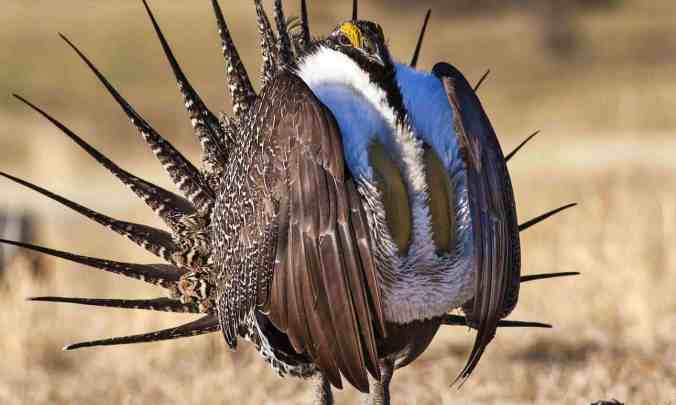
How the fight to save a bird species shows how to bridge the red/blue divide

A plan to save the sage grouse was a rare instance where ranchers, the timber industry, scientists, landowners and environmentalists all agreed on something

At 5am, the day is black, and resounds with the steady drum of rain. My husband Rich is getting ready for work. He oils his leather gloves and fills a Thermos. He’ll spend a 10-hour day in the downpour: tramping through thorny salmonberry and wading through the roaring creeks. Continue reading

Chocolate’s Future Is Ours To Write, Within Limits


Slowmelt

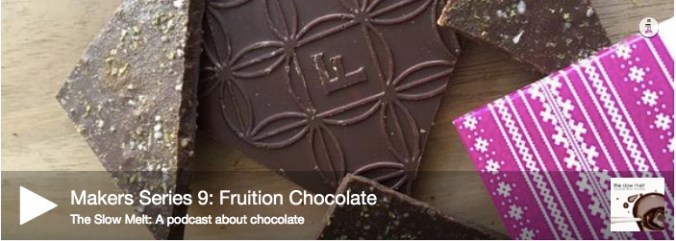
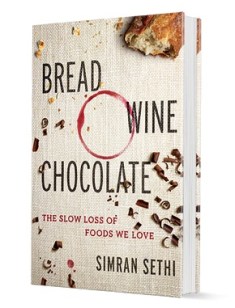
sethi_breadwinechocolate_3dWe are among those hoping that the future of chocolate is tastier, but we thankfully missed the mistaken headlines highlighted in this story below (thanks to the salt at National Public Radio, USA). So no false hopes dashed, but we pass this along in the interest of science. And to highlight an author who has recently come to our attention. A couple of us who contribute here have a copy of Simran Sethi’s book Bread, Wine, Chocolate: The Slow Loss of Foods We Love (click to the right to go to there) on our nightstand currently; she also podcasts on the topic of chocolate over at The Slow Melt (click above to go there).

Sorry Folks, Climate Change Won’t Make Chocolate Taste Better

gettyimages-626378342_wide-4e7d50db9ab7b5dcd9578cdca115148a070224e7-s1300-c85

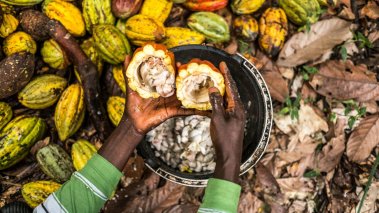
A cocoa farmer opens cacao pods with a stick to collect cocoa beans at his farm in Beni in the Democratic Republic of Congo. Eduardo Soteras/AFP/Getty Images

Two years ago, news headlines blared, “Cheese really is crack,” citing research that was widely misinterpreted as asserting cheese was addictive. Now, it’s chocolate’s turn.

Last week, several publications celebrated a new study that highlights the impacts of climate change on cocoa, stating global warming might make chocolate taste better. “Good news, chocolate-lovers,” wrote one outlet, “climate change may have a silver lining.”

Sadly, it’s not true. Continue reading

Lepidopterist’s Treasure

730

Heterosphecia tawonoides puddling on a dry leaf washed out by the river. Photograph: Courtesy of Marta A. Skowron Volponi

Thanks to the Guardian for sharing this bit of good news:

Lost species of bee-mimicking moth rediscovered after 130 years

The rare oriental blue clearwing, that disguises itself as a bee, was spotted in the Malaysian rainforest

A moth that disguises itself as a bee and was previously only identified by a single damaged specimen collected in 1887 has been rediscovered in the Malaysian rainforest by a lepidopterist from Poland.

The oriental blue clearwing (Heterosphecia tawonoides) was seen “mud-puddling” – collecting salts and minerals from damp areas with its tongue-like proboscis – on the banks of a river in Malaysia’s lowland rainforest, one of the most wildlife-rich – and threatened – regions on Earth. Continue reading