Blue New Worlds

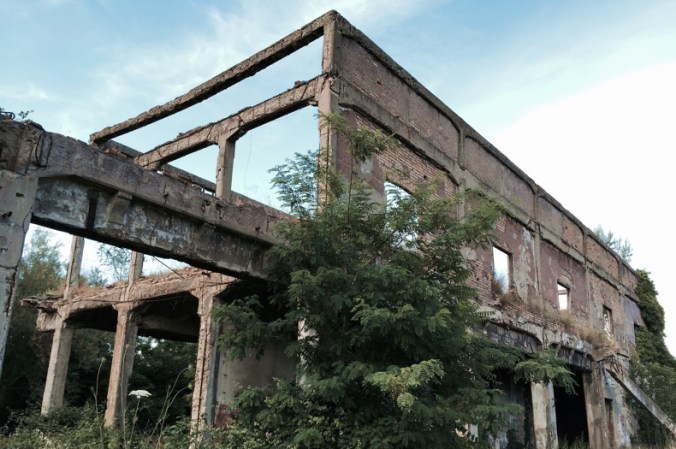
As a company we have a long interest with the concept of non-permanent Art Installations .  Installed off the coast of Catalina Island, California, these particular interactive underwater sculptures were a collaboration with artist Doug Aitken , the Museum of Contemporary Art, Los Angeles (MOCA) and Parley for the Oceans.

Due to the temporary nature of the installations, they’re no longer in place but will reopen to the public soon, at a new location, in a new ocean.

Underwater Pavilions is artist Doug Aitken’s large-scale installation and collaboration with Parley consisting of three temporary sculptures submerged beneath the water’s surface. As a symbol and catalyst for the Parley Deep Space Program, the sculptures provide a portal into the marine realm that swimmers, snorkelers, and scuba divers can swim through and experience. Continue reading

Swamp Is Not A Bad Word

14847876920_3904caac90_o_slide-2a56f4c96e9fcd098def2965b202ed5806f00671-s1300-c85.jpg

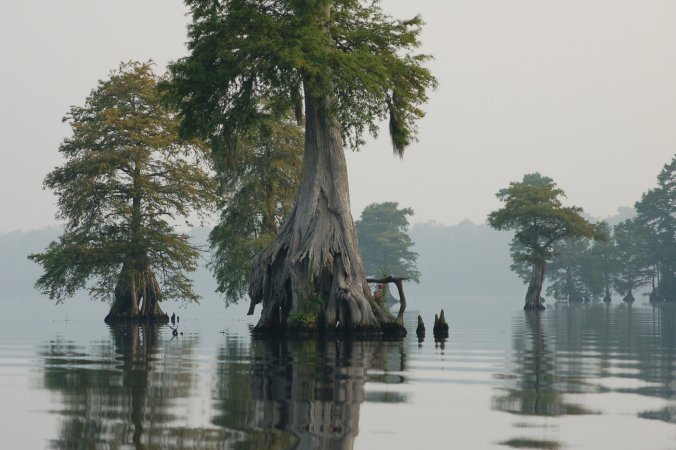
The Great Dismal Swamp National Wildlife Refuge in North Carolina and Virginia has been dramatically altered over the past few centuries by human development. Rebecca Wynn/U.S. Fish and Wildlife Service

Thanks to Sarah McCammon at National Public Radio (USA) for this story:

“Drain the swamp” may be a popular political slogan, but it doesn’t always work so well in nature. Continue reading

Nature Needs More Good Ideas

5000d.jpg

There is no known vaccine against temptation to harness nature. There is not enough nature left on the planet to allow this temptation to spread. But bad ideas are infectious:

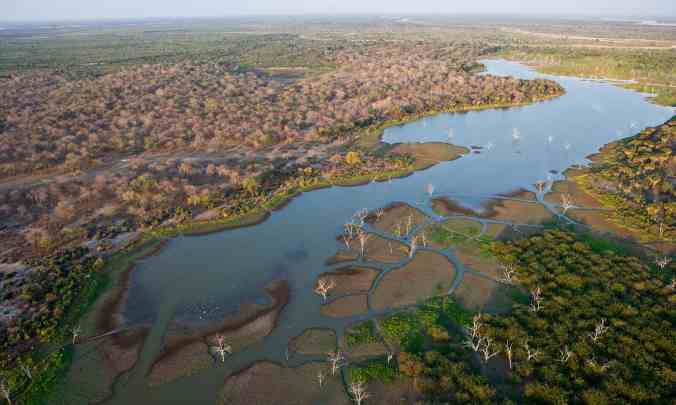
Tanzania presses on with hydroelectric dam on vast game reserve

Stiegler Gorge dam on the Selous park, a world heritage site listed as ‘in danger’, will cause irreversible damage, say conservationists Continue reading

Mangrove Mathematics

Mangroves play an essential role in maintaining healthy life on earth, and we’ve been privileged to work in many locations where we’ve seen their impact on biodiversity levels first-hand, including India.

Frequently these ecosystems are under threat of habitat loss, whether for agricultural or land development. Thanks again to Anthropocene for adding up the facts in such clear terms.

Intact mangroves worth twice as much as rice paddies

Conservationists frequently say that ecosystems are worth more when they’re left untouched. But to whom? Local communities who could potentially farm the land might wonder, what’s the real benefit of leaving wild areas intact?

In the Bhitarkanika mangrove in Odisha, India, a group of Indian researchers grappling with this question have arrived at a surprising answer. By leaving the mangrove intact, they say, Bhitarkanika’s surrounding communities can in fact reap almost double the economic benefits they’d get from simply converting the mangrove to crops. Continue reading

A Day In the Life of the Chan Chich Archaeological Project

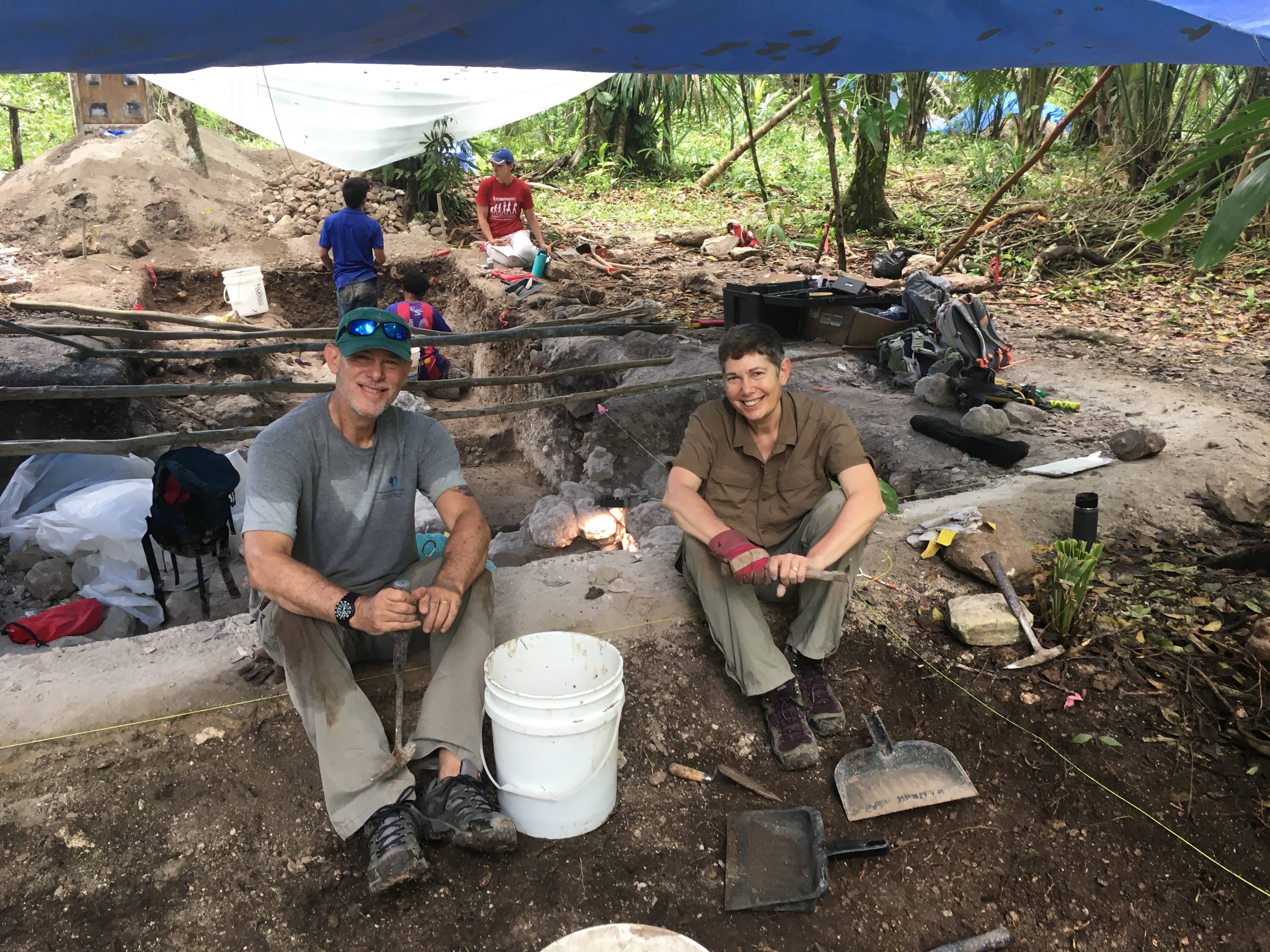
When Crist wrote about the Chan Chich Archaeological Project in April it was in anticipation of the group’s arrival. Now that we’re several weeks in I’ve had the opportunity to assist them first hand, in part as a “guinea pig” for guest involvement as citizen science participants. Fellow contributor Phil Karp (a veteran of many citizen science programs) was enthusiastically up  for the experience as well.

The team of archaeologists and field school students, led by Texas Tech University associate professor Dr. Brett Houk, is studying the ancient Maya at Chan Chich and surrounding sites. Several weeks into their dig they’ve made significant progress, and they gamely accepted the challenge of taking novices into their ranks.

We began at the beginning, well known to be the very best place to start, with a new “lot” located next to a well-established excavated area. Continue reading

Sustainable Village Highlight: San Juan la Laguna, Guatemala

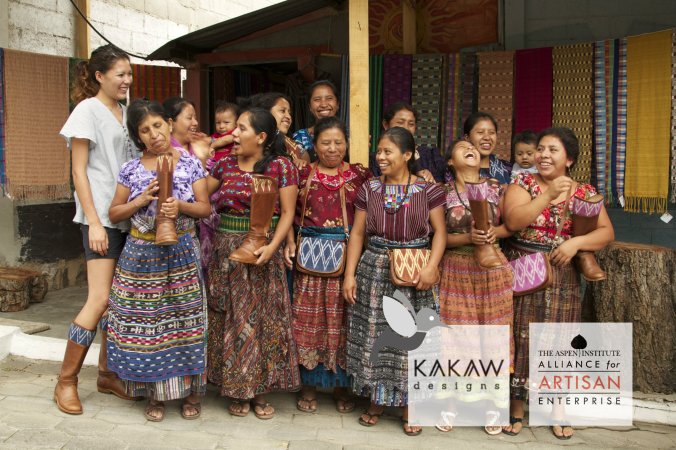
Hi, there! I’m Mari Gray, founder of artisan-made brand Kakaw Designs, based in Guatemala. After studying International Relations and Spanish at UC Davis and then working for several non-profits in Latin America, I became disillusioned and decided to focus on sustainable development through a social enterprise, partnering with talented artisan communities in Guatemala.

I feel incredibly fortunate to work with different artisan groups in Guatemala through Kakaw Designs (pronounced <kekao> like the cacao tree), an artisan-made brand I started about four years ago.  We currently work with several different artisan groups: two weaving, one embroidery, two teams of leathersmiths, and one silversmith; all to make our designs come to life.  But it was for a good reason that we started with the weaving cooperative Corazón del Lago in San Juan la Laguna, at Lake Atitlán.

Kakaw Designs Alliance logo

We would never have been able to launch Kakaw Designs without this group of forward-thinking, professional weavers from this small Maya village.  The community itself is exceptional, with sustainability clearly a focus through:

  • Use of natural dyes in textile production, also using local traditional techniques such as backstrap weaving and ikat designs  <<Learn more by watching our video>>
  • Organization of weavers in cooperatives or associations, where women work together and can therefore take larger orders and offer quality control
  • Up-and-coming development of community ecotourism, especially birding

Continue reading

Paul Nicklen Way North & Way South

PhotogArctic.jpg

Paul Nicklen/Paul Nicklen Gallery

I listened to this interview while walking the trails at Chan Chich Lodge this morning, so had no photos to look at. And yet, it was vivid. And highly relevant to what we do here. I will let you listen to get what I mean.

Six photos accompany this story on the Fresh Air website, and those are curated for the podcast. If you only have time for photos click over to Paul Nicklin’s website, but the interview with him is worth every one of the 48 minutes. If you only have ten minutes to listen, go to 22:30 and if you do not find yourself bursting into a mix of laughter and other unidentified emotions, let me know; it means one of us may need some professional help:

Polar Photographer Shares His View Of A Ferocious But Fragile Ecosystem

Conservation photographer Paul Nicklen has spent more than two decades documenting the ice and wildlife in some of the most inhospitable places on Earth — the Arctic and the Antarctic. Continue reading

Organic, Bird-Friendly Cold Brew Coffee At Chan Chich Lodge

07COLDBREW1-master1050-v2

At All Day, a coffee shop in Miami that’s on the must-visit list of coffee fanatics, cold brew is the foundation of the menu. Credit John Van Beekum for The New York Times

Apparently it is iced coffee season up north. It is intern season here at Chan Chich Lodge. Maybe an intersection? Emily, from an agriculture and environmental engineering background, and Alana who is an aspiring sustainable hospitality developer are off to the races, as they say. They were out in the forest yesterday with GPS tools, a GIS mapping app and the assistance of Migde and Hector on the trails, developing a more scientific way of estimating the incidence of Ramon trees in our 30,000 acres.

More on that from them. But more on coffee from me. We have been cultivating an estate coffee unique to Belize, organic and as bird-friendly as you will find. Let’s add cold brew to your list of summer experimentation? Migde and Hector, aka bartender and waiter and therefore defacto coffee baristas, will be setting up the instrumentation in the kitchen.

How Cold Brew Changed the Coffee Business

Continue reading

Blue Heart of the Planet

The United Nations Ocean Conference is underway to support the implementation of Sustainable Development Goal 14: Conserve and sustainably use the oceans, seas and marine resources for sustainable development.

The importance of collaboration between public and private sectors to brainstorm innovative solutions to environmental issues is becoming increasingly clear, as is the reality that states and local governments will be the stronger voices for climate activism.

The health of the planet and our oceans are interchangeable, and Sylvia Earle has been the spokesperson for that truth for decades.

Take the extra 18+ minutes to listen to her 2009 TED Prize Talk here.


Keep This Place Out Of Bounds

4256b.jpg

The letters come amid fears that the Trump administration will favor the powerful mining lobby, increasing the risk, particularly, of uranium contaminating water flowing into the Grand Canyon. Photograph: Stephen Yelverton Photography/Getty Images

Arizona officials, sensing an opportune moment, are using one of the most iconic places on earth to make a point. And the point is at one with the reason given for the USA pulling out of an environmental treaty, that every last buck to be raked out of the earth is more important than the earth as a whole, or a particular spot on the earth, or those living on the planet generations from now. The headline and story below fail to shock. This is how things are lately. Getting numbed to it is not an option. Arizona officials have made their point clear, but the point cannot be conceded. Boundaries still exist and must be protected. Thanks to the Guardian for its vigilance in its This is Your Land series:

Grand Canyon at risk as Arizona officials ask Trump to end uranium mining ban

Exclusive: Powerful regional officials to ask administration to end 20-year ban, saying it is unlawful and inhibits economic opportunity Continue reading

Stanford Earth’s Rosemary Knight

Thanks to Stanford News for this short video on important innovation related to ensuring we all stay hydrated well into the future:

Mapping groundwater from the air

Stanford Earth’s Rosemary Knight recently spearheaded a project to map underground freshwater resources and forecast the intrusion of saltwater into aquifers beneath the California coastal town of Marina. The project, a collaboration between Stanford, the Marina Coastal Water District, and Aqua Geo Frameworks, involved a low-flying helicopter towing a giant, instrument-laden fiberglass hoop that generated ground-probing magnetic fields that penetrated 1,000 feet beneath the surface.

Sea Shepherd & Cuvier’s Beaked Whales

It has been a long while since our last link to Sea Shepherd news, shame on us, but today we rectify it with news from Seth and Jocelyn’s neighborhood–actually on the Pacific side of Mexico’s Baja California Sur but as close as most people get:

Sea Shepherd Records Never Before Seen Footage of Rare Cuvier’s Beaked Whales During Expedition in Mexico

Sea Shepherd’s research vessel the R/V Martin Sheen returned to Mexico’s Guadalupe Island to continue its study of Cuvier’s beaked whales, capturing never before seen drone footage of these rare and elusive cetaceans.

During the two-week expedition, Mexican lead-scientist Gustavo Cardenas Hinojosa and American collaborator Jenny Trickey, deployed various acoustic devices to compare their effectiveness. The scientists will return and leave these devices for a longer period of time. Continue reading

Foraging Forays

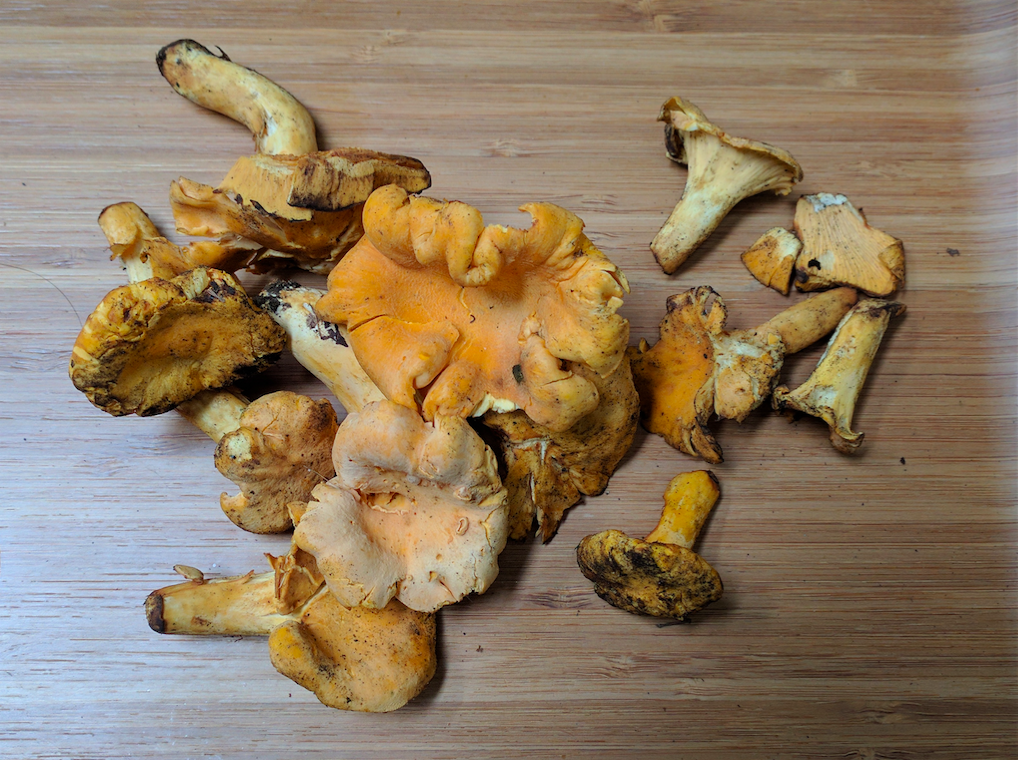
Taking a break from packing for my upcoming return to Belize, I joined a group of old friends from the Georgia Mushroom Club in a foray near the Georgia/South Carolina border. Fresh air, a walk in the woods, good company, and foraging for mushrooms – what better way to spend a morning?

The weather has been warm and wet, great conditions for mushrooms and we were happy to find patches of chanterelles. As we searched we talked about Chan Chich Lodge and Belize, and that we’re in the midst of brainstorming collaborations with the staff and local community who carry the ancestral knowledge of the old Mayan and Belizean foodways, and chefs who focus on foraging in the creation of their menus. We’ve recently discovered a variety of foods that are plentifully available from the Chan Chich forests, and are excited to incorporate them into our culinary story.  Continue reading

Rome Rewilded

viscosa.jpg

Image: Planet World / Flickr

Thanks again to one of our most reliable sources for the summary of conservation-oriented science, and specifically to Brandon Keim for this one:

An Anthropocene wildness grows in Rome

Even in one of the most densely urbanized places on Earth, wildness and natural abundance may yet flourish again, sustained by both neglect and stewardship. Continue reading

Leadership On Climate Change Is Alive And Well

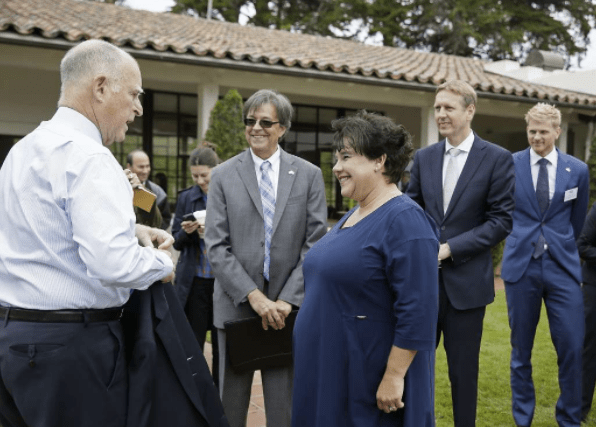
California Gov. Jerry Brown talks with Sharon Dijksma, Netherlands Minister for the Environment, during the joint Netherlands and California Environmental Protection Agency conference called, “Climate is Big Business,” at the Presidio Wednesday, May 24, 2017, in San Francisco; Photo: Eric Risberg, Associated Press

The news yesterday that the USA is exiting the Paris climate accord was in a font size the New York Times only uses at times of true tragedy–i.e. big news. Editorials accompanying that headline on the front page were proportionately big with invective:

Our Disgraceful Exit

Trump’s Stupid and Reckless Climate Decision

Brooks: Trump Poisons the World

Krugman: Trump Gratuitously Rejects the Paris Accord

All consistent with the implications of the news. There is no discounting the scale of that tragedy, so it is possibly not the right moment to look for silver linings. But that is what we do here, so here goes. In the model mad series we linked to a story about California Governor Jerry Brown, who has been making a stand during decades of public service, and he clearly has no intention of slowing down. The governors of California, New York and Washington on Thursday announced a new “alliance of states dedicated to fighting global warming and urged others to join them”.

“California will resist,” Brown told journalists on a conference call, going on to say that  the administration may well create the exact opposite of what is intended –

an aroused citizenry — and an aroused international community — who will not tolerate this kind of deviant behavior from the highest office in the land.”

Brown and his counterparts, Jay Inslee of Washington and Andrew Cuomo of New York, announced that they would join forces in a United States Climate Alliance, a coalition of states committed to upholding the goals of the Paris agreement.

The three states, combined, represent more than 20 percent of the U.S. population and at least 10 percent of the country’s greenhouse-gas emissions, according to the governors. Continue reading

When Life Gives You Lionfish…

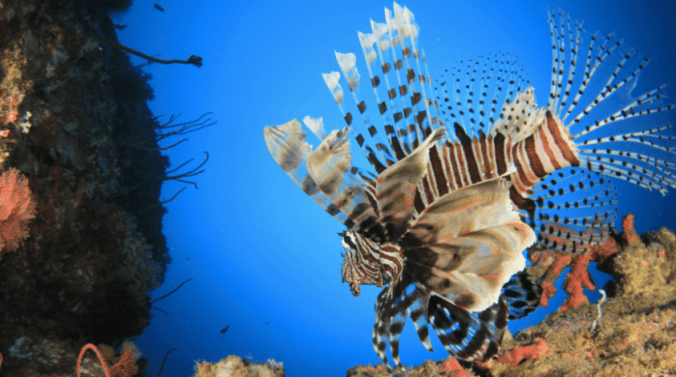
Market-based approaches to controlling invasive lionfish populations were highlighted at a recent GEF event in Grenada.

La Paz Group contributor Phil Karp has long been our guide into marine ecosystems, with both citizen science and social entrepreneurship posts on his work with groups in Belize and other parts of the Caribbean focused on these goals.

This collaboration with Sarah Wyatt,  a colleague from the Global Environment Facility, illustrates the on-going market-based approaches to managing the invasive species while creating new cottage industry opportunities.

Seeing a lionfish while diving in the Caribbean is a cause for mixed emotions.  On the one hand, one marvels at the exquisite beauty of the fishes’ flowery fins and its amazing adaptability to a range of habitats, from shallow estuaries with low salinity to deep reef environments. But then you remember that these fish don’t belong in the Caribbean, and that the very versatility noted above makes them an invasive menace. Indeed, if the fish you are looking at is a female, she may be carrying up to 30,000 eggs, and may have thirty or more native fish or crustaceans in her stomach.

One of the many impacts of the Anthropocene era on global biodiversity is the increased spread of invasive species, like the lionfish, due to rapid globalization. With the United Nations Ocean Conference taking place in New York next week, the conservation and sustainable use of the oceans and marine resources is high on the international agenda.  While long recognized as an environmental and biodiversity threat, invasive species also pose a threat to livelihoods, particularly in developing countries where incomes may be heavily dependent upon a single sector or product.

Traditionally, efforts to eradicate or control invasive species have been focused on public sector interventions.  But control efforts are often expensive and are either out of reach, or pose severe strains on limited budgets of developing countries.  Hence there has been growing attention to identification of market-based control approaches which create commercial incentives for removing the invaders, providing a financially sustainable means of control… Continue reading

Food Sleuthing

00Apples-2-superJumbo.jpg

The remnant of an old apple orchard among wheat fields in Steptoe Butte State Park in Washington. Credit Ruth Fremson/The New York Times

Yesterday magic happened. After sharing in the morning a quick mention of why my thoughts are on agriculture, I was walking with a member of Chan Chich Lodge’s groundskeeping team to review some work he had completed. On the way, we encountered a tree showering small fruits onto the ground. Fragrant. I asked him what it was and he said a word I did not recognize that sounded like “yo”.

About the size of a blueberry but not a berry, nor resembling anything I could identify. Until I opened it and its inside looked exactly like that of my favorite fruit. And then I realized my colleague had said higo, the Spanish word for fig. He then told me that in his village the old Mayans use this to make a flour, something they have done since olden times. He paused a moment, a bit of reverie I could tell, and then he continued about how the tortilla made from this is the best. It’s got me thinking. Thanks to Kirk Johnson for this second unexpected pleasure of a story:

Hunting Down the Lost Apples of the Pacific Northwest

STEPTOE, Wash. — David Benscoter honed his craft as an investigator for the F.B.I. and the United States Treasury, cornering corrupt politicians and tax evaders. The lost apple trees that he hunts down now are really not so different. People and things, he said, tend to hide in plain sight if you know how and where to look. Continue reading

Rewilding, Panthers & People

Filkins-The-Return-of-the-Florida-Panther.jpg

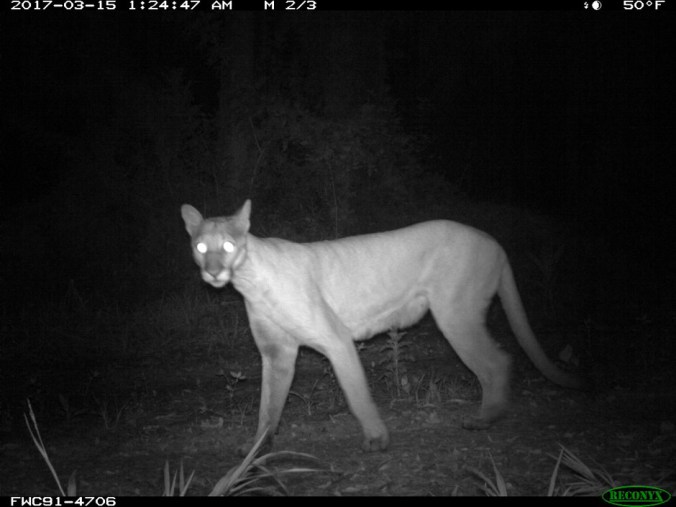
As Florida panthers have begun to multiply, they’ve been forced to search for new home ranges. PHOTOGRAPH COURTESY FLORIDA FISH AND WILDLIFE / FLICKR

Rewilding is a topic I started linking to as a matter of solidarity. While based in south India, I had plenty of exposure to residual evidence of the complicated–sometimes resplendently beautiful and other times brutally tragic–relationship between mankind and wild animals as played out over millennia, and still evolving. So I have kept an eye open for these stories, and have posted so many times on the topic that it might give the impression that it is a thing. As if it is happening more or better than it is really happening. But it is happening so I will keep the links coming.

Now I am in Belize most of the year, where the man-cat relationship is also millennia old, and as constant challenge as ever. But I am seeing it from well within the confines of Chan Chich Lodge and its surrounding hundreds of thousands of acres of healthy cat habitat. I know there are big cats in the USA, but not enough. That is why this story is a thrill. Dexter Filkins, never yet cited in these pages but whose reporting I depend on for other kinds of stories, was not a byline I expected to see on this story, but thanks to him for it:

For years, the Florida panther, a majestic creature that lurks in and around the forests of the ovbnm,./, has teetered on the edge of permanent disappearance. Closely related to the mountain lion, the panther once roamed across much of the South, but the ever-advancing modern world pushed it into a tiny corner of Southwest Florida. By the late nineteen-seventies, fewer than thirty survived.

Since then, the panther has been coming back, helped by a government- and privately backed expansion of its habitat. Florida panthers are now thought to number around two hundred. Indeed, there are so many big cats in the Everglades that they are venturing out in search of new territory. Continue reading

Gallon Jug’s Bird Friendly Coffee

CoffeeConsvtn.jpg

I am back at Chan Chich, with one goal before I start focusing on my plan to go to graduate school. A recurring theme in my work for La Paz Group, especially at Xandari, has been the intersection of birds and coffee. And now I have some months to think about how this may relate to what I will study in graduate school. One of the programs I am considering applying to is the Masters in Environmental Management at the Yale School of Forestry. Can I link what I have learned while working to what I would study there? If so, maybe I could link that to what I do after grad school.

This other post today reminds me of the value of geeking out from time to time. Most of my attention to coral reef comes from Phil Karp’s posts on this platform and I admit to preferring stories featuring real people and their entrepreneurial approaches to conservation. But science is the other best friend of conservation. Today my attention is turning to coffee, in advance of the arrival this week of an intern coming from Cornell University’s College of Agriculture and Life Sciences.

Just one of the many topics for an intern, with science and research on her side, to help us tackle over the next ten weeks, bird-friendly coffee has been on been on my mind since last year but I have been waiting for the perfect moment to focus. Nothing like the arrival of an intern to focus your mind. And so today in my task-oriented wanderings I came across this website (click the banner above), which I loved immediately for sharing this news on capsules, but the rest of the site is a great resource for present purposes as well:

A short round-up of coffee news.

Farmers, Loggers & Biodiversity

5184 (1)

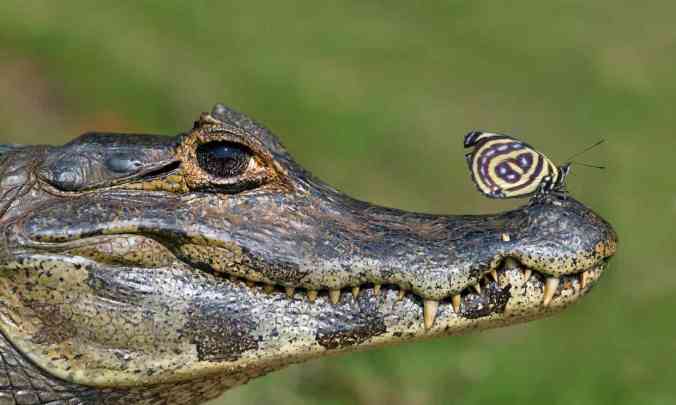
Serro Ricardo Franco is in one of the world’s biggest and most diverse ecological reserves. But reality on the ground is different, putting many animals at risk, such as Yacare caiman and giant river otters. Photograph: Angelo Gandolfi/Getty Images/Nature Picture Library

Sometimes, sitting in a glass house, reading the news makes me want to throw a stone. The glass house where I live includes a farm in an extremely biodiverse area. It is surrounded by nearly half a million acres where logging happens. But there is farming, as you can read about in the news below, and there are plenty of better ways of farming; there are loggers like those in the news below, and there are forests where extraction happens according to standards such as those set and enforced by the Forest Stewardship Council.

Instead of throwing a stone, I get up every day and make sure the glass around here is as transparent as possible, because we can demonstrate a better way of supplying food, of harvesting wood, and doing so with the protection of wildlife in constant view. Meanwhile, I do read the news from elsewhere and continue to share it here (thanks to the Guardian’s Jonathan Watts in Vila Bela da Santíssima Trindade for this one):

Wild Amazon faces destruction as Brazil’s farmers and loggers target national park

The Sierra Ricardo Franco park was meant to be a conservation area protecting rare wildlife

To understand why the Brazilian government is deliberately losing the battle against deforestation, you need only retrace the bootmarks of the Edwardian explorer Percy Fawcett along the Amazonian border with Bolivia.

During a failed attempt to cross a spectacular tabletop plateau here in 1906, the adventurer nearly died on the first of his many trips to South America. Back then, the area was so far from human habitation, the foliage so dense and the terrain so steep that Fawcett and his party came close to starvation.

He returned home with tales of a towering, inaccessible mesa teeming with wildlife and irrigated by secret waterfalls and crystalline rivers. By some accounts, this was one of the stories that inspired his friend Arthur Conan Doyle to write The Lost World about a fictional plateau jutting high above the jungle that served as a sanctuary for species long since extinct elsewhere. Continue reading