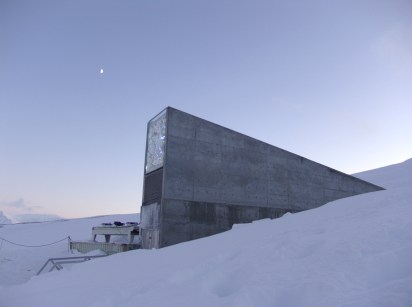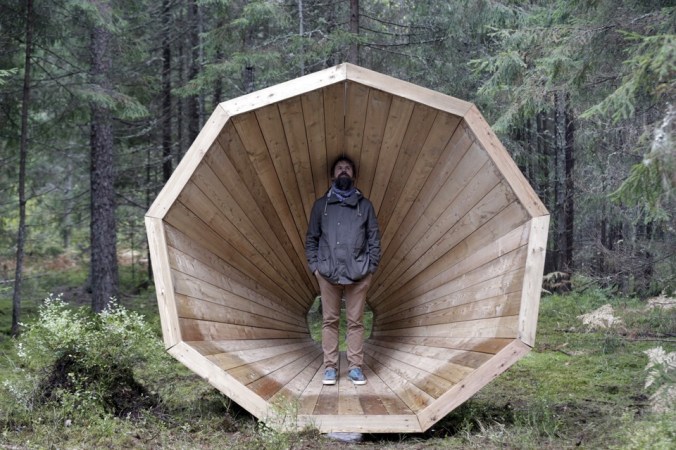
Our favorite doomsday machine, which we never tire of hearing about and sharing on this platform each time it has demonstrated its visionary worthiness, is back in the news. Discover Magazine brought this to our attention today: Continue reading
Conservation
Naming For The Sake Of Conservation

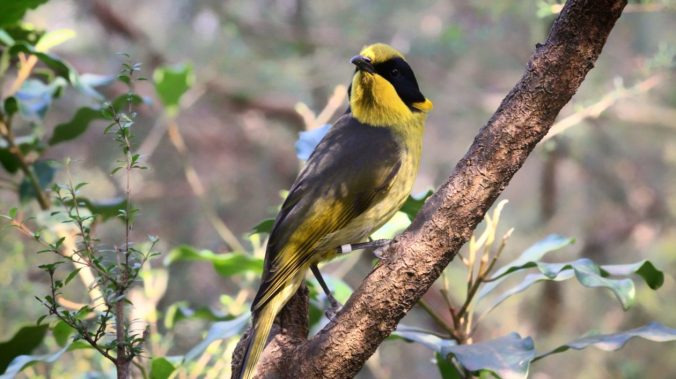
The Helmeted Honeyeater, a subspecies of the Yellow-tufted Honeyeater and the state bird of Victoria. Photo © Dylan Sanusi-Goh / Wikimedia Commons
Thanks to the Nature Conservancy for its conservation and scientific work in Australia, and for this finding shared on Cool Green Science:
…Recognizable common names are often critical for species protection, but subspecies miss out on this public perception benefit. A new paper argues that standardized English names are key to conservation success for Australia’s fantastic avifauna, and creates a definitive list for every subspecies on the continent. Continue reading
James Prosek, Come to Chan Chich Lodge!

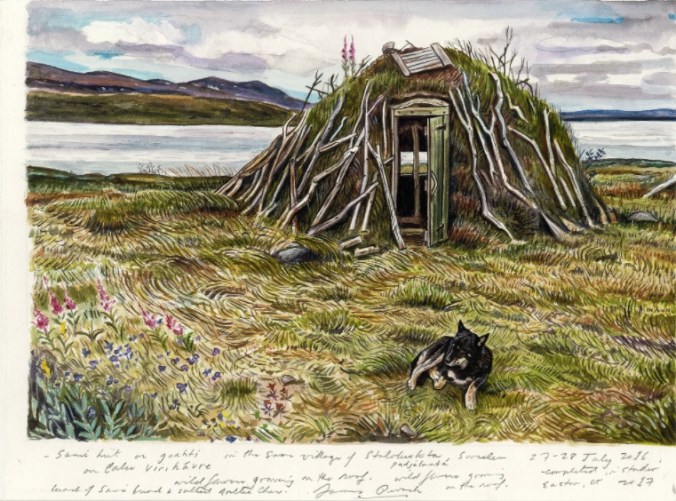
A Sami reindeer herders’ hut on Lake Virihaure in Padjelanta National Park. Credit Paintings by James Prosek, courtesy of the artist and Schwartz-Wajahat, New York
A Botanist in Swedish Lapland
By
The plan was to retrace part of a journey that Carl Linnaeus made in 1732 when he was 25, from Uppsala, just north of Stockholm, to the northernmost region of Sweden, known as Swedish Lapland. Linnaeus kept a detailed journal of his travels, often called his “Lapland Journal,” with maps of the mountains, rivers and lakes, drawings and his squiggly handwriting. Continue reading
Reanimating Coffee
Considering the coffee farming and roasting operation, not to mention all the coffee served at Chan Chich Lodge; also considering the constant search for new options relevant to ecologically sensitive operations, this catches our attention. Thanks to Anthropocene and Prachi Patel:
A simpler route to biodiesel from used coffee grounds
The world produces almost 10 million tons of waste coffee grounds every year. Researchers have now discovered an efficient way to turn that waste into a green fuel. Their simple one-step process, outlined in the Journal of Environmental Chemical Engineering, would save time and the cost of producing biodiesels from coffee. Continue reading
Strengthening Our Birding With Citizen Science

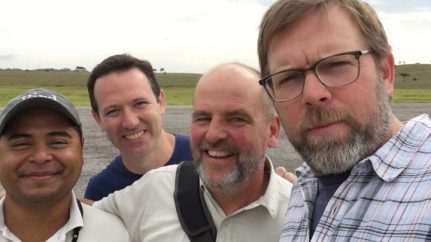
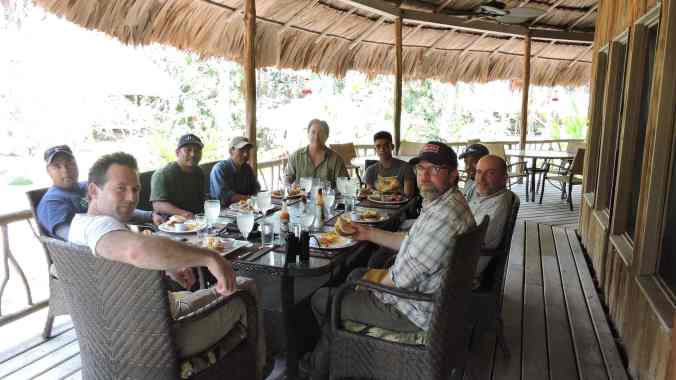
Team Belize finished with 242 species. From left: Roni Martinez, Andrew Farnsworth, Steve Kelling, Brian Sullivan.
Seth, since his time working for the Cornell Lab of Ornithology, and even after his time in Ithaca, has helped me to see how important the Lab’s work is to what our company has been doing since he was an infant. Citizen science is an essential component, and at Chan Chich Lodge guests have responded to the passion the guides have for eBird, which is why we put so much attention into this year’s Global Big Day. And it is why we are already planning the next collaboration with the Lab, a collaboration Seth will lead on our side. For now, a final roundup of stories from last weekend, starting with our favorite team:
…After pooling their lists, the teams ended the day with a whopping 327 species combined—reflecting not just great birding but the region’s importance to an immense diversity of birds. Team Belize topped the friendly group competition with 242 species (including 40 species the other teams didn’t find); Team Mexico found 224 species (with 43 unique to their list); and Team Guatemala tallied 213 (with 23 unique)…

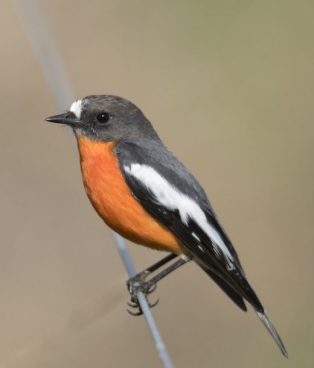
Flame Robin by John Cantwell/Macaulay Library, taken on Global Big Day
Also, the final numbers are in and news published late yesterday confirmed what I suspected as day was breaking in Belize, titled Global Big Day 2017: birding’s biggest day ever:
…On 13 May 2017, almost 20,000 birders from 150 countries around the world joined together as a global team, contributing more than 50,000 checklists containing 6,564 species—more than 60% of the world’s birds. This is a new record for the number of bird species reported in a single day, Continue reading
The Bells & Whistles Of The Forest At Daybreak
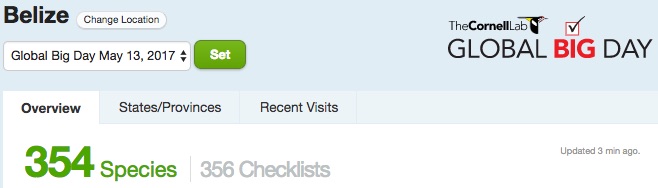
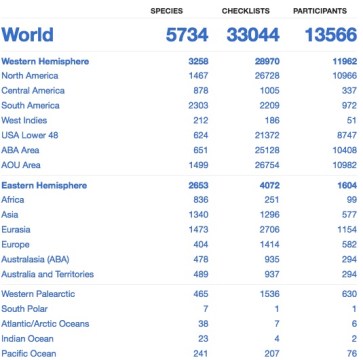
We post a few times a day, sharing information about initiatives in our own realm of work and frequently observations on news links that we find interesting. For the record, here is a bit of news worth celebrating. As I type this at 5:30a.m. Belize time, the Global Big Day page on eBird shows the latest tally of the species count as seen above. At the same time, on the eBird Facebook page I am looking now at the last post, dated May 15 midday, that says:
The #GlobalBigDay total is now 6,255, less than 100 away from a new record for a single day of birding!
Looks to me like a new record has been set. Where are all the bells and whistles? They are outside my door right now, where the wildlife is whirring, cling-clanging, whooping and shrieking as the forest lights up…
Technology, Wilderness & Balance

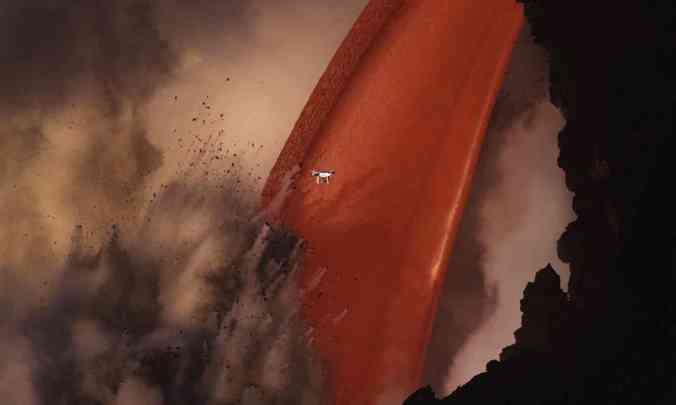
An illegally flown drone gives scale to next to a lava tube in Hawaii Volcanoes national park. Photograph: Andrew Studer
Some in the hospitality business will likely embrace technologies that I cannot picture using in our hospitality operations, ever, but that is fine. Good for them, I say. Recent events at Chan Chich Lodge have reinforced my wonder at, and love for, technology as a tool to support conservation. There is no doubt that guest photos of big (or small) cats and monkeys, shared via social media, help our conservation mission. There is no doubt that tech tools such as eBird and Merlin (Belize edition recently released, just in time for Global Big Day for those of us who need it) also move our conservation mission forward.
That said, I still have a preference for digital detox among our guests, as much as possible. Artificial noises, visuals, aromas and structures are best minimized in order to maximize the many benefits of nature. Distractions, which may be normal things and habits quite common at home, are the spoilers of visits to great places. The problem first came to my attention nearly two decades ago while visiting Mont Saint Michel, where helicopter tours were just becoming a thing, which clearly annoyed every individual who was making the wondrous visit on foot.
I hope, but doubt, that such tours have been limited in the time since then. The evidence seems to point to more distractions in monumental places, whether natural or cultural, that had previously been visually and sonically protected (thanks to Sam Levin at the Guardian for this):
‘Turn it off’: how technology is killing the joy of national parks
As drones, smartphones other gadgets invade America’s most tranquil trails, many lament the loss of peace and quiet Continue reading
Sticking To Mission & Unintended Consequences
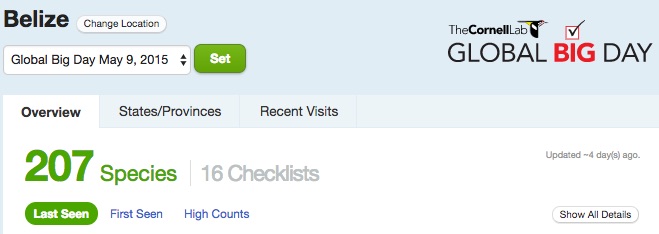
In recent months, as we prepared to host Team Sapsucker Belize at Chan Chich Lodge, our goals were focused on the citizen science mission. Using a couple simple metrics, the event was a clear success, comparing the number of species counted in Belize this year versus last year, and especially looking at the number of checklists submitted.

If you look at this as the third iteration of an event that we hope to grow in future years, the progress from beginning to present is promising. As I type this there are still more than 40 hours of data entry remaining for this year’s event, so the increase in this year’s participation and species identification will likely grow larger by this time Wednesday.
Agripreneurship On The Rise
This exciting project came to our attention a little over a year ago, and we’re excited to see that it’s going full steam ahead!
This is an Embark Fellowship campaign. If we raise our target, Brown University will donate $25,000 to our project!
What’s up with fish?
The world’s population is growing rapidly, and the global demand for animal protein—from fish to poultry, beef, and pork— is growing with it. But there’s a problem: animal feeds are made from wild-caught fish like anchovies and sardines. These fish are caught using highly destructive fishing methods that result in unintentional by-catch and the destruction of coral reefs. One third of global fish catch doesn’t go towards direct human consumption; it goes to feeding animals. As a result, more than 85% of the world’s fisheries are exploited. We are feeding fish to other animals, and it doesn’t make sense.
Meanwhile, the world’s population is increasing rapidly and is projected to hit 9.7 billion by 2050. We desperately need a new way to feed a growing population that is not at odds with the health of our oceans.
Meet the black soldier fly.
Global Big Day 2017, Results
When I left Team Sapsucker late last night it was pouring rain, a perfect punctuation to the day, telling them to stay under cover on Chan Chich’s deck since no bird would be out in the deluge. They were reviewing their lists, waiting to see if the rain would pass, allowing one final outing of the 24-hour period. I did not ask the final number, but I could tell they were happy with the day.
As I type this at 5am the rain has long since stopped, the early birds are out in full sonic force, competing with the howler monkeys it seems, and results on eBird’s website look impressive. My eye is drawn to the Central America numbers. Partly because I moved to the region two decades ago and have worked in each country. Partly also because the region has embraced its ornithological importance, and yesterday provided one more metric for that embrace. But mainly, because I am here in Belize and the Lab team we had here was exactly as expected, not only as birders but as people.
The Chan Chich guide team had an amazing day with the Team Sapsucker on Friday, and over lunch that day they all celebrated several firsts, the details of which escape me now, but they involved two new species being added to Chan Chich’s list on eBird (a big deal) and our guide Ruben adding a life list bird that day to his nearly two decades of birding accomplishments at the Lodge.

The Lab team explained the rules of the game for the following day. No assistance of any kind would be possible after midnight. Continue reading
Introducing The Team Prepping For Global Big Day At Chan Chich Lodge
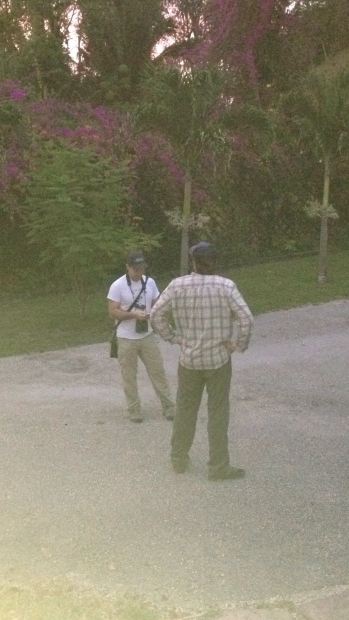
On day two in Belize with Team Sapsucker introductions are due. The photo to the left, taken at about 5am today in front of Chan Chich Lodge’s reception area, shows two of them. The best information I could find to share with you about Andrew Farnsworth is on Songbird SOS Productions, where he says:
“I like the challenge of trying to figure out how to go birding when there’s a traffic jam on first avenue. It’s cool to be able to study birds in a city… Some people have seen technology as the end of all things natural, but there’s a whole other side to it that gives us access to a world that we would otherwise not have seen.” Continue reading
Sound, Noise & Wilderness
Sound is often profound. Noise often annoys. Thanks as always to Ed Yong, touching on a topic we have been sensitive to for some time now:
A Not-So-Silent Spring
Even America’s protected areas are being subjected to harmful levels of noise pollution.
If a tree falls in the forest, and there’s no one around, the National Park Service will still hear it. Continue reading
Welcome News From Brazil

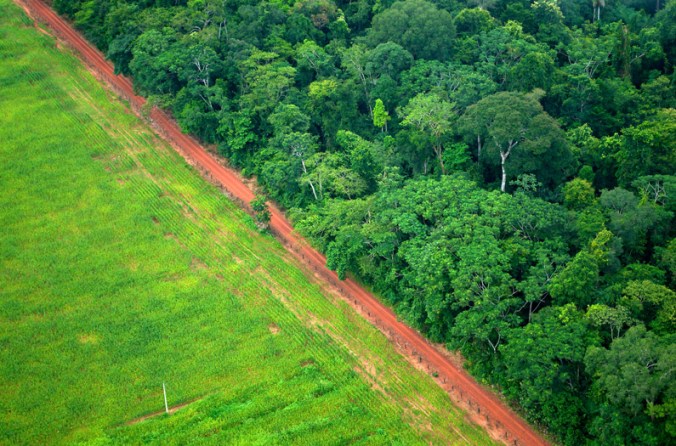
Image: CIFOR/Flickr
Thanks to Anthropocene for a moment of relief:
In Brazil, signs that a soy moratorium is slowing down deforestation
Counting Down To Global Big Day

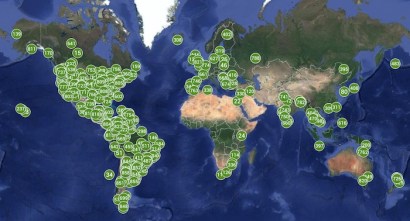
A world of birders has already marked out where they’ll be on 13 May. Where’s your place? Add it today!
Thanks to eBird for the one week marker until Global Big Day, which we look forward to supporting at Chan Chich Lodge. Click the map to the left to mark your territory, so to speak. This countdown notice uses one species to illustrate a conceptual premise of the annual event, and we are happy to report that this species is frequently seen at Chan Chich Lodge on birding walks, and excursions to Gallon Jug Farm, where the barns are accommodating:
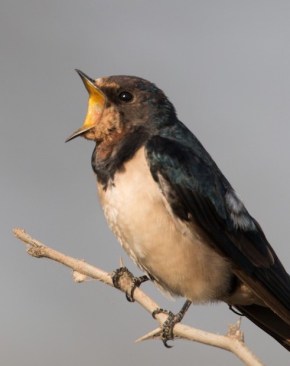
The familiar Barn Swallow (right) has been recorded in eBird from 222 countries. You can hope to spot a Barn Swallow almost anywhere on the planet, from Alaska to Argentina, Siberia to Australia, Iceland to South Africa. Barn Swallows criss-cross the equator and traverse the Eastern and Western Hemispheres. Their movements not only span an entire planet of birds, but connect a worldwide community of birders.
Barn Swallow by Ian Davies/Macaulay Library
In the same way, Global Big Day and eBird connect all of your local birds with the rest of the world, making a real difference in the collective understanding of birds worldwide. On 13 May, every bird that you report contributes to the global team total for an unprecedented snapshot of our planet’s bird diversity. Every bird counts.
To join the Global Big Day team from more than 150 countries, all you have to do is go birding on 13 May! Continue reading
Foxes, Habitat & De-Wilding

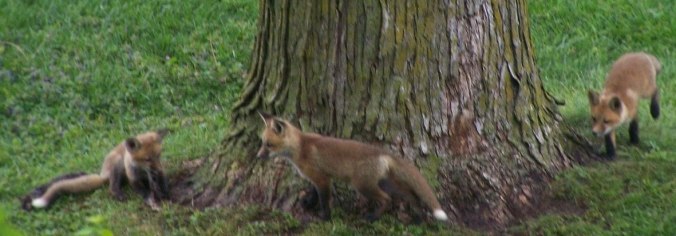
I recently received some photographs showing a family of foxes that had taken up residence near a home in the countryside an hour away from Kansas City. The foxes were wild, but even in this semi-rural landscape the foxes did not appear wild to me.
It was something about the context, seeing them in a yard I recognized well, that made me think about the essence of wildness. In the last year I have seen a number of grey foxes in the forests of Chan Chich and like most of the wild animals they do not seem to be afraid of humans; neither attracted to nor repelled by fear.
The animal-human dynamic in both cases, the semi-rural home (of my in-laws, as it happens) setting of the foxes as well as those at Chan Chich seem to be one of peaceful coexistence, even apparent disinterest. The human-animal dynamic is anything but disinterested, which the photos illustrate and that we see evidence of every day among Lodge guests. People want to see animals in their natural habitat. The animals’ apparent lack of fear of humans is related to the fact that there has been no hunting in the surrounding half million acres of forest for a couple generations.
It may also be that the foxes around the yard of the home in these photos also have not been hunted but something tells me that the foxes that seem habituated in and around human populations are different from those in these wild forests. I cannot quite articulate why I think that but today this book review got me thinking differently about the essence of wildness:
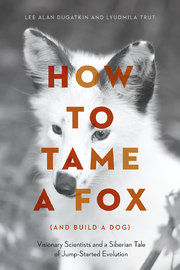
Imagine a time when scientists worked in secret, wondering if government officials would declare their research counter to state interests, endangering not only the personal liberty of the scientists themselves but their ability to let the experiments take them where the facts led. A time when how good a scientist you were was not all that mattered — what was important was how well you fit into political and ideological dictates. No, this is not a setup for a book ripped from yesterday’s CNN feed. Instead, it is the backdrop to a story that is part science, part Russian fairy tale and part spy thriller.
“How to Tame a Fox” sets out to answer a simple-seeming question: What makes a dog a dog? Put another way, how did an animal that started out as a bloodthirsty predator become one that now wants nothing more than a nice belly rub and the chance to gaze adoringly at a member of another species? Continue reading
One Possible Future of Fish

Open-ocean aquaculture could reduce environmental concerns associated with aquaculture in coastal waters. Photo courtesy of NOAA Fisheries.
We’re always looking for well-balanced discussions on innovative but occasionally controversial forms of food production. Open ocean aquaculture is an example, and we appreciate the Food & Environment Reporting Network for offering just that, suggesting that many of the environmental concerns with aquaculture are mitigated by using deep water locations.
President of the New Orleans–based Gulf Seafood Institute, Harlon Pearce knows better than anyone that wild fisheries alone can’t supply U.S. consumers’ growing demand for fish. Which is why he’s doing his best to bring everyone to the table to achieve one goal: farming the Gulf of Mexico. Continue reading
Optimal Mangrove
Thanks to Anthropocene’s Brandon Keim for the summary and insights from Mangroves optimized: How to make coastal habitats sequester even more carbon:
Of all the carbon buried in the floors of Earth’s oceans, most of it is found in the narrow strip of tidal marshes, seagrass beds, and mangroves along their edge. Known as blue carbon ecosystems, these vegetated coastal habitats “occupy only 0.2% of the ocean surface, yet contribute 50% of the total amount of carbon buried in marine sediments,” write researchers, led by Deakin University ecologist Peter Macreadie, in the journal Frontiers in Ecology in the Environment. Meter for meter, they’re some of the most effective carbon storage systems we have. But could people make them even more effective? Continue reading
Preserving Biodiversity to Feed the World
Thanks again to Atlantic for its occasional short film series, and in this case specifically to Erica Moriarty for bringing our attention to a video by Independent Lens available for sampling over at PBS (click the image above):
In the last century, 94% of the world’s seed varieties have disappeared. Family farmsteads have given way to mechanized agribusinesses to sow genetically identical crops on a massive scale. In an era of climate uncertainty and immense corporate power, farmers, scientists, lawyers, and indigenous seed keepers are on a mission to defend the future of food. Botanical explorer Joseph Simcox has been to over 100 countries, collecting thousands of seeds. In this documentary from Independent Lens, he travels to the Peruvian Amazon. Continue reading
Ranching, Recovery & Reason
If you missed this post, it is worth a read for perspective either before or after the story below, and even if you do not read the story below that one should not be missed. Thanks to Cool Green Science:
Ridding the West of cattle remains a priority for some organizations and individuals. “Ranching,” the director of one prominent group told High Country News, is among “the most nihilistic lifestyles this planet has ever seen. Ranching should end. Good riddance.” Another group charges that ranching causes “desertification.” Another proclaims that “grazing spreads weeds.” Still another cites as a “myth” that “profitable livestock production and ecological preservation can coexist.” Continue reading
Song of the Sloth Bear
Much of our efforts on this site go to honoring the efforts of conservationists, in the form of scientists, activists, and writers. A special appreciation go to the photographers, filmmakers and artists whose work brings nature into the lives of many who may not normally be exposed to the incredible biodiversity of our world.
Longtime contributor Sudhir Shivaram is one such photographer, and we appreciate his introduction to this lovely film Daroji by Sugandhi Gadadhar currently in final deliberation at the 2017 Wild & Green Shorts Film Festival, Montana.
Daroji is a short film for children, introducing them to wildlife, specifically those from in and around Daroji Sloth Bear Sanctuary in Karnataka, India. Bindu, a female Indian Sloth Bear, tells the story of different families, including her own, and shares a friendly note with her audience, suggesting that man and animal can co-exist in harmony.
We wish Ms. Gadadhar the best of luck!