In my earlier posts, I wrote about the abundance of coconut trees in Kerala and their many uses from ingredients in typical foods to the construction of house boats. Another primary use is for roofing. Here at Marari Pearl, it is used unsparingly for most of the buildings from the restaurant to the 20 villas on site. Continue reading
Conservation
Sustainable Logging Improves Lives
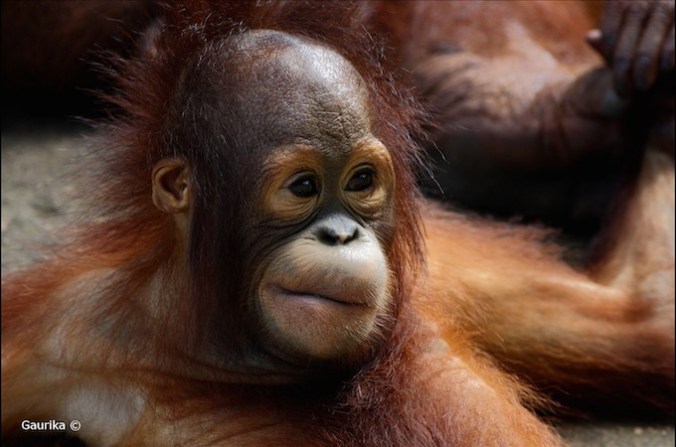
Logging generally does not come high on our priority list for inspirational stories, but we are nothing if not open to new ideas (thanks to Conservation for keeping up us apprised of encouraging surprises), especially when camera traps are involved to verify the facts:
ORANGUTANS MIGHT SURVIVE SUSTAINABLE LOGGING
Like for all of its great ape cousins, the rise of Homo sapiens has not been pleasant for the Bornean orangutan, Pongo pygmaeus. The endangered “red ape,” found only in Borneo, is threatened by the continuing loss of its forest home. Hectare after hectare of primary forest is being lost either to logging or to palm oil plantations. Continue reading
We Will Cheer This Until Completion

The proposed marine reserves around the South Sandwich Islands, Ascension and Pitcairn Islands would protect rare and threatened marine life. Photograph: Matthias Graben/Alamy
We write about marine reserves whenever we hear of a new initiative, and try to keep up with the progress of those as we can. The Guardian is reporting here on a new one; if Helena is in, we are in to support this as we can, and will post updates as available:
Conservationists call for UK to create world’s largest marine reserve
Three proposed reserves in UK waters around the Pitcairn Islands in the Pacific, and Ascension Island and South Sandwich Islands in the Atlantic, would more than double the size of the world’s existing marine protected areas
Pressure is mounting on the UK government and opposition parties to commit to creating at least one massive marine reserve in the Pacific or Atlantic to protect rare and threatened whales, sharks, fish and corals ahead of the general election.
Museums, Birds, Natural History–A Few Of Our Favorite Things
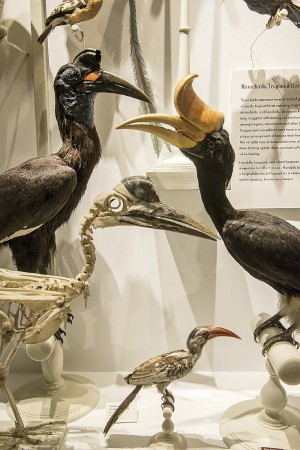
Photograph by Jim Harrison
Hornbills, including the Malaysian state bird, Buceros rhinoceros (right)
If you happen to be in Boston, and are one of our many bird-motivated readers, you may want to visit a place where birds have helped a great institution become greater:
THE GREAT MAMMAL HALL has been emblematic of the Harvard Museum of Natural History for decades. Traditionalists will be glad to know that the gorilla tirelessly pounding on his chest, the placid okapi, and the room-long whale skeleton are still in place, and birds still fill cases on the balconies that run all around the hall. But the birds are no longer solely the “Birds of North America,” as has been the case for ages. Like the University that houses them, they have become more cosmopolitan and are now “Birds of the World.”
“I’m staggered by their diversity,” said Maude Baldwin, a doctoral student
Marine Reserves, Unexpected Effects

Marine reserves have been of interest since the first months of this blog in 2011 and are still a mainstay of our incoming and outgoing newsfeeds. Much of our recent interest in the intersection between marine biology and conservation has been focused on invasive species since 2013, due to the super series penned by Phil Karp, most recently added to last week. Thanks to Jason G. Goldman and Conservation for this summary of a special topic within this intersection:
Most marine reserves are optimized for reef fish. These are fish that are born, live, reproduce, and ultimately die in a small area – sometimes on just a single reef. Where there is connectivity across a large area, it’s usually while the fish is in its larval stage. Once it matures, it stays put.
It’s a fitting strategy for conserving fish that live on coral reefs, rocky reefs, or in kelp forests, but does it do much to help those species that are more migratory? These are animals, like the Gulf of Mexico’s gag grouper, that spend their childhoods in one place, a nursery habitat like a mangrove, estuary, or kelp forest, and then migrate to live out their adult years in an adult habitat, like a reef or along the continental shelf. Continue reading
Beer, Craftily Crafted

Water samples at the Clean Water Services brewing competition last year used to compare their high-purity water to other local sources of water.
/Courtesy of Clean Water Services
When we previously wrote about artisanal beer and it’s most precious ingredient, water, we thought that the New Belgium Brewery was an outlier of alchemy. But thanks to the NPR team at the Salt, we hear this forward thinking form of recycling is more common than we thought.
Clean Water Services of Hillsboro says it has an advanced treatment process that can turn sewage into drinking water. The company, which runs four wastewater treatment plants in the Portland metro area, wants to show off its “high-purity” system by turning recycled wastewater into beer.
Clean Water Services has asked the state for permission to give its water to a group of home brewers. The Oregon Brew Crew would make small batches of beer to be served at events – not sold at a brewery.
But as of now, the state of Oregon doesn’t technically allow anyone to drink wastewater, no matter how pure it is.
The Oregon Health Authority has approved the company’s request for the beer project. But the Oregon Environmental Quality Commission will also have to sign off on it before anyone serves a beer made from recycled sewage.
Eat a Lionfish, Save a Reef – Markets and Menus to the Rescue
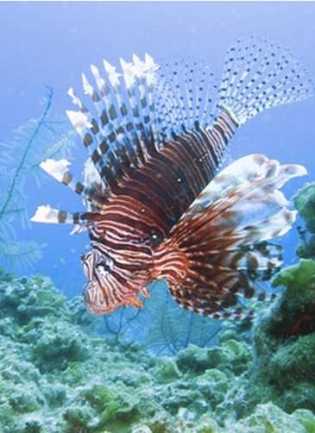
photo credit: Reef.org
At the risk of back-patting and preaching to the converted, it’s heartening to connect with others in the world community calling attention to and making efforts toward education and action against invasive species.
We thank the contributors of Conserve Fewell for introducing themselves to us!
As many of you who follow this blog know, invasive species can have devastating impacts on local economies and wipe out endemic wildlife populations. Scott Cameron a frequent blogger here at ConserveFewell has established a new coalition devoted to reducing the risks and economic costs from invasive species, RRISC.
The lionfish is one of those perfectkillers, introduced by aquarium enthusiasts into places it doesn’t belong and wreaking havoc on native fish populations and decimating reefs. Continue reading
India Tiger Census Shows Promise For The Future
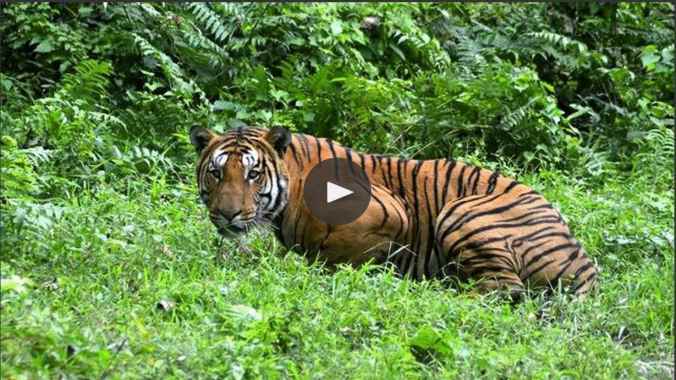
The Guardian‘s video shorts, covering current news that sometimes calls for moving images, shares this recent surprise finding from India:
India’s 2014 tiger census finds the country is now home to 2,226 tigers, making up 70% of the world’s population. The figure increased by 30% in three years despite threats of poaching and habitat loss. The World Wildlife Foundation say the world has lost 97% of its tiger population in just over a century Continue reading
Panthers In Man’s Habitat

And in other “nature sometimes solves man-made problems” news to complement today’s editorial from the Guardian, we thank Conservation for their daily summaries of important environmental science news:
MOUNTAIN LIONS SURVIVE NEAR CITIES, BUT AT WHAT COST?
The samango monkeys living near South Africa’s Lajuma Research Centre have learned that they can rely on humans as lookouts while they forage for food. The monkeys have learned that if humans are around, then they’re probably safe from leopards. When left alone, the monkeys spend less time foraging for food and more time scanning their surroundings to avoid becoming someone else’s dinner. The mountain lions of California have a different tale to tell. Continue reading
Let Nature Do Its Own Work

The Pine Marten, once common in the UK, is a natural predator of the grey squirrel and has successfully reduced their numbers in Ireland. Photograph: Alamy
Not every problem in the natural world has a solution, let alone a simple one; and there is always that law of unintended consequences, but we like the way this proposal sounds as an alternative to other forms of eradication:
Is there anything more stupid than the government’s plan to kill grey squirrels?
I ask not because I believe – as Animal Aid does – that grey squirrels are harmless. Far from it: they have eliminated red squirrels from most of Britain since their introduction by Victorian landowners, and are now doing the same thing in parts of the continent. By destroying young trees, they also make the establishment of new woodland almost impossible in many places. As someone who believes there should be many more trees in this country, I see that as a problem. A big one.
No, I oppose the cull for two reasons. The first is that it’s a total waste of time and money. Here’s what scientists who have studied such programmes have to say: Continue reading
When New Roads Signal Nothing But Danger Ahead
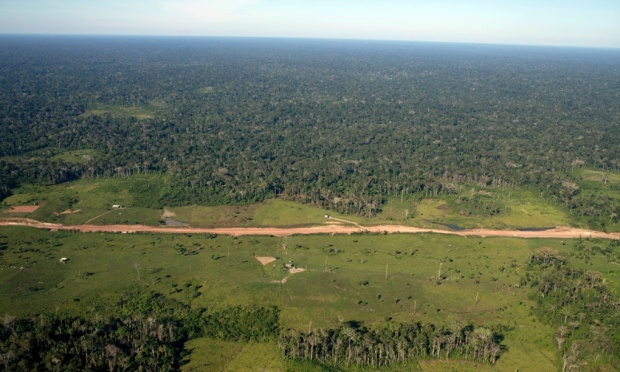
A newly constructed road goes through the Amazon rainforest outside Rio Branco, the capital of Acre province, Brazil. For every 40 meters or road created, around 600 sq km of forest is lost. Photograph: Per-Anders Pettersson/Corbis
Thanks to the Guardian for keeping us up to date with news, no matter how dismal, which in this case raises red flags about the future of our earth’s lungs:
Roads are encroaching deeper into the Amazon rainforest, study says
Oil and gas access roads in western Amazon could open up ‘Pandora’s box’ of environmental impacts
Oil and gas roads are encroaching deeper into the western Amazon, one of the world’s last wildernesses and biodiversity hotspots, according to a new study.
Roads across Bolivia, Colombia, Ecuador, Peru and western Brazil could open up a ‘Pandora’s box’ of negative environmental impacts and trigger new deforestation fronts, the study published in Environmental Research Letters finds.
“The hydrocarbon frontier keeps pushing deeper into the Amazon and there needs to be a strategic plan for how future development takes place in regards to roads,” said the report’s lead author, Matt Finer, of the Amazon Conservation Association.
Fairer Trade Pact, In The Interest Of Wildlife
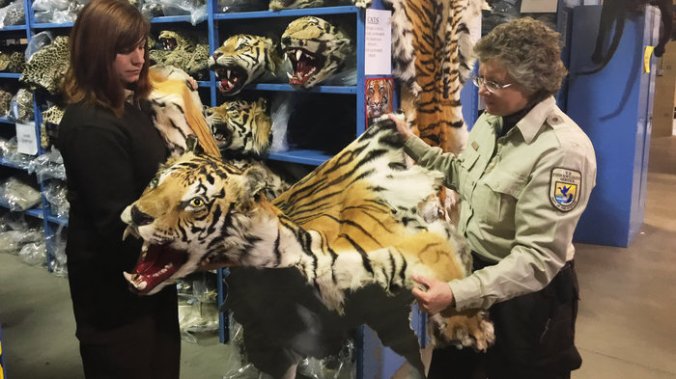
Coleen Schaefer (left) and Doni Sprague display a tiger pelt that was confiscated and is being stored at the National Eagle and Wildlife Repository on the outskirts of Denver. Some 1.5 million items are being held at the facility. The Trans-Pacific Partnership, which is still under negotiation, would punish wildlife trafficking. Jackie Northam/NPR
Thanks to National Public Radio (USA) for this story, which has nothing pleasant about it but which signals a positively determined approach to do something substantive about this tragic scourge:
Tiger Skins And Rhino Horns: Can A Trade Deal Halt The Trafficking?
If you want a sobering look at the scale of wildlife trafficking, just visit the National Eagle and Wildlife Repository on the outskirts of Denver. In the middle of a national reserve is a cavernous warehouse stuffed with the remains of 1.5 million animals, whole and in parts.
They range from taxidermied polar bears to tiny sea horses turned into key chains. An area devoted to elephants is framed by a pair of enormous tusks. Continue reading
Seeing The Forest Through The Concrete Jungle

Shutterstock, Oxygen64
Thanks to Dan Levitan for his ever-punchy summaries of important environmental science stories in Conservation:
IS THERE AN OPTIMAL URBANIZATION STRATEGY?
Cities are going to get bigger. With more than half the world now living in urban areas, and that percentage growing steadily, that means the concrete and steel will have to stretch out into areas that are currently forest and farm and grass. But just letting that process happen without a plan is likely to be a very bad idea.
A study published in the journal Landscape and Urban Planning simulated the urbanization process in the Piedmont region of North Carolina out to 2032. The question the authors posed was, essentially, what land will suffer in favor of the ever-growing city? Continue reading
Please Do The Needful

An Indian girl stands near a kite with portraits of India’s Prime Minister Narendra Modi and US President Barack Obama, displayed for sale at a shop ahead of the Hindu festival of Makar Sankranti, also knowns as kite festival, in Hyderabad, India, 12 January 2015. Photograph: Mahesh Kumar A./AP
Down here in Kerala the air is perfectly clean, and the biodiversity hotspot of the Western Ghats may spoil us into thinking all is well with the environment; but it is not. And the meeting of these two heads of state could do something substantive about it. We hope they do (the needful, as they say in India):
…“The co-operation on clean energy and climate change is critically important,” Ben Rhodes, the deputy national security adviser, told a conference call with reporters.
America is hoping to persuade India, one of the world’s biggest emitters, to commit to an ambitious post-2020 plan for reining in its greenhouse gas emissions ahead of the international climate change meeting in Paris this December. Continue reading
Expedition Update

Expedition Group – From L to R: Seth, Justin, Bobo, no name donkey, John. Photo credit: Dango, a friendly local
We’re back from a three day and two night excursion into Cockpit Country along the Troy-Windsor trail. We went out with Bobo and his donkey with no name, and made it what we think added up to about twelve miles down the old, overgrown trail. Several times we had to chop through fallen trees that the donkey couldn’t go around or over, and this took up quite a bit of our time.

Photo of rotten tree we cleared by John
Eventually we hit a patch that would have taken a full day to clear so we left the donkey behind with the idea of setting out for a few hours and then coming back. Continue reading
A Reflection On My Summer In Kerala
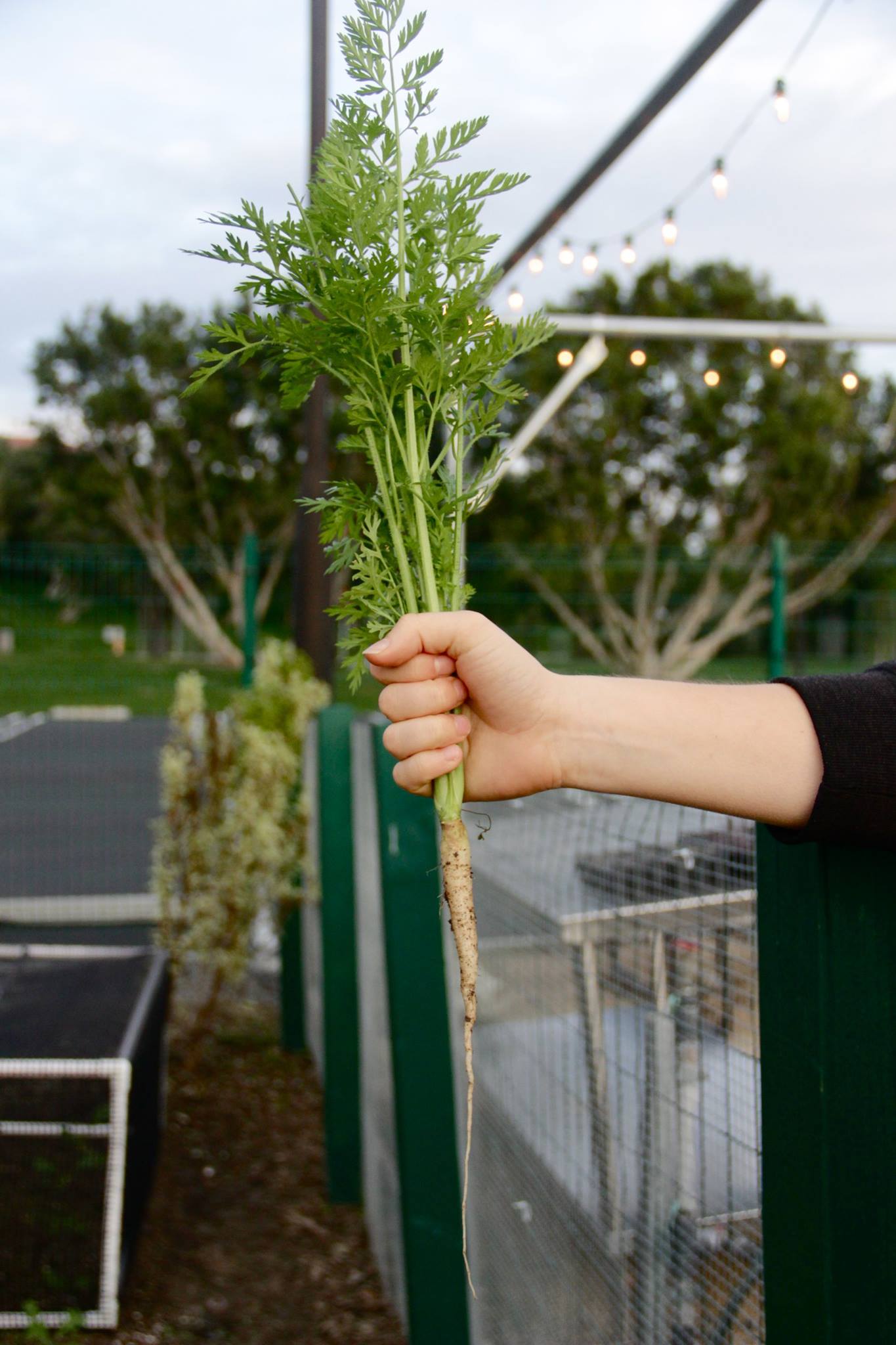
Soka Instructional Garden, photo courtesy of Nina Boutin
It has been a little over 4 months since I finished my internship, which has given me a lot of time to integrate and reflect on what I learned at Raxa Collective. I spent my first month in Thekkady at Cardamom County and my second month in Cochin at Spice Harbour. I am deeply grateful for this experience because it has informed my personal growth and career path in ways that are hard to articulate, but- I will try.
The month before coming to India, I walked part of the Camino de Santiago, a pilgrimage in Spain. If that wasn’t exhausting enough, I promptly went to India, and when I got to Raxa Collective, I hit the ground running, trying to figure out how I could best be of service and learn as much as possible. I expected for it to be difficult, but I didn’t know how it would be (though I was forewarned about the monkeys).
I’m working towards an environmental studies liberal arts degree at Soka University. A liberal arts degree is interdisciplinary, therefore I’m always looking for the intersection between things people think are separate. Profit and conservation are definitely things people usually think are separate.
I got to look deeply into the way those can intersect when I interviewed Crist about the path they have taken up until now. That interview has been so valuable for me in planning a business model that incorporates environmental and cultural conservation. Now, I think I want to start a restaurant that incorporates my passion for local food, biodiversity, sustainability, agriculture, and community. Continue reading
From Cochin to the Periyar Tiger Reserve
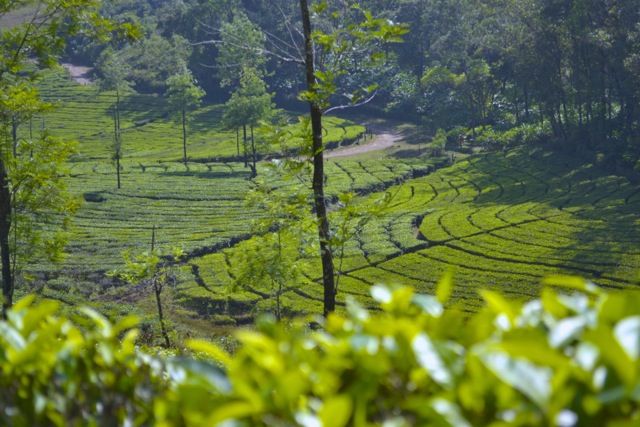
Overlooking a local Chai plantation outside Thekkady
India for the most part is spread out as one can imagine due to sheer size. In Kerala, you have the Kochin Harbor slightly west of the Cochi airport, the Backwaters to the south and to the east you have the third major attraction, the Periyar Tiger Reserve. About a three hour drive outside Cochi, one begins to see the change from the metropolitan to the rural “farmer lifestyle” that is popular in Thekkady. Local farmers mainly specialize in Cardamom, coffee and Chai or tea. However, the most noticeable of these are the Chai plantations which add a striking green layered look to the mountains (especially in the dryer months).
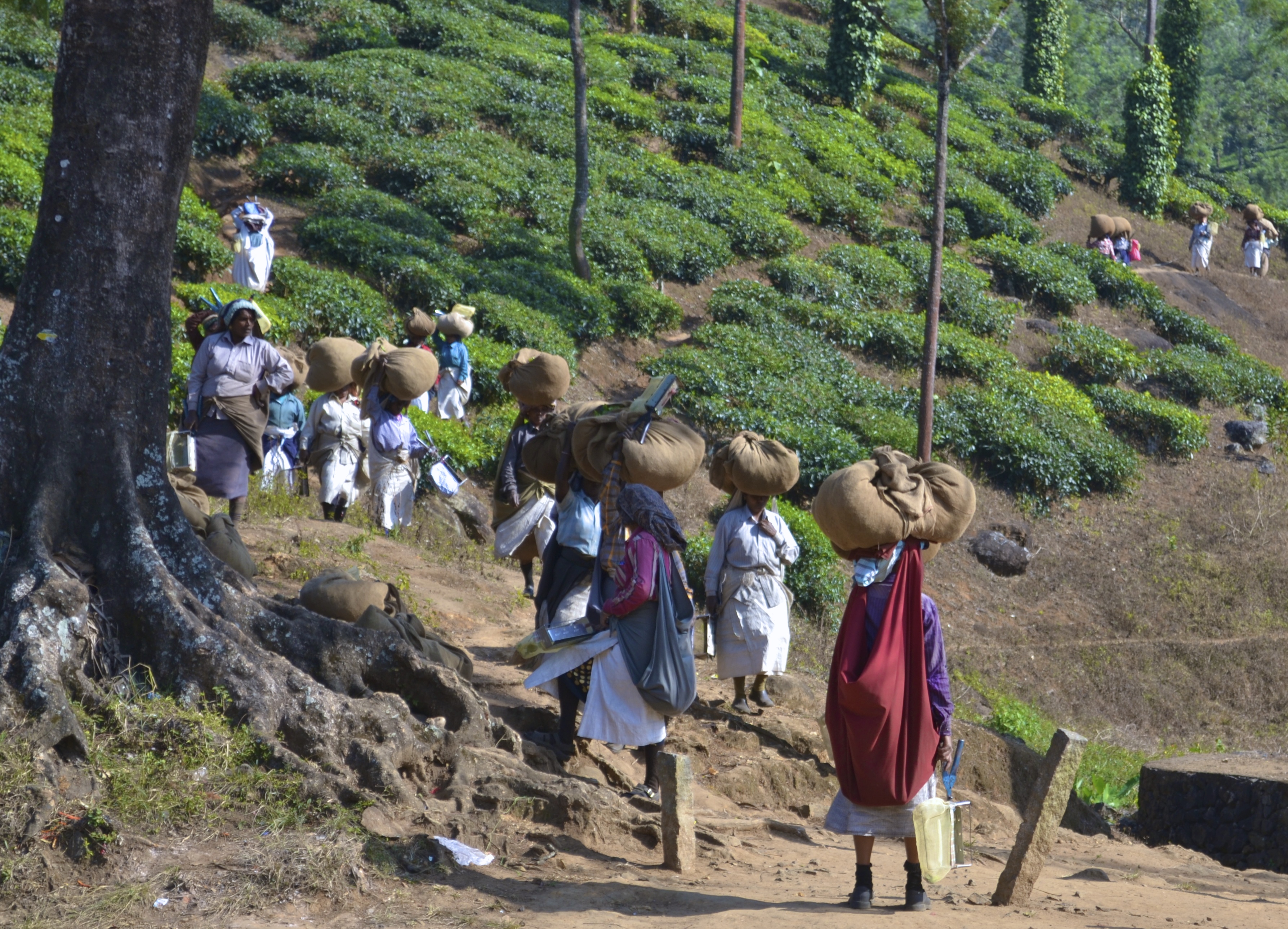
Local woman carrying bundled up Chai
The road winds up, down and around these plantations, giving great perspective and unique photo opportunities around every corner. Historically, women are the ones who harvest the top layer of leaves from these bushes. The leaves are collected into sacks and then transported.
Cardamom County Hotel, located across the road from the tiger reserve offers very comfortable and affordable rooms and a great local Indian (specifically Keralan) cuisine. Continue reading
The Ecological Health Of Oceans In Dire Need Of Support
The news that is fit to print, for better or worse as it impacts our mood and our sense of hope (or sense of doom on occasion), includes this review of the current best knowledge on marine ecosystems by one of our favorite science writers:
Ocean Life Faces Mass Extinction, Study Says
Scientists find what they say are clear signs that humans are beginning to damage oceans on a catastrophic scale, but there is still time to preserve their ecological health.
Recycling Nature’s Leftovers, A Puzzle
Thanks, as always, to Conservation for the summary of important scientific findings:
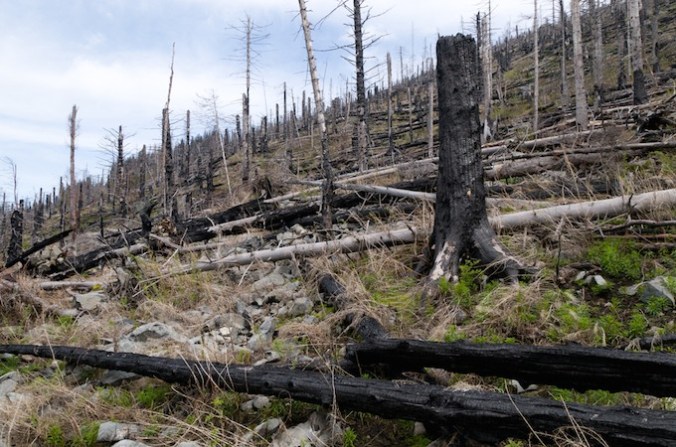
DOES SALVAGE LOGGING MAKE THINGS BETTER OR WORSE?
When a serious wildfire rips through a forest, it has a tendency to kill nearly all the trees in its path. Then come the logging companies. On one hand, to log a burned forest makes a good deal of sense. Some of the timber is still useful, and it’s a way to derive some economic benefit from a landscape that’s otherwise devastated. The process, called “salvage” logging, typically operates in two phases. In the first phase, machines called “feller-bunchers” come through, cut down the dead trees, and pile them into bunches. In the second phase, machines called “skidders” are brought in. Their function is to take those piles of felled trees and cart them back down the mountain. Continue reading
Avian Odyssey
As Seth and his team are in flight for their odyssey in search of the golden swallow, it seems fitting that we come across the stories of epic avian journeys. Just about a year ago we posted about the bar-tailed godwit, and it seems the species has some stiff competition in the semipalmated sandpiper.
Scientists from the Manomet Center for Conservation Sciences recovered data from a geolocator tagged sandpiper from sub-Arctic Coats Island revealing that the bird flew over 10,000 miles in the past year, including a remarkable six day, 3,300-mile nonstop flight across the Atlantic Ocean. Continue reading
 Organikos