“Tuf Voyaging” and Biological Controls

Book cover by David Willson for Baen Books.

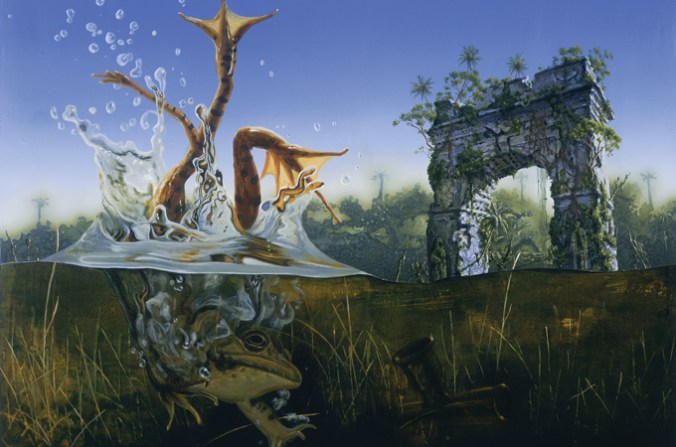
Six or seven years ago, I read a relatively little known science fiction novel called Tuf Voyaging, written by an author extremely well known for his fantasy writing: George R.R. Martin. The book is actually a collection of short stories that had originally been published over the course of several years, and most of the stories follow the adventures of Haviland Tuf. That’s about as much as I can say without spoiling anything, except for the purposes of this post I do need to mention that quite a few of the stories in the novel are about ecological engineering and the introduction of biological controls to help solve different planets’ problems.

Even if you don’t like the more recently popular fiction by Martin (A Song of Ice and Fire), I would recommend Tuf Voyaging just for its humor and commentary on environmentalism. The stories focused on human (or at least humanoid) interaction with–and often mismanagement of–nature are thought-provoking and reminiscent of certain aspects of Frank Herbert’s Dune. And if you do enjoy Martin’s writing, then this will be a cool opportunity to Continue reading

A Book To Gift The Bird-Lovers In Your Life

raffin_birdsofpandemonium_hc_jkt_rgb_hr-updated

We first heard about it here. This book may be the perfect solution to your next gift-giving occasion for the bird lover(s) in your life. We are still on alert and concerned about Amazon, so if you do not have find this in your local bookstore, please place your order somewhere that supports independent booksellers, or perhaps National Public Radio (USA) for this book. The publisher has this to say about the book:

“A remarkable book. Reading about the birds of Pandemonium will make you laugh and cry; it will make you see more clearly the need to take care of our planet; and it will confirm that one person with a passion can make a difference.” —Jeff Corwin, nature conservationist Continue reading

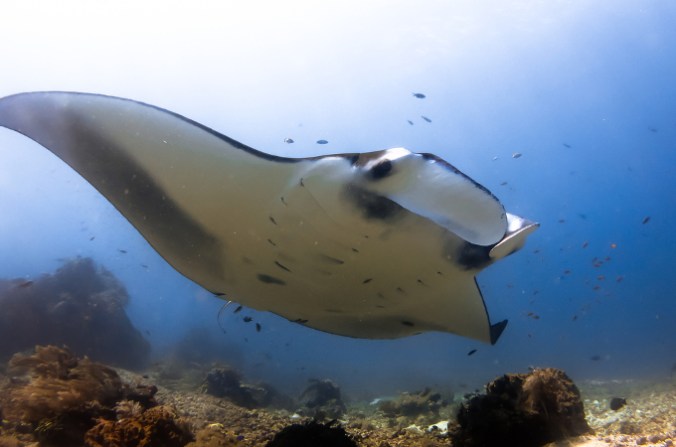
Manta Matching

mantaray

Click the image above or the title below to go to the article:

WANDERING MANTA RAYS HIGHLIGHT GAPS IN MARINE CONSERVATION

Earlier this year we showcased a study showing how reef fish don’t exactly pay much attention to where humans draw conservation lines. Just because a Marine Protected Area, or MPA, exists, doesn’t mean a species we might be keen on saving will stay inside its borders. Manta rays, a charismatic and threatened group of animals, are now showing us how understanding and targeting certain species may help improve ocean conservation.

Continue reading

Bravo To Our Friends At EARTH, Thanks To Our Friends At Whole Foods

141029Bananas-300x194

Bananas from EARTH University are available at over 400 Whole Foods locations in Canada and the U.S. (Courtesy of EARTH University)

The Tico Times, in Costa Rica, reports on the the growth of sustainably grown banana cultivation, and their distribution in North America:

The supermarket chain’s new “Responsibly Grown” produce rating system was launched earlier in October and divides fruits, flowers and vegetables into three categories: Good, Better and Best, based on suppliers’ farming practices.

Continue reading

The Bat Cave, Protected

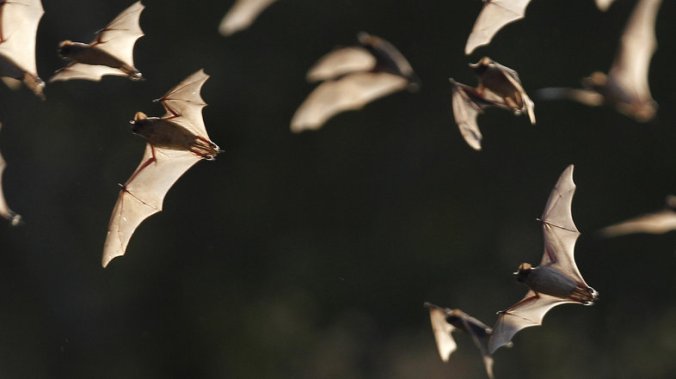
The Bracken Bat Cave outside San Antonio, Texas, is home to millions of bats. Here, a few of them emerge from the colony in 2011.

The Bracken Bat Cave outside San Antonio, Texas, is home to millions of bats. Here, a few of them emerge from the colony in 2011. Eric Gay/AP

Thanks to National Public Radio (USA) for this story on bat habitat conservation:

Down a narrow gravel drive and a short walk past cactus and scrub cedars outside of San Antonio, Texas, is a gaping, dark cave mouth, 60 feet wide, nestled at the bottom of a steep hill.

This is the Bracken Bat Cave. Each night at 7:30, millions of bats spiral out of the deep cave and streak off toward the darkening southern sky.

Thanks to a $20 million deal signed Friday by San Antonio, conservation groups and a local developer, the night sky around the cave will stay dark, and the mother and baby bats inside will have a buffer between them and the hazards of city sprawl. Continue reading

End The Exotic Pet Trade

31salamander-1-thumbStandard

Thanks to the New York Times‘ weekly Science section for a reminder of all the reasons why wild animals should not be traded as pets across regions of the world:

Infection That Devastates Amphibians, Already in Europe, Could Spread to U.S.

Fire-bellied newts imported from Asia through the pet trade may be spreading a fungal disease that is killing off fire salamanders in Europe, according to researchers.

Kerala’s Tigers, And Protectors

DSCN2857_JPG_2171199f

Tribal conservationist Babu: School dropout launches a website with info on tiger conservation in Parambikulam reserve.

The Hindu carries a story, close to our hearts and activities, about a heroic member of a local indigenous community devoted to conservation for the tiger and all it depends on:

He may be the answer to the debate on tiger versus tribal, where tiger conservation and livelihood of forest-dwelling tribespeople fail to find a common ground. A school dropout from the Sunkam tribal colony inside the Parambikulam tiger reserve, he has designed a website to bring to the outside world the biodiversity of the reserve and highlight its tiger conservation efforts. Continue reading

Feral, Reviewed

washington-square

Thanks to Conservation for this review of a book I first started hearing about last year, and now have even more motivation to read:

ADD A FEW SPECIES. PULL DOWN THE FENCES. STEP BACK.

Brandom Keim reviews George Monbiot’s Feral

The early twenty-first century is a soul-searching moment for conservation. With each new report of vanishing species and dwindling biodiversity, the last century’s great successes grow distant. Fundamental ideals and assumptions, in particular our cherished notions of wilderness, often feel ill-fitted to a crowded planet of more than 7 billion people. Continue reading

Profits, Privileges, Environmental Destruction

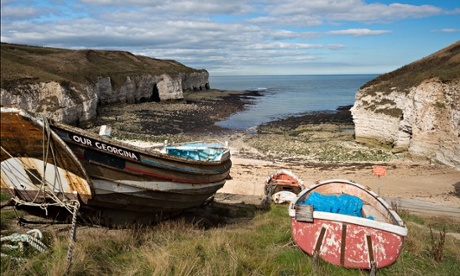
Mombiot blog on sea protection : Fishing boats near the beach at Flamborough head Yorkshire

Fishing boats near the beach at North Landing, Flamborough Head, on the Yorkshire coast. Falmborough Head is home to one of the UK’s three ‘no take’ zones – that in total cover just 5 sq km. Photograph: Paul Richardson/Alamy

The excellent Guardian editorialist, whom we have linked to more than once, strikes again:

Ripping up the sea floor on behalf of royal profits

George Monbiot: Even the pathetic laws protecting marine life in this country are instantly swept aside in response to lobbying by Prince Charles’s tenants

A few days ago, I visited the Flamborough Head “no take zone”, one of the UK’s three areas in which commercial fishing is prohibited.

Here marine life is allowed to proliferate, without being menaced by trawlers, scallop dredgers, drift nets, pots and all the other devices for rounding it up, some of which also rip the seabed to shreds. A reef of soft corals, mussels, razorfish and other species has begun to form, in which plaice and cod, crabs and lobsters can shelter, unmolested by exploitation. Fantastic, isn’t it?

Well curb your enthusiasm. Continue reading

Jaguar, Conservation, Book Time

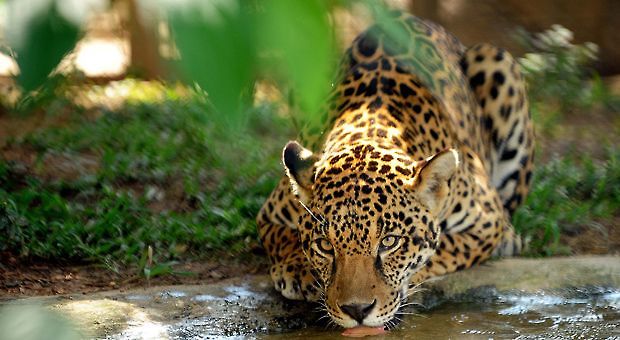
A captive jaguar drinks water in an enclosure at Petro Velho Farm, a refuge of the non-governmental organization NEX in Corumba de Goias, about 80 km from Brasilia, on January 11, 2013. EVARISTO SA/AFP/Getty Images

A captive jaguar drinks water in an enclosure at Petro Velho Farm, a refuge of the non-governmental organization NEX in Corumba de Goias, about 80 km from Brasilia, on January 11, 2013. EVARISTO SA/AFP/Getty Images

Listening to this interview it is just enough to clue you in to how Alan Rabinowitz has touched the lives of so many with the work he has done on behalf of jaguars and particularly conservation of their habitat:

Jaguars are the world’s third-largest wild cat – after tigers and lions. They have distinctive black rosettes on their fur and can weigh up to 250 pounds. Jaguars have been eradicated from 40 percent of their historic range. Today they live along a corridor from Argentina to Mexico. Their future is threatened by illegal hunting, deforestation and a loss of prey. One of the world’s leading big cat experts is responsible for creating a jaguar preserve in Central America, the first of its kind. In a new book, he shares why he’s committed to giving a voice to jaguars and how they helped him find his own voice.

Continue reading

Birds, Gastronomy, Cultural Heritage–Is It Entrepreneurial Conservation?

ORTOLAN-articleLarge

Michel Guérard, left, the chef of Les Prés d’Eugénie, and Jean Coussau, the chef of Relais de la Poste, are among a handful of chefs trying to bring the ortolan back to the restaurant menu in France. Credit Ulrich Lebeuf/M.Y.O.P for The New York Times

We do not link often to the countless stories of rhino populations being decimated due to poaching, not because they are depressing, which they are; but because there have been no breakthrough entrepreneurial conservation stories related to that tragedy. Ditto for elephants and other charismatic megafauna–overwhelmingly depressing and no solution in sight, with the rare glimmer of hope.

So, when I see an article like the one below, even though it focuses on charismatic minifauna rather than megafauna, I take note. We pay a disproportionate amount of attention to birds on this platform for reasons that should be clear to regular readers of these pages, so for now a question to all ornithologically advantaged readers: is the reference to the unpublished Canadian study at the end of the article real or bogus? If the latter, please share your knowledge through our comment section and we will provide the publisher a crowd-sourced, fact-checked update to the article.

This is one of the exceptional articles for which we provide full text because of its urgent environmental value, with the expectation that you will click through to the source to give proper credit, with thanks to the New York Times:

“The bird is absolutely delicious,” said Mr. Guérard, who recalled preparing ortolans for Mitterrand and his successor, Jacques Chirac, back when it was legal. (Mitterrand was said to linger over two ortolans in his last supper before his death in 1996, also consuming three dozen oysters, foie gras and capon.)

“It is enveloped in fat that tastes subtly like hazelnut,” Mr. Guérard said, “and to eat the flesh, the fat and its little bones hot, all together, is like being taken to another dimension.”

But the campaign has provoked environmentalists, who accuse the chefs of engaging in a publicity stunt to promote what they say is an archaic custom that will further endanger the bird, and that treats the ortolan inhumanely before it is killed. Continue reading

Plastic Bags Going, Going, Gone

Marks and Spencer carrier bag

Marks and Spencer is one of the retailers that has agreed to donate the extra money from carrier bag sales to good causes in Scotland. Photograph: Stefan Rousseau/PA

Small local moves here and there add up, on occasion, to major change. We are amazed to learn of the scale of the success in the Celtic region with the program to ensure consumers and vendors share in the cost of the environmental mess that plastic bags create. Thanks to the Guardian for this coverage:

Scottish shops start charging for bags

Charge of at least 5p a carrier bag introduced in bid to emulate 70% fall in usage in Wales and Northern Ireland

Scotland is joining Wales and Northern Ireland in charging shoppers for carrier bags , in an attempt to encourage sustainable behaviour among shoppers. Last year, shoppers at Scotland’s main supermarket chains alone used 800m single-use bags, most of which end up as litter, landfill or polluting the country’s marine and natural environments.

Continue reading

Biophilia By Any Other Name

Screen Shot 2014-10-19 at 11.38.13 AM

Thanks to Conservation for their regular daily feature, summarizing important research findings related to the environment, and for reminding us in the story below of the great scientist E.O. Wilson, who might note that the findings below are essentially a reflection of his ideas on biophilia. Click on the banner above to go to a new resource that we have just discovered that honors the scientist, and read on for the scientific findings that demonstrate his genius observation even without referencing him:

We’ve been hearing for a while now how simply being around green space more can be beneficial. Early this year, for example, a study found that moving to areas with more trees and vegetation led to an immediate and prolonged improvement in mental health. Just looking at a tree every now and then seems to give us all a boost. Continue reading

Book Covers, Storytelling, And The Mind’s Eye

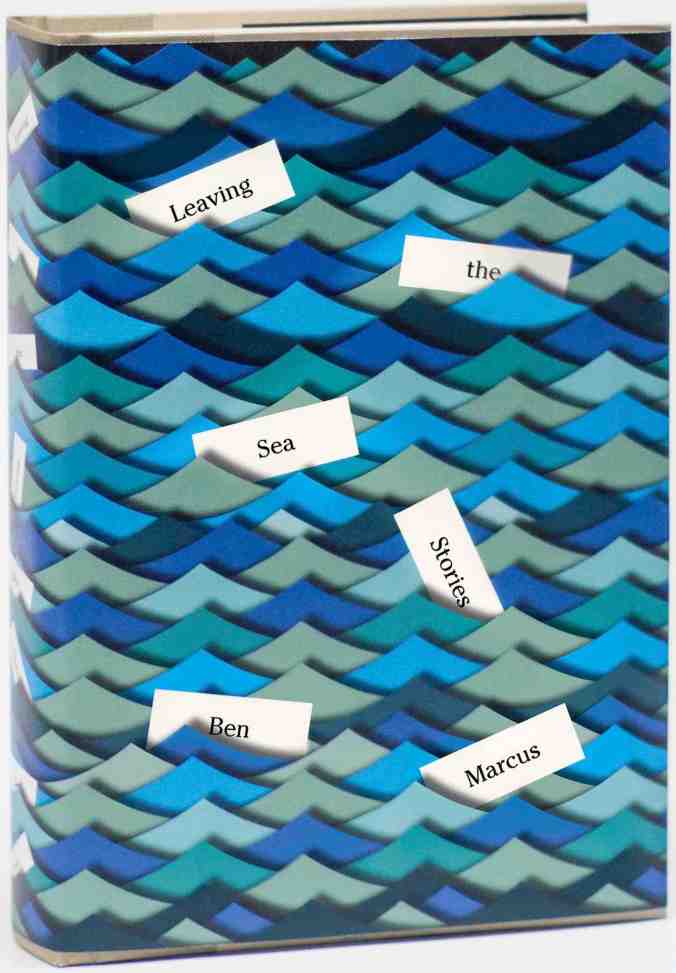
Author Ben Marcus described Peter Mendelsund's cover for his story collection Leaving the Sea as "sumptuous, playful and gorgeous to look at."

Author Ben Marcus described Peter Mendelsund’s cover for his story collection Leaving the Sea as “sumptuous, playful and gorgeous to look at.”

We are most of the time sharing stories, told by our own contributors or chosen by them from other sources, that say something relevant about community, about collaboration, and/or about conservation.  And many of us are involved day to day in hospitality that offers authentic experiences of immersion in “faraway places” relative to where the traveler comes from. We frequently share stories about books and libraries because they are the building blocks of preparation for appreciating what one finds on a long journey away from the familiar. So, this story about a book cover designer was destined to capture our attention:

Peter Mendelsund estimates he’s designed “somewhere between 600 and 1,000 book covers,” ranging from Crime and Punishment to Girl with the Dragon Tattoo. But the self-taught, sought-after designer says he spends a lot of time reading, too. Continue reading

Reducing Demand For The Irreplacable

A black dehorned rhinoceros and its calf at a Johannesburg reserve. Photograph: Stephane De Sakutin/AFP/Getty Images

A black dehorned rhinoceros and its calf at a Johannesburg reserve. Photograph: Stephane De Sakutin/AFP/Getty Images

From the “glimmer of hope” category of news, thanks to the Guardian‘s ongoing coverage of vital environmental issues, we find this story simultaneously depressing and hopeful, somehow:

Rhino horn demand in Vietnam drops by more than 33% in one year

Information campaign successfully changes minds of people who think rhino horn has medicinal value

Efforts to curb the deadly trade in rhino horn appear to be gaining traction, with a poll finding that demand for the animal part in Vietnam has dropped by more than a third over the past year.

After a year-long public information campaign in Vietnam, only 2.6% of people in the Asian country now continue to buy and use rhino horn, a decrease of 38%. Continue reading

Listen When Nature Is Speaking

Edward Norton provided the voice for the soil in Conservation International's Nature is Speaking campaign. Credit Conservation International

Edward Norton provided the voice for the soil in Conservation International’s Nature is Speaking campaign. Credit Conservation International

Dot Earth, once upon a time, was a daily source of amazing material, until it seemed to disappear, and then again it reappeared. Ed Norton gets our attention any time:

Nature Talks Back, and Sounds a Lot like Edward Norton

Continue reading

Bee Friendlier

Screen Shot 2014-10-13 at 12.46.44 PM

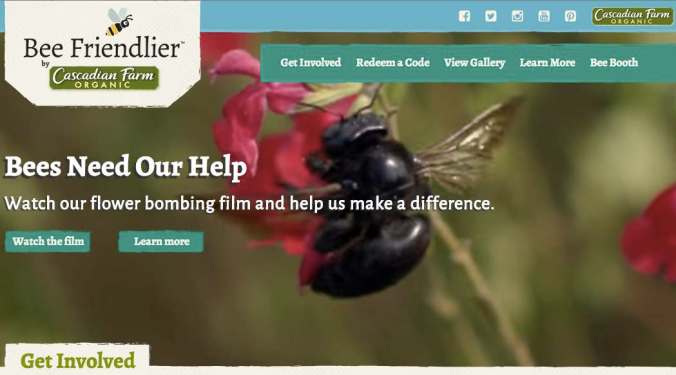
Our otherwise impenetrable fortress, resisting commercial interests everywhere, sometimes lets one over the wall.  For worthy causes only. Good stuff here, we think, especially learning about The Xerces Society through this company’s initiative:

Our Commitment

At Cascadian Farm, we’ve been farming organically since 1972, and we know how essential bees are to the environment and food supply. In fact, almost all of the food that we make depends on bees. That’s why we’re spearheading Bee Friendlier, an education and support program to help bees thrive. It’s also why we’re donating $0.50, up to $150,000, for every code redeemed online before December 31, 2014, to help support bee research and habitat creation… Continue reading

Watch Your Pump Jockey

shutterstock.com

shutterstock.com

Conservation‘s daily summary of an intriguing scientific finding captures our attention at least one time per week. Which is about how often, on average, some of us fill the gas tank of our vehicles. And we learn that the fuel lost during those visits can add up to massive waste. Which means, this should interest you:

First, you pull into the gas station. You open the cover to the fuel tank, unscrew the cap, insert the nozzle, and pump away. Once you’ve filled up your tank, you dislodge the nozzle and return it to its starting position. But in between – perhaps without even noticing – you spilled a few drops of gasoline onto the concrete. You were as careful as possible, and it was just a tiny bit wasted…right? A few drops here and there aren’t a big deal, are they?

Well, it might be. That’s according to new research published this week in the Journal of Contaminant Hydrology. Continue reading

Entrepreneurial Conservation, Macro Version

ILLUSTRATION BY CHRISTOPH NIEMANN

ILLUSTRATION BY CHRISTOPH NIEMANN

In the current issue of the New Yorker, the excellent “explainer in brief” of economic phenomena provides a macro equivalent example of what we have referred to as entrepreneurial conservation. Instead of just a sampling of the text we provide the full story here, per an occasional exception we make for important environment-related stories, but please click through to the source to give proper attribution:

During the recent U.N. Climate Summit, it was hard not to think of the quip, attributed to Charles Dudley Warner, “Everyone complains about the weather, but no one does anything about it.” A parade of global leaders (including Barack Obama) made all the right noises, but there was little action. So it was notable when Norway announced a deal with Liberia: Norway will give Liberia up to a hundred and fifty million dollars in aid, in exchange for which Liberia will work to stop the rapid destruction of its trees.

Continue reading

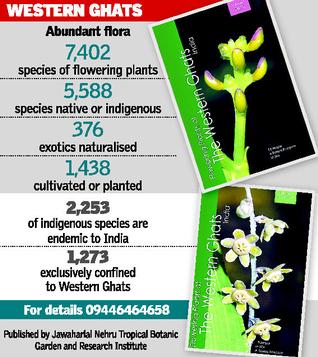
Flowering Plants Of The Western Ghats

05tv_western_ghat__2140103e

For flower lovers, ecologists, and concerned citizens everywhere, important news in today’s Hindu:

As a global biodiversity hotspot and a world heritage site, the Western Ghats is a magnet for conservationists, nature lovers, scientists and researchers hoping to delve into the secrets of its abundant flora and fauna. But despite decades of study by individuals and groups, an essential reference work cataloguing the rich biodiversity of the region has remained a dream.

In a bid to address this need, scientists at the Jawaharlal Nehru Tropical Botanic Garden and Research Institute (JNTBGRI) at Palode near here have come out with a comprehensive work on the flowering plants of the Western Ghats.

Published in two volumes, the 1,700-page book reveals the occurrence of a total of 7,402 species of flowering plants in the region, out of which 5,588 species are native or indigenous. Of the rest, 376 are exotics naturalised and 1,438 species are cultivated or planted as ornamentals. Continue reading