Do The Green Thing Countdown 26/29

tumblr_n2zzyyGvp21qz5g9bo1_1280

Today’s is a dark one, darker than our normal post content but in the spirit of going with the flow we link out to this poster appropriately called Extermination Workshop:

Step forward Michael Wallis, a left-field thinker and co-founder of branding agency Corke Wallis. In this satirical poster-cum-drama set in the future, he speculates on the totally ridiculous idea of standby mode, and makes us ask ourselves: “why on earth would humanity come up with such a hopeless invention?”

Michael says: “I’m supporting Green Thing and Earth Hour so that when the apocalypse comes it is at the hands of something really epic like aliens or cyborgs or giant reptiles from another dimension, not DVD players.”

Why?


Continue reading

Libraries Old And New, Big And Small, At The Core Of Communities

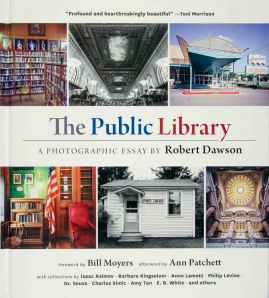
Cover_The_Public_Library_bookThis book by Robert Dawson pays attention to one of the institutions we care most about, libraries–specifically public ones. Why do we care so much about them? Because of the essential role they play in so many communities, both small and large, with regard to education and egalitarian opportunity.

Toni Morrison’s assessment of the book is that “Robert Dawson’s work is an irrefutable argument for the preservation of public libraries. His book is profound and heartbreakingly beautiful.”  From the author/photographer’s own website the text that introduces the work is a mix of promotion and fact:

This project is a photographic survey of public libraries throughout the United States featuring essays on libraries and the public commons from prominent American writers. The book The Public Library: A Photographic Essay will be published in April, 2014 by Princeton Architectural Press. ISBN 978-1-61689-217-3

Smallest library, now closed, Hartland Four Corners, Vermont

There are over 17,000 public libraries in this country. Since I began the project in 1994, I have photographed hundreds of libraries in forty-eight states. From Alaska to Florida, New England to the West Coast, the photographs reveal a vibrant, essential, yet threatened system.

For the past two centuries public libraries in America have functioned as a system of noncommercial centers that help us define what we value and what we share. The modern library in the computer age is in the midst of reinventing itself. What belongs in a library? Continue reading

Pro-Environment Posters For WWF’s March 29 Earth Hour Initiative

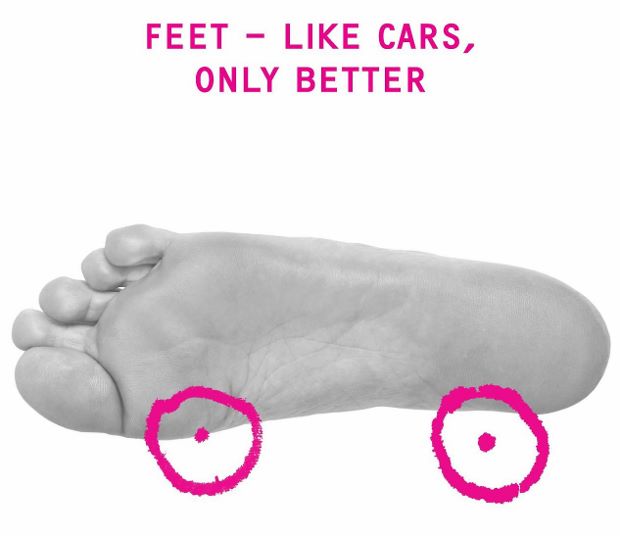
Walk the Walk by Marina Willer for 29 Posters for the Planet

Walk the Walk by Marina Willer for 29 Posters for the Planet

We appreciate collaborative efforts to raise awareness about environmental issues, especially when they come from places where the focus is not normally on conservation. Design agencies are generally designed to sell more stuff. Publishers are generally designed to use ex-trees to communicate stuff. But some designers are on the other side of the consumer behavior-influencing fence. And some publishers use those ex-trees to publicize a more tree-centric future.  Ethics sometimes prevail over ambition. Education sometimes jumps the line.

Professional communities–whether design firms, publishers, hotel companies or take your pick–all have latent collective action lurking in their futures. We hope nature and culture are the beneficiaries. Thanks in particular at this moment to publisher Phaidon, which is in itself worthy of a post on its series of environmentally-friendly books and initiatives, for bringing this initiative of design firm Pentagram to our attention:

Pentagram’s carbon free foot print

Design agency works with Do The Green Thing charity on environmentally friendly posters

The gulf between our high-consumption lifestyles and the kind of sustainable world many of us hope to inhabit is vast. Yet the changes that could take us there aren’t unthinkable, as our recent book, The World We Made, makes clear. Continue reading

If You Happen To Be In Denver

We are always on the lookout for more information about counter-intuitive relationships between various communities of outdoor enthusiasts–including those involving people with guns, bows & arrows, and fishing rods–and their collaboration with/as conservationists. An op-ed article today on the Atlantic‘s website, by Tovar Cerulli, got us thinking about posting something we would title “Hunters, Anglers, Conservationists:”

For many environmentalists, the word “hunter” suggests a mindless brute, an enemy of nature who loves guns, kills for fun, and cares nothing for biodiversity or ecological integrity. For many hunters, the word “environmentalist” suggests a self-righteous tree-hugger, an enemy of freedom who hates guns, has no respect for hunting, and imagines nature as a Disney-like fantasyland where humans should not tread.

Though these stereotypes contain grains of truth, hunters and environmentalists aren’t as separate as many imagine. The Nature Conservancy counts many hunters among its members and staff and works closely with hunting-conservation organizations. Likewise, Pheasants Forever has thousands of non-hunting members who appreciate the organization’s work on behalf of native prairie habitats, wetlands, butterflies, and clean water.

Then we clicked through his byline to see that he is affiliated with this organization that is hosting an event this weekend in Denver and decided this would make a more interesting post: Continue reading

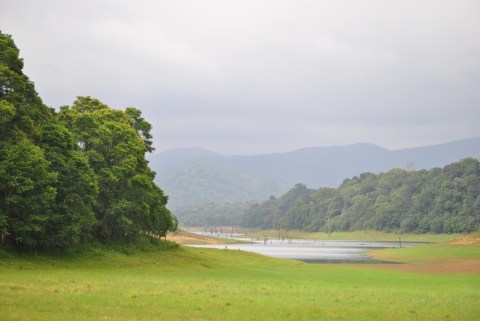
Periyar Tiger Reserve

Photo credits : Vijay Mampally

Photo credits: Vijay Mampally

The Periyar Tiger Reserve is one of the major wildlife sanctuaries in India. It is home to elephants, wild gaur, leopards, wild boar, deer, and of course tigers, in addition to over 300 species of birds, a dazzling variety of butterflies, and plenty of reptiles and amphibians. Continue reading

Community, Collaboration, And Gran Chaco Conservation

This slideshow requires JavaScript.

In about 10 minutes, this National Geographic video gives a great primer on why you should care about the conservation of one of the planet’s largest intact ecosystems, with a storyline focused on community and collaboration.

South America’s Gran Chaco region spans a complex mix of land, climates, and species. National Geographic Emerging Explorer and conservation biologist Erika Cuellar shares her passion and know-how with the people who live there to protect their natural treasure from unsustainable development.

If You Happen To Be In Muzuris

The ancient port city of Muzuris came into the spotlight in 2012 with the critically acclaimed Kochi-Muzuris Biennale, but the Muzuris Heritage Project highlights the region in a more historical context.

Located just 30 km north of Kochi in Paravur and Channamangalam, the four museums–Kerala History Museum, Lifestyle Museum, Kerala Jewish History Museum, and Jewish Lifestyle Museum–were inaugurated this Sunday.

The four museums together present a comprehensive picture of the political and cultural history and lifestyle of the region….

…The Muziris Heritage Project, spearheaded by the Tourism Department, envisaged a group of heritage and tourism plans around key historical monuments in North Paravur, Kodungalloor, Chennamangalam, Pallippuram, Mala and other areas. Continue reading

Lexicon of Sustainability

Thanks to the Public Broadcasting Service of the USA for the video above and these links to sustainability-focused terminology, in this case related to Food Waste:

Nearly 40 percent of the food we grow, distribute, put on store shelves then ultimately buy as consumers never gets eaten. It’s called food waste and people are doing something about it by gleaning, composting, and learning to eat from head to tail to eliminate waste.

Food Terms

Food waste
“Forty. That’s the percentage of food in this country that never gets eaten, or that’s grown and never comes to market. It’s the food we distribute that never reaches a destination or sits on grocery store shelves without finding a consumer. And it’s food consumers buy but never eat. “
– Douglas Gayeton, LOCAL: The New Face of Food and Farming in America Continue reading

Drought, Desalination, Drink

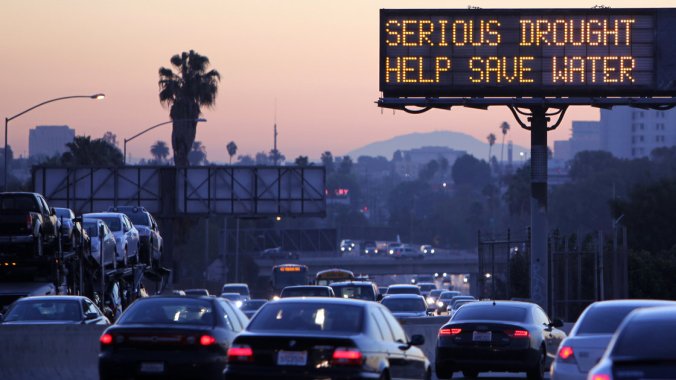
Extreme drought conditions in California have state officials looking for alternative sources of water, including desalinated ocean water. Richard Vogel/AP

Extreme drought conditions in California have state officials looking for alternative sources of water, including desalinated ocean water. Richard Vogel/AP

National Public Radio in the USA has this story, both podcast and text version, about efforts to provide drinking water to a dry, thirsty region:

California is getting some much needed rain this week, but more than two-thirds of the state is still in extreme drought conditions, and that has the state thinking about alternative ways of getting water.

On the coast in Carlsbad, Calif., construction workers are building what will be the largest seawater desalination plant in the Western Hemisphere. When finished in early 2016, it is expected to provide up to 50 million gallons of fresh drinkable water every day.

“That’s enough water for 112,000 households here in the region,” says Peter MacLaggan with Poseidon Resources, the developer of this $1 billion plant. Continue reading

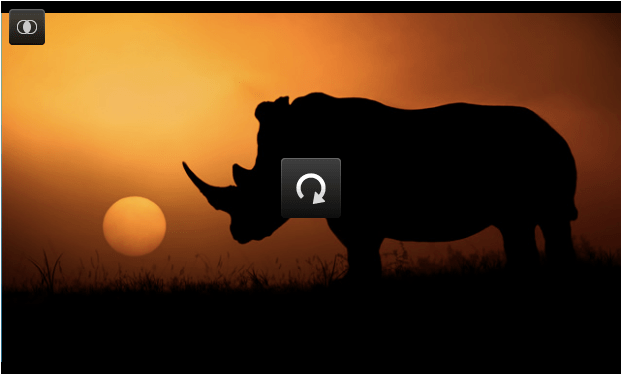
Microchipping Rhinos In Kenya

Click above to go to the video, on the Guardian‘s website courtesy of WWF:

In a dawn operation, rhinos in the Mara region of Kenya are tranquilised by rangers. A multidisciplinary team of researchers, vets and technicians take over to drill a tiny hole in the horn to insert a microchip. Another is implanted in the body and a unique pattern is put on the rhino’s ears. Microchipping, conservationists say, is essential to protect the endangered black rhinos. ‘If Kenya loses its rhinos, it will lose its heritage,’ says Robert Nedeti, species manager at WWF Kenya.

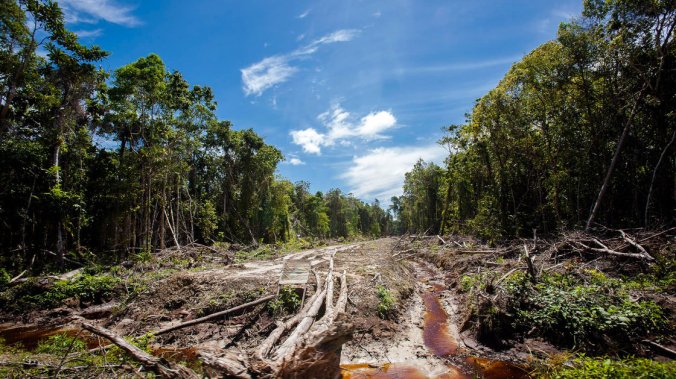
Saving Rainforest One Pop-Tart At A Time

An access road is constructed in a peatland forest being cleared for a palm oil plantation on Indonesia's Sumatra island in 2013. Chaideer. Mahyuddin/AFP/Getty Images

An access road is constructed in a peatland forest being cleared for a palm oil plantation on Indonesia’s Sumatra island in 2013. Chaideer. Mahyuddin/AFP/Getty Images

Thanks to National Public Radio in the USA for this story of palm oil, Pop-Tarts and ethics, wrapped up in the clothing of an entrepreneurial conservation case study among multinational corporations:

If you think a small shareholder can’t get the attention of the multibillion-dollar palm oil industry, think again.

Lucia von Reusner lives half a world away from the palm oil plantations in Southeast Asia that have become notorious for environmental, labor and human rights abuses.

So, how did she nudge for change? She couldn’t tell palm oil plantations in Indonesia to clean up their act. But, as a Kellogg shareholder, she figured out how to put pressure on the company to use its leverage to push for change.

Palm oil, of course, is the fat that lubricates so many of our packaged snacks today, from Pop-Tarts and Eggo waffles to soaps and other personal products. And global demand for palm oil has grown quickly.

The clear-cutting of precious forests in countries like Indonesia and Malaysia to grow the oil palm trees has been well-documented. More recently, an investigation by Bloomberg Businessweek into human rights abuses on Indonesian palm oil plantations and an Accenture analysis that described the use of child labor have raised more awareness about other unsavory realities in the industry. Continue reading

The Canopy Is A Portal

When we first met Dr. Meg Lowman last year we were already familiar with the use of tree climbing techniques for forest biology research. But the pioneer of canopy ecology includes an additional dimension to her REU (Research Experiences for Undergraduates) by acknowledging that physical mobility has little to do with being an effective field biologist. “To explore the canopy we climb ropes not trees, and in the lab we use microscopes, computers and minds, which have no limits.”

The Baker University program had been open to eight students, half of whom had ambulatory disabilities. All eight students were professionally trained to ascend into the canopy to collect moss, lichen and leaves to measure the impact of the invertebrates like tardigrades (water bears) on the habitat. Continue reading

How Many Options Does It Take To Change A Lightbulb?

(From left) Incandescent, CFL and LED light bulbs. Many people are finding that choosing the right light bulb has a steep learning curve.

(From left) Incandescent, CFL and LED light bulbs. Many people are finding that choosing the right light bulb has a steep learning curve.

From National Public Radio, an update to the ongoing knowhow required to change a lightbulb efficiently (click the image above to go to the podcast):

Buying a light bulb used to be a no-brainer. Now it’s a brain teaser; the transition to more energy-efficient lighting means choosing from a dazzling array of products.

We’ve long identified bulbs by their wattage, but that is actually a measure of electricity, not the brightness of a bulb. The amount of light a bulb generates is measured in lumens.

An incandescent 60-watt bulb, for example, gives off 800 lumens of light. And LED bulbs, which are more energy efficient than their incandescent counterparts, can deliver the same amount of light using as little as 10 watts.

The Environmental Protection Agency says that if every household replaced just one incandescent bulb with an “Energy Star”-rated LED or CFL (compact fluorescent), Americans would save close to $700 million per year in energy costs.

But with so many types of bulbs with different price points and life spans now on the market, many consumers are confused.

When we asked for your questions about light bulbs, we got an earful. So we called in Noah Horowitz, director of the Natural Resources Defense Council’s Center for Energy Efficiency, to answer your most frequently asked questions. Continue reading

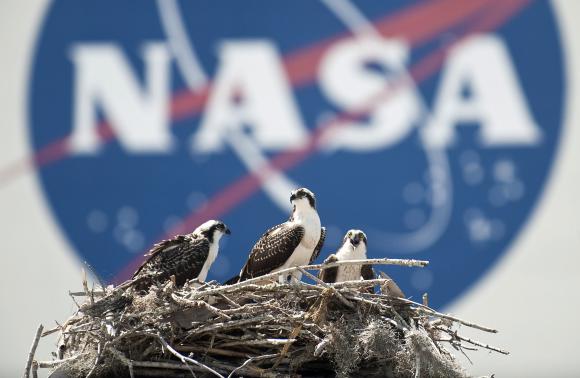
Calling On Solomon In A Birds-Versus-Science Conundrum

A family of Osprey are seen outside the NASA Kennedy Space Center Vehicle Assembly Building in Cape Canaveral, Florida in this file photo taken May 13, 2010. CREDIT: REUTERS, BILL INGALLS, NASA/HANDOUT/FILES

A family of Osprey are seen outside the NASA Kennedy Space Center Vehicle Assembly Building in Cape Canaveral, Florida in this file photo taken May 13, 2010. CREDIT: REUTERS, BILL INGALLS, NASA

Anyone who has been following Raxa Collective’s blog for more than a day is probably aware that we pay close attention to birds.  We do this because many of the places where we operate conservation-focused lodging are also exceptionally biodiverse bird habitats. Most of the travelers who visit our properties are at least interested in birds, and many are serious bird-watchers. But we also pay attention to birds for the same reason we pay attention to science in general: they are an indicator of the health of our planet and we want to both pay attention to the indicators and understand them better. Science matters. So, in general, we are NASA fans.  But the story here makes us wonder what Solomon’s wisdom might advise:

Florida’s plan to build a commercial space launch complex in a federal wildlife refuge surrounding the Kennedy Space Center drew sharp words from environmentalists and strong support from business boosters during the project’s first public hearing on Tuesday.

Advocates say the proposed spaceport is needed to retain and expand Florida’s aerospace industry, which lost about 8,000 NASA and civilian jobs after the shutdown of the space shuttle program in 2011.

Opponents of the plan to carve out about 200 acres from the 140,000-acre (57,000-hectare) Merritt Island National Wildlife Refuge cite concerns over protecting the refuge’s water, seashore, plants and wildlife, which include 18 federally listed endangered species. Continue reading

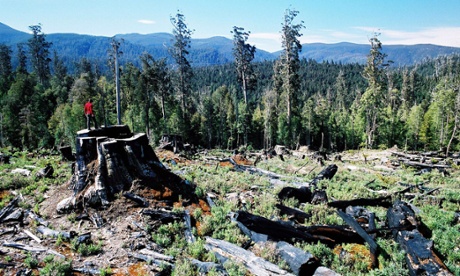
Bedeviling Tasmanian Conservation Conundrum

The Wilderness Society says more than 93% of the disputed area is old growth, rainforest or intact natural forest and non-forest. Photograph: AAP

The Wilderness Society says more than 93% of the disputed area is old growth, rainforest or intact natural forest and non-forest. Photograph: AAP

The Guardian today reports on a disturbing attempt to roll back conservation in Tasmania:

Fallout from the federal government’s request to Unesco to remove 74,000 hectares of Tasmanian forest from world heritage listing has erupted into a war of words and pictures over the status of the disputed land.

On Friday the Coalition announced it would follow through on an election commitment to request a rollback of last year’s 170,000 hectare extension of world heritage listed forest. The final proposal sought to delist a smaller area of 74,000 hectares but was met with strong opposition from environmental groups, the Tasmanian state government and representatives of the timber industry. Continue reading

Solar’s Messy Compromises

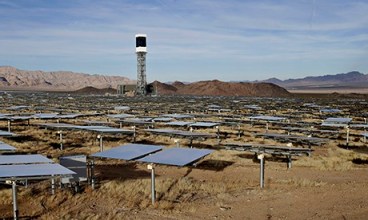
BrightSource Energy's Ivanpah Solar Electric Generating System in the Mojave Desert. Photograph: Isaac Brekken/Washington Post

BrightSource Energy’s Ivanpah Solar Electric Generating System in the Mojave Desert. Photograph: Isaac Brekken/Washington Post

It’s not easy being green.  Even seeming no-brainers like this solar initiative requires complicated tradeoffs between one environmental objective and another:

…The Ivanpah Solar Electric Generating System will send that power across California, the Golden State, early this year, becoming the largest solar plant in the world to concentrate the sun’s rays to produce electricity. Such utility-sized solar plants are beginning to appear across the US, with 232 under construction, in testing or granted permits, many in the south-west and California, says the Edison Electric Institute, which represents utilities. The scale of the largest plants is difficult to imagine in the eastern part of the country, where a relative lack of available open land and unobstructed sunlight have limited solar facilities to perhaps a tenth the size of the West’s plants. In the west, ample sun, wide-open spaces, financial incentives, falling costs and state mandates have made big solar plants possible…

…But even as the largest plants are helping utilities meet state requirements for renewable energy, the appetite for them may be waning, say experts. The next phase of solar development – especially in the east – may feature smaller projects located closer to cities. Environmental groups want regulators to look at sites such as landfills and industrial zones before allowing construction in largely undisturbed environments such as deserts. Continue reading

$350,000 Conversation Piece

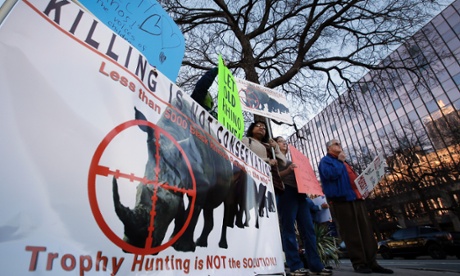
A protest outside the Dallas Convention Centre against the auction of a black rhino hunting permit. Photograph: Tony Gutierrez/AP

A protest outside the Dallas Convention Centre against the auction of a black rhino hunting permit. Photograph: Tony Gutierrez/AP

This coverage in the Guardian provides an answer to the lingering question of how much good the killing of an endangered animal can do, but does not answer the fundamental question raised by this endeavor:

A permit to hunt an endangered African black rhino sold for $350,000 at a Dallas auction held to raise money for conservation efforts but criticised by wildlife advocates.

Steve Wagner, a spokesman for the Dallas Safari Club, which sponsored the closed-door event Saturday night, confirmed the sale of the permit for a hunt in the African nation of Namibia. He declined to name the buyer. Continue reading

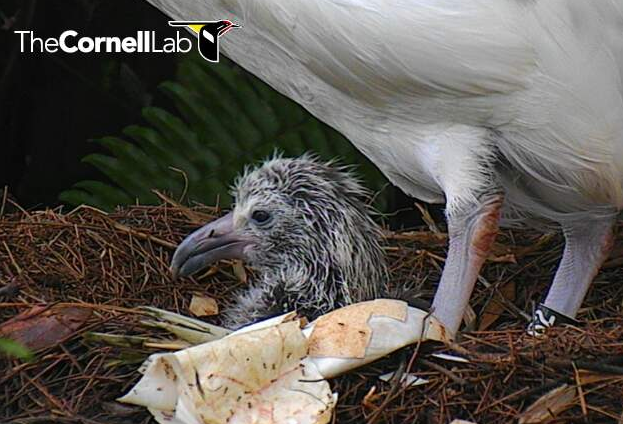
The Cornell Lab Of Ornithology’s Student Innovators, Dreamers, and Leaders

After you watch the video above you might recognize some faces from the Cornell expedition to Borneo that we featured about a month ago, and be introduced to the faces of other friends that I made in ornithology class several years ago and have kept up with through soccer, squash, and biology classes we’ve taken together.  Continue reading

Good Fences Make Good Neighbors, It Has Been Said

mystery-picket-fence-1-600x399

The odd web-like structure that has captivated scientists. Photograph by Jeff Cremer, Solent News/Rex Features via AP

One of the myriad arguments in favor of wilderness conservation is that we do not know what we are losing when wild places are lost to development. Case in point with this story and image via National Geographic newswatch service:

Six months ago, visitors to the Peruvian Amazon discovered a mysterious picket fence structure nicknamed Silkhenge. Despite watching the structure for several days, naturalists at the Tambopata Research Center couldn’t figure out what type of animal (or fungus) was building it.

When scientist Troy Alexander first announced his find, all he had to show for his discovery was a series of intriguing photographs. He had no idea what Amazonian critter could have created the circular hideaway with a spoke-like outer wall. Continue reading