Digging Deeper, Getting To No

Casa Dominique is an ecolodge on Lanzarote's northern coast. Julie Genicot, a French trekking guide, has lived in Lanzarote since her grandparents opened the Casa Dominique when she was a child. She worries that offshore oil drilling might ruin the natural environment she grew up in. Lauren Frayer/NPR

Casa Dominique is an ecolodge on Lanzarote’s northern coast. Julie Genicot, a French trekking guide, has lived in Lanzarote since her grandparents opened the Casa Dominique when she was a child. She worries that offshore oil drilling might ruin the natural environment she grew up in. Lauren Frayer/NPR

We cannot possibly say that Spain does not need more oil. But we can say that before going to the Canary Islands there should be more effort to use the sun and wind, as at least one European country with less direct sunlight per year than Spain has successfully done. Spain should dig deeper on the alternative energy front before drilling in the sea. Go, Julie, go! Thanks to National Public Radio (USA) for bringing this story to our attention:

An oil rig now floats offshore in one of Europe’s top winter beach destinations — Spain’s Canary Islands. For the first time, Spain has authorized offshore oil drilling there. It’s hoping to reduce its dependence on foreign oil. But the project has prompted massive protests by local residents and environmental groups like Greenpeace.

Julie Genicot is a French trekking guide who’s lived in Lanzarote, one of Spain’s Canary Islands, ever since her grandparents opened an ecolodge there when she was a child.

“We have all the elements. It’s very windy, we have tides, the sun. It’s a very energetic place,” she says, looking out her windows across sand dunes in a protected natural park, backed by the Atlantic Ocean. “You have earth, the fire — we’re surrounded by volcanoes. And the wind, the sea — it’s very powerful.” Continue reading

Wildlife at Bosque del Cabo

Pochote (I think) trees at Bosque

As I mentioned in my last post about Bosque del Cabo, one of the lodge’s strongest points is the access and shelter for wildlife that it provides, being right by the Corcovado National Park in the Osa Peninsula and having such a huge nature reserve as part of the property.

While walking along the extensive network of trails at Bosque, which includes a suspension bridge perfect for peering into the canopy and down at the river, my family and I never stopped seeing great examples of jungle life that people come to Costa Rica to see. I’ve very briefly referenced the Osa’s incredible biodiversity before, and the statistics are proven in experience every time I visit.

Giant strangler figs with hanging roots that are perfect to try free-climbing (as my brother Milo did), well-maintained trails that were never too muddy even in peak rainy season, and cool mushrooms all over the place. The bark of trees alone was full of life! At one point we saw some scratch marks that could even be territorial signals from one of the several species of wild cat that are in the Osa.


female Great Curassow

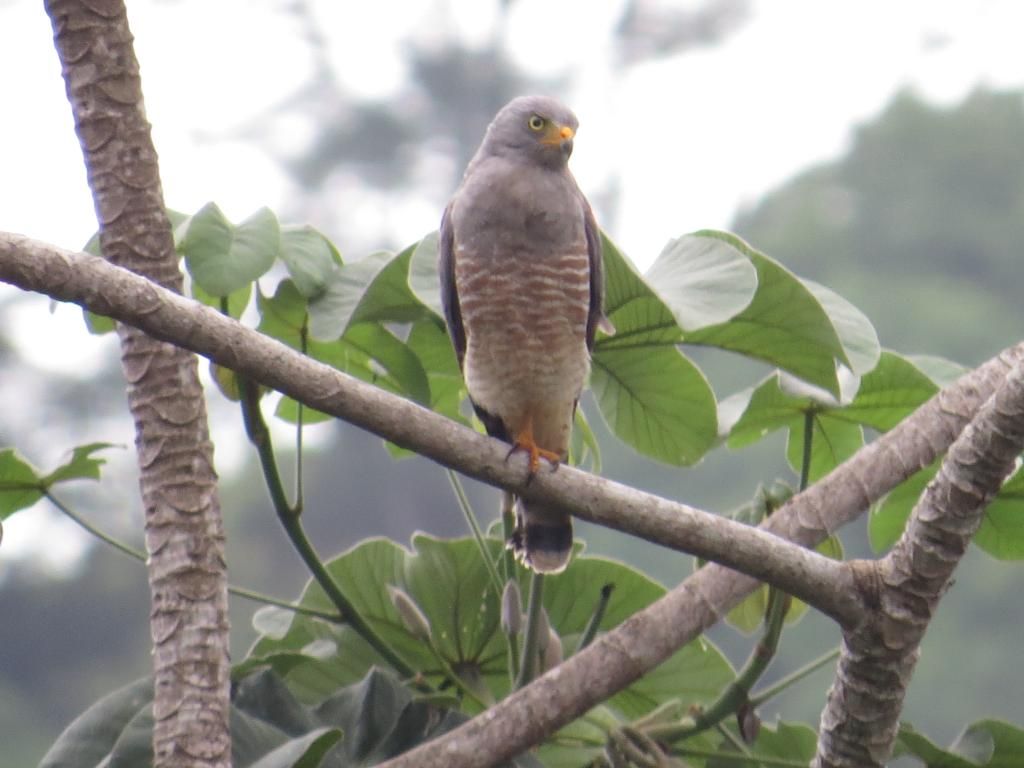
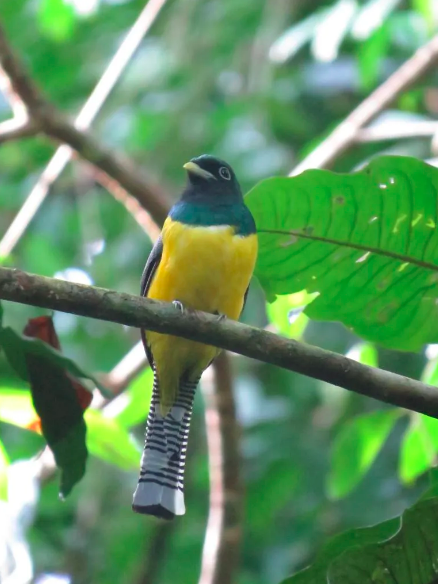
In terms of birds, it was fantastically easy to spot cool-looking ones like the Crested Guan or Roadside Hawk, and in some cases it even seemed like the exotic species were literally lining up to be seen. Great Curassows, which are fairly uncommon outside of protected areas, walked the open areas of Bosque del Cabo like peacocks at some royal palace. We also spotted the relatively harder to find White Hawk, and I was lucky enough to get photos of both a female and male Black-throated Trogon!

Continue reading