Reduce Is Best Because Recycle Is Costly & Re-Use Is The Next Big Thing

1114

Starbucks at South Terminal, Gatwick. The scheme is being launched by Starbucks and environmental charity Hubbub. Photograph: Zute Lightfoot

We have been using this cup since early 2017, and it really should have replaced the paper cup by now. But slow as the pace is, we are happy to read the news of this experiment and wish it well:

Gatwick hosts UK’s first airport reusable coffee cup trial

Customers buying coffee from South Terminal Starbucks will be able to borrow free refillable cup

1060.jpg

A sign will remind passengers to return their cup before they board a flight

The UK’s first airport reusable coffee cup trial gets under way this week at Gatwick, offering passengers the opportunity to borrow and return refillable cups in a bid to help cut waste and tackle “throwaway” culture.

Customers buying hot takeaway drinks from Starbucks will have the option to borrow a free reusable cup instead of using a paper cup, which they can then drop off at a designated point before boarding their flight.

The trial – starting on Monday in Gatwick’s South Terminal – will help customers reduce their disposable cup usage in a manageable “closed loop” environment that could be used in any travel hub. The scheme is being launched by Starbucks in partnership with the environmental charity Hubbub with support from Gatwick, the UK’s second largest airport. Continue reading

France Acts On Waste

merlin_155977602_ef40511f-9c82-437e-9129-dc6a888c864e-jumbo.jpg

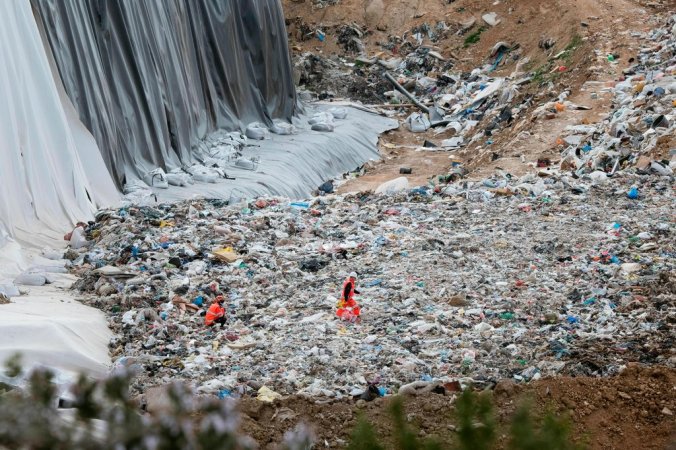
A dump site in Castries, France. By 2023, unwanted, unsold goods in the country will have to be donated, reused or recycled. Xavier Malafosse/Sipa, via Associated Press

Food waste has been a topic regularly featured in these pages. And reducing carbon footprint obviously involves reducing waste in general. Palko Karasz reports on this almost unbelievable example of waste that had escaped our attention until now, and we are impressed by France’s decisive action:

France to End Disposal of $900 Million in Unsold Goods Each Year

LONDON — France plans to outlaw the destruction of unsold consumer products, a practice that currently results in the disposal of new goods worth 800 million euros, or more than $900 million, in the country each year.

By 2023, manufacturers and retailers will have to donate, reuse or recycle the goods, Prime Minister Édouard Philippe said on Tuesday of the measure, which the government billed as the first of its kind.

“It is waste that defies reason,” Mr. Philippe said at a discount store in Paris, according to Agence France-Presse, and he called the practice “scandalous.”

Under a new measure that will be part of a bill set to be debated by the government in July, destroying unsold goods could result in financial penalties or prison time. Continue reading
The Fate Of Food

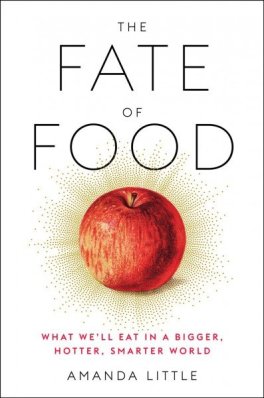
9780804189033_custom-d872d405185775dec7efba71e353dfdbc66d0130-s600-c85.jpgAn interview about a book that picks up on themes that we have been following since we started this platform:

‘Fate Of Food’ Asks: What’s For Dinner In A Hotter, Drier, More Crowded World?

Environmental journalist Amanda Little says the sustainable food revolution will include meat cultured in a lab, 3-D printer food, aquaculture and indoor vertical farming.

TERRY GROSS, HOST:

This is FRESH AIR. I’m Terry Gross. Climate change is affecting the weather. And droughts, floods, storms and unseasonal temperatures are affecting the global food supply. Tech startups, as well as mega companies, are developing new, high-tech ways of growing vegetables and fruits, farming fish and growing meat without harming animals.

3D food printers, laboratories where meat is grown from cultured animal cells, robots that can weed crops without using chemicals and indoor farms where vegetables are grown without soil or sun are some of the new approaches investigated by Amanda Little in her new book “The Fate Of Food: What We’ll Eat In A Bigger, Hotter, Smarter World.”

She’s traveled to 13 states and 11 countries researching changes in our food system. Her reporting on energy, technology and the environment has been published in The New York Times, The Washington Post, Rolling Stone and other publications. She’s a professor of journalism and science writing at Vanderbilt University.

Amanda Little, welcome to FRESH AIR. Tell us some of the ways in which climate change is affecting the global food supply. Continue reading
Climate Change Demands Political Change

Inslee-announcement_AP_19060695481892_web.jpg

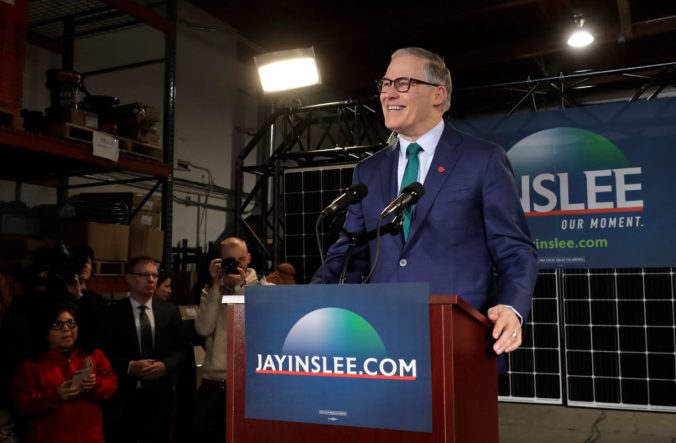
Inslee announcing his run for the Democratic presidential nomination on March 1 at a solar panel installation company in Seattle. AP PHOTO/TED S. WARREN

We have been diligent, if not perfect, about keeping politics off this platform. For anyone who takes climate change seriously, and who understands how important the USA is to the future of the planet due to its outsized carbon footprint as well as its historic geopolitical influence, that is a tough constraint. But this interview is a must read, thanks to one of our favorite climate conversationalists:

Tackling Climate Change? Governor Jay Inslee Has a Plan for That

Jay Inslee has made climate change the centerpiece of his campaign for the Democratic nomination for president. In an e360 interview, the Washington governor talks about why a full-scale national mobilization is needed to address what he calls an “existential crisis.”

Jay Inslee is often called the “climate change candidate.” The two-term governor of Washington state launched his presidential campaign in March at a solar panel installation company in Seattle. He said he was joining the crowded field of Democratic candidates because “we are the first generation to feel the sting of climate change, and we are the last generation that can do something about it.”

Inslee has since unveiled two major climate change proposals. One would require“zero-emission” electricity generation across the U.S. by 2035. The other calls for the federal government to invest $3 trillion over a decade to upgrade buildings, create “climate-smart infrastructure,” encourage “clean manufacturing,” and research “next-generation” energy technologies. Representative Alexandria Ocasio-Cortez, of New York, one of the authors of the Green New Deal, recently tweeted that Inslee’s plans were “the most serious + comprehensive” of any of the candidate’s. Continue reading

Supporting The Climate Strikers

Strike350.jpg

McKibben-ClimateStrike.jpg

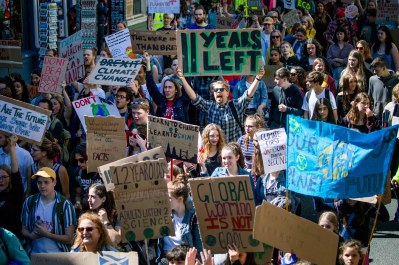
Young people have used strikes to call attention to the climate disaster. Now they’ve challenged adults to do the same.Photograph by Jane Barlow / Getty

Bill MkKibben makes the case that It’s Not Entirely Up to School Students to Save the World:

…What all of these people have in common is a strong sense that business as usual has become the problem, and that it needs to be interrupted, if only for a day. The climate crisis is a perplexing one because, mostly, we just get up each day and do what we did the day before, as if an enormous emergency weren’t unfolding around us. That hasn’t been true of past crises: during the Second World War, oceans may have separated American civilians from the fighting, but every day they were aware of the need to change their ways of life: to conserve resources, buy bonds, black out their windows at night if they lived on the coast.

The climate emergency, however, is deceptive. Unless it’s your town that day that’s being hit by wildfire or a flood, it’s easy to let the day’s more pressing news take precedence. It can be hard to remember that climate change underlies so many daily injustices, from the forced migration of refugees to the spread of disease. Indeed, the people who suffer the most are usually those on the periphery—the iron law of climate change is that the less you did to cause it the more you suffer from it. So we focus on the latest Presidential tweet or trade war instead of on the latest incremental rise in carbon dioxide, even though that, in the end, is the far more critical news.

A one-day work stoppage—a decision to spend a day demanding action from governments or building a bike path—is a way to break out of that bad habit…

He is promoting the idea that all of us should get involved now, and there are some useful guidelines for how to do so:

Strike.jpg

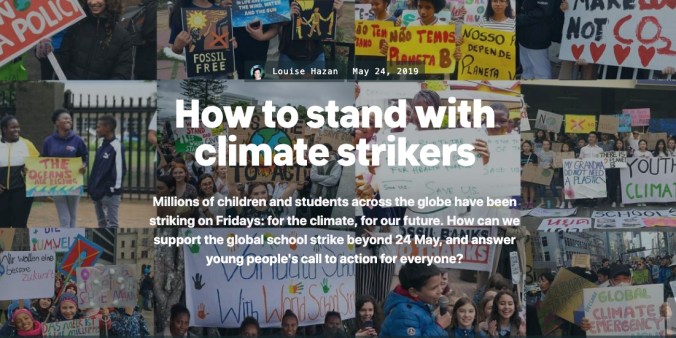
School strikers are calling on everyone: young people, parents, workers, and all concerned citizens to join massive climate strikes and a week of actions starting on September 20.

People all over the world will use their power to stop “business as usual” in the face of the climate emergency. We will join young people in the streets to demand an end to the age of fossil fuels and emergency action to avoid climate breakdown.

The Simplest Impact You Can Personally Have Related To Climate Change

CarbonFood

The average greenhouse gas impact (in kilograms of CO2) of getting 50 grams of protein from various food types. Source: Poore and Nemecek, Science

We have been on the lookout since we started this platform for stories like this. There have been too many to link back to.Thanks to this team of collaborators I have just read a primer that is more clear, convincing and relatively painless in its instruction on how to change my diet than any of the earlier ones:

Your Questions About Food and Climate Change, Answered

How to shop, cook and eat in a warming world.

By Julia Moskin, Brad Plumer, Rebecca Lieberman and Eden Weingart. Graphics by Nadja Popovich. Illustrations by Cari Vander Yacht

Does what I eat have an effect on climate change?

Yes. The world’s food system is responsible for about one-quarter of the planet-warming greenhouse gases that humans generate each year. That includes raising and harvesting all the plants, animals and animal products we eat — beef, chicken, fish, milk, lentils, kale, corn and more — as well as processing, packaging and shipping food to markets all over the world. If you eat food, you’re part of this system.

How exactly does food contribute to global warming?

Lots of ways. Here are four of the biggest: When forests are cleared to make room for farms and livestock — this happens on a daily basis in some parts of the world — large stores of carbon are released into the atmosphere, which heats up the planet. When cows, sheep and goats digest their food, they burp up methane, another potent greenhouse gas contributing to climate change. Animal manure and rice paddies are also big methane sources. Finally, fossil fuels are used to operate farm machinery, make fertilizer and ship food around the globe, all of which generate emissions.

Continue reading
Reducing Waste As A Personal & Community Commitment

merlin_154322778_cf2d9b7e-e538-4dff-b135-65ffc2855c05-articleLarge.jpg

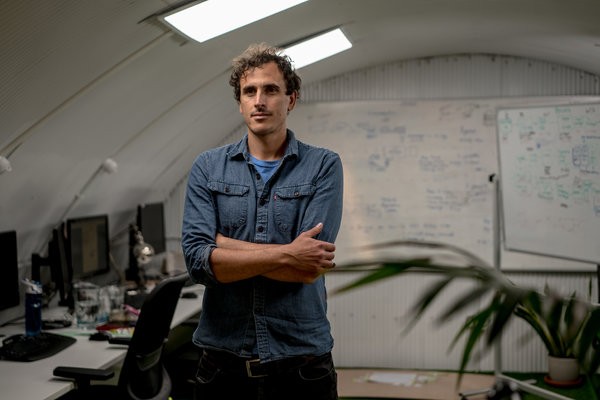
Keiran Whitaker, the chief executive of Entocycle, which takes so-called pre-consumer local food waste and feeds it to fly larvae, which eats the waste and converts it to protein. Andrew Testa for The New York Times

We believe in waste reduction as a key component of individual and community responsibility for securing the future. Our thanks to Tatiana Schlossberg for this:

Waste Not — if You Want to Help Secure the Future of the Planet

If there’s one vital, but underappreciated, subject in the conversation about climate change, it’s waste: how to define it, how to create less of it, how to deal with it without adding more pollution to the planet or the atmosphere.

The issue has gained some acceptance, whether in the form of plastic straw bans or anxiety about e-commerce-related cardboard piling up.

But experts say these aren’t necessarily the biggest problems. Reducing the damage from waste might require expanding the traditional definition of waste — not just as old-fashioned garbage, but as a result of wild inefficiency in all kinds of systems, which often results in emissions of greenhouse gases, among other problems.

Continue reading

What Is The Cost Of Extinction To You?

merlin_85350212_d2257703-c289-4df0-8998-7ed3b621f2ad-jumbo.jpg

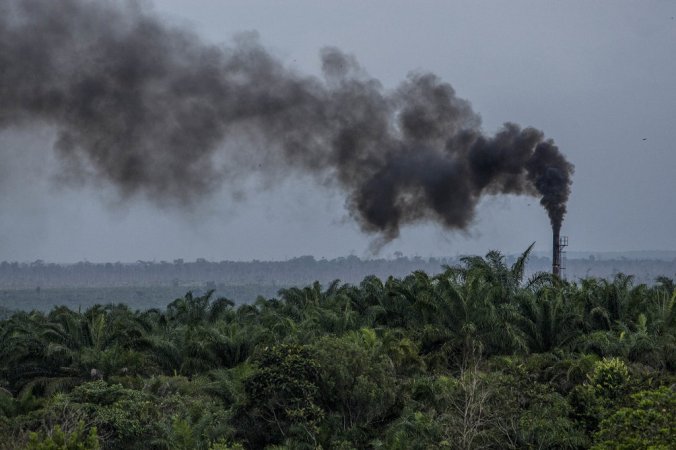
A palm oil plantation in Riau province, Sumatra, Indonesia. Ulet Ifansasti/Getty Images

One more on the same topic of recent days, last for a while I promise:

To Tell the Story of Biodiversity Loss, Make It About Humans

The authors of a sweeping United Nations report on species in danger of extinction faced the same question I often do in reporting: Why should anyone care about the loss of nature?

On Monday, I wrote about a sweeping new United Nations report warning that humans were destroying Earth’s natural ecosystems at an “unprecedented” pace.

The findings were sobering: Millions of acres of wetlands and rain forests are being cleared away. As many as one million plant and animal species are now threatened with extinction because of farming, poaching, pollution, the transport of invasive species and, increasingly, global warming. Almost everywhere you look, nature is vanishing before our eyes.

But the report, which was written for world leaders and policymakers, also wrestled with some big questions: Why should anyone care about the loss of nature? Why should countries take drastic steps, as the report urges, to halt the decline in biodiversity? Continue reading

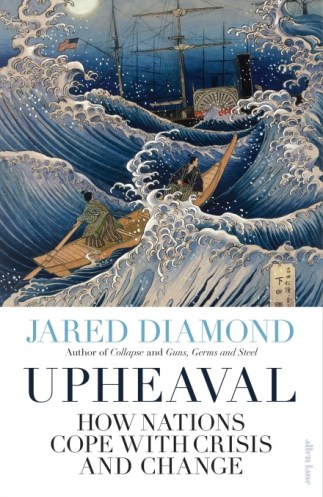
Upheaval, Another Heavy Book For The Reading List

First I had read the Guardian interview with the author, which was good, and made watching the above worthwhile. But when David Wallace-Wells conducts such an interview, it is something altogether more compelling. He knows how to word a title alarmingly. My reading list just got 320 pages longer:

Jared Diamond: There’s a 49 Percent Chance the World As We Know It Will End by 2050

Upheaval.jpgJared Diamond’s new book, Upheaval, addresses itself to a world very obviously in crisis, and tries to lift some lessons for what do about it from the distant past. In that way, it’s not so different from all the other books that have made the UCLA geographer a sort of don of “big think” history and a perennial favorite of people like Steven Pinker and Bill Gates.

Diamond’s life as a public intellectual began with his 1991 book The Third Chimpanzee, a work of evolutionary psychology, but really took off with Guns, Germs, and Steel, published in 1997, which offered a three-word explanation for the rise of the West to the status of global empire in the modern era — and, even published right at the “end of history,” got no little flak from critics who saw in it both geographic determinism and what they might today call a whiff of Western supremacy. In 2005, he published Collapse, a series of case studies about what made ancient civilizations fall into disarray in the face of environmental challenges — a doorstopper that has become a kind of touchstone work for understanding the crisis of climate change today. In The World Until Yesterday, published in 2012, he asked what we can learn from traditional societies; and in his new book, he asks what we can learn from ones more like our own that have faced upheaval but nevertheless endured.

I obviously want to talk about your new book, but I thought it might be useful to start by asking you how you saw it in the context of your life’s work.
Sure. Here’s my answer, and I think you’ll find it banal and more disappointing than what you might have hoped for. Continue reading
How Do You Define Too Late?

TNY-McKibbenKolbertUNReport.jpg

“The problem with climate change is that it’s a timed test,” the writer Bill McKibben says. “If you don’t solve it fast, then you don’t solve it.” Photograph by S. E. Arndt / Picture Press / Redux

I have been reading the reviews, and interviews with the authors of this and two other important recent books covering similar territory. I have stopped worrying about overkill, because this is overkill territory. You cannot get too much perspective on this; the worry is too little, too late:

McKibKolbert.jpg

Bill McKibben and Elizabeth Kolbert on the U.N. Extinction Report

While the political tide could be turning on climate change, both writers worry that it is too late.

After years of languishing far down the list of voters’ priorities—for Democrats and even more so for Republicans—the desire for action on climate change has brought this issue to the top of many voters’ concerns, according to a CNN poll. Now Presidential candidates are competing to establish themselves as leaders on the issue, while children are making headlines for striking from school.

Bill McKibben, whose book “The End of Nature” brought the idea of global warming to public consciousness thirty years ago, tells David Remnick that the accumulation of weather catastrophes—droughts, wildfires, floods—may have finally made an impact. McKibben joined Elizabeth Kolbert in a conversation about the U.N.’s new report on species extinction. It finds that a million species could become extinct within a few decades, and that human life itself may be imperilled. While the political tide could be turning, both worry that it is too late. Continue reading
Better Fruit For Harsher Realities

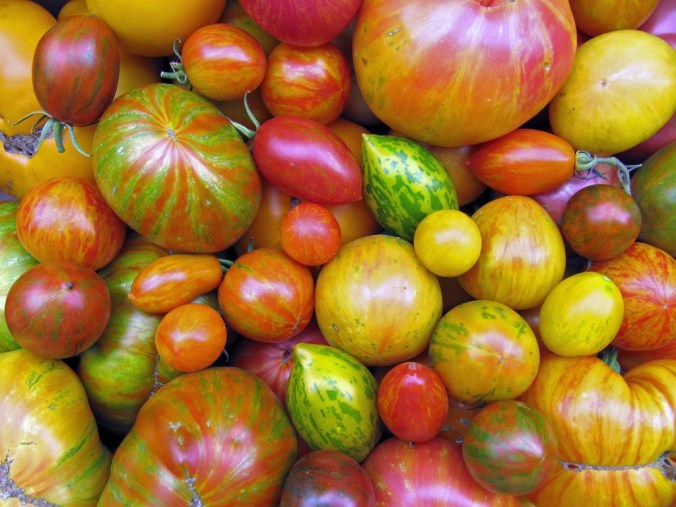
Mr. Gates sells about 60 of his own open-pollinated varieties, many with especially bright colors and unusual shapes, and shares growing tips online. Credit Wild Boar Farms

From our perspective, many agricultural “developments” deserve quotations. The Agricultural Industrial Complex of Monsanto and their ilk more frequently serve to further their own economic gain rather than preserve species or better the health and livelihoods of the farmer or consumer.

Preserving the genetics of fruit and vegetable species down to their paleo-botanical ancestry is an entirely different story, and may be our best chance to overcome the obstacles of harsher and harsher weather conditions.

Reinventing the Tomato for Survival in a Changing World

Like other small farmers and researchers, Brad Gates is trying to ensure a future for the tomato by breeding hardier varieties and persuading more Americans to grow their own.

NAPA, Calif. — In a borrowed van, Brad Gates of Wild Boar Farms sped south on Interstate 680 with hundreds of fuzzy tomato seedlings bumping around in the back, their trembling leaves, warmed by the sun, filling the cab with the smell of summer. It was one of a half-dozen deliveries on his to-do list.

Born and raised in Northern California, Mr. Gates has been organically farming tomatoes in the region for 25 years, working on small leased plots and introducing new varieties with cult followings, like the dark, meaty Black Beauty and the striped, rosy-pink Dragon’s Eye.

For most of that time, he sold his tomatoes to top restaurants, including Chez Panisse in Berkeley. But a few years ago he completely rethought his work. Galvanized by climate change, he joined a growing number of farmers who are trying to find a future for their threatened crops — in his case, the queen of the farmers’ market.

As Mr. Gates bred tomatoes, he noticed that many of his orange and yellow varieties were unusually heat-tolerant. Credit Wild Boar Farms

Mr. Gates now grows thousands of tomato plants each year, selling the young ones to local shops and the seeds all over the country through his website and catalogs, encouraging people to grow their own at home. He believes that the tomato’s survival and continued deliciousness depend on the plant’s diversity, and he considers breeding hardy, cold-tolerant and heat-tolerant varieties an essential part of his work — not just to provide food, but also to expand the number of places where the plant can flourish. Continue reading
Melissa Clark’s Kelp Call

merlin_153017235_49fd1266-e0bc-4084-b2a0-463f574844dd-jumbo.jpg

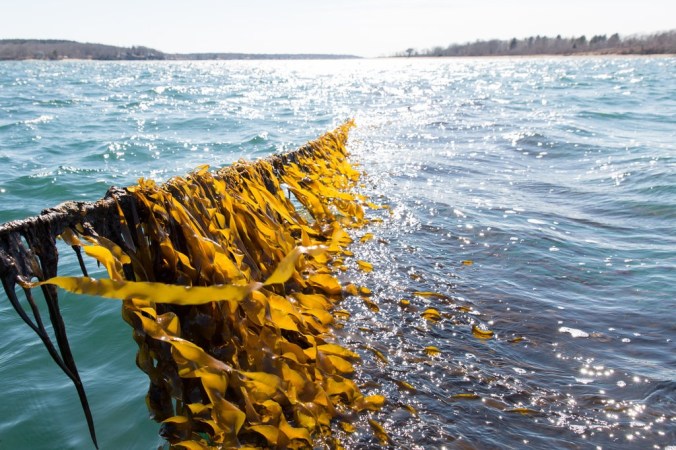
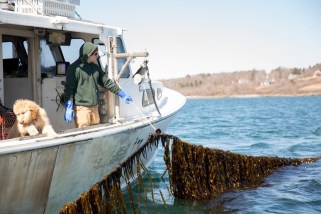
Kelp, a variety of edible seaweed farmed near Portland, Me., is harvested in spring. It’s delectable and nutritious, it’s easy to cook with, and it actively benefits the ocean’s health. Matt Cosby for The New York Times

Melissa Clark has appeared in our pages plenty of times, starting in 2014 when we were launching a restaurant whose menu featured tasty, nutritious and environmentally friendly dishes–i.e. the types of foods she promotes. Today’s pitch is right in line with those we have featured before:

The Climate-Friendly Vegetable You Ought to Eat

Kelp is delicious and versatile, and farming it is actively good for the ocean. Melissa Clark wants you to just try a bite.

merlin_153017220_60147ae8-0be8-4022-9809-771478c35d7a-jumbo.jpg

Justin Papkee, kept company by his dog, Seguin, pulling up a line of kelp. Harvesting wild kelp is ancient, but farming it is a relatively new practice in the United States. Matt Cosby for The New York Times

PORTLAND, Me. — It was a sharp, windy March day, but the gray water of Casco Bay glimmered green in the sun. On his lobster boat, the Pull N’ Pray, Justin Papkee scanned the surface of the ocean, searching for his buoys. But he wasn’t looking for lobster traps.

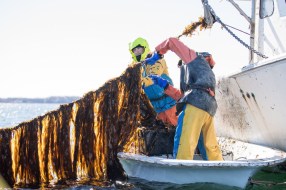
Mr. Papkee was farming, not fishing: His crop, clinging to ropes beneath the cold waves, was seaweed, thousands of pounds of brownish kelp undulating under the surface. Growing at a rate of 4 to 6 inches per day for the past six months, it was nearly ready to be harvested and sent to restaurants like Blue Hill at Stone Barns, Estela, Houseman, Saint Julivert Fisherie and Luke’s Lobster in New York, and Honey Paw, Chaval and the Purple House here in Maine.

merlin_153563010_afbf47f7-c23c-4309-8485-d213349da62d-jumbo.jpg

Justin’s father, Chris Papkee, at left, and Jimmy Ranaghan removing the kelp from the long ropes on which it grows. Matt Cosby for The New York Times

He pulled a blade of kelp from his line and handed me a long, translucent strip. I took a bite, and then another, seawater running down my chin.

I’d eaten plenty of seaweed salads at Japanese and vegan restaurants, but this was not that. A variety called skinny kelp, it was lightly salty and profoundly savory, with a flavor like ice-cold oyster liquor, and a crisp, snappy texture somewhere between stewed collard greens and al dente fettuccine. The chef Brooks Headley, who adds it in slippery slivers to the barbecued carrots he serves at Superiority Burger in New York, described it in an email as “insanely delicious and texturally incredible.” Continue reading
Plastic Soup & Creative Re-Use With A Critical Purpose

4159

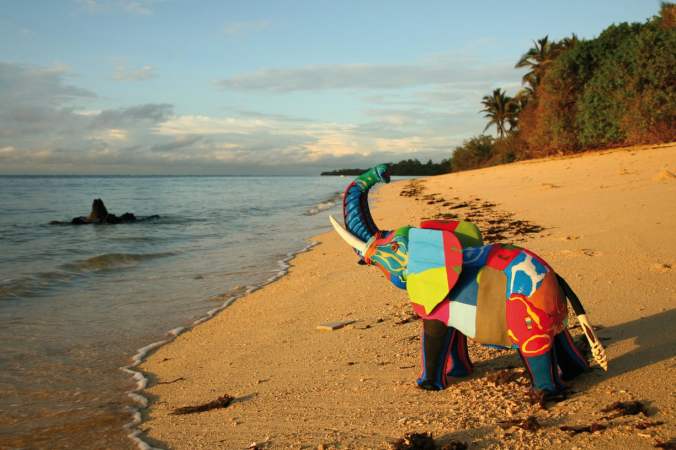
Ocean Sole turns reclaimed flip-flops into colourful, hand-made animal toys and sculptures. Tonnes of flip-flops wash up on the east African coast every year.
Photograph: Courtesy of Ocean Sole/Plastic Soup

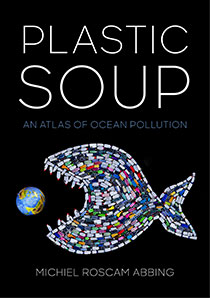
PlasticSoupAnd speaking of plastics, a new book has come to our attention thanks to the Guardian, and thanks to Island Books for the explanation of the book:

Plastics have transformed every aspect of our lives. Yet the very properties that make them attractive—they are cheap to make, light, and durable—spell disaster when trash makes its way into the environment. Plastic Soup: An Atlas of Ocean Pollution is a beautifully-illustrated survey of the plastics clogging our seas, their impacts on wildlife and people around the world, and inspirational initiatives designed to tackle the problem.

4519

Peter Smith made this floating work, World of Litter, in 2012.
Photograph: Courtesy of Jos van Zetten/Plastic Soup

In Plastic Soup, Michiel Roscam Abbing of the Plastic Soup Foundation reveals the scope of the issue: plastic trash now lurks on every corner of the planet. With striking photography and graphics, Plastic Soup brings this challenge to brilliant life for readers. Yet it also sends a message of hope; although the scale of the problem is massive, so is the dedication of activists working to check it. Plastic Soup highlights a diverse array of projects to curb plastic waste and raise awareness, from plastic-free grocery stores to innovative laws and art installations.

According to some estimates, if we continue on our current path, the oceans will contain more plastic than fish by the year 2050. Created to inform and inspire readers, Plastic Soup is a critical tool in the fight to reverse this trend.

2362.jpg

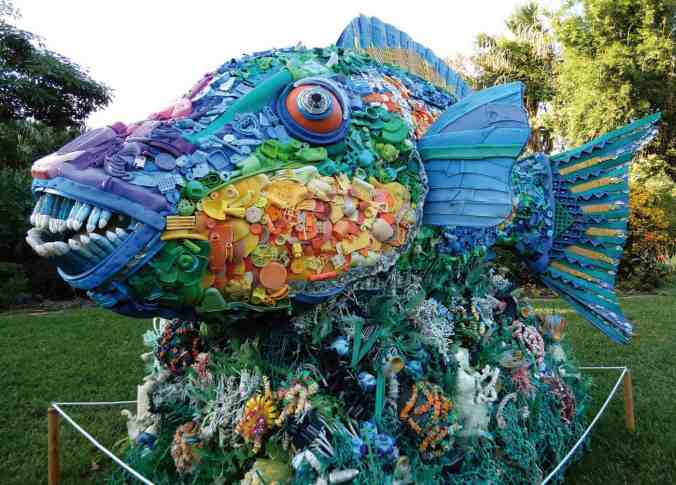
Washed Ashore makes larger-than-life sculptures of marine animals, like this parrotfish, to make people aware of plastic pollution.
Photograph: WashedAshore.org/Plastic Soup

Know Your Numbers

Credit Tyler Varsell; Shutterstock

Coinciding with Earth Day  the NYTimes Environment team recently initiated the Climate FWD newsletter, emailing readers weekly with stories and insights about climate change.

We’ve been writing about plastics since the inception of this site; it’s alternatives, environmental impacts, and even creative applications with it’s existence.

Studies are clear that reducing plastic use and production is multiple steps better than recycling, yet considering the ubiquity of the material, the latter has it’s place.

One Thing You Can Do: Know Your Plastics

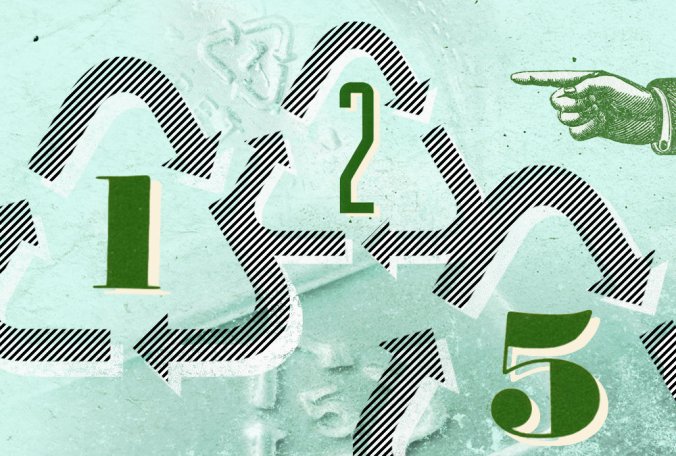
Ever notice those recycling symbols, the triangles with the numbers inside, on plastic packaging and containers? I always assumed they meant the plastic was recyclable. But that’s not necessarily the case.

Those numbers are resin identification codes, and they tell what kind of plastic the item is made from. And not all plastic is created equal.

Identifying what types of plastics are recyclable can be challenging because plastics do not always carry a resin code and because not all recycling programs are equal, either. Generally speaking, though, some categories of plastic are more widely recyclable in the United States.

“We always encourage people to focus on Nos. 1, 2 and 5 because we have great markets for them in the U.S.,” said Brent Bell, vice president of recycling at Waste Management, a major garbage collection and recycling company.

Water and soda bottles, milk jugs, laundry detergent bottles, yogurt cups and butter tubs are mostly made of these plastics. You could lend a helping hand by rinsing these kinds of containers and removing labels.

Continue reading
Falter, Bill McKibben’s Latest Book

merlin_153059301_1c87fe8a-f33f-4586-a999-f1699b5569e6-jumbo

Mikel Jaso

My morning hike yesterday was accompanied by Bill McKibben. We have featured him so frequently in these pages that I was surprised that I had not already known he had a new book. So I found what I could read about the book, starting with Jared Diamond’s review (snippet below), and a book talk by the author himself (above).

merlin_152123523_a034032d-0d87-4c6a-a74d-4f49c938ba5c-jumbo

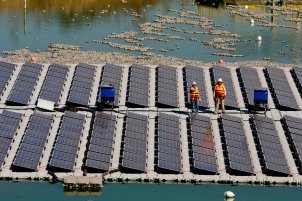
A floating island of solar panels in Santiago, Chile.CreditEsteban Felix/Associated Press

Solar panels and nonviolent movements are the two of the causes for hope that McKibben mentions in his podcast interview, and in the book talk in Philadelphia, and according to Diamond’s review those are substantive but not sufficient. Hope and fear are both motivators and getting the balance right is the most important task in perhaps the entire history of mankind. I highlight only this part of the review because it is an echo of what Nathaniel Rich says in an interview about his own book:


falterbookpage.jpg

…McKibben’s book is much more about grounds for fear, which take up some 18 chapters, than about grounds for hope, which take up five. Fear will motivate some people who are currently undecided, and increase the motivation of others already convinced. But in my experience most people need a strong dose of hope to be spurred to action. Why waste effort on a hopeless cause? One group that has learned this lesson is the cancer lobby, which succeeds at raising funds for research by stressing cures that may be just around the corner more than the grim statistics of the disease’s ongoing toll.

In fact, there are reasons for hope besides those McKibben discusses. One is the change in policies of some powerful multinational corporations. I can already hear the horrified screams of many of my environmentalist friends as I say this. Continue reading
The Wind Calls For Attention

03lovins-jumbo.jpg

A wind farm in Pomeroy, Iowa. Credit Jim Watson/Agence France-Presse — Getty Images

In the current political climate it may sound like howling in the wind, at first, but read on:

A Case for a Market-Driven Green New Deal

Any serious energy transformation will need to harness America’s powerful and creative economic engine.

By Amory B. Lovins and Rushad R. Nanavatty

Mr. Lovins and Mr. Nanavatty work at Rocky Mountain Institute, which is focused on creating a clean, low-carbon energy future.

The best thing to come from the Senate’s floor debate on the Green New Deal late last month may have been these eminently sane remarks, calling on lawmakers of both parties to “move together” in order “to lower emissions, to address the reality of climate change, recognizing that we’ve got an economy we need to keep strong, that we have vulnerable people we need to protect, that we have an environment that we all care about — Republicans and Democrats.”

Who said it? A Republican, Senator Lisa Murkowski of Alaska, who leads the Energy and Natural Resources Committee. “My hope is we get beyond the high-fired rhetoric to practical, pragmatic, bipartisan solutions,” she said on the chamber floor.

The path is there, if our leaders will only choose to take it. In 2011, Reinventing Firean energy study by Rocky Mountain Institute, where we work, showed how a business-led transition could triple energy efficiency, quintuple renewables and sustain an American economy 2.6 times larger in 2050 than it was in 2010 with no oil, coal or nuclear energy, and one-third less natural gas. The net cost was $5 trillion less than business-as-usual — or even more valuable if a price was put on carbon emissions.

Continue reading
Closer To An Alternative For Plastic Packaging

cut-melon-fruit-store_web

Yale e360, with news like this, titles it carefully:

Scientists Say They Have Found a Viable Replacement for Petroleum-Based Plastic

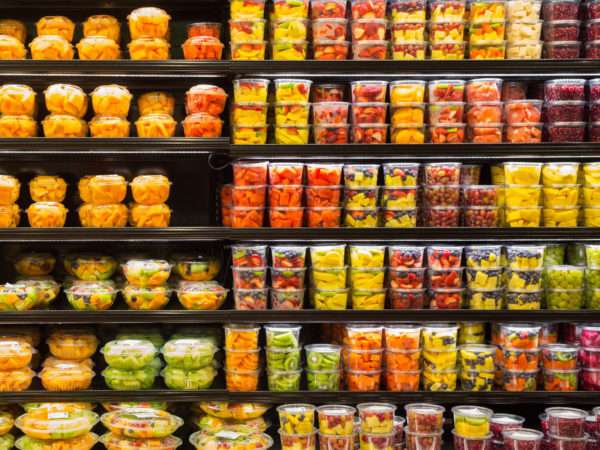
Scientists at Ohio State University say they have developed a viable alternative to petroleum-based plastic food packaging by using natural tree-based rubber. According to the researchers, the new biodegradable material holds promise for fighting the world’s growing plastic pollution problem, as well as for helping curb our reliance on fossil fuels.

The original source, with slightly more flowery language, titles it as if packaging can be friendly to the environment. The way we use packaging, not so. But we will take what we can get at this point:

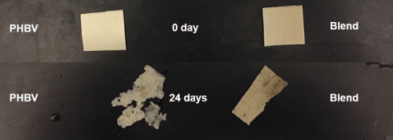
Study shows potential for Earth-friendly plastic replacement

New biodegradable ‘plastic’ is tough, flexible

500_biodegradation-312743

The new bioplastic and rubber blend devised by Ohio State researchers proved much more durable than the bioplastic on its own

The quest to keep plastic out of landfills and simultaneously satisfy the needs of the food industry is filled with obstacles.

A biodegradable replacement for petroleum-based products has to meet all sorts of standards and, so far, attempts at viable replacements from renewable sources have faced limited success due to processing and economic constraints. Among the obstacles, products to date have been too brittle for food packaging. Continue reading
Renewables For Communities In Need

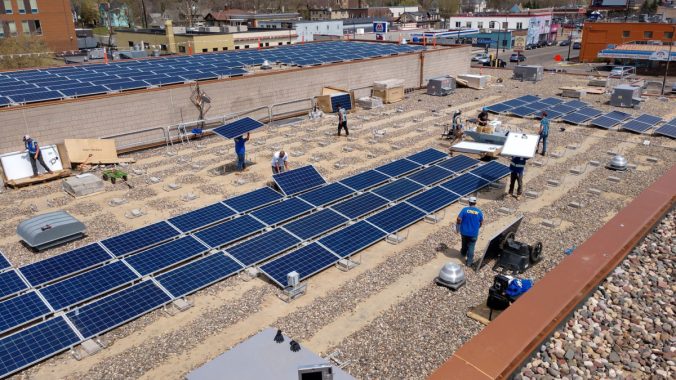
CEF_Shiloh-Temple_IMG_20180503_133709053_HDR_web.jpg

EnterA 204-kilowatt community solar array being installed on the roof of the Shiloh Temple International Ministries in Minneapolis. COURTESY OF COOPERATIVE ENERGY FUTURESa caption

Thanks to Maria Gallucci and Yale e360 for this:

Energy Equity: Bringing Solar Power to Low-Income Communities

Millions of Americans lack access to solar energy because they cannot afford the steep upfront costs. Now, more than a dozen states are adopting “community solar” programs that are bringing solar power and lower energy bills to low-income households from New York to California.

GRID-Alternatives_CO-Solar-Training-Academy-Platteville-0818-03_web.jpg

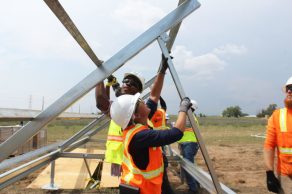
Workers receive job training while building a shared solar farm in Platteville, Colorado. COURTESY OF GRID ALTERNATIVES
Isbel “Izzy” Palans lives in a small cabin nestled among mountain peaks and towering trees in the Colorado Rockies. Her home is often shaded and, during the long winters, buried under heaps of snow. Her monthly utility bills show credits for solar electricity production, but no solar panels are affixed to her roof. Instead, the power comes from a solar array some 60 miles away in a nearby valley.
Last year, the panels nearly slashed her energy bill in half. “I’ve been thrilled,” said Palans, a 76-year-old retired waitress who relies partly on Social Security benefits to make ends meet.

Groundswell_DC_Dupont-Church_IMG_1237_web2.jpg

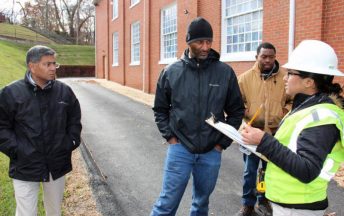
Solar contractor Brad Boston (center) and utility representatives meet with engineer Pranay Kohli to discuss a community solar project at DuPont Park Seventh Day Adventist Church in Washington, D.C. COURTESY OF GROUNDSWELL

Palans is a subscriber to a 145-kilowatt solar array project run by Holy Cross Energy, a rural utility cooperative. Built with state funding, the program provides solar credits to more than 40 low-income households in western Colorado that otherwise wouldn’t have the financial or technical means to access renewable energy. The venture is just one of a growing number of so-called “community solar” projects across the United States focused on delivering renewable energy — and the cost-savings it can provide — to low-income households, from California to Minnesota to Massachusetts. Continue reading

Impossible Made Possible By Pat Brown

01impossible1-jumbo.jpg

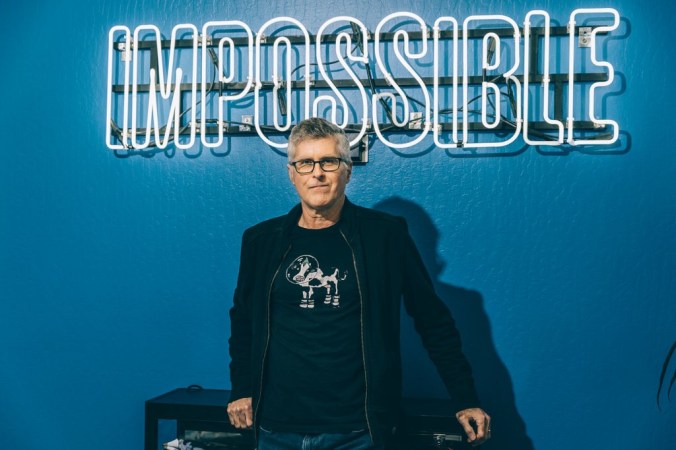
“Our whole focus is on making products that deliver everything that meat lovers care about,” said Pat Brown, the chief executive.  Matt Edge for The New York Times

We were waiting patiently for this day to come. Impossible has had our attention for a couple years now, but who knew when it would go really big? The time is now:

Behold the Beefless ‘Impossible Whopper’

Burger King is introducing a Whopper made with a vegetarian patty from the start-up Impossible Foods. The deal is a big step toward the mainstream for start-ups trying to mimic and replace meat.

OAKLAND, Calif. — Would you like that Whopper with or without beef?

merlin_142926714_e16db61c-10ca-410f-a951-850718fda06a-jumbo.jpg

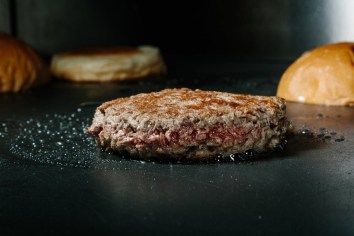
An Impossible Foods burger on the grill at the company’s headquarters in Redwood City, Calif.CreditJason Henry for The New York Times

This week, Burger King is introducing a version of its iconic Whopper sandwich filled with a vegetarian patty from the start-up Impossible Foods.

The Impossible Whopper, as it will be known, is the biggest validation — and expansion opportunity — for a young industry that is looking to mimic and replace meat with plant-based alternatives.

Impossible Foods and its competitors in Silicon Valley have already had some mainstream success. The vegetarian burger made by Beyond Meat has been available at over a thousand Carl’s Jr. restaurants since January and the company is now moving toward an initial public offering.

White Castle has sold a slider version of the Impossible burger in its 380 or so stores since late last year. Continue reading

From South-South To North-North

merlin_150668253_8478433b-acb1-4e50-ad5c-07753a4a7545-jumbo.jpg

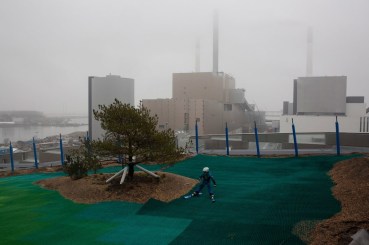
The beginning of a ski run on the roof of Copenhagen’s new trash incinerator, which will help heat buildings in the city. Photograph by Charlotte de la Fuente

South-south cooperation has been an important learning mechanism for some time and we have shared plenty of those stories in part because those places are where we work. According to Somini Sengupta Copenhagen Wants to Show How Cities Can Fight Climate Change,  so we now also should be paying attention to the northern counterpart of the cooperation that has been getting all our attention:

merlin_150668361_cc20049e-a87c-46f1-a7d1-8dcb474d3f5f-jumbo.jpg

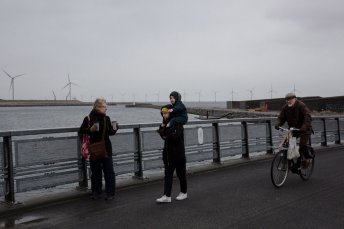
Wind turbines along the strait that separates Denmark from Sweden, seen from the Amager Strandpark in Copenhagen. Photograph by Charlotte de la Fuente

COPENHAGEN — Can a city cancel out its greenhouse gas emissions?

Copenhagen intends to, and fast. By 2025, this once-grimy industrial city aims to be net carbon neutral, meaning it plans to generate more renewable energy than the dirty energy it consumes.

merlin_150668178_4d6ca480-2e7d-41c4-b2ca-263eb31c8490-jumbo.jpg

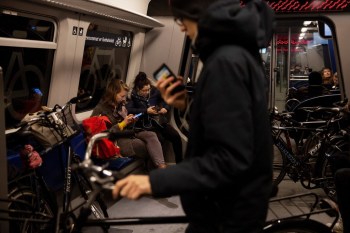
The Copenhagen Metro. A new line, scheduled to open this year, will put most residents less than half a mile from a station. Photograph by Charlotte de la Fuente

Here’s why it matters to the rest of the world: Half of humanity now lives in cities, and the vast share of planet-warming gases come from cities. The big fixes for climate change need to come from cities too. They are both a problem and a potential source of solutions.

The experience of Copenhagen, home to 624,000 people, can show what’s possible, and what’s tough, for other urban governments on a warming planet.

merlin_150668325_10e1c59f-32f1-40bb-8099-87326409a305-jumbo.jpg

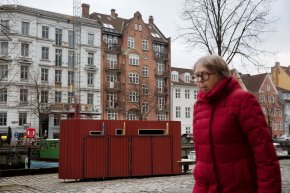
Recycling bins in the Christianshavn district of Copenhagen. The city requires residents to sort recycling into eight separate categories. Photograph by Charlotte de la Fuente

The mayor, Frank Jensen, said cities “can change the way we behave, the way we are living, and go more green.” His city has some advantages. It is small, it is rich and its people care a lot about climate change.

Mr. Jensen said mayors, more than national politicians, felt the pressure to take action. “We are directly responsible for our cities and our citizens, and they expect us to act,” he said. Continue reading