Chicago’s Vertical Farming

Plant Chicago, NFP/Rachel Swenie

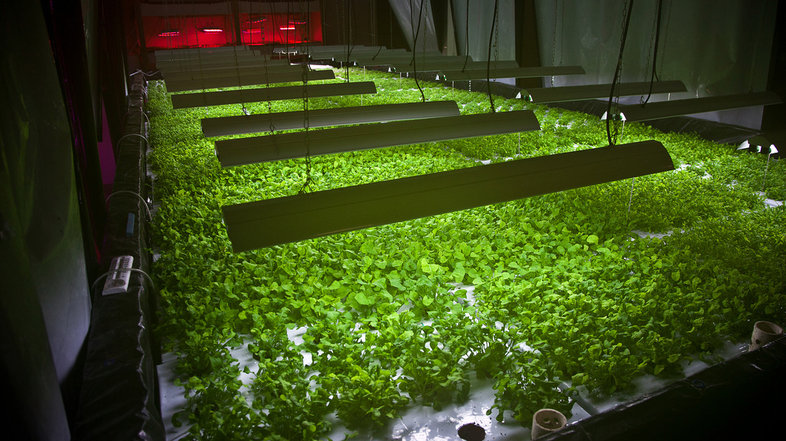
Arugula plant beds inside The Plant, a vertical farm operation in Chicago. Plant Chicago, NFP/Rachel Swenie

Thanks to National Public Radio (USA) for this story on their weekly program called The Salt:

From plant factories fueled by the magenta glow of blue and red LED lights, to the 30-foot tall Ferris wheel for plants in Singapore, we’ve shown you the design possibilities for growing vegetables up instead of out.

But critics ask, what kind of stresses does that put on the plant? And how do you feed this kind of intensive cultivation without spending more than what you get back in the harvest? Continue reading

The Lights Are On by Sylvia Moritz

tumblr_n0msx5vlNw1qz5g9bo1_1280

As noted yesterday, we will continue highlighting the best of the Young Creatives for the Do The Green Thing campaign. Raxa Collective’s operations teams at various properties can relate to Sylvia’s challenge to all of us to collaborate on conservation of electricity, whether in the hospitality community, the traveler community, in our residential home community or wherever:

Graphic designer and illustrator Sylvia Moritz wants to spell an end to the stupidity of leaving lights on in empty rooms.

“Electricity is a daily comfort we take for granted,” says Sylvia. “It is our sun when it is night, it is our means of living out our modern daily lifestyles. To recklessly exhaust this energy source, to squander something so integral to our survival, is wasteful. I hope this illustrated idiom can switch people’s behaviour.” Continue reading

Do The Green Thing Countdown 29/29

29 Posters Final Template

Today’s the day this series was designed for, and Shiv’s “Less Light” provides a fitting conclusion about doing the green thing this evening:

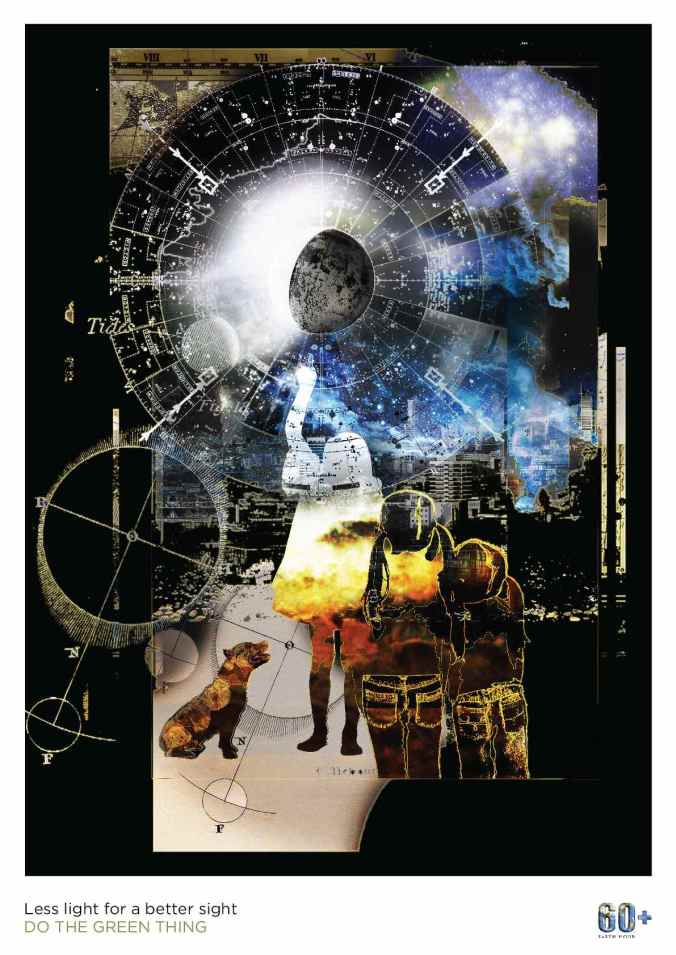
Illustrator and art director Shiv uses a blend of photography and computer trickery to create a bewitching image to get us warmed up for Earth Hour tomorrow evening. Her poster urges us to switch off, save energy and enjoy the the galaxies above. Shiv said:

“I moved out of London nearer the countryside a couple of years ago and what I love is how much of the sky at night i can see now. I think Earth Hour is a great opportunity to see the stars while the urban lights are down, and that everyone should take advantage of this.”

Why?

Continue reading

Do The Green Thing Countdown 28/29

tumblr_n33p2xFFaL1qz5g9bo1_1280

“Let’s Ride” is a cool, clean visual that says it all, whether you are already a member of the biking community, or yet to become one:

Josh Higgins built and led the design team behind Barack Obama’s 2012 presidential campaign and is now Communication Design Manager for Facebook. Using fresh colours and geometrical shapes, his poster rallies the world to do more bike riding and less driving.

“I have always loved cycling and rode a bike since age 6 because it is fun,” says Josh. “Now I am a bit older I realize it is so much more. Riding a bike is a proven stress releaser. It is great for our environment and whether you are riding purely for pleasure or to get from point A to point B, you will arrive feeling relaxed, energized and happier about the world.”

Why?

Continue reading

Committing To More Conversation In 2014

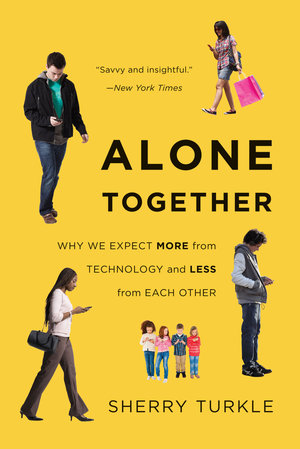
Well over a year ago there was an interview podcast that several of us at Raxa Collective listened to, discussed, and determined to write about, but none of us did. The idea was lost for nearly 15 months. Then, all of a sudden, in the first post today the word conversation appeared in a manner that reminded us of the Fresh Air interview with Sherry Turkle headlined:

In Constant Digital Contact, We Feel ‘Alone Together’

October 17, 2012

The book was reviewed in the New York Times three years ago this month, and together with the interview we just remembered, is still very much worth the while:

As soon as Sherry Turkle arrived at the studio for her Fresh Air interview, she realized she’d forgotten her phone. “I realized I’d left it behind, and I felt a moment of Oh my god … and I felt it kind of in the pit of my stomach,” she tells Terry Gross. That feeling of emotional dependence on digital devices is the focus of Turkle’s research. Her book, Alone Together, explores how new technology is changing the way we communicate with one another. Continue reading

The Hut of Romulus

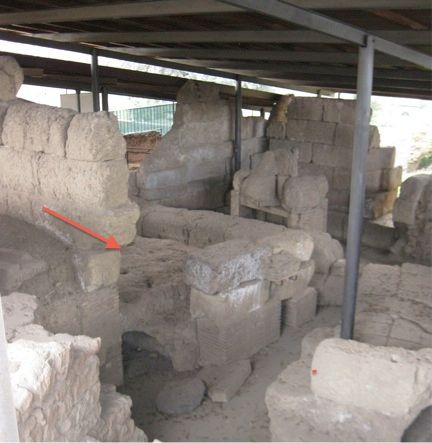
Hut of Romulus (Post holes where arrow is pointing.)

Today, all that remains of the so-called “Hut of Romulus” are the holes you see in the picture above (the slight indentations on the platform where the arrow is pointing). When intact, Romulus’ humble wattle-and-daub dwelling, located in the southwest corner of the Palatine Hill in Rome, might have looked something like this. One might have expected that the passing of nearly three millennia would not have treated well the wood, straw, and twisted bark ties of the hut, but even in its own day the Hut was prone to accidental destruction. One particularly ignominious story has a crow dropping Continue reading

Cats And Dogs And The Golden Rule


This slideshow requires JavaScript.

When we posted about a unusual collaboration between cheetahs and shepherd dogs, we started watching for more news on the same.  This website tells a different story about feline-canine common interests, with a clear reminder about the human interest in behaving more empathetically toward our neighbors:

CHEETAH AND AFRICAN WILD DOGS NEED LOTS OF SPACE: Of all the large carnivores of Africa cheetahs and wild dogs need lots of space. Recognition of this led to the RANGE WIDE CONSERVATION PLANNING PROCESS bringing together all sectors of society to develop frameworks under which all stakeholders – government, community and private – can work together to ensure the survival of these iconic species. Use this website to learn more about this innovative approach, the distribution of the two species, who is working to help them and what is being done on the ground. Continue reading

Citizen Science in Belize: Part 1/2

Photo © ReefCI

Photo © ReefCI

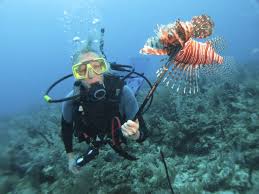
It might seem strange to accompany a posting about marine conservation with a photo of a fish on a spear, but in this case, it is entirely warranted.

I recently returned from the Sapodilla Cayes Marine Reserve in Southern Belize, where I spent two weeks working as a volunteer with ReefCI, a NGO dedicated to coral reef ecosystem conservation. Located 30 miles off the coast of Belize on the southern tip of the Mesoamerican Barrier Reef (the second largest in the world, after Australia’s Great Barrier Reef), the Sapodilla Cayes constitute a unique ecosystem.

Along with other volunteers, I assisted the ReefCI marine biologist with population surveys of conch, lobster, and commercial fish species, as well as coral reef health checks. At least one, and sometimes two surveys were carried out each day. The data collected is provided to the Belize Fisheries Department as well as to other cooperating NGOs.

Now about that fish on a spear. One of ReefCI’s projects is lionfish control. Spears Continue reading

Noise Pollution’s Viral Enemy

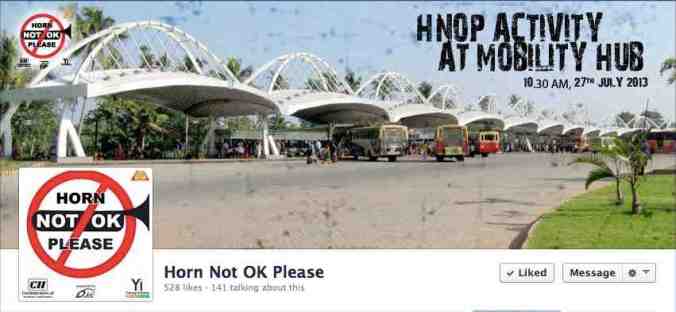
Yesterday was another milestone for anti-noise pollution’s cleverest activists in India. We have mentioned this project, introduced here when it was still just a catchy much-needed idea, but it has now become a movement. We are still hoping for an update in person from the idea’s originator, but meanwhile: don’t honk if you like HNOP, but like it on Facebook!

Stuff, Change, And Examining Broke

View the video by clicking the image above, again brought to you on Cornell University’s website:

The United States isn’t broke; we’re the richest country on the planet and a country in which the richest among us are doing exceptionally well. But the truth is, our economy is broken, producing more pollution, greenhouse gasses and garbage than any other country. Continue reading

Reducing Waste While Contributing to Communities

When “first world” travelers are planning a trip to the “third world”, their doctors often require them to take a handful of vaccinations, and a few prescriptions. This summer, about 40 students from a graduate program at the University of Western Ontario interned in Kerala, hosted by Raxa Collective; many of them, to err on the side of caution brought medicines for tropical diseases, including malaria. However, most of those medications are not needed in Kerala, whose health profile is comparable to Costa Rica, and which happens to be malaria-free.

As weeks progressed, many of the interns stopped taking their pills and consequently they were left with an excess, which are worth much more to those in need than in the garbage can back home. Continue reading

Cornell Tech Redefines “Industrial Complex”

Architectural firm WEISS/MANFREDI project rendering

Architectural firm WEISS/MANFREDI project rendering

When President Eisenhower warned of the rising power of the hyphenated industrial complex his concerns were clearly well-founded. Cornell NYC Tech, the upcoming Roosevelt Island campus of graduate high-tech education, is in the process of rehabilitating the concept of collaboration with industry with the development of its first “corporate co-location” building.

“Cornell Tech is radically rethinking how industry can collaborate with faculty, students and researchers, and corporate co-location is vital to making that a success,” Continue reading

Seasteading, Self-Reliance Utopia, And Our Shared Future

An article recently published in n+1 examines a utopian futurist form of an idea that seems oddly symmetric with Seth’s posts about the history of exploration using Iceland as a case study. Looking back, we see much in common with explorers, pioneerspilgrims and adventurous thinkers of all sorts.  Looking forward, we are inclined to embrace smart, creative, enthusiastic group efforts to resolve seemingly intractable challenges. Especially when they involve living on boats. We recommend reading the following all the way through:

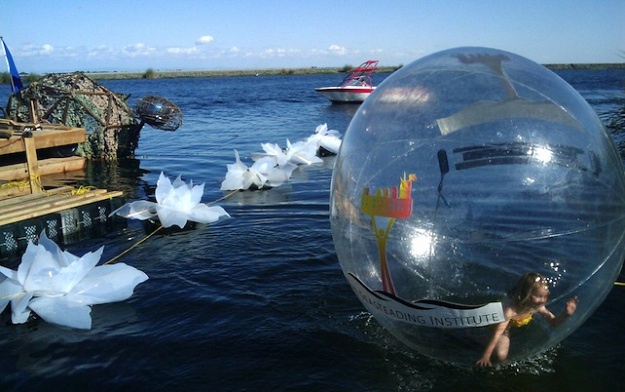
To get to Ephemerisle, the floating festival of radical self-reliance, I left San Francisco in a rental car and drove east through Oakland, along the California Delta Highway, and onto Route 4. I passed windmill farms, trailer parks, and fields of produce dotted with multicolored Porta Potties. I took an accidental detour around Stockton, a municipality that would soon declare bankruptcy, citing generous public pensions as a main reason for its economic collapse. After rumbling along the gravely path, I reached the edge of the Sacramento–San Joaquin River Delta. The delta is one of the most dredged, dammed, and government subsidized bodies of water in the region. It’s estimated that it provides two-thirds of Californians with their water supply.  Continue reading

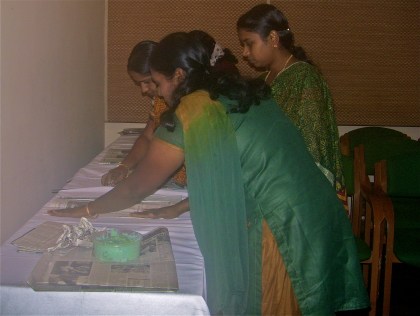
Training session at the newspaper bag unit

Our newspaper bag unit is a permanent, exciting work-in-progress. Using upcycled newspapers provides us with an alternative  to plastic bags in our two shops at Cardamom County– the Raxa Collective store and the via kerala shop. It is also a way to work with more people in our community. We have been working at making this unit a sustainable entreprise with many collaborators since the beginnings of Raxa Collective in 2011.

Newspaper bag training unit - Raxa Collective Continue reading

WED 2013 : Learning To Finish That Meal…

WED 2013 - Raxa Collective

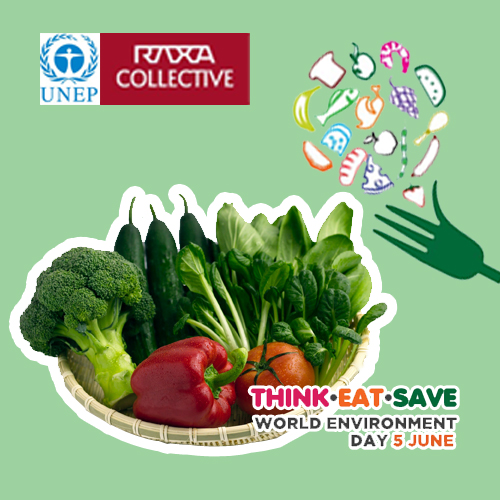
On June 5, we’ll celebrate World Environment Day. This year UNEP focuses on Food waste/Food Loss. At Raxa Collective we’ll be carrying out actions and sharing experience and ideas. Come and join us with your tips to preserve foods, preserve resources and preserve our planet.

As a child, I was always told to finish eating my meals because there were starving children in poor and faraway lands that would gladly trade places with me.  I could not exactly picture what that meant, and the rebelious part of me always wanted to stick a postage stamp on my plate and send it to these children.  No one who grew up with such abundance, I think, could trade the fresh memory of a full meal for a clear picture of hunger.

Being from Texas (and proud of it, so don’t mess with that), with its long “bigger and better” history and wonderful mythology of abundance and its can-do certainty, I did not “get it”.  Now, the hazy memories of those dinners and parental wisdom are coming into perspective with my ability to follow and understand news from around the world.

Continue reading

Barefoot College

This slideshow requires JavaScript.

This organization and its founder came to our attention recently in a by-now familiar manner: our go-to podcast for interesting and inspiring stories of entrepreneurs, From Scratch, featuring Bunker Roy. Read about Barefoot College here and then click through their site to see more about their accomplishments:

In the late 60’s, a very small group of determined individuals in India, coming out of a sound educational system, felt it necessary to look for alternative ways of living, thinking and looking for rural solutions. Continue reading

Community, Collaboration, Career

If you spend five minutes listening to Gerald Chertavian in the video above, and it resonates in any manner, then you should learn more about the organization he formed.  It came to our attention, as many other great stories have recently, thanks to From Scratch, Jessica Harris’s radio show and podcast repository. Continue reading

For Bees, Europe Does The Right Thing

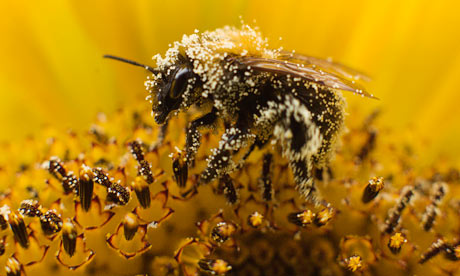
A bee collects pollen from a sunflower in Utrecht, the Netherlands. EU states have voted in favour of a proposal to restrict the use of pesticides linked to serious harm in bees. Photograph: Michael Kooren/Reuters

A bee collects pollen from a sunflower in Utrecht, the Netherlands. EU states have voted in favour of a proposal to restrict the use of pesticides linked to serious harm in bees. Photograph: Michael Kooren/Reuters

At a time when news out of Europe often points to political dysfunction, on at least one front we can point to some good news for these creatures who need help perhaps more than ever, and deserve it; they are finally getting it in at least one part of the world:

Europe will enforce the world’s first continent-wide ban on widely used insecticides alleged to cause serious harm to bees, after a European commission vote on Monday.

The suspension is a landmark victory for millions of environmental campaigners, backed by the European Food Safety Authority (EFSA), concerned about a dramatic decline in the bee population. The vote also represents a serious setback for the chemical producers who make billions each year from the products and also UK ministers, who voted against the ban. Both had argued the ban would harm food production. Continue reading

University-Based Groups Worth Noting

syn-mosaic

An occasional feature, beginning here, will point to university-based groups–informal organizations, living arrangements, secret societies, etc.– we can relate to:

Co-operative societies bring forth the best capacities, the best influences of the individual for the benefit of the whole, while the good influences of the many aid the individual.

Leland Stanford
October 1, 1891
Stanford University Opening Ceremonies

Camera Traps, Unite

This slideshow requires JavaScript.

Sharing technology, data, knowhow.  Pooling resources in the common interest across regions of the tropical world for the sake of biodiversity conservation.  Take a look at what TEAM is doing. A six minute video appears on the Guardian‘s website, providing much-appreciated coverage:

One million images of wildlife in 16 tropical forests around the world have been captured by the Tropical Ecology Assessment and Monitoring (TEAM) Network. Since it began its work in 2008 to monitor changes in wildlife, vegetation and climate, cameras in the the Americas, Africa and Asia have photographed more than 370 different species including elephants, gorillas, chimpanzees, large cats, honey badgers, tapirs and tropical birds Continue reading