Entrepreneurial Conservation In The Cabinet

idy0zePVhYWU

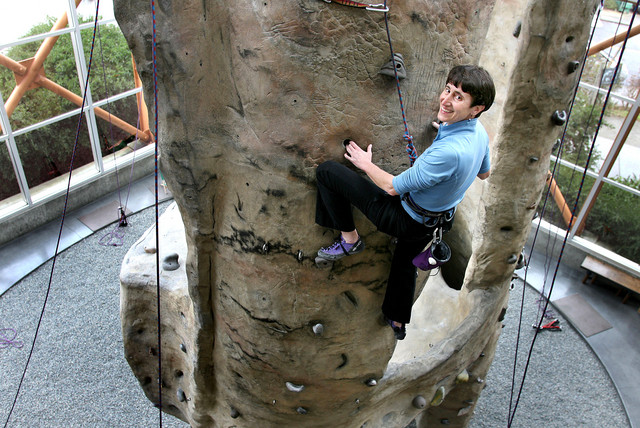
Recreational Equipment, Inc. (REI) CEO Sally Jewell climbs the 65-foot rock climbing pinnacle at REI’s Seattle flagship store. Photographer: Scott Cohen/AP Photo

We stay out of politics, for the most part, but point to interesting events when we notice them. This news qualifies, because it seems the leader of one big country has captured the spirit of entrepreneurial conservation in a rather visible way, choosing a business leader to run the largest conservation component of the federal government. Oddly, she appeals to both environmentalists and industrialists, but that is the point. This choice is outside the box, and seems to tap into some of our favorite “c” words. As the article below notes, this business person has led some important collective action initiatives, building a community to ensure that this political leader gives conservation the attention it deserves. We laud both of them for cooperating in such a creative manner:

President Barack Obama said he has selected Sally Jewell, chief executive officer of Recreational Equipment Inc., to be secretary of the U.S. Interior Department in his second-term Cabinet.

Jewell’s background as an engineer and experience in the banking, energy and retail industries give her the skills needed to run a department that oversees 500 million acres of public land, Obama said as he introduced her at the White House. Continue reading

Farming, Biodiversity & Cooperative Conservation

All over the world farmers like Bishnu Maya (in Nepal) are the main custodians of agricultural biodiversity through the conservation, use and improvement of plant genetic resources on-farm

Click the image above to go to the source of this interesting look at the relationship between farming, biodiversity and conservation:

The study ‘Flows under stress: availability of plant genetic resources in times of climate and policy change’ describes how eight members of the CGIAR Consortium, whose research is focused on plant genetic resources, are (re)organizing their conservation and improvement activities in light of climate change adaptation. Continue reading

What Would Jean Jacques Rousseau Do?

Our rivers and natural resources are to be valued and commodified, a move that will benefit only the rich, argues George Monbiot. Photograph: Alamy

Click the image to the left to go to the editorial opinion of one of The Guardian‘s environmentally-oriented writers.  It starts with a quotation from Jean Jacques Rousseau; not shabby:

‘The first man who, having enclosed a piece of ground, bethought himself of saying ‘This is mine’, and found people simple enough to believe him, was the real founder of civil society. Continue reading

A Learning Laboratory (Stop Motion Video!)

Yesterday, Jonathon, Siobhan, Milo, and I moved into one of the new Raxa Collective properties under development. As the four of us huddled silently under our covers, the backwaters of Kerala’s nighttime accompanied Jonathon’s ghost stories…

Instead of spooky tales, though, today I want to share with you another story Jonathon narrates, Raxa Collective presents “A Learning Laboratory.” It’s a short video, Jonathon (narrator), Sunnie (illustrator), Siobhan (director), and I (producer) put together with the help of all the staff and summer interns to highlight some of the best anecdotes of how Raxa Collective’s Cardamom County ecolodge has acted as a “learning laboratory” for its staff, international trainees, and summer interns.

Enjoy!

Man-Machine Collaboration

Click the banner above to go to the source, one of National Public Radio’s many excellent podcasts (this one being among our favorite, as you may have noticed here, as well as here and here, not to mention here):

Here’s a robot from Ishikawa Oku’s physics lab at the University of Tokyo that plays rock, paper, scissor and always beats the human, every single time. Because the team that built it gave it a superpower.

We’re No Angels

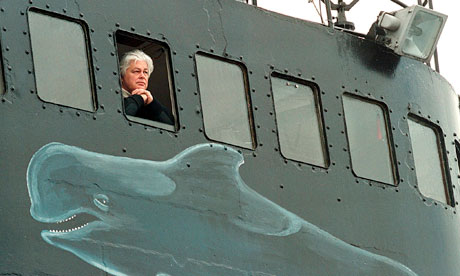
Captain Paul Watson says that the alleged incident in 2002 did not occur in Costa Rican waters. Photograph: Corbis

He’s no angel.  That would be the view of whaling and fishing interests, which include countries and big companies (plus plenty of soulless mercenaries, poachers and thugs).  Whales might think otherwise. 800 large endangered bluefin tuna, saved from poachers by this man and his organization, might too.  He counts plenty of our contributors as admiring, angel-cheering, distant observers.  Our observations are tempered by acknowledgement of the conundrums wrapped up in his in-your-face, semi-legal tactics (not our style).  But we care about fisheries and related topics as much (while trying to keep our wits about us) as those complexities.  And those forces Paul Watson is battling are certainly not always angelic themselves. Nor are we, always, for that matter.  Click the image above for the story in The Guardian:

California-based marine conservation organisation Sea Shepherd suspects that Costa Rica may have made a deal with Japan to have him extradited. Continue reading

News From Rio

After more than a year of negotiations and a 10-day mega-conference involving 45,000 people, the wide-ranging outcome document – The Future We Want – was lambasted by environmentalists and anti-poverty campaigners for lacking the detail and ambition needed to address the challenges posed by a deteriorating environment, worsening inequality and a global population expected to rise from 7bn to 9bn by 2050.

Click the image above for the coverage in The Guardian.

Story’s It

I can trace it back to the beginning for you, trace my Moth addiction to its start. For the uninitiated, the Moth is an organization devoted to the craft of storytelling. It’s real people telling true stories, “live and without notes.”

So can I.  Click the image above to read Nathan Englander’s engaging account of telling stories in front of a live audience.  Reading it I am reminded of my recently untended year-old efforts to further articulate Why La Paz Group?

Continue reading

Back To The Commons

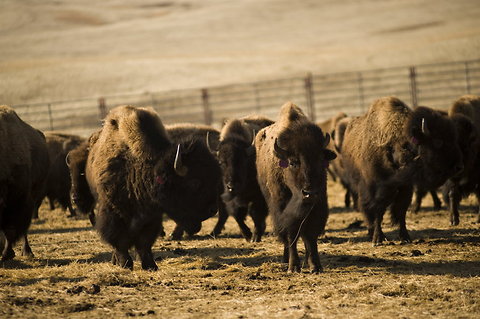
Cattle graze on public lands under federal permits, and the fee is heavily subsidized — $1.35 per head of cattle, in contrast with the $22 per head that ranchers pay for their cattle to graze on private land.

Most days we find stories that bring us back to one of the common themes affecting, and affected by, the one or more of the three “c” words in our site’s banner.  Just this last week, in two very different contexts–the Mediterranean fisheries and the great plains of the western USA–we see the potential for the tragedy so commonly affecting unrestricted and accessible open spaces.

Click the image above to go to the second of these stories.  While we do not believe markets solve all problems, and certainly do not solve the most complex problems easily, this one seems to be the definition of a no-brainer.  Or at least, the questions seem obvious: why do citizens in the USA, who contribute to ranchers abundantly at the supermarket each week, also contribute so generously on April 15 each year?  If they reduced the latter would they reduce the former? And would that not be a good thing, in terms of health and environmental considerations?

The Upside of Empire

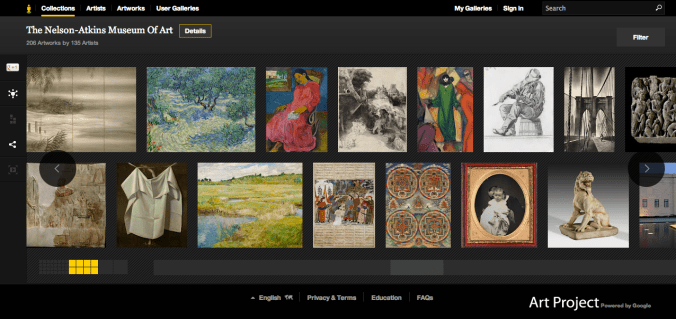
For art lovers nothing quite tops the experience of standing before a favorite painting, sculpture or tapestry, far from the madding crowds, soaking in the aura of history.  But few of us have the luxury of being able to visit the “Hermitage” in the morning and the Musée d’Orsay in the afternoon, not to mention the connections that would enable a personalize tour with the curator.

Over the past year Google has put its technological powerhouse behind a project that brings over 30,000 pieces of art from 151 museums in 40 countries into the home of anyone with a computer and an internet connection. Continue reading

Rice

I recently read the fascinating story of Inakadate, a small village in northern Japan struggling against a global economic downturn.  The rural community with a population of fewer than 10,000 people had none of the charismatic landscapes that typically drive tourism. Twenty years ago a clerk in the Town Hall was asked to figure out how to bring that very thing to the bucolic village surrounded by rice paddies and apple orchards.

The story goes that Mr. Koichi Hanada saw school children planting purple and bright green rice as a class project when it occurred to him that the varied hues could be used like a natural artist’s palette. Continue reading

“I Will!”

What began as a WWF Australia project to focus public attention on climate change has turned into an international movement that has become the largest voluntary action ever witnessed, reaching 1.3 billion people across the globe.

In the best possible way the movement has gone viral, expanding exponentially, bringing people together in a celebratory atmosphere that represents the power of social media and a good idea. Continue reading

Cottage Industry

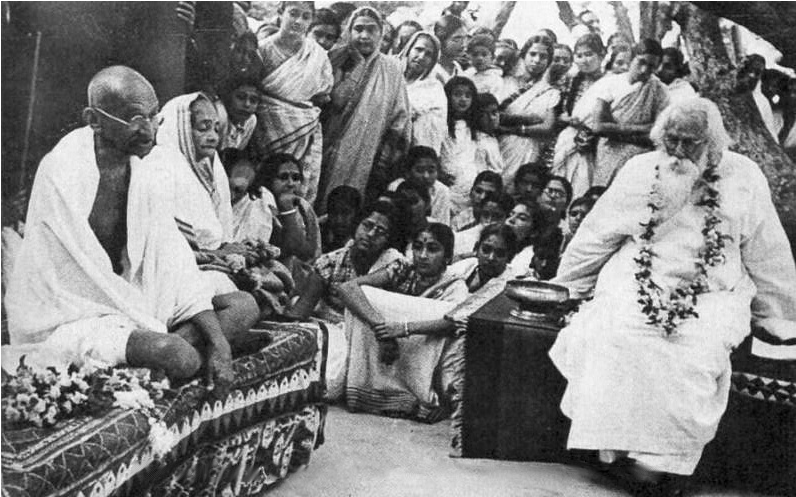
Nobel Laureate Rabindranath Tagore founded Shanti Niketan (meaning an Abode of Peace) laying the foundation for what is today known as Vishva-Bharati University, home of one of the best art colleges in the world. In 1922 Mohandas Karamchand Gandhi visited Santiniketan and met Sushen Mukherjee, a young man inspired by the movement for Indian Independence. The meeting influenced Mukherjee to set up Amar Kutir “my cottage” in 1927, establishing a rudimentary cottage industry for sari printing, handloom, and leather craft production 15 miles away from Santineketan on the banks of the Kopai River near West Bengal. Continue reading

Optimism and Opportunity

Many of my posts reflect my outlook to err on the upside of life’s circumstances.  I try to drown out my inner (and often powerful) pessimism by surrounding myself with positivity and optimism.  I find that this is a careful balance of being hopeful while remaining realistic.  Today, when I was taking a break from my coursework, or the slightly negative part of my day, I watched an encouraging Ted Talk that I think demonstrates hopeful realism.

Johan Rockstrom suggests that the earth is at a point where major transformation must occur.  He optimistically recommends that we use and continue to use crises as opportunities and local initiatives to transform and sustain life.  Also, he makes a realistic statement that climate change is not our biggest problem only a symptom of our land use.

I found this talk engaging and thought-provoking.  I agree that I transformation is soon to happen and I look forward to being a part of it.

Evolved Cooperation

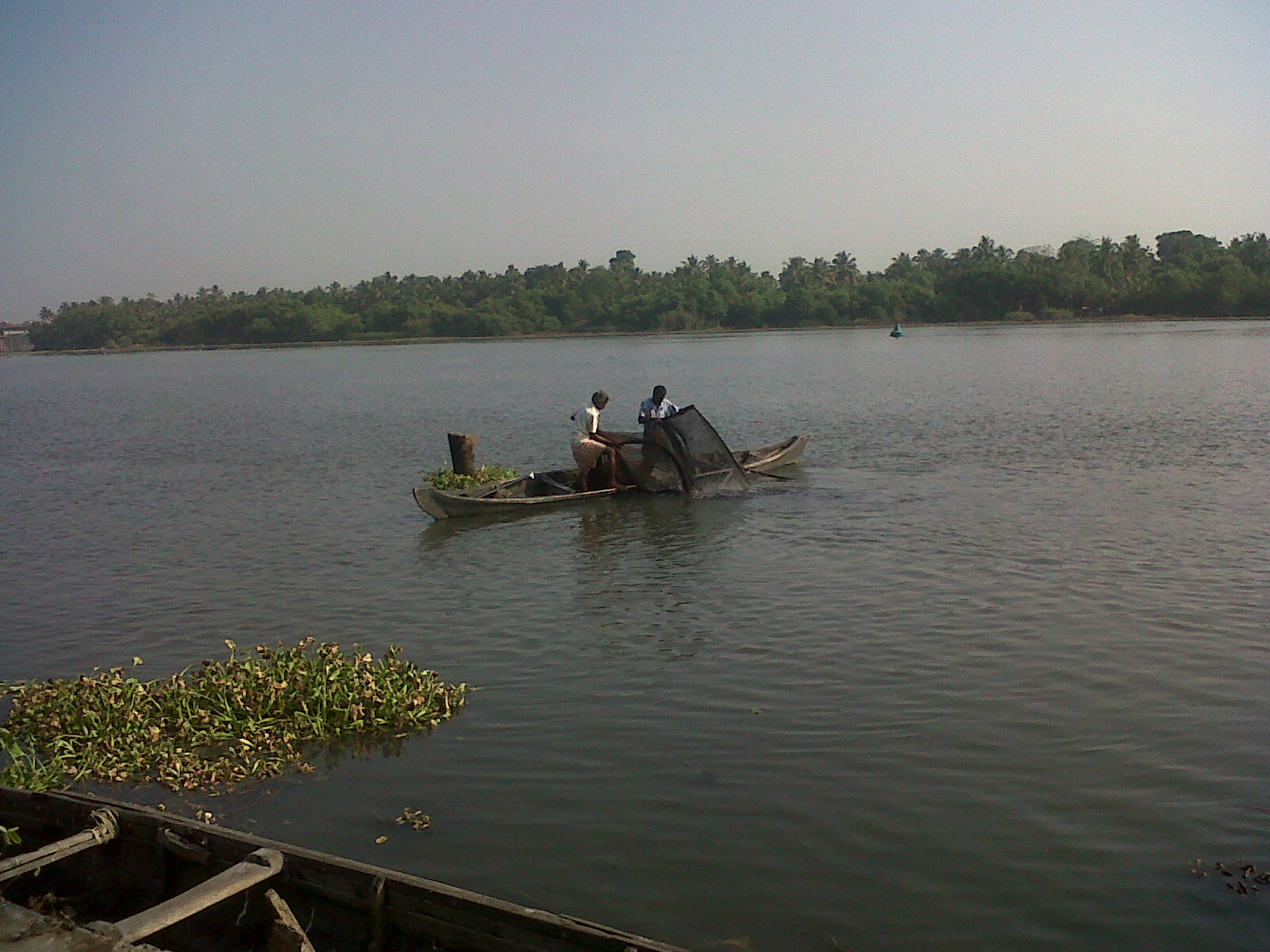
Any given morning in the neighborhood called Thevara, where we have some wonderful friends, the fishermen do their thing a few meters from the riverfront walkway.  To call that cooperation is like calling the kettle black.  But just as we found this explanation of man-animal cooperation fascinating, this morning’s mobile phone snapshots got interesting.

Continue reading

The Evolution Of Cooperation

Several earlier posts have touched on the topic–how cooperation (or altruism, defined here) comes about, overcoming the problems associated with the potential for free riders and other collective action barriers.  The current issue of Nature contains findings from the research of a team at Harvard Medical School.  If you are a subscriber to the journal click the image above to go to the research.  If you want a four minute synopsis with excellent visuals, jump the jump.

Continue reading