Instagram’s Hashtag Alerts to Highlight Animal Abuse

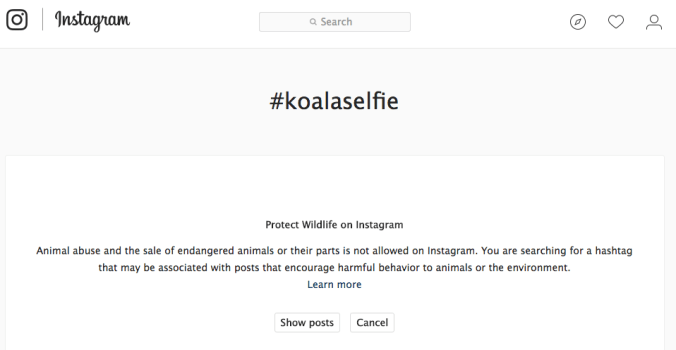
This is the message that now appears on Instagram if you search for a hashtag like #koalaselfie

I post on Instagram a couple times a month, but I often browse pictures on the app at least once a day. I can’t say that I’ve encountered photos like those described in the NatGeo article below, but I’m still thankful that Instagram is taking action to try to keep it that way, by pointing out to people using certain hashtags involving wildlife that the animals may be suffering behind the scenes:

Instagram is rife with photos of cute wild animals—including the exotic and endangered. A picture of someone hugging a sloth or showing off a pet tiger cub is just a click away on the massively popular photo-sharing platform, which serves 800 million users.

But starting [December 4th], searches for a wide range of wildlife hashtags will trigger a notification informing people of the behind-the-scenes animal abuse that makes some seemingly innocent wildlife photos possible.

Instagram will now deliver a pop-up message whenever someone searches or clicks on a hashtag like “#slothselfie.” The message reads, in part, “You are searching for a hashtag that may be associated with posts that encourage harmful behavior to animals or the environment.”


Continue reading

Ben & Jerry & Labor

04MIGRANT-01placeholder-master768

Ben Cohen, left, and Jerry Greenfield, the founders of Ben & Jerry’s, in 2010. The company, which is now owned by Unilever, announced an agreement that establishes labor standards for the Vermont dairy farms that are its suppliers. Credit Ade Johnson/Agence France-Presse — Getty Images

We do not normally feature corporate food conglomerates in these pages, because there is not normally good news to share; but Ben & Jerry are not normal. Good on them for this:

For years, Ben & Jerry’s took steps to make sure that its ice cream did not contain artificial growth hormone. The company also has a self-imposed fee on its greenhouse gas emissions.

What Ben & Jerry’s did not have was a reliable way of ensuring that the dairy farms supplying it with milk were providing humane conditions for their workers, a major issue in an industry where many people work seven days a week for less than minimum wage.

On Tuesday, the ice cream maker, which is based in Vermont, took a big step toward changing that, signing an agreement with a farmworkers’ group that establishes labor standards for the company’s suppliers in the state, and creates an enforcement strategy that encourages workers to speak up about violations. Continue reading

Model Mad, National Monument Protection Coalition

Arch Canyon, within Bears Ears national monument in Utah. Bears Ears is under threat from the Trump administration. Photograph: Francisco Kjolseth/AP

More examples of corporate social responsibility and activist collaboration taking the higher ground position over flawed public policy.

Native Americans and environmental advocates get help from outdoor retailers as they battle proposal to change monuments’ boundaries

Environmental activists, Native American groups and a coalition of outdoor retailers have vowed to redouble their efforts to protect public lands, after the US interior secretary, Ryan Zinke, recommended on Thursday that Donald Trump change the boundaries of a “handful” of national monuments.

“Secretary Zinke’s recommendation is an insult to tribes,” said Carleton Bowekaty, co-chairman of the Inter-Tribal Coalition, which asked Barack Obama to create the Bears Ears monument in Utah in 2015, citing increasing thefts and vandalism at more than 100,000 native cultural sites in the area.

Millions of petitioners have joined an urgently assembled advocacy effort to dissuade the Trump administration from moving against the monuments. On Friday, the outdoor retailer Patagonia, which spearheaded the industry initiative, said the group would continue its efforts. Continue reading

Have Cause Will Travel

Ring-Your-Rep-Phone-Night

We have found that when travelers can support a cause they believe in while traveling, they will go out of their way to do so. When our hotelier colleagues make it easier for a traveler to support a cause, we can only celebrate it:

The Standard Telephone Co. Wants YOU to Ring Your Rep

Over the past few months, we’ve been thinking a lot at The Standard about what we can do to support positive, productive activism. As we’ve gone out and talked to people who are engaged in this very thing, one piece of advice we’ve heard again and again is this: speak up! There are lots of ways to take action, lots of ways to make a difference, but there is no substitute for the simple act of making your voice heard. Continue reading

Understand Amazon Before The Next Train Leaves The Station

21khan-master768

Oliver Munday

Mark Twain called it the Gilded Age. In his period there was plenty of reason to be concerned about monopoly powers, especially those of railroads. Echoes in the present day, of reasons to be concerned about the same, seem to be getting louder and clearer. We have shared concerns about Amazon in the past. Those were mostly little creepy concerns. But little creepy things sometimes grow big. Sometimes Amazon big. Thanks to Lina M. Khan, a legal fellow with the Open Markets Program at New America and the author of “Amazon’s Antitrust Paradox,” recently published by the Yale Law Journal. She has made clear, in a concise essay, exactly what we need to be concerned about with Amazon.

…For consumers, so far, Amazon has delivered many benefits. Its Prime program enables users to receive, through a click, almost any item within two days. But for producers — those who make and create things — Amazon’s dominance poses immense risks. Continue reading

Environmentalism, It’s Just Good Business

Solar panels at the Googleplex, headquarters of Google in Mountain View, Calif. Its data centers worldwide will run entirely on renewable energy by the end of this year, the technology giant announced in December. Credit Smith Collection/Gado, via Getty Images

Although the current administration may be cloaking themselves in a fog of denial, we’re happy to read that much of corporate America is staying the course of their own emissions goals.

Nearly half of the Fortune 500 biggest companies in the United States have now set targets to shrink their carbon footprints, according to a report published Tuesday by environmental organizations that monitor corporate emissions pledges. Twenty-five more companies adopted climate targets over the last two years, the groups said.

Almost two dozen companies, including Google, Walmart and Bank of America, have pledged to power their operations with 100 percent renewable energy, with varying deadlines, compared with just a handful in 2015. Google’s data centers worldwide will run entirely on renewable energy by the end of this year, the technology giant announced in December.

“We believe that climate change is real, and it’s a severe crisis,” said Gary Demasi, who directs Google’s energy strategy. “We’re not deviating from our goals.” Continue reading

Gangsta Garden’s Gentle Giant

06Garden-master768

Ron Finley in a garden outside his home in Los Angeles. Credit Emily Berl for The New York Times

When Amie passed along a link to him way back when, it was all fresh news about an amazing challenge set up by an urban charismatic. Now that challenge has been turned around and amped up and we link again to Ron to help him gets what he needs:

Fighting Eviction, a Gardener Turns to Organic Industry Giants for Help

A Conversation About Sustainability

SustPanel2

This is a shout out to friends at Cornell University’s School of Hotel Administration, particularly the team leading this year’s Hotel Ezra Cornell, and especially Carmel Bendit-Shtull (she invited me to moderate this panel and for several months helped us plan it all out). The panel included Diana Dobin, President & Chief Sustainability Officer, Valley Forge Fabrics, Inc.; Bennett Thomas, SVP – Corporate Finance & Sustainability, Hersha Hospitality Trust; Eric Ricaurte, Founder, Greenview; Uttam Muthappa, Founder, Ithica Hospitality Consulting; & me (Panel Moderator). I will share a video of this if and when it is made available. Continue reading

Admire & Emulate

5333.jpg

It is not the first time we have enjoyed a good long read about either of these companies’ and/or founders, but this one in the Guardian offers a good look circa 2017:

Patagonia and The North Face: saving the world – one puffer jacket at a time

The retail giants are not only competing to sell outdoor gear – they are rivals in the contest to sell the thrill of the wilderness to the urban masses Continue reading

Demanding Action From Those Accountable

3110

Newly bleached coral on the Great Barrier Reef near Palm Island in February. Photograph: Australian Marine Conservation Society

We could not have said it better:

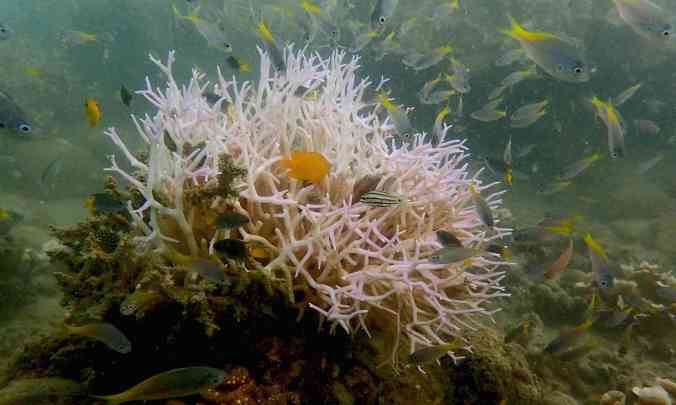
As the Great Barrier Reef faces the return of coral bleaching, why are Mantra, Accor and Marriott still silent on Adani? Continue reading

Model Mad, Corporate

oh418v0r-1Thanks to EcoWatch for identifying these companies for speaking out, as is their right and responsibility as much as their self-interest–a good self-interest in conservation–and providing another example of model mad, corporate style:

The most anticipated outdoor recreation event of the year just finished in Salt Lake City, Utah, where hundreds of outdoor brands from small business outfitters to industry pioneers like Patagonia and Black Diamond Equipment gathered to witness the cutting-edge in outdoor gear. Continue reading

Greening Museums

garden_drawing

Illustration by Emily Woodworth

There have been moments in recent months when continued attention to the little details we see, and link to concerning incremental improvements in environmental sensitivity, social responsibility, or any other sustainability metric seems akin to “rearranging the deck chairs on the Titanic.” Political turmoil, and specifically political commitment to dismantle environmental protection in various influential countries, might make incremental change seem even less significant to some. These deck chairs are different. Every instance of care and action is a data point worthy of attention, and we will continue to connect the dots. Today, from the Field Museum of Chicago and their awesome Green Team:

THE FIELD MUSEUM’S GREEN TEAM

A Greener Field (the Museum’s “green team”) began as a grassroots recycling effort in 1989, and now has over 40 members representing every area of the Museum.  Staff members who share the Museum’s commitment to improving sustainability attend monthly meetings which provide an outlet for them to share successes and challenges in terms of greening their departments, as well as a vehicle to initiate and help implement institution-wide programs.  From bike sharing programs to recycling and composting Continue reading

Food Waste Approaching Zero (Goals Are Powerful)

dsc_0080-90-beea8781c209d5611d13eacd9f03985d6f1a805d-s1100-c85

Junior Herbert, a volunteer with Olio, collects leftovers from vendors at London’s Camden Market. London has become a hub for apps and small-scale businesses that let restaurants and food vendors share leftovers with the public for free, and otherwise reduce the amount of edibles they toss. Maanvi Singh for NPR

Green entrepreneurship is alive and well in London (thanks to National Public Radio, USA, and its program the salt for this story):

Eat It, Don’t Leave It: How London Became A Leader In Anti-Food Waste

MAANVI SINGH

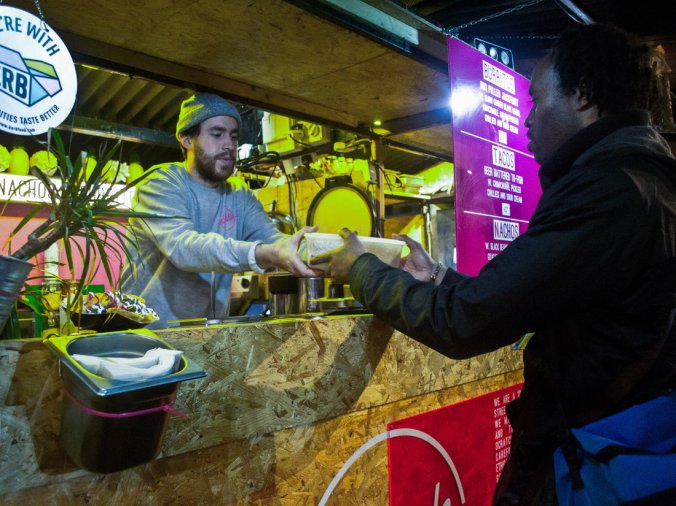
It’s around 6 o’clock on a Sunday evening, and Anne-Charlotte Mornington is running around the food market in London’s super-hip Camden neighborhood with a rolling suitcase and a giant tarp bag filled with empty tupperware boxes. She’s going around from stall to stall, asking for leftovers.

Mornington works for the food-sharing app Olio. “If ever you have anything that you can’t sell tomorrow but it’s still edible,” she explains to the vendors, “I’ll take it and make sure that it’s eaten.” Continue reading

Big Data & Environmental Activism

3702

Kate Brandt speaking at the 2016 SXSW Eco conference in Austin, Texas. Photograph: Diego Donamaria

We do not see enough of this type of story:

How Google is using big data to protect the environment

Google’s sustainability officer Kate Brandt outlines the company’s wide-range interest in sustainable fishing, green buildings and renewable energy

by Ucilia Wang

For many people, Google is simply the gateway to a vast archive of facts and memories. For those who pay closer attention to its business dealings, the company also invests billions to find new ways to use the power of computers: it’s developing robots, virtual reality gear and self-driving cars. Remember all the hubbub about Google Glass?

Google has been using the same approach in sustainability – spreading its wealth in a variety of projects to cut its waste and carbon footprint, initiatives which may one day generate profits. During the SXSW Eco conference this week, I caught up with Google’s sustainability officer, Kate Brandt, to find out more. Brandt joined the company in July last year after serving as the nation’s chief sustainability officer in the Obama administration. Continue reading

A Business Model To Fish For

patagonia

Heroes are, by definition, not easy to come by. When they get profiled, read it (this one is thankfully not merely fluff):

…The ordeal, and the perspective of middle age, snapped him to attention and caused him to refine the company’s mission. In the eighties, he’d been feeling increasingly uneasy about being a businessman and about the transformations and compromises that seemed inevitably to accompany corporate success. The company, he worried, was straying from its hard-core origins. “I was faced with the prospect of owning a billion-dollar company, with thousands of employees making ‘outdoorlike’ clothing for posers,” he said early in 1991, in a speech to the employees, in which he outlined his misgivings and his new resolutions. These subsequently appeared in the Patagonia catalogue, as a manifesto, under the heading “The Next Hundred Years.” Continue reading

High Fashion Upcycling

om-archist_upcycling

Source: triplepundit.com

The concept of upcycling has become a movement thanks to innovative and sustainable companies that divert our wasteful habits and produce other goods in order to recreate the cycle in nature: nothing goes to waste. An example of one of these companies in the clothing industry is Looptworks. The company only uses excess materials that would have otherwise been incinerated or ended up in landfills to create high-quality bags, accessories and apparel.

Co-founder Scott Hamlin noticed the issue of clothing material waste in the manufacturing process during the time he worked for a large outdoor apparel company.

“Thirty percent of our materials never actually got used in manufacturing,” Hamlin said of his prior work experience with an outdoor gear company. “To me, that was a huge issue that nobody was talking about. It was dealt with as ‘business as usual.’”

Continue reading

Can Environmental Regulations Increase Corporate Profits?

Image credit: Royal Olive via Flickr

A thought-provoking question, the economic and political debate over regulation and efficiency is one that has plagued governments long before the US Environmental Protection Agency was created. But with the EPA’s role in regulating pollution (among other things, of course) has come the question of whether corporations can actually benefit in the long run as a result of more stringent requirements that prevent wanton waste, for instance, being put in public waters. Sarah DeWeerdt reports:

According to conventional economic wisdom, the cost of complying with environmental regulations represents a burden that eats into companies’ profits. But another view, known as the Porter hypothesis, holds that environmental regulations can spur innovation and increased efficiency, ultimately increasing profitability.

Economists have debated these ideas for the past two decades but have had little direct empirical evidence to help settle the matter. Now, researchers Dietrich Earnhart of the University of Kansas and Dylan Rassier of the U.S. Department of Commerce have provided such a real-world test with a look at the U.S. chemical manufacturing industry between 1995 and 2001.

Continue reading

Water Bottles into Fleece


plastic-bottles-from-gm-plants-are-turned-into-insulation-for-these-jackets-650x433

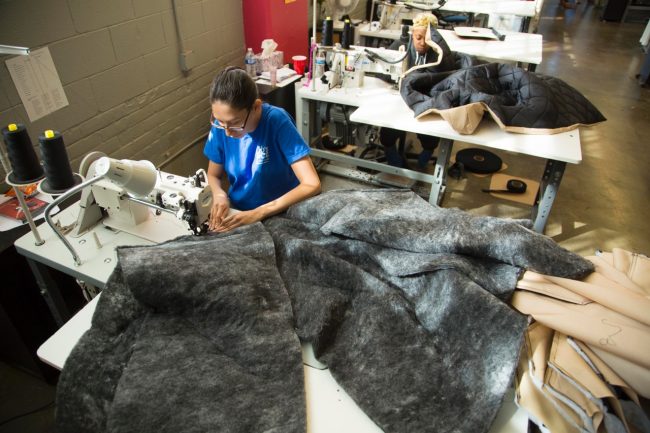
Plastic bottles from GM plants are turned into insulation for jackets. Source: General Motors

Converting to a Closed-loop business model from an Open-loop model presents its challenges, but General Motors (GM) is a good case study of a corporation that is making progress in the closed-loop direction. GM has a zero-waste agenda which encompasses a variety of recycling programs that uphold their claim:

In recent years, the company added used water bottles to its kit of raw materials. Two million water bottles, many of which are from Flint, have been recycled into three products, which include engine covers for the V-6 Chevrolet Equinox, air filters for 10 GM plants, and coats for the homeless through a partnership the company has with a Detroit nonprofit. Through this recycling program, GM says it works with a total of 11 organizations while boosting its waste diversion efforts.

[The] challenge the automakers face in using recycled products for parts is whether they can maintain the same quality and strength of conventionally made materials.

Continue reading

A Tetra Pak Social Experiment

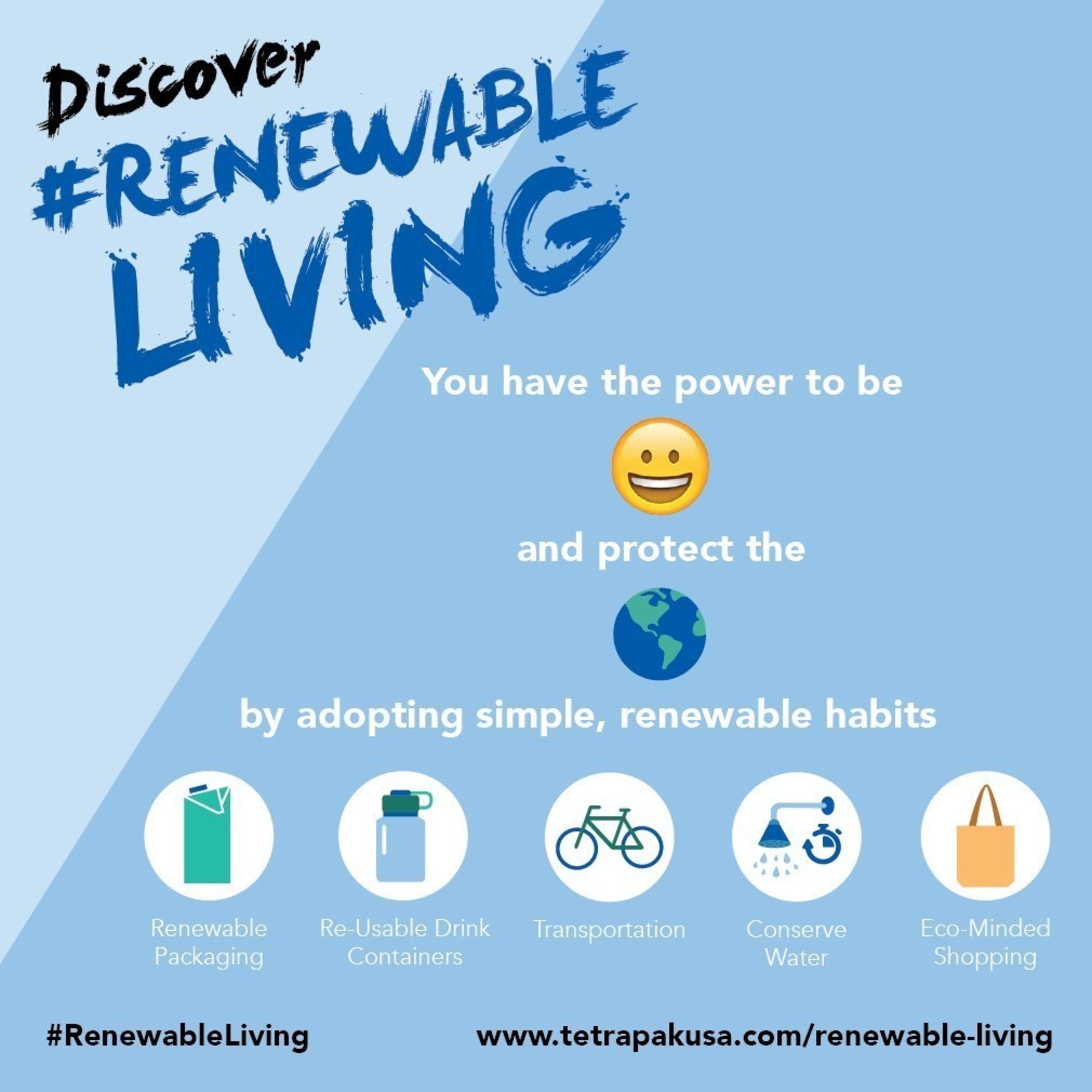
The packaging company Tetra Pak, perhaps best known for its milk cartons, is also dedicated to eco-efficiency and recyclability of its materials. Recently, they put together a study with the participation of ten women who maintain lifestyle blogs while also being mothers. Tetra Pak wanted to explore the sense of happiness that comes from practicing a small renewable habit every day, like using reusable bottles, choosing renewable product packaging, switching one outdoor habit to an indoor one, and others. Here are their key takeaway points from a white paper they released:

1. Start small and start now. Don’t over plan or procrastinate. Choose a habit you can change today and begin. Immediate, incremental changes can quickly become more automatic and result in increased happiness.

2. Cues are the key. Choose a behavior associated with a situational cue and make it more renewable.

3. Make a pact with yourself. Like a New Year’s resolution, commit to a goal and set out to achieve it. A personal contract may help to solidify the commitment, i.e. “When I encounter situation X, I will perform behavior Y.”

Continue reading

Good Spirited

Although we don’t particularly endorse consumption of alcohol or hold loyalty to any single brand or type of liquor, we’re always on the lookout for positive environmental news in any corporate setting, and we’ve recently learned that Bacardi Limited, perhaps the best-known makers of rum in the world (and owners of other alcohol brands Martini, Grey Goose, Bombay Sapphire, and Dewar’s Scotch), has been attempting to do better for the environment.

Called “Good Spirited,” (who doesn’t like a nice pun), Bacardi’s campaign involves recycling, waste reduction, energy efficiency, and other mechanisms to reduce the company’s environmental impact in the world and become more sustainable. For example, they’ve removed plastic straws and stirrers from their North American headquarter events in Florida and their Bombay Sapphire distillery in the UK, which they estimate will save more than 12,000 of the small plastic tubes from landfills annually.

In their original distillery in Puerto Rico, the company reuses water from rinsing Continue reading