Sandstructures, Just Because

16CHARACTER-master675

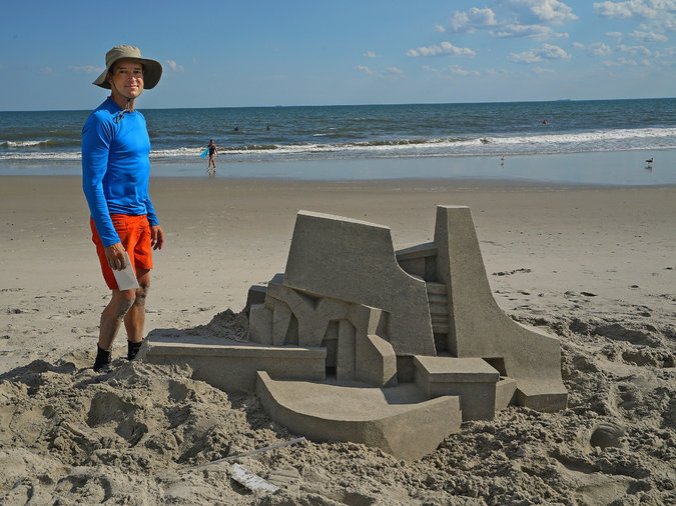
Calvin Seibert spends up to four days a week during the summer at Rockaway Beach in Queens. Credit Nicole Bengiveno/The New York Times

We do not need to explain it; we just like it (click the image to go to the original):

It looked like some futuristic civilization poking up out of the footprinted sand on Rockaway Beach in Queens. A lifeguard walked over to inspect it, then some surfers. A group of dripping children stopped, transfixed.

“Young people tend to watch for longer,” said Calvin Seibert, 57, who was shaping the structure. “If people sense you’re serious about it, they’ll watch longer.”

Mr. Seibert, a Manhattan artist, is serious enough about it to take a long subway ride to the beach up to four days a week from June through September. Continue reading

Your Worst Dragons Are Your Best Teachers

PHOTOGRAPH BY ELI REED/MAGNUM

PHOTOGRAPH BY ELI REED/MAGNUM

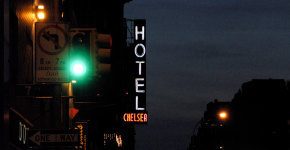
Amie and I lived around the corner from the Chelsea Hotel during the second term of Ronald Reagan’s presidency. At that moment in our lives, newly married and full of that kind of hope, we nonetheless observed with concern the culture of the USA changing radically around us. New York City, in particular seemed an epicenter for the demonization of “welfare queens” (Reagan terminology) and homeless people (of which there was a sudden massive increase due to various social safety nets being eliminated, a result of the “Reagan revolution”), while the values associated with speculative money, and cronyism, were ascendant.

It seems to me in hindsight that it was the moment when entrepreneurial capitalism receded as a driving force of the culture, giving way to a strong strain of some other form of capitalism. A much darker, or at least shadier, form that culminated in the economic tragedies of recent years in the USA, including contagious sub-strains that made their way to Europe and can be seen in the Greek tragedy today.

Reading that the Chelsea Hotel is g0ing “boutique” is at first depressing, but then not; it is a reminder of how New York City has been transformed by the new rules of capitalism; yet encouraging, even if the Chelsea Hotel’s role as an institution will be lost, because some of its core values remain intact as residents live out their terms there. The heartless strain of capitalism that bred and multiplied in the 1980s, which we have thought monstrous, has forced us to look for answers, which in turn has led us to the entrepreneurial conservation concept that animates our work, daily. The dragon sometimes teaches:

At a moment when the once beautifully entangled fabric of New York life seems to be unravelling thread by thread—bookstore by bookstore, restaurant by restaurant, and now even toy store by toy store—it might be time to spare a thought or two for the Chelsea Hotel. At the hotel on Twenty-third Street, famously rundown and louche—the Last Bohemia for the Final Beatniks, our own Chateau Marmont, where Dylan Thomas drank and Bob Dylan wrote “Sad-Eyed Lady of the Lowlands” and Leonard Cohen wore (or didn’t; people argue) his famous blue raincoat, and Sid Vicious killed (or didn’t; they argue that, too) Nancy Spungen—the renovators and gentrifiers have arrived. The plastic sheeting is everywhere, the saws buzz and the dust rises. In a short time, the last outpost of New York bohemia will become one more boutique hotel. Continue reading

Wind Powered Race Goes To Team Elsie Piddock

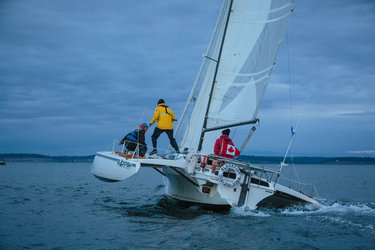
Team Elsie Piddock sails up Nichols Passage south of Ketchikan on the way to winning the Race to Alaska. TAYLOR BALKOM / KETCHIKAN DAILY NEWS

Team Elsie Piddock sails up Nichols Passage south of Ketchikan on the way to winning the Race to Alaska. TAYLOR BALKOM / KETCHIKAN DAILY NEWS

Fishermen gonna fish, sometimes pushed to do remarkable things under extreme challenge. Sailors gonna sail, sometimes pushed to do remarkable things under extreme challenge. We thank Seattle radio station KUOW for sharing the news of the conclusion of this race that has had our attention for the last week:

Screen Shot 2015-06-15 at 4.36.40 AM

Ross Reynolds talks to Jake Beattie the director of the Northwest Maritime Center in Port Townsend and the organizer of the first ever Race to Alaska contest about how Team Elsie Piddock managed to defy expectations and win the race in one week and a day.

See more at the Ketchikan Daily News.

Humans At Their Best, In The Water, In The Extreme

Team Blackfish set sail Thursday morning in what organizers called the first human-powered boat race to Alaska. Credit Evan McGlinn for The New York Times

Team Blackfish set sail Thursday morning in what organizers called the first human-powered boat race to Alaska. Credit Evan McGlinn for The New York Times

Too much dullness and dimwittedness recently. We need a break from that. We like the optimism of Team Blackfish and their fellow sailors:

A Race to Alaska: No Motors, but No Limits on Imagination

PORT TOWNSEND, Wash. — Scott Veirs and Thomas Nielsen have a little wooden plank mounted on their boat, just in front of the seat where they plan to take turns, for days on end, pedaling a bike-chain-driven propeller shaft all the way to Alaska.

“If in doubt,” the sign reads, “try some optimism.”

That could be the motto for the entire field of competitors in what is billed as the first race of its kind — human powered to Alaska — which set off Thursday morning from this city on the shores of Puget Sound, heading north across open water. The 54 entrants in the Race to Alaska— solo efforts and teams, novices and old-salt veterans — were fueled by a mix of determination, ingenuity and upward of 6,000 calories a day, but no motors. Continue reading

Museums, Libraries, And An Innovative Hybrid

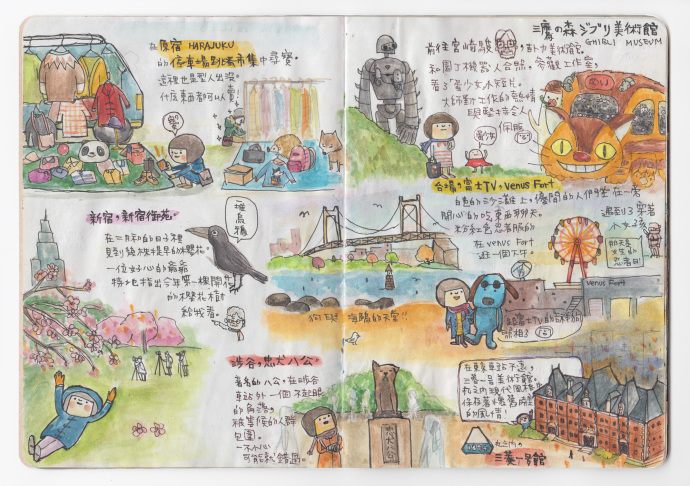
DRAWING BY LINYU YEN, COURTESY THE SKETCHBOOK PROJECT

DRAWING BY LINYU YEN, COURTESY THE SKETCHBOOK PROJECT

Museums, as well as libraries and other community institutions get a disproportionate share of our attention on this blog. When we see a random variation like the following, we cannot help but follow the trail (thanks to Jordan Kisner):

One recent Wednesday afternoon, a man wandered into a library on North Third Street in Brooklyn and asked how he could sign up for a library card. The young woman behind the counter smiled and explained that at this particular library there were no cards—or even traditional books. The Brooklyn Art Library, housed in a Williamsburg storefront with unfinished floors and exposed piping, is, instead, home to the Sketchbook Project, a collection of crowdsourced sketchbooks that is, according to its staff, the largest in the world. The project was founded in 2006, when Steven Peterman and Shane Zucker, two art students living in Atlanta, began mailing blank Moleskines to anyone who wanted one for a small fee, and then archiving whatever came back. Now anyone can pay twenty-eight dollars for a sketchbook, or sixty-three dollars for a digital membership, which means that their books will be scanned in full and archived online in a digital library. Continue reading

Invasive Species, Animated Variety

Our promise to not participate in the cute kitten economy remains steadfast. This is different. Really. It fits into this category, sort of, or perhaps this one.  Hopefully not this one. We like what we see here. Nicolas Deveaux‘s variety are certainly welcome on our pages, one of the many places they were intended to be:

Stephan Brusche, Come To Kerala!

Stephan Brusche (@isteef)

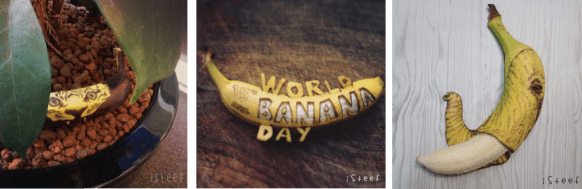
Stephan Brusche (@isteef) From left to right: tiger, WBD, elephant

Hospitality is in our DNA, but we always want to go the extra mile for the those who tickle our creative fancy. In fact, World Banana Day touches us on multiple dimensions, and we thank our newest contributor, Rosanna Abrachan, for bringing it to our attention.

Stephen Brusche is someone who clearly enjoys playing with his food, and scrolling through his gallery it was close to impossible to choose favorites from over 200 fabulously creative examples, crafted with a wink and smile at both the sacred and the profane. We settled on 2 of our iconic Kerala fauna above, but be prepared to lose yourself in the images when you visit his site. Continue reading

The Critic As Cold Water Splashed Refreshingly On The Face Of Modernity

Schjeldahl-Bjork-690

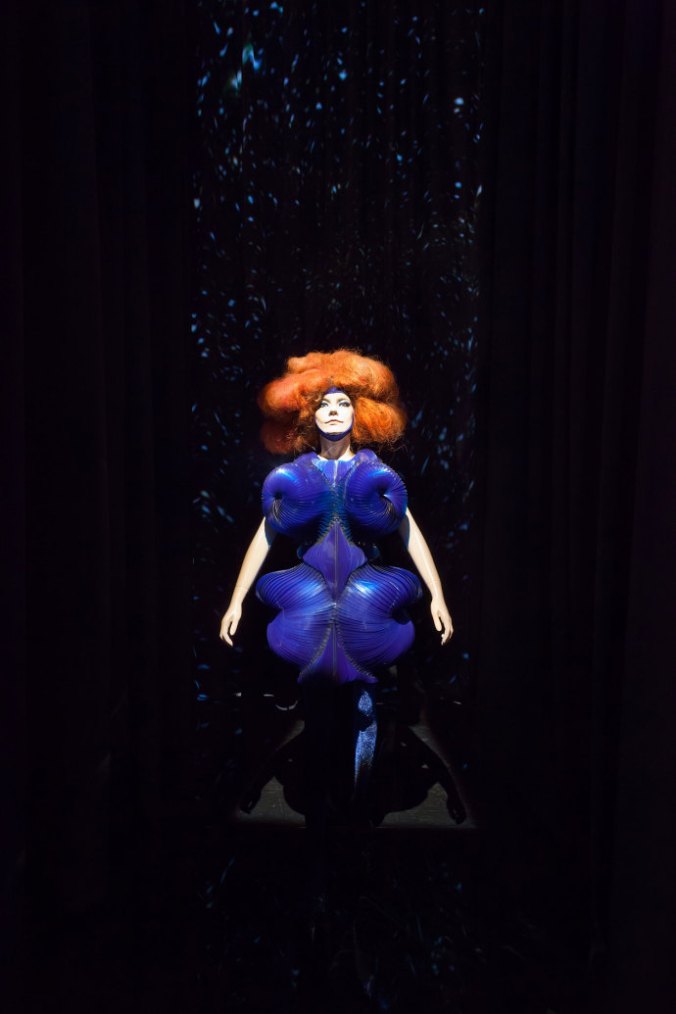
Björk is a restlessly experimental (and therefore fallible), tremendous creative force, not a tarnishable brand. CREDIT PHOTOGRAPH BY JONATHAN MUZIKAR


The opening paragraph of this brief review is worth the click, but the point we would like to bring to your attention is what follows. Sometimes an artist’s museum show can be taken down, critically speaking, with the museum bearing the brunt of the shame. And this point is directly linked to the now well-established concern that art in our age is as much a racket as it is an essential embodiment of culture. This reviewer, and his peers quoted in the opening paragraph, remind us of why we depend on critics for the insight that comes with an occupation whose singular focus is to help us decide whether a certain journey is worth making, or not:

…And yet Björk is unscathed. All the critics (now including me) hasten to acknowledge her musical genius and personal charisma. No detour into lousy taste—even at times her own, as in her partnership, lately ended, with the mercilessly pretentious Matthew Barney—can dent her authenticity. Her music videos (an oasis at the show, in a screening room) typically bring out the best in collaborating directors, musicians, designers, costumers (notably the late Alexander McQueen), and technicians. But if she chances to bring out the worst in star-struck curators, so what? Björk is a restlessly experimental (and therefore fallible) tremendous creative force, not a tarnishable brand. Continue reading

If You Happen To Be In New York City

“The Grand Robe” (circa 1800-30), made by an artist from a Central Plains tribe. CREDIT COURTESY PATRICK GRIES AND VALÉRIE TORRE / MUSÉE DU QUAI BRANLY

“The Grand Robe” (circa 1800-30), made by an artist from a Central Plains tribe. CREDIT COURTESY PATRICK GRIES AND VALÉRIE TORRE / MUSÉE DU QUAI BRANLY

Talk about an epic show. Let’s go:

Moving Pictures

Plains Indian Art at the Metropolitan Museum.

By 

It began with horses and ended in massacre. The zenith of the cultures that are celebrated in “The Plains Indians: Artists of Earth and Sky,” a wondrous show at the Metropolitan Museum, lasted barely two hundred years. It started in 1680, when Pueblo Indians seized the steeds of Spanish settlers whom they had driven out of what is now New Mexico. The horse turned the scores of Plains tribes—river-valley farmers and hunter-gatherers who had used dogs as their beasts of burden—into a vast aggregate of mounted nomads, who ranged from the Mississippi River to the Rocky Mountains, and from the Rio Grande into Canada, hunting buffalo, trading, and warring with one another. The era ended with the killing of more than two hundred Lakota men, women, and children by federal troops at Wounded Knee, South Dakota, in 1890. Meanwhile, epidemic smallpox and other alien diseases took a toll far beyond that of military violence. The official census of 1900 found only a quarter of a million Native Americans in the entire United States. What ensued is a story of reservations—including the immaterial sort, which trouble the mind. But there’s an ameliorating epilogue of revivals and transformations of Plains heritage.

Continue reading

Muro de las Lágrimas: Historical Conservation in the Galapagos


151

Isla Isabela: Paradise with a dark history

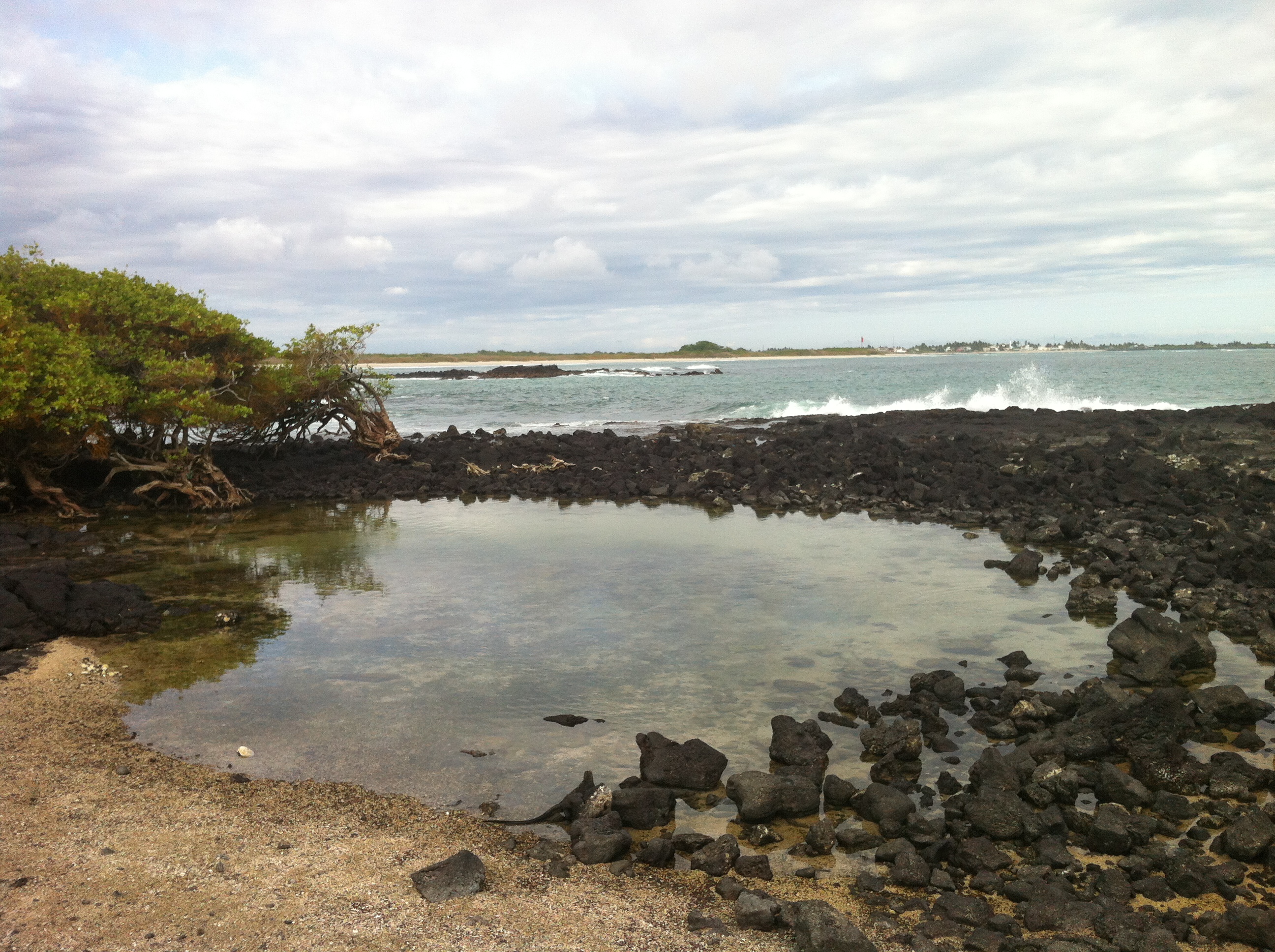
I am currently on study abroad in Ecuador, which has provided me with a mountain of experiences to post about when my homework will allow. I recently had the good fortune to go to the Galapagos, a dream I’ve had since I realized they existed. I am still so struck by everything I saw. In this post, I’ll just highlight one of the places on Isla Isabela that started some good conversations among my classmates about historical conservation of sites of trauma. Also, I will share a poem I wrote about the location.

Former President Ibarra of Ecuador used the island of Isabela as a penal colony (1946-1956), where prisoners were forced to do agricultural labor. They had to carry lava rocks from all over the island to construct the walls of their own prison. There are stories that they would cry as they carried the rocks. I was told that bodies are inside the walls from the rocks falling down while they were building them. The saying that accompanies the island’s history is: Los valientes lloran y los cobardes mueren, which means “The brave cry and the cowards die.” After ten years, the prisoners escaped by creating a play for the guards about prisoners escaping. They got the guards drunk, and actually escaped during the play.

Despite the story of escape, it couldn’t feel like a happy ending. My friends and I were talking about how it felt to visit this site of trauma as tourists. What is the role of historians and purpose of preserving places exactly as they were in the past? Is it to empower us with memories that in our normal lives we couldn’t have access to? Who are these memories for? For some people, this type of oppression is not of the past. They don’t need external reminders because the struggle for survival is part of their daily lives. There was conversation in the group about how preserving sites of trauma allows many of us to experience a sense of empathy before moving on to our daily, more privileged lives. This is how the set-up of touring through the site of trauma left us feeling. Continue reading

Neighbors Unite

Photo credit: Davebloggs007/Flickr

Photo credit: Davebloggs007/Flickr

Many of the RAXA Collective contributors could could easily get behind  the motto: “Book Lovers Unite!”; many could be found with their noses in a book from early childhood to the present day. So when we read about these “pop up libraries” in various parts of the country the only response possible was excitement.

Books are an essential part of culture and the LFL concept of sharing creates an even greater community bond worth conserving.

Three years ago, The Los Angeles Times published a feel-good story on the Little Free Library movement. The idea is simple: A book lover puts a box or shelf or crate of books in their front yard. Neighbors browse, take one, and return later with a replacement. A 76-year-old in Sherman Oaks, California, felt that his little library, roughly the size of a dollhouse, “turned strangers into friends and a sometimes-impersonal neighborhood into a community,” the reporter observed. The man knew he was onto something “when a 9-year-old boy knocked on his door one morning to say how much he liked the little library.” He went on to explain, “I met more neighbors in the first three weeks than in the previous 30 years.” Continue reading

Visual Acuity, And Other Talents, Ever Deployed To Good Ends

Processed with VSCOcam with 1 preset

Petrified wood. Las Cruces, New Mexico. PHOTOGRAPH BY SHANE LAVALETTE

Contributors to our blog come and go. We wonder from time to time how the talents we saw in India, or Costa Rica, or elsewhere are being deployed today and will be deployed tomorrow. That is how it is with interns, and volunteers, as much as with other types of team members. Above, this, and a few of the other photographs in this post remind us of Milo’s first year with a camera, and his sense of spontaneity combined with visual acuity; someone who is a natural with that tool, the camera, and is ever on the lookout to tell a story with a snapshot:

Last week, the photographer Shane Lavalette set out on a road trip from Austin, Texas, to Joshua Tree, California. Each day, he posted austere, poetic photographs of the region’s landscapes and people to the New Yorker photo department’s Instagram feed, using the photo-editing app VSCO Cam. Continue reading

Making The Most Of The Golden Years

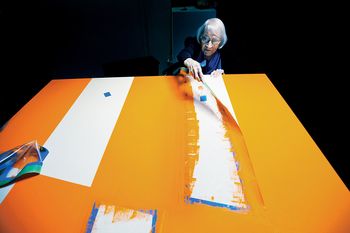
Carmen Herrera, painter, 99, in her Manhattan studio. Herrera sold her first painting at age 89. Today her work is in the permanent collections at the Museum of Modern Art and the Tate Modern.

Carmen Herrera, painter, 99, in her Manhattan studio. Herrera sold her first painting at age 89. Today her work is in the permanent collections at the Museum of Modern Art and the Tate Modern.

David Bowie sang of golden years, but we did not think of those this way. Many of us are already there, and all of us are on our way there, to the golden years; the question is what we make of those years. Thanks to Lewis Lapham for his inspirational report in the New York Times:

…The portraits here are of men and women in their 80s and 90s, rich in the rewards of substantial and celebrated careers, and although I know none of them except by name and reputation, I’m asked why their love’s labor is not lost but still to be found. Why do they persist, the old masters? To what end the unceasing effort to discover or create something new? Why not rest on the laurels and the oars? Continue reading

Resin Painting, Explained By A Master

Screen Shot 2015-01-31 at 3.55.00 PM

There is no explanation for how this post relates to other posts on this blog–not much to say about community, collaboration or conservation here. But it fits in with our general appreciation and sharing of stories in which creativity, craft and the broader art world feature. Thanks to the Atlantic, by way of Vimeo, for this five minute wonder:

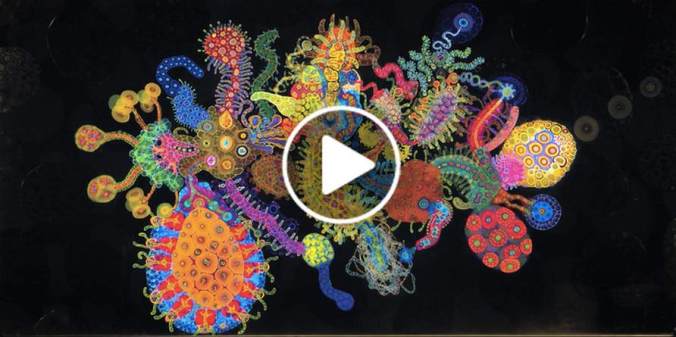
In this short documentary, filmmakers Jason Stanfield and Jordan Olshansky visit the studio of artist Bruce Riley, who paints abstract wonders with poured resin. His art blooms as he works; each layer of dripped paint reacts with the others, creating deep patterns that bear an uncanny resemblance to what a biologist might see under a high-powered microscope. “It’s obvious when it works,” Riley says. “It’s obvious when it fails.”

Riley publishes photos of his artwork on Flickr. Stanfield and Olshansky frequently collaborate with brands to tell their stories through documentaries. To learn more, visit truestoriessf.com and stanfieldwork.com.

When the land heats up and air rises

DSC_8934

Three sisters

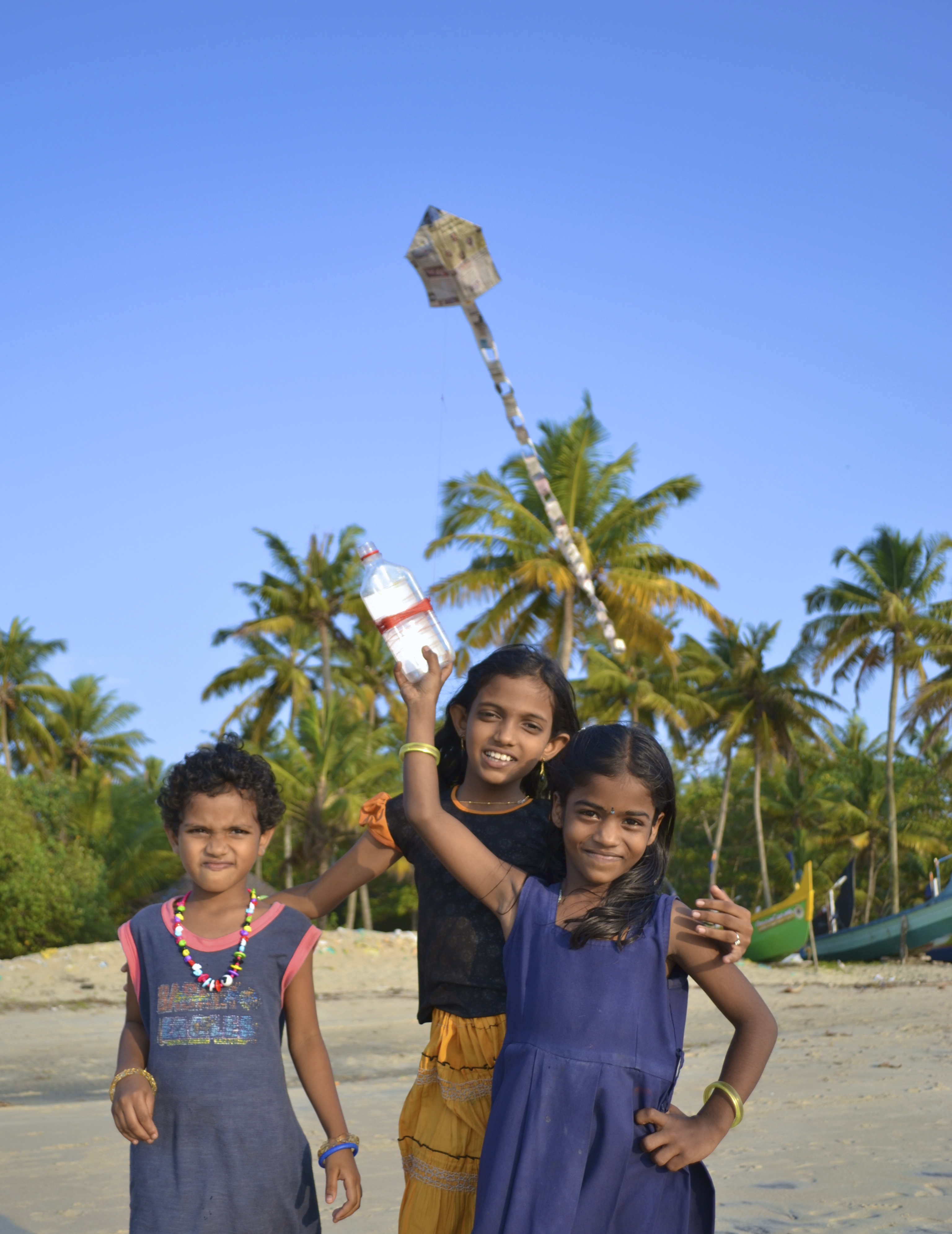
When land heats up and air rises, it gives way to fresh on-shore wind from the Arabian sea. A walk along Marari beach during sunset will most likely give the sight of homemade kites being flown mostly by children, but also adults of all ages. These kites are made of bamboo, newspaper and glue. Old fishing line is then attached and wound up on a bottle.

The children are very proud of their creations and will insist that theirs is the “best” of all and that you try it out. Choose carefully and watch the kite soar!

Let Nature Do More Work For Us (Coconuts-R-Us)

Screen Shot 2015-01-30 at 11.45.00 AM

Kerala, the state in southwest India where many of Raxa Collective’s initiatives are located, is the “land of coconuts” if you translate the state’s name literally from Malayalam (the language of Kerala) to English.  This article in today’s Hindu highlights the introduction of a new bi-product of coconuts at the annual trade fair (click the image above to go to the trade fair’s brochure):

Coir-based organic acoustic panelling system developed

SARATH BABU GEORGE, January 30, 2015

In what could be a major boost to the coir industry, the National Coir Research and Management Institute (NCRMI) has developed a coir-based organic acoustic panelling system.

Christened ‘ACCOIR’, the acoustic panels have been designed in collaboration with the Institute of Indian Interior Designers (IIID) and the National Institute for Interdisciplinary Science and Technology (NIIST), a constituent laboratory of the Council of Scientific and Industrial Research (CSIR). Continue reading

Recycling as a Universal Construct

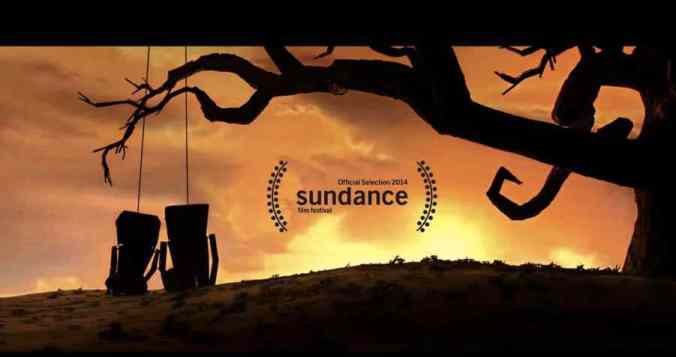
Although not technically an environmental manifesto, this superbly crafted short film ushers us into a 2-dimensional world built on the depth and power of atomic theory: recycling as a form of immortality.

Congratulations to the director and team for their selection at the Sundance Film Festival, among other achievements.

Click here to view the film via the newyorker website and here for the official featurette.

Authenticity And Its Discontents

Chef James Corwell's nigiri sushi rolls made with Tomato Sushi, a plant-based tuna alternative, in San Francisco. Alastair Bland for NPR

Chef James Corwell’s nigiri sushi rolls made with Tomato Sushi, a plant-based tuna alternative, in San Francisco.
Alastair Bland for NPR

I am realizing more each day how complex the notion of authenticity is. It is often, I see with increasing frequency, a cliche thrown casually into descriptions and promotions of this or that. Are there times when something other than authenticity is appropriate, even for an organization such as ours that promotes offering travelers authentic experiences of various cultures around the world, including local cuisine?

This story has me thinking (thanks to National Public Radio, USA and its program called “the salt”) that if foodies can make the leap from literal authenticity to a more complex notion of authenticity, for the sake of the environment as well as for broadened pleasures of the palate, it may serve as a model for how to approach seemingly intractable challenges facing the planet (in the case of this story, fisheries collapse but also the broader challenges of collapse), including the ever-changing cultures that make our planet worth traveling:

It’s a dead ringer for Ahi tuna sashimi. It cuts into glistening slivers that are firm and juicy. And it’s got a savory bite.

But this flesh-like food is not fish. It’s made of tomato, and it’s what San Francisco chef James Corwell hopes could be one small step toward saving imperiled species of fish, like bluefin tuna.

“What I want is to create a great sushi experience without the tuna,” Corwell tells The Salt.

To make this Tomato Sushi, he skins and removes the seeds from fresh Roma tomatoes. Then he vacuum seals them in sturdy plastic bags and cooks them in hot water for about an hour — a technique called sous-vide. Continue reading

Teen Invents Lego Braille Printer

We’re constantly amazed at the inventiveness and creativity of people around the world. A few weeks ago, PBS aired a story about a thirteen-year-old entrepreneur who created a braille printer out of Legos that is cheap enough to provide better opportunities for literacy among the sight-impaired. Quotes from the transcript are below, or you can click on the video above to watch the feature.

JACKIE JUDD: At the age of 12, Shubham Banerjee learned how random the universe can be.  One seemingly inconsequential occurs, in this case the ring of a doorbell, and life changes in a big way.

SHUBHAM BANERJEE: I looked out.  No one was there.  But I did see a flyer over there, and which asked for donations for the visually impaired.

I asked — I didn’t know why.  I just asked a random question to my parents.  How do blind people read?  They didn’t really have time for me, so they said: “Sorry, I’m busy.  Can you go Google it?”

JACKIE JUDD: And one thing lead to another.

Continue reading

Costa Rican Wildlife Saving Under-vacationed Americans

We have many connections with Costa Rica at Raxa Collective, but especially after the inclusion of Xandari in our network. So we were happy to hear that, facilitated by Costa Rica’s Tourism Institute (ICT), the country’s animals have gotten together to try to save overworked Americans by offering them natural habitat and a stress-free paradise to escape to. Or at least that’s what the Save the Americans website declares after you watch the video embedded above. Spinning off statistics like “Americans leave 500,000,000 vacation days unused,” “1 in 4 Americans get no paid vacation,” and “59% of Americans feel vacation deprived,” the initiative’s true purpose is to advertise and inform American travelers about the opportunities for different vacation experiences in Costa Rica.

Continue reading