Throwback Thursday: Bog

Photo credit: BU Dining Services

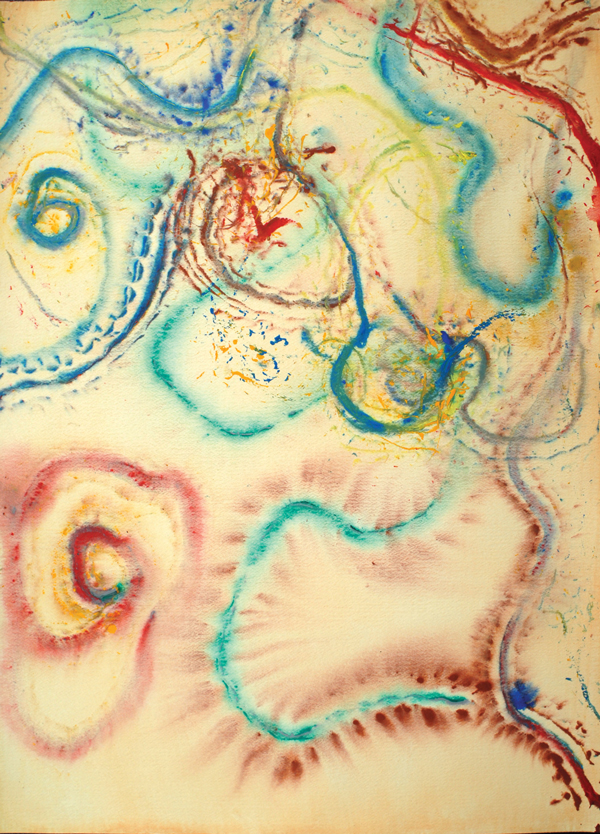
About this time two years ago, I came across the YouTube video featured in the #throwback Thursday post below. Hope you enjoy it, especially in light of this week’s post on peatlands!

Original Post Date: December 28, 2012

Earlier this week I wrote about an entirely different sort of swamp. This brief post is about a topic much more in tune with the holiday season: cranberries. Grown in bogs with layers of peat, sand, gravel, and clay, cranberries are native to North American wetlands (our readers across the pond will probably know the European variety of the fruit as lingonberries). In the United States they are primarily grown in Massachusetts, New Jersey, Oregon, Washington, and Wisconsin (ordered alphabetically, not by output). Something not many people may know is that these cranberry bogs are cyclically flooded with vast amounts of water every season; some might worry over the constant waste of this precious liquid in areas of major cranberry production, or the contamination of water tables with pesticides and fertilizers common to agricultural use.

But I am about to tell you about some of the advantages cranberry-growers have over other industrial agriculturalists in terms of their water utilization. Why will I share this with you? Well, cranberry sauce features prevalently in the traditions of recent holidays, namely Thanksgiving and Christmas (and was thus probably consumed in an overwhelming majority of American households at least once in the past 60 days), plus my grandparents swear by cranberry juice, but I also recently found out that cranberries–and the water they are flooded with for harvesting–make for excellent art, or sport. What I never would have guessed is that Red Bull would be the one to show me this; just watch the video below:
Continue reading

Xandari’s Latest Dozen+ Pysanky

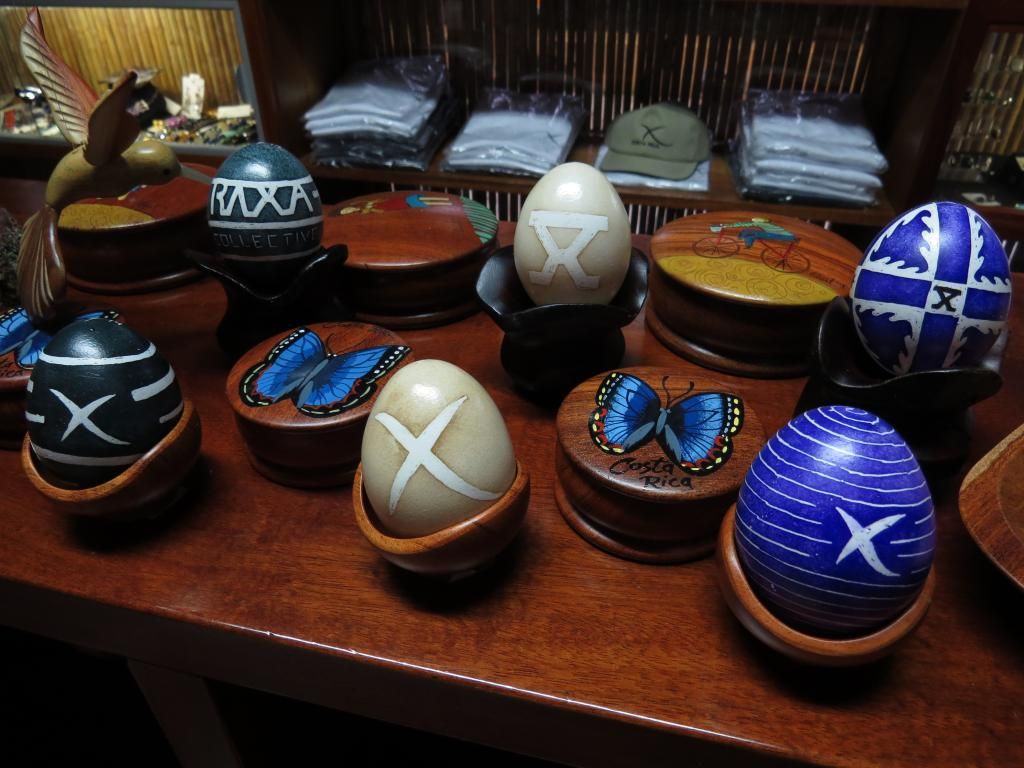
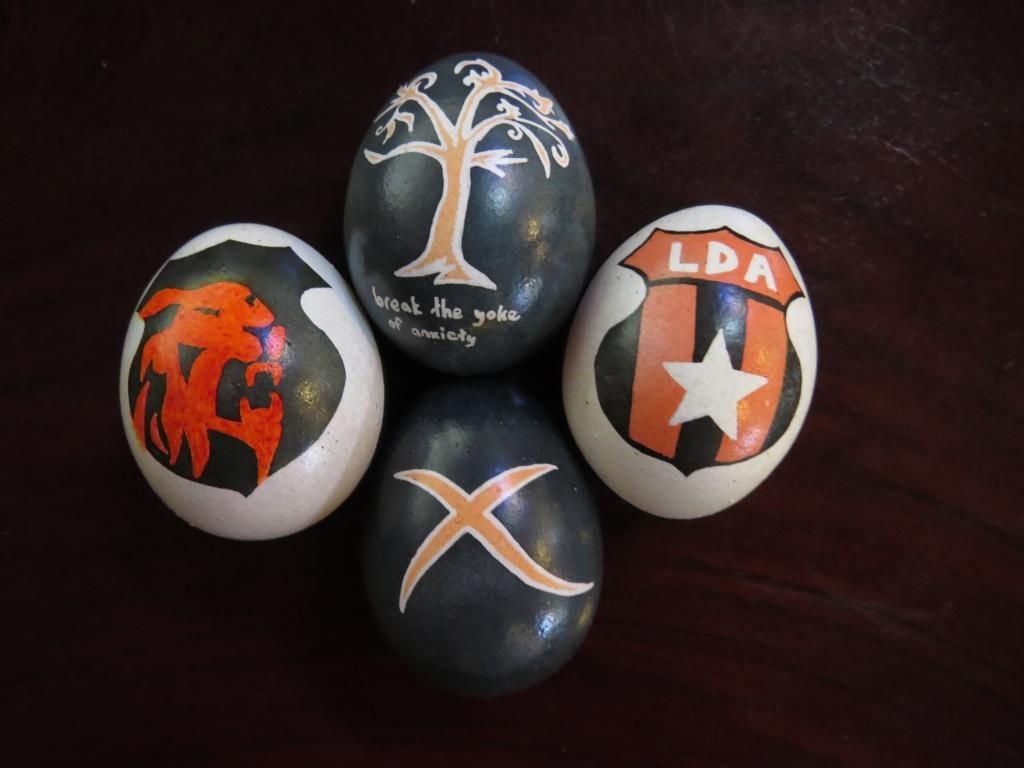
As my on-site time with Xandari wound down for the year early this week, I worked to make as many pysanky for the gift shop as possible, since an ornithological expedition in Jamaica will be taking up the first couple months of the new year. In the photo on the right, you can see that I finally got to one of the patterns I’d brainstormed when first starting this project, as well as a repetition of the Alajuelan soccer team insignia egg. Since the little tree for hanging the eggs in the gift shop is pretty full at sixteen eggs already, most of these eggs will stay in the office until an egg is sold or eggs are rotated.

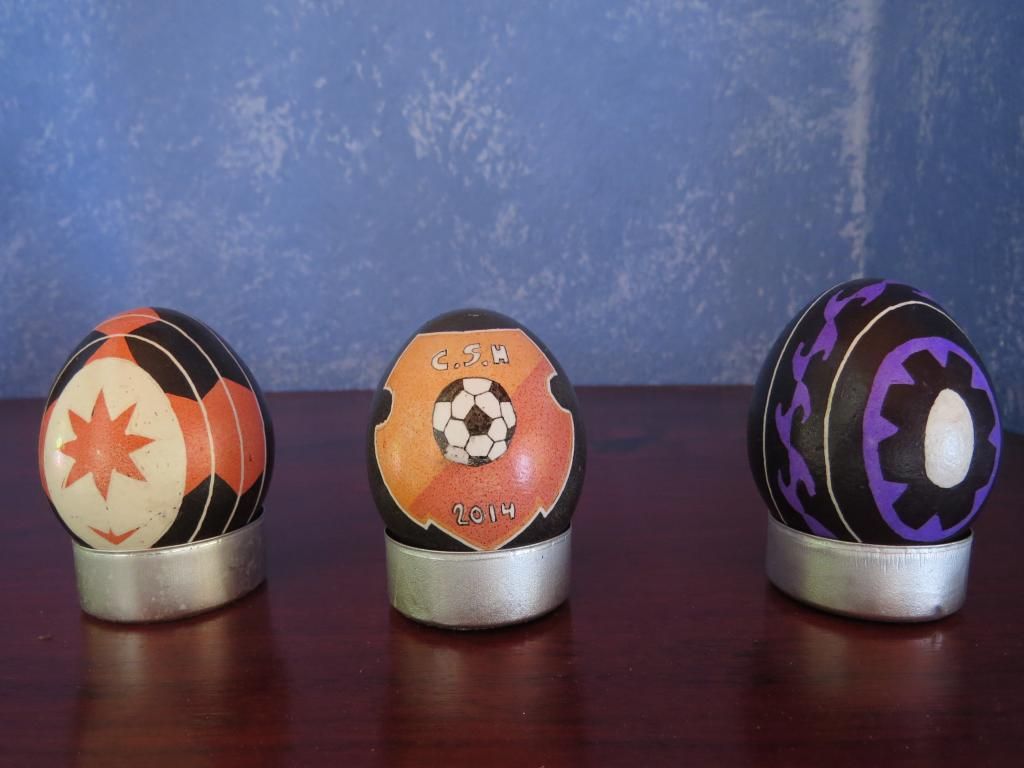
Two adaptations of earlier patterns I developed and another soccer-themed egg, this time for Heredia’s team.

I’m hoping all these eggs, some of which directly reference Xandari and others Continue reading

Bugs Illustrating Important Things

bug-art-starry-night

Thanks to Conservation for this story, more inspiring than the other one we just posted:

Steven Kutcher is an artist, an entomologist, a teacher—and a Hollywood bug wrangler. Kutcher got his start in bug art in the 1980s when he was asked to figure out how to make a fly walk through ink and leave footprints for a Steven Spielberg–directed TV project. From there he went on to work with carpenter ants in Copycat, giant mosquitoes in Jurassic Park, and stampeding spiders in Arachnophobia—of course. Continue reading

Here, Now

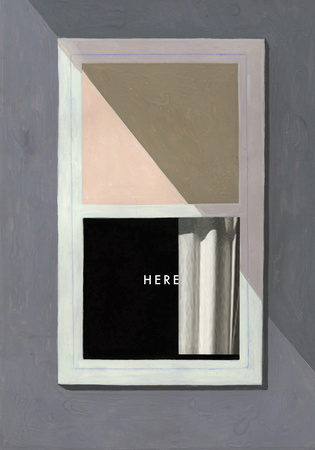
9780375406508We hope that the review of his book (thank you National Public Radio, USA), a hard cover tome that began as what we then called comic strips, brings one of the great graphic novelists of our time appropriate rewards worthy of his herculean efforts:

What is it about Richard McGuire’s Here? A simple-looking, black-and-white cartoon that first appeared in Raw magazine in 1989 — clocking in at a mere 36 panels — it’s maintained its hold on comic artists’ imaginations ever since. McGuire himself spent more than eight years creating this book-length version.

The words of his publisher, Pantheon, about the author make us want to explore this book and his earlier work, especially the toys:

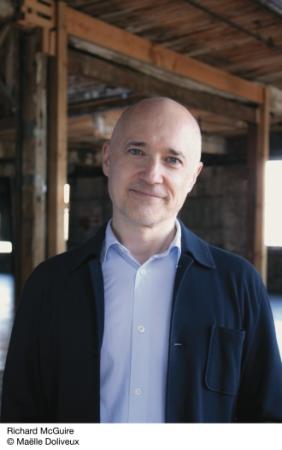
downloadRichard McGuire is a regular contributor to The New Yorker. His work has appeared in The New York Times, McSweeney’s, Le Monde, and Libération. He has written and directed for two omnibus feature films: Loulou et Autre Loups (Loulou and Other Wolves, 2003) and Peur(s) du Noir (Fear[s] of the Dark, 2007). He has also designed and manufactured his own line of toys, and he is the founder and bass player of the no-wave band Liquid Liquid. The six-page comic Here, which appeared in 1989 in Raw magazine, volume 2, number 1, was immediately recognized as a transformative work that would expand the possibilities of the comic medium. Its influence continues to be felt twenty-five years after its publication.

Continue reading

Xandari’s Holiday Tree is Up and Running


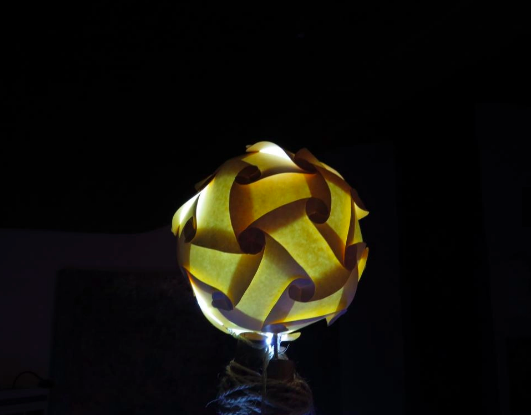
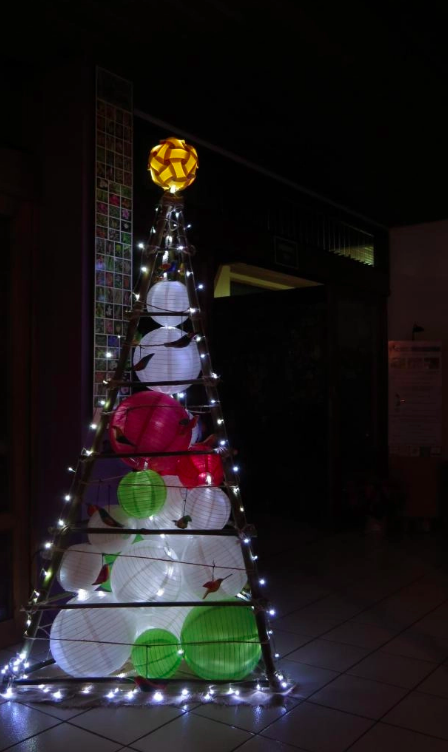
A homemade “loomi” lamp


Like any other tree acquired this time of year, Xandari’s holiday tree had to be put on the roof of a car — in this case, the resort’s golfcart — to transport it up to the lobby area from its site of construction. We snaked an LED “hose” through most of the paper lanterns in the bamboo structure, and now we have balsa-wood bird ornaments made by Costa Rican artists (these birds normally hang in our gift shop). Finally, I made a modular paper lamp recycled from old manila folders (template and how-to pending, but the lamp is basically a DIY Loomi light).

Tomorrow, when I finish the second loomi tree “star,” I’ll put up photos of the smaller tree that Edwin and I made for the Xandari Spa.

Continue reading

Sneak Peek at Xandari’s Upcoming Holiday Tree

The Raxa Collective Holiday tree at Cardamom County, 2012.

Two years ago, the Raxa Collective team designed a new kind of conical decoration to replace the traditional pine tree at Cardamom County, one of Raxa Collective’s properties in Kerala, India. Pictured left, this tree received many compliments from employees and guests alike, was considered a success all around, and came out again last year with some new ornaments at Cardamom County. For the last several years, Xandari has relied on a small palm tree from the gardens here as the holiday ornament, but the resort has been looking for alternatives. When I showed the team what might now be considered the “Raxa Collective tree,” they were immediately excited and started planning to build one straight away.

And so it was that Edwin (José Luis‘s brother) and I found ourselves in two of the several bamboo groves on Xandari property with a saw and a machete on Tuesday. We started out with a simple sketch design of our planned tree based on the images we’d seen of the Indian version, then set out to cut a couple bamboo poles for the construction phase. We knew we’d need three 2.1 meter poles for the pyramid sides, so we got them from one type of medium-thickness bamboo. Then we needed twenty-one rods of seven different lengths (see design photo above), so we went to a grove of thinner type of bambooContinue reading

Thanksgiving: Art History on a Plate

This slideshow requires JavaScript.

As we continue to work on plating and food trials for 51 at Spice Harbour, the concept of deconstructing a typical Kerala dish often makes it into the conversation. During these conversations with Indian colleagues the subject of “typical American food” frequently comes up. Like India, there’s no one “American cuisine” (don’t get me started on the horrors of our fast food exports), but a Thanksgiving meal comes close.

In the collaborative spirit of preparing and plating a meal that’s meant to be shared, multi-media artist Hannah Rothstein deconstructed the classic Thanksgiving meal of turkey, gravy, cranberry sauce and “sides” with a nod to 10 artists with the most distinctive of painting styles, with the acception of Cindy Sherman, a photographer best known for her conceptual portraits. Continue reading

Starry Night Bike Path

Artist Dan Roosegaarde pays tribute to Vincent Van Gogh's painting Starry Night by creating this bike path in Van Gogh's hometown of Eindhoven. Courtesy of Studio Roosegaarde

Artist Dan Roosegaarde pays tribute to Vincent Van Gogh’s painting Starry Night by creating this bike path in Van Gogh’s hometown of Eindhoven. Courtesy of Studio Roosegaarde

Thanks to National Public Radio (USA) for this follow up to another recent story from Holland about bike path innovations:

In the Dutch town of Eindhoven, artist Daan Roosegaarde has paid homage to its most famous resident, Vincent Van Gogh, by creating a glowing bike path that relies on solar-powered LED lights and interprets his classic painting Starry Night.

Roosegaarde says he wants his work, illuminated by thousands of twinkling blue and green lights, to speak to everyone. Continue reading

Pachyderm Prowess

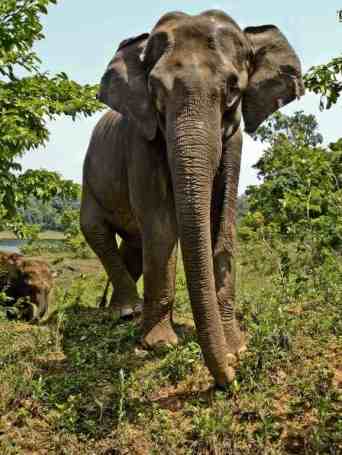
Mother and baby Asian Elephant, Periyar Tiger Reserve. Photo credit: Milo Inman

Mother and baby Asian Elephant, Periyar Tiger Reserve.
Photo credit: Milo Inman

Quite a few La Paz Group contributors are life-long elephant lovers, and we never tire of learning about these amazing members of the animal kingdom. Thanks to TED Ed for giving us more to remember…

It’s a common saying that elephants never forget. But the more we learn about elephants, the more it appears that their impressive memory is only one aspect of an incredible intelligence that makes them some of the most social, creative, and benevolent creatures on Earth… Continue reading

Kidstuff, Creativity

lauracarlin6

Thinking of Seth’s recent work at Xandari’s neighboring school, and earlier work in Galapagos, this article strikes a cord:

Laura Carlin’s artistic exercises for young minds

The Phaidon author demonstrates how creativity comes from an active mind not an overly tutored hand

At Phaidon, we understand that a good art education should start early. Yet some books for younger readers aren’t always especially kid friendly. This is why we’ve buddied up with the London illustrator and educator Laura Carlin. Her fantastic new book, A World of Your Own, treats drawing not so much as a skill be to mastered, but as a fantastic toy, to engage a child’s imagination. Continue reading

First Sale of Xandari Pysanky

Last week, we had the good fortune of having some guests at Xandari who were interested in buying a few of the eggs on display in the gift shop. One guest purchased a Xandari coffee-stained egg like the ones featured in my previous post on the subject, as well as an egg that bore the insignia of San José’s soccer team, Saprissa, which is generally unpopular among fans of the Alajuelan team, La Liga Deportiva Alajuelense (La Liga for short).

As Xandari is located in the hills above Alajuela, most of the employees here are Liga fans, and it’s fun to joke with them about which team’s eggs will sell more in the future (so far the Liga egg is still hanging on the display tree, but that’s most likely because it doesn’t feature a fire-breathing dragon like Saprissa). The third egg that we sold this weekend was one featuring a new design of the Xandari ‘X’ with some extra lines to turn it into a flying bird. Continue reading

Celebrate Urban Rock Birds

With over a week of working with other grades at the elementary school in Tacacorí, I’ve seen lots of really great paintings of birds on locally-found stones, and even one or two chunks of cement. After finding around seventy-odd rocks around Xandari that were mostly usable for this art project and scrubbing them all of mud and moss, I Continue reading

Tacacorí Rocks Birds

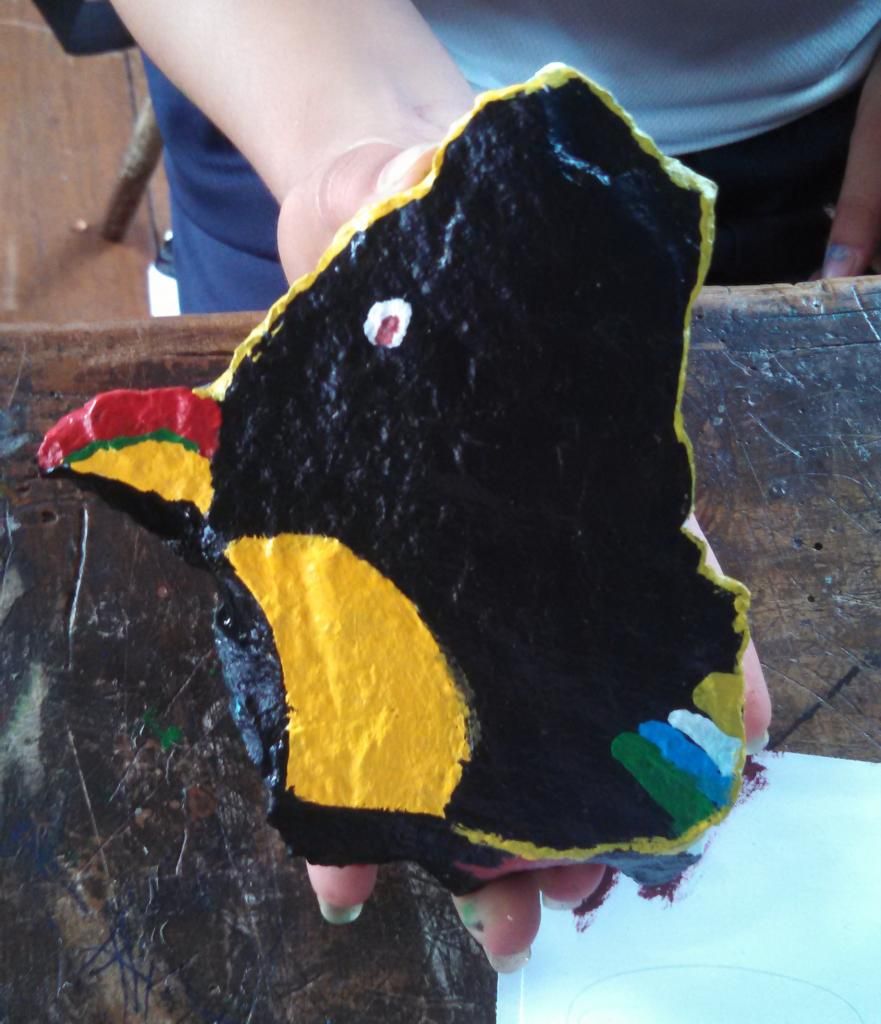
A sixth-grade creation

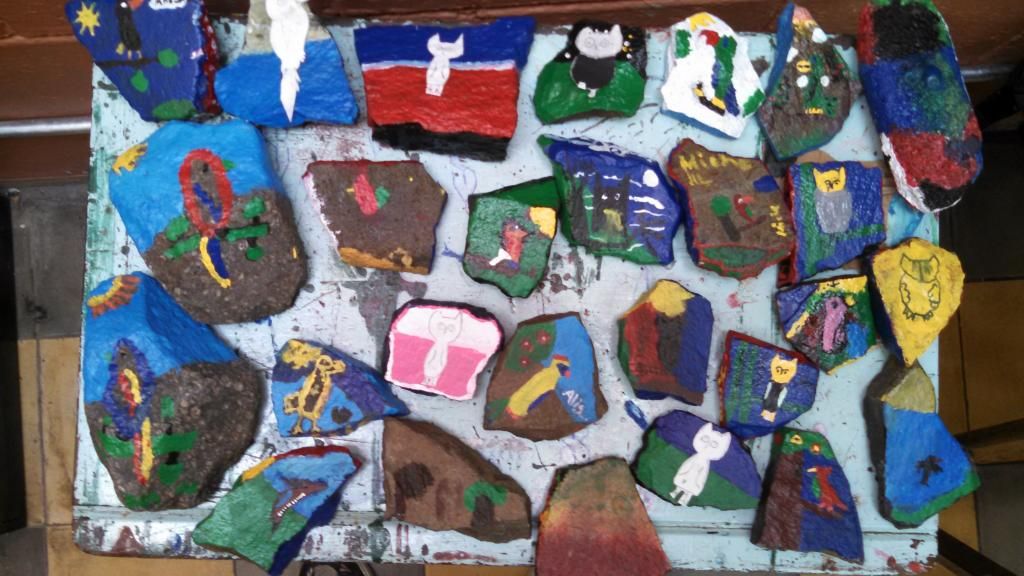
Starting last week, I began the next art project at the elementary school in Tacacorí. After learning that over time the papier-mâché creations succumbed to the Central Valley’s relative humidity and became difficult to preserve, I decided to find a more solid medium. I liked the idea of recycled plastic bottles from the hotel but I worried about the extensive use of scissors they’d require and all the sharp plastic edges that would be created in the process. Instead, I went with the option that, although not exactly recycled, at least doesn’t require industrially-created materials and is fairly abundant: rocks. And the best part is that stone is impervious to humidity (on the scale of time that we’re thinking about).

Fifth-grade creations — some kids pasted paper versions of their bird on the rock.

In the slideshow below, you can see some of the fifth- and sixth-graders’ works of art Continue reading

Xandari Pysanky

This slideshow requires JavaScript.

Sample eggs in the Xandari gift shop

Over the last four days, I made six sample eggs with parts of the designs I had drafted and shared in my last post on the subject. With a slightly limited palette of dye colors (black and purple so far) and an attempt at a home-made coffee-based dye (i.e. coffee), I followed three very simple color schemes and tried a couple different design themes.

I also tried my hand at some vinegar etching, which I had read about recently and seemed like a cool way to  Continue reading

Pysanky (Part Three)

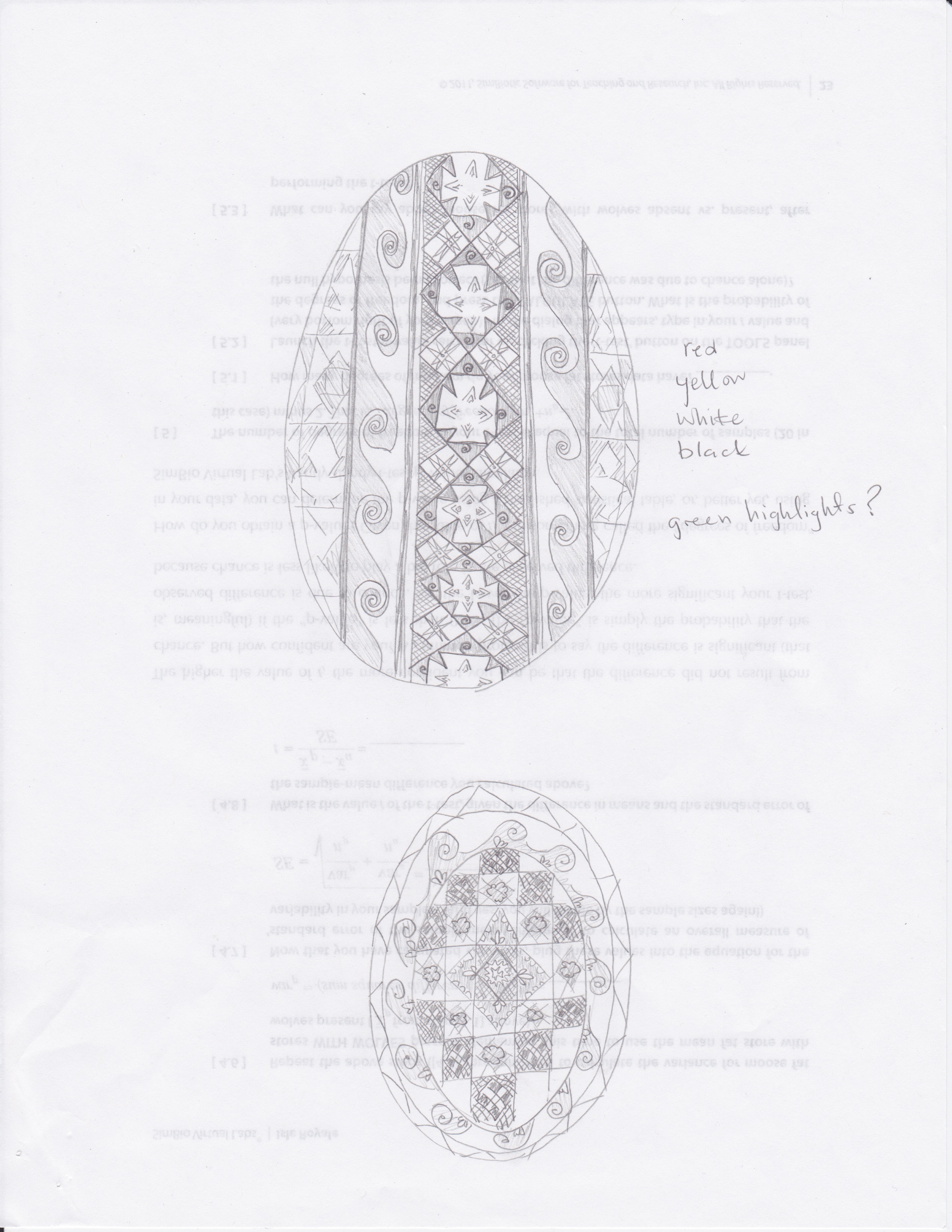
Egg blueprints

Egg blueprints for a previous project

Access Part One and Part Two if you haven’t checked them out yet!

As we reach the end of September, it may seem strange to be posting about a traditional art form that generally revolves around the festivities of Easter. Even though none of my egg creations have had religious foundations behind them, I’ve still always worked on them in the springtime around holy week because that’s the accepted time to be fashioning and gifting “Easter eggs.” Being at Xandari for the past several months, however, where the gift shop could always use another little shelf of locally-crafted artwork souvenirs, I’ve been thinking about making a round of trial eggs to put up for sale and see how it goes. After all, we could dedicate any profits to more artwork supplies for the Tacacorí school or another good local cause.  Continue reading

Pysanky (Part Two)


To continue learning about the process of creating pysankyContinue reading

Pysanky (Part One)

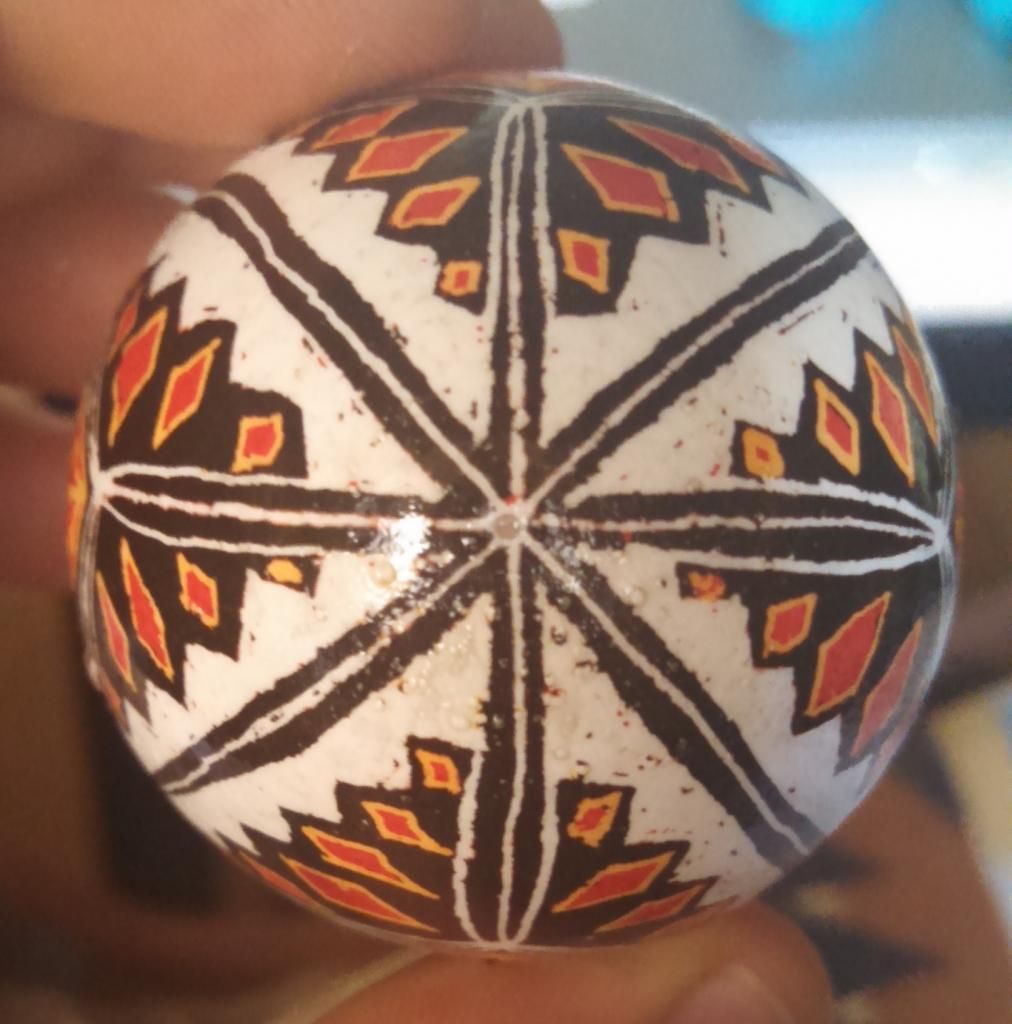
Several years ago, my aunt gave my mom and me a starter kit to make Ukrainian Easter eggs, knowing that the two of us enjoyed art and working on detail-oriented things. Included in the package was this book, which contains a great history of the tradition as it evolved in communities around the US through the work of Ukrainian immigrants. The book also, of course, explains how to make the eggs and includes many fantastic photos of eggs that the authors or their friends have created over the years, in countless patterns and color schemes. These exemplary eggs have served as perfect inspirational diving-boards for my mom and me as we create our own pysanky every year (when we have the time).

Croatian Easter eggs made for neighbors, friends, and family

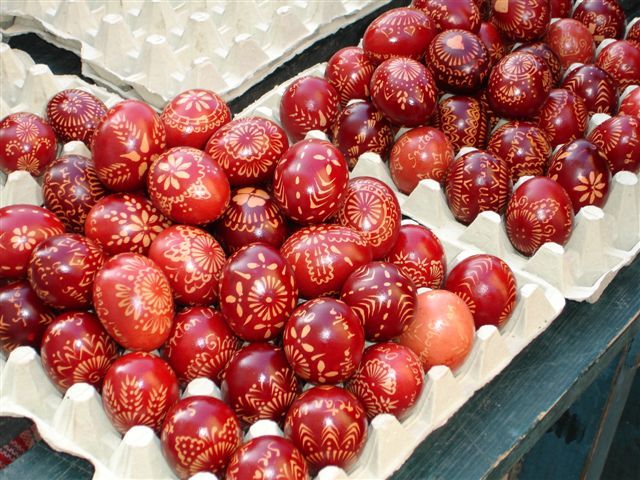
The process always starts with creating the dyes. In Croatia, on the island of Koločep where my family lived for a year, we learned that villagers use a boiling water bath of red onion skins, walnuts, roots, and herbs. This creates a reddish dye that stains the egg a reddish color. The problem is that the boiling water also removes the wax that covered the egg before it was placed in the dye, so you only get two shades on the egg, but that’s Continue reading

Ambling, Thinking, Progress

PHOTOGRAPH BY ALEX MAJOLI/MAGNUM

PHOTOGRAPH BY ALEX MAJOLI/MAGNUM

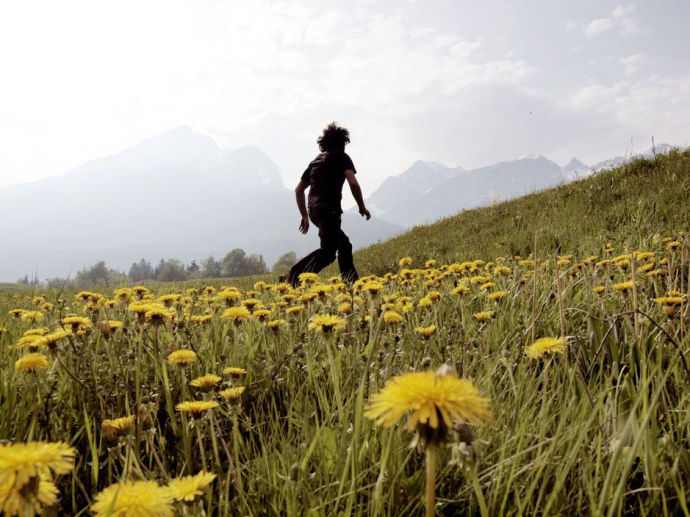
We are all for it.  We post here about walking frequently for a reason. When travelers join us, whether in Africa, Latin America or Asia there is a common thread in conversations about their journeys, with walking be essential to the value of the experience of new places. Otherwise, it is just site-seeing. This New Yorker post expands on the theme well, linking walking to thinking, which we stretch to imply (for our own work) the source of progress:

In Vogues 1969 Christmas issue, Vladimir Nabokov offered some advice for teaching James Joyce’s “Ulysses”: “Instead of perpetuating the pretentious nonsense of Homeric, chromatic, and visceral chapter headings, instructors should prepare maps of Dublin with Bloom’s and Stephen’s intertwining itineraries clearly traced.” He drew a charming one himself. Several decades later, a Boston College English professor named Joseph Nugent and his colleagues put together an annotated Google map that shadows Stephen Dedalus and Leopold Bloom step by step. The Virginia Woolf Society of Great Britain, as well as students at the Georgia Institute of Technology, have similarly reconstructed the paths of the London amblers in “Mrs. Dalloway.” Continue reading

Andrew Forsthoefel, Come To Kerala!

AndrewSlider

Andrew Forsthoefel. Photo by Therese Jornlin, Andrew’s mom. Chadds Ford, PA.

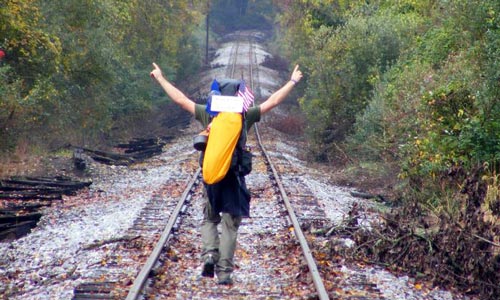
The interns we have had the honor of hosting since setting up shop in Kerala a few years ago have all shared in the responsibility to communicate their experiences in writing on this blog. We are committed to the written word, but not Ludditically opposed to other forms of communication. We have barely put a toe in the water with video, and not even thought about radio as an option, even though we consider Jay Allison an epic hero of good, important communication.

Because of him, we know alot of worthy things that otherwise would have escaped our attention; most recently we learned of and from Andrew Forsthoefel, whose radio story is worth an hour of your time. After which, if you are like us, you will want to know where he is now, and what he is doing. We hope Andrew will see our shout out here and consider our welcome mat in Kerala. Here is his introduction to the podcast when it originally aired nearly 17 months ago: Continue reading