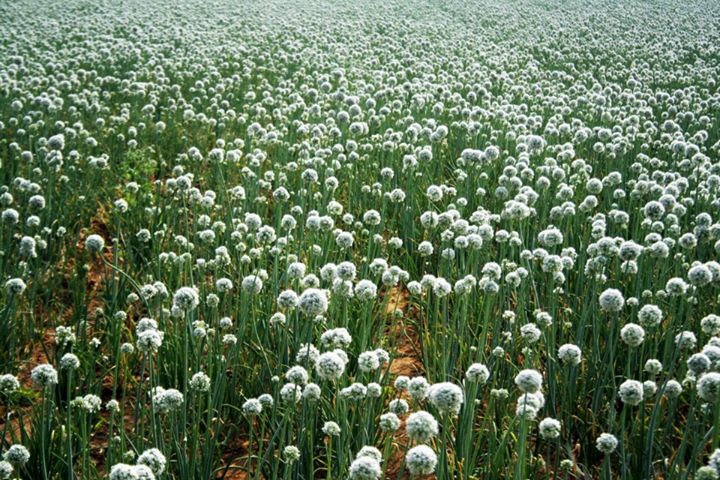
In India and throughout the world, onions are often used as a spice, and are an essential ingredient in many meals. Specifically in India, onions are considered to be one of the most important cash crops. They are a staple food, and are relied upon by everyone from the rich to the poor. Continue reading
Cuisine
Would We Be Healthier With a Vegan Diet?
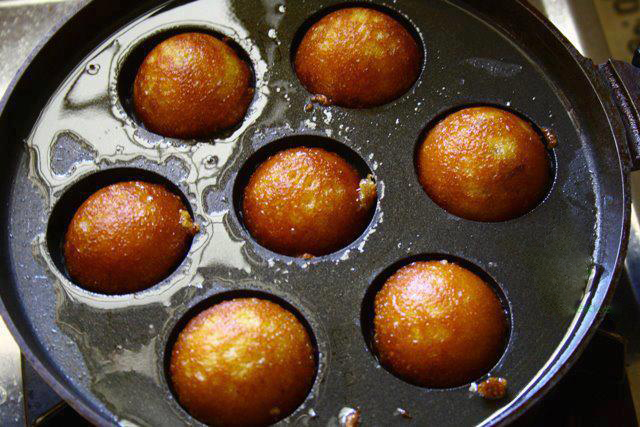
Flavours Of Kerala – Unniappam
Unniappam is a traditional snack popular all over Kerala. They are easy to make, very tasty, and are prepared from the main ingredients of rice, jaggery, banana, and ghee.
How to Prepare
Mix rice powder, jaggery, chopped banana, fried coconut bits, and cardamom powder for flavor, all with water to make the batter. Then, heat the oil in an Unniappam pan and fill the holes with the batter. Continue reading
Fiery questions
Fire. That’s what comes to my mind when I think of Indian food. I understand from my colleagues that here in Kerala food can never be too spicy. Don’t get me wrong– I love spicy food. I am less keen on surprises. But how to make sure to avoid them ? Continue reading
Astronaut Coffee Taste Test
Thanks to Megan Garber, one of the Atlantic‘s other intrepid investigative writers for this story of collaboration by members of the food and astronaut communities:
So we finally have an answer to that age-old culinary question: What do professional foodies think about … space coffee?
Two celebrity chefs — David Chang of Momofuku and Traci Des Jardins of Jardiniere — made a trip to the Johnson Space Center in Houston. Their particular mission? To do some testing of the culinary offerings developed in the Space Food Systems Laboratory. Continue reading
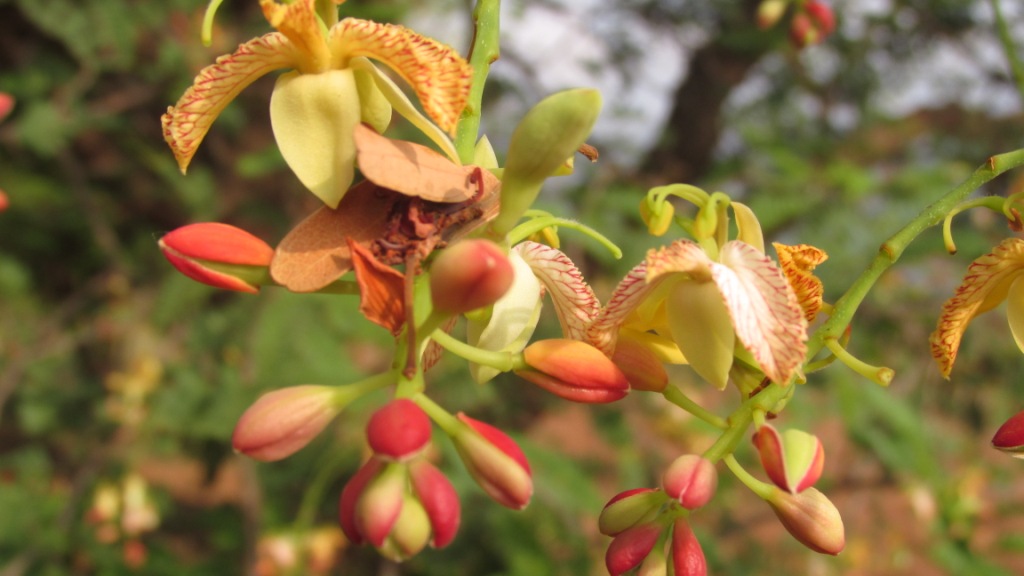
Tamarind Tree Flowers
The Tamarind is a large evergreen tree that grows up to 30 to 35 metres in height with beautiful flowers. Tamarind grows all over India, especially in hot and dry climate. Continue reading
So I’ve arrived at Cardamom county #2: Eating as a physical activity
I was about to start my meal at the canteen with my colleagues yesterday when I decided it was time to take the dive and eat with my hands. Boy, was it an exercise, I mean a physical exercise.
As a first-timer I was quite slow: I’ve read it is most polite to use your thumb, pointer and middle finger, and to let only the first two joints of those fingers touch the food. I’m not sure that I did all that. Also you only eat with your right hand, even if you’re a lefty. The left hand will take care of menial things such as wiping your tears of eyes after a spicy curry. The whole meal activates so many muscles that it left me exhausted. It got me thinking about the lack of thought and the lack of physical effort me and my folks, in westernized countries, put into the act of eating. Eating with the hands is common in many areas of the world, including parts of Asia and much of Africa and the Middle East and it has plenty of health benefits. Continue reading
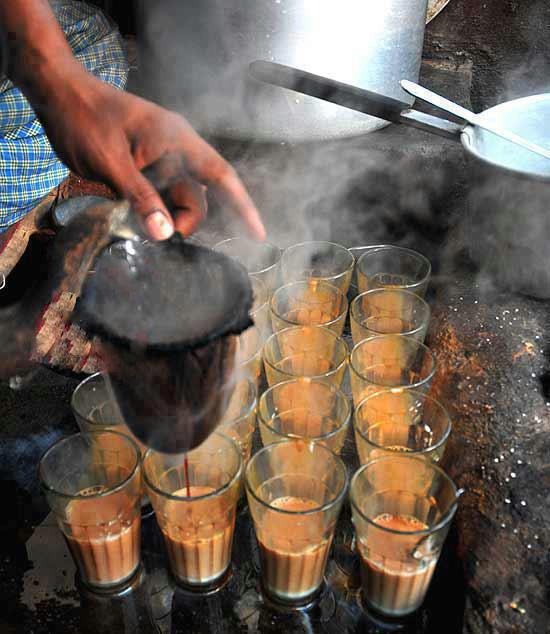
Milk Tea
Milk Tea is a favorite beverage for people all over India. In addition to the tea shops commonly found throughout the country, it is also served as a welcome drink in most homes. Continue reading
Job #43 – Sailing the World for Food

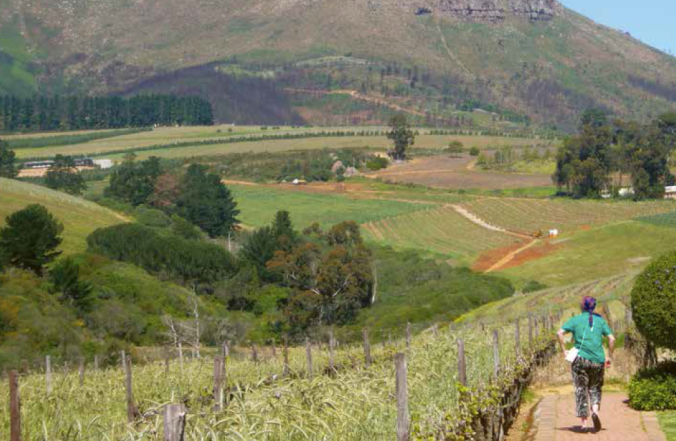
Barbara following a footpath in the wine country of Stellenbosch, South Africa – during one of her many adventures
There is a book called “150 Good Food Jobs” and I’ve had 43 of them. This means I’m either really old, I can’t keep a job or I get distracted and curious by shiny objects. But basically, these have been encapsulated within two long-term careers, one in Napa Valley as a winery culinary director and the other at Cornell University and in Ithaca.
Two-and-a half years ago, I “retired” from my 20-plus years at the Hotel School. After some years teaching about wines and later restaurant management and co-owning an Ithaca restaurant, I served as an academic and career advisor to “hotelies” – some of the most entrepreneurial, engaging, smart young adults around. After a serious cancer scare I retired at age 55 and went rogue, looking for a new career combining my love of travel, food, culture and service.
A SEMESTER AT SEA
I found my calling in fall 2011, as the adult lifelong-learning coordinator for the University of Virginia’s Semester at Sea program. With my husband Dave, 500 undergraduates, 60 adult learners, the faculty and the crew, I sailed from Montreal to Casablanca, Morocco; Accra, Ghana; Cape Town, South Africa; Port Louis, Mauritius; Chennai, India; Penang, Malaysia; Ho Chi Minh City, Vietnam; Hong Kong and Shanghai, China; Kobe, Japan; Hilo, Hawaii; Puntarenas, Costa Rica; and Coxen Hole, Honduras before docking in Fort Lauderdale at the end of 120 days. students getting a semester’s credit while circling the globe, making 14 stops in 120 days.
My job was to keep the adults (“the Salty Dogs”) happy and occupied. A perk of the job was the opportunity to chaperone field food programs, which I often did, including a Tropical Spice Garden in Penang Pang, Malaysia; a cooking class in Capetown, South Africa; and a coffee plantation tour in Mercedes, Costa Rica. This freedom in ports allowed my husband Dave and me to explore each host country independently for three to six days at a time. I spent that time focused on food; food in the markets, restaurants, and the street (which caused a bit of food poisoning and worse, two days in ship’s quarantine). Continue reading
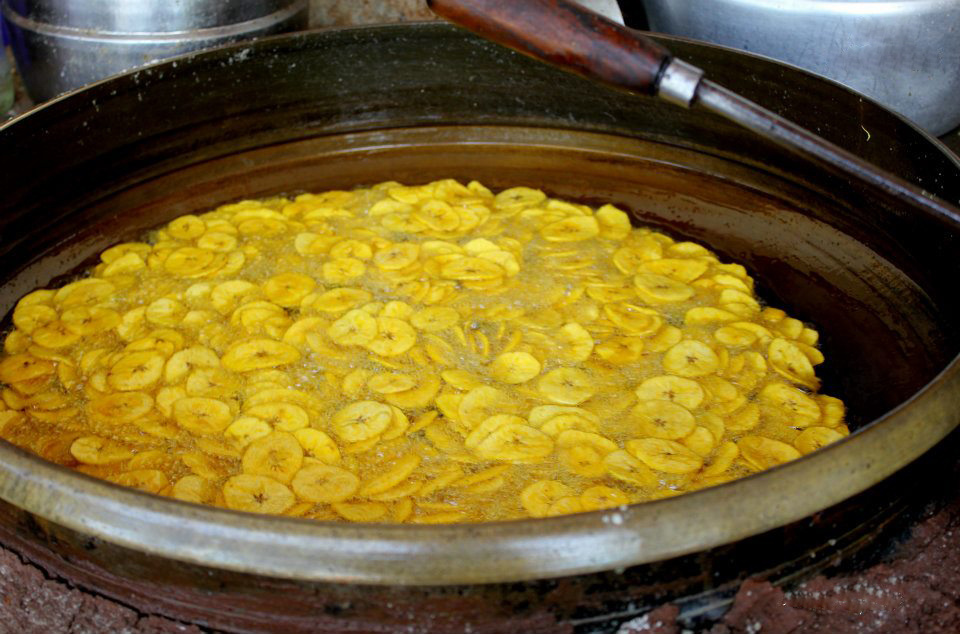
Flavours Of Kerala – Banana Chips
Kerala cuisine is noted for the many snack items to be enjoyed, especially during tea time or in between major meals during the day. Banana Chips are a common example found throughout the state in any bake shop, snack shop or tea stall. They are are also included in the traditional Kerala sadya meal. Continue reading
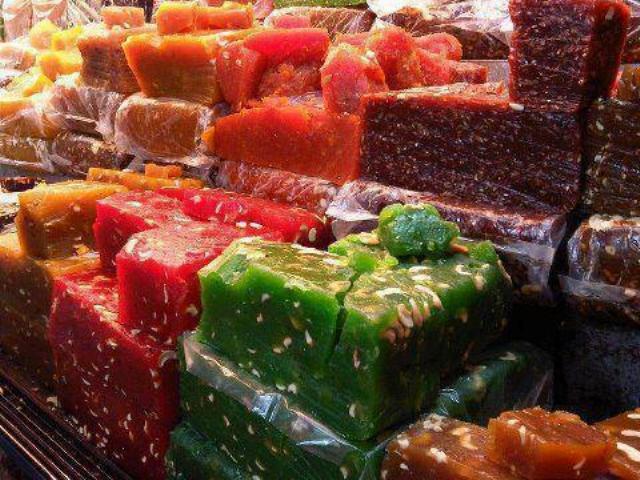
Flavours Of Kerala – Halwa
There is no written history as to when Halwa first came to Kerala but considering that it appears where Arab culture took root in matters of cuisine, this sticky sweet must have its origins in the Middle East. While Halwa is also native to many other parts of India, what is essentially different about the Kerala Halwa are the basic ingredients used. In other regions either wheat paste or white flour with sugar forms the base; here it is rice flour with jaggery, with the addition of cardamom, nuts and occasionally grated fruit or vegetable. Continue reading
Flavours Of Kerala – Meen Curry (Fish Curry)
Meen Curry (Fish Curry) is a hot and spicy fish preparation in thickly seasoned red sauce. Although the spice levels may be varied as per individual preferences, meen curry is one of the all-time favourites of every Malayali household. This preparition is best served with rice, but tapioca is also an extremely popular accompaniment. Continue reading
A Thekkady Easter
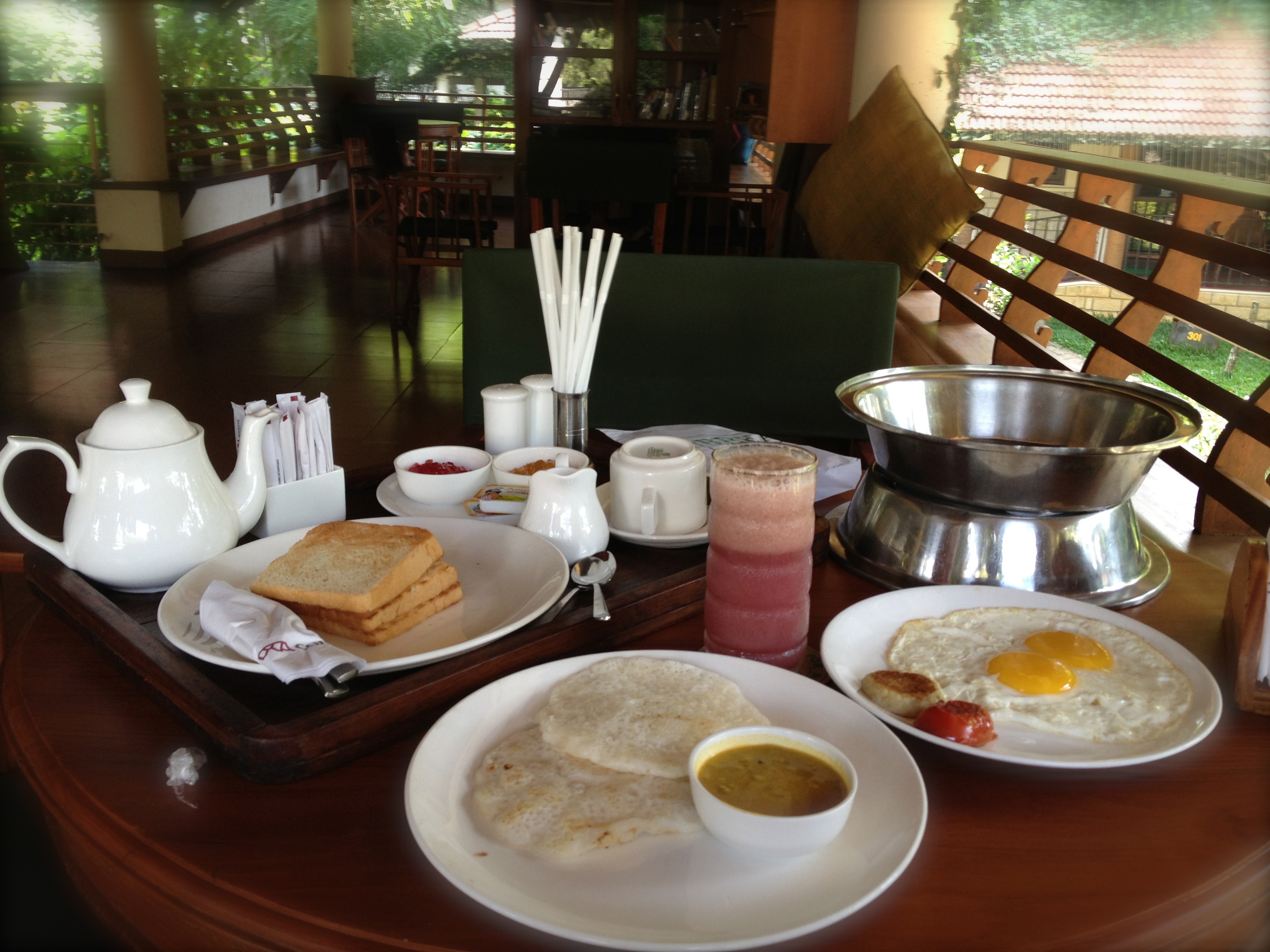
The dawn of my Easter Holiday experience in Kerala started with this unique communion bread served with Molasses sauce to represent the wine. The beautiful church nearby the resort was filled beyond capacity but I fully enjoyed the Sunday service together with other worshippers standing across the street. There I stood, not understanding any of the words (the service was in Malayalam) but following all the rituals with the same sense of peace as in my own church in Accra, Ghana.
After a good lunch and the sleep of the blessed I had my road to “Emmaus” experience by going on the 3 hour Green Walk in the Periyar Tiger Reserve with one of the naturalist guides. Continue reading
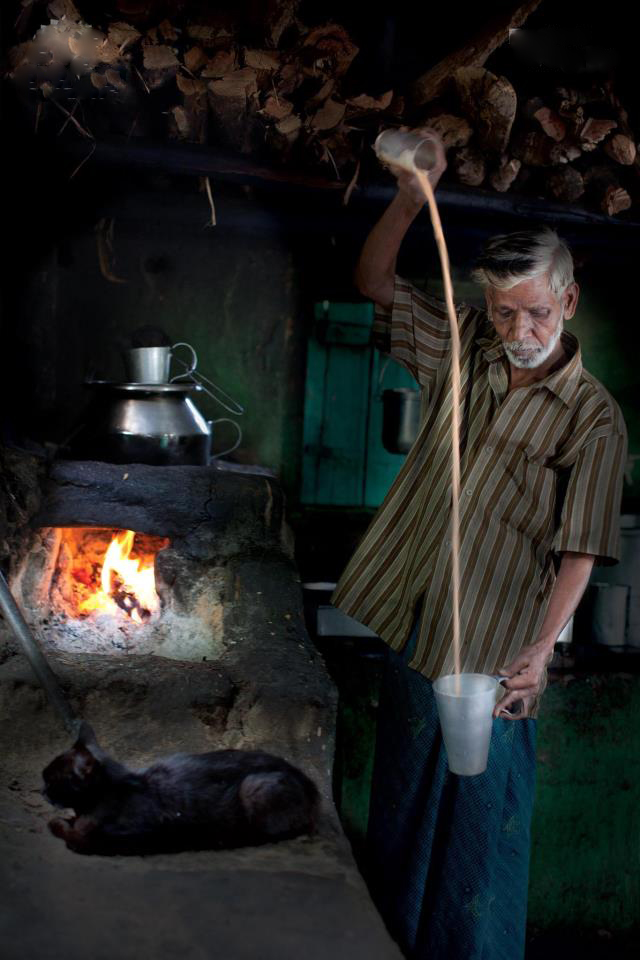
Chaya Kada – Traditional Tea Stalls
Tea stalls are an integral part of Kerala’s culture. These tiny restaurants offers a chance to enjoy traditional tea and Kerala snacks in authentic style. It has become something of a national pastime to enjoy conversation and a cup of chai masala or black tea at the end of the day. Parippu vada (lentil fritters), Ulli vada (onion fritters), and Pazham pori (banana fritters) are the most popular snacks enjoyed at tea stalls. Continue reading
Flavours Of Kerala – Pickles
Pickles are an important part of Indian cuisine, especially in Kerala. There are numerous varieties of pickles, locally called achar, in Kerala’s traditional meals. Lime, Mango, Gooseberry, Carrot, Chili and Garlic are among the favorites. Several types of Achar are usually a must in Kerala’s Sadya meals served on the banana leaf during special occasions. Continue reading
Indian Lotus Flower
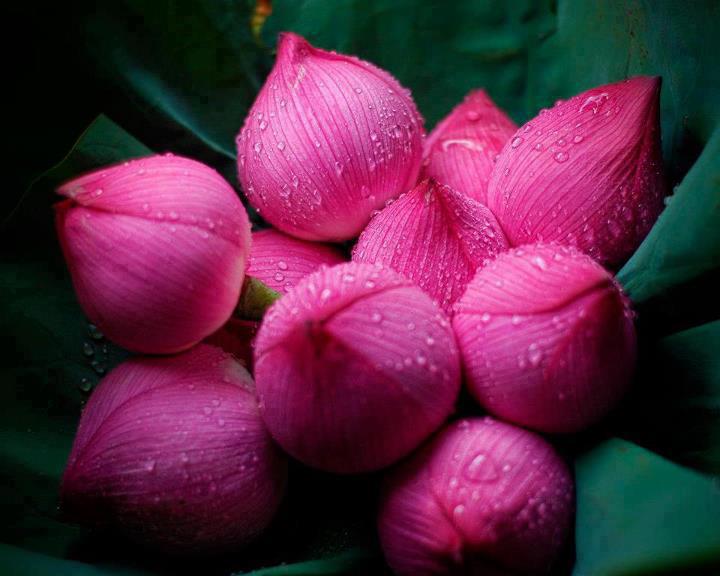
Lotus, the national flower of India, symbolizes beauty, majesty, spirituality, purity, wealth, serenity and knowledge. It is an aquatic plant that belongs to the Nelumbonaceae species with broad floating leaves and bright aromatic flowers that grows in shallow waters. Its seeds, leaves, flowers and roots are all edible and used in a variety of medicines. Lotus is also a sacred flower for Hindus and Buddhists. Continue reading
Coconut Toddy – Kallu
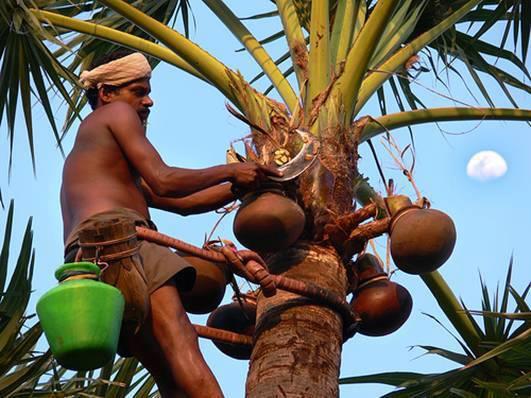
Popularly known as kallu, toddy is Kerala’s own coconut liquor. In fact, kallu is probably the first (and perhaps the only!) Malayalam road sign a tourist will learn to read. Made from the sap of the coconut flower before it blooms, the drink gives no intoxication when freshly tapped, but the level of alcohol increases as it ferments. When fresh it has a mildly yeasty flavor. Continue reading
Kochi’s Foodways Celebrated

Joan Nathan’s Cochin Coriander-Cumin Chicken for Passover, adapted from Queenie Hallegua and Ofera Elias – cooked and styled by Andrew Scrivani NYTCREDIT: Andrew Scrivani for The New York Times
We are always pleased to see Raxa Collective’s hometown in the news, but especially when the coverage focuses on cultural history in the part of town where we are developing a new property. Fort Kochi’s harbor area, including Bazaar Road where Spice Harbour (a waterfront hotel opening later this year, more on which in a future post) is located and where the spice trade is centered, completes the domestic route of the Malabar Coast’s spice trade. Spices are grown throughout the Western Ghats, they make their way down to sea level for transport in the coastal backwaters, and a large percentage end up on Bazaar Road where merchants, traders, godown (warehouse) keepers and others prepare them for shipment. This has been the way of the spices for millennia, though Fort Kochi’s harbor has played its role in the spice route only in recent centuries. The New York Times writer Joan Nathan describes a culinary-religious heritage motivation for her visit here (minutes from our office location):
KOCHI, India — Dreaming of spices described in the Book of Kings, I came to this southern port city built in the 14th century to learn about its longstanding but tiny Jewish presence and its food, which some believe dates back to the time of the Bible.
Continue reading
Flavours Of Kerala – Idli
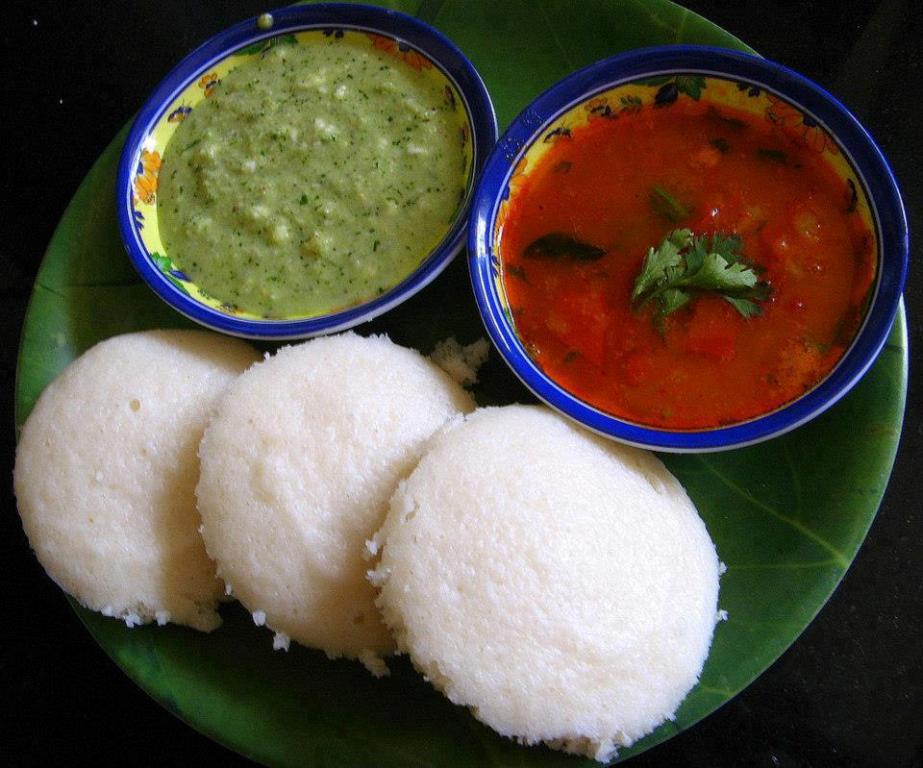
Idli is a South Indian savoury cake made by steaming a batter made with fermented rice powder, black gram dal and salt in a special pan with rounded indentations. Idlis are popular throughout India especially the southern part of the country. The dish is usually served with sambar and various chutneys, including tomato, coconut or coriander.
Continue reading
South Indian Open Markets
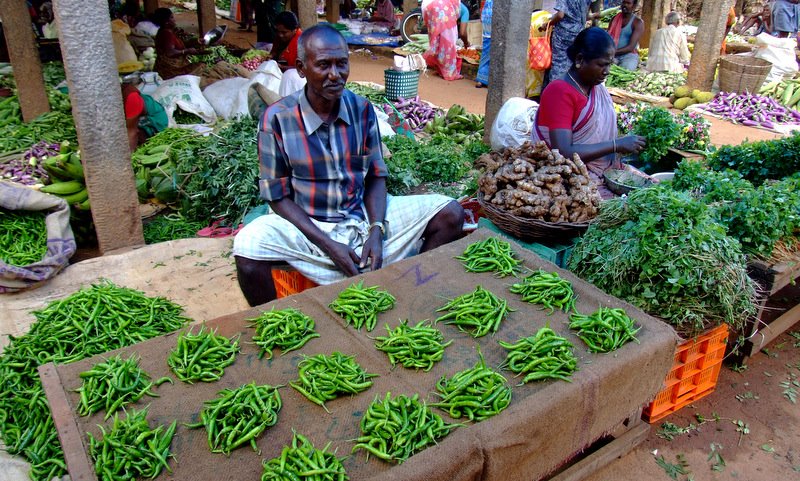
Vegetables and fruits typically constitute an essential part of the daily diet in India and they are in great demand year-round by most sections of the population. Open markets are very common in both small towns and cities of South India, where people buy and sell their fresh vegetables and fruits. Continue reading