Ocean Farms & Better Burgers

Shout outs here. First, as a Connecticut boy myself, I say with some homestate pride that this is the coolest thing to come out of the state in my lifetime. Mr. Smith, our hats are tipped to you. Click the image above to see what he is doing.  Great stuff.

Screen Shot 2016-01-29 at 10.17.53 AMNext, take a look at Mr. Headley’s creation by clicking the image to the right, a place which we first read about here; and then again more recently here. The reason both of these came to my attention today, and why I am compelled to share these links, is worthy of 20 minutes of your time if you care about food-related sustainability issues. For that, in the form of a podcast, click here. A summary of the podcast: Continue reading
Who Dreamed This City into Being?

paris

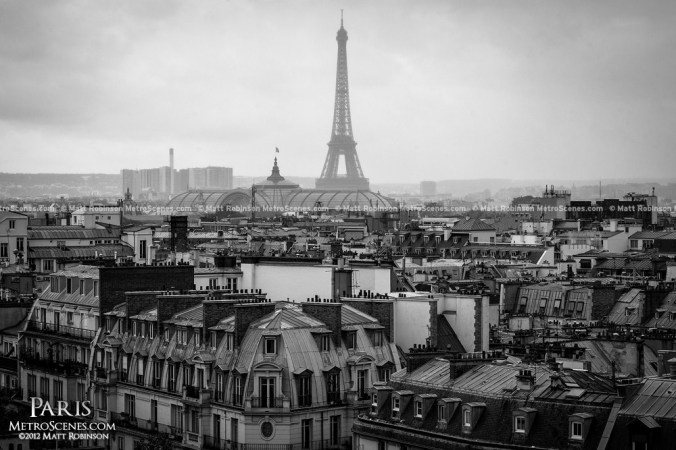
In the 19th century, George-Eugene Haussmann completely redesigned and rebuilt the French capital. PHOTO: Matt Robinson

“Paris was a universe whole and entire unto herself, hollowed and fashioned by history; so she seemed in this age of Napoleon III with her towering buildings, her massive cathedrals, her grand boulevards and ancient winding medieval streets–as vast and indestructible as nature itself. All was embraced by her, by her volatile and enchanted populace thronging the galleries, the theaters, the cafes, giving birth over and over to genius and sanctity, philosophy and war, frivolity and the finest art; so it seemed that if all the world outside her were to sink into darkness, what was fine, what was beautiful, what was essential might there still come to its finest flower. Even the majestic trees that graced and sheltered her streets were attuned to her–and the waters of the Seine, contained and beautiful as they wound through her heart; so that the earth on that spot, so shaped by blood and consciousness, had ceased to be the earth and had become Paris.”
Anne Rice, Interview with the Vampire

Literature, history, art, everyday news, talk at a neighborhood cafe – the exquisite and the commonplace are rife with paeans to this city. But how did she come into being?

Continue reading

The Republic Stands

Republic Day

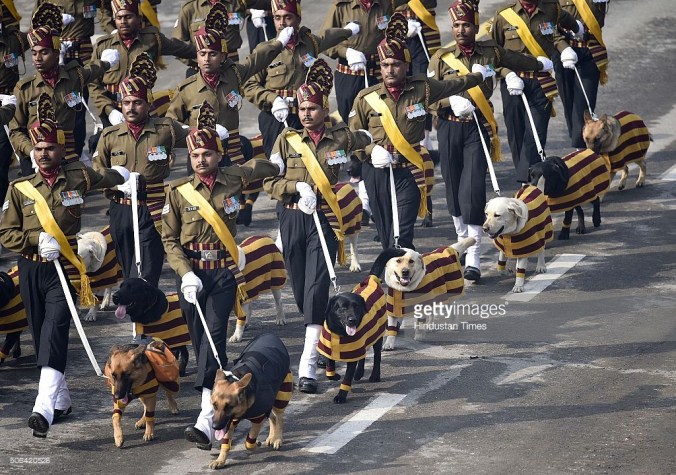
After 26 years, man’s or rather a soldier’s best friend returned to the annual Republic Day parade in India. PHOTO: Getty

5 months and 11 days – that was the last time I felt a surge of patriotism, took a good look at what my country was and is. And what it will be. As the clock hands inched towards midnight and yet another Indian anniversary of independence, I wrote these lines. That day drew to a close. Sadly, the all-consuming, overwhelming love I felt for this land, too. Don’t get me wrong: I love my country. Every single day. All its idiosyncracies with all my heart and soul. But it takes the designated Independence Day or the more recent Republic Day (January 26) for this love to reign over my work-weary being. To remind of this freedom I am bestowed with. Yesterday, it did. And this love left paw prints all over my heart and I sorely missed a friend of mine in the uniform. Made me love my country more. Be thankful, too.

Continue reading

Sifting Through Food Memories

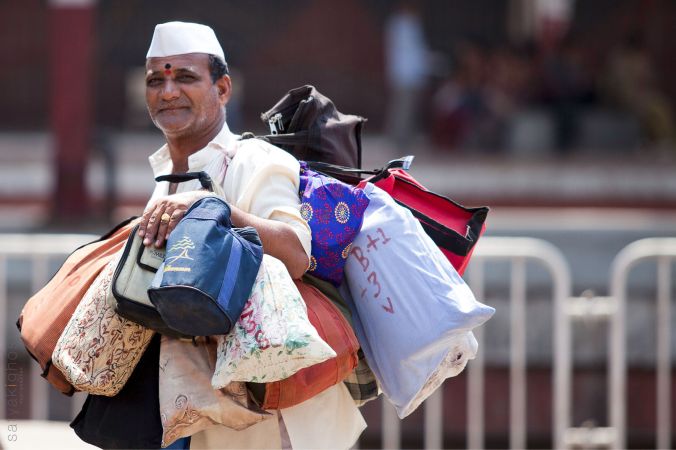
Dabbawala,the lifeline of Mumbai.

The Indian city of Mumbai is home to the ‘dabbawala’ service wherein boxes of hot lunch make their way from homes to customers’ offices.   PHOTO: Satyaki Ghosh

Food memories. Absolutely universal, absolutely distinctive. Across cultures, across borders. United by the emotions they evoke – nostalgia, love, warmth, hope. While travel memories are notched up by the miles, they are bound to feature a food memory or two. Of cultures, smells, people, faces, history.  Jacques Pepin, noted French chef, writes of his in The New York Times:

There is something evanescent, temporary and fragile about food. You make it, it goes, and what remains are memories. But these memories of food are very powerful. My earliest memories of food go back to the time of the Second World War. My mother took me to a farm for the summer school vacation when I was 6 years old with the knowledge that I would be lodged and fed there. I cried after she left and felt sad, but the fermière took me to the barn to milk the cow. That warm, foamy glass of milk is my first true memory of food and shaped the rest of my life.

Continue reading

Rain Scents

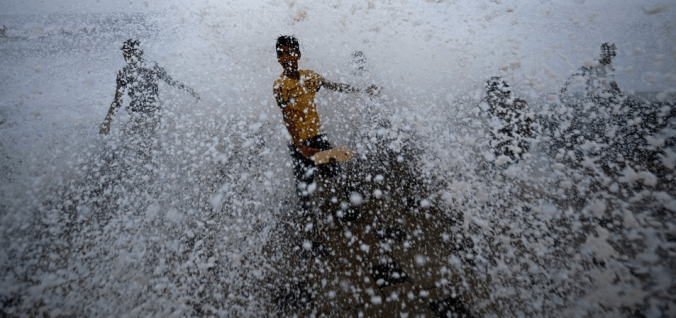
Vivek Prakash/Reuters

Vivek Prakash/Reuters

Smell is one of the most evocative of the five senses, allowing us to relive memories that span our entire lives. Scents from the kitchen make our mouths water. Scents from nature make us long to be outdoors. Considering that on average our bodies consist of 60% water, it isn’t surprising that we’re so attuned to the range of smells associated with H2O.

Many of the RAXA Collective team long for the refreshing monsoon rains in Kerala, never imagining that exhilaration could be captured in a bottle.

Once again we thank The Guardian for this intoxicating story.

Every storm blows in on a scent, or leaves one behind. The metallic zing that can fill the air before a summer thunderstorm is from ozone, a molecule formed from the interaction of electrical discharges—in this case from lightning—with oxygen molecules. Likewise, the familiar, musty odor that rises from streets and storm ponds during a deluge comes from a compound called geosmin. A byproduct of bacteria, geosmin is what gives beets their earthy flavor. Rain also picks up odors from the molecules it meets. So its essence can come off as differently as all the flowers on all the continents—rose-obvious, barely there like a carnation, fleeting as a whiff of orange blossom as your car speeds past the grove. It depends on the type of storm, the part of the world where it falls, and the subjective memory of the nose behind the sniff… Continue reading

The Sea Inside

What is it about the sea? The fact that it changes, and the light changes, and the ships change. The feel of being entwined with the ocean? That when we go back to it – whether it is to sail or to watch it – we are going back from whence we came.

– Rosanna Abrachan

The teamwork involved in crafting the videos that help define the guest experience at Xandari Harbour was as satisfying as creating the property itself. Thank you Anoodha and the RAXA CollectiveXandari Harbour teams!

Stay tuned for more!

Forests Giving Deeply Appreciated Gifts

4928

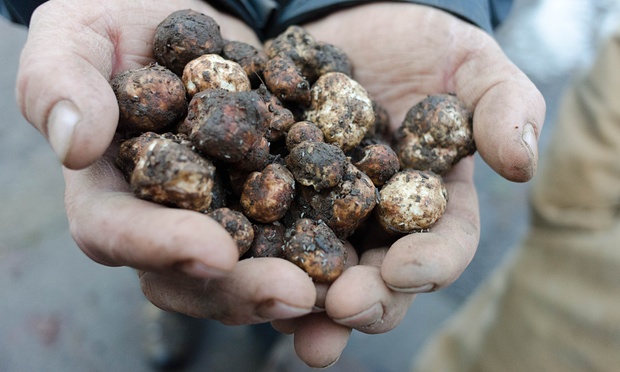
‘You could take an iron rake and rip outwards several feet from the trunk of a fir until you gathered up every truffle in the vicinity.’ Photograph: Jason Wilson for The Guardian

Two Raxa Collective representatives made their way in late autumn (northern hemisphere) to Istria, Croatia. Those same two, and their two sons, had lived in Croatia 2006-2007 but had stayed on their island at the very southern limit of Croatia; never had the chance to make it to Istria during truffle season. So, the two who finally went made the Istria visit a culinary weekend, which will need to be the subject of another post.

The exposure to truffles in their native habitat is an experience that is difficult to describe, because it is at once a deep immersion in a very comforting deciduous forest ecosystem during a time of delicious decay; and it is simultaneously a whetting of the appetite. We are now inclined to seek out more places where we can experience this. For now, the foodies among us, and particularly the mycologically oriented, will appreciate this article in today’s Guardian Environment section, which clues us in on one possible next location for next autumn:

Truffle trackers: how dogs and humans help ecology and gastronomy in Oregon

Hunting for the underground fungus delicacy with dogs ensures ripe truffles and minimum environmental impact – and it’s a great way to bond with a canine

Jason Swindle has already learned the best and hardest lesson that his dog can teach. “It’s about trust. River does the craziest things when we’re out here – she charges up cliffs or hillsides – and I have really just had to learn to trust her.”

This trust is perhaps even sweeter than the prize she helps him find beneath the forest floor: truffles. Continue reading

New York Public Library, At It Again

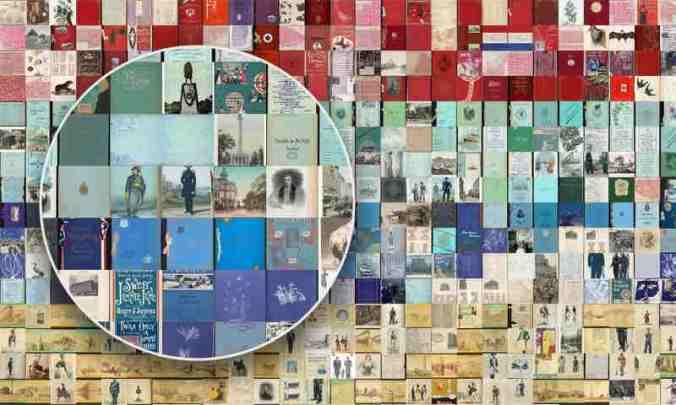
pd_banner_magnified_3We appreciate the efforts of the New York Public Library, which we have posted on numerous times previously for its innovative as well as its occasionally worrisome institutional changes, to make more of its collection more available to more people for more uses. This blog post by Shana Kimball, Manager of Public Programs and Outreach at NYPL Labs, explaining the value to all of us:

Today we are proud to announce that out-of-copyright materials in NYPL Digital Collections are now available as high-resolution downloads. No permission required, no hoops to jump through: just go forth and reuse!

The release of more than 180,000 digitized items represents both a simplification and an enhancement of digital access to a trove of unique and rare materials: a removal of administration fees and processes from public domain content, and also improvements to interfaces — popular and technical — to the digital assets themselves. Online users of the NYPL Digital Collections website will find more prominent download links and filters highlighting restriction-free content; while more technically inclined users will also benefit from updates to the Digital Collections API enabling bulk use and analysis, as well as data exports and utilities posted to NYPL’s GitHub account. These changes are intended to facilitate sharing, research and reuse by scholars, artists, educators, technologists, publishers, and Internet users of all kinds. All subsequently digitized public domain collections will be made available in the same way, joining a growing repository of open materials. Continue reading

If You Happen To Be In New York City

NYTTS

Come say hello. Amie and I are representing Xandari at the Costa Rica stand in North America’s largest consumer travel show. Today through Sunday they are expecting nearly 30,000 visitors to enter the premises of this show. For $20 you can have a whirlwind tour of the world, and some interesting Event Speakers (for our few recommendations, click the titles to go to the ticket page): Continue reading

If You Happen To Be In Hamburg

MKG_Christoph_Niemann_Unterm_Strich_sundaysketches4_052043b9a1

Our favorite illustrator has been busy. We have not pointed to one of his illustrations or shows in way too long…so to correct that:

CHRISTOPH NIEMANN

20 January 2016 until 10 April 2016

UNDER THE LINE

For the accountant, what’s under the line is the balance – and for the draughtsman? Strictly speaking, what’s under the draughtsman’s line is the paper – no paper, no line.

Continue reading

Understanding India

i187-darjeeling-west-bengal-1983

Darjeeling, India, 1983.

In short, you cannot. India is too diverse to explain, or even describe, in any meaningful way. So understanding it is a journey, at least lifelong if not eternal. But you should try. And we are dedicated to all kinds of attempts, including via journey; this book, published recently by Phaidon, may help with visual clues prior to such a journey, whether it will be your first or 80th:

The brilliant American Magnum photographer Steve McCurry has travelled so widely, he could have produced a great monograph on almost any continent. Yet, in his latest Phaidon publication, he has chosen to focus on the country that he first visited as a 28-year-old photojournalist in 1978, and has since returned to over eighty times.

Continue reading

Because Coffee is ‘Human’

For those who believe life begins after coffee, the story of its origin will definitely sound familiar. Coffee grown worldwide can trace its heritage to the ancient coffee forests on the Ethiopian plateau, where legend says the goat herder Kaldi first discovered the potential of these beloved beans. It is said that Kaldi discovered coffee after noticing that his goats, upon eating berries from a certain tree, became so energetic that they did not want to sleep at night. Kaldi reported his findings to the abbot of the local monastery who made a drink with the berries and discovered that it kept him alert for the long hours of evening prayer. The abbot shared his discovery with the other monks at the monastery, and slowly knowledge of the energizing berries began to spread.

Now photographer Sebastiao Salgado takes readers deep into that grind with his latest collection, The Scent of a Dream: Travels in the World of Coffee that looks at the landscapes and labors behind the $100-billion-a-year business in ten countries around the globe.

Continue reading

When A Legend Fades Away

Stories about the Yeti date back thousands of years, especially in the Himalayan nations. Legends say it can be seen only when it comes down from the high mountains to lower elevation and that it passes through the forests and into the villages where it surprises or scares people and sometimes kills a yak for food. Several climbers claim to have seen an unusual animal on their way up Mount Everest. A few have taken photographs of very large footprints in the snow, claiming they belong to the Yeti. It has another name that many people will recognize: Abominable Snowman. Think of a big human-like animal covered in white hair, with huge canine teeth and very big footprints.

But now, no one’s looking for the Yeti.

Continue reading

Still Standing – the Last Jews of Jew Town

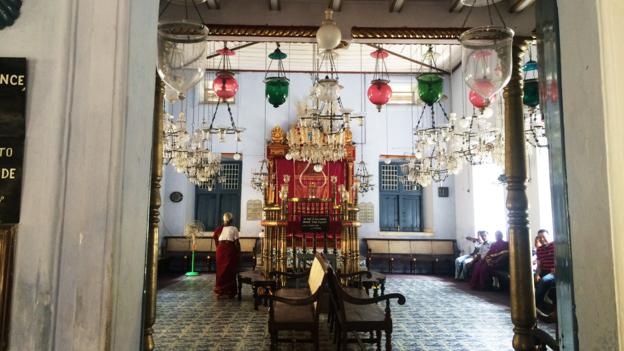
The Paradesi synagogue in Jew Town, Fort Kochi, Kerala.  Credit: Alyssa Pinsker

The Paradesi synagogue in Jew Town, Fort Kochi, Kerala. Credit: Alyssa Pinsker

Xandari Harbour, going beyond a hotel, doubles as a gateway to history. Located between the tourist paradise of Fort Kochi and the heritage rich bylanes of the spice markets of Mattanchery, it sees people and time come and go. Among the tales we hold precious is the heartwarming lifestory of the Jews of Jew Town. A handful left, behind doors and windows they sit – reminders of a people who found warm refuge in an alien land. Reminders of a page of a history turning to close.

In a small neighbourhood in the South Indian city of Cochin, Kashmiri shopkeepers in Islamic dress stand in front of shops emblazoned with banners reading “Shalom!” Inside, Hindu statues and shawls vie for space with Jewish stars, menorahs and mezuzahs. Although this multiculturalism might seem strange, the majority-Hindu city is well known for its substantial Muslim and Christian populations. Less known is that there’s also a fast-dwindling native Jewish community, known as the Paradesi (Foreign) Jews, who once populated the neighbourhood of Jew Town.

Continue reading

On the Rocks

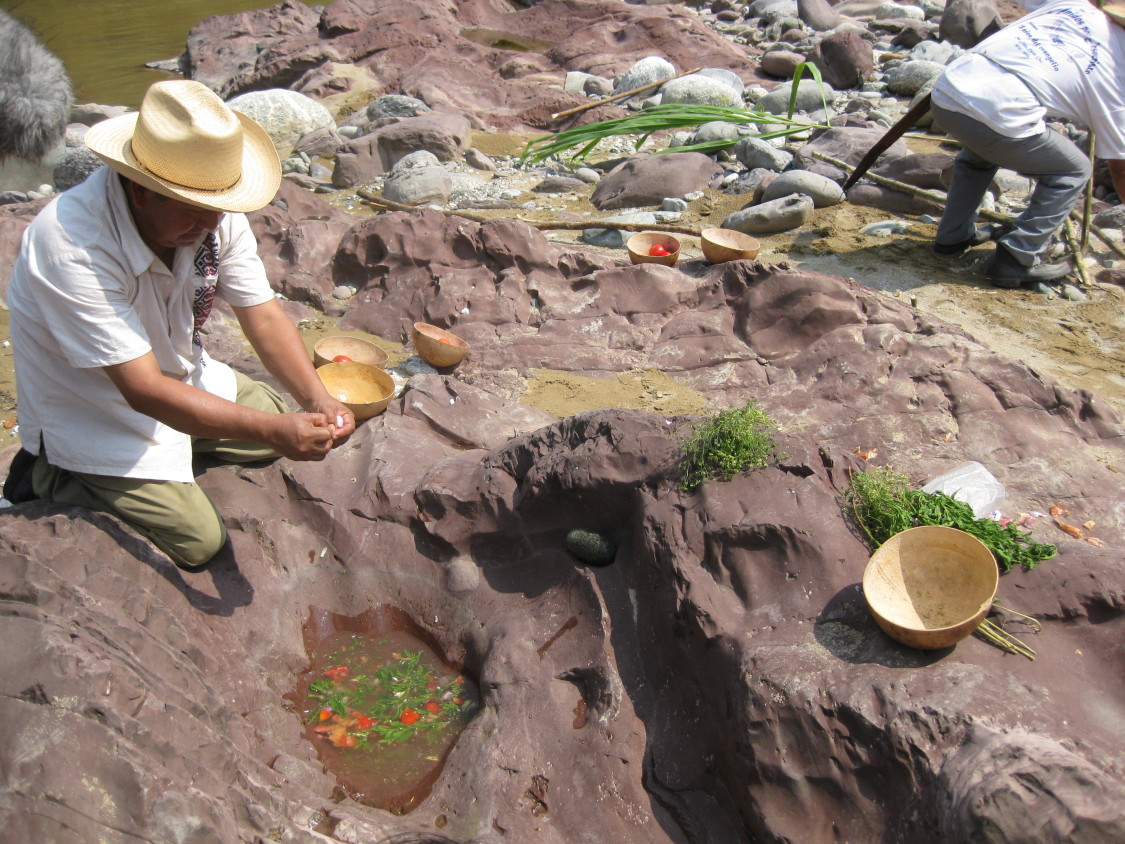
Chinatec elders prepare stone soup the traditional way, by the Papaloapan River. PHOTO: SARAH BOREALIS

Chinatec elders prepare stone soup the traditional way, by the Papaloapan River. PHOTO: SARAH BOREALIS

National Geographic’s The Plate explores the “global relationship between what we eat and why, at the intersection of science, technology, history, culture and the environment”. The latest in its daily discussion on food is the preparation of  real stone soup in Oaxaca, Mexico.

The soup originated in a remote ritual site in the Papaloapan River basin, about 12 hours by car from Oaxaca City, in the highlands of the Sierra Madre mountain range. The geography there is very rocky, and in the Pre-Ceramic [period,] Chinantec ancestors developed an elemental way to cook their food using fire and stone. The ritual site features large boulders excavated to serve as large cooking pots, and I guess you might say that the rest is history! The recipe for stone soup features local ingredients and really is a product of this unique environment.

Continue reading

When Art Bridges Communities

The Islamic Cultural Center of Northern California hosts plays, open mic nights, painting and ceramics classes. PHOTO: ICCNC

The Islamic Cultural Center of Northern California hosts plays, open mic nights, painting and ceramics classes. PHOTO: ICCNC 

Places of religious significance have long been centers of the community spirit. Moving beyond discourses and rituals, their supreme ability lies in bringing people together on some common ground. And projects like the Islamic Cultural Center in Northern California demonstrate how art and culture can bridge gaps within the space of beliefs.

Many mosques preach against even listening to music, let alone playing it on the premises. But here, in a huge auditorium filled with dozens of people, a Moroccan singer on stage sings the praises of the Prophet Muhammad, playing a stringed instrument called an oud. Next to him, a man plays a North African drum called thedumbek. The people here are white, black, Asian — some in embroidered green Sufi robes, others in black Shiite turbans or flowing white Arab jalabeyas. Some women cover their hair, some don’t. Ask anyone who’s been to a mosque, and they’ll tell you this scene is definitely not a common one — which is precisely why many people feel comfortable here.

Continue reading

When a Way of Life Melts With the Ice

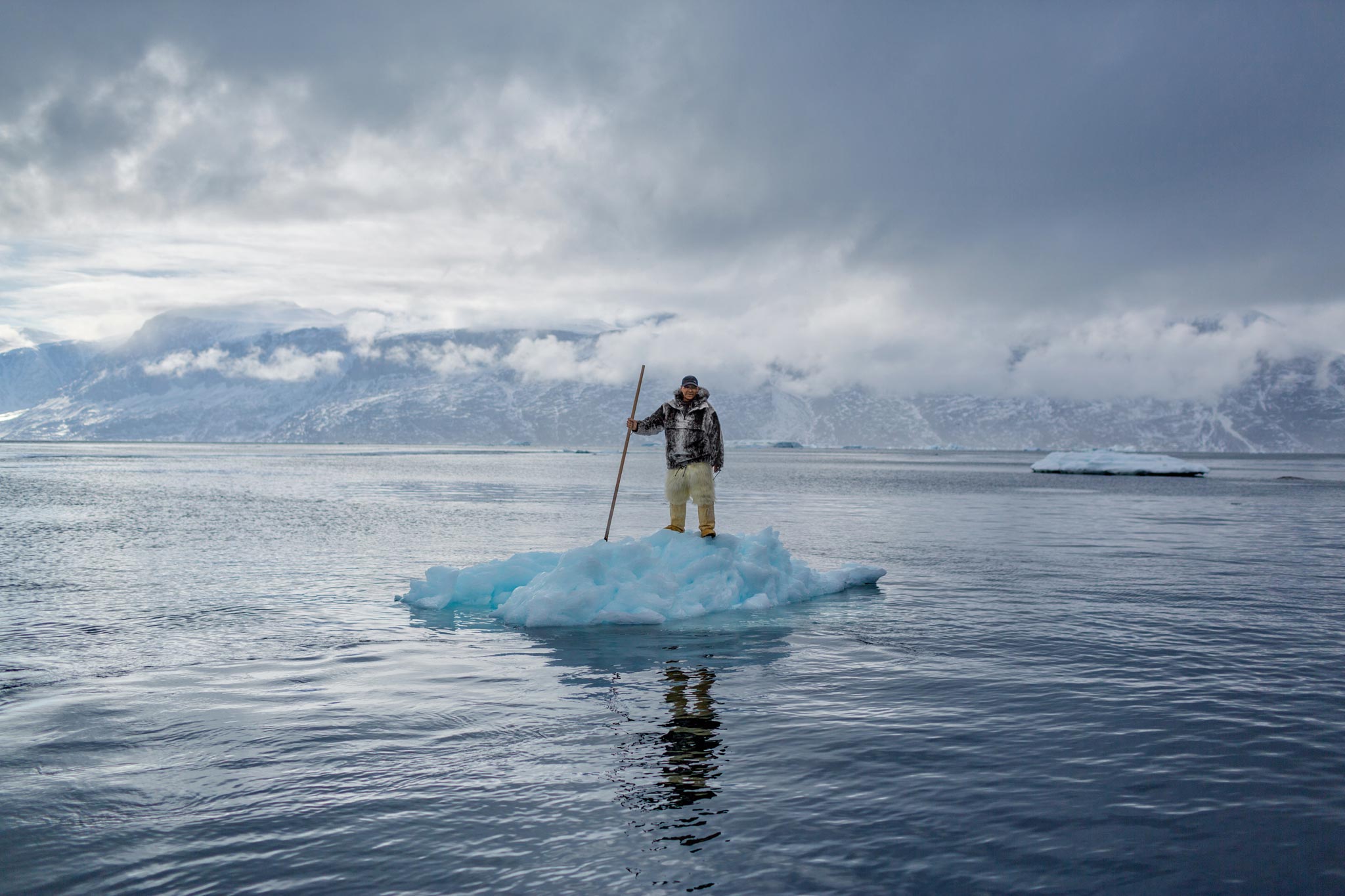
Albert Lukassen’s world is melting around him. When the 64-year-old Inuit man was young, he could hunt by dogsled on the frozen Uummannaq Fjord, on Greenland’s west coast, until June. This photo shows him there in April. PHOTO:  Ciril Jazbec

Albert Lukassen’s world is melting around him. When the 64-year-old Inuit man was young, he could hunt by dogsled on the frozen Uummannaq Fjord, on Greenland’s west coast, until June. This photo shows him there in April. PHOTO: Ciril Jazbec

Climate change – a situation that choices can better, but circumstances see it go from bad to worse. Much talk, much less done. Temperatures rise, glaciers melt, and seas begin to usurp shores. Also, people like the natives of Kiribati and now the Inuit are forced to rethink ways to survive on their lands which once provided for all. And did not threaten their lives. National Geographic reports from the North:

Something else is vanishing here too: a way of life. Young people are fleeing small hunting villages like Niaqornat. Some of the villages struggle to support themselves. And now a culture that has evolved here over many centuries, adapting to the seasonal advance and retreat of sea ice, is facing the prospect that the ice will retreat for good. Can such a culture survive? What will be lost if it can’t?

Continue reading

Short Story Dispensers Aim to Dispense with Unproductive Waiting Time in Grenoble

Screenshot from a spot by the French news channel M6

Last week Konbini, the online magazine dedicated to popular culture, featured a short story (the nonfiction kind) on the French city of Grenoble, so-called capital of the French Alps. In a collaboration between the city council and the French publishing company Short Édition, certain public spaces that frequently feature waiting time–libraries, the post office, the tourist center–have been equipped with short story dispensers.

After pressing a button to select between one-, three-, and five-minute stories, a long strip of paper is printed from the kiosk and the user can enjoy a piece of short fiction from Continue reading

Wedded to Their Land Despite the Tides

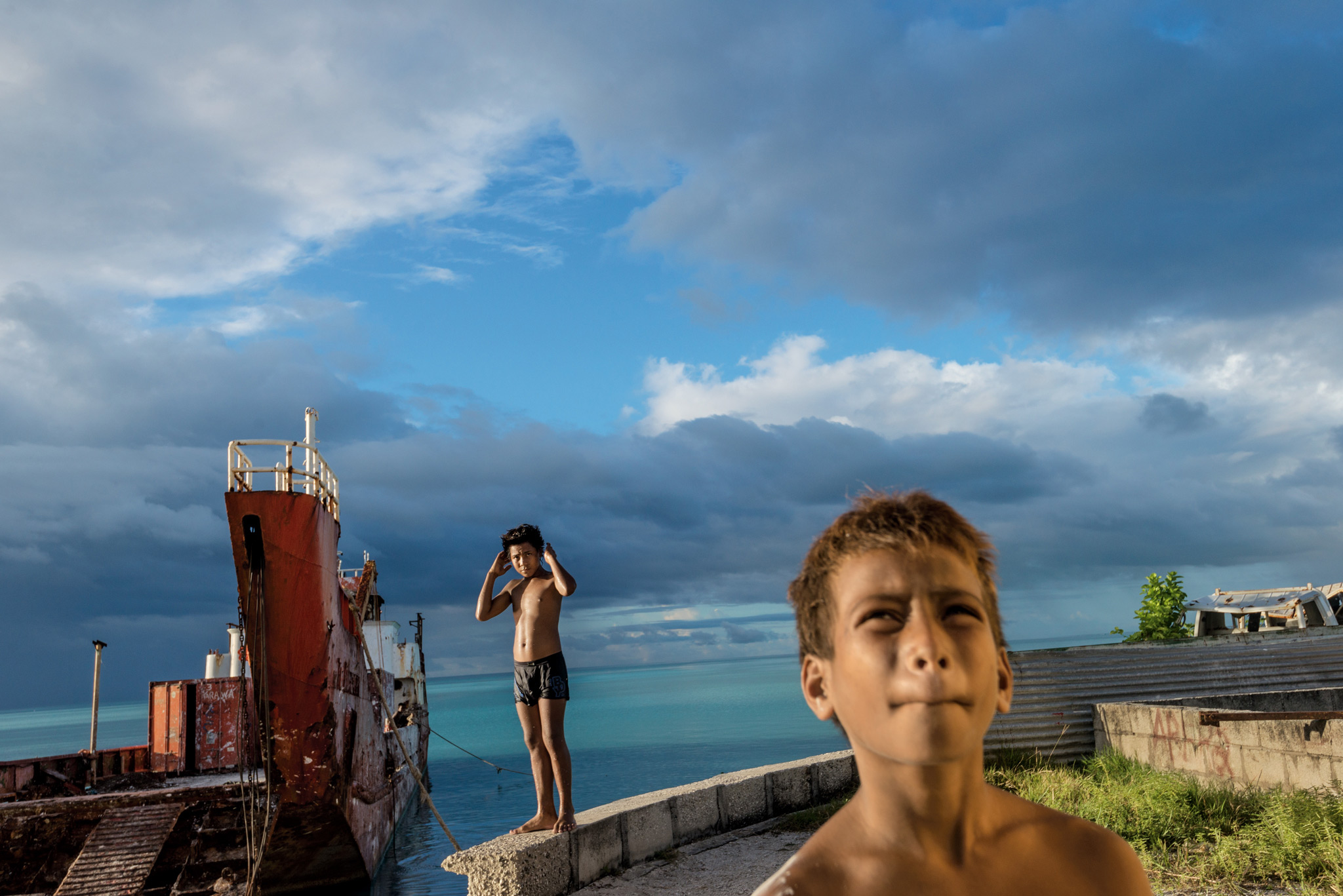
 Kiribati—33 coral islands in an expanse of the central Pacific larger than India—is “among the most vulnerable of the vulnerable” to climate change. PHOTO: Kadir Van Lohuizen

Kiribati—33 coral islands in an expanse of the central Pacific larger than India—is “among the most vulnerable of the vulnerable” to climate change. PHOTO: Kadir Van Lohuizen

They do not think of themselves as “sinking islanders,” rather as descendants of voyagers, inheritors of a proud tradition of endurance and survival.

That’s how National Geographic captures the spirit of the people of Kiribati, a spirit that forgives the seas despite the threats that its warming, rising, acidifying waters pose to their native islands. A people who believe that planting mangroves will stop the encroaching sea in its tracks, a people whose lives are centered on the seas that without it, they maybe forced to question who they are. This is their story then, from “the front line of the climate-change crisis.”

Continue reading

Ancient Knowledge and a Nobel

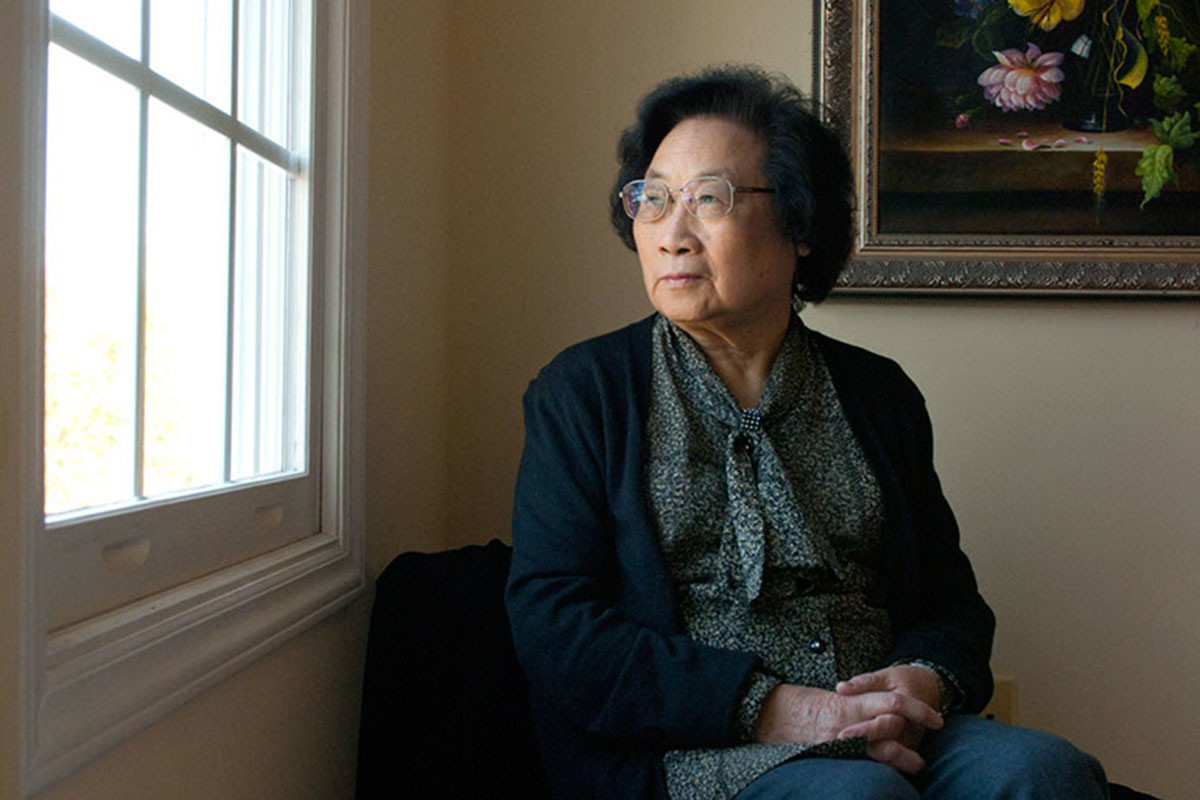
In giving Youyou Tu the prize, the Nobel Prize committee has recognized the role ancient knowledge can play in the modern world. PHOTO: New Scientist

In giving Youyou Tu the prize, the Nobel Prize committee has recognized the role ancient knowledge can play in the modern world. PHOTO: New Scientist

Traditional Chinese medicine has found its Nobel Prize moment. A cure for malaria. And its origin is marked by war, military, learning, and more.

The Quartz reports:

In the war, the North Vietnamese were not just fighting American-supported forces but also failing to fight malaria. The parasite that caused the disease had developed resistance against chloroquine, which was commonly used as treatment. So, in desperation, they turned to China’s leader, Mao Zedong, for help. Mao’s answer was to make searching for a new malaria drug a military project.

Continue reading