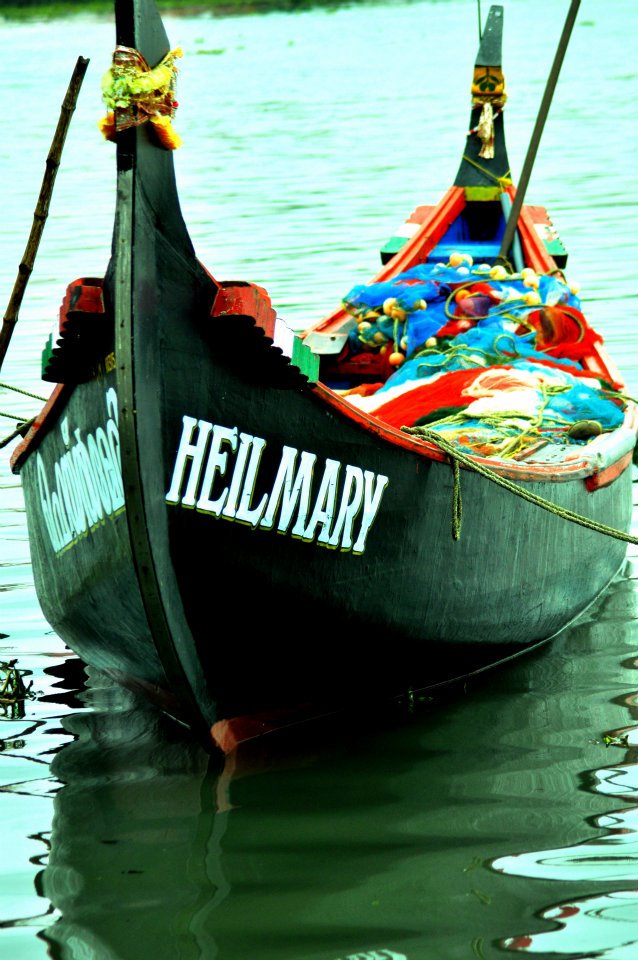
Mattanchery, Kerala
Mattanchery, Kerala
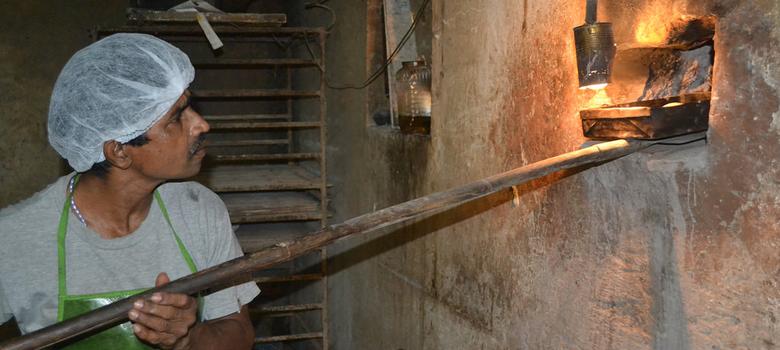
The Poderanchem Fest will pay tribute to the state’s unique baking traditions and the people who keep them alive. PHOTO: Scroll
India is home to celebrations that pan religions, occasions like harvest, birthdays of legendary heroes, and more. And now the country gets its first platform celebrating bakers. All the way from the tourist-laden beaches of Goa.
It’s the sound of Goa. Every morning at the crack of dawn, the bulb horn of the poder wakes up people across the state, encouraging them to start their day with cheap, freshly baked bread. On Friday, the state’s humble bakers will finally get turn in the spotlight. Goa’s first Poderanchem Fest, or Baker’s Festival, being hosted in the leafy North Goa village of Succorro, will feature a baker’s parade and stalls selling traditional and new varieties of pao, in addition to the region’s favourite foods to eat the bread with.
Read more here.

On Canadian tasseomancer Amy Taylor’s vintage tea-leaf reading cups, your reading is determined by where your leaves fall on the preprinted symbols on the cups. PHOTO: Mike Taylor for NPR
Divining fortune from tea leaves has been around for almost as long as there has been tea, over five thousand years. Tea-Leaf reading which is also known as Tasseomancy like any other divination art has multiple origin histories. Tea-leaf reading tells fortunes using the symbols and the patterns formed by the residue of tea left in the cup. More of an art rather than a science, there are no universal guidelines that dictate what the patterns mean. Tea-Leaf reading is mostly done as a daily reading about life, love, work and money issues, though a longer timeframe may be determined as well.


I recently had the opportunity to participate in the planning and execution of a video project as part of my internship. We worked with creative director Anoodha Kunnath, who has already produced many videos about different topics.
The first step was of course a discussion between Anoodha and Raxa Collective to understand what they both expected from the video. This took place about one month ago – at the beginning of my training – so it was really interesting for me to be aware, in a different way, of the company and its philosophy. The main goal of Anoodha’s work will be to communicate all the characteristics of Xandari Harbour (one of the hotels developed and managed by Raxa Collective) and of course its fascinating location.
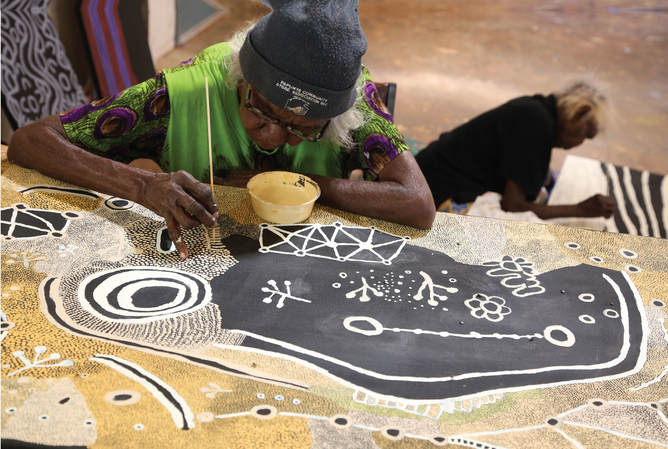
Martha MacDonald Napaltjarri (in foreground) and Mona Nangala painting at Papunya Tjupi art centre, Papunya, 2015. Photo: Helen Puckey
Have you heard of Papunya? The birthplace of what is touted as the century’s greatest art movement? The Conversation looks at how the movement has given birth to indigenous artists’ collectives, transformed communities, empowered women and forms a grand narrative on Aboriginal art:
The emergence of ‘dot’ paintings by Indigenous men from the western deserts of Central Australia in the early 1970s has been called the greatest art movement of the twentieth century.It all changed at a place called Papunya. Papunya was a ‘sit-down’ place established in the early 1960s, 240 kilometres northwest of Alice Springs in the Northern Territory (NT). The settlement brought together people from several western desert language groups: the Pintupi, Warlpiri, Arrernte (Aranda), Luritja, and the Anmatyerr, who were unaccustomed to living in close proximity to each other. Papunya was described as a ‘centralised government settlement established as a marshalling point for Aboriginal people displaced from their traditional lands’ (Curator Hetti Perkins, Papunya Tula: Genesis and Genius, Art Gallery of New South Wales– external site, 2000).
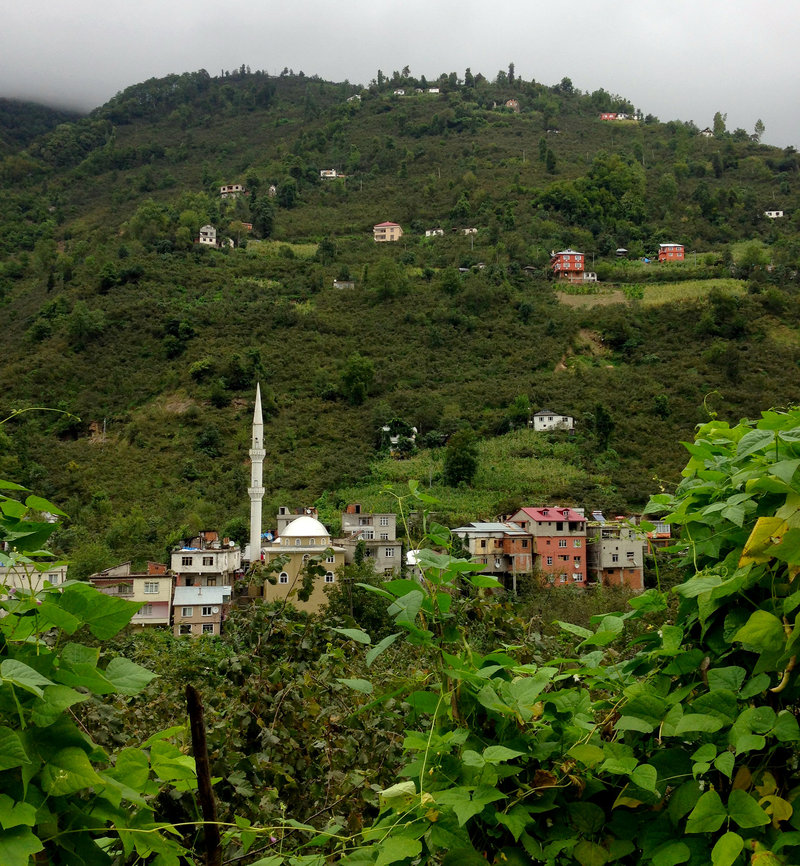
Steep hills surround the village of Kuskoy. Some villagers here can still understand the old “bird language,” a form of whistled Turkish used to communicate across these deep valleys. PHOTO: Peter Kenyon/NPR
Is it always necessary to use words to communicate? Theoretically, there’s verbal communication and its non-verbal counterpart of body language, gestures, and the like. What if the communication is to pass over valleys and hills – spontaneously? Then, a whistled language – with its origin in bird calls – is the answer. Ask the “bird whistlers”.
In a remote mountain village high above Turkey’s Black Sea coast, there are villagers who still communicate across valleys by whistling. Not just whistling as in a non-verbal, “Hey, you!” But actually using what they call their “bird language,” Turkish words expressed as a series of piercing whistles.
The village is Kuskoy, and it’s inhabited by farmers who raise tea, corn, beets and other crops, and also keep livestock. The landscape is unusual by Turkish standards, and the residents are also considered a bit eccentric by other Turks.
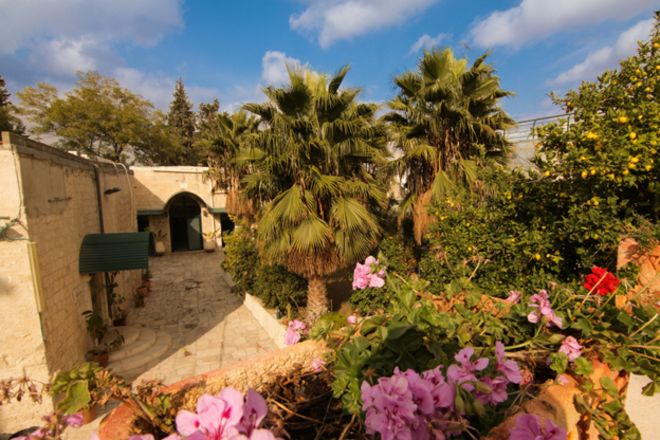
There is a little corner of Jerusalem that is forever India. At least, it has been for more than 800 years and its current custodian has plans for his family to keep the Indian flag flying for generations to come. PHOTO: BBC
For close to a century, many generations of an Indian family have been looking after the Indian Hospice, a symbol of India’s heritage, in the old city of Jerusalem.The Indian Hospice was born in 1924, with Sheikh Nazir Ansari, a police inspector’s son from Saharanpur in Uttar Pradesh, becoming the first Indian to look after the hospice, situated opposite Herod’s Gate in the old city. Since then generations of the Ansari family have kept the Indian flag flying in a situation which is “politically fraught where every inch of territory is claimed or counter-claimed”.
From the roof he flies an Indian flag, its saffron and green visible over a city that remains as volatile as ever. Sheikh Munir, though, is not easily intimidated. “I am not afraid. I am satisfied for the future, that we, the Ansari family, are serving. After me, my elder son, Nazer, should replace me as Sheikh of the zawiyya [lodge].”
I ask if Nazer, who works overseas, is interested in taking over. Sheikh Munir hesitates. From a frame on the wall, his father looks down silently. The old man raises his hands, palms up.
“It’s not a question of interested.”

Vigorón served at El Gordito in Granada, Nicaragua. The combination of soft, starchy yucca; salty, rough pork cracklings; and tangy, cool slaw made with cabbage, onions, tomato, mimbre fruit, chile and vinegar. PHOTO: Julie Schwietert Collazo for NPR
No matter how different our ethnic backgrounds, beliefs, views and values are, we can all sit around a dinner table and unite in sharing a meal that includes different tastes and types of food from all over the globe – the palate knows no boundaries and no limitations. In a divided country like Nicaragua, all differences melt when it comes to vigoron. The national dish that cuts across political ideologies, economic status, and strong preferences.


All across India, elaborate subterranean temples are hidden in plain site. Constructed between the 2nd century and 4th century AD, these massive and ornate stepwells were built both for spiritual bathing and as a way to access water tables during monsoon season and drought seasons. Many stepwells have been abandoned and are in disrepair since the introduction of modern waterworks, plumbing and village taps. Some have been destroyed. Because the water table is even lower in recent years, many are now dry. Victoria Lautman, a freelance journalist in Chicago, has been traveling around India documenting stepwells before more fall into dereliction are destroyed by neglect or outright demolition.
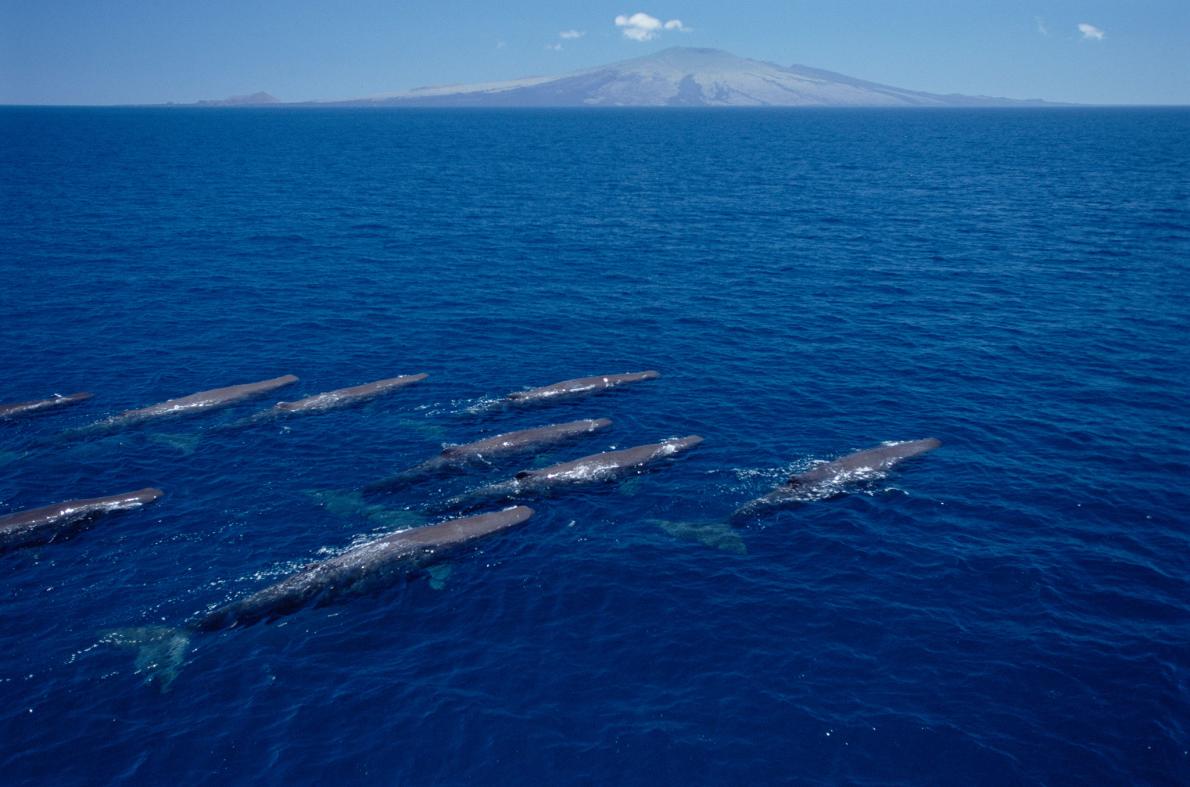
Female sperm whales and their calves swim off the coast of Pinta Island in the Galápagos. PHOTO: FLIP NICKLEN, MINDEN/CORBIS
Have you read about how lemon sharks are able to make and maintain social networks, despite the lack of Facebook and Twitter—and learn from their interactions? Or about the whales who communicate with other humpbacks through social learning? Now a study finds that deep-diving whales have a distinct series of clicks called codas they use to communicate during social interactions.
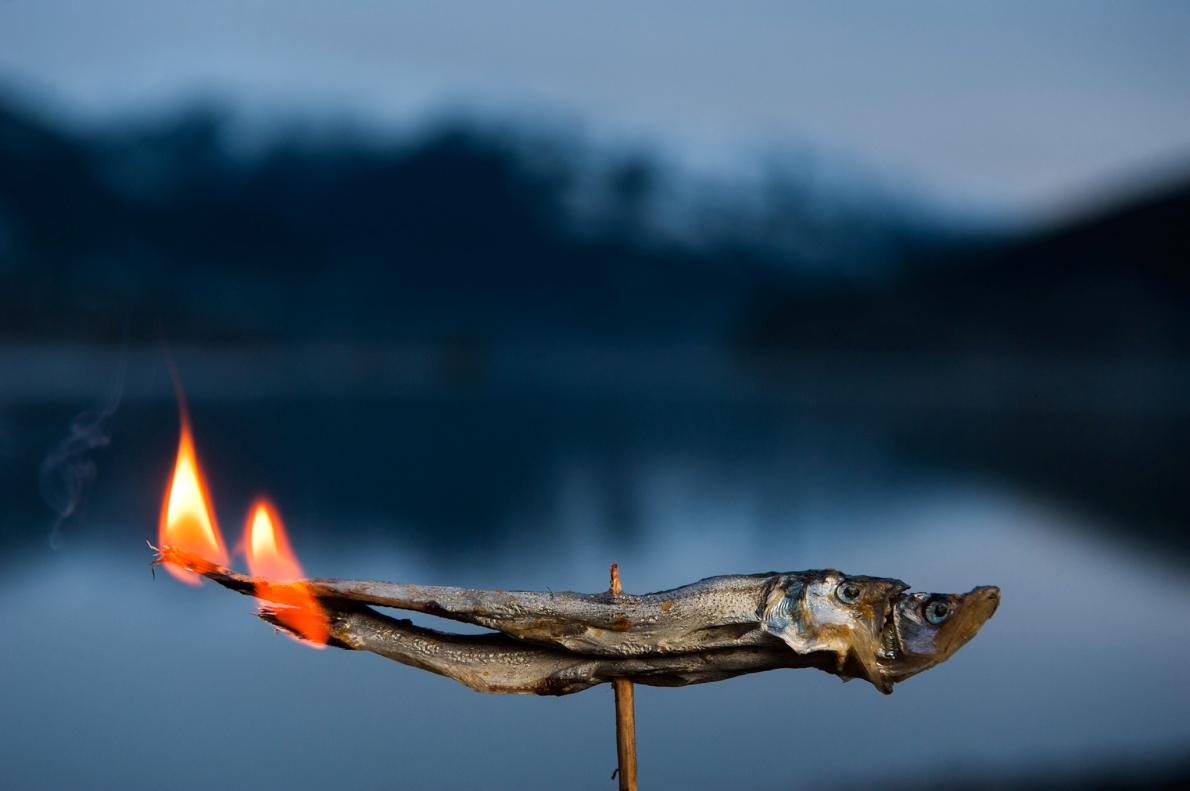
Also known as candlefish, eulachon (Thaleichthys pacificus) are so oily that they can ignite when dried. Traditionally, eulachon were used at times as lights by Nisga’a people. PHOTO: PAUL COLANGELO
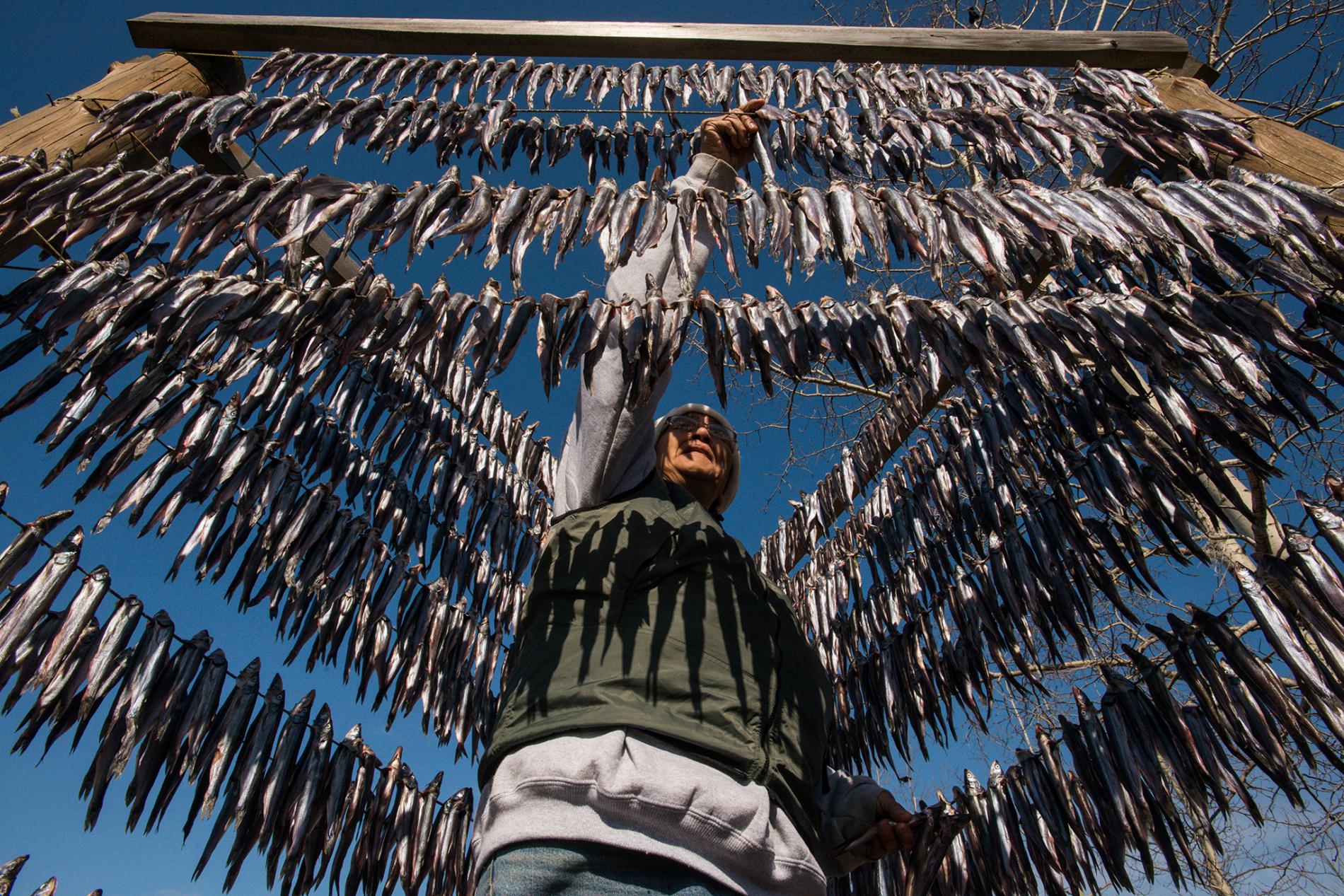
A Nisga’a woman hangs eulachon on a ganee’e, or air-drying rack. PHOTO: PAUL COLANGELO
Often referred to as “salvation fish” for safeguarding native people from starvation, the eulachon is now in need of a lifeline itself—as its habitat and population are in danger. National Geographic reports on the fish’s historical and cultural significance and the the many changes in the ocean that have led to the decline of the eulachon’s numbers:
The fish are also known as halimotkw, often translated as “savior fish” or “salvation fish.” Eulachon return to the rivers here to spawn at the end of the North Pacific winter, when historically food supplies would be running low. In lean years the eulachon’s arrival meant the difference between life and death for people up and down the coast.
Today, the fish that used to safeguard native people from starvation is itself in need of a lifeline.


The Kazakhs of the Altai mountain range in western Mongolia are the only people that hunt with golden eagles, and today their number is on the decline. The eagles are not bred in captivity, but taken from nests at a young age. Female eaglets are chosen since they grow to a larger size – a large adult might be as heavy as seven kilos, with a wingspan of over 230cm. After years of service, on a spring morning, a hunter releases his mature eagle a final time, leaving a butchered sheep on the mountain as a farewell present.
“That’s how the Kazakh eagle hunters make sure that the eagles go back to nature and have their own strong newborns, for the sake of future generations”.

Gyotaku, the art of making inked prints from real fish, originated in 19th century Japan. Above, three examples from modern Gyotaku artist Heather Fortner (from left): Under the Rainbow Rainbow Trout; Little big skate and Primary colors butterfly ray. Courtesy of Heather Fortner
How did fishermen record their trophy catches before the invention of photography? In 19th century Japan, fishing boats were equipped with rice paper, sumi-e ink, and brushes in order to create gyotaku: elaborate rubbings of freshly caught fish.
Fish printing often attracts those who have a connection with the ocean or marine life. Wada, who is Japanese-American, grew up in Hawaii and was taught how to fish by his family at a young age. And before she became a gyotaku artist, Fortner was a commercial fisherman, research vessel deckhand, and a ship’s officer and Master in the U.S. Merchant Marine. “I have always loved the ocean and anything from the ocean,” she says.
She adds: “Gyotaku allows you to express an appreciation for the natural world by partnering with the finest artist in the world: Mother Nature.”
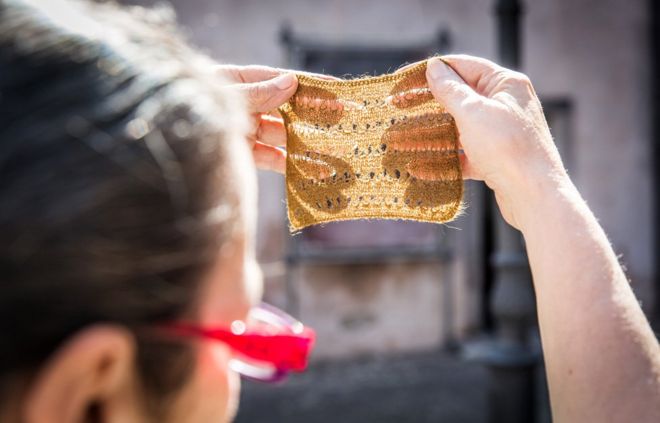
Chiara Vigo is the only woman in the world who still works the byssus, better known as the silk of the sea, the same way women in ancient Mesopotamia used to weave it in order to make clothes for their kings. PHOTO: BBC
The Italian island of Sardinia. A place where coastal drives thrill, prehistory puzzles, endearing eccentricities exist. As DH Lawrence so succinctly put it: ‘Sardinia is different.’ The island has been polished like a pebble by the waves of its history and heritage. And an indispensable part of it is Chiara Vigo, who is thought to be the only women left who can harvest sea silk, spin it and make it shine like gold. By her own admission, Vigo is neither an artist nor an artisan. She is a master. While an artist creates over inspiration and an artisan produces and sells, masters pass their art on. Like she hopes to.
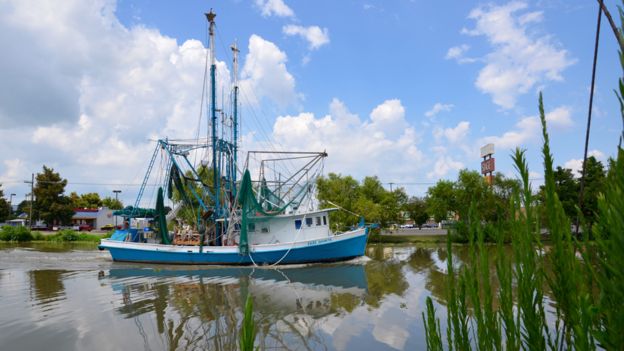
A shrimp boat heading out to fish on Bayou Lafourche. PHOTO: BBC
Cajuns are mostly descended from French immigrant ancestors. Their name comes from Acadia in Nova Scotia, Canada, where they originally settled – they were expelled by the British in the 18th Century, and many eventually ended up in southern Louisiana. What was once home to several hundred families now only counts a few permanent residents. Where there were cotton fields, there’s now open water. Where a cemetery once stood, a few last remaining tombstones are sliding into the bayou.The people here have survived hurricanes, including Katrina in 2005, and the BP oil spill in 2010. But their resilience is being tested again by a less dramatic, but no less dangerous threat – the long-term erosion of the marshes and wetlands that run all along Louisiana’s coast.
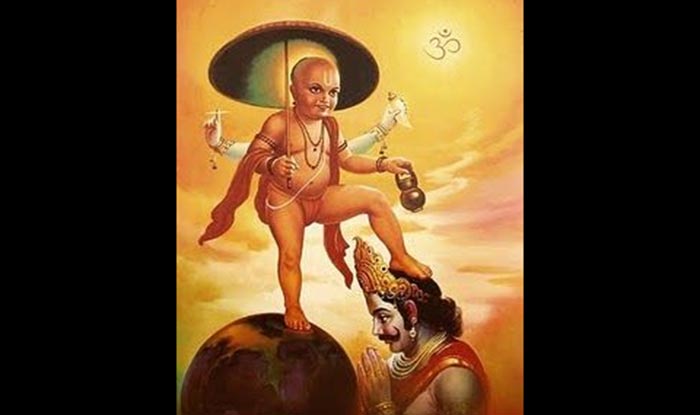
Vamana, an avatar of Lord Vishnu, places his feet on King Mahabali.
Kerala was once ruled by Mahabali, who was an asura (Demon). Now being a demon, evil and sinful practices were expected of him, but he was completely the opposite. Mahabali was a mighty king who worked for the prosperity of his people. During his reign, everybody was happy and prosperous. But the Devas (Gods) were jealous and felt that he may surpass them and so they urged Lord Vishnu to help them. Mahabali was about to perform a ritual and he had announced that he would fulfill everyone’s wishes. Vishnu decided to use this opportunity and disguised himself as a dwarf, poor Brahmin called Vamana and went to Mahabali. He asked Mahabali to give him a piece of land which he could measure with three footsteps. Generous Mahabali granted his wish. But everybody was in for a shock when the tiny Vamana grew into a giant. He then took his first step and covered all land, and in his second step he occupied the whole of the sky. He then asked Mahabali where should he keep the third step. Unable to find any more land, the noble king then asked Vamana to keep the third step on his head. Lord Vishnu was pleased with Mahabali’s dedication and so he granted him a wish. Mahabali, who unconditionally loved his people, asked for permission to visit his people once a year. And so Onam is celebrated in his honor and people believe their Mahabali visits them on the day.

A vendor attends a customer at a railway platform at Mumbai, India. PHOTO: Reuters
You remember railway book stalls as being there since eternity. Being in the business of making arduous train journeys a pleasant affair in the company of books and newspapers. It’d be easy to assume a well-meaning civic body put them up. But as far as India goes, the country and its people owe their reading on trains to Emile Edouard Moreau, a European businessman.

What might be the perfect holiday retreat has just been listed on AirBnB: the opportunity to become a bookseller for a week or two. PHOTO: Colin Tennant
Quotes on travel abound. And chances are you’ve read this some time: The world is a book and those who do not travel read only page. St. Augustine immortalized those words and now, AirBnB has literally taken it to heart. Always believed in the many worlds that exist between two ends of a book? Then, imagine a library. One that you run for a week. Or maybe two, too.
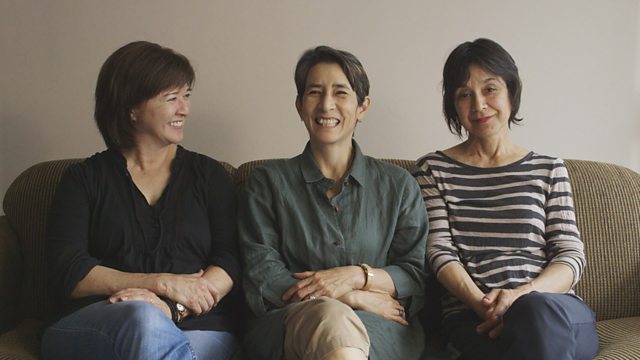
Atsuko, Emiko and Hiroko were among tens of thousands of Japanese women who married their former enemies after World War II. They landed in 1950s America knowing no one, speaking little English and often moving in with stunned in-laws. PHOTO: BBC
What does it mean to leave your country, where you were somebody, and move miles to a continent you’d only heard of? A country where you’d be a ‘nobody’. Not knowing whether the decision to say ‘yes’ to a former enemy was right. Struggling for words that help start a conversation. Being told not to wear the one piece of cloth your identity hinges upon? And years of trying to fit in, juggling two distinct identities? Listen to the Japanese War brides as they tell their story on BBC this week.
For 21-year-old Hiroko Tolbert, meeting her husband’s parents for the first time after she had travelled to America in 1951 was a chance to make a good impression. She picked her favourite kimono for the train journey to upstate New York, where she had heard everyone had beautiful clothes and beautiful homes.
But rather than being impressed, the family was horrified. “My in-laws wanted me to change. They wanted me in Western clothes. So did my husband. So I went upstairs and put on something else, and the kimono was put away for many years,” she says.
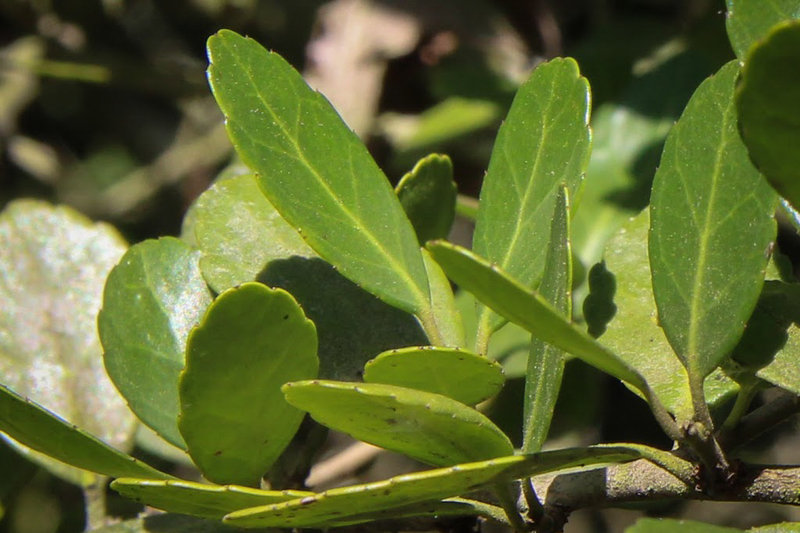
Yaupon growing in the wild in east Texas. This evergreen holly was once valuable to Native American tribes in the Southeastern U.S., which made a brew from its caffeinated leaves. PHOTO: Murray Carpenter for NPR
Thanks to RAXA Collective’s India operations, specifically in Kerala, there has been no dearth of stories on tea here. Tea’s takeover of the table finds space here. While our travels allow us to bring you tea experiences from across the world. Follow a seed to cup journey in Thailand here. Also be sure of how the iced variety is slowly taking over the world. Now NPR creates some buzz with a piece on North America’s forgotten ‘tea’ plant, probably the only plant from the continent known to contain caffeine.
 Organikos