Umberto Eco, Come To Kerala!

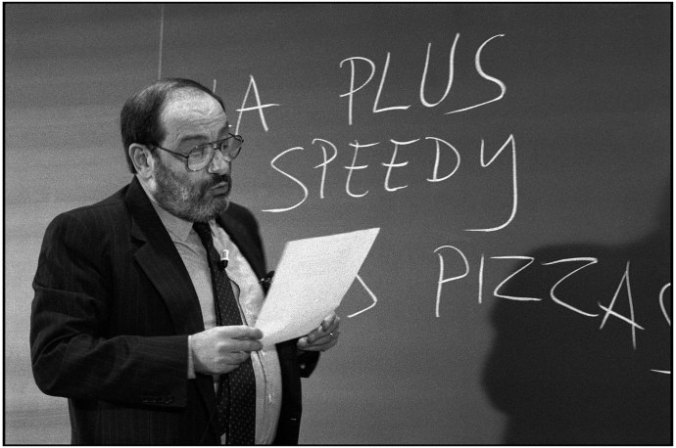
In “How to Write a Thesis,” Umberto Eco walks students through the craft and rewards of sustained research. CREDIT PHOTOGRAPH BY MARTINE FRANCK / MAGNUM

In “How to Write a Thesis,” Umberto Eco walks students through the craft and rewards of sustained research. CREDIT PHOTOGRAPH BY MARTINE FRANCK / MAGNUM

I have excerpted the first two paragraphs, and the last two, of a delightful and delightfully odd book review in order to finally extend an invitation to Umberto Eco that is long overdue. The review is odd only in the sense that the book was first published when I was a sophomore in high school, 20 years before I completed my doctoral dissertation (which I was working on 20 years ago), and is only now appearing in English for the first time, one year after my son completed his undergraduate honors thesis (the best advice we could send him back then was this).

The review is anything but odd, if you have been following our blog for the last four years.  It is about the effort required to understand sufficiently, and to communicate effectively, on a topic you care about–and provides some tricks of the trade that sound geared for university students but apply to members of our collective as well.  We are not in thesis mode at Raxa Collective. What we do is not theoretical, but grounded in the grind of hard work every day in our chosen profession. But we are in constant search mode for thesis-forged talent who know how to express themselves, to join us as interns or as employees (see Rosanna’s post for our latest talent acquisition in this spirit).

Umberto Eco is my favorite author, mainly because of one short book of his collected writings that I read when I was working on my doctoral dissertation. And mainly for that same book I extend to him an invitation to visit with us in Kerala, as our guest. Maybe I did not need the book reviewed below to complete my thesis, but I am sure I would have devoured it if given the opportunity at that time:

“How to Write a Thesis,” by Umberto Eco, first appeared on Italian bookshelves in 1977. For Eco, the playful philosopher and novelist best known for his work on semiotics, there was a practical reason for writing it. Up until 1999, a thesis of original research was required of every student pursuing the Italian equivalent of a bachelor’s degree. Collecting his thoughts on the thesis process would save him the trouble of reciting the same advice to students each year. Since its publication, “How to Write a Thesis” has gone through twenty-three editions in Italy and has been translated into at least seventeen languages. Its first English edition is only now available, in a translation by Caterina Mongiat Farina and Geoff Farina. Continue reading

The Mysteries Of Elena Ferrante

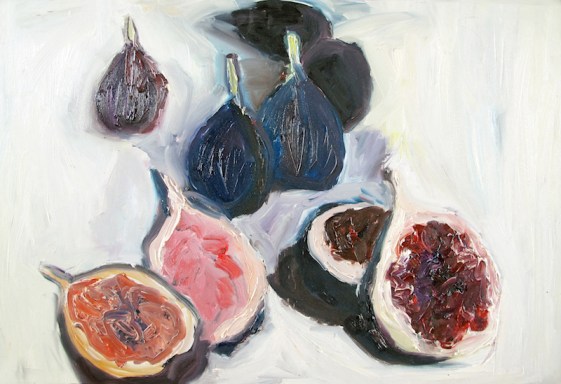
Path of Figs, 2012. Giulia Bianchi.

If you have not heard of Elena Ferrante before, you may want to start here, here, or here. But then come back here for this review. Thanks to the nplusone magazine website:

Those Like Us

On Elena Ferrante, by Dayna Tortorici,Issue 22: Conviction, Spring 2015

WHENEVER I HEAR someone speculate about the true identity of Elena Ferrante, the pseudonymous Italian novelist of international fame, a private joke unspools in my head. Who is she? the headlines ask. Don’t you know? I whisper. In my joke I’m sitting opposite someone important. The person promises not to tell, so I say:

She’s Lidia Neri.

She’s Pia Ciccione.

She’s Francesca Pelligrina. Domenica Augello.

Different names, every time, but the reaction is the same: a momentary light in the listener’s eyes that fades to bored disappointment. An Italian woman from Naples, whose name you wouldn’t know. Who did you expect?

Continue reading

The Extreme Present

Post_extremePresent1

We play a modern game by a modern set of rules, and just found that there is a name for the game–the extreme present–by listening to a few men and women discuss it on a stage in London recently. It is not our main game, but the game we play to enable our main game to succeed. We upload, we post, we tweet, we text and we otherwise try to catch your attention in order to have the chance to convince you that our issues should be your issues, and that you should come to our places to support our issues in those places.

We call our main game entrepreneurial conservation and we use modern communications technology, and its social media tools, and the whole bundle of scary social implications that come with those, to play that game. The scary social implications are not only in the form of people constantly looking and pecking at their smart phones.

Listen to this discussion to get the big picture. It takes a bit of effort to find the podcast of those men and women on the London stage, because as of this moment it is only available on iTunes, but we believe it will be worth the two extra minutes, and then the hour of listening. In iTunes paste this link, and then find the title below as one of the most recent podcasts:

THE EXTREME PRESENT: AN EVENING OF SELF-HELP FOR PLANET EARTH

With Shumon Basar, Douglas Coupland and Hans Ulrich Obrist

In the space of just 20 years, the internet has transformed us completely. It has changed not just the structure of our brains, but the structure of the planet. Our attention spans have narrowed to the length of a Beatles song. Our lives used to feel like stories; now they’ve collapsed to a perpetually refreshing stream of tweets and posts. We outsource our memory to the ‘Cloud’, and remember nothing we don’t have to. All that exists is immediately in the now. The internet, like all technologies, is not being shaped to resemble humans. Humans are being shaped to resemble the internet. Welcome to the age of the Extreme Present.

Continue reading

Working To Survive, Alternate Edition

7_wide-3e7cde0913bd4deea8f50800b59f674482c45b98-s1300-c85

The St. James vineyard at the Abbey of New Clairvaux. The 20 brothers of the abbey belong to an order with a tradition of winemaking that dates back nearly 900 years. Lisa Morehouse for NPR

Thanks to the folks over at the salt, at NPR (USA):

Continue reading

From The Department Of Save It For Later

Screen Shot 2015-04-09 at 4.58.56 AM

Anyone, anywhere, who believes that something is worth saving (preserving, conserving, protecting, etc.) enough to dedicate time and effort, among other resources, we are likely to support it however we can. Our Bird of the Day feature is an example that goes back to one man’s collection of photographs he took personally containing all the birds, endemic and otherwise, that inhabit and/or migrate through south India. This collection is part of his passionate commitment to wilderness conservation in Kerala and other neighboring states.

We asked, in 2011, if Vijaykumar would allow us to publish his photographs in the interest of promoting conservation. He said yes. By now we have probably published all of the collection as it was in 2011, but he is still photographing and contributing. And four years later we have talented birders, many of whom are also exceptional wildlife photographers, contributing their photographs from all over the world. Seth became an employee of the Cornell Lab of Ornithology that same year, and that has led to a whole bunch of other interesting bird-related posts that we host.

Meanwhile New York City has rarely been a subject we cover from a conservation perspective, though its Public Library is of special interest to us. We have not linked to Jeremiah’s blog previously, but it is the type we favor, as you might have noticed, so here goes. Maybe there is more NYC in store for us.

Continue reading

Northern California’s Public Media Shares Art History With Communities Local And Global

Sonya Noskowiak, Calla Lily, 1932. (Courtesy Center for Creative Photography)

Sonya Noskowiak, Calla Lily, 1932. (Courtesy Center for Creative Photography)

Thanks to KQED (Public Media for Northern California, including National Public Radio and Public Broadcasting System, both of which would have the Raxa Collective seal of approval, if such a thing existed, for their excellent service to their communities) for this story of a not well enough known photographer:

Sonya Noskowiak: A Groundbreaking but Forgotten Photographer

By Matthew Harrison Tedford

…Another photograph, Calla Lily(1932), also possibly shown at the de Young, demonstrates Noskowiak’s thoughtful treatment of light. The flower’s milky white spathe is set against a vacuous black background. The flower appears as if floating, but the light falls on the veins of the leaves, grounding the luminous spathe.

A work titled Sand Pattern (1932) looks like aerial photographs of the Sahara or a satellite image of some uncharted Martian desert. Tentacles of sand stretch out in all directions as if they’re grasping for a nearby oasis. The sand resembles the aluminum powder found in an Etch A Sketch, almost shimmering. In actuality, the patterns might cover an area no larger than a footprint, possibly on a Carmel beach. Continue reading

Inspired By Libraries Without Borders

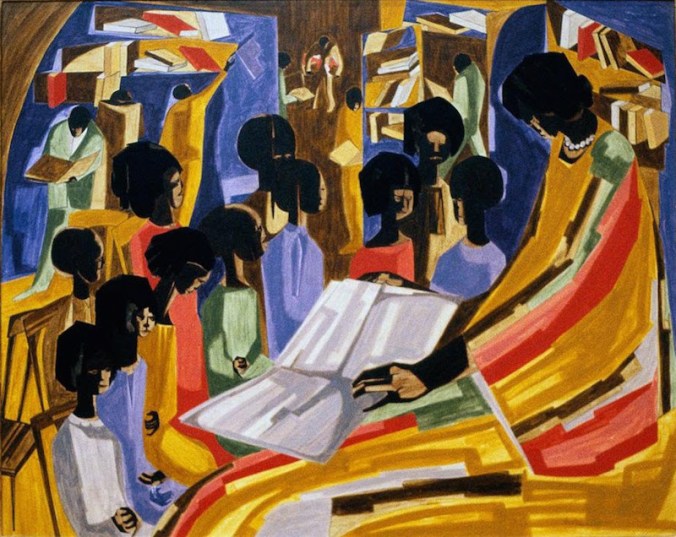
jacob-lawrence-library-1

from a series on libraries by Jacob Lawrence.

What a wonderful surprise, to come across this talk by Kenan Malik, on a topic that has been of interest to us for some time:

I gave a talk at the launch at London’s Institut Français of Libraries without Borders, the charity inspired by Patrick Weil that aims to increase global access to books and libraries. Also speaking were Ian McEwan, Lisa Appignanesi, Barbara Band and Patrick Weil himself. Here is a transcript of my talk.


Let me begin with a story not of a library or a book but of a grand piano. The one grand piano in Gaza, that was discovered still intact in a theatre destroyed by an Israeli missile during last year’s war. A piano that has been restored string by string, hammer by hammer, by Claire Bertrand, a young French music technician who travelled to Gaza specially to bring the piano back to life, in a project financed by Daniel Barenboim. Continue reading

If You Happen To Be In London

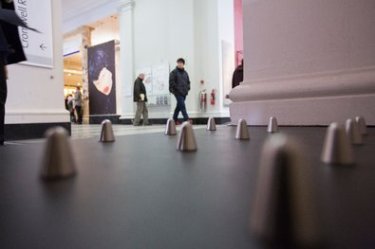
Peter Kelleher/Victoria and Albert Museum, London, 2015. Spike studs, used to keep people from sleeping near buildings, are part of the exhibition.

Peter Kelleher/Victoria and Albert Museum, London, 2015. Spike studs, used to keep people from sleeping near buildings, are part of the exhibition.

When we hear of civic-minded initiatives, museum shows are not the first thing that comes to mind. Schools, and libraries, and conservation initiatives come to mind.

Museums are civic institutions, of course, and we have posted more on this site about museums than almost any other topic.

But civic? We like the theme. This is a show we know will be worth seeing:

V&A Museum Returns to Its Civic-Minded Roots

“All of This Belongs to You,” an exhibition running through July 19 at the Victoria and Albert in London, seeks to stimulate debate about citizenship and the role of museums as public spaces.

Easter Is Upon Us, And Our Tastes Shift Accordingly

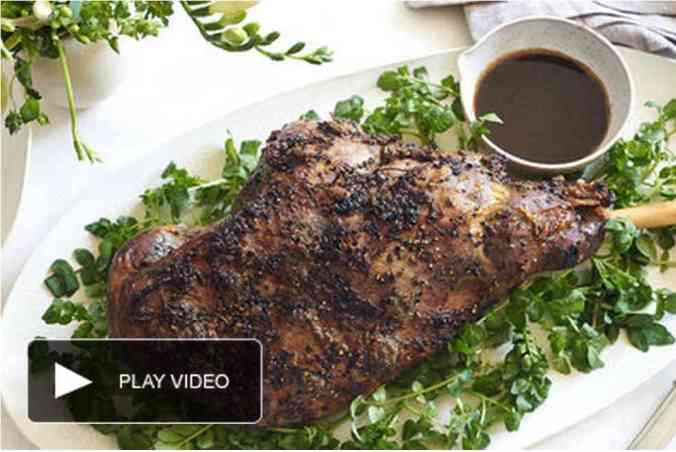
Remedying Americans’ resistance to lamb with a juicy roast that gets help from anchovies and butter. (Article plus video.)

Thanks to the New York Times‘ Food section for a reminder to try something new this particular holiday season:

RECIPE LAB

The Best Roast Lamb for Your Easter Feast

Remedying Americans’ resistance to lamb with a juicy roast that gets help from anchovies and butter. (Article plus video)

Waste Less, Want Less, Lean In, Pop Up

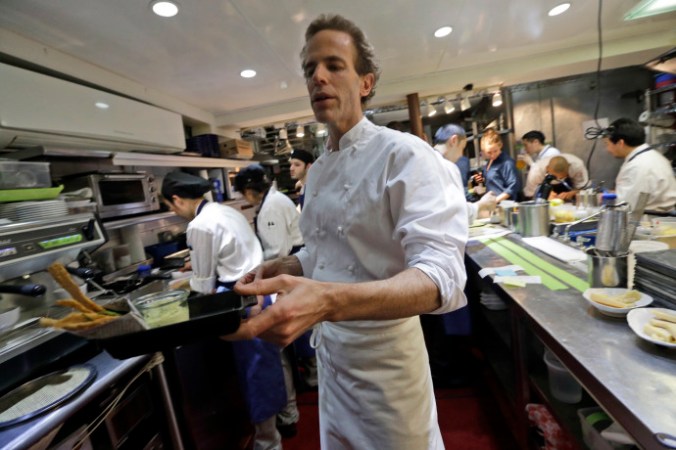
In this Thursday, March 19, 2015 photo, chef Dan Barber hands a waiter an order of fried skate wing cartilage with smoked whitefish head tartar sauce at WastED in New York. Dishes using scraps and other ignored bits comprise the menu at chef Dan Barber's WastED, a pop-up project at one of his Blue Hill restaurants intended to shed light on the waste of food. (AP Photo/Mary Altaffer)

In this Thursday, March 19, 2015 photo, chef Dan Barber hands a waiter an order of fried skate wing cartilage with smoked whitefish head tartar sauce at WastED in New York. Dishes using scraps and other ignored bits comprise the menu at chef Dan Barber’s WastED, a pop-up project at one of his Blue Hill restaurants intended to shed light on the waste of food. (AP Photo/Mary Altaffer)

Thanks to Hannah Goldfield for this post:

The other night, as I ate a salad at Blue Hill, in the West Village, a server approached my table with an iPad. “Have you seen this?” she asked. “Chef wanted you to see this.” By “Chef,” she meant Dan Barber, the man behind Blue Hill and Blue Hill Stone Barns, a sister restaurant and farm upstate. By “this,” she meant a photograph of a dumpster, into which a chute was depositing an enormous quantity of multi-colored scraps of fruit and vegetables—the runoff from a commercial food processor. The experience felt something similar to being shown a picture of what would happen to a sad-eyed old horse if you didn’t save it from the glue factory. Sitting in a small, enamel casserole dish in front of me were fruit and vegetable scraps that Barber had rescued, just like the ones in the photo. Arranged in an artful tangle, bits of carrot, apple, and pear were dressed with a creamy green emulsion, studded with pistachios, and garnished with a foamy pouf that turned out to be the liquid from canned chickpeas, whipped into haute cuisine. Continue reading

Don’t Go Away Mad, Just Go Away

koch_sitegraphic-830x467

The Koch brothers are a wondrous phenomenon. You probably knew that. What can you do (?), you might ask. We know the feeling. Well, here is something. A public service announcement from our colleagues at EcoWatch, linking to a petition effort worthy of your consideration:

The Natural History Museum just released an unprecedented letter signed by the world’s top scientists, including several Nobel laureates, calling on science and natural history museums to cut all ties to the fossil fuel industry.

The letter comes on the heels of recent news that Smithsonian-affiliated scientist Willie Soon took $1.25 million from the Koch brothers, Exxon Mobil, American Petroleum Institute and other covert funders to publish junk science denying man-made climate change, and failed to disclose any funding-related conflicts of interest.

In particular, it points a finger at the Smithsonian National Museum of Natural History (D.C.) and the American Museum of Natural History (NY), where David Koch is a member of the board, a major donor and exhibit sponsor.

Oil mogul David Koch sits on the boards of our nation’s largest and most respected natural history museums, while he bankrolls groups that deny climate science.

Sign this petition to the Smithsonian and the American Museum of Natural History: It’s time to get science deniers out of science museums. Kick Koch off the Board! Continue reading

Kerala’s Legacy Around The World

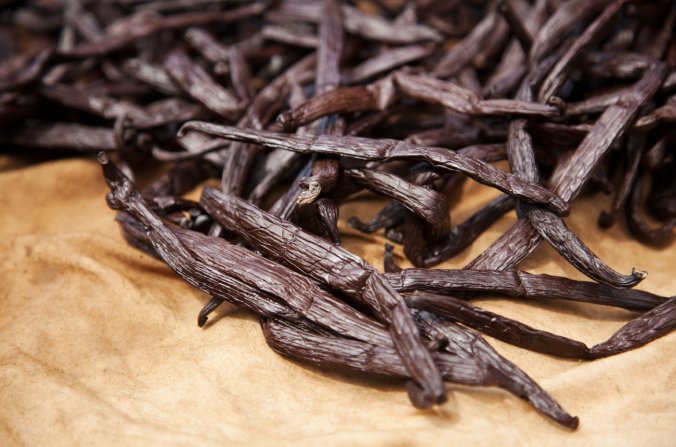
Vanilla is seemingly a prima donna spice because its pods have to be hand-pollinated and then boiled and dried in the direct sun for only one hour. iStockphoto

Vanilla is seemingly a prima donna spice because its pods have to be hand-pollinated and then boiled and dried in the direct sun for only one hour. iStockphoto

Spices enrich in more ways than one. Raxa Collective’s home base in Kerala has more stories than we can ever recount to prove this point. Some of the world’s most loved (and enriching) spices originate in Kerala. But for now, we put our attention elsewhere in the spice world. Our friends in Zanzibar are deserving of this attention (thanks to the NPR program, the salt, as always):

Let’s start with a spice quiz. One is a bean discovered in Mexico. One’s a tree native to India. One’s the seed of a fruit discovered in Indonesia.

Today vanilla, cinnamon and nutmeg can all be found in any spice farm in Zanzibar — the East African archipelago that was used as a spice plantation by the 18thcentury Omani Empire. Continue reading

Recognizing the Gift of the Galapagos

157

“We’ve all been given a gift, the gift of life. What we do with our lives is our gift back.”

-Edo, Sacred Economics

Being in the Galapagos was such a gift.

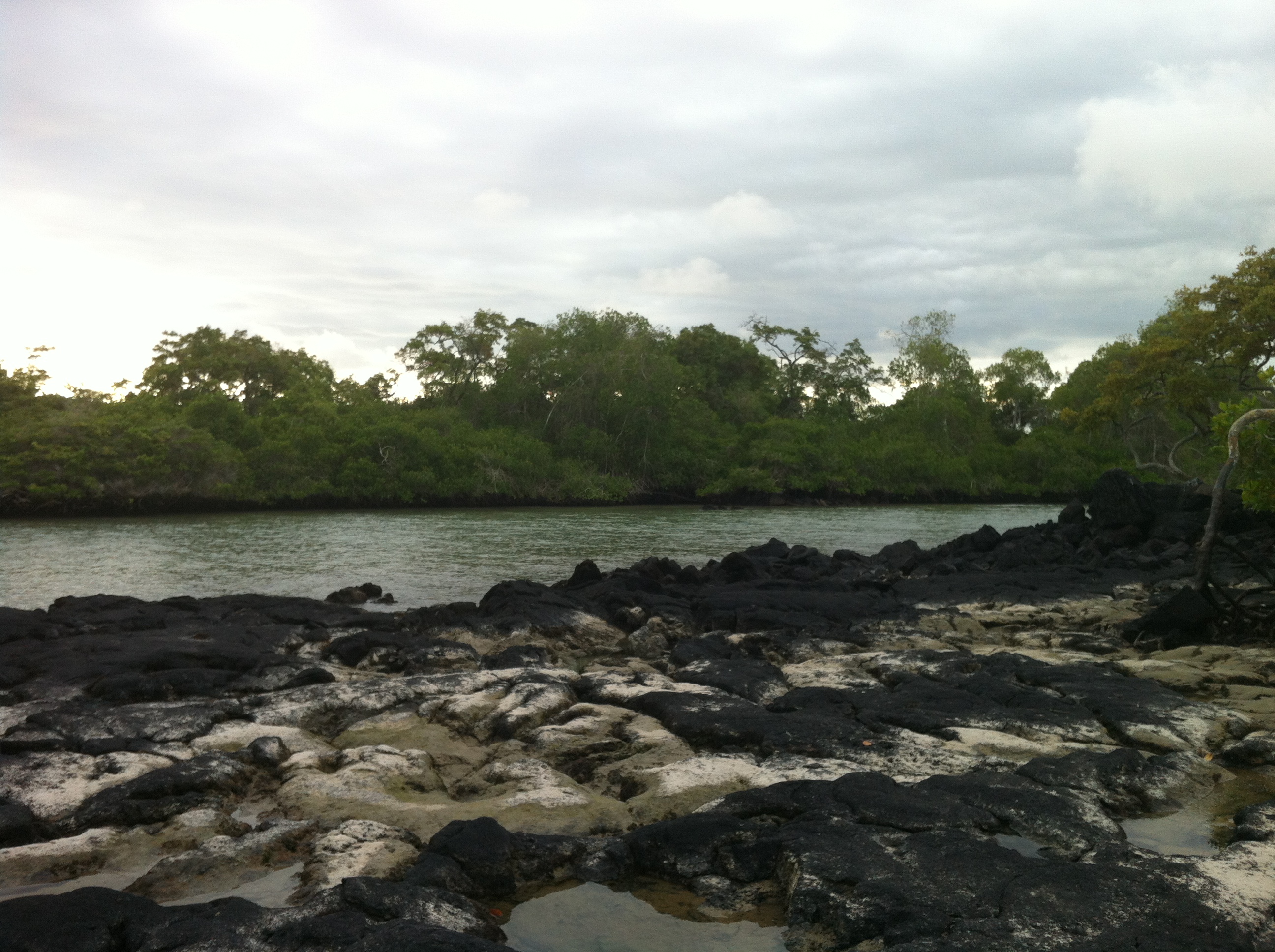
I remember reading a list in the newspaper when I was 14- something like “Top 10 Places to Visit Around the World”, and the Galapagos was on it with descriptions of black rocks and blue-footed boobies and I remember thinking how can I lead a life that takes me to places like that? The Galapagos Islands are a sacred mecca of biodiversity that most people will never have the privilege to see and I feel uncomfortable that I went without having to make any particular effort: I just chose a college and a study abroad program and voilà! my dreams came true. I feel immense gratitude for this. More importantly I feel a sense of obligation. I have an obligation to respond to this gift wisely and with intention in the way I conduct my life.

The sense of obligation is interesting to me because currently I’ve been reading about gift economies in my Economic Anthropology class. There is a concept called hau from the New Zealand Maori that tries to explain the sense of obligation to reciprocate when given a gift. From Wilk and Cligget’s book Economies and Cultures:

Hau is a term for the force of the identity of the owner of an object, which is attached to the object. Thus, upon giving the object away, part of the owner’s hau goes with it. And this is why receiving the gift always carries an obligation to reciprocate, because the hau wants to return to its original owner, though now it may be attached to another’s object.

In class, we’ve been talking about when things are separated from their origin, their story, the people who made it, there is some kind of erasure of the hau that represents the giver and we don’t feel compelled to respond in kind. Continue reading

Clothing Past, Experienced In The Present

One of Hortense Mitchell Acton’s Callot Soeurs gowns in the Camera Verde of Villa La Pietra. The gold and silver lace at the neck, the apron skirt, and the five metallic rosettes across the chest recall the forms of a Gothic cathedral. The sleeves are made of metallic lace, now oxidized. PHOTOGRAPHS BY PARI DUKOVIC

One of Hortense Mitchell Acton’s Callot Soeurs gowns in the Camera Verde of Villa La Pietra. The gold and silver lace at the neck, the apron skirt, and the five metallic rosettes across the chest recall the forms of a Gothic cathedral. The sleeves are made of metallic lace, now oxidized. PHOTOGRAPHS BY PARI DUKOVIC

It is likely that the New Yorker is the publication we link to the most, between its magazine and its website. If so, there is a reason. They care about stories we care about, enough to put their best writers and photographers on the task:

PortfolioMARCH 23, 2015 ISSUE

Twenty-One Dresses

BY AND

A number of years ago, a young painting conservator entered a forgotten storeroom in a fifteenth-century Florentine villa and stumbled on a pile of Louis Vuitton steamer trunks. She opened them and discovered a collection of exquisite dresses, the kind usually seen only in movies, or inside protective vitrines in museums. Closer inspection revealed silk labels, hand-woven with the name “Callot Soeurs.” Continue reading

Place, Memory And Experience At Present

Screen Shot 2015-03-20 at 7.02.51 AM

Our kind of project, and we look forward to the experience:

MADE WITH KICKSTARTER

In Japan, a Farmhouse Becomes a Journalist’s Elegy

A Bite Into the Past

Shanghai airport selfie

Singapore airport selfie

Singapore is a strange yet interesting place to experience a 16 hour layover in between flights from India and the Gold Coast of Australia where I have recently arrived. It’s a mecca for travel and a melting pot for cultures from around the globe. Upon arrival, I found myself starving after refusing to buy a $14 turkey sandwich from my low-budget airline. Luckily I also found myself surrounded by restaurants with countless choices of different cuisines inside of the airport. Of all the choices, I couldn’t force myself to part ways with the amazing smell of Indian spices and I sat down and ordered my “go-to”, my “Kerala heaven on a plate”: lacha paratha and a beef biriyani. I took my first bite and it took me way back… Continue reading

The Critic As Cold Water Splashed Refreshingly On The Face Of Modernity

Schjeldahl-Bjork-690

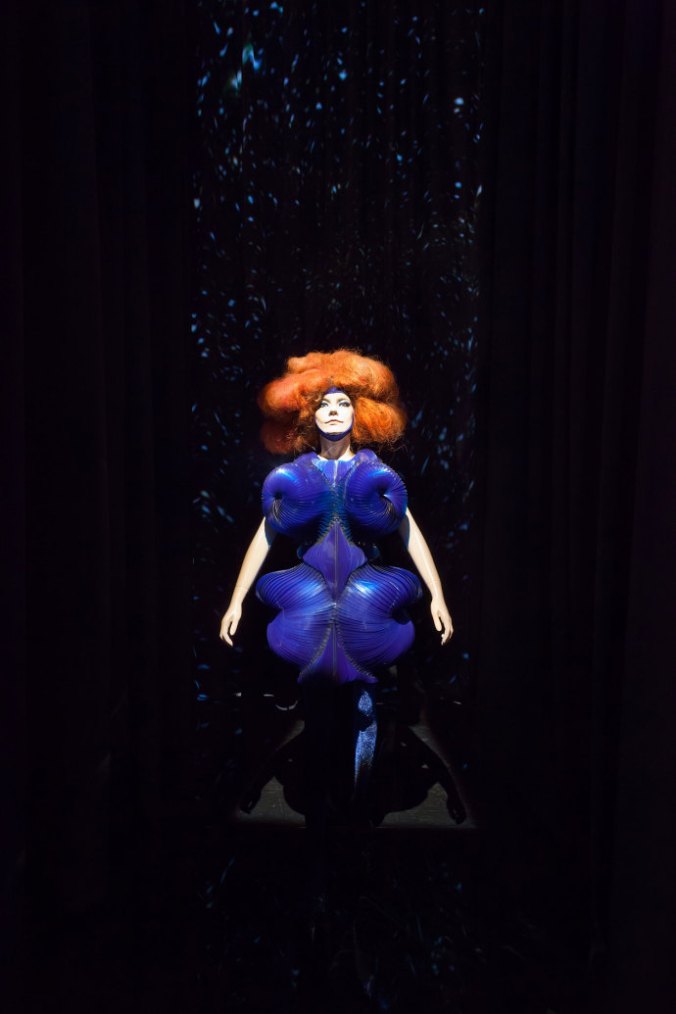
Björk is a restlessly experimental (and therefore fallible), tremendous creative force, not a tarnishable brand. CREDIT PHOTOGRAPH BY JONATHAN MUZIKAR


The opening paragraph of this brief review is worth the click, but the point we would like to bring to your attention is what follows. Sometimes an artist’s museum show can be taken down, critically speaking, with the museum bearing the brunt of the shame. And this point is directly linked to the now well-established concern that art in our age is as much a racket as it is an essential embodiment of culture. This reviewer, and his peers quoted in the opening paragraph, remind us of why we depend on critics for the insight that comes with an occupation whose singular focus is to help us decide whether a certain journey is worth making, or not:

…And yet Björk is unscathed. All the critics (now including me) hasten to acknowledge her musical genius and personal charisma. No detour into lousy taste—even at times her own, as in her partnership, lately ended, with the mercilessly pretentious Matthew Barney—can dent her authenticity. Her music videos (an oasis at the show, in a screening room) typically bring out the best in collaborating directors, musicians, designers, costumers (notably the late Alexander McQueen), and technicians. But if she chances to bring out the worst in star-struck curators, so what? Björk is a restlessly experimental (and therefore fallible) tremendous creative force, not a tarnishable brand. Continue reading

“What’s Life Without Cumin?”

Cumin Globe at 51

Cumin Globe at 51

My friends and family might roll their eyes at the frequency they’ve heard me state the title of this post, but given cumin’s importance in the cuisines of the world, it bears repeating. The spice’s ubiquitous place around the globe dates back to the Old Testament. Seeds excavated in India have been dated to the second millennium BC. Egyptians used it as a spice as well as one of the many ingredients required for mummification. Its heavy use in Greek, Roman and Assyrian cuisines help earn its place in the pantheon of spices.

“Once it has been introduced into a new land and culture, cumin has a way of insinuating itself deeply into the local cuisine, which is why it has become one of the most commonly used spices in the world,” writes Gary Nabhan, author and social science researcher at the University of Arizona Southwest Center, in his recent book, Cumin, Camels, and Caravans.

Nabhan’s book is really a much broader look at the spice trade and its relationship to history and culture. But cumin earned a spot in the title “because it is so demonstrative of culinary globalization,” Nabhan writes.

Cumin has also literally been popular since the dawn of written history.

In English, at least, cumin has a singular distinction – it is the only word that can be traced directly back to Sumerian, the first written language. So when we talk about cumin, we are harkening back to the Sumerian word gamun, first written in the cuneiform script more than 4,000 years ago. Continue reading

Feathers’ Maps Rediscovered

Map

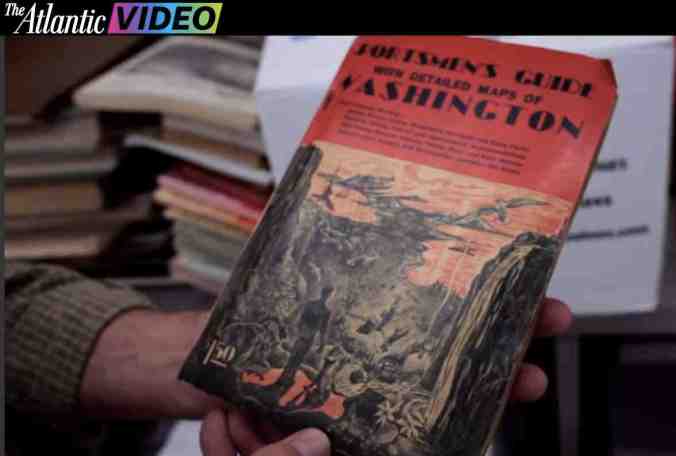
Thanks to the Atlantic‘s website for this Editor’s Pick, a fascinating video about a map collection and its conservation:

‘A Hidden Treasure’: The Unusual Story Behind a Rare Map Collection

Video by Alec Ernest

In this short documentary produced for the Los Angeles Review of Books, Alec Ernest digs into the story behind an extraordinary private collection of maps discovered by Glen Creason, a librarian.

Continue reading

If You Happen To Be In New York City

“The Grand Robe” (circa 1800-30), made by an artist from a Central Plains tribe. CREDIT COURTESY PATRICK GRIES AND VALÉRIE TORRE / MUSÉE DU QUAI BRANLY

“The Grand Robe” (circa 1800-30), made by an artist from a Central Plains tribe. CREDIT COURTESY PATRICK GRIES AND VALÉRIE TORRE / MUSÉE DU QUAI BRANLY

Talk about an epic show. Let’s go:

Moving Pictures

Plains Indian Art at the Metropolitan Museum.

By 

It began with horses and ended in massacre. The zenith of the cultures that are celebrated in “The Plains Indians: Artists of Earth and Sky,” a wondrous show at the Metropolitan Museum, lasted barely two hundred years. It started in 1680, when Pueblo Indians seized the steeds of Spanish settlers whom they had driven out of what is now New Mexico. The horse turned the scores of Plains tribes—river-valley farmers and hunter-gatherers who had used dogs as their beasts of burden—into a vast aggregate of mounted nomads, who ranged from the Mississippi River to the Rocky Mountains, and from the Rio Grande into Canada, hunting buffalo, trading, and warring with one another. The era ended with the killing of more than two hundred Lakota men, women, and children by federal troops at Wounded Knee, South Dakota, in 1890. Meanwhile, epidemic smallpox and other alien diseases took a toll far beyond that of military violence. The official census of 1900 found only a quarter of a million Native Americans in the entire United States. What ensued is a story of reservations—including the immaterial sort, which trouble the mind. But there’s an ameliorating epilogue of revivals and transformations of Plains heritage.

Continue reading