Foodpreneurship

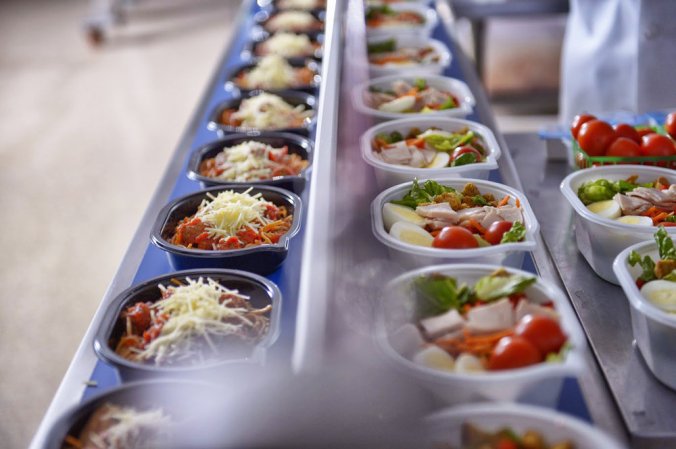
Revolution Foods makes healthy kids meals for both schools and stores. Co-founder Kristin Richmond says mentoring and support have been key to the success of her business. Shelly Puri/Courtesy of Revolution Foods

Revolution Foods makes healthy kids meals for both schools and stores. Co-founder Kristin Richmond says mentoring and support have been key to the success of her business. Shelly Puri/Courtesy of Revolution Foods

In the past year, with conceptualization and then food trials that led to the opening of 51, this story catches our attention and interest. Thanks to the salt, over at National Public Radio (USA) for the new vocabulary:

Culinary Institute’s School For ‘Foodpreneurs’ To Cook Up Innovation

The Culinary Institute of America may be best known for churning out chefs. And some of its graduates — from Grant Achatz to Roy Choi to Anthony Bourdain — have succeeded in entertaining and inspiring a new generation of foodies.

But not all CIA graduates don chef toques. Continue reading

Origins Of Chocolate In Costa Rica

We had not heard of this series until now, but considering the geographic and foodstuff focus of this current episode, we want to know more, especially considering what we learn in the show’s About section:

Iron Way Films, the creators of Original Fare, has spent the last seven years traversing the globe in search of authentic stories and incredible locations. We’ve explored tropical oceans with musicians & pro-surfers. Road horses through big sky back country with ranch riders. Tasted backyard wine deep in the tiny towns of Provence. We’ve glamped, we’ve camped, we’ve lived on boats and spent far too much time in rental cars.

But we always sought to uncover what makes a place special- and what makes it unique.

EL-COSMICO-NIGHT-TENT900x5001

Continue reading

Chefs Celebrating Biodiversity

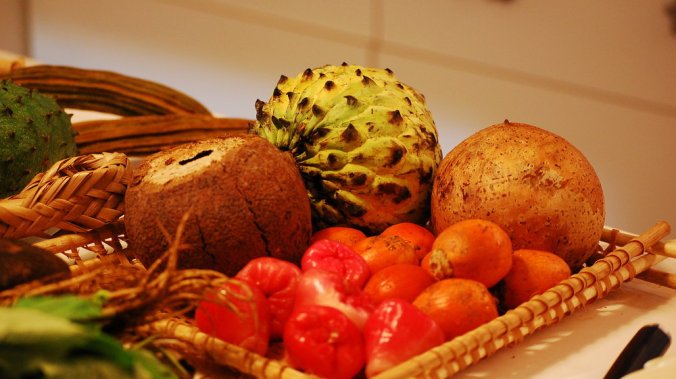
Brazilian fruits, including jambu and tapereba (lower right), displayed for a gathering of chefs in Sao Paolo. Paula Moura for NPR

Brazilian fruits, including jambu and tapereba (lower right), displayed for a gathering of chefs in Sao Paolo. Paula Moura for NPR

Thanks to the salt, as always, for bringing us diverse stories about what we eat, where it comes from, and who is doing what to ensure that our food future is a good one:

Culinary superstars gathered in the Brazilian city of Sao Paulo this month at an event organized by the Basque Culinary Center. But they weren’t there to cook. Instead, the the famous chefs were talking about biodiversity. Continue reading

An Artist’s Favorite Points Of View

The sculptor, printmaker and painter tells Charlie McCann about his favourite places—they reveal an eye for beauty as well as a taste for symbolism

The sculptor, printmaker and painter tells Charlie McCann about his favourite places—they reveal an eye for beauty as well as a taste for symbolism

Thanks to the Economist’s “intelligent life” for this briefing on an artist’s favorite visuals:

JOURNEY From Beijing to Yining (above)
In 2010, my son Edmund went on his gap year to Yining, in the province of Xinjiang. My wife and I were worried; Edmund was one of only two Europeans in the city and there’d been tremendous unrest in the region. After eight months, we decided to check up on him. We flew to Beijing and got on a train. Our journey inland was really exciting: from our cabin we saw tiny villages, where every little patch had been cultivated, and passed vast deserts where huge dust storms turned the sky black. Eventually we got to Xinjiang. By that time, Edmund could speak rudimentary Mandarin. With him, we ended up travelling to Yining by an overnight coach. It was this mad bus full of chickens, geese and dogs. Continue reading

Amazon, Thinking Of Our Future

LINES ARE DRAWN A battle over pricing may have been the Sarajevo moment. But the war is really about the future of publishing—and maybe of culture.

LINES ARE DRAWN A battle over pricing may have been the Sarajevo moment. But the war is really about the future of publishing—and maybe of culture.

I never tire of “think pieces” on Amazon because it is about our cultural future:

The War of the Words

Amazon’s war with publishing giant Hachette over e-book pricing has earned it a black eye in the media, with the likes of Philip Roth, James Patterson, and Stephen Colbert demanding that the online mega-store stand down. How did Amazon—which was once seen as the book industry’s savior—end up as Literary Enemy Number One? And how much of this fight is even about money? Keith Gessen reports.

By Keith Gessen  Photo Illustrations by Stephen Doyle Continue reading

Chocolate, New Sense

Le Laboratoire Cambridge features a restaurant, the Cafe ArtScience. The restaurant's bar features a glass-globed drink vaporizer called Le Whaf. Andrea Shea/WBUR

Le Laboratoire Cambridge features a restaurant, the Cafe ArtScience. The restaurant’s bar features a glass-globed drink vaporizer called Le Whaf. Andrea Shea/WBUR

Thanks to National Public Radio’s program, the salt, for this idea on how we can expect to enjoy chocolate in new ways in the future:

David Edwards has been called a real-life Willy Wonka. The biomedical engineer has developed, among other things, inhalable chocolate, ice cream spheres in edible wrappers, and a device called the “oPhone,” which can transmit and receive odors.

Edwards is based at Harvard, but much of his work has been done in Paris, at a facility he calls Le Laboratoire. Now he’s opened a similar “culture lab” closer to home: Le Laboratoire Cambridge in Cambridge, Mass. Continue reading

Be Careful What You Wish For

You can’t always get what you want. Sometimes you can, but the law of unintended consequences never ceases to surprise us. Thanks to this week’s Science section of the New York Times for a marine/culinary example:

A New Bounty of Oysters in Maryland, but There Is a Snag

Recent changes to state policy and a growing national affection for the shellfish have led to an oyster farming boom that is hampering the traditional fishing ways of the watermen.

Traditional Soaking, London Edition

gin_wide-e8531d735abd157859bb21c062514336fc542f51-s5-c85

A quick review suggests we rarely post on topics related to liquid spirits, though wine and beer get the occasional honorable mention when craft or conservation is the main point of interest. Currently Kerala is debating new policies related to the sale of alcohol, so the subject is on our collective minds in that neck of the woods, and this piece from one of our go-to National Public Radio (USA) shows, the salt, seems germaine:

Tracing A Gin-Soaked Trail In London

Around the world, new gin distilleries are popping up like mushrooms after a rain. The boom has historic roots in London, which once had 250 distilleries within the city limits alone.

Throwback Thursday: October Olives Redux

One aspect of the reconnaisance for projects in Greece included embracing and honoring past experiences. The place of foodways and cuisine in the narrative of lives can never be underestimated. The taste and aroma of a specific food brings back floods of memories, crossing the bounderies of time and space.

Visiting Laconia, the region in the Greek Peloponnesus that year after year receives accolades for both it’s olives and extra virgin olive oil (EVOO) was in many ways like coming home. Coming home to family heritage, coming home to living in other olive producing countries and how we embraced those cyclical events that humans have engaged in from time immemorial.

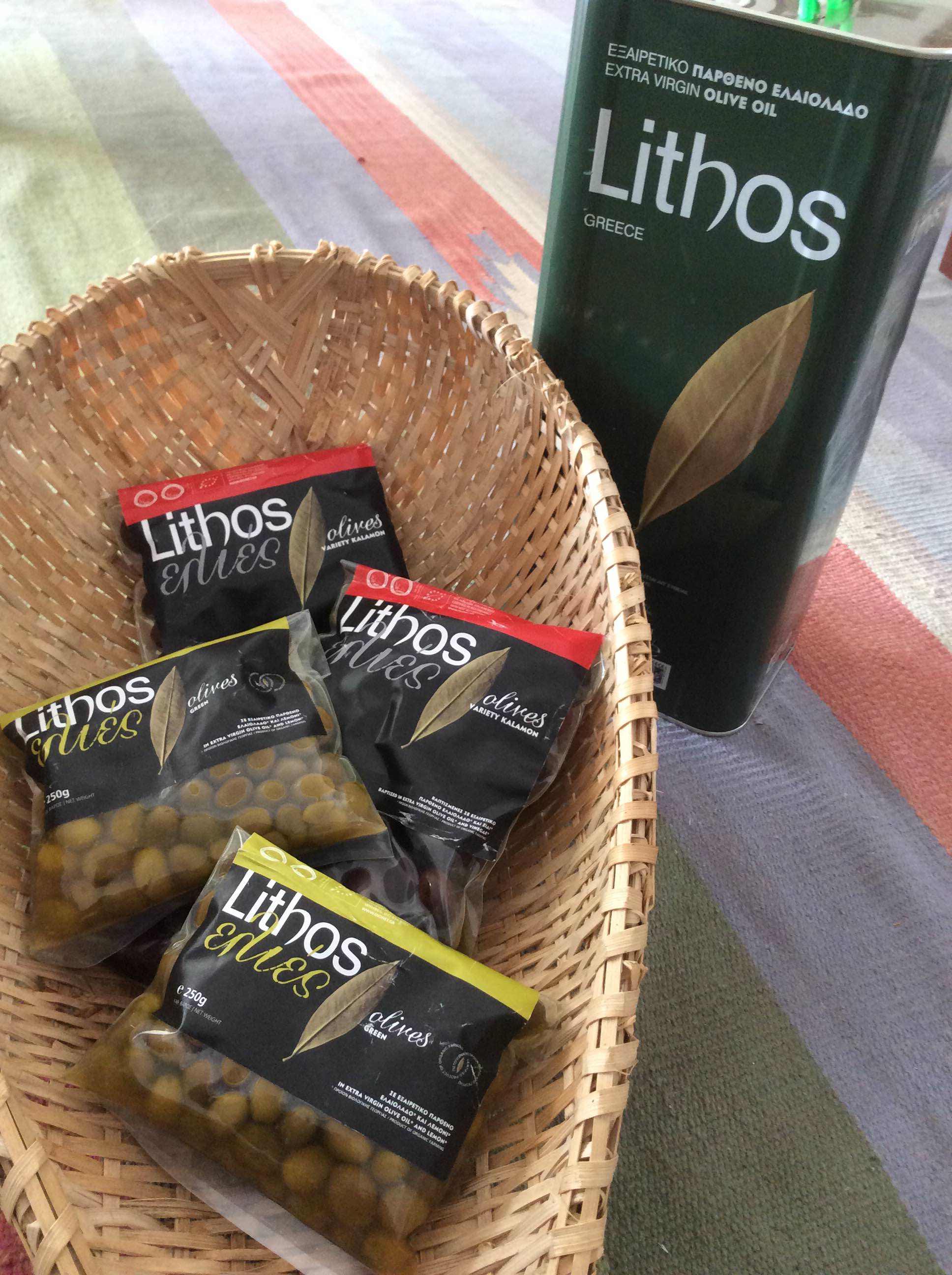
In the village of Soustiani in Laconia we met Nikos Papadakos and his wife, after a 6 year hiatus, to again talk about their company, Lithos. In this region of olive excellence they form a cooperative of organic farmers, collecting the harvest into one source and both pressing the fruit into EVOO and packaging the olives in both jars and vacuum packed sachets for easy transport. Continue reading

Phaidon Tribute To Chef, Author

169-1000-year-old-quail-egg

110 Year old quail eggs, as served at Benu

On the occasion of his third star, and with no controversy related to birds as per his colleagues in France, congratulations are in order:

The Michelin Guide only began reviewing US restaurants in 2005, yet it has established a reputation for favouring places that, while conforming to certain old-world standards, capture the finest in American dining today.

So, we were delighted to learn that Benu, Corey Lee’s Benu restaurant, which opened in San Francisco’s SOMA district in 2010, was awarded its third Michelin star, the guide’s highest accolade, when the new ratings for the city were announced yesterday. Continue reading

Wine In India, Historically Intriguing

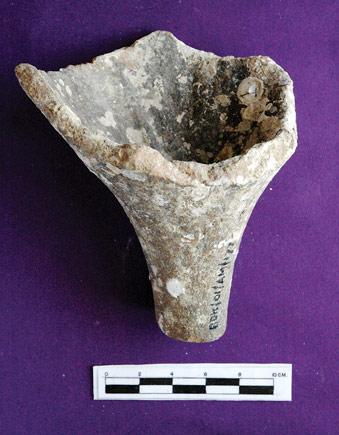
Amphora shards have been found all along India’s western coast. Courtesy National Institute Of Oceanography

Amphora shards have been found all along India’s western coast. Courtesy National Institute Of Oceanography

As Spice Harbour’s restaurant, 51, looks forward to the day when it might serve a glass of wine with an evening meal, we look back in time for a bit of inspiration, thanks to our friends at Caravan:

…In August, I spoke on the phone to A S Gaur, a marine archaeologist at India’s National Institute for Oceanography and co-author of  a paper on ancient wine imports. Speaking from Goa, Gaur said he had recently discovered amphora shards at what appears to be an ancient shipwreck near Bet Dwarka, an island off the coast of Gujarat. Amphorae were widely used in ancient times for transporting liquid goods, especially olive oil and wine. According to Gaur, the amphorae near Bet Dwarka most likely date from between the second and the fourth centuries CE. It is difficult to analyse the residues found on the shards for a conclusive answer, he said, but trying his “level best” Gaur surmised the amphorae once held wine. “Roman wine,” he said, “was very famous in India during that time.” Wrecks and shards from the same period have been found at many other sites too. All over South India, Gaur told me, “many museums have amphora shards.”

Continue reading

Birds, Gastronomy, Cultural Heritage–Is It Entrepreneurial Conservation?

ORTOLAN-articleLarge

Michel Guérard, left, the chef of Les Prés d’Eugénie, and Jean Coussau, the chef of Relais de la Poste, are among a handful of chefs trying to bring the ortolan back to the restaurant menu in France. Credit Ulrich Lebeuf/M.Y.O.P for The New York Times

We do not link often to the countless stories of rhino populations being decimated due to poaching, not because they are depressing, which they are; but because there have been no breakthrough entrepreneurial conservation stories related to that tragedy. Ditto for elephants and other charismatic megafauna–overwhelmingly depressing and no solution in sight, with the rare glimmer of hope.

So, when I see an article like the one below, even though it focuses on charismatic minifauna rather than megafauna, I take note. We pay a disproportionate amount of attention to birds on this platform for reasons that should be clear to regular readers of these pages, so for now a question to all ornithologically advantaged readers: is the reference to the unpublished Canadian study at the end of the article real or bogus? If the latter, please share your knowledge through our comment section and we will provide the publisher a crowd-sourced, fact-checked update to the article.

This is one of the exceptional articles for which we provide full text because of its urgent environmental value, with the expectation that you will click through to the source to give proper credit, with thanks to the New York Times:

“The bird is absolutely delicious,” said Mr. Guérard, who recalled preparing ortolans for Mitterrand and his successor, Jacques Chirac, back when it was legal. (Mitterrand was said to linger over two ortolans in his last supper before his death in 1996, also consuming three dozen oysters, foie gras and capon.)

“It is enveloped in fat that tastes subtly like hazelnut,” Mr. Guérard said, “and to eat the flesh, the fat and its little bones hot, all together, is like being taken to another dimension.”

But the campaign has provoked environmentalists, who accuse the chefs of engaging in a publicity stunt to promote what they say is an archaic custom that will further endanger the bird, and that treats the ortolan inhumanely before it is killed. Continue reading

If You Happen To Be In Paris

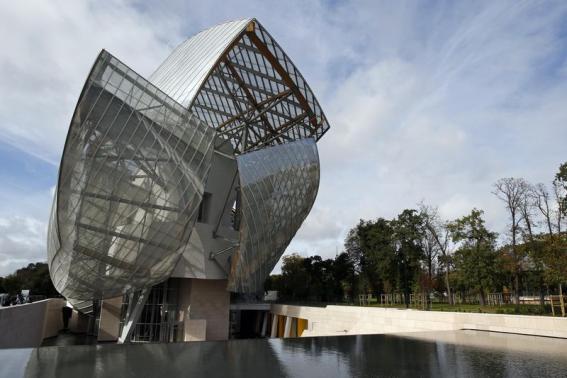
A general view shows the Fondation Louis Vuitton designed by architect Frank Gehry in the Bois de Boulogne, western Paris, October 17, 2014.  REUTERS/Benoit Tessier

A general view shows the Fondation Louis Vuitton designed by architect Frank Gehry in the Bois de Boulogne, western Paris, October 17, 2014. REUTERS/Benoit Tessier

We are in solidarity with the neighborhoods concerned about the loss of green space in Paris, as reported by Reuters on more than one occasion, and this project has been controversial since first announced, but for now, we can only say wow:

(Reuters) – Billowing sails of glass join the Eiffel Tower and the Sacre Coeur as permanent fixtures of the Paris skyline this month, when the new Fondation Louis Vuitton contemporary art museum designed by Frank Gehry opens to the public.

Thirteen years in the making, the museum is the brainchild of Bernard Arnault, the chief executive and founder of LVMH. France’s richest man envisioned a bold new piece of architecture in the capital that would tie the world’s largest luxury group with the cutting edge of art and design.

The private museum that opens to the public on Oct. 27 will be donated to the city of Paris in 50 years. Continue reading

Speaking Of Greece

36hours-athens-thumbWide36 Hours in Athens

By JOANNA KAKISSIS

The city’s self-confidence and creativity are stirring again after years of tough press that defined Athens as a beleaguered capital.

This post on classics, referencing an earlier post on the same topic reminds us of our hinted promise to tell more about Raxa Collective’s recent scouting visit to Greece, and specifically about prospective project on one of the most fascinating of all the islands. We promise more on that soon.

Why Study Classics?

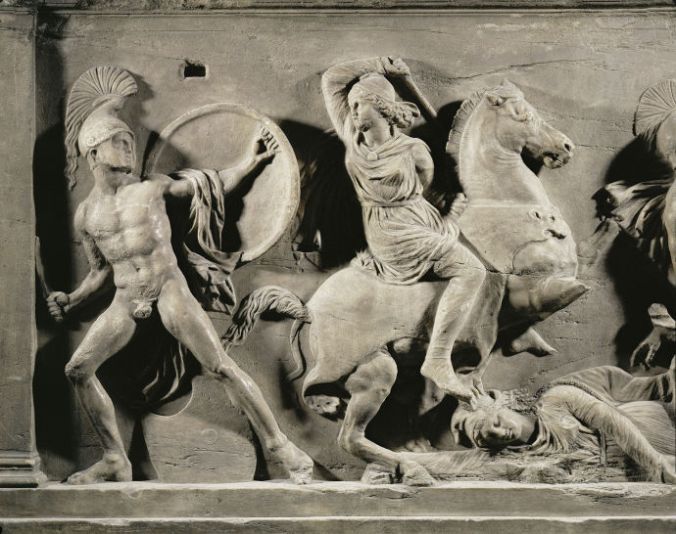
In some archaeological digs in Eurasia, as many as thirty-seven per cent of the graves contain the bones and weapons of horsewomen who fought alongside men. PHOTOGRAPH BY ERICH LESSING / ART RESOURCE

In some archaeological digs in Eurasia, as many as thirty-seven per cent of the graves contain the bones and weapons of horsewomen who fought alongside men. PHOTOGRAPH BY ERICH LESSING / ART RESOURCE

For every question why like this one, there must be many answers. We post enough on the topic to have some guesses. James, one day, may tell us his. For anyone who likes a good story, part of the answer must be simply that. But there may be more; for now let this post on the New Yorker‘s website speak for itself:

The Real Amazons

BY JOSHUA ROTHMAN

Here’s a story, told by Herodotus, about the fierce female warriors known as Amazons. Many thousands of years ago, a group of Greek raiders ventured into what is now northern Turkey. Travelling across the steppe, they came across a group of warrior women. The Greeks kidnapped them, locked them in the holds of their ships, and set sail for home. But the Amazons escaped. They recovered their weapons and killed their captors. Because they were horsewomen, and didn’t know how to sail, the ships drifted far off course. Eventually, though, they landed in the Crimea. The Amazons went ashore and stole some horses. They started marauding, gathering loot, and building up their strength. Continue reading

Burn Calories, Eat What You Want

A breakfast taco in Texas. John Burnett/NPR

A breakfast taco in Texas. John Burnett/NPR

Now that the heavy lifting of food trials of 51 is mostly behind us, we are ramping up food trials at Marari Pearl. Any of you who know members of the Raxa Collective food trials team can attest that some of them remain mysteriously svelte, and others are gravitating into Santa Claus territory. Does this story at The Salt provide any explanations, or possible solutions? It is worth a read:

Last month, a friend and I rode bicycles 738 miles up the spine of Texas from the Rio Grande to the Red River, dodging oilfield trucks and yipping Chihuahua dogs.

All that pedaling had us burning about 5,000 to 5,500 calories every day. And so the 10-day journey — eight days of it riding into a headwind — became a movable feast.

There were hero sandwiches, Tater Tots, loaded baked potatoes, rib-eye steaks, chiles rellenos, cheese enchiladas, fried shrimp, cheeseburgers, french fries, hot dogs, barbecue brisket, beef jerky, chocolate glazed donuts, Snickers bars and fried pies. Continue reading

Hermes Appears, Again

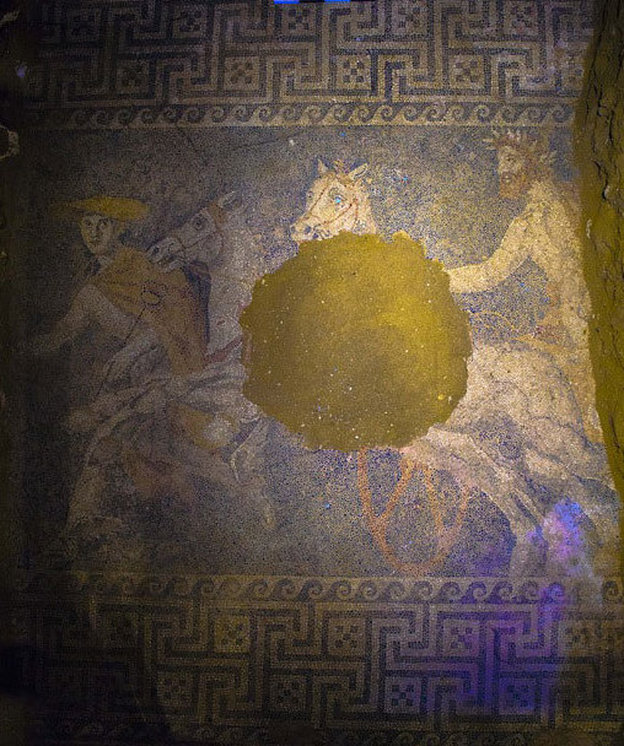
Striking Mosaic Found In Greek Tomb Dates From 4th Century B.C. by BILL CHAPPELL

Striking Mosaic Found In Greek Tomb Dates From 4th Century B.C. by BILL CHAPPELL

We are now in our second month without the classicist among our ranks, but we amateurs can still do our part to share stories of interest from the world of classics. Hermes was there all along of course, for about 2,400 years since the image above was created, but amazingly we are still finding new hiding places for a character mentioned in these pages more than once:

Archaeologists have uncovered an intricate and beautiful floor mosaic in a large tomb in northern Greece. Dating from the last quarter of the 4th century B.C., the mosaic covers a space of nearly 15 feet by 10 feet. It features two horses, a man and the god Hermes; it was found in a tomb that was discovered in August. Continue reading

If You Use Amazon, Read This

Screen Shot 2014-10-11 at 10.58.33 AM

As the article below suggests, whether we shop with them or not we are all complicit. It is the best article yet on the growing concern over not only Amazon’s market power but its cultural influence. And in true liberal spirit of the great publication that offers it, both sides of the argument are presented starting at the first sentence:

Before we speak ill of Amazon, let us kneel down before it. Twenty years ago, the company began with the stated goal of creating a bookstore as comprehensive as the great Library of Alexandria, and then quickly managed to make even that grandiloquent ambition look puny. Amazon could soon conjure the full text of almost any volume onto a phone in less time than a yawn. Its warehouses are filled with an unabridged catalogue of items that comes damn close to serving every human need, both basic and esoterica mere click away, speedily delivered, and as cheap as capitalism permits. Continue reading

51 Ways To Have Your Porridge

Definitely not traditional: two colorful takes on porridge, from Friday's London Porridge Championships. Dai Williams/Courtesy of the National Porridge Championship

Definitely not traditional: two colorful takes on porridge, from Friday’s London Porridge Championships. Dai Williams/Courtesy of the National Porridge Championship

I loved it when we found out that one of our favorite companies was sponsoring a competition for porridge-making at exactly the time we were first planning the menu for 51.  And since opening, 51 has offered both sweet and savory options for porridge on its breakfast menu, but thanks to this story in one of our go-to food knowledge sources we are thinking that we can and must do more to expand the porridge horizons of our guests:

Dr. Samuel Johnson’s dictionary once summarily dismissed porridge, defining oats as a “grain, which in England is generally given to horses, but in Scotland supports the people.”

That was in the 1700s. These days, porridge is seen as more cool than gruel. Today is World Porridge Day — and to celebrate, London hosted its own porridge-making competition. Continue reading

Those Who Make Chinese Restaurants In The USA What They Are

141013_r25586-690

Chinatown employment agencies can get immigrants kitchen jobs in a few hours. CREDIT PHOTOGRAPH BY ANNIE LING

When our interest in long form journalism intersects with our wide and deep interest in foodways, we could not be happier than to pass it along. Have a taste of this deeply reported story on cooks in the Chinese restaurant trade in the USA, as offered in this week’s New Yorker:

In a strip mall on a rural stretch of Maryland’s Indian Head Highway, a gaudy red façade shaped like a pagoda distinguishes a Chinese restaurant from a line of bland storefronts: a nail salon, a liquor store, and a laundromat. On a mild Friday morning this July, two customers walked into the dimly lit dining room. It was half an hour before the lunch service began, and, aside from a few fish swimming listlessly in a tank, the room was deserted.

In the back, steam was just starting to rise from pots of soup; two cooks were chopping ginger at a frenzied pace. Most of the lunch crowd comes in for the buffet, and it was nowhere near ready. “Customers are here already!” the restaurant’s owner, a wiry Chinese man in his fifties, barked. He dropped a heavy container onto the metal counter with a crash. “How can you possibly be moving this slowly?” Continue reading