
Photo credits: Sastha Prakash
Thaipooyam is a colorful “kavadiyattom” festival. It is a vigorous dance that starts in the morning, when a small group of people richly decorated with wooded arches and other materials take to the streets to celebrate.
Photo credits: Sastha Prakash
Thaipooyam is a colorful “kavadiyattom” festival. It is a vigorous dance that starts in the morning, when a small group of people richly decorated with wooded arches and other materials take to the streets to celebrate.
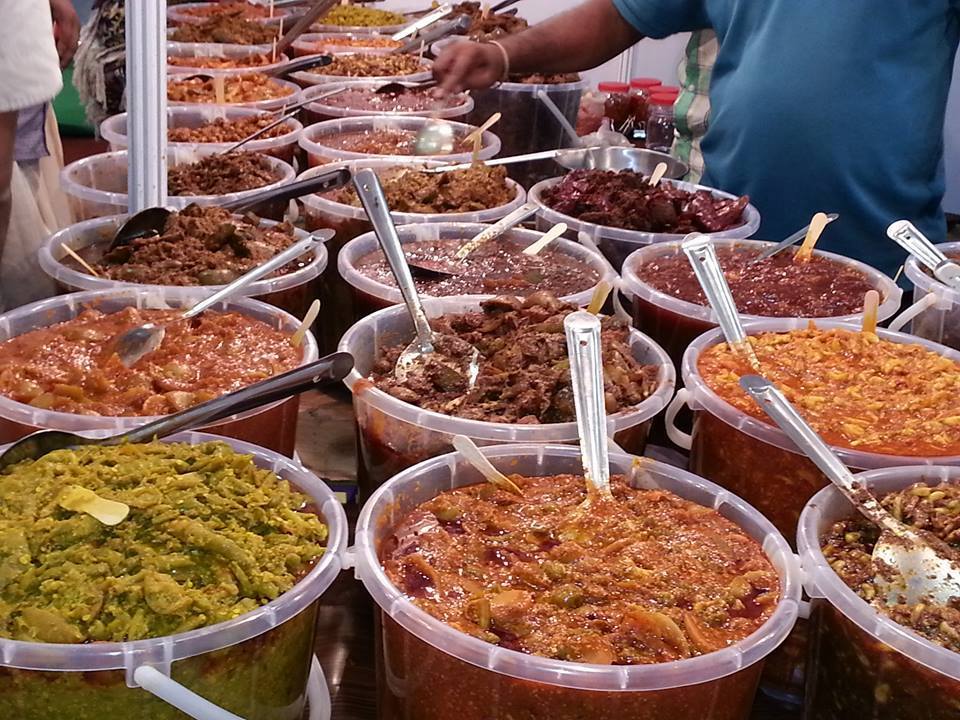
Photo credits: Renjith
Pickles are a traditional condiment served with Indian meals. Called achaar in Kerala, they are an important part of a traditional sadya meal, always served next to the salt on the upper lefthand corner of the banana leaf. Continue reading
For many people “The Boston Tea Party” refers to an historical event that formed the tipping point for the American Revolution. But two centuries later (give or take) the name relates to a completely different, but no less iconic, moment in time. In the late 1960’s and early 70’s the #53 Berkeley Street Boston Tea Party was a legendary live-music venue featuring musicians from local bands to the Blues, Rock and Pop icons of day.
Music wasn’t the only dimension to a Boston Tea Party experience. Filmmaker Ken Brown cut his “creative teeth” as part of the team creating the venue’s light shows and visual effects.
We actually have one of the coveted DVDs of this work, but those not lucky enough to have one or to have been in Boston 40 years ago have the opportunity to make up for it now …
On Sunday at 7 p.m. at [Boston’s] Institute of Contemporary Art, Brown will screen “Psychedelic Cinema,” a 55-minute compilation of his Tea Party work, and answer questions afterward. The silent film will be accompanied by a live performance by Ken Winokur of Alloy Orchestra, Beth Custer of Club Foot Orchestra, and Jonathan LaMaster of Cul de Sac. Brown’s Tea Party work screened at the Coolidge Corner Theater in 2008, one of only a handful of public showings. We spoke by phone this week. Continue reading

Photo credits: Immanuel Abraham
Kerala has more than 20,000 temples dotting its landscape. Unique in their design and construction they stand out when compared to other Indian temples. Unlike other regions of the country, Kerala’s temples are primarily wooden structures that stress horizontal lines rather than tall towers and pillars. Continue reading
While we complete our design and planning for the menu and the musical accompaniment at 51, the restaurant at Spice Harbour, we seem to have hit two birds with one stone in our research today. We tend more and more to the preferences of vegetarian travelers, and to the tendency of many non-vegetarian guests generally to reduce consumption of animal protein. And everyone loves good music. So this caught our attention, thanks to a slideshow on the Reuters newsfeed; this orchestra’s website tells the story (with a great video here):
Worldwide one of a kind, the Vegetable Orchestra performs on instruments made of fresh vegetables. The utilization of various ever refined vegetable instruments creates a musically and aesthetically unique sound universe.
The Vegetable Orchestra was founded in 1998. Based in Vienna, the Vegetable Orchestra plays concerts in all over the world. Continue reading

Photo credits: Shaji MN
Kerala offers an amazing diversity of dishes for every meal and every occasion. Food is an important indicator of a region’s history, and with a rich and vibrant ancient culture greatly influenced by civilizations from almost every corner of the globe down the ages, Kerala is indeed the proverbial melting pot. Continue reading
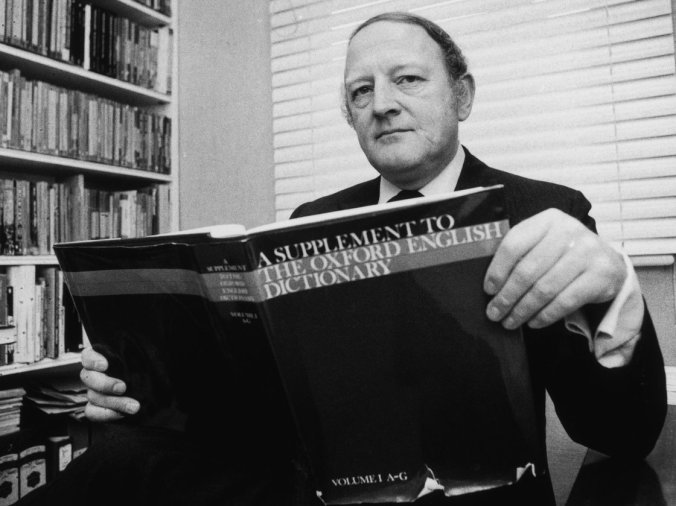
English writer and broadcaster Robert Robinson holding the first volume of A Supplement To The Oxford English Dictionary in 1977. Evening Standard/Hulton Archive/Getty Images
We love dictionaries, but apart from the Scrabble usage, we do not always know why. Thanks to Alva Noe for these clues (click the image above to go to the story on NPR’s Cosmos & Culture website):
Among the clutter and furniture of our intellectual lives, there are dictionaries. Although they have probably disappeared from the bookshelves of most college students, they haven’t disappeared. They’ve migrated online.
I thought of this while reading an article in The New York Times on the truly Herculean labors going on at the offices of the Oxford English Dictionary, where a team of scholars are busy producing the OED’s third edition. They started in 1994 and now anticipate finishing in 2037. It’s going to be a long book, if it ever comes out in book form. The second edition, published in 1989, was nearly 22,000 pages. (As reported in The New York Times.) Continue reading

Max Bearak. Amitabh Kumar painting a wall in Shahpur Jat, one of South Delhi’s urban villages
Normally we have thought of vivid color in conjunction with India’s amazing holy days, especially those called Holi. Thanks to India Ink for this story about the street art going up, up north in India’s capital city:
Street Art Festival Brings Color to the Walls of Delhi’s Urban Villages
By Max Bearak
NEW DELHI — While looking out from a balcony in one of Delhi’s many urban villages – former villages that were swallowed up by the ever-expanding capital — more often than not, one is confronted by a boring, gray wall – the bare side of another building. Continue reading
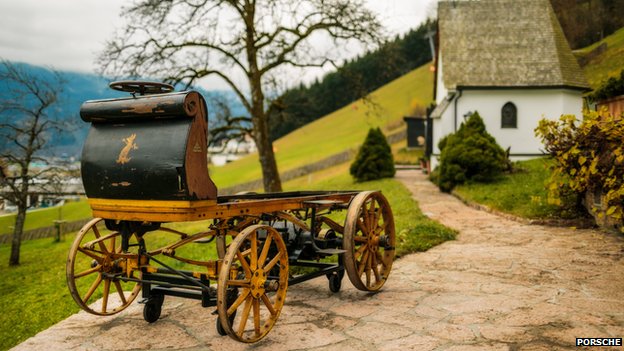
This is the first Porsche-designed vehicle, which had been stored in an Austrian garage since 1902
We are decidedly not the go-to source for information about automobiles, though from time to time we have been known to point out the innovations related to green tech and cars. Thanks to the BBC for their coverage of this intriguing conservation story we might file under cultural heritage, or alternative energy vehicles, or both:
Luxury automaker Porsche has revealed the first car designed by its founder was electric, in a show at its museum in Stuttgart-Zuffenhausen, Germany.
Ferdinand Porsche’s design was dubbed the Egger-Lohner electric vehicle C.2 Phaeton model, or the P1 for short. Continue reading

Photo credits: Ramesh Kidangoor
Kalamezhuthu is a unique form of art found only in Kerala, and is almost solely used in temples. The “drawing” with the powders is done by hand, without using any tools whatsoever, and the powders used are all natural (from vegetables and minerals). Continue reading
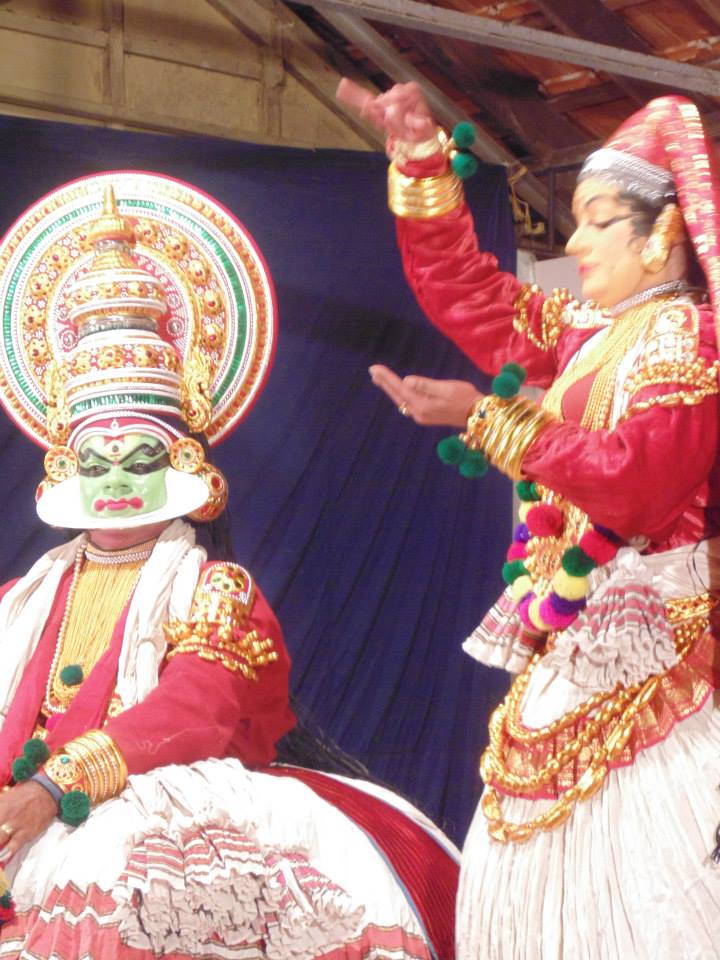
Kalyana Saungandhika–Bhima and Draupadi
The true Kathakali experience that I’ve referred to previously is only understood fully within the context of the grand Indian epic stories that they express. The rightful heirs to the throne of Hastinapur were 5 Brothers called Pandavas. The brothers were beaten in a game of dice by their 100 cousins called the Kauravas and were sent to the forest. The arrangement was such that the Pandavas were required to spend 12 years in the forest (Vanavaasa) and one year incognito (Ajnaathavaasam). If they were to be recognized by the Kauravas during the year of living incognito, they had to repeat the 12 years of forest life.
Many incidents good and bad occurred while they were undergoing Vanavaasa and the story of Kalyana Saungandhika is about one such incident, which also happens to be the favorite of ‘Kathakali’ performers.
Arjun, one of the 5 Pandavas, won his future wife Draupadi through an archery test and due to a misunderstood statement by Kunti the mother of the Pandavas, Draupadi had to accept all 5 of the Pandavas as her husband. Continue reading
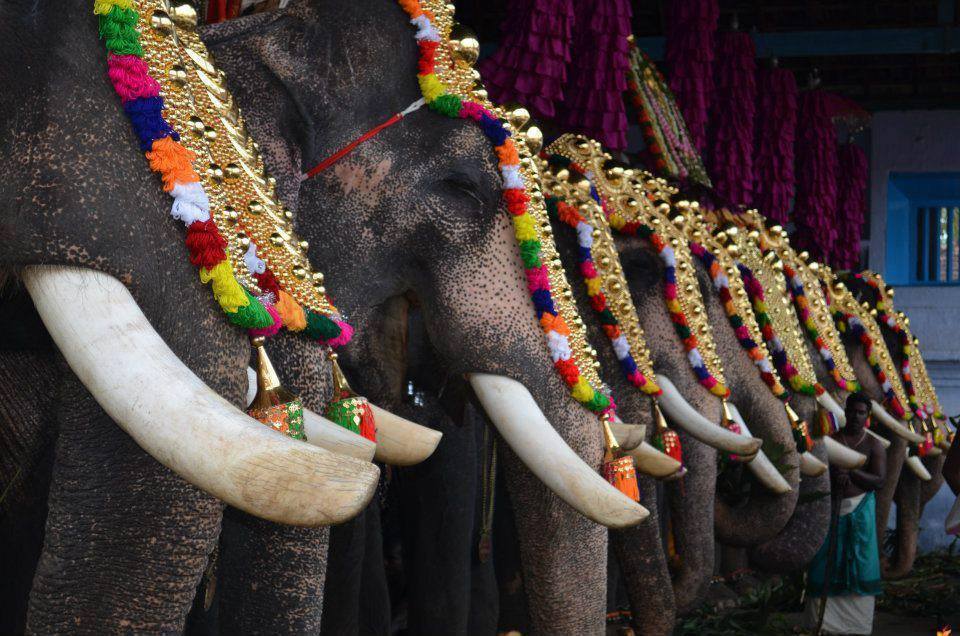
Photo credits: Ramesh Kidangoor
In the history of Kerala, elephants have been part of the festival and cultural ethos of the state. People believe that this animal is a remover of obstacles, a harbinger of good fortune and an integral part of religious and economic life. Over the years, no temple festival in the state has been complete without the participation of elephants: all major temples in Kerala have an attachment to them. Continue reading

Tiraseela – the cloth that is used both as curtain and dramatic effect
Kathakali is one of the oldest theatre forms in the world. Originating in the area of southwestern India now known as the state of Kerala, it is a group presentation in which dancers take various roles in performances traditionally based on themes from Hindu mythology, especially the two epics, the Ramayana and the Mahabharata.


One of the most interesting aspects of the art form is its elaborate make-up. Characters are categorized according to their nature, which determines the colors used in the make-up. Continue reading
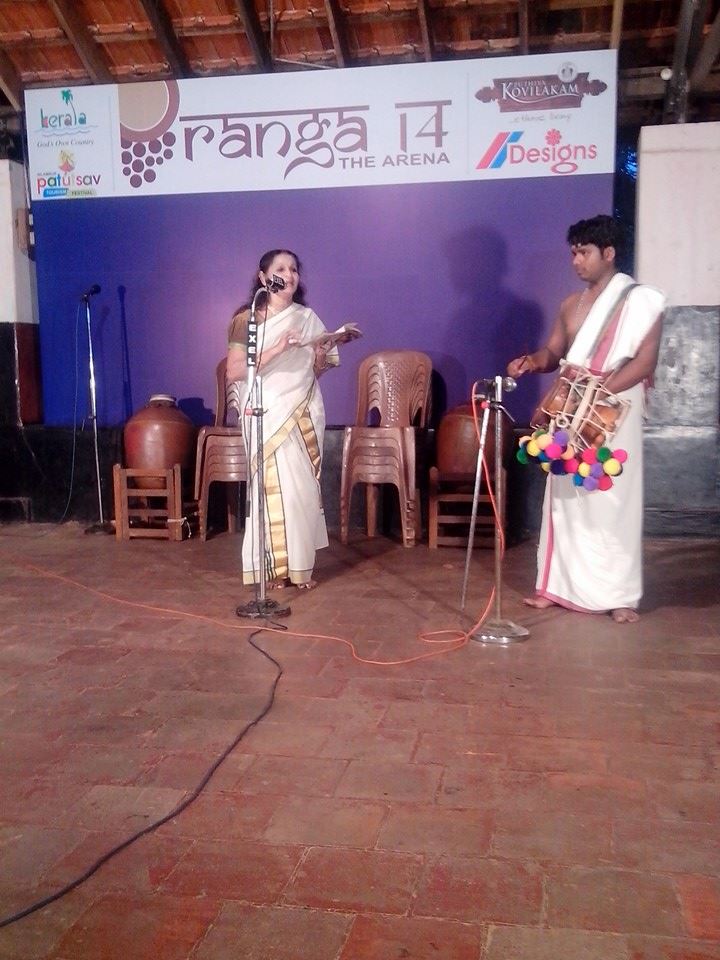
Ashtapadi
With the goal of conserving the cultural art of Kerala from extinction, Nilambur Kovilakam recently conducted an event called ‘Ranga 2014’ on the 17th and 18th of January. It was a two day event wherein artists portrayed their talents to a mixed audience of people from the Kovilakam and visitors from farther afield. The major intention of this event was to showcase the cultural heritage of Kerala and demonstrate its art forms to an invited audience from various parts of the world. Continue reading
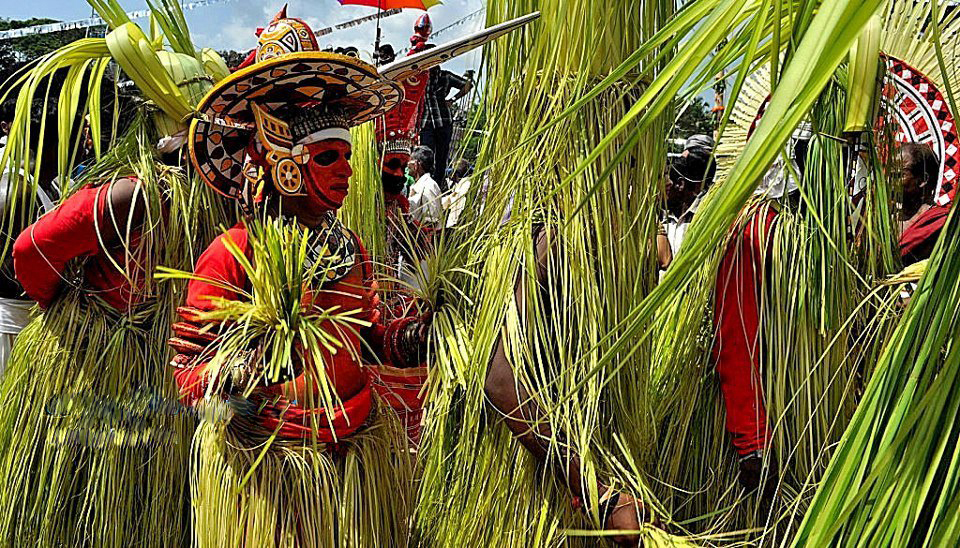
Photo credit: Abhayan Menon
The rhythm, elegance and finesse of the classical dance of Kerala is a result of the various cultural influences that took place in the state. These classical forms are a delicate fusion of ancient classical texts and folk traditions, often related to religious rituals and mythological stories. Continue reading
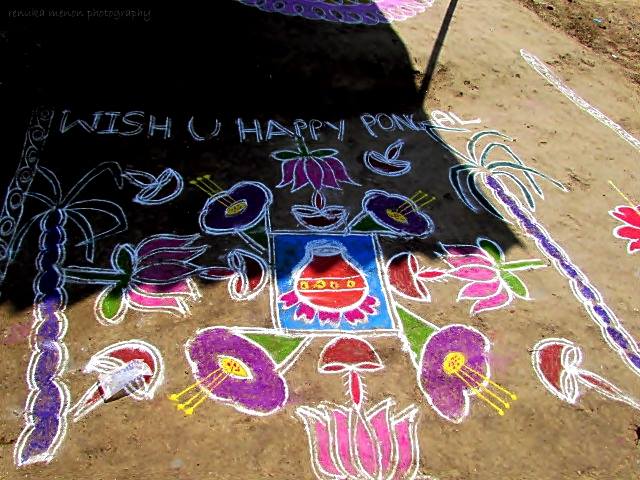
Photo credits: Renuka Menon
Thai Pongal is a harvest festival celebrated in Tamil Nadu on January 14th every year for four days. Tamilians decorate their homes with sugarcane and leaves from banana and mango trees, and draw on the floor with kolams (decorative patterns made with rice flour). Continue reading
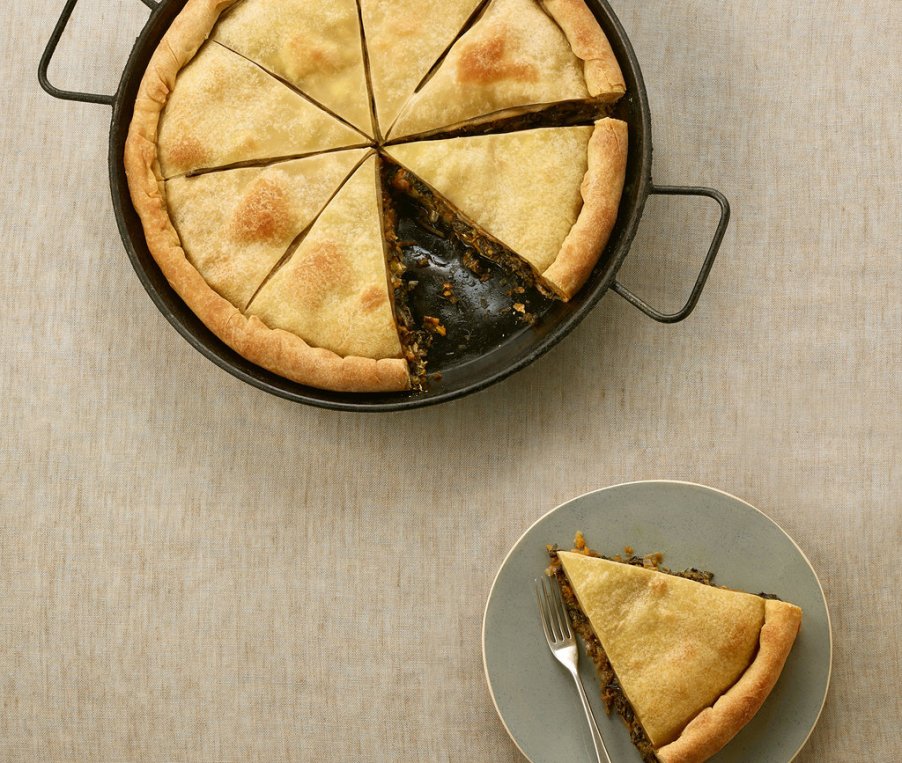
William Brinson for The New York Times. Food stylist: Suzanne Lenzer. Prop stylist: Deborah Williams.
Click the image to the right to go to the story (and take a few minutes to watch the video), which contains a brief cooking lesson in the form of a travelogue. It will either get you reaching for your cookbook, or your travel planner. As we prepare the opening of a restaurant facing a harbor whose waters have hosted ships from the Mediterranean for thousands of years now, we find ourselves with a soft spot for any and all mentions of the foods from that faraway region.
 We have been offering authentic Malabar cuisine, in its present day form, in multiple venues over the years already. Now it is time to go back to some of the less considered influences. For that reason, a quick trip to a kitchen in the Greek islands is a welcome diversion. In his article Life of Pie the food writer Mark Bittman has described the same food in the same location where Amie and I recently ate what we thought was the best hortopita, a variation on the more well known spanakopita, we had ever tasted. And by chance we were on a scouting mission on the island of Ikaria, so this article and the forthcoming cookbook are both perfectly timed for us:
When Diane Kochilas said we were making phyllo, I confess I was intimidated. But as Kochilas taught me, although “phyllo” means “leaf,” that leaf need not be the paper-thin type we’re accustomed to seeing in flaky Middle Eastern pastries. It may be, as it is here, a thin but readily made dough, rich in olive oil, smooth to the touch and easy to handle. Continue reading
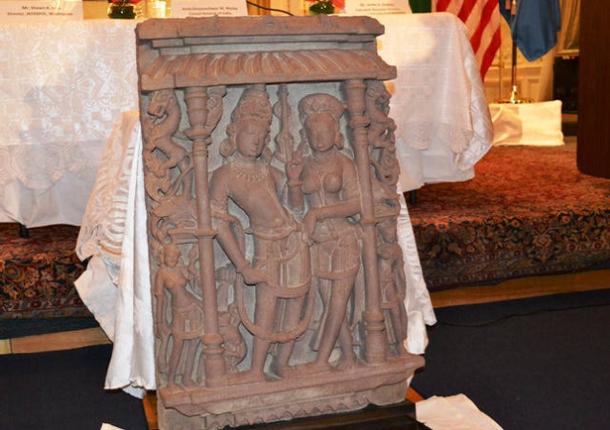
A Vishnu-Lakshmi sandstone sculpture, one of three stolen from India, is seen during a repatriation ceremony of the artefacts at the Indian consulate in New York on Tuesday. Photo: Narayan Lakshman
For those contributors to Raxa Collective based in India, but of USA citizenship, it is no stretch to say that Indians in India have treated Americans in India with the same friendliness as ever, and then some, in spite of a recent diplomatic spat between the two countries (if you were not aware of it, don’t bother, as the storm appears to be passing). Ladies and gentlemen of India, we salute you. Now, news of gentlemanly behavior on the part of authorities in the USA, with uncanny timing as it comes on the heels of that diplomatic problem. The return of these antiquities is a seriously good thing on its own, but we would be happy to think that cultural heritage plays a role in improving relations between two countries:
The U.S. handover to India this week, of idols worth more than $1.5m stolen from temples in Rajasthan, and Bihar or West Bengal, marked what seemed to be a gradual thaw in bilateral frost following a month-long diplomatic crisis.
In a repatriation ceremony at the New York Consulate of India, where the diplomat at the centre of the crisis, Devyani Khobragade, used to work, the U.S. Customs and Immigration Enforcement (ICE)’s Homeland Security Investigations (HIS) on Tuesday returned two sandstone sculptures of “Vishnu and Lakshmi,” respectively weighing 159 and 272 kg. Continue reading
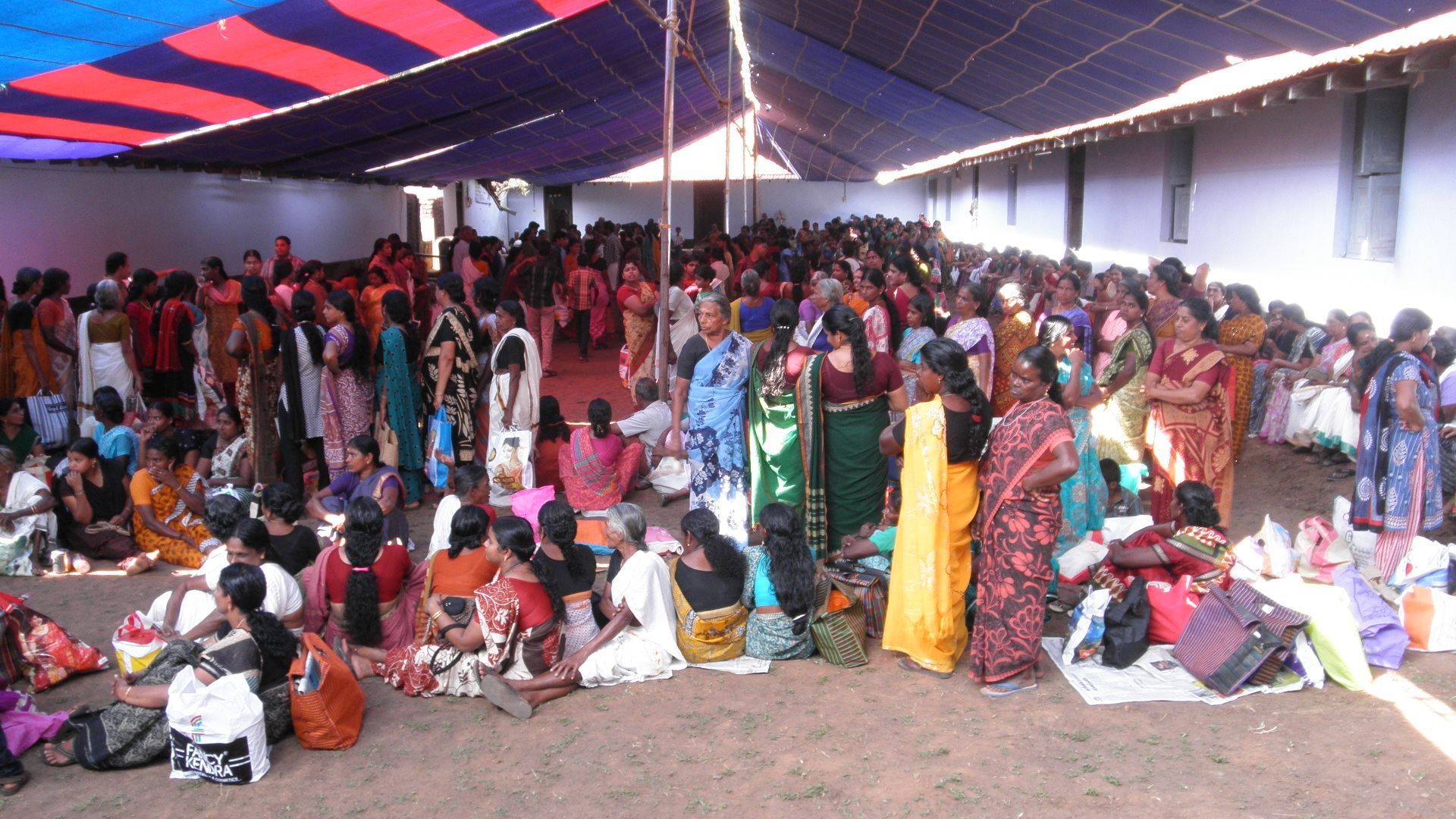
Sarvani Sadya (Food served by the Royal Family)
Kerala is known for its culture, traditions and festivals. After a gap of 2 years, I had the chance to attend our family festival at Nilambur Kovilakam. Normally people from outside the family are not allowed to enter the temple, since it is my family’s, but this festival, called ‘Nilambur Pattu’, gives a chance for all to attend and seek the blessings of our family God ‘Vettekkorumakan’. Continue reading
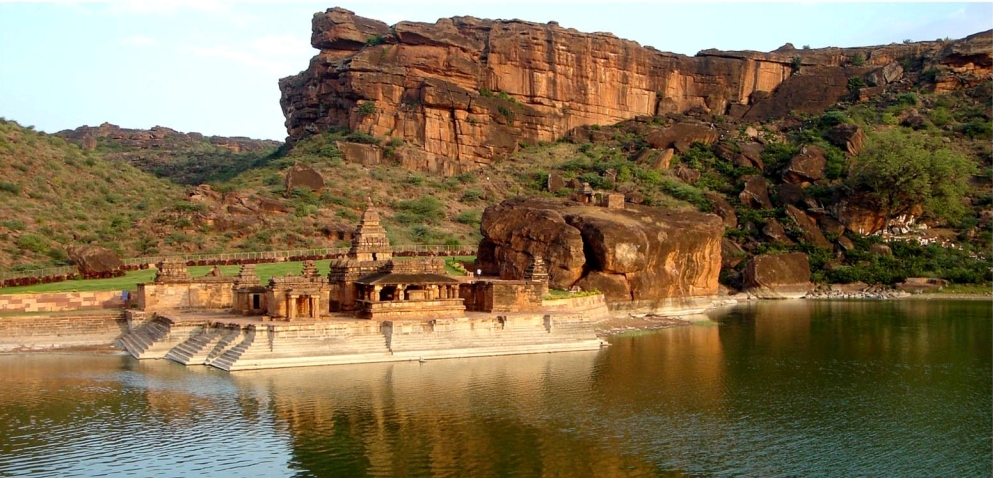
Photo credits: Ramesh Kidngoor
Badami, situated in modern Karnataka, was once the majestic capital of the royal Chalukyas between the 4th and 8th century — now it is a rural town famous for the monuments and remnants that remain. Continue reading
 Organikos