“I found love when I was 6”: A Story of Tattoos and Love

There are many things I could have named this blog post, but I decided it should sound scandalous, it should sound crazy, it should sound epic. I mean, what is more scandalous, more crazy, and more epic than falling in love when you’re is only 6 years old?

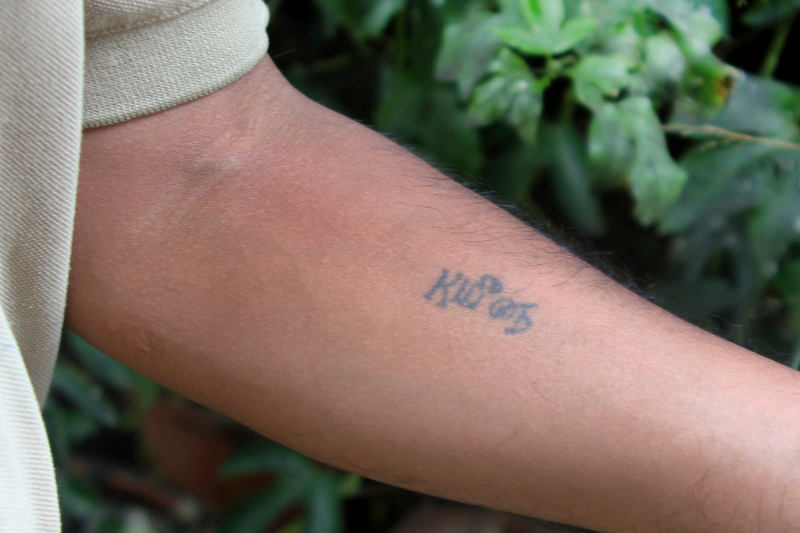
Getting a tattoo? No.

Getting a tatttoo at 6? No.

Getting a tattoo of your true love at 6? Now that, my friends, is crazy.

Kamal's Tattoo of his wife's name, Meena

Kamal’s Tattoo of his wife’s name, Meena

Continue reading

The Mestizo-Indigeno Divide

Should we connect everyone, everywhere?  Another of globalization’s thorny debates, but this time argued very locally.  As always there are global implications (in this case having to do with the loss of unique cultural heritage).  Click the headline image above to go to the story in The Guardian:

The 125-mile (200km) road would pass through the Alto Purús national park in Peru, connecting a remote area to the outside world but opening up the most biologically and culturally important area of the upper Amazon to logging, mining and drug trafficking. Opponents of the plan fear it will threaten the existence of uncontacted tribes such as the Mashco-Piro. Continue reading

I Can Feel My Heart Beat With Kalari Moves

Guest Author: Rania Mirabueno

Image

Beyond the nature tours of the Periyer Tiger Reserve near Cardamom County, the cultural scene in Thekkady offers a traditional Kerala martial arts performance called Kalari that I would definitely recommend for everyone to experience. Kalari is truly an art form combining music, dance and performance in the context of martial arts.

What I enjoyed most about Kalari was the diverse audience that attended. Kalari attracted all ages and from all backgrounds. I was able to share a unique moment with the community to see an ancient art form. From dagger to long stick to sword, I was at the edge of my seat the entire hour. Continue reading

Many Stripes. Many Tales. Few Tigers.

When I decided to come to Kerala this summer for my internship, I got most excited not entirely about my work, but really about seeing a tiger. I can’t even remember the last time I went to a zoo, but I know deep in my closet I have a dusty photo of me and a tamed tiger from Thailand. At this time, seeing a wild tiger was actually more of a WILD idea. Since I’m working next to the Periyar Tiger Reserve, a home to approximately 40 tigers and many other animals, I’m practically neighbors with them and awaiting a miraculous moment to see a tiger before my trip to Delhi.

As a Korean descendent, I must introduce you all to some Korean culture and explain why I’m writing a blog post that is dedicated just to tigers. I’m sure a lot of my Korean folks will agree that tigers and Koreans go way back. My relationship with tigers started when I was 3 years old when my grandmother told me a story about a tiger that smoked using bamboo pipes.  My reaction was: “Really? Tigers smoke, too?”

Source & Credit: Picture of a Tiger at SamChunSa (삼천사) at BookHanSan (북한산)

Continue reading

To Munnar And Back – 6 Interns And An Indian Staff Picnic

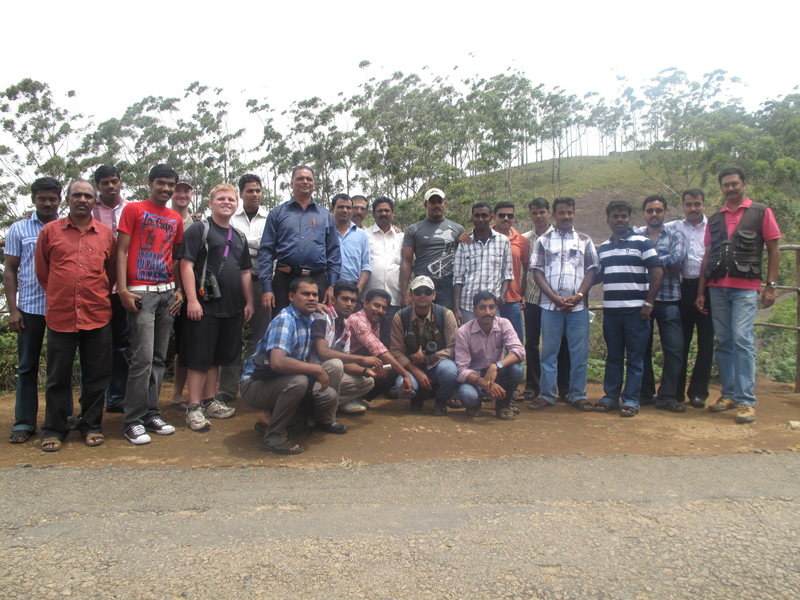
The morning of the staff picnic began with a wakeup call at 4:30am to prepare for a prompt 6am departure to Munnar, a beautiful hill station in the Idukki district of Kerala. To the interns, an early morning with a long bus ride meant a great opportunity to catch up on some sleep after several long days of trekking and work. To the staff it meant the party could start even earlier.

The Men of Cardamom County

Within minutes of leaving the Cardamom County parking lot, a small group of the staff was already busy preparing the music list for the day’s journey. Immediately the bus was pouring with energy- Bollywood music incited full volume singing and raucous dancing that was only made more amusing by the jostling motions of the moving bus. It provided not only a humorous and exciting start to the day but also a somehow appropriate cultural soundtrack to the beautiful mountain views, tea plantations, and villages that passed by the bus window on the way to Munnar. Continue reading

Mudiyattu – A Ritual Dance

Mudiyattu is an drama associated with the worship of the Mother Goddess, Bhadrakali. It is performed with minor variations in almost all parts of the state. The dance form depicts the taking over of the mudi, or crown, from the demon Darikan by Bhadrakali. Continue reading

Kummatikali – Folk Dance of Kerala

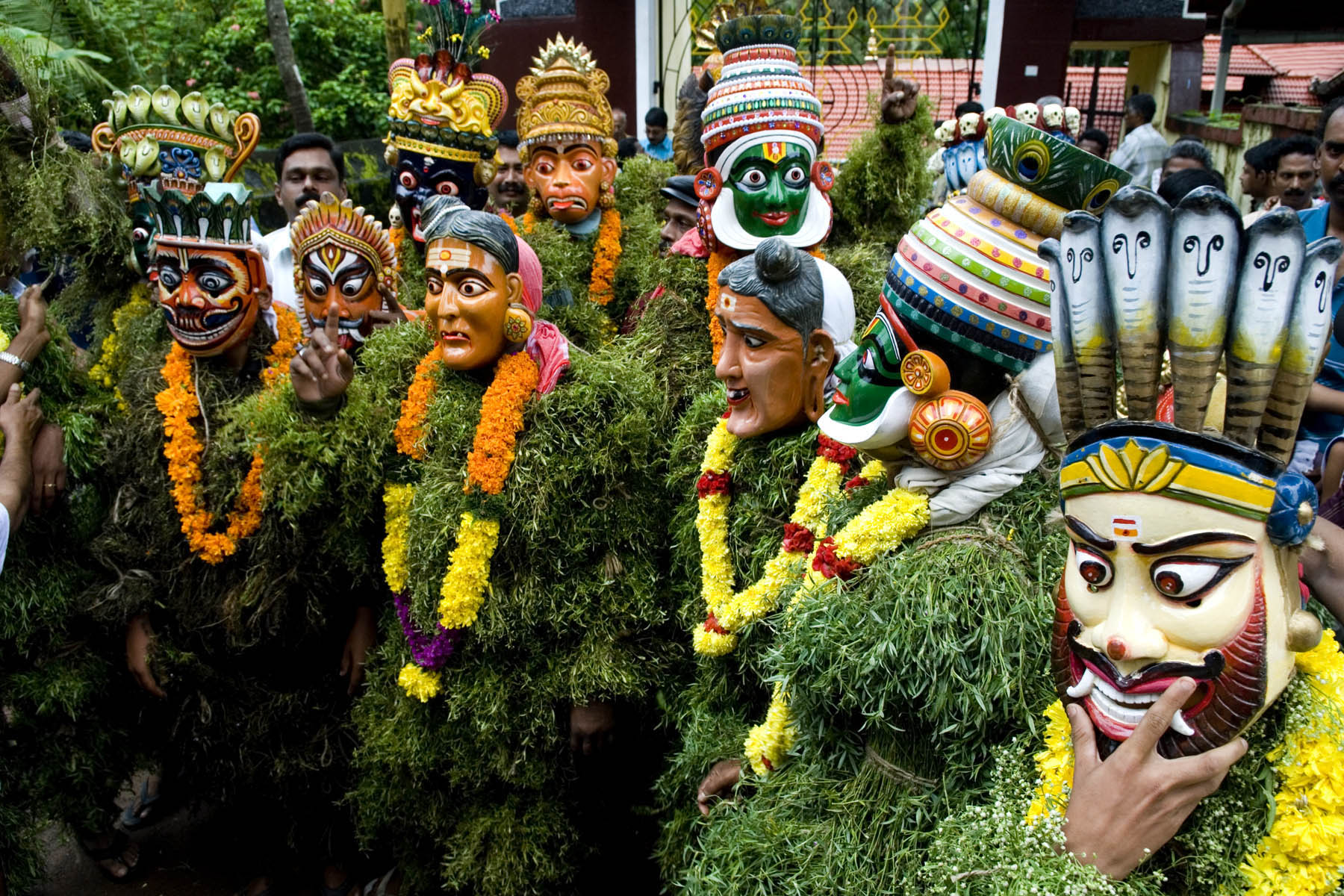
Kummatikali is a folk dance celebrating the arrival of the legendary King Mahabali to visit his subjects during the festival of Onam. It is believed that the presiding deity of Vadakukumnathan Temple in Thrissur asked the attending spirits to perform for him. The dance they presented came to be known as Kummatikali. Continue reading

Nangiar Koothu – Traditional dance of Kerala

Nangiar Koothu is an offshoot of the Koodiyattam theater which combines dance and drama. The dance is performed by women of the Nambiar clan (scholars in Sanskrit) called Nangiars and hence the name Nangiar Koothu. The theme of Nangiar Koothu is the story of Lord Krishna as described in his historical texts called Sree Krishna Charitam. It commences with a ritual dance called Purrapad. Continue reading

Art of Taxi Driving

It has been a week since I arrived in Kerala, India. Not surprisingly, my first cultural shock was the ear-piercing, honking sound of rickshaws (small Indian taxis) that welcomed me when I stepped out of the Cochin airport. In the beginning, I thought the drivers here were just a little more aggressive or would get frustrated easily: the reason why they honked so much. But, as we drove away from the airport, our driver explained to us that these drivers honked to show their existence and alert others. In addition, drivers in India tend to not keep to their lanes. They use the entire road sometimes driving on the left side, right side, and in the middle…so ALL sides! These days, many young Indians are actively protesting to eliminate this unnecessary honking and to reduce noise pollution. So, increasingly you can see many signs like “Yi Horn Not OK Please.”

Rickshaws in India

Continue reading

Chakyarkoothu – Traditional Dance of Kerala

The elegance of the classical dances of Kerala are a result of the various cultural influences that took place in the state. These classical forms are a delicate fusion of ancient classical texts and folk traditions, making them distinctive and unique. The Koothu is a solo narrative act. As the performers of the Koothu are from Chakyars- a Brahmin community, it bears the name Chakyarkoothu. Continue reading

Being Full of It: A Meaningful Word

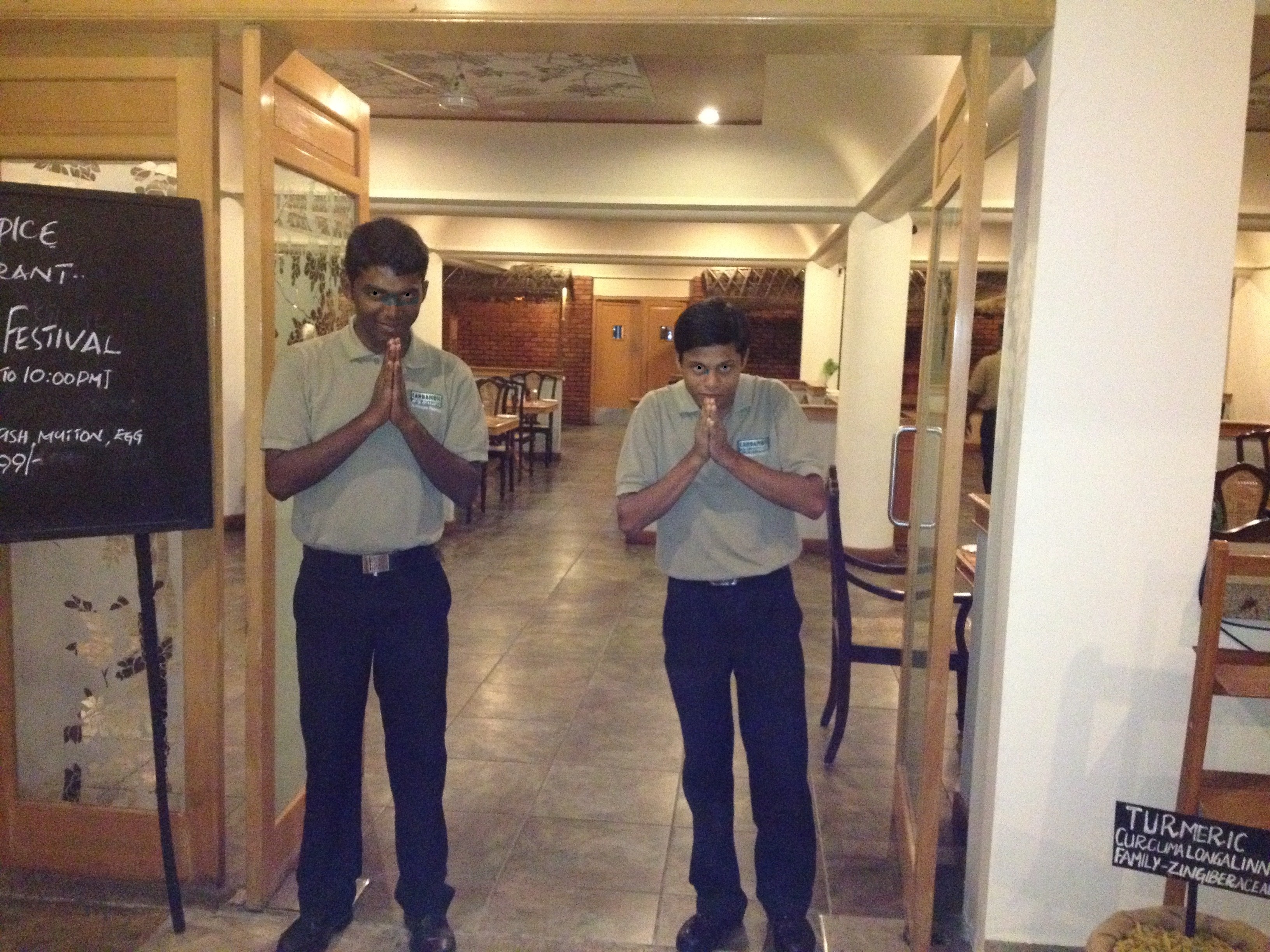
Since arriving in Kerala, I have been greeted many ways.  I have exchanged many smiles and hellos, and I have been veiled with jasmine garland and pressed with traditional dika.  However, the greeting I find most profound lies in a single word: Namaskaram.
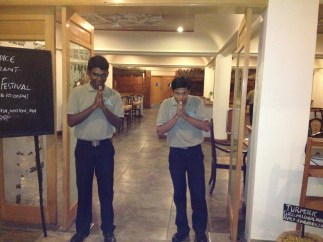
Two people, worlds apart, meet with this word.  Each of their hands draws together in a prayerful pose in the nest of their individual chests.  With a bow of their heads, they utter, “Namaskaram.”  At first, it seemed like a simple interaction, yet when I asked the native people for the meaning, I learned that it has a much deeper connotation.

A signal of respect.  A promise of hospitality.  A notion of putting aside one’s ego.  All of these meanings are understood with Namaskaram.  I witness and experience them with nearly every interaction among the people here at Cardamom County, but the latter meaning, putting aside one’s ego, has struck a powerful chord in me. Continue reading

Pagoda Flower

The Pagoda flower is a tropical garden plant with large, heart shaped evergreen leaves found in the Western Ghats of India. The small, orange-red flowers are funnel shaped with long tubes. It is the main food plant of the Southern Bird Wing– the largest butterfly of Southern India. Continue reading

Southern City of Light

Guest Author: Denzel Johnson

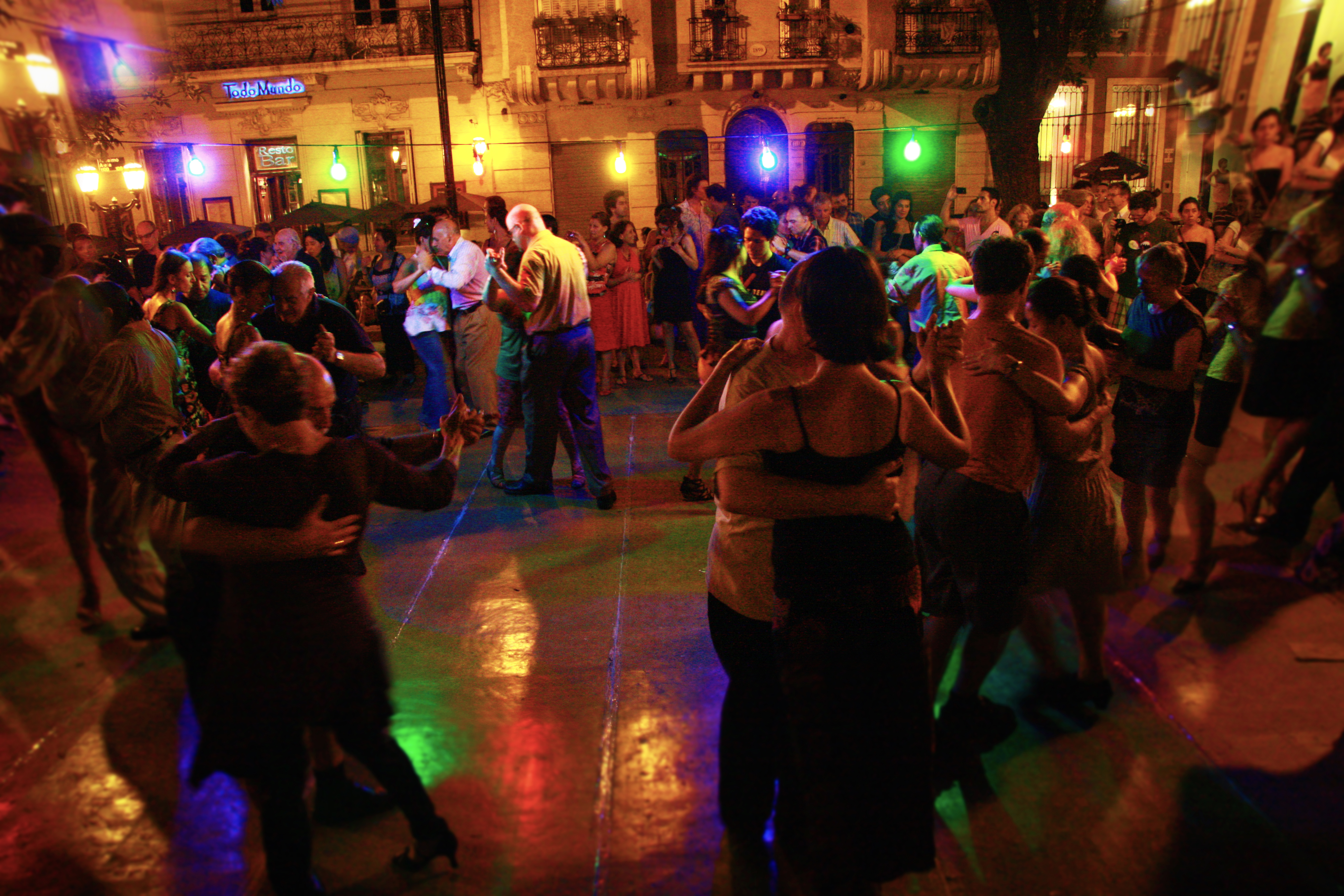
During the 1800’s Buenos Aires hosted a wealthy group of people in what is today’s most popular district- San Telmo. The district today is as popular as it could be and hosts a series of events that accommodate locals as well as tourists as they flock between the clubs and cafes. Continue reading

The Patel Phenomenon

In our organization, which includes more than one American working in lodging establishments in India, a sociological investigation like this catches the eye.  Click the image to the left for a podcasted author interview.  A few fun facts:

– At least 1 out of 2 motels are owned by Indian-Americans.

– Out of those Indian-owned motels, 70 percent are owned by Gujaratis, people with roots in the western Indian state of Gujarat.

– Of those Gujaratis, three-fourths share the last name Patel. There’s even a name for these overnight establishments: “Patel Motels.”

Thrissur Pooram – Festival of Festivals

The Thrissur Pooram is the largest of all the festivals held in Kerala. It is a grand bonanza of colors and sound, native drums and horns plus magnifiicent elephant pageantry which cannot be missed. It normally falls between 15th April and 15th May. The festival takes place over two days and surrounding communities set out with their temple icons in all regalia on caparisoned elephants to the Pooram ground in front of Vadakkumnatha temple located in the city centre.

The festival is famous for the fireworks display that begins in the well past midnight into the second day and can last several hours. The Pakal Pooram (Daylight’s Pooram) staged the next morning is a recap of the main Pooram’s highlights. Continue reading

Velichappadu – Mediator between dieties and devotees

The Velichappadu or Komaram (oracle, or revealer of light) is an integral part of the rural life of Kerala. The Malayalam word Velichappadu literally means “the one who throws light on any problems”. Believed to be a representation of the deity in a temple, oracles often belong to a particular family. Dressed in red and adorned with heavy ritual ornaments and garlands, they often carry heavy hooked swords. The deity is believed to speak as the Velichappadu dances, delivering the frenzied forecasts. There are both male and female Velichappadus.

Continue reading

Thiruvathira Kali, Traditional Dance of Kerala

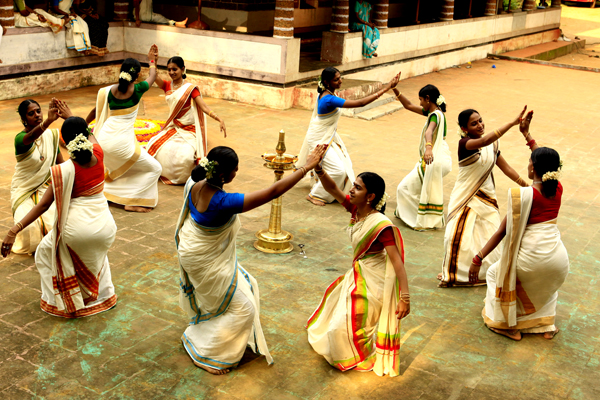
Since La Paz Group started working in Kerala last year, we have been in learning mode, especially with regard to cultural traditions. Dance is an essential part of Kerala’s cultural fabric. Thiruvathira kali is one of the typical dance forms here. This is a female group dance made up of simple, elegant steps. In  ancient times, women performed this dance in their homes during festivals and functions, giving it the Malayalam name aka Kaikottikali: aka-inside + kaikottikali-play claping hands. Lore has it that Thiruvathira Kali is remembering Lord Siva taking Parvathi as his wife. The group of women dress in typical Kerala style — mundu and neriyathu and the hair in a bun, adorned with jasmine garlands — and perform this dance during festival seasons. Kaikottikkali spreads the message of joy and also illustrates the emotions of a married woman towards her beloved and of the unmarried woman longing for one. Continue reading

Jasmine flower

Being native to tropical and subtropical regions, the many species of jasmine are either deciduous, evergreen, erect or climbing shrubs commonly found in India’s Western Ghats. It is widely cultivated throughout the world for its fragrant character.  Continue reading

A Road Less Traveled

Guest Author: Denzel Johnson

The positive thinker regards life as an adventure where the rewards are in the risks and the pleasure in responding to the challenge.

A card printed with that quote has sat in my wallet since setting off last year for my journey through Latin America. I convinced myself that my philosophy as a traveller should somehow reflect these words and the card was meant to encourage me to step off the beaten track and venture where others wouldn’t consider a destination.

Having recently just spent a good portion of my gap year in solo travel through South America, I not only found myself on my own but always more positively challenged because there was no one else I could rely on. Continue reading

Bhathra Kali Amman Goddess (Ten Handed Goddess)

This is the statue of the Goddess Veera Bathra Kaliamman situated 8 kms away from Thekkady, on the way to Madurai in between Gudalur and Lower camp(villages of Tamilnadu). The statue is nearly 42 feet high and is unlike anything elsewhere in India. Continue reading