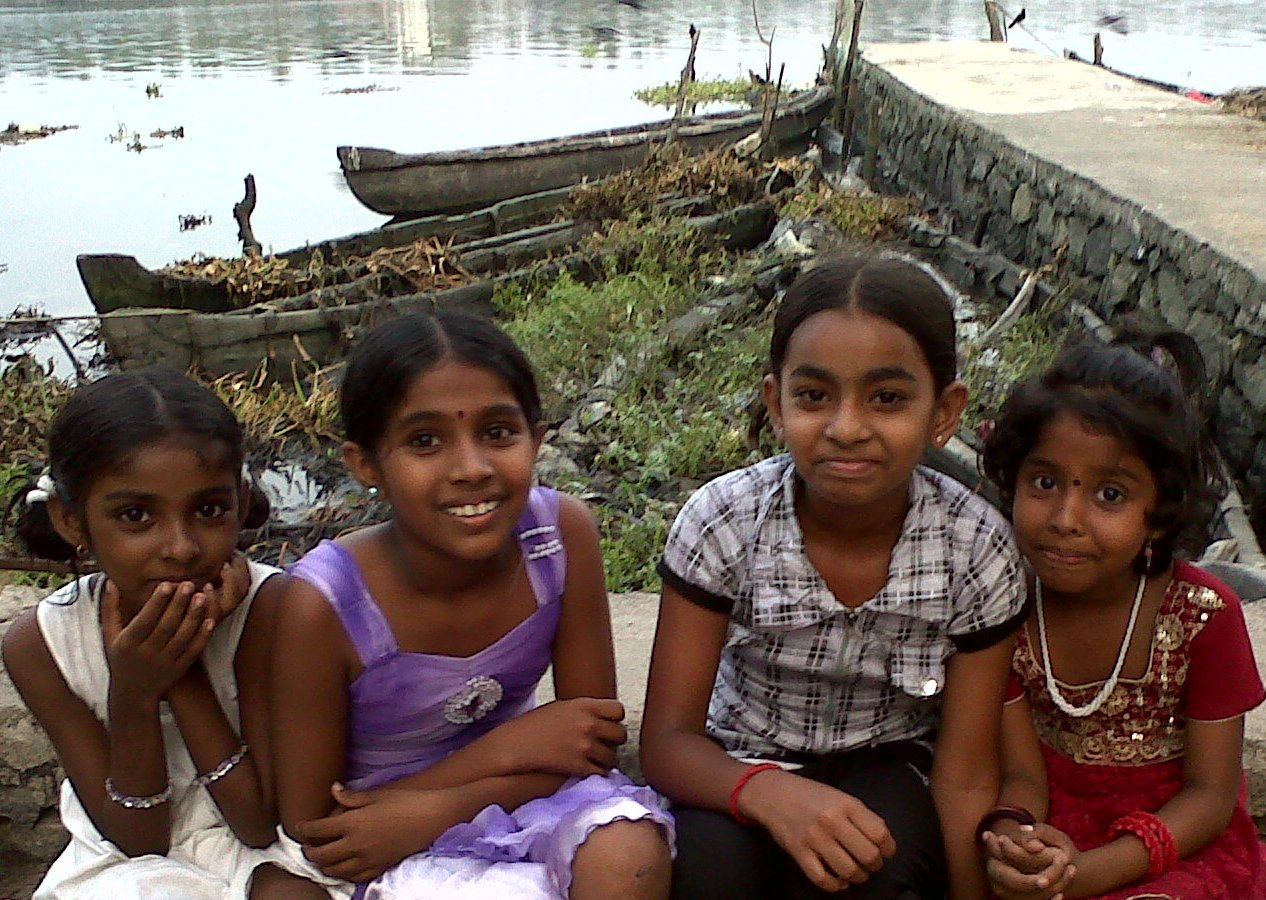
These youngsters are often to be found on a warm afternoon sitting in this exact spot, discussing something important in Malayalam; but ever polite, when a passerby of foreign appearance says hello, they break into English. Continue reading
These youngsters are often to be found on a warm afternoon sitting in this exact spot, discussing something important in Malayalam; but ever polite, when a passerby of foreign appearance says hello, they break into English. Continue reading

In our neighborhood, 8am on a weekday implies children of all ages preparing for a walk or ride to school Continue reading
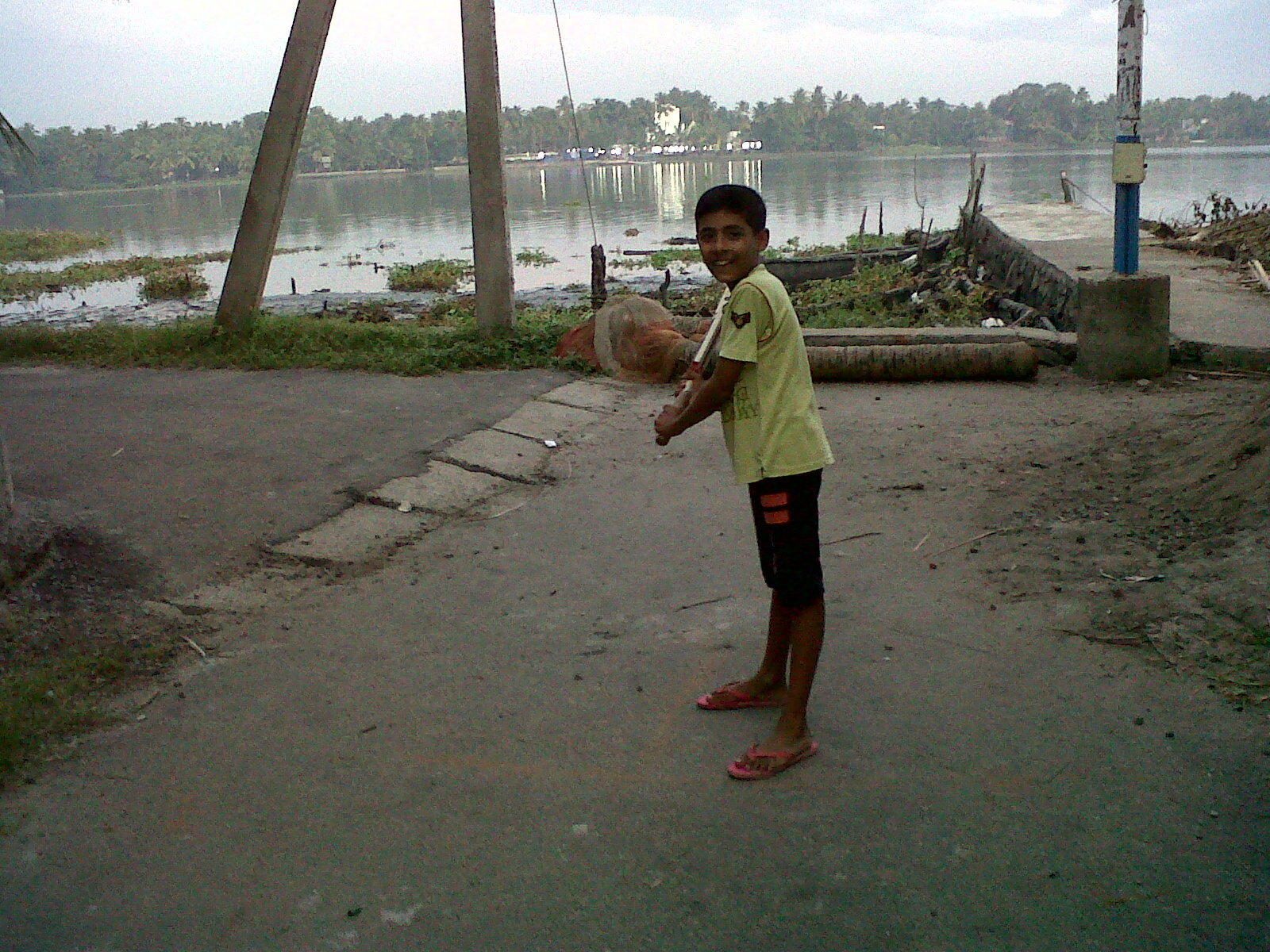
The stance is familiar to anyone of North American, Cuban, Central American or Venezuelan heritage. But it is not what it first might seem to anyone from those places. An anglophile, indophile, or carribophile will immediately recognize the bat our neighborhood friend is gripping. On any given day, on any given street in the country that currently holds the trophy as world champions in cricket, you are likely to see something like this. Continue reading
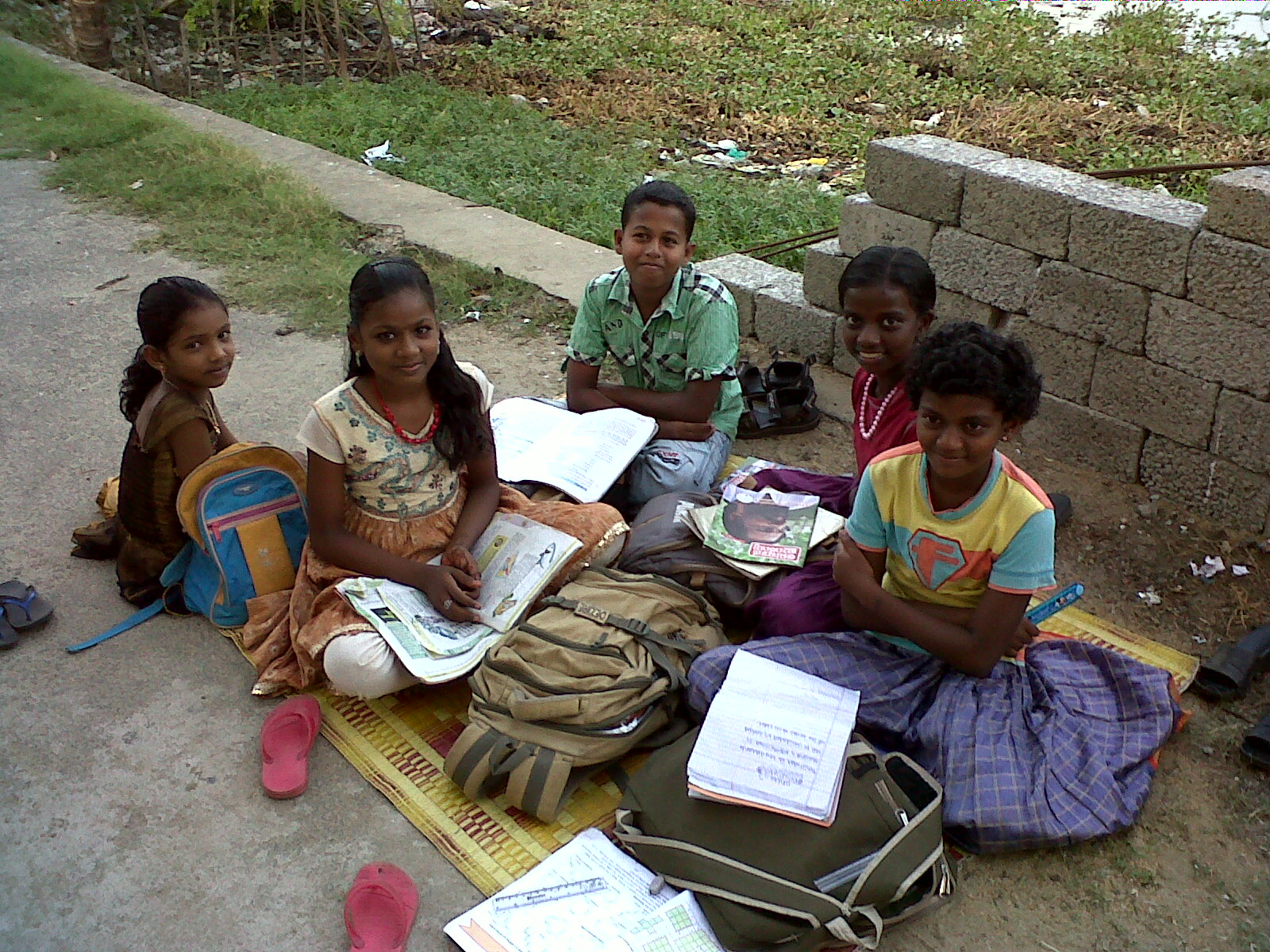
Those not roaming or sifting, waiting for school or playing cricket, are often sitting right here in the late afternoon. Their instructor is nearby, always happy to have a passerby speak English to her tutorial group. And they are always eager to showcase their favorite phrases. Continue reading
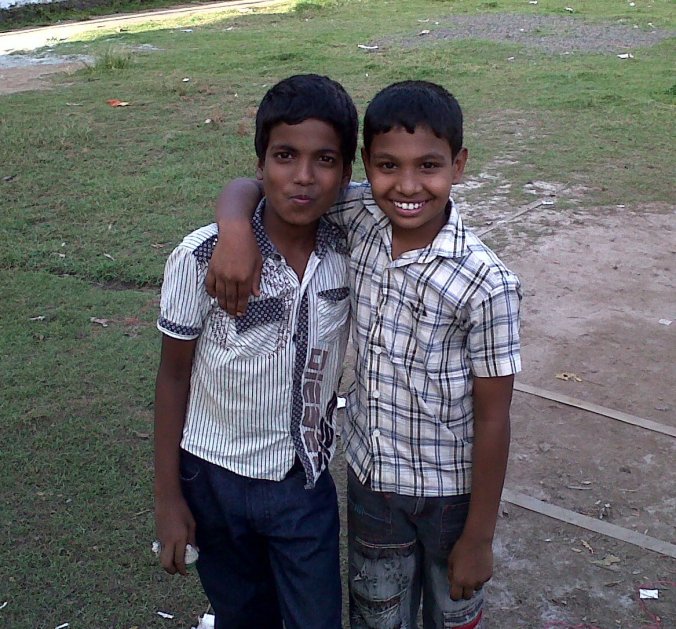
In more than one earlier post, we might have given the impression that every young person in our neighborhood seems to smile all the time. Not necessarily so, though most do. But for certain when they see someone they do not recognize, they will definitely say hello.
For any new resident of India, let alone its own citizens, the question is always interesting.
The following is the text of a speech delivered by Justice Markandey Katju, chairman of the Press Council of India, at Jawaharlal Nehru University on November 14, 2011.
Friends,
I am deeply honoured to be invited to speak before all of you. My time is limited, as I was told I should speak for 30 minutes and after that there will be a question answer session. As my main speech will be restricted to 30 minutes, I may come to the topic of discussion immediately, that is, What is India? …
…The difference between North America and India is that North America is a country of new immigrants, where people came mainly from Europe over the last four to five hundred years, India is a country of old immigrants where people have been coming in for 10 thousand years or so.
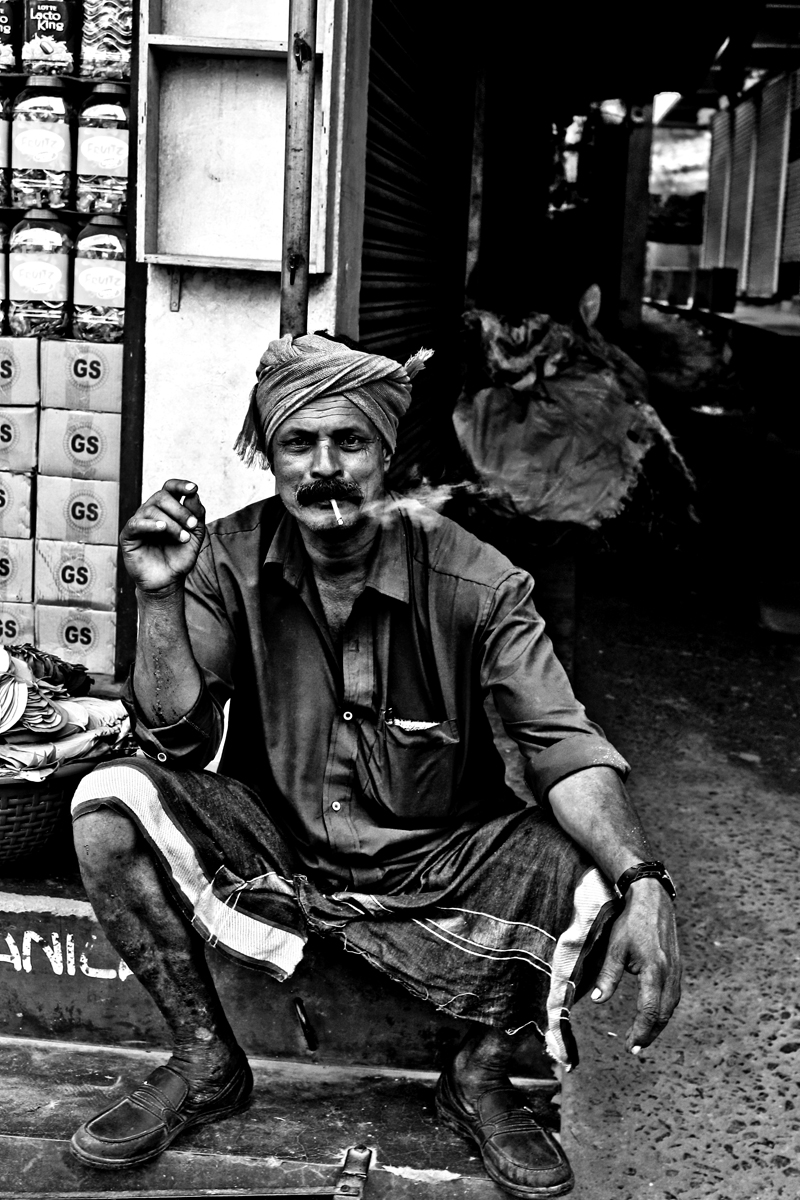
Although I thoroughly enjoy viewing street photography for its spontaneity, diversity, and ability to display the flow of life of any culture, I generally refrain from partaking due to a generally awkward disposition and inhibitions around strangers. Being unusually tall (to Indians) and quite white, I also get a lot of stares as it is, and waving a camera around at people certainly does not make me go unnoticed. However, in areas more frequented by ‘foreigners’ such as Thekkady, a tall Caucasian isn’t all that exciting, and many locals are in fact enthusiastic to have their pictures taken.
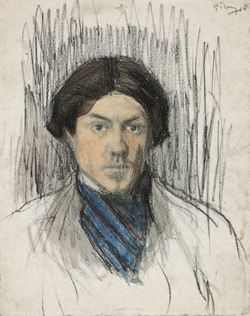 We had mentioned in an earlier post encountering this source of interesting observations, and now another from the same (click on the image for the full thought and information about the exhibition):
The idea of Picasso always precedes the experience of seeing Picasso’s art. Looking at drawings from the artist’s early years in the Frick Collection’s cramped basement, I wondered what we can say about Picasso that hasn’t already been said. I’ve previously encountered this question with artists whose reputations (and market value) are in such high esteem that it is almost impossible to see the work as separate from the artist’s image. Even in this small show, with works that look decidedly un-Picasso, I found it difficult to view the drawings as anything other than work of this great artist.
Michael Lewis, a great journalist working for a glossy publication, popularized a smart baseball manager in a book and more recently a film adaptation of that book. A great 2003 interview with him can be found in podcast form here. Unique intelligence, it seems, is not as celebrated in popular culture as it should be (and is not, usually, in Vanity Fair or other glossy publications). But credit where due: Lewis recently followed up his success with that book and film giving credit where he saw it due. And celebrating an even grander unique intelligence in that very same glossy:
It didn’t take me long to figure out that, in a not so roundabout way, Kahneman and Tversky had made my baseball story possible. In a collaboration that lasted 15 years and involved an extraordinary number of strange and inventive experiments, they had demonstrated how essentially irrational human beings can be.
As a new face here at Raxa Collective, I thought I’d take a minute to introduce you to all to the organisation I’m volunteering for here in Costa Rica. It’s called MUSADE, which stands for Mujeres Unidas en Salud y Desarrollo, and its function is to provide support for women who have suffered intra-familiar violence. MUSADE has a lot of great programs going on, but today I’d like to talk to you about some exciting news for our Defensoras Populares.

This banner was made to commemorate MUSADE's 25th anniversary this coming Tuesday.
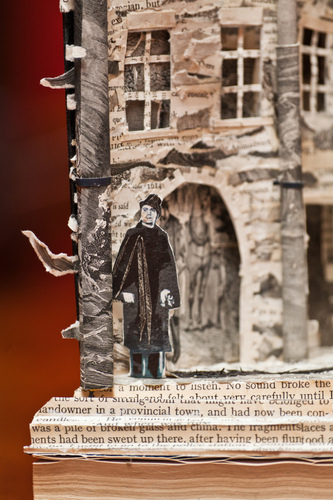
…somebody has been dropping glorious little paper sculptures into libraries and museums all over Edinburgh, Scotland, and we’ve just heard … that there are now three more…
We have been using this word for years as a shorthand for one of the core objectives of our entrepreneurial conservation work: collaborating with communities to assist in the retention of heritage that has meaning, and that those communities feel should remain essentially as it was. It is therefore interesting to consult OED (finally) on exactly what this means.
Top of the list of entries:
a. Of authority, authoritative (properly as possessing original or inherent authority, but also as duly authorized); entitled to obedience or respect.
Although the Kenyan destination tourism market has commercialized the Masai name, I was pleasantly surprised to find the traditions and heritage of the Masai people thriving and vibrant in the Masai Mara. In Nairobi, you will find merchants and craft markets collectively selling Masai blankets, beaded jewelry, artwork and more. I would contend the Masai name is an over-utilized marketing tool, a clear indication it’s moving dangerously close to holding a “tourist trap” reputation. Although my position on the matter remains unchanged, the innate beauty of the Masai culture should not be dismissed. The Masai Mara may be best recognized as Kenya’s wildlife mecca, but the region is also home to over fifty authentic Masai villages of tremendous character and unique local charms.
After our concluding full day safari game drive, our guide gave us the option of visiting a Masai Village near our camp. Indicating that the venture would cost us an additional 15USD, I immediately believed yet another “tourist trap” pitstop was in store. Nevertheless, faced with the alternative option of sitting in my non-electrified tent, I succumbed to the sales proposal and scrambled together 1500 Kenyan Shillings to visit this so called “authentic village”. The entrance fee granted us a traditional Masai welcome dance, entry into the villagers’ homes, a guided tour of the community, and complimentary photo opportunities. With my skepticism still intact upon entering, I anticipated some sort of lazily executed, artificial village re-creation of primitive Masai Mara life, à la Plymoth Plantation or some cheesy Renaissance Fair. While the community has certainly optimized their culture’s tourism appeal, I was happily surprised to find that what we witnessed wasn’t just for show or to indulge us “muzungus” (foreigners); conversely, it demonstrated how the native Masai currently lived day-to-day.
One of our Contributors recently posted from Panama, including a brief summary of his visit to the Panama Canal and Panama City. Here is a nice two minutes worth of additional footage, courtesy of one of the few worthwhile channels on television.
Every minute of this is fun. The 35th minute is particularly fun for those of us based in Kerala because members of our organization join the stage with the stars of this show.
About five months ago we were approached by a film production company about a show they were filming for National Geographic Channel. They told us that River Escapes was recommended to them as having the best houseboats in the Kerala backwaters (a bit of music to our ears). Then they proposed that their Kerala episode should be based on our houseboats (we danced to that music).
There are needs, and there are wants.
A toothpick sculpture? Not necessary for San Francisco to demonstrate its greatness (as might have been an underlying objective of the commission). Not sufficient for that purpose either.
 Click the photo to the left to read the interview of mother by daughter, artist by artist. The interviewer shares this perspective on the interviewee’s art:
Her work has, over the years, centred on forgotten, vanishing worlds, art and language that exist on the margins. The epigraphs to her novels (TS Eliot, Emily Dickinson, Borges …) often make reference to the persistence of memory. She writes: “The ancient Chinese believed time is not a ladder one ascends into the future but a ladder one descends into the past.” Her new book, The Artist of Disappearance, is made of three delicate stories about the frailty as well as the transforming power of art.

This morning at 8am, India Standard Time, our Thanksgiving turkey arrived at our flat. With a little help from friends it was surprisingly easy to come by. Unlike chickens, which can be seen running around every yard or patch of untended land, or ducks, which are pretty ubiquitous in Kerala’s watery byways, turkeys are just not that common here in India. So when I saw a few milling around someone’s yard while Milo and I were kayaking on the backwaters some time back I just had to ask our friend (who happens to own the neighboring property) to see if they might sell one to me. The rest is history, as they say. Continue reading
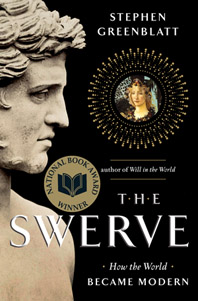 It is just the way things are. My reading list/pile is always longer/taller than I have time for. And living between the rice fields and spice-laden Western Ghats I do not have access to the kind of bookstores we took for granted while living elsewhere. Amazon does not deliver in India, nor would I put a penny in their coffers until I have the sense that they are not trying to monopolize the book trade, not to mention everything else.
Even if I had access to a great book store I might not have picked this one up off the shelf, though I admire the author’s writing. I have not been in the mood for anything too canonical or Great lately; rather merely useful, interesting, lesser reading. Short- and long-form journalism tend to be my standard fare. There was something in the pile with Greenblatt’s name on it, a magazine article, that I kept burying for months and which persistently kept resurfacing. Continue reading

 Organikos