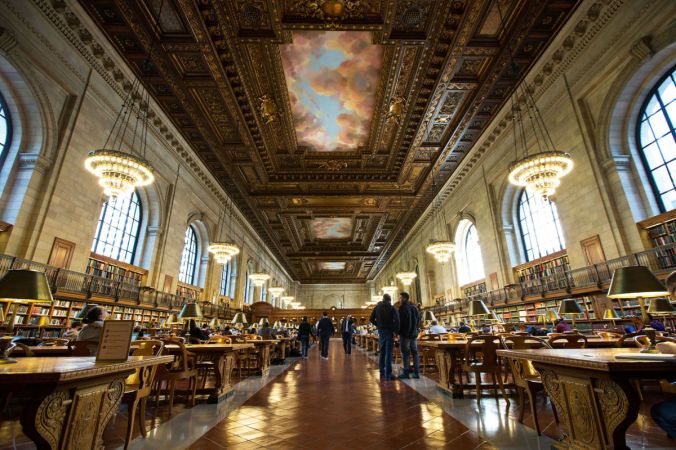
The Rose Reading Room is luxurious in the way that only certain shared spaces can be. Its grandeur attracts its visitors, and is in turn amplified by their presence: the true urban symbiosis. PHOTOGRAPH BY DREW ANGERER / GETTY
It was the room in the photo above where I sat, in the early 1990s, collecting some data for a research project that would eventually become my doctoral dissertation. I had been in that room once or twice in my youth, but as an adult on a specific mission (little did I know the data collected that day would help me develop ideas that we now call entrepreneurial conservation within La Paz Group) the room barely registered in my notice. Except as a very practical place to read some historical documents.
So I am delighted to see that room again after a long time. It looked great to me the last time I saw it. Now I can say wow for different reasons. The legacy of the room is protected, and perhaps renewed for another hundred years. If you click the image and go to a larger viewing with greater detail, you will understand why the word luxury fits in the title of this post on the New Yorker website.
It is not our practice to use the word luxury because it is so laden with old and often inappropriate (considering the ecological condition of the planet, considering advances in socio-economic development, and considering other modern sensibilities) meanings. So we appreciate when others take care in how they use it:
THE ROSE READING ROOM AND THE REAL MEANING OF “LUXURY” IN NEW YORK CITY
To say that the ceiling of the Rose Main Reading Room, at the New York Public Library’s main building, on Fifth Avenue—the biggest room in the biggest public-library branch in the country’s biggest city—is an ornate piece of work is putting it mildly. Continue reading


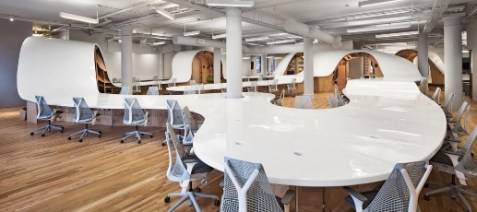
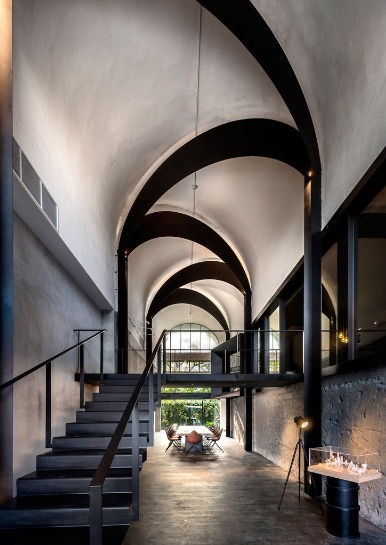 hared office space, akin to what we saw in one of the


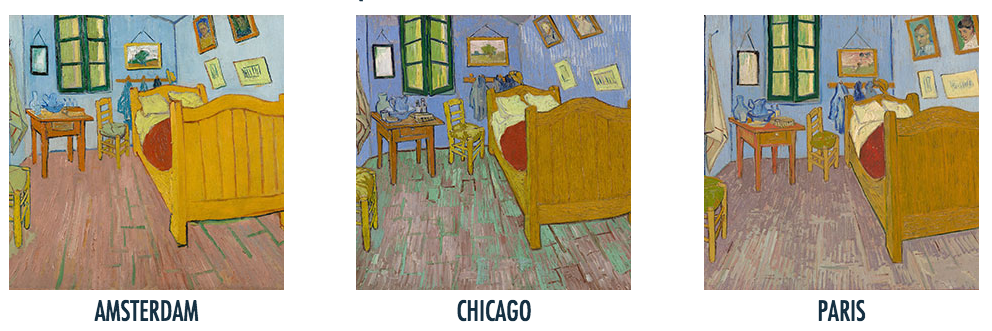


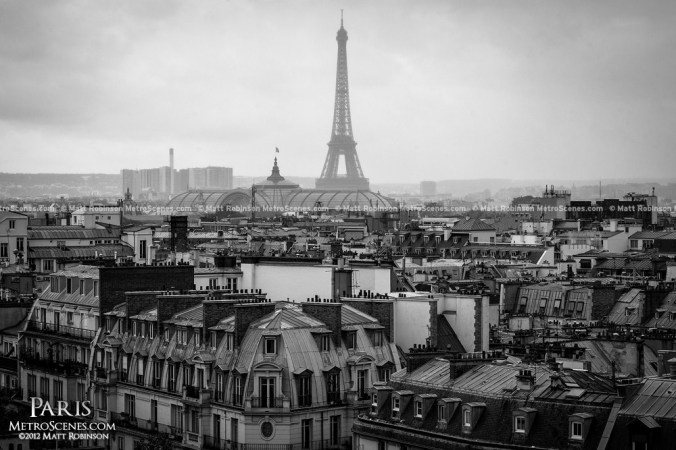
 Organikos