Suburbanosity

St. Andrews Manor, Shanghai, China (2009)

St. Andrews Manor, Shanghai, China (2009)

Thanks to Atlantic’s far-reaching reviewers and commentators for their attention to this book:

Swedish-born photographer Martin Adolfsson has been living in New York City since 2007, but he’s spent a lot of his time documenting upper middle-class suburban enclaves outside the U.S. Continue reading

Urban Muse

This slideshow requires JavaScript.

It does not matter whether you are a farmer, a geneticist, or whatever you do with your time: you will almost certainly be affected in important, unexpected ways after time spent in Paris.   Continue reading

Upcycling Mattanchery

Getting greener on the transportation front is partly about reducing use of fossil fuel, partly about reducing the noise and particulates generated by motorized vehicles, and partly just the fun of alternative methods of getting around. Sometimes pedicabs are simple visions, other times elaborate hipsterisms.  The image above links to just one of the several companies peddling practical person-powered vehicles, now ubiquitous world-wide… Continue reading

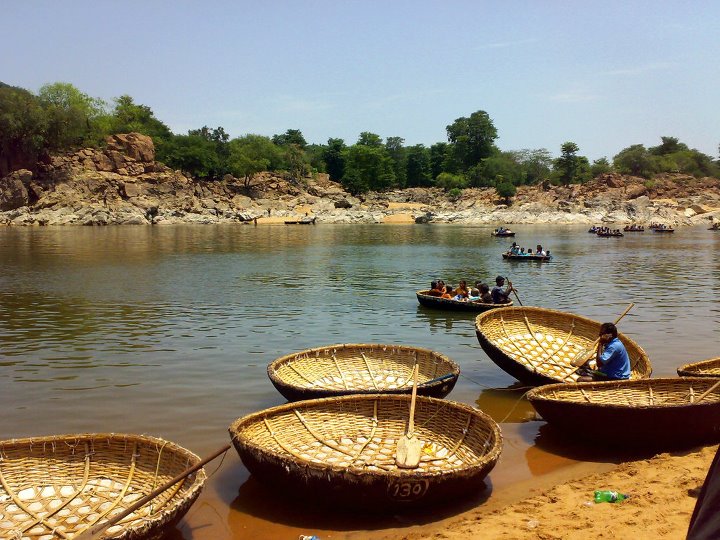
Coracle – Traditional Boats

Photo credits : Ramesh Kidangoor

Photo credits : Ramesh Kidangoor

Coracles are local fishing crafts that are circular and ideal for navigating river waters. These traditional vessels are made out of reeds and the design is believed to have been used for centuries. They are mainly used for fishing and river crossings. Continue reading

Student Innovation Helping Make a Better World

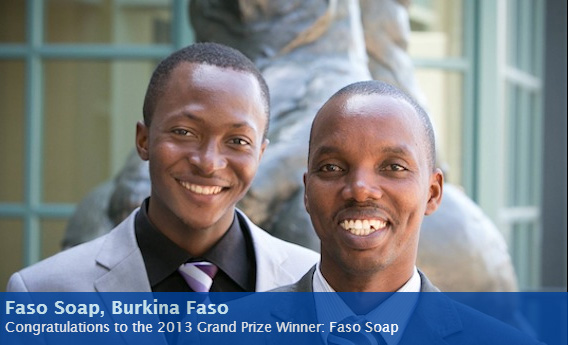
Fasoap Founders Photo courtesy of gsvc.org

Moctar Dembele and Gerard Niyondiko are this year’s grand prize winners of Global Social Venture Competition, an annual competition that awards young entrepreneurs for ideas that can have a positive impact on the world. Their idea “Fasoap” hopes to help prevent the contraction of malaria, a disease that Johns Hopkins Research Institute states over 40% of the world is at risk for, including parts of Africa and India. Malaria a disease that is contracted through bites of infected mosquitoes. Once contracted the medical treatment for the malaria can be very costly, and many of the people who contract it have trouble seeking and paying for such medical care. Continue reading

A Future More Beautiful?

We are completing the architectural designs on several new properties, and this talk had strong resonance on several dimensions:

Architect Thomas Heatherwick shows five recent projects featuring ingenious bio-inspired designs. Some are remakes of the ordinary: a bus, a bridge, a power station … And one is an extraordinary pavilion, the Seed Cathedral, a celebration of growth and light.

Click the image above to go to the TED Architectural Inspiration playlist.

Creative Uses Of Intelligence, Intelligent Uses Of Creativity

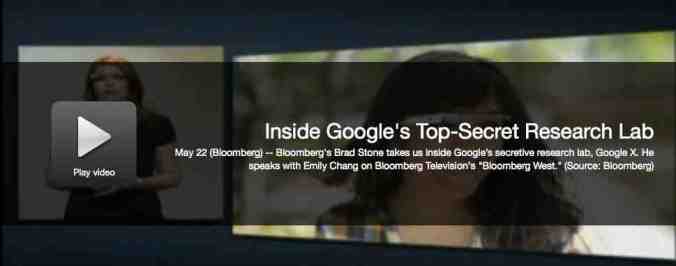
How smart are they? Do they drink alot of coffee?  Find out by clicking the image above, or reading the following from the article accompanying that video:

…Google X seeks to be an heir to the classic research labs, such as the Manhattan Project, which created the first atomic bomb, and Bletchley Park, where code breakers cracked German ciphers and gave birth to modern cryptography. After the war, the spirit of these efforts was captured in pastoral corporate settings: AT&T’s (T) Bell Labs and Xerox (XRX) PARC, for example, became synonymous with breakthroughs (the transistor and the personal computer among them) and the inability of each company to capitalize on them. Continue reading

Sleek, sustainable alternatives to disposable tableware

Single-use tableware create increasing, massive amounts of waste. We eat out more than our parents ever did and our lunches are more and more wasteful. The best way to minimize lunch waste is to pack a lunch and pack only what you can eat, and to keep the restaurant option for that special occasion. The bento-box for lunch is a huge trend right now in Europe, mine is a shiny round box. When I happened to eat at my company’s canteen I noticed the invasion of the shelves by disposable packaging. And when my colleagues and I ate out at any of the pricey parisian eateries, it was more and more difficult to find non-disposable tableware. Here in rural South India, I never once had to say “I’d rather have a real cup please”.  When I go to the staff cafeteria, I pick up my large steel tray and my steel cup from the drainer wash it, fill them up and afterwards I wash ’em put ’em back, so someone else can do the same. Easy peasy. Nothing worth adding to the landfill about.   Continue reading

For The 2012 Design Team

Hey you!  We think of you guys almost every day, and this vimeo made it necessary to stop and post a quick hello.  The property we called Harbour is looking fabulous. And the property called Pearl down at Marari beach is curvaceous in exactly the manner we talked about.  We have heard rumors that one of you got a job in New York.  True or false?  The rest of you?  Stay in touch!

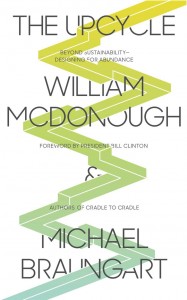
“The Upcycle”, the sequel to “Cradle to cradle”

If you’ve read “Cradle to Cradle” and you come here regularly, chances are you’ll be as excited as I am to learn about the sequel : ‘The Upcycle”.

10 years ago William McDonough and Michael Braungart published one of the most important environmental manifestos of our time.

Based on biomimetics, Cradle to Cradle design is an approach to the design of products and systems. It models human industry on nature’s processes viewing materials as nutrients circulating in healthy, safe metabolisms. The book states that:

“All products can be designed for continuous recovery and reutilization”.

Every product can and should be conceived with the reuse of its materials in mind and every material can and should be conceived to be used again. Just like in nature, nothing goes to waste.

If you have not read it, McDonough’s TED talk Cradle to Cradle design will probably make you want to give it a go.

In their newest book  The Upcycle: Beyond Sustainability – Designing for Abundance,  McDonough and Braungart go further than ‘Cradle to cradle’ saying that we should be ambitious about our role on this planet.

“Industry can do better than “do no harm”: it can actively improve everything with which it comes into contact.” Continue reading

The Wild5Five collection : drawing from Nature

via kerala‘s Wild 5 Five collection was designed to raise awareness about the fauna of the Periyar forest by setting forth 5 wildlife ambassadors. To decide which 5, the team of designers at Thought Factory carried out thorough research on the fauna of the Periyar Tiger Reserve in online journals and books, blogs and libraries. Continue reading

Artisanal Toys

Anker index1.jpg

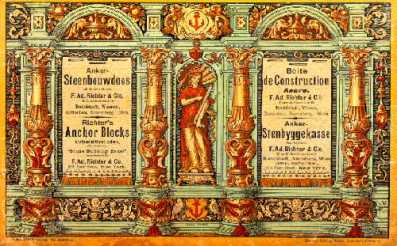
Box Set of Anchor Stone Blocks

In The New Yorker‘s book review last week, Alexandra Lange discussed Amy F. Ogata’s new book “Designing the Creative Child: Playthings and Places in Midcentury America,” focusing on the diverse materials and malleability of toy design over the past several decades.

With increasingly commercialized handmade, all-natural toys on the market, Lange asks, “Do toys need to be as artisanal as our food?”

Nearly two years ago now, Meg wrote about Tegu, wooden magnetic building blocks that support conservation and Hondurans in poverty. Tegu blocks seem to be a perfect blend of the artisanal qualities that wood bring to a toy, while the magnets inside add the opportunity for creativity that simple wooden rectangles and squares might not (unless they have the Lego-like studs that Mokulock does).

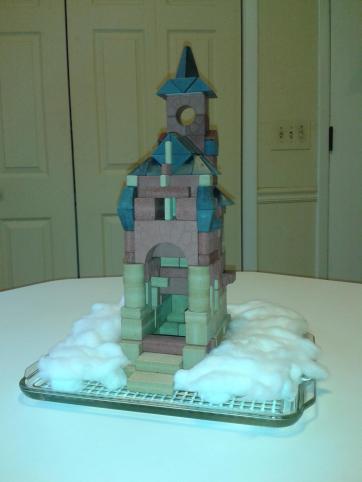
anker-1.jpgWhat about stone toys?

You don’t hear much about those, it seems to me. Heavy to carry around, more dangerous as projectiles, and requiring more machinery to produce, playthings built from stone might seem even more cumbersome and antiquated than wooden toys to a child brought up on shiny plastics and polymers. But the stone Anker/Anchor blocks (a box cover of which is pictured at the top of this post, and one of my own creations from these blocks is here to the right) made from quartz sand, chalk, linseed oil, and color pigment, are still able to merit $200+ asking prices on eBay, although part of their appeal comes from their relative–or perceived–antiqueness. Continue reading

This object will self-destruct in… Shouldn’t the life span of a product be on the package ?

The adaptor for my very sleek, efficient and trendy computer broke down and I am a thousands of kilometers away from the brand store. It was a second-hand computer, I’m a vintage kind of gal you see, so I was not exactly shocked that after 4 years the computer may need care. I  soon realized though that the local resellers did not have a replacement for the plug, only a newer bigger version for a computer no one has yet. So I tried to have the adaptor fixed. It turned out the white well-rounded adaptor was not made to be fixed.

That’s what planned obsolescence is about : designing objects for the bin, if you want to know more about this industrial method you should watch The Story of Stuff.

Are there solutions to shift to a less wasteful consumption ? Governments, France and the European Union included, are currently at work on laws to implement longer guarantee periods, to encourage companies to offer replacement parts for 10 years after manufacture and to inform consumers on the expected longevity of the product.

And the corporate sector ? A growing number is getting organized in a circular economy :

Malayalam font: research and reinvention at Thought Factory Design

One of the things you notice first when you arrive Kerala is the beautifully curvy and mysterious script. The Malayalam alphabet consists of 56 letters. Its rounded form comes from the fact it was primarily handwritten with a sharp point on dried palm leaves. Continue reading

Getting It Done, With Attitude

Richard_Saul_Wurman2

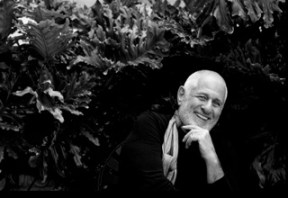
Harvard Magazine writes about a man we have appreciated since hearing him interviewed on a show whose podcasts with some of our heroes we have mentioned in previous posts.  It is easy to perceive Wurman as a world class pain in the neck. Listen to the end of that podcast and you learn that he is self-aware of this. For those who know ourselves to come across as unreasonable, contentious, etc. Wurman is an inspiration worthy of the pantheon:

Described by Fortune magazine as an “intellectual hedonist with a hummingbird mind,” Wurman created and chaired the TED conference from 1984 through 2002, bringing together many of the world’s pathbreaking thinkers to share their ideas and spark discussion.  Continue reading

Vote now for the contest Sarifixation: a redesign challenge !

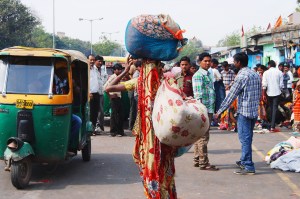
 sari collector on her way to work Ahmedabad, India (January, 2013) via sarifixation.comA sari: five yards of unstitched fabric ingeniously wrapped and draped. Nowadays, with the exhausting rhythm of fashion, tons of unwanted secondhand saris are discarded every day and collected by India’s informal rag-picker community who resell these fabrics. This task has gotten harder and harder to do as India’s GDP per capita rises along with a distaste for secondhand.
Back in 2010, Bijal Shah was working on slum development issues as a fellow of the AIF-Clinton Foundation for the NGO SAATH in Gujarat, India. In a sea of beautiful second hand sari fabric, she had the idea to turn secondhand Indian saris into one of a kind, exciting products. Continue reading

Novague’s Electricity Chair

This slideshow requires JavaScript.

This appears to be the only product of this design firm that has an ecologically sound intent–does it work? we wonder, so please let us know if you know–which you can read about by clicking in the rocking chair link in the “works” section:

Rocking Chair

It has triggered the media interest about me, my studio and our work. Continue reading

Traditional Kerala Houses

traditional house

traditional house

Traditionally the architecture of Kerala has been of a humble scale, an ensemble of simplicity and elegance tailored to suit the climate and culture of the state. The low walls, sloping roofs and projecting eaves of ancient houses were built for protection against heavy rains and intense heat. The architecture of Kerala tells many stories; the way its structures have been designed not only speaks about the artistic and technical capabilities of the craftsmen, but also about the progression and evolution of its society. Continue reading

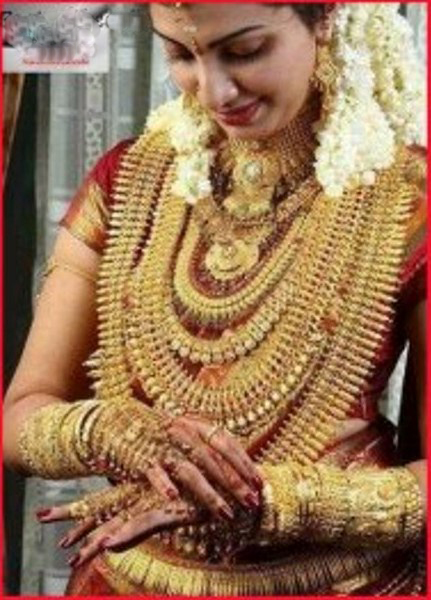
Gold Ornaments

Photo credits: Best Of Kerala

Photo credits: Best Of Kerala

Throughout history the people of Kerala have had a special affinity for gold ornaments compared to people in other parts of India. Keralites love gold and the state is noted for a variety of gold designs made by traditional goldsmiths. Due to the influences of modern-day fashions the current trends are quite different. Continue reading

Le Macchine E Gli Dei

Machines and Gods: Dionysus at MCCM

The Musei Capitolini Centrale Montemartini is an interesting place, to say the least: it combines Italian machinery of mammoth proportions from the Industrial Revolution with ancient Roman statuary. These statues include the monolithic “Fortuna Huiusce Diei” (“Fortune of This Very Day”), various Greek gods (Venus, Dionysus as pictured above, and others), Roman emperors, famous statesmen, and lesser known wealthy citizens; the machinery, on the other hand, consists in titanic pieces of metal that when whirring generated tens of thousands of horsepower. Continue reading