Historian Cross-overs

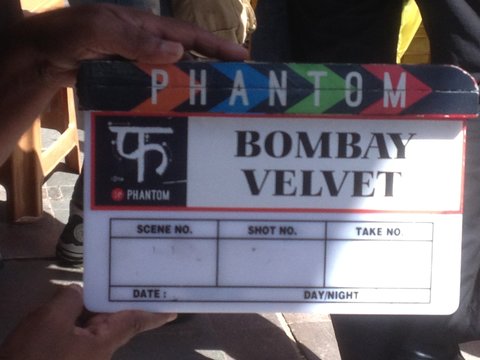
Photo: Gyan Prakash. A clapper board for the film “Bombay Velvet”.

For anyone who has been following Seth’s posts on this site over the last couple years, there has been a notably strong dose of history in many due to his decision to focus his undergraduate studies in environmental history. Summer 2013–an archival deep dive quite distinct from his previous summers in the present reality of Galapagos, Nicaragua, India, Jordan, Chile, Croatia, Costa Rica, France–was spent in Ithaca, his first summer there since the series of summers 1992-1995 (birth year through toddlerhood, when his father was engaged in history-based doctoral dissertation research). Is there a DNA tracer for history appreciation?

This comes to mind reading Gyan Prakash’s account of his experience mixing history and film.  For the many readers of university age who follow Seth’s writings the reasonable question might be what he plans to do with that degree once he graduates.  We expect that in the coming months as he approaches graduation this will start popping up as a theme in his posts. What good is history? Consult Mr. Prakash for inspiration:

On July 28, I flew to Colombo, the capital of Sri Lanka, to join the filmmaker Anurag Kashyap,  the actors Ranbir Kapoor and Anushka Sharma, and a massive crew making the movie “Bombay  Velvet.” In 2004, drawing on my research on the history of Mumbai, I had written the outline for a retro film noir  aimed at capturing the momentous transformation of Mumbai’s milieu of jazz clubs and industrial society in the 1960s. Continue reading
Fruit, Every Day, Everywhere


We appreciate the reminder provided by one of the Atlantic’s many talented writers, about a topic we have had more than passing interest in for the last couple years. Our own previous mention of this film, and the phenomenon make this article no less interesting:

There are more than a thousand banana species in the world, but you’ve probably only ever tasted one. The Cavendish banana is the one we know and love. It’s the one the international banana economy is based on–the only species that’s exported from one country to another, anywhere in the world. But its extinction is coming… Continue reading

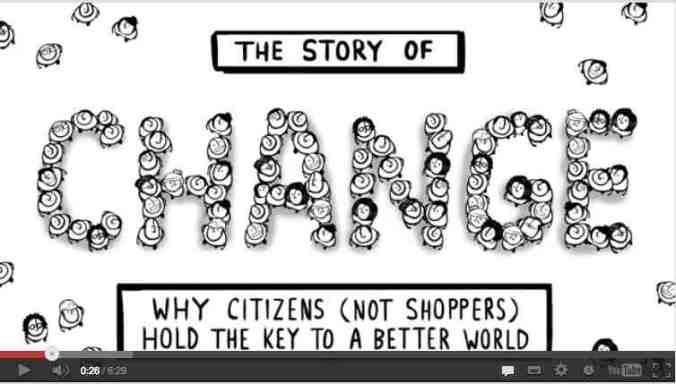
Conservation Is Sometimes The Story Of Change

Click above to go to the location where Cornell University is hosting this brief video by a fellow alum of several Raxa Collective contributors:

Can shopping save the world? The Story of Change urges viewers to put down their credit cards and start exercising their citizen muscles to build a more sustainable, just and fulfilling world. Continue reading

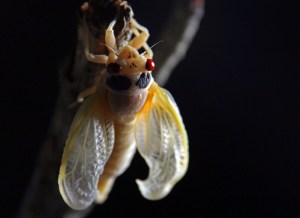
More love for the cicadas

After our post yesterday on the 17-year emergence of periodical cicadas, here is a fantastic body of work on  one of nature’s most intriguing creatures by Samuel Orr. A natural history filmmaker and time-lapse photographer he has been following and filming the various broods of periodical cicadas since 2007 (multiple broods that come out in different years across the eastern part of the United States). After filming some  200 hours of footage, and he is now working towards an hour documentary that focuses on the 17-year periodical cicadas for which he just started a Kickstarter campaign. Continue reading
Documentaries : Black Out by Eva Weber, children searching for the light

Short electricity cuts punctuate the day here in Kerala. As if to remind us, for a few seconds in our daily life, that the electricity fairy can play hard to get. Generators always kick in in an instant though, and that is it. Elsewhere, in Guinea for instance, generators are not there to save the day. 

Only about a fifth of Guinea’s people have access to electricity. With few families able to afford generators, school children have had to get creative to find a place to read, do their homework and study for exams. So every day during exam season, as the sun sets over Conakry, hundreds of children begin a nightly pilgrimage to the  G’bessia International Airport, to petrol stations and parks in wealthier areas of the city, searching for light.

Continue reading

Midway – a transmedia project by Chris Jordan

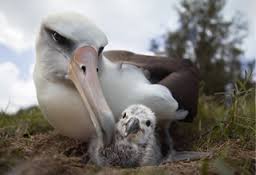
imagesThis morning’s post about the Smithsonian Ocean Portal featuring one of Chris Jordan‘s pictures from his exhibit Midway reminded me to check on his current work on the atoll. On one of the remotest islands on our planet, tens of thousands of albatrosses lie on the ground, their bodies filled with plastic from the Pacific Garbage Patch.

Returning to the island over several years, Chris Jordan and his team witness the cycles of life and death of these birds. He will release in late 2013, his first documentary feature Midway, message from the gyre.

See the  trailer after the jump. Continue reading

Documentaries : The Carbon Rush by Amy Miller

carbon rush credit Amy Miller

I am from Europe where since the Roman conquest forest and civilization were perceived as antagonistic. Silva, the forest, was wild and needed to be tamed, and ager, the man-made open space was culture. So when Western countries debate of reducing deforestation and planting trees to offset carbon emissions, you can bet they mean elsewhere.

We have shops where you can buy a wooden chair but in exchange you pay for a carbon offsetting voucher which will allow for trees to be planted somewhereThat’s the thinking behind the Clean Development Mechanism (CDM), which allows a country with an emission-reduction or emission-limitation commitment under the Kyoto Protocol to implement an emission-reduction project in developing countries. Director Amy Miller went around the world to meet the communities where some of those offsetting projects were implanted.  See the trailer after the jump.

Continue reading

The Bishnois of Rajasthan: The First Environmentalists

Khamu Ram Bishnoi fights against the pollution carried by discarded plastic bags in India since 2005. Every year during Mukam festival, the Bishnois, his community, must bring sand on top of dunes to solidify them and block the advance of the desert.  Lately pilgrims had taken the habit of collecting the sand in plastic bags, causing a widespread pollution in the Thar desert. To protect the landscapes and the animals who regularly ate plastic bags, Khamu Ram started to demonstrate noisily to educate his community about alternatives to plastic bags.

In 2008, he was invited to talk at a series of environmental conferences in  France. When looking at the street dustbins in Paris, Khamu Ram had the idea of a mobile public dustbin.  Since 2010, he installs these dustbins complete with jute bags in public places, during festivals, pilgrimages, and organizes their collection. Last February Khamu Ram Bishnoi received the award of “Extraordinary man of India” in Jaipur, Rajasthan.

If Khamu Ram Bishnoi is an extraordinary man, he’s also part of an extraordinary community. He is a bishnoi. Continue reading

Documentary: Shunte ki pao! (Are you listening), the life of a family of climate refugees in Bangladesh

Shunte ki pao (Are you listening) (c) Beginning Production

When introducing his documentary at the Paris International Documentary festival, Cinéma du Réel, director Kamar Ahmad Simon said to the audience: “Thank you for being here. I will be back at the end of the screening to discuss the film with you. I’d like to know your opinion and to answer any questions you may have, whether you liked the film or not, so I can go forward and progress.” If I had to sum up the response from the audience and jury it would be something like: “Please keep going. We’ll follow.”

Click here for the  trailer  of Shunte Ki Pao ! (Are you listening)

Rakhi and Soumen are a beautiful couple, they are young, in love and are the happy parents of little Rahul. You could say they have it all. That’s if their region of the coastal belts of Bangladesh had not been wiped out by the tidal in 2009. Rakhi and Soumen are climate refugees. A couple among  almost a million homeless, stranded under the open sky on an ancient dyke. They now live in a small village named Sutarkhali. Rakhi and Soumen were from the middle-class, today three years after the tidal, they buy fruits by the unit, fish for their meal and line-up on neverending queues for food aid. And life goes on.  Shunte Ki Pao ! (Are you listening) is not about disaster, it tells how people build a life afterwards. Continue reading

International Environmental Film Festival of Paris: Prize List and Small Gems

The 30th edition of the International Environmental Film Festival closed in Paris a few weeks ago. The selection of rare, beautiful and eye-opening films was a treat so I wanted to share some of the goodness with you.

Grand Prix: The Fruit hunters by Yung Chang

Inspired by Adam Leith Gollner’s book of the same name -that also inspired a post in these pages – Canadian director Yung Chang (Up the Yangtze) enters the world of fans of rare varieties of fruits.  As he follows fruit hunters’ travels and meet-ups, he finds the tree of an almost extinct mango, comes across actor Bill Pullman and interviews many of these unsung heroes of biodiversity. The aesthetics of the cinematography makes those fruits and those characters irresistible. Continue reading

Camera Traps, Unite

This slideshow requires JavaScript.

Sharing technology, data, knowhow.  Pooling resources in the common interest across regions of the tropical world for the sake of biodiversity conservation.  Take a look at what TEAM is doing. A six minute video appears on the Guardian‘s website, providing much-appreciated coverage:

One million images of wildlife in 16 tropical forests around the world have been captured by the Tropical Ecology Assessment and Monitoring (TEAM) Network. Since it began its work in 2008 to monitor changes in wildlife, vegetation and climate, cameras in the the Americas, Africa and Asia have photographed more than 370 different species including elephants, gorillas, chimpanzees, large cats, honey badgers, tapirs and tropical birds Continue reading

Gravity and Grace

Arsenale installation from the Venice Biennale

Arsenale installation from the 2007 Venice Biennale

During a recent visit to the Nelson-Atkins Museum of Art in Kansas City I was struck by a 3-dimensional piece that combines the opulence of a Gustav Klimt painting and the earthy elegance of Ghanian Kente cloth. The comparison isn’t as bizarre as it might appear when it’s understood that its creator is the Ghanian artist El Anatsui. Over a decade ago the sculptor found a bag of thousands of colorful aluminum screw tops discarded by a local distillery. The artist began by cutting and folding the bottle tops into flat pieces then used copper wire to stitch them together, creating patterns inspired by his country’s iconic cloth. Continue reading

Land Fillharmonics

From the collaborative film Waste Land about the catadores (trash pickers) of Jardim Gramacho to the new documentary Trashed, there are film makers and organizations talking about the growing and overpowering problem of waste. Waste Land talks about the transformation of trash into art. The documentary film Landfill Harmonic is about “people transforming trash into music; about love, courage and creativity.”

With the ethos of reuse and recycle there are those who grab the creative spirit along with our attention with programs like the Paraguayan Sonidos de la Tierra (Saving Children Through Music) and Favio Chávez, director of the orchestra of recycled instruments on the Catuera Landfill on the banks of the Paraguay River. Continue reading

If You Happen To Be In Hyderabad

Inviting film to the table seems like a powerful, creative idea:

The Ministry of Environment and Forests, Government of India, and the National Biodiversity Authority are hosting an International Biodiversity Film Festival and Forum in Hyderabad as part of COP-11 in association with CMS Environment. Continue reading

A Man, A Plan, A Grain of Sand

Newspaper editor Brendon Grimshaw bought an “abandoned” Seychelle island in the 1960s and spent the rest of his life lovingly creating the habitat that is now Moyenne Island National Park, part of the Ste. Anne Marine National Park.

Together with a Seychellois named Rene Lafortune Grimshaw transformed the island, planting 16,000 trees by hand, including native hard woods such as mahogany.  The trees attracted birds (some 2,000 make the island their home), and Grimshaw himself reintroduced over 100 giant tortoises, native to the Seychelles but almost hunted to extinction in the early 1900s. The labor of love resulted in Moyenne island now holding more than two thirds of all endemic plants to the Seychelles as well as the Seychelles government standing firm against the multiple advances offering millions of dollars to”develop” the island after Grimshaw’s death. Continue reading

A Learning Laboratory (Stop Motion Video!)

Yesterday, Jonathon, Siobhan, Milo, and I moved into one of the new Raxa Collective properties under development. As the four of us huddled silently under our covers, the backwaters of Kerala’s nighttime accompanied Jonathon’s ghost stories…

Instead of spooky tales, though, today I want to share with you another story Jonathon narrates, Raxa Collective presents “A Learning Laboratory.” It’s a short video, Jonathon (narrator), Sunnie (illustrator), Siobhan (director), and I (producer) put together with the help of all the staff and summer interns to highlight some of the best anecdotes of how Raxa Collective’s Cardamom County ecolodge has acted as a “learning laboratory” for its staff, international trainees, and summer interns.

Enjoy!

5 Lenses For Every Vacation

Hey guys,

All of us photobugs and travel-junkies have struggled with the age-old question: which lens should I bring on my River Escapes backwaters adventure or my Roman holiday or my trip to the moon?

As a casual photographer, I’m not crazy about specs. I don’t get the numbers and technical terms! JUST TELL IT TO ME STRAIGHT! I know there are people out there who are like me, so Ben, Milo, and I will make it as easy as possible to understand which lens YOU need to bring on your next vacation! We’d also love to know what YOU brought on your last vacation!

See which of description fits you best:

  1. I’m out to shoot wildlife. Tell me what I need to know.
  2. I love architecture and the built world. What should I bring with me?
  3. I’m a tourist who’s going to stick out like a sore thumb, but I really want to capture candid portraits of interesting people– help!
  4. I’m going to a naturey place filled with dust/humidity/dirt/whatever and I don’t want to constantly change my lens. What’s the best daily walk-around lens?
  5. I’m going on a service trip and I’ll be working on a construction site. How do I make it look epic?
Here’s what we’ll be introducing from our private collections today:
  1. Canon EF 70-200mm f/2.8 L IS USM with 2x extender
  2. Canon EF 70-300mm f/4-5.6 IS USM
  3. Canon EF 50mm f/1.8
  4. Canon EF-S 10-22mm f/3.5-4.5 USM
  5. Canon EF-S 18-55mm f/3.5-5.6 IS

ALRIGHT, I’M READY!! NOW SHOW ME THE 5 LENSES I SHOULD BRING ON MY NEXT VACATION!!!

Continue reading

The Patel Phenomenon

In our organization, which includes more than one American working in lodging establishments in India, a sociological investigation like this catches the eye.  Click the image to the left for a podcasted author interview.  A few fun facts:

– At least 1 out of 2 motels are owned by Indian-Americans.

– Out of those Indian-owned motels, 70 percent are owned by Gujaratis, people with roots in the western Indian state of Gujarat.

– Of those Gujaratis, three-fourths share the last name Patel. There’s even a name for these overnight establishments: “Patel Motels.”

Telling Story

Click the image to the left for a five minute view into the art of story-telling in the words of one our own age’s Homeric wonders (thanks to Atlantic Monthly).  The team tasked with capturing and explaining his craft is thoughtfully artful:
His signature style is so well known that Apple’s iMovie has a function — a slow zoom on a still image — called “the Ken Burns effect.” For a documentary filmmaker, it’s hard to imagine a more intimidating project than making a documentary film about Ken Burns.