…takes a warning sign from the depths of the car world and reuses it to create a messages that instructs us to step away from our vehicles and go by foot instead.
“The visual language of obedience demands our attention and compliance,” says Harry. “Maybe the car industry should follow its own rules.”
We should recycle, re-use, waste less just because. Occasionally there are distracting stories about other reasons for these more eco-efficient behaviors. A copy of the USA Declaration Of Independence found in a “junk” sale–that sort of thing. These rare occurrences just make it more fun to do the green thing:
When a scrap metal dealer from U.S. Midwest bought a golden ornament at a junk market, it never crossed his mind that he was the owner of a $20 million Faberge egg hailing from the court of imperial Russia.
In a mystery fit for the tumultuous history of Russia’s ostentatious elite, the 8-cm (3-inch) golden egg was spirited out of St Petersburg after the 1917 Bolshevik Revolution and then disappeared for decades in the United States. Continue reading →
Bosch is testing the viability of electric cars in Singapore. Photograph: Samuel He/Bosch
Normally we avoid articles that look strictly like press releases promoting a PR firm’s client. However, in this case, a couple of exceptions were allowed. First, we like the storyline because of its relevance to three years’ worth of posts on our site. Second, there is not one iota of obnoxious flimflam, which is what normally forces us to avoid press releases.
But, an additional component to this one really made the difference. Nearly one year ago two of Raxa Collective’s contributors had the opportunity to visit Duke University and sit in the office of the founder and director of their Center for Energy, Development and the Global Environment. A conversation that was meant to last 15 minutes continued for hours that day, because of the credible commitment that Center and its leadership are making to ensure that future business leaders see sustainability as serious business. So, we gladly pass this newsworthy article on:
When it comes to sustainability ambitions, Singapore might take the prize. The island nation, which currently relies on neighboring Malaysia for its water, is aiming for water self-sufficiency by 2050, with 55% of its water needs met via recycled water and 25% from seawater desalination. Continue reading →
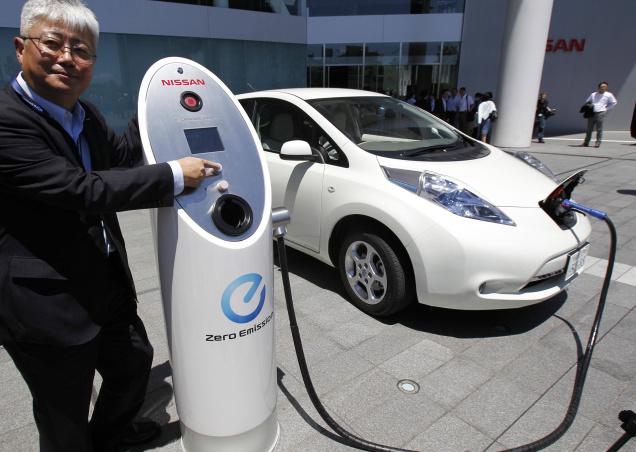
A Nissan Motor Co. executive demonstrating quick charge of a Nissan Leaf by a solar-assisted EV charging system at Nissan’s global headquarters in Yokohama. File photo.
The Himalayan kingdom of Bhutan has tapped Nissan Motor Co to supply electric cars for its taxis and government fleet, hoping to reduce reliance on imported oil.
Under the agreement announced on Friday, Nissan will supply its Leaf electric car and set up charging stations in Bhutan. Continue reading →
(From left) Incandescent, CFL and LED light bulbs. Many people are finding that choosing the right light bulb has a steep learning curve.
From National Public Radio, an update to the ongoing knowhow required to change a lightbulb efficiently (click the image above to go to the podcast):
Buying a light bulb used to be a no-brainer. Now it’s a brain teaser; the transition to more energy-efficient lighting means choosing from a dazzling array of products.
We’ve long identified bulbs by their wattage, but that is actually a measure of electricity, not the brightness of a bulb. The amount of light a bulb generates is measured in lumens.
An incandescent 60-watt bulb, for example, gives off 800 lumens of light. And LED bulbs, which are more energy efficient than their incandescent counterparts, can deliver the same amount of light using as little as 10 watts.
The Environmental Protection Agency says that if every household replaced just one incandescent bulb with an “Energy Star”-rated LED or CFL (compact fluorescent), Americans would save close to $700 million per year in energy costs.
But with so many types of bulbs with different price points and life spans now on the market, many consumers are confused.
When we asked for your questions about light bulbs, we got an earful. So we called in Noah Horowitz, director of the Natural Resources Defense Council’s Center for Energy Efficiency, to answer your most frequently asked questions. Continue reading →
In heavily wooded New England, forests are dynamic ecosystems that support a range of plants and animals, and their ability to soak up carbon also makes them an important piece of the climate-change puzzle. How changes to forests over time affect the flow of carbon through the atmosphere has long been a focus of researchers at the 3,700-acre Harvard Forest. Now, three wood-fired boilers are providing those scientists with a new tool to expand their understanding. Continue reading →
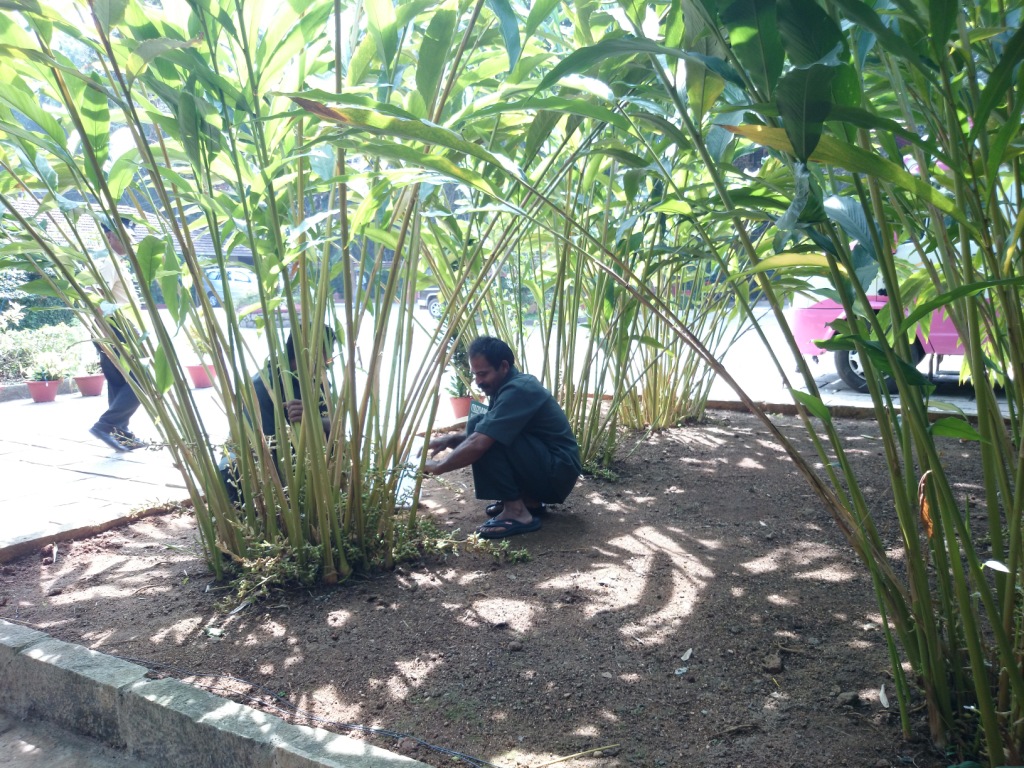
At Cardamom County we believe in organically grown vegetables and spices to provide our guests with the best produce that can be used to make the most sumptuous meals. We grow organic vegetables, fruits, spices and even eggs from our own farm. These pictures show our cardamom being harvested by staff members. Continue reading →
People typically wash their hands seven times a day in the United States, but they do it at a far higher temperature than is necessary to kill germs, a new study says. The energy waste is equivalent to the fuel use of a small country. PHOTOGRAPH BY GAETAN BALLY/KEYSTONE/CORBIS
Which small country are they referring to? Does it matter? No. Just read on to be awed by the news that something you may have thought to be important to your health is actually not; and worse, it is costly to the earth’s health:
It’s cold and flu season, when many people are concerned about avoiding germs. But forget what you think you know about hand washing, say researchers at Vanderbilt University. Chances are good that how you clean up is not helping you stay healthy; it is helping to make the planet sick. Continue reading →
Mostly, when we have been thinking of Middlebury lately, it has been in relation to the College there, and one of its favorite sons. But there are plenty of other reasons for a visit:
InSite is a home for local living. Our design was inspired by our hometown of Middlebury, VT where the community is friendly, approachable, and engaging. Team Middlebury believes that towns such as ours can contribute to social, economic, and environmental sustainability. Continue reading →
The adaptor for my very sleek, efficient and trendy computer broke down and I am a thousands of kilometers away from the brand store. It was a second-hand computer, I’m a vintage kind of gal you see, so I was not exactly shocked that after 4 years the computer may need care. I soon realized though that the local resellers did not have a replacement for the plug, only a newer bigger version for a computer no one has yet. So I tried to have the adaptor fixed. It turned out the white well-rounded adaptor was not made to be fixed.
That’s what planned obsolescence is about : designing objects for the bin, if you want to know more about this industrial method you should watch The Story of Stuff.
Are there solutions to shift to a less wasteful consumption ? Governments, France and the European Union included, are currently at work on laws to implement longer guarantee periods, to encourage companies to offer replacement parts for 10 years after manufacture and to inform consumers on the expected longevity of the product.
And the corporate sector ? A growing number is getting organized in a circular economy :
Schematic showing how buildings are disassembled from the inside out. Image via Taisei Corp.
As Raxa Collective continues its work on a historic waterfront building in the Mattancherry section of Fort Cochin’s harbor–currently in the demolition phase of a portion of the property that was built in recent years–we have been doing our homework on methods that make the process as “clean” as possible. We came across EarthTechling, oriented to consumers rather than techno-professionals but with broad and deep coverage of clean tech. This brief article is of interest to our demolition task:
We all know about ways to build greener more energy-efficient buildings, but what about the other side of this coin? Is there such a thing as “green demolition”? Many of today’s small buildings are torn down slowly with wrecking balls and earth-moving equipment. Taller structures are more economically brought down by explosives and gravity, becoming eye-popping media events that bring out the destructive inner-three-year-old in all of us. Continue reading →
In a story first run in the Wall Street Journal, and picked up by this fantastic cleantech news aggregator, surprising news about the pace of decrease in demand for the automobile in Europe:
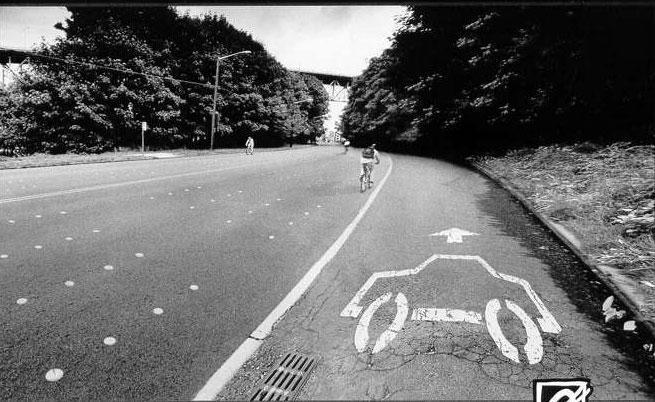
Increased environmental awareness does encourage some people to drive less, and travel by foot, bicycle, or public transit more often.
In 2007, 16 million cars were registered in the European Union, however, that many registrations is unlikely to happen again, and may instead drop down to 11 million registrations, which is equivalent to that of 1993 before the number of registrations stabilizes.
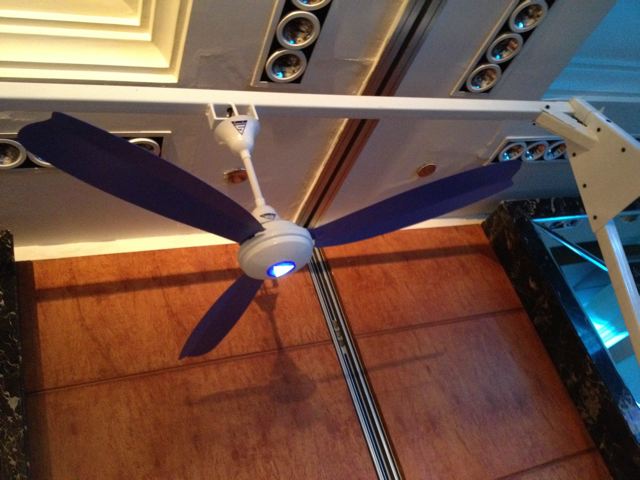
The Superfan, complete with colorful blades and LED power indicator. Photo credit: David Ferris
One of the least likely publications to cover ecological or social issues with any true concern, to our pleasant surprise occasionally runs an interesting story like this one (click the image above to go to the source):
…The fan is the first venture into consumer products for Versa Drives, a Indian manufacturer of alternating-current drives. Managing Director Sundar Muruganandhan said that the Superfan uses 35 watts of electricity in a country where the standard efficient fan is rated at 75 watts. In fact, Muruganandhan said, the fan blows past the country’s existing ratings system so thoroughly that a new index might be required. Continue reading →
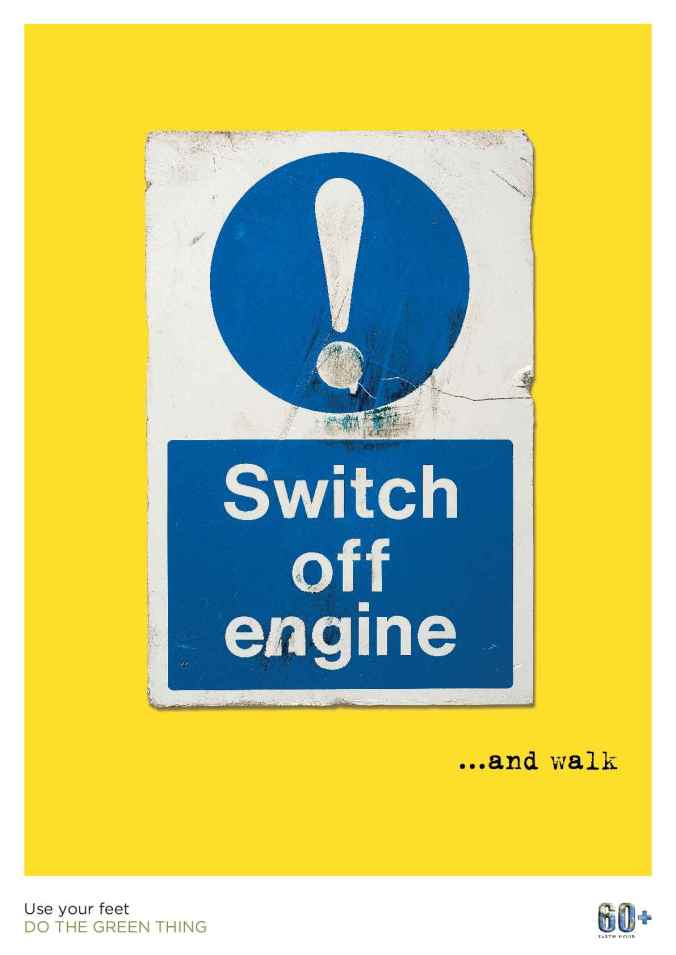 Continuing our promotion of Do The Green Thing’s campaign on behalf of WWF for Earth Hour, we point you to Switch Off Engine by Harry Pearce in which he:




 Organikos