Renewable Energy Record Set

3500 (7).jpg

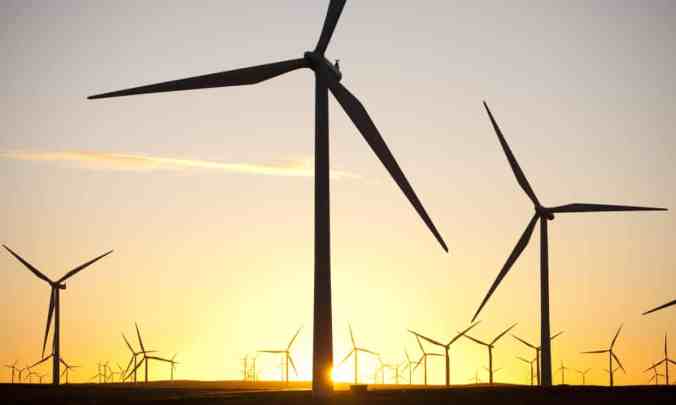
E.ON’s Rampion windfarm in the English Channel, which can power 350,000 homes. Photograph: Darren Cool/E.On/PA

Thanks to Adam Vaughan and the Guardian for this news:

Windy weather carries Britain to renewable energy record

Windfarms supplied third of UK’s electricity this week, with output hitting 14.9GW high

Storm Diana brought travel chaos to road, rail and airports, but the clouds did have a silver lining: the strong winds helped set a renewable energy record.

Windfarms supplied about a third of the UK’s electricity between 6pm and 6.30pm on Wednesday, a time of peak energy demand. Output hit a high of 14.9GW, beating a previous record of 14.5GW. Continue reading

The Technology Of Negative Emissions

ClimeWorks_20170510DSC_6501_PhotosbyJuliaDunlop_web2.jpg

A direct air capture facility in Zurich, created by the Swiss-based technology company ClimeWorks. JULIA DUNLOP / CLIMEWORKS

I was not aware that Elizabeth Kolbert has been writing for Yale e360 for the entire time we have been linking to her New Yorker work on this platform. And then some, because she started publishing there ten years ago. This is her 17th publication for Yale e360 and it can help a layperson understand in a relatively short read whether technology has any chance of accelerating our progress on climate change mitigation:

Climate Solutions: Is It Feasible to Remove Enough CO2 from the Air?

A U.S. scientific panel reports that technologies that take CO2 out of the atmosphere could be a significant part of a strategy to mitigate global warming. In an e360 interview, Stephen Pacala, the panel’s chairman, discusses how these fast-developing technologies are becoming increasingly viable.

Is there still time to avoid runaway climate change? To a large degree, the answer depends on the feasibility of “negative emissions” — techniques or technologies that suck CO2 out of the air. In the latest report from the Intergovernmental Panel on Climate Change (IPCC), all scenarios for limiting warming to 1.5 degrees Celsius depend on negative emissions technologies, or NETs. Most 2-degree scenarios also rely on negative emissions; many call for removing billions of tons of CO2 per year by mid-century.

NETs_NationalAcademies_web.jpg

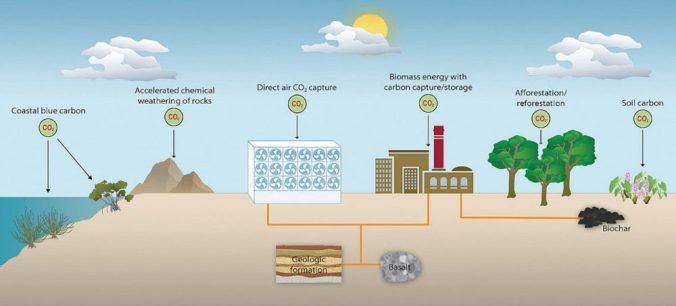
Negative Emissions Technologies (NETs) range from low-tech, such as planting more trees, to more high-tech options, such as developing machines to scrub CO2 from the air. NATIONAL ACADEMY OF SCIENCES, 2018

Yet most NETs remain either untested or unproved. To help bridge this gap, the National Academies convened a panel of scientists and asked it to propose a research agenda. The panel considered several possible techniques, ranging from the low-tech — planting more trees — to the high-tech — developing machines to scrub CO2 from the sky. It also looked at a hybrid technology that has become known as bioenergy with carbon capture and storage, or BECCS. The panel recommended several billion dollars be directed to research on NETs. Such technologies, it suggested, ought to be viewed as a “component of the mitigation portfolio,” rather than as a futuristic, last-ditch effort to reduce atmospheric CO2.

Pacala_IsometricStudios_web.jpg

Stephen Pacala. CREDIT: ISOMETRIC STUDIOS

Stephen Pacala, a professor of ecology and evolutionary biology at Princeton University, chaired the panel. In an interview with Yale Environment 360, he talks about why NETs are needed, what should be done to advance them, and why he believes that “direct air capture” technologies could come into widespread use within the next decade. Continue reading

Eliot Coleman’s New Organic Grower At 30

UrbFarm.jpgI have been linking to stories about urban farming more frequently, and it has been an interest since Milo first posted this during our second year living in India. A resource I have for staying attuned is the Urban Farm podcast. The most recent episode is about one of the pioneers of organic farming, and depending on your interests may be worth a listen. The images in the video above will help you decide whether listening to the podcast is a good investment of time. Click the image of the book, which he talks about in this episode, to go to the publisher’s description and click the banner immediately below to go to the farm’s website:

OrgGrowF.jpg

OrgGrow

Eliot has over fifty years’ experience in all aspects of organic farming, including field vegetables, greenhouse vegetables, rotational grazing of cattle and sheep, and range poultry. He is the author of The New Organic GrowerFour-Season Harvest,The Winter Harvest Handbook and an instructional workshop DVD called Year-Round Vegetable Production with Eliot Coleman – all published through our friends at Chelsea Green.

Eliot and his wife, Barbara Damrosch, operate a commercial year-round market garden and run horticultural research projects at their farm called Four Season Farm in Harborside, Maine.

In This Podcast:

In 1988, Eliot Coleman literally wrote the book on being an organic grower and has been an invaluable resource for organic gardeners and farmers for three decades. He only started growing food because it sounded like an adventure; and he learned how through books and making friends with farmers around the world. We learn who inspired and taught him, how he uses livestock on his farm, how he virtually moved his farm 500 miles to the south for the winter, and more. Continue reading

A Big Step To Reduce Plastic Pollution


gettyimages-984354822-1cd9174e52fd0dc14cf00ca4ec859b0ee256e09a-s1300-c85.jpg

Volunteers cleared trash from the banks of the River Thames during the annual Big Bottle Count in London last month. Credit Matt Dunham/Associated Press

Thanks to Ceylan Yeginsu and the New York Times for this news:

European Parliament Approves Ban on Single-Use Plastics

merlin_145766505_d571d0f9-8739-4a8d-b1cb-691bce23acf5-jumbo.jpg

Under the proposal, 10 single-use plastics that most often end up in the ocean will be prohibited in the European Union. Credit Rafael Marchante/Reuters

LONDON — The European Parliament has overwhelmingly approved a ban on single-use plastics such as straws, plates, cutlery and cotton-swab sticks in Europe by 2021, joining a global shift as environmentalists emphasize the urgency of halting the use of materials that are detrimental to the planet.

Under the proposal, approved on a vote of 571 to 53 on Wednesday, 10 single-use plastics that most often end up in the ocean will be prohibited in the European Union, as well as oxo-degradable plastics, such as bags or fast-food container packaging. Continue reading

Keeping Track Of Renewables

Kormann-Prop-127.jpg

Despite the rapid decline in the cost of solar-energy technology and battery storage, Arizona gets only six per cent of its electricity from solar. Photograph by Joshua Lott / Bloomberg / Getty

Thanks to Carolyn Kormann, making her fifth appearance since early 2016 in our pages, including this recent item that I particularly favored, for the article below that helps us understand what is happening with renewable energy these days in the USA. It is easy to forget, amidst all the noise of a federal government working to deregulate and reduce environmental protection, that important work continues:

The Battle for Solar Energy in the Country’s Sunniest State

In late September, the Heartland Institute, a libertarian think tank that receives donations from fossil-fuel companies, published a blog post titled “California Billionaire’s Renewable Energy Initiative Makes Arizona Ballot.” The billionaire in question was Tom Steyer, whose year-long effort to pass Proposition 127, an amendment to Arizona’s constitution that would require power companies to generate fifty per cent of their electricity from renewable sources by 2030, has faced aggressive opposition from the state’s largest utility, Arizona Public Service, or A.P.S. The blog post lamented a failed lawsuit filed by Arizonans for Affordable Energy, a political-action committee funded by A.P.S.’s parent company, to keep Prop 127 off the ballot, and quoted several opponents who believed the measure, now up for a vote in November, would be a costly mistake. “Prop 127 would tie Arizona’s future to technologies that do not deliver baseload electricity,” Mark Finchem, a Republican state representative, said, “and are arguably worse for the environment as a whole than the dependable technologies we already have.” The photograph accompanying the post depicted a wind-turbine farm, and, in the foreground, a dead bald eagle.

Arizona is the sunniest state in the country, with more than three hundred bluebird days per year. It is also projected to endure an additional month of hundred-degree days in the coming decades owing to climate change. Yet, despite the rapid decline in the cost of solar-energy technology and battery storage—to the point that, as an A.P.S. director told me, it now frequently outbids fossil fuels, even natural gas—in 2017, Arizona generated only six per cent of its electricity from solar, according to the ballot initiative’s advocates. The state currently requires utilities to generate eight per cent of their power from sources like solar and wind, scaling up to fifteen per cent by 2025. Natural gas, the largest source of Arizona’s net electricity generation, is imported from out of state. “Our most abundant resource in Arizona is our sunshine,” D. J. Quinlan, a spokesman for Clean Energy for a Healthy Arizona, the Phoenix-based political-action committee that Steyer is funding, said. “We need a nationwide transition to renewables. One of the first places we should be doing it is where it’s most efficient and cost-effective, and that’s here.” Continue reading

Scotland, Land Of Regret-Reducing Renewable Resources

5329

Scottish Power’s Whitelee windfarm on Eaglesham moor, just south of Glasgow. Photograph: Global Warming Images/REX

My daily contribution to this platform is a habit vaguely in the tradition of meditation–finding something each day that is worthy of gratitude, or otherwise worthy of sharing with friends, family, and anyone else who cares to listen. Because of the good fortune I have had to visit and work in many amazing places, it is important to me to never regret the places where I still have not been. Scotland is one of those places that, if I were a regretter, I would be feeling it now. I owe that place a visit (even if the company name sounds like a Bond villain):

Scottish Power shifts to 100% wind generation after £700m Drax sale

Big six energy firm drops fossil fuels for generation and say cheap green energy is the future

Scottish Power has ditched fossil fuels for electricity generation and switched to 100% wind power, by selling off its last remaining gas power stations to Drax for more than £700m.

Iberdrola, Scottish Power’s Spanish parent company, said the move was part of its strategy to tackle climate change and would free it up to invest in renewables and power grids in the UK.

The deal also marks a significant expansion and diversification for Drax, whose main business is a coal- and biomass-fired power station in North Yorkshire. Continue reading

Teaching Lego To Play Well By Eliminating Plastic

merlin_137674503_7ad52e7b-462c-4daf-897b-9940119cd67b-jumbo.jpg

Tim Brooks, Lego’s vice president for environmental responsibility, says the company emits about a million tons of carbon dioxide each year. Credit Carsten Snejbjerg for The New York Times

For a company, and a product, that has been a part of so many lives for so long–and especially one whose name means to play well, it is still a shock to be reminded of their carbon footprint. And three years after first reading about their commitment, it is good to read details of their plan and progress:

Lego Wants to Completely Remake Its Toy Bricks (Without Anyone Noticing)

merlin_137674470_486eb273-ba3b-4808-857f-956b9cb7f533-jumbo.jpg

At Lego, petroleum-based plastics aren’t the packaging, they’re the product — and the bricks making up these dinosaurs have barely changed in more than 50 years. Credit Carsten Snejbjerg for The New York Times

BILLUND, Denmark — At the heart of this town lies a building that is a veritable temple to the area’s most famous creation, the humble Lego brick. It is filled with complex creations, from a 50-foot tree to a collection of multicolored dinosaurs, all of them built with a product that has barely changed in more than 50 years.

A short walk away in its research lab, though, Lego is trying to refashion the product it is best known for: It wants to eliminate its dependence on petroleum-based plastics, and build its toys entirely from plant-based or recycled materials by 2030. Continue reading

Behavioral Science & Green Innovation

5749.jpg

Green registration plates are already in use in China. Photograph: Roman Pilipey/EPA-EFE/Rex/Shutterstock

The UK, whatever other challenges it may be experiencing, is proving itself creatively committed to green innovation:

Green number plates ‘could boost sales of electric cars’ in UK

Behavioural insights unit proposes new colour for registration plates to help ‘normalise the idea of clean vehicles’

A Time and Place for the Public Service Announcement

One of the many Advocacy Priorities of the National Association of Clean Water Agencies (NACWA)

While indoor plumbing is more or less taken for granted, not everything that can flush, should. Thanks to the NYTimes for clarifying the basics.

Should I Flush It? Most Often, the Answer Is No

It might seem harmless at first: a thread of dental floss tossed in the toilet, a contact lens swirling down the drain of the bathroom sink. But even the tiniest of items can contaminate waterways.

The small fragments of plastic contact lenses are believed to be contributing to the growing problem of microplastic pollution. Pharmaceuticals, which are also frequently flushed down the drain, have been found in our drinking water, and the consequences are not fully known.

Larger products like wipes and tampons are also clogging sewer systems, resulting in billions of dollars in maintenance and repair costs.

Wondering what’s safe to flush or wash down the drain? We spoke with several wastewater management experts who explained why many frequently disposed items belong in a garbage can, not the toilet. Continue reading

Europe And The Race To Car Electrification

ElectricCars.jpg

Thanks to Adam Vaughan and the Guardian for this update on this race:

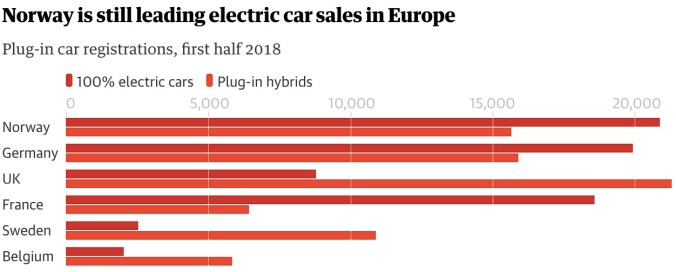
Electric cars exceed 1m in Europe as sales soar by more than 40%

Milestone reached nearly a year after China but ahead of the US

3963.jpg

Between January and June around 195,000 plug-in cars were sold across the EU, Iceland, Liechtenstein, Norway and Switzerland. Photograph: Miles Willis/Getty Images for Go Ultra Low

There are now more than a million electric cars in Europe after sales soared by more than 40% in the first half of the year, new figures reveal.

Europe hit the milestone nearly a year after China, which has a much larger car market, but ahead of the US, which is expected to reach the landmark later this year driven by the appetite for Tesla’s latest model.

Between January and June around 195,000 plug-in cars were sold across the EU, Iceland, Liechtenstein, Norway and Switzerland, a 42% increase on the same period a year before. Continue reading

Off Halogen, On With LED

Switching to LEDs has been estimated to save consumers up to £112 a year. Photograph: imageBroker/Rex/Shutterstock

Arthur Neslen at the Guardian shares the news, in Europe to ban halogen lightbulbs, that we have been waiting to hear for years:

After nearly 60 years of lighting homes halogens will be replaced with more energy efficient LEDs

After nearly 60 years of brightening our homes and streets, halogen lightbulbs will finally be banned across Europe on 1 September.

The lights will dim gradually for halogen. Remaining stocks may still be sold, and capsules, linear and low voltage incandescents used in oven lights will be exempted. But a continent-wide switchover to light-emitting diodes (LEDs) is underway that will slash emissions and energy bills, according to industry, campaigners and experts.

LEDs consume five times less energy than halogen bulbs and their phase-out will prevent more than 15m tonnes of carbon emissions a year, an amount equal to Portugal’s annual electricity usage. Continue reading

Vegetarianism For Footprint Reduction

3000 (2).jpg

Replacing 50% of meat consumption with a vegetarian diet would push back the overshoot date by five days. Photograph: Scott Olson/Getty

Our vegetarian diet ambitions are strengthening for all kinds of reasons. Footprint reduction among them. Thanks to our colleague Mathis Wackernagel for his regular reminders of the anything but regular footprint growth humanity imposes on the planet each year:

Earth’s resources consumed in ever greater destructive volumes

Study says the date by which we consume a year’s worth of resources is arriving faster

Humanity is devouring our planet’s resources in increasingly destructive volumes, according to a new study that reveals we have consumed a year’s worth of carbon, food, water, fibre, land and timber in a record 212 days.

As a result, the Earth Overshoot Day – which marks the point at which consumption exceeds the capacity of nature to regenerate – has moved forward two days to 1 August, the earliest date ever recorded.

Earth Overshoot Day falls on 1 August this year – marking the point at which consumption exceeds the capacity of nature to regenerate

OverShot.jpg

Guardian graphic. Source: Overshootday.org

To maintain our current appetite for resources, we would need the equivalent of 1.7 Earths, according to Global Footprint Network, an international research organisation that makes an annual assessment of how far humankind is falling into ecological debt. Continue reading

Other Farms Of The Future

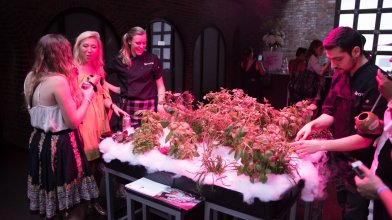
170822-mms-a1-hoegaarden-event-brooklyn-08824.jpgYou can click on any of these photos to go to their source, and they are inserted here because the article that brought this farm (?), this company, this phenomenon to my attention did not have any images. It was good to have only the New Yorker words to start with because, like all good writing, it forced me to imagine what this might look like. However, my imagination fell short.

Out of the Ordinary

Farm+One.jpegFarm.One is New York City’s grower of rare herbs, edible flowers and microgreens for some of the best restaurants in the city. Our Edible Bar and Tasting Plates make these fresh, exciting ingredients available for the first time in an event setting. Guests can discover botanical ingredients for the first time, with the expert guidance of our farm team. Taste ingredients on their own, or paired with cocktails and other beverages, for a colorful, flavorful and aromatic experience like no other.

VS_Inspiration_at_Farm.One-9124This short piece by Anna Russell below continues our stream of thought about the farm of the future, and takes it into very unexpected territory. Hydroponics and urban farming have been featured many times in these pages over the years so that is not what has our attention. It is the mixing of art and agriculture that gets us thinking outside the box:

Tribeca’s Hydroponic Underground

Chic stems and tender greens thrive deep below Worth Street on the rolling shelves of Farm.One.

170822-mms-a1-hoegaarden-event-brooklyn-08817.jpgHydroponics are a slippery slope. You might find yourself, one Sunday morning, at a Santa Monica farmers’ market, loitering among the apples, say. You come across a bunch of papalo, a leafy herb native to central Mexico, and toss it in your mouth (your tastes are expansive; a papalo leaf is nothing to you) and wham!: a brand-new flavor. Suddenly, you’re up at all hours, watching vertical-farming videos on YouTube, ordering seed packets from eBay, buying rhizomes—rhizomes!—and worrying about spider mites. You get some fennel crowns and a pouch of parasitic wasps, and you’re on your way. Continue reading

Helping Plants Make Their Own Nitrogen

img_20171013_133748571_hdr-3-bab7de57d14653c47b66cf3afc9fa586b3731b9c-s1400-c85.jpg

Poplar trees at the Snoqualmie River in Washington State. The river is fed mostly by snow melt and is extremely low in nitrogen, yet the trees thrive thanks to endophytes. Sharon Doty

Thanks to our friends at the salt, and National Public Radio (USA) for this:

Microbial Magic Could Help Slash Your Dinner’s Carbon Footprint

m1_zstack4-1-18cd73a7dc27353a90c3aeda47317503af40edca-s1400-c85.jpg

Endophytes are microbes that live inside plants — the ones tagged with a fluorescent dye in this image are found in poplars. The microbes gather nitrogen from the air, turning it into a form plants can use, a process called nitrogen fixation. Researchers are looking at how these microbes could be used to help crops like rice and corn make their own fertilizer.
Sam Scharffenberger

If you’re interested in sustainability, you’ve probably thought about how to reduce your carbon footprint, from how you fuel your car to how you heat your home. But what about carbon emissions from growing the food you eat?

Most of the crops in the United States are grown using chemical fertilizer – a lot of it: American farmers used over 24 billion pounds of nitrogen fertilizer in 2011. And making nitrogen fertilizer requires fossil fuels like natural gas or coal. Continue reading

Agroecology, A Guiding Principle For Food Entrepreneurship

Ryan Donnell for The New York Times

Our attention has been on food entrepreneurship recently, and here we continue the thread. With agroecology, a new word and robust concept, we have new food for thought. And for that we thank one of our favorite food writers, who we have relied since the first year of this platform. Many of the food stories we have linked to over the years have been authored by him. A year ago we linked to this story, which marked the first time we noted him as an activist. We expect, after reading Bringing Farming Back to Nature, which he co-authored with Daniel Moss, that he has found his new calling:

Workers in a paddy field in the state of Andhra Pradesh, India. Credit Noah Seelam/Agence France-Presse — Getty Images

Farming the land as if nature doesn’t matter has been the model for much of the Western world’s food production system for at least the past 75 years. The results haven’t been pretty: depleted soil, chemically fouled waters, true family farms all but eliminated, a worsening of public health and more. But an approach that combines innovation and tradition has emerged, one that could transform the way we grow food. It’s called agroecology, and it places ecological science at the center of agriculture. It’s a scrappy movement that’s taking off globally. Continue reading

Rise Products Reduce Waste


merlin_136683216_717972aa-9b50-4c20-a0e1-7823ac25f3e8-jumbo.jpg

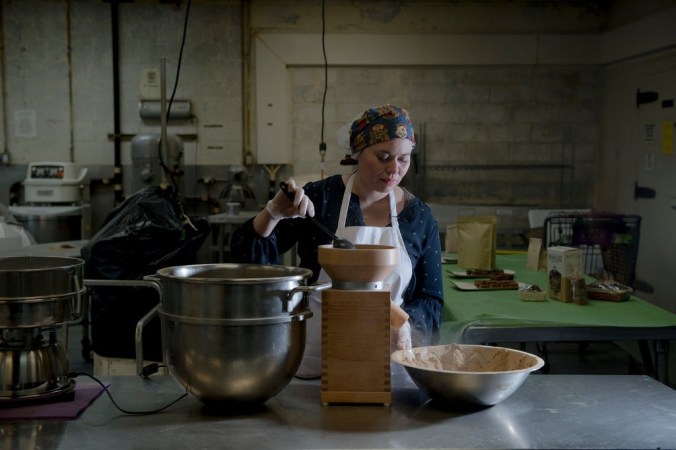
Bertha Jimenez milling flour at Rise Products’ temporary kitchen in Long Island City, Queens.
Ms. Jimenez, an Ecuadorean immigrant with a doctorate in engineering, helped develop a method for making flour from the grain left over after brewing beer. 
George Etheredge for The New York Times

Thanks to Larissa Zimberoff for this:

From Brewery to Bakery: A Flour That Fights Waste

merlin_136683021_001d3c91-70a2-4942-bbef-c40181c31510-jumbo.jpg

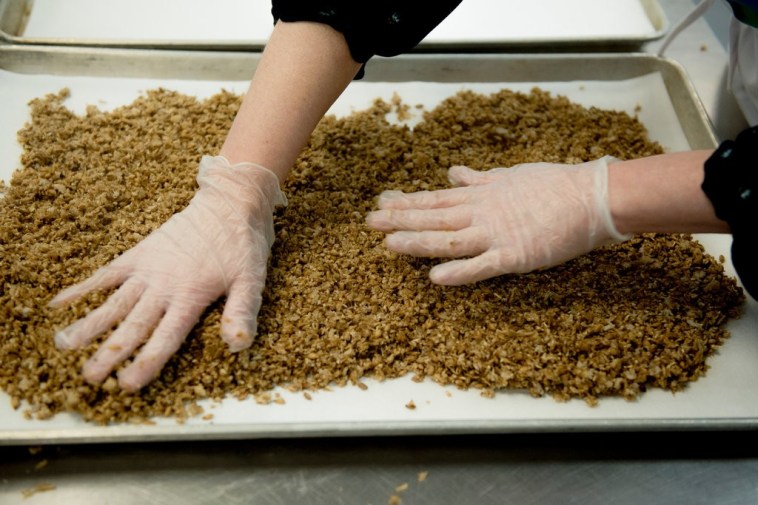
In a temporary commercial kitchen in Long Island City, Queens, Rise Products dries spent beer grains in an oven before they are ground, milled and sifted into a fine flour. George Etheredge for The New York Times

For some people, beer is the perfect end to a workday. For Bertha Jimenez, it’s the start of a new way to eliminate food waste.

Breweries throw out millions of pounds of used grain every day that could have other uses. While some is repurposed as animal feed, compostable products or heating fuel, little has been exploited for its value as food.

20flour-new2-jumbo.jpg

Because of the growing interest in reducing waste, many chefs and bakers are already eager to work with the flour. George Etheredge for The New York Times

But Ms. Jimenez, 35, has created a small start-up, Rise Products, that converts the grain into a flour that is finding its way into sustainable bakeries and kitchens in New York and as far away as Italy.

The potential for recycling beer waste first came into the cross hairs of Ms. Jimenez, an immigrant from Ecuador, while she was working toward her doctorate in 2015 at the Tandon School of Engineering at New York University. Intent on finding ways to reduce industrial waste, she started a side project with like-minded friends — most of them also immigrants — and craft beer provided an easy target: Everyone loved it, but it had issues.

Ms. Jimenez lives in Brooklyn, which at last count had 20 craft breweries that are tossing out grain. Ms. Jimenez and Ashwin Gopi, a classmate and a founder of Rise, began asking around for samples so they could figure out how best to reuse them. Continue reading

Copenhagenize Your City

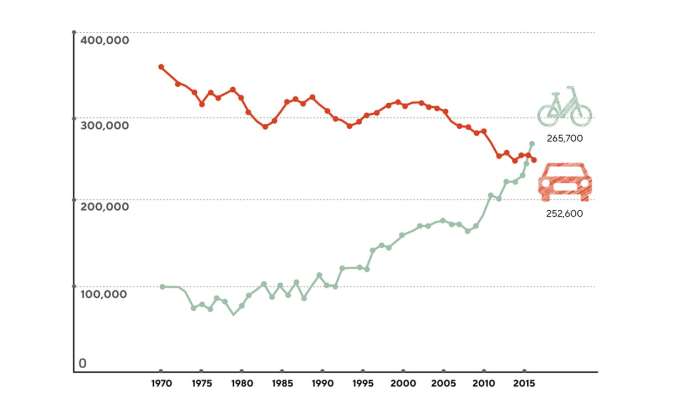
3872 (1).jpgWho knew you could do such a thing? When did that become a thing? Nevermind, just read the graphs that accompany this story:

Danish-Canadian urban designer Mikael Colville-Andersen busts some common myths and shows how the bicycle has the potential to transform cities around the world (All images: Copenhagenize Design Company/ Mikael Colville-Andersen)

8889 (1).jpg

Perspective On The Plastic Straw

906318ab3.jpg

A typical Stone straw ad from a newspaper in 1899 (Google Books)

When we arrived in south India mid-2010 our toolkit was full of fifteen years worth of entrepreneurial conservation initiatives, starting in Costa Rica and followed by work in the Galapagos Islands, Chilean Patagonia, Montenegro, Croatia and Siberia. It took us a year to understand all the important ways India differed from everything we knew from elsewhere. Then Amie started targeting the elimination of plastic from our hotel operations, starting with bags in the gift shops. She might have been a latter-day Doña Quixote, tilting at packaged water bottles. All tourists had been instructed by guide books and travel agents to insist on these, and it was not as simple as deciding we knew better.

I might have been a latter-day  Sancho Panza, with a front row seat to the action and as occasional contributor to solution-sourcing. But nevermind the literary allusions. We did eliminate plastic bottles, and then moved on to straws, both in India and back in Costa Rica. We are still working on straws, which oddly enough are more puzzling than disposable water bottles. Alexis Madrigal, as always, has our gratitude for this illuminating history and perspective that helps stoke our motivation:

Disposable America

A history of modern capitalism from the perspective of the straw. Seriously.

lead_720_405.jpg

MIRAGEC / GETTY

A straw is a simple thing. It’s a tube, a conveyance mechanism for liquid. The defining characteristic of the straw is the emptiness inside it. This is the stuff of tragedy, and America.

Over the last several months, plastic straws have come under fire from environmental activists who rightly point out that disposable plastics have created a swirling, centuries-long ecological disaster that is brutally difficult to clean up. Bags were first against the wall, but municipalities from Oakland, California, (yup) to Surfside, Florida, (huh!) have started to restrict the use of plastic straws. Of course, now there is a movement afoot among conservatives to keep those plastics flowing for freedom. Meanwhile, disability advocates have pointed out that plastic straws, in particular, are important for people with physical limitations. “To me, it’s just lame liberal activism that in the end is nothing,” one activist told The Toronto Star. “We’re really kind of vilifying people who need straws.” Other environmentalists aren’t sure that banning straws is gonna do much, and point out that banning straws is not an entirely rigorous approach to global systems change, considering that a widely cited estimate for the magnitude of the problem was, umm, created by a smart 9-year-old. Continue reading

Plastic Reduction Via Straws Off The Menu

3500 (5).jpg

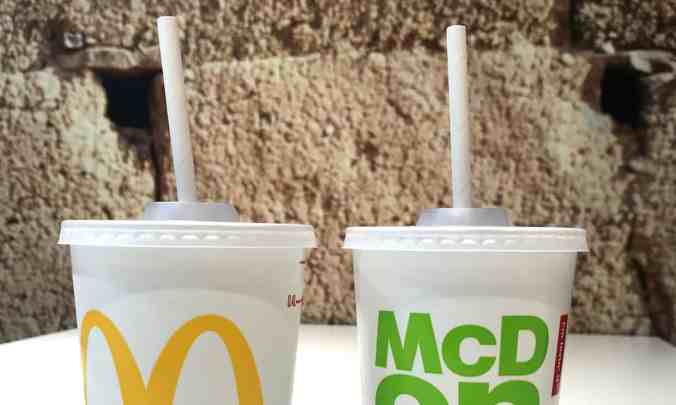
The switch will affect McDonald’s 1,361 outlets in Britain but not the rest of its 36,000 restaurants worldwide. Photograph: McDonald’s/PA

Most of the stories we link out to are examples of revolution, or at least incremental innovation, by way of market forces. At a time when there appear to be incentives for sliding backwards, it is even more important to highlight the rationality and logic of conservation. One small but important example here on the plastic reduction front, where the clientele of a large company take the lead:

McDonald’s to switch to paper straws in UK after customer campaign

Fast-food chain, which uses 1.8m straws a day, says plastic straws will go by 2019

McDonald’s will end the use of plastic straws in its British restaurants next year, after nearly half a million people called on the company to ditch them.

The decision by the US fast-food chain to switch from plastic to paper straws follows a trial at a number of outlets in the past two months. The firm uses around 1.8m straws a day in the UK.

The switch will affect McDonald’s 1,361 outlets in the UK, but not the rest of its 36,000 restaurants worldwide. Continue reading

Reducing Our Intake Is The Only Answer

3829

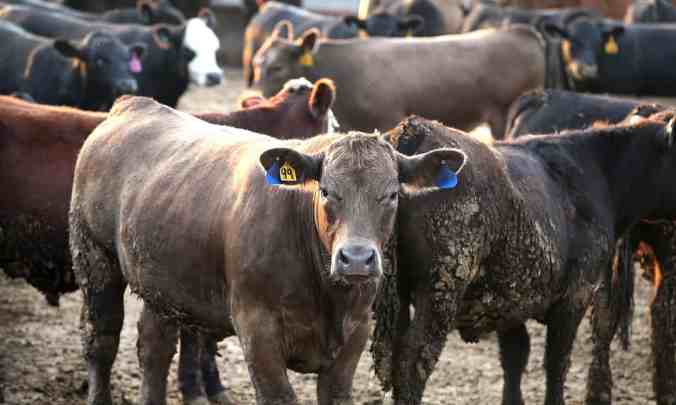
Cattle at an illegal settlement in the Jamanxim National Forest, state of Para, northern Brazil, November 29, 2009. With 1,3 million hectares, the Jamanxim National Forest is today a microsm that replicates what happens in the Amazon, where thousands of hectares of land are prey of illegal woodcutters, stock breeders and gold miners. Photograph: Antonio Scorza/AFP/Getty Images

The argument made below by Damian Carrington, the Guardian’s Environment editor, is one nobody can hide from. We are not. Contributors on this platform have been reducing our intake of these forms of calories over the last couple years. We can report on its not being as difficult as it may sound at first to carnivores, ice cream aficionados and milk-drinkers. We are down some 40% and pushing the envelope further as fast as we can. It is not enough, relative to what these numbers say:

Avoiding meat and dairy is ‘single biggest way’ to reduce your impact on Earth

Biggest analysis to date reveals huge footprint of livestock – it provides just 18% of calories but takes up 83% of farmland

Avoiding meat and dairy products is the single biggest way to reduce your environmental impact on the planet, according to the scientists behind the most comprehensive analysis to date of the damage farming does to the planet. Continue reading