Humanity’s Diet Makes A Difference, Historically As Well As Futuristically

On the timescale of evolutionary history, paleo enthusiasts note, agriculture is a fad. Credit Illustration by Mike Ellis.

On the timescale of evolutionary history, paleo enthusiasts note, agriculture is a fad. Credit Illustration by Mike Ellis.

Since the early days of this blog we have been hungry consumers of environmental long form journalism, of which Elizabeth Kolbert’s New Yorker chronicles are best-in-category. They are also, frankly, almost always depressing.

Nonetheless, they put humanity into its natural context. This not-at-all-depressing chronicle demonstrates the value of that contextualization well:

The first day I put my family on a Paleolithic diet, I made my kids fried eggs and sausage for breakfast. If they were still hungry, I told them, they could help themselves to more sausage, but they were not allowed to grab a slice of bread, or toast an English muffin, or pour themselves a bowl of cereal.

Continue reading

Notes from the Garden: A Harvest for Everyone

10491215_10201551076698566_8417073961388965292_n (1)

Green beans at Cardamom County

When we see an abundant harvest overflowing from a wheelbarrow, maybe it’s primal, but I think there is a sense of never going hungry. There is a sense of the aliveness of freshly picked food.

Remember how we used to share our food? Remember the connection to food we had before it came from chain grocery stores? I think something in us does. Or something in us wants to remember.

By simply putting out our hand, the food passes into our possession, but it’s a different kind of possession than picking up something in a supermarket and putting it in a cart. A possession isn’t really yours, which happened without the exchange of money. I think that the natural givingness of the land makes us feel like it is not really ours and that it is for everyone, meant to be shared. When I harvest, I remember this gift. I like sharing it with other people.


Since I have been here as an intern, I haven’t done all that much field work. This is probably the first day I’ve been able to help just by providing extra hands. I felt like it was a way to connect with the people I am working with as language barrier has stopped us. I appreciate the togetherness that can be felt by simply harvesting something together. They are teaching me Malayalam words and using the English words they know.

Continue reading

Monkeying around in Cardamom County

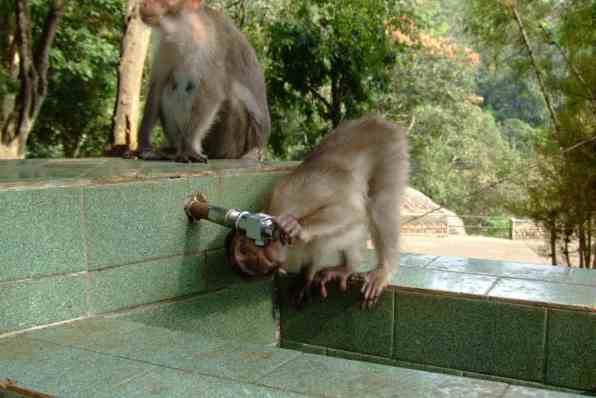
Monkey mischief at the Periyar Tiger Reserve, neighbor of Cardamom County

I have never had to take monkeys into consideration when gardening before.

I am at this jungle-like Raxa Collective property in Thekkady, India. I am here to work as an intern to help with creating a more farm-to-table relationship in the restaurant at Cardamom County. There is an organic garden here that is already providing the restaurant with a decent percentage of their staple foods. However, we face a little problem with some main ingredients such as tomatoes, eggplants, and actually anything sweet that we might like to grow such as grapes or pomegranates.

Monkeys. Continue reading

Growing Fruit and Vegetables at Xandari

The view from the path right before reception

Much of the fresh, rich compost that Xandari produces from all sorts of organic material is used as the perfect substrate to grow delicious fruits and vegetables on property, both in greenhouses and out in the open. During our tour a few days ago with José Luis, James and I saw dozens of tomatoes (three different varieties), lots of lettuce, citrus and other tropical fruits, green beans, and much more.

Continue reading

Saving Species–One Paper, One Video, One Course, And One Initiative At A Time

saving-species-logo-long-small

We thank Stuart Pimm for his ongoing excellent contributions to conservation through science and education, as well as creative activism, and congratulate him and his colleagues for their most recent publication:

new scientific paper was published today in the prestigious journal Science and it has important findings for biodiversity. Though it reaffirms what we already know—that there is a global extinction crisis and it is worse than we believed—it also details how technology and smart decision-making are offering hope for endangered species and their habitats. Continue reading

Go Ahead, Laugh About Climate Change

climate-change-comedy-290I am not 100% certain that laughter is an antidote to anything, but every now and then it seems like the only option. HOW TO LAUGH AT CLIMATE CHANGE, by Michelle Nijhuis, had its intended effect on me:

Continue reading

Bedeviling Bovine Biproducts

cow-butt

Roberta Kwok, over at Conservation, shares a new view on the humble cow:

COWS VS. COAL

To reduce emissions, the usual thinking goes, we should promote alternative energy and declare war on coal. But researchers argue that policymakers are ignoring a crucial climate threat: cows. Continue reading

Green Economy Realism

There’s no way toward a sustainable future without tackling environmentalism’s old stumbling blocks: consumption and jobs. And the way to do that is through a universal basic income.

Illustration by Edward Carvalho-Monaghan

Illustration by Edward Carvalho-Monaghan

There is nothing wrong, per se, with wishful thinking. It is when those wishful thoughts are left in dream state that they can become tedious, even dangerous. Action matters. It is where dreams meet reality. Reality matters at least as much as dreams in getting to a desired outcome. This is true with regard to environmental issues as with any other. We appreciate reminders whenever, wherever we find them:

For as long as the environment has existed, it’s been in crisis. Nature has always been a focus of human thought and action, of course, but it wasn’t until pesticides and pollution started clouding the horizon that something called “the environment” emerged as a matter of public concern.

In 1960s and 1970s America, dystopian images provoked anxiety about the costs of unprecedented prosperity: smog thick enough to hide skylines from view, waste seeping into suburban backyards, rivers so polluted they burst into flames, cars lined up at gas stations amid shortages, chemical weapons that could defoliate entire forests. Economists and ecologists alike forecasted doom, warning that humanity was running up against natural limits to growth, extinction crises, and population explosions.

But the apocalypse didn’t happen. The threat that the environment seemingly posed to economic growth and human well-being faded from view; relieved to have vanquished the environmental foe, many rushed to declare themselves its friends instead. Continue reading

Collapsitarians Rising

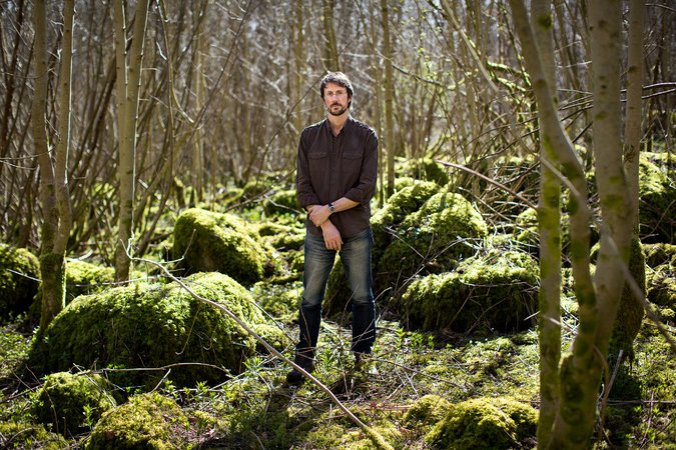
Paul Kingsnorth. Photo by Kenneth O Halloran

Paul Kingsnorth. Photo by Kenneth O Halloran

Collapsitarian sounds decidedly like the opposite of our approach on this platform, but in this profile I recognize observations and motivations, and even actions if not conclusions, out there among the practitioners. Read the story in this week’s New York Times Magazine:

By DANIEL SMITH

After decades of fervent environmental activism, Paul Kingsnorth decided it’s too late — collapse is inevitable. So now what?

If that seems intriguing, and especially if you want to smile and even laugh a bit, visit Paul Kingsnorth’s website:

OAQs

(Occasionally Asked Questions)

Could you puff yourself up in a few paragraphs of third person prose please?

Certainly. Paul was born in 1972. He studied modern history at Oxford University, where, as well as studying, he edited the student newspaper and was politically radicalised by his involvement in the road protest movements of the 1990s. Continue reading

Duchamp Design Du Jour

tumblr_mjnoeg7QzL1qz5g9bo1_1280

Our thanks to Mel Duarte for this referral of a design idea that has artistic legs and history, but is as fresh as ever:

In a small Brazilian village, artist and photographer Mel Duarte came across this great example of turning an old thing into a new thing.

“I really like the idea of creative recycling, and hope to inspire people with the potential it offers. With this in mind, I took the chance when I was in a little town in Bahia, Brazil, called Serra Grande, to wander through the village looking for something that could express this idea. That’s how I came across the recycled toilet bowl – it’s such a lovely example of how waste can be turned into something funny and beautiful.” Continue reading

Do The Green Thing Countdown 25/29

Continuing our promotion of Do The Green Thing’s campaign on behalf of WWF for Earth Hour, we point you to Switch Off Engine by Harry Pearce in which he:

…takes a warning sign from the depths of the car world and reuses it to create a messages that instructs us to step away from our vehicles and go by foot instead.

“The visual language of obedience demands our attention and compliance,” says Harry. “Maybe the car industry should follow its own rules.”

Why?

Continue reading

Community, Collaboration, And Gran Chaco Conservation

This slideshow requires JavaScript.

In about 10 minutes, this National Geographic video gives a great primer on why you should care about the conservation of one of the planet’s largest intact ecosystems, with a storyline focused on community and collaboration.

South America’s Gran Chaco region spans a complex mix of land, climates, and species. National Geographic Emerging Explorer and conservation biologist Erika Cuellar shares her passion and know-how with the people who live there to protect their natural treasure from unsustainable development.

Skimming the Globe

Stemming from a spontaneous fascination while living in India, I have photographed and written extensively about dragonflies in the past, and as an untrained naturalist, my interest has been mainly focused on dragonflies’ aesthetics rather than their physiology or ecological significance. However, as my interest in holistic ecology and the natural world grows, my thoughts have wandered from dragonflies and mushrooms to a bigger-picture ideology focusing on the connectedness and relationships between organisms within an ecosystem. Those relationships are present across the globe, year-round – regardless of how lifeless a place may seem. Being used to tropical climates unfortunately gives me a predisposition to fear the painful cold of Colorado mountain winters, and I retreat to a less hands-on approach to my research.

While seeking food for thought online, I stumbled upon a TED Talk given in 2009 on dragonflies – which in itself would interest me. But this talk concerns an exceptionally interesting species of dragonfly (though I didn’t realize it when I noticed its swarms in Gavi) – and one that aligns more with my current biological interests than those I held in the past few years (skimming the surface, some might say). Continue reading

Fact-Checking Walter Isaacson

Walter Isaacson has done some remarkable things (according to his present byline he is “CEO of the Aspen Institute. Author of biographies of Steve Jobs, Albert Einstein, Benjamin Franklin, and Henry Kissinger. Former editor of Time, CEO of CNN”).  Little reason for him to doubt his own authority, on anything.  But he invites you to fact check the book he is currently working on, starting with a draft of a chapter published in Medium.  I appreciate the creative spirit of collaboration, and his faith in the wider community to get his facts both straight and full of color:

The Culture That Gave Birth to the Personal Computer

I am sketching a draft of my next book on the innovators of the digital age. Here’s a rough draft of a section that sets the scene in Silicon Valley in the 1970s. I would appreciate notes, comments, corrections

In that draft he makes reference to the starting point of the Whole Earth Catalog, and the meme that came with it of using an image of the earth from space to communicate its fragility and limitations as much as its wondrousness; which, along with the rest of the draft (as if you needed convincing) makes the book sound worth the wait: Continue reading

Greening The Green, With Plastic?

Photo by Julian Herbert/Getty Images

Photo by Julian Herbert/Getty Images

We rarely have the chance to link to the writing of Hendrik Hertzberg, one of the New Yorker‘s cleverest turners of phrase, because he so frequently writes on political matters (generally outside our scope on this site).  But when he writes on another topic, it is invariably worth reading if nothing else for the quality of his writing.  This one, as it happens, is closer to our general range of interests because of the ecological implications:

On Wednesday came news that, starting in 2016, the Bank of England will replace its paper currency with plastic.

This doesn’t mean that our British cousins will thenceforth have to make all their purchases with credit cards, as in, “Do you take plastic?” They’ll still have folding money, but it will be printed on sheets of plastic polymers—a stiffer version of the stuff that the plastic bags which disfigure the trees of New York City are made of. Continue reading

Drink the Wild Air

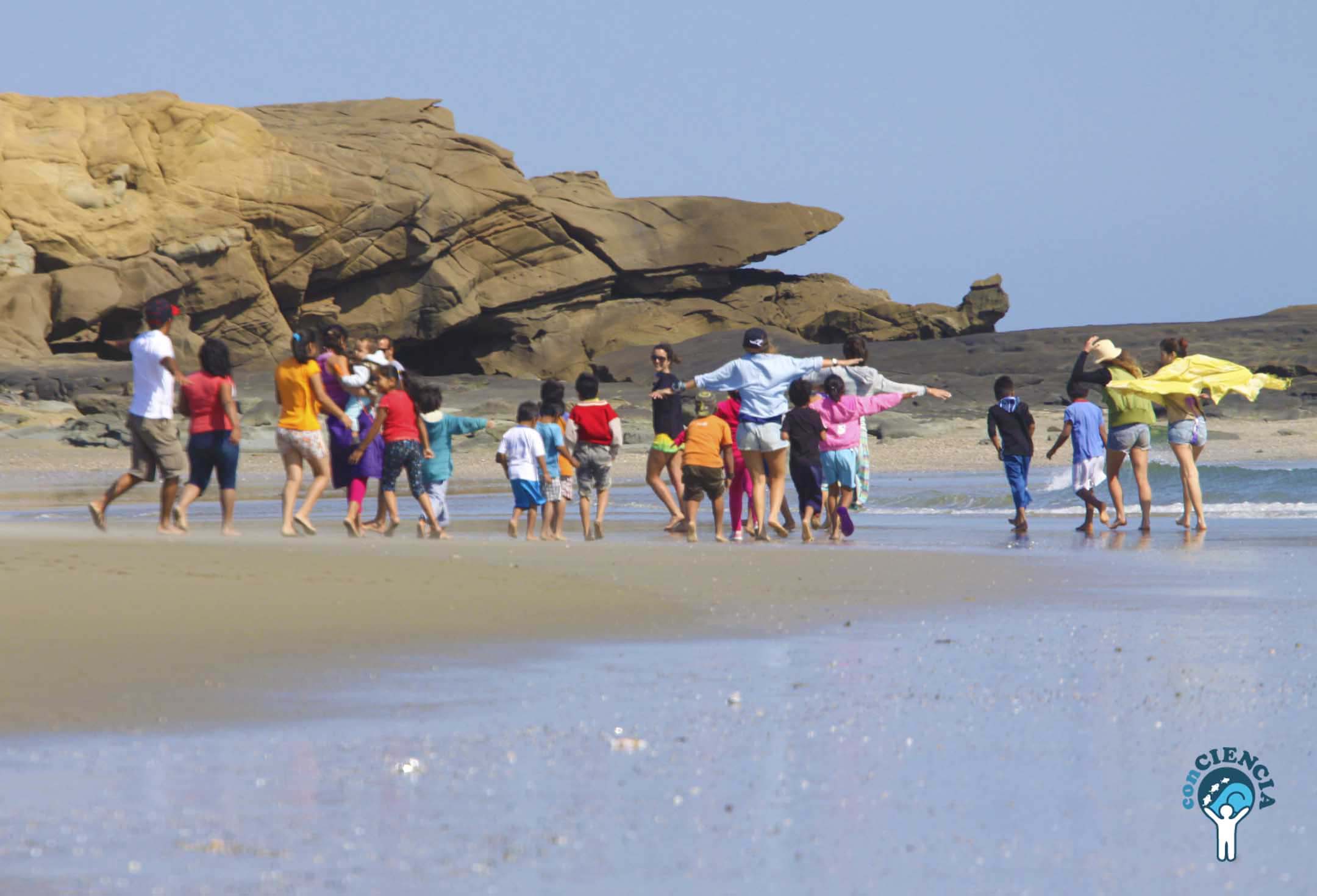
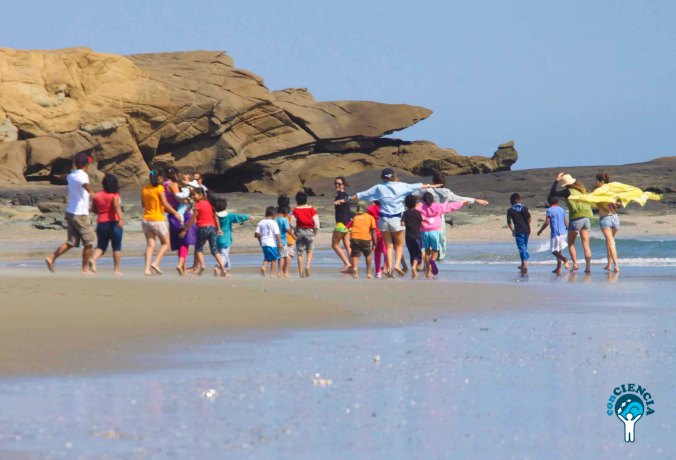
“Live in the sunshine, swim the sea, drink the wild air.” Alejandra Benavides/conCIENCIA

Working for the balance and health of nature as a conservation biologist brought me to understand the importance of nature in the balance and health of communities. The great gap between the two inspired me to establish conCIENCIA, a nature-based education design program. We build environmental identity in fishing villages across Peru through nature-based integrated learning guided by play, creativity, curiosity and the senses.
As First Mermaid in conCIENCIA, I work with an amazing group of artists and scientist, to connect coastal children to the natural wonderland, since 2010.

Lobitos has some of the most beautiful beaches on the Peruvian coast. Its world-class surfing draws hundreds of surfers from all over the planet and is known far and wide. A lesser-known fact is that it also has 153 children enrolled in its elementary school. Walking down the beach we wonder where these kids are. We walk from point to point with not one in sight. There’s no laughter or splashing on the shores. Surfers and fishermen dominate our view. No mothers and children sharing the democratic fun the beach offers: a place with more attractions than we could ever finish exploring.

In Latin American cities like Rio de Janeiro it is on the beach that rich and poor meet, crossing the giant social chasm that separates them, virtually identical in their bathing suits, covered in sand, sweat and salt. Surprisingly, this doesn’t seem to be the case in many of Peru’s coastal towns. Exactly why is hard to say. Our NGO conCIENCIA helps coastal communities develop an environmental identity and engagement through outdoor science-based learning. We hope to be able to answer the question ‘why’ through surveys, conversation and appreciation.

On the surface one could say it is cultural.  Fishermen don’t bathe in the sea or lounge on the beach. This is their place of work, as for a New Yorker her office would be–of course, with greater hardships and demands. The sea is treacherous and fish stock is dwindling. Continue reading

Vegan Viewpoint

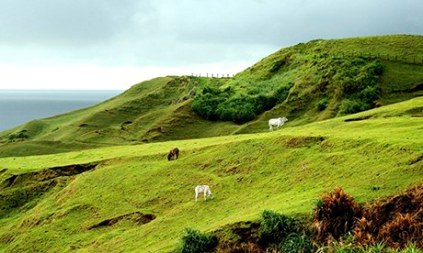
'By preventing the growth of trees and other deep vegetation in the hills, and by compacting the soil, grazing animals cause a cycle of flash floods and drought.' Photograph: Farley Baricuatro (www./Getty Images/Flickr RF)

‘By preventing the growth of trees and other deep vegetation in the hills, and by compacting the soil, grazing animals cause a cycle of flash floods and drought.’ Photograph: Farley Baricuatro (www./Getty Images/Flickr RF)

One of the editorialists at the Guardian whom we read for an unflinching environmentalist perspective, today on veganism:

He did it quietly, and the decision is the better for that: Al Gore, according to reports in the US press, has gone vegan.

Certain things could be said about other aspects of his lifestyle: his enormous houses and occasional use of private jets, for example. While we can’t demand that everyone who espouses green causes should live like a Jain monk, I think we can ask that they don’t live like Al Gore. He’s a brilliant campaigner, but I find the disjunction between the restraint he advocates and the size of his ecological footprint disorienting.

So saying, if he is managing to sustain his vegan diet, in this respect he puts most of us to shame. I tried it for 18 months and almost faded away.  Continue reading

Encased in Ash

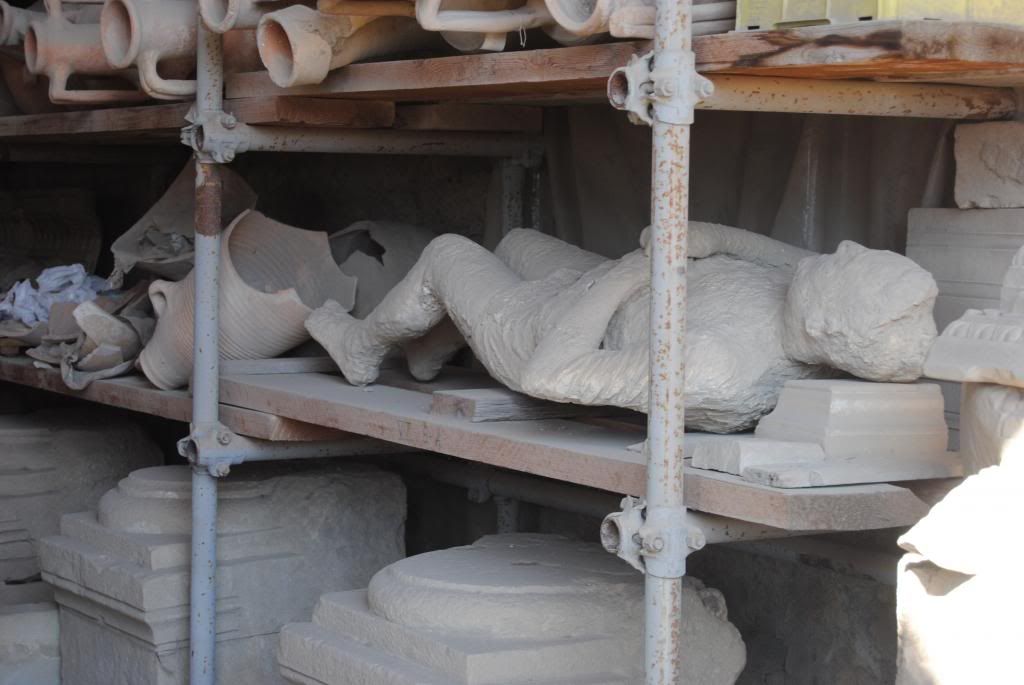
Encased in Ash – Body Mold from Pompeii

In 79AD, Mt. Vesuvius erupted with disastrous consequences for the residents of nearby Pompeii, Herculaneum, and other cities in the Campania region. Flows of boiling mud and rock rushed down the slopes, clouds of noxious fumes billowed upwards in the wind, and thousands of tons of rock and ash rained down upon the countryside. Pliny the Younger saw the eruption and likened it to a pinus, a pine tree. This may baffle some American readers, who may be accustomed to see pine trees that taper from a wide base to a narrow point Continue reading

Rainforests, Primary And Otherwise

Thanks to the Guardian for bringing this to our attention:

At an age when freedom passes allow pensioners to take on the challenge of clambering to the top deck of a bus, Dr Francis Hallé is more likely to be found perched at the top of a tree.

The retired professor of botany is 75 and has just completed his first film. In it he can be seen standing, without a safety rope, on a branch of a massive moabi tree 230 feet above the forest floor. Continue reading

If You Happen To Be In Austin

An expected 3,000 attendees are gathering in Austin, Texas, for SXSW Eco next week. Photograph: Austin CVB

An expected 3,000 attendees are gathering in Austin, Texas, for SXSW Eco next week. Photograph: Austin CVB

We normally think of technology or music when we think of Austin, or SXSW.  This even provides more to think about with regard to either of them. Thanks to the Guardian for letting us know about it:

Activists and industrialists might be like oil and water, but 3,000 of these strange bedfellows are gathering together in Austin, Texas, to discuss oil and water at SXSW Eco 2013 next week. Now in its third year, the annual conference aims to encourage cross-sector collaboration between professionals in business, government, academia and nonprofits on topics ranging from policy to consumer engagement. Continue reading