This object will self-destruct in… Shouldn’t the life span of a product be on the package ?

The adaptor for my very sleek, efficient and trendy computer broke down and I am a thousands of kilometers away from the brand store. It was a second-hand computer, I’m a vintage kind of gal you see, so I was not exactly shocked that after 4 years the computer may need care. I  soon realized though that the local resellers did not have a replacement for the plug, only a newer bigger version for a computer no one has yet. So I tried to have the adaptor fixed. It turned out the white well-rounded adaptor was not made to be fixed.

That’s what planned obsolescence is about : designing objects for the bin, if you want to know more about this industrial method you should watch The Story of Stuff.

Are there solutions to shift to a less wasteful consumption ? Governments, France and the European Union included, are currently at work on laws to implement longer guarantee periods, to encourage companies to offer replacement parts for 10 years after manufacture and to inform consumers on the expected longevity of the product.

And the corporate sector ? A growing number is getting organized in a circular economy :

Changing Business Models

hikers on a mountain

Patagonia’s connection to the wilderness has a big impact on the company’s approach to environmental issues, says Vincent Stanley, vice-president of marketing at Patagonia. Photograph: Daniel Garcia/AFP/Getty Images

From the Guardian‘s Sustainable Business blog:

Patagonia plans global campaign for responsible capitalism

The outdoor clothing and equipment company says we need to develop very different measures of success if we are to prevent environmental collapse

In the true spirit of adventure, mountaineering and surfing company Patagonia reaches one summit and immediately searches for an even tougher peak to climb.

Fresh from taking a pot shot at our consumerist society with its challenging “don’t buy this jacket” advertising campaign, Patagonia now has the whole capitalist system in its crosshairs. Continue reading

Collaboratively Clean City

Jose Beceiro, the Director of Clean Energy Initiatives eat the Chamber of Commerce in Austin, Texas notes the role of collaboration in his city’s remarkable economic development:

As one of the first smart-grid-powered communities, a revolutionary technology incubator, and the host of a conference promoting clean energy investment; Austin, TX has proven itself a leader in the clean technology sector, and the region is poised to continue making significant strides in building a strong clean  Continue reading

Another View On Miraculous Silicon Valley

Click the banner above to read the whole entry at its source:

Diary

Rebecca Solnit

The buses roll up to San Francisco’s bus stops in the morning and evening, but they are unmarked, or nearly so, and not for the public. They have no signs or have discreet acronyms on the front windshield, and because they also have no rear doors they ingest and disgorge their passengers slowly, while the brightly lit funky orange public buses wait behind them. Continue reading

The Gift, A Gift

Recent guests of Raxa Collective, mentioned here, handed Amie and me this book prior to our parting ways. Upon reading this blurb, we expected to find it enriching if and when we could find the time to read the gift, The Gift, which:

“actually deserves the hyperbolic praise that in most blurbs is so empty. It is the sort of book that you remember where you were and even what you were wearing when you first picked it up. The sort that you hector friends about until they read it too. This is not just formulaic blurbspeak; it is the truth. No one who is invested in any kind of art, in questions of what real art does and doesn’t have to do with money, spirituality, ego, love, ugliness, sales, politics, morality, marketing, and whatever you call ‘value,’ can read The Gift and remain unchanged.”—David Foster Wallace

Continue reading

Mixing Up The Medicine

Although we steer clear of politics, we pay close attention to policy; we do our part to support policy outcomes that match our values and interests; and (given the complexity of it all) mostly we just try to keep on our radar the various issues that lead to the need for policy in the first place.  You don’t need a weatherman. You need be neither policy wonk nor know-it-all nor tree hugger to know where those winds are blowing us. Case in point:

Dear President Obama,

As the lead negotiator for the world’s 48 Least Developed Countries (LDCs) in the United Nations climate change negotiations, I congratulate you on your re-election. I also want to express my admiration for your response to superstorm Sandy: without the preparations that you made, the impacts to those hit by the storm would have been even more devastating. As communities in the north-east work to rebuild and recover, the world has an opportunity to begin a new, reality-based conversation about climate change. Continue reading

Tree of Life

Kerala is one of the leading producers of coconut in the world, producing thirteen billion nuts per annum. Not only is the tree an iconic fixture of the Kerala landscape dotted with green palms and their swaying fronds but this tree is an integral part of the state economy.  Numerous products and by-products are derived from all parts of the tree, providing food, shelter and fuel, as well as the raw material for various local crafts. Not surprisingly, in Malayalmam this multi-faceted tree is known as kalpakavriksham or the “Tree of Life”.

Continue reading

Foodienomics

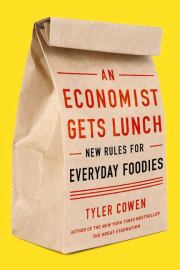
In a world that already has its fair share of freaky explanations for life’s quirks, and where celebrity is built in a day by some of the cleverer writers in that genre, do we really need this?  Hard to say with just a couple of reviews seen so far (click the image to the left to see the Kirkus review or click here to see the New York Times review of the book), but it sounds as though you are more likely to enjoy this if you are of the libertarian persuasion (as the author is touted to be) or a liberal (not the political variety but the curious, open-minded variety).

This snippet from the Kirkus review sums up why and for whom it may be worth the read:

Continue reading

Really, Nike?

Quinn O’Neill, someone we have never encountered in writing (or otherwise) before, posted that ad and some reflections about it on the dependably superb 3 Quarks Daily.  Reading those reflections is worth a lot more than the five minutes it will take.  On this site we very rarely engage in outrage for reasons we have not fully articulated (yet); but a well-crafted second thought on what might otherwise seem harmless entertainment begs the question: Continue reading

Optimism and Opportunity

Many of my posts reflect my outlook to err on the upside of life’s circumstances.  I try to drown out my inner (and often powerful) pessimism by surrounding myself with positivity and optimism.  I find that this is a careful balance of being hopeful while remaining realistic.  Today, when I was taking a break from my coursework, or the slightly negative part of my day, I watched an encouraging Ted Talk that I think demonstrates hopeful realism.

Johan Rockstrom suggests that the earth is at a point where major transformation must occur.  He optimistically recommends that we use and continue to use crises as opportunities and local initiatives to transform and sustain life.  Also, he makes a realistic statement that climate change is not our biggest problem only a symptom of our land use.

I found this talk engaging and thought-provoking.  I agree that I transformation is soon to happen and I look forward to being a part of it.

Chess, Snakes, Ladders & Sen

A few weeks ago The Financial Times published a blog post by one of India’s favorite sons, Nobel prize-winning economist Amartya Sen.  Click the image to the right to go to the original.  The start is promising:

Like many board games that were developed in India, of which chess is perhaps the most important and famous, the game of “snakes and ladders” too emerged in this country a long time ago.

The piece is long, as blog posts go, and yet the second sentence gives a sense of why Sen is so loved, in spite of being a leader of the dismal science.

Continue reading