Stories Without End – The Grandmother Project

The Ogelthorpe University Museum of Art is one of the gems of the Atlanta area, for good reason. Not only does the museum have its own well curated collections, it receives visiting collections that are timely and powerful.

Tara Rice‘s Grandmother Project photographic series highlights the historically matriarchal influence within African cultures, coinciding with the project based in Senegal “promoting health, well-being and rights of women and children in developing countries through grandmother-inclusive and intergenerational programs that build on communities’ cultural values and resources.”

The photo series dovetails perfectly with the female centric collection of sculptures and masks in the sister exhibit, Stories Without an End.

Stories Without an End: Power, Beauty and Wisdom of Women in African Art of the Mehta Collection

January 18 – April 21, 2018

The exhibition Stories Without an End: Power, Beauty and Wisdom of Women in African Art of the Mehta Collection includes a selection of 50 classically carved wooden sculptures and masks drawn from the collection of Dileep and Martha Mehta.

The exhibition represents art from more than 25 ethnic groups spanning 12 countries. These objects are gathered into thematic groups including women in governance, maternity, idealized beauty, and female ancestors.

OUMA members Dileep and Martha Mehta are collectors of African and Asian arts. Their African art collection, including objects in this exhibit, has greatly benefited from diligent sourcing by and wise counsel of African Art dealers Tamba Kaba and Sanoussi Kalle.

This exhibition was developed by Elizabeth H. Peterson, OUMA director, and organized by Amanda Hellman, PhD, curator of African art, Michael C. Carlos Museum, Emory University.

Stories Without an End was inspired in part by the work of the Grandmother Project (GMP) an American 501(c)(3) nonprofit organization and a Senegalese NGO with representatives throughout the USA and abroad. GMP, with headquarters in Senegal, works with elders in West African villages to fight the maltreatment of young girls. This includes bettering maternal and child nutrition, reproductive health, and marriage standards. The exhibition title is inspired by the GMP initiative “stories without an ending,” which is a tool used to facilitate communication via the elders. For more about the Grandmother Project please visit www.grandmotherproject.org.

The Grandmother Project: Photographs by Tara Rice

January 18 – April 21, 2019

The Grandmother Project (GMP) develops community approaches that promote positive and sustained improvements in the lives of girls, children, women, and families by building on existing cultural and community values, roles and assets in southern Senegal. Continue reading
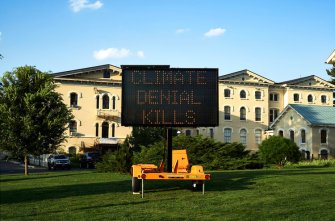
The Climate Museum’s Climate Signals


My only wish is to have been able to share this earlier, during the exhibition’s run. But better late than never.

Kormann-Queens-Climate-Signals.jpg

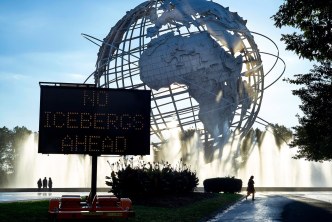
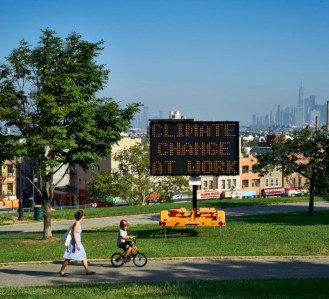
The “Ask a Scientist” event gives curious passerby the chance to pose their climate-related questions to scientists stationed around New York City. Photograph by Justin Brice Guariglia

Thanks to Carolyn Kormann for another fresh dose of creative rational thinking, with her short piece Ask a Scientist: How to Deal with a Climate-Change Skeptic:

A Place And A Time For Learning To Read, And To Appreciate Books As Things

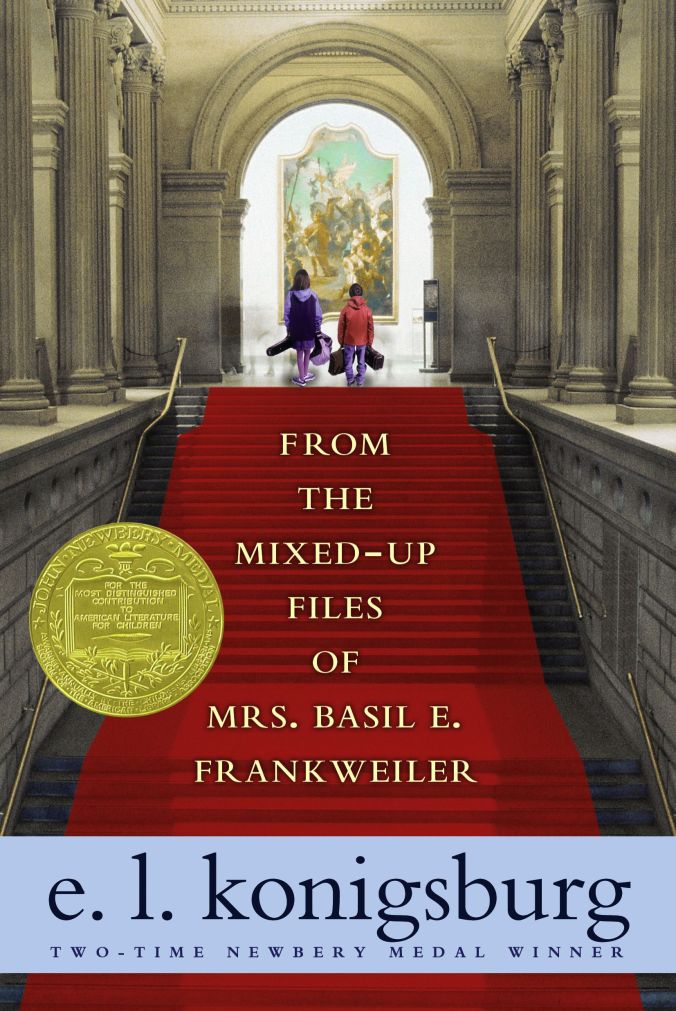
from-the-mixed-up-files-of-mrs-basil-e-frankweiler-9781416949756_hr.jpg

Just this moment, as I started today’s post, I learned I had missed a 50th birthday party. We tend to like round numbers, even if they do not mean much–why should the 50th be any more important than the 49th or 23rd? For whatever reason, a centenary or half-centenary, or bicentennial all seem to have a bigger ring. So, happy birthday to this book (last year) that I searched for after reading Susan Orlean’s essay on her personal history with libraries and books:

…My family was big on the library. We were very much a reading family, but we were more a borrow-a-book-from-the-library family than a bookshelves-full-of-books family. My parents valued books, but they had grown up in the Depression, aware of the quicksilver nature of money, and they had learned the hard way that you shouldn’t buy what you could borrow. Because of that frugality, or perhaps despite it, they also believed that you should read a book for the experience of reading it. You shouldn’t read it in order to have an object that had to be housed and looked after forever, a memento of the purpose for which it was obtained. The reading of the book was a journey. There was no need for souvenirs…

I have just recently finished unpacking from storage a lifetime’s worth of books–actually multiple lifetimes because in addition to my own family of four’s lifetimes there are also books from our parents’ and grandparents’ personal collections. And the essay got me thinking about whether I had a personal favorite book, and if so whether I have a “souvenir” of it.

I had taken a moment after emptying a box to leaf through this book that qualifies as a contender. I remember where I was when I purchased it, and where I first read it. But the essay I just read got me thinking about the importance of libraries to my own history with reading, so I focused my thought on the question what was my first favorite book. And the book above was that book, without question, in part because it was what got me to return to the library for more books. Not much more to say on that, but if you are a bibliophile or a libraryphile, if you consider librarians heroes, or any such thing, the essay may be for you.

Better Science Writing, Better Societal Decision-Making?

Zimmer Longform

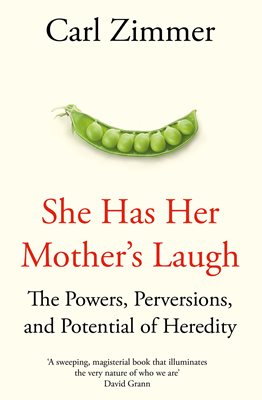
9781509818532she has her mother-s laugh_11_jpg_262_400.jpgScience writing has been one of our favorite themes since we started this platform. The quality with which science is explained in clear language is good for the planet, we think. Carl Zimmer is probably the most cited science writer during these eight years, for good reason. The interview above from late 2016, if you are convinced about the importance of science writing, is about as good as it gets for hearing a master explain his craft in very personal terms. It was recorded just weeks after the most fateful (with regard to science) presidential election in recent USA history. Zimmer takes a “just the facts” approach to the interview, and neither punches, nor pulls punches, with regard to the environmental and other science policy mess-making that had just begun. He just shares his craft.

5088.jpg

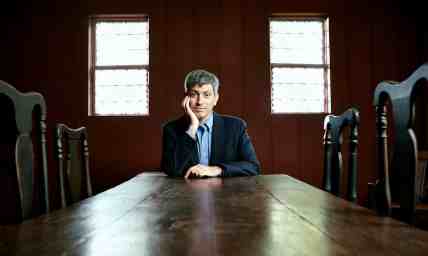
Carl Zimmer: ‘Heredity is central to our existence… but it’s not what we think it is.’ Photograph: Mistina Hanscom/Lotta Studio

He has a new book out, which we have not read, but we are glad that it has brought him out on book tour. In the interview below, from just a couple weeks ago, we get a quick read on what he is saying now:

Carl Zimmer is a rarity among professional science writers in being influential among the scientists on whose work he writes and comments – to the extent that he has been appointed as professor adjunct in the department of molecular biophysics and biochemistry at Yale University. Zimmer has just published his 13th book, She Has Her Mother’s Laughsurvey of “the power, perversions and potential of heredity”. Continue reading

Don’t Take The Bait

10661.jpg

Is the evidence for fish-eating better than simply taking a fish oil pill? Composite: Getty

Paul Greenberg, author of The Omega Principle: Seafood and the Quest for a Long Life and a Healthier Planet (Penguin Press), is making the rounds with an important argument; get the short version here in the Guardian:

Fool’s gold: what fish oil is doing to our health and the planet

Omega-3 is one of our favourite supplements – but a huge new study has found it has little or no benefit for heart health or strokes. How did it become a $30bn business?

9781594206344.jpgThe omega-3 industry is in a twist. Again. Last week, Cochrane, an organisation that compiles and evaluates medical research for the general public, released a meta-analysis – a study of studies – to determine whether or not omega-3 pills, one of the world’s most popular dietary supplements, reduced the risk of coronary heart disease. After comparing 79 trials involving 112,059 people, the researchers could find “little or no difference to risk of cardiovascular events, coronary heart deaths, coronary heart disease events, stroke or heart irregularities”.

I can’t say that I was particularly surprised. Over the past 15 years, more than 20 studies have shown a similar lack of effect. But what does surprise me is how we continue to look at the world of fish and seafood through the amber lens of a fish oil capsule. Omega-3s do something in our bodies – and probably something important. But without the larger context of the marine organisms that contain them, omega-3s get lost in the noise of human metabolism and modern marketing.

Continue reading

Podcast Proliferation

VoxPodNearly one month ago, Vox launched a new way for us to source stories. We have sourced from their website when the story fits our mission. For us to scan the news daily and link to at least one article or book review or other media that seems consistent with our mission, we increasingly bump up against the fact that producers of and channels for accessing relevant information seem to be increasing faster than we can possibly keep up.

Today we sampled from their sonic venture, a story about changes way up north, wrought by climate change, geopolitical ambitions, head in the sand-ism and other intrigue. Finding an episode like this one stretches our horizons in a healthy, productive manner:

VoxPod2

There’s a new Cold War being fought in the North Pole between the United States and Russia (but also China, Finland, Norway, Canada, Greenland and more). Fueling the battle is the melting Arctic, which just had its warmest winter in recorded history. Vox’s Brian Resnick gives us the science before Yochi Dreazen takes us to the war.

It must also be mentioned that having outlets we trust recommend other outlets is a must. And here is an example of one we appreciate:

“Today, Explained”: An Edgy New Vox Podcast to Compete with “The Daily”

By 

Larson-Today-Explained

Hosted by Sean Rameswaram, the Vox podcast “Today, Explained” feels funny, knowing, and energetic—which, in this news climate, isn’t easy. Photograph by James Bareham / Vox Media

Podcast-wise, 2017 was arguably the year of “The Daily,” the beautifully produced, gently voiced narrative-news offering from the Times, hosted by Michael Barbaro, which started last January and quickly became indispensable. The show, which parses a different news story in each episode, through a conversation with a reporter or other guest, then delivers a brief news roundup, has sufficient perspective and empathy that it produces in its listeners an intoxicating, if temporary, feeling of sanity; by now, its theme song alone cues in me a Pavlovian calm. The show garners 4.5 million unique listeners each month; in April, it will expand to public-radio syndication. Continue reading

Birding Field Guides, Rated

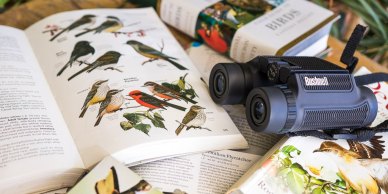
field-guide-to-birds-lowres-1688

Photo: Kyle Fitzgerald

We are constantly on the lookout for information useful to birders, for birding. Clara Chaisson made some choices for Wirecutter on which field guides to rate and which was best, and she had us at methodology:

Birding together is a bonding activity in my family in the same way that game night is in other households, so I’ve been casually birding for most of my life. Since studying ornithology in college, I’ve had opportunities to make my enthusiasm for bird observation more than just a hobby; I’ve done seasonal fieldwork that required me to know how to identify all Northeastern birds by sight and sound. Even now that I have a desk job and live in a city, I still get out as often as I can.

field-guide-to-birds-top-2x1-lowres1024-1702I spent a week testing nine of the most-recommended and best-selling bird guides at Mount Auburn Cemetery—the first garden cemetery in the US—and Fresh Pond in Cambridge, Massachusetts, both of which are hotspots, or popular public birding locations, on the online birding database eBird. Continue reading
Hidden Numbers, Brought Into Daylight

FlatironThe mission of the Flatiron Institute is to advance scientific research through computational methods, including data analysis, modeling and simulation.

The institute, an internal research division of the Simons Foundation, is a community of scientists who are working to use modern computational tools to advance our understanding of science, both through the analysis of large, rich datasets and through the simulations of physical process.

If you are seeing the name above for the first time, so are we. It has come to our attention through this profile below. The questions raised are important. The answers, to the degree there are any, are fascinating. Thanks to longform journalism, which we need now more than ever, we have profiles like this:

Jim Simons, the Numbers King

Algorithms made him a Wall Street billionaire. His new research center helps scientists mine data for the common good.

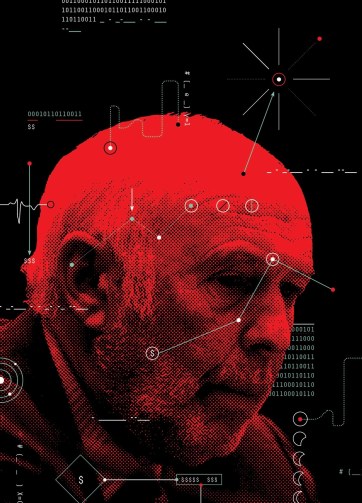
171218_r31148 (1).jpg

Simons is donating billions of dollars to science. But much of his fortune, long stashed offshore, has never been taxed. Illustration by Oliver Munday; photograph by Tim Sloan / AFP / Getty

By D. T. Max

A visit to a scientific-research center usually begins at a star professor’s laboratory that is abuzz with a dozen postdocs collaborating on various experiments. But when I recently toured the Flatiron Institute, which formally opened in September, in lower Manhattan, I was taken straight to a computer room. The only sound came from a susurrating climate-control system. I was surrounded by rows of black metal cages outfitted, from floor to ceiling, with black metal shelves filled with black server nodes: boxes with small, twinkling lights and protruding multicolored wires. Tags dangled from some of the wires, notes that the tech staff had written to themselves. I realized that I’d seen a facility like this only in movies. Nick Carriero, one of the directors of what the institute calls its “scientific-computing core,” walked me around the space. He pointed to a cage with empty shelves. “We’re waiting for the quantum-physics people to start showing up,” he said. Continue reading

How Does Your Garden Grow?

Partnering with programs like the Atlanta Community Food Bank Garden Program and the Cornell Lab of Ornithology to bring bird friendly and healthy food education to youngsters connects well with our ethos. Citizen Science participation starts early. We hope our readers will share with public and private K-12 schools!

SCHOOL GARDEN GRANTS to grow healthy, happy, nature-connected kids!

School gardens provide an exciting context for cross-disciplinary learning and a wonderful opportunity to engage students in hands-on activities, project-based learning, and citizen science. Kids benefit from gardens in academic, physical, emotional, social, and behavioral ways. We are excited to support teachers’ efforts to engage kids in outdoor learning and all its benefits!

We will award 20 grants to teachers within the United States who strive to take the classroom outside, reconnect students with the natural world, and teach them valuable concepts and skills that integrate across all subjects. In partnership with our amazing sponsor, Alaska Fertilizer, we’re thrilled to support 20 teachers with a $500-$2,000 grant, gardening supplies, and BirdSleuth’s Habitat Connections kit. Funds can support a new garden or the revitalization of an existing one. In addition to funding food/veggie gardens, preference will be given to bird, pollinator, native habitat, rain, and other natural projects. Continue reading

Archaeology Lab 101

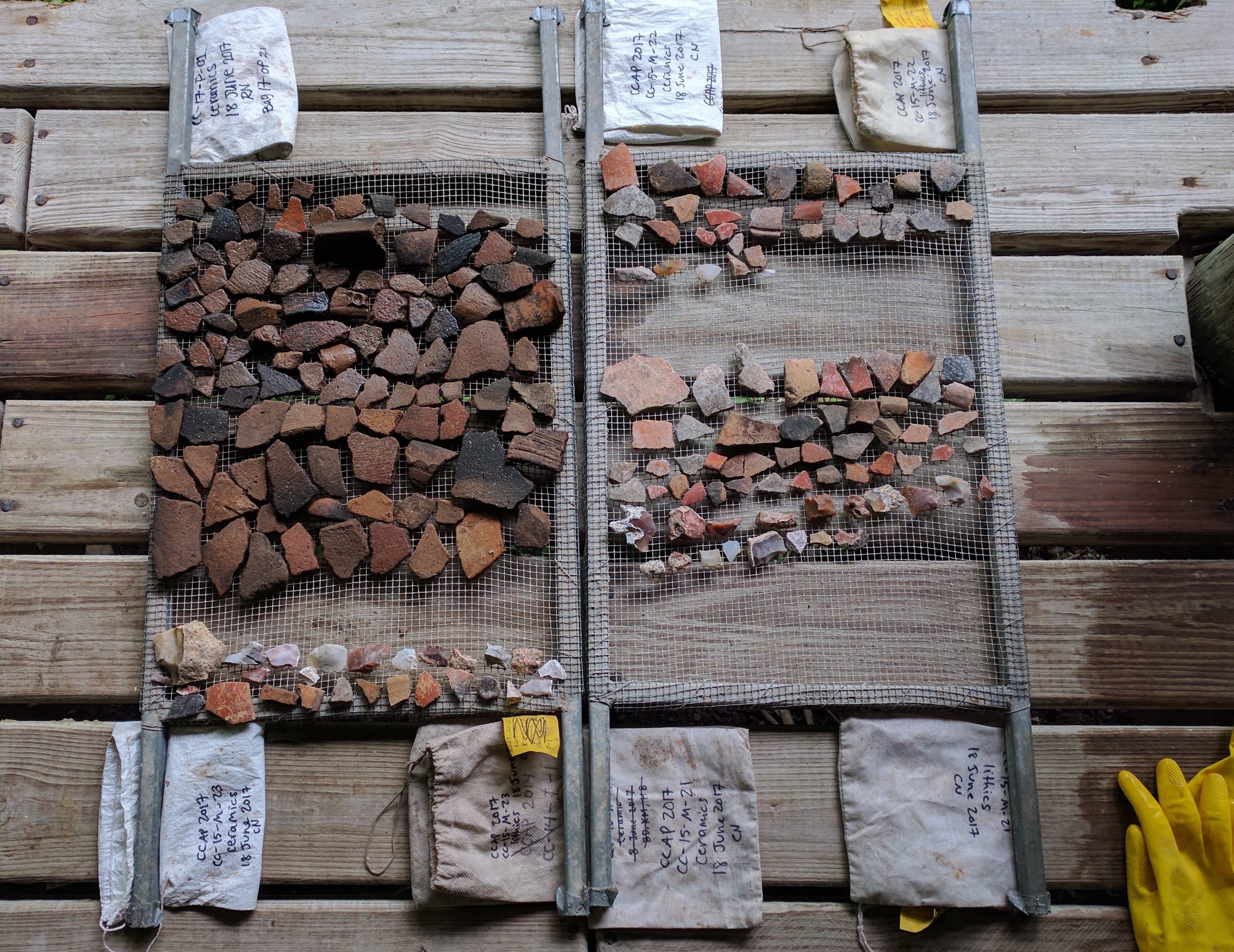
Much of the scientific rigor involved in archaeology is related to the careful documentation of what often appears to be a proverbial needle in a haystack: tiny flakes of chert stone, potsherds, or obsidian can be found in the layers (or lots) of a dig unit.

In this tropical environment we’re dealing with wet, loamy earth, so those stone or pottery fragments are frequently covered in mud, and who better to clean much of these items than interested novices. Continue reading

Getting Your Archaeological Feet Wet

Day #2 at CCAP began with the same sense of camaraderie as Day #1 as we continued the process of clearing out topsoil, clipping roots, hauling soil and stone, and yes, working on walls. Each conversation with the team was informative, as we discussed the upcoming step of closing out the “lot” we’d started and opening the next one of the unit – basically as we approached the change-over of levels for the precise documentation required at an archaeological dig.

We were quite close to that point when we stopped work for lunch, returning with high energy to move on to the next stage. But it’s green season in Belize, and Mother Nature had other plans for the day. Continue reading

A Day In the Life of the Chan Chich Archaeological Project

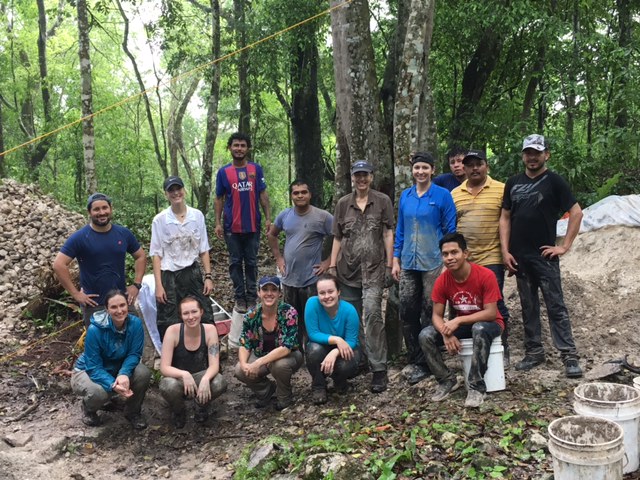
When Crist wrote about the Chan Chich Archaeological Project in April it was in anticipation of the group’s arrival. Now that we’re several weeks in I’ve had the opportunity to assist them first hand, in part as a “guinea pig” for guest involvement as citizen science participants. Fellow contributor Phil Karp (a veteran of many citizen science programs) was enthusiastically up  for the experience as well.

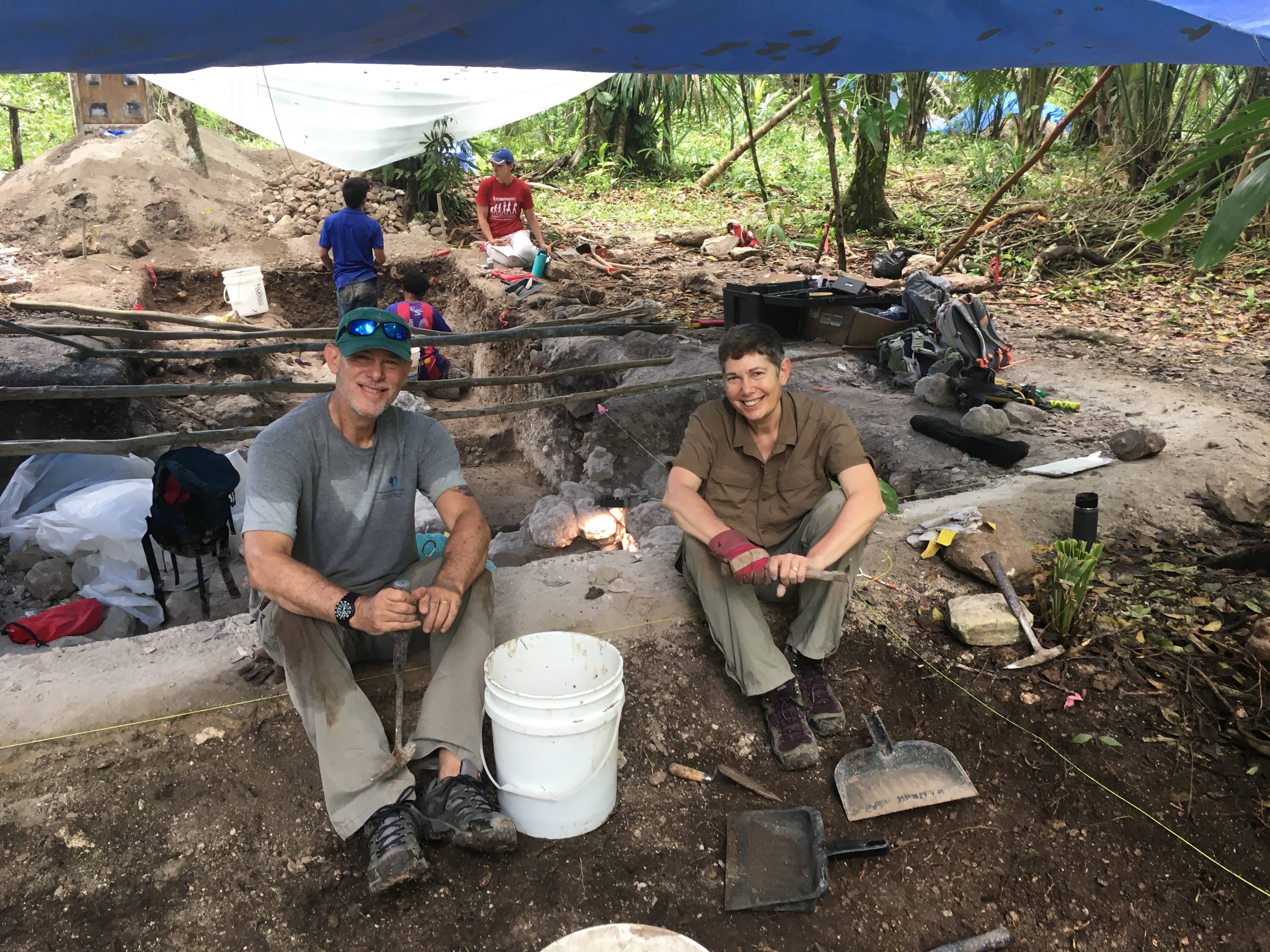
The team of archaeologists and field school students, led by Texas Tech University associate professor Dr. Brett Houk, is studying the ancient Maya at Chan Chich and surrounding sites. Several weeks into their dig they’ve made significant progress, and they gamely accepted the challenge of taking novices into their ranks.

We began at the beginning, well known to be the very best place to start, with a new “lot” located next to a well-established excavated area. Continue reading

Graduation Day in Sylvester Village

IMG_0767

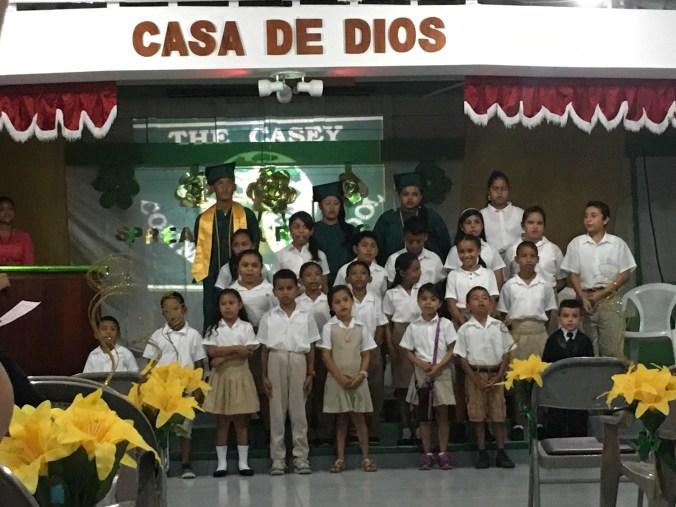
Earlier this week I did something that I couldn’t possibly have anticipated would be part of my Chan Chich experience: I attended a primary school graduation.

Sylvester Village is a community where employees of Chan Chich and Gallon Jug Farm live with their families. The Casey Community School is where many of the village’s children go for their first years of education. As one might imagine, the school is not very big. In fact, this year the school only had one kindergartner. Growing up in suburban America, this was very different from my early education which had about 24 kids in a first grade class with multiple classes per grade. However, perhaps the biggest difference from my experience was the school’s emphasis on community.

Continue reading

Sustainable Education

outdoor compost rendering CCL

To me, conservation tourism isn’t just about facilitating guest experiences in nature, but rather, it is about ensuring that guests walk away from their experience having gained a new appreciation for the systems they have interacted with. When I first spoke with Crist about spending my summer at Chan Chich, we mostly discussed working on developing a hydroponic food production system at the lodge. Not only would this system serve as a food supplier for the kitchen, but would also have an interactive educational aspect so guests could learn about the process. While this project is still a focal point of my internship, sustainability isn’t just about improving one aspect of a system, just like good conservation tourism is about having a medley of experiences.

When strengthening both the guest experience and sustainable operations at Chan Chich, it isn’t enough to just focus on what is going in to the kitchen. Rather, it is essential to focus on what is coming out of the kitchen as well.

Sustainable waste management has been important to the operations at Chan Chich for some time now. However, never before has these processes been visible to guests. While the hydroponic project is still under development, applying the project’s ideas of sustainable technology and guest education to waste management in the meantime is highly beneficial.

The result?

Continue reading

Cornell’s Climate Friendly Construction

oakImage-1495980544830-jumbo

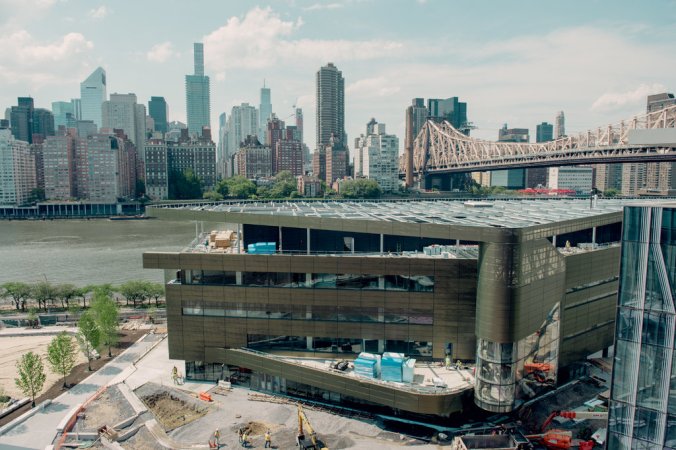
A view of Manhattan from the roof of the Bridge building on the Cornell Tech campus on Roosevelt Island. Photo VINCENT TULLO

When Cornell University competed in 2011 to develop an applied science and engineering campus in New York City, part of its pitch was that it would construct an academic building that would at least approach making as much energy as it used in a year, a concept known as net zero. It won. Then came the hard work of making that vision happen at the campus, known as Cornell Tech. Continue reading

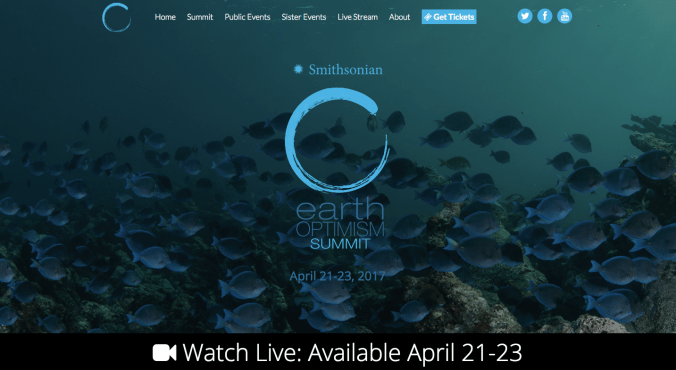
If You Happen to Be at the Smithsonian – But You Don’t Have to Be

Science, entrepreneurship, conservation and innovation converge at this amazing open source summit with events in multiple Smithsonian locations ranging from New York City, Washington DC and Panama City.

Frequent contributor to this site Phil Karp, will participate in a forum on Restoring Nature. The synergy of forum subjects with our interest in wild foods and our work in conservation focused hospitality makes us wish we were there.

What’s Working in Conservation

Earth Optimism celebrates a change in focus from problem to solution in the area of global conservation with an unprecedented gathering of thought leaders, scientists, environmentalists, artists, civic leaders and international media.

The global conservation movement has reached a turning point. Continue reading

Foraging Classes

HornFarmCenterLogoStacked-72-540x540WhiteBGA mushroom dropped in on my life, in an unexpected manner, and now I find myself wandering to unexpected places, such as rural Pennsylvania. I am sharing here mainly as a record of how I have come across the resources that inform how we approach bringing foraging to Chan Chich Lodge.

So, bravo and thanks to our friends at the Horn Farm Center for Agricultural Education, which is my latest find in these wanderings. I particularly like their clearly laid out information on the educational resources they offer, most notably this section on foraging classes: Continue reading

Gaps, Meaning & More

09GAP-superJumbo-v2.jpg

Kyle DeNuccio, right, on Lake Batur in Bali, a gap year stop. CreditKyle DeNuccio

I am currently interviewing candidates to join us for summer internships, and possible university gap year projects at Chan Chich Lodge. Most importantly the projects will focus on various food-related initiatives, some longstanding goals and others more in the spirit of random variation. We have had plenty of awesome interns, as well as wondrous wanderers and sometimes sabbaticalists join us here and there for more than two decades, and we feel qualified to claim that this fellow (who reminds me a bit of this fellow) speaks truth:

Independence Days: My Perfect Imperfect Gap Year

By

Midway through a lackluster freshman year at the University of San Diego, I called my parents and told them I planned to leave school after the spring semester. Continue reading

Happy 20th Anniversary, Meg!

543092After posting this quick thought about foraging, I sent a link to Meg, and she reminded me that she had not only been to Belize but that there is a book about her time here.

As I explored the book I realized that it was first published 20 years ago, incidentally the year when I first visited Belize. I also discovered that the book is in wide circulation among educators in the USA, for hopefully obvious good reasons:

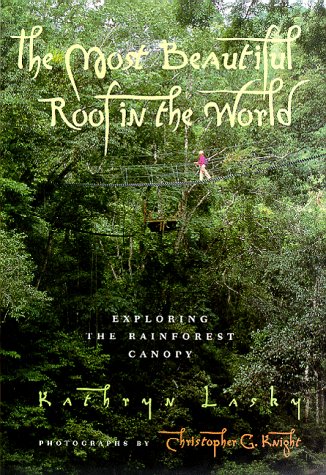
Journey along with Dr. Meg Lowman, a scientist who, with the help of slings, suspended walkways, and mountain-climbing equipment, has managed to ascend into one of our planet’s least accessible and most fascinating ecosystems–the rain-forest canopy. “Fresh in outlook and intriguing in details, this book will strengthen any library collection on the rainforest.”–Booklist Continue reading

Coastal Preparations

Thanks to the Nature Conservancy’s Cool Green Science, and specifically Lisa Feldcamp, for this note and video on adaptive coastal folks:

“It hurt my heart to see how [the beach] had been deteriorated,” says Norris Henry of St. Andrew’s Development Organization. “I know in the past there was a nice beachfront, where you can play cricket, you can play football, you can run. But it’s so sad to see it is no longer there.” Continue reading