Kidstuff, Creativity

lauracarlin6

Thinking of Seth’s recent work at Xandari’s neighboring school, and earlier work in Galapagos, this article strikes a cord:

Laura Carlin’s artistic exercises for young minds

The Phaidon author demonstrates how creativity comes from an active mind not an overly tutored hand

At Phaidon, we understand that a good art education should start early. Yet some books for younger readers aren’t always especially kid friendly. This is why we’ve buddied up with the London illustrator and educator Laura Carlin. Her fantastic new book, A World of Your Own, treats drawing not so much as a skill be to mastered, but as a fantastic toy, to engage a child’s imagination. Continue reading

Field Ecology At University, Twin Of Our Daily Activities For Guests At Xandari, Cardamom County, And Soon At Zaina Lodge

Screen Shot 2014-10-27 at 6.56.03 AM

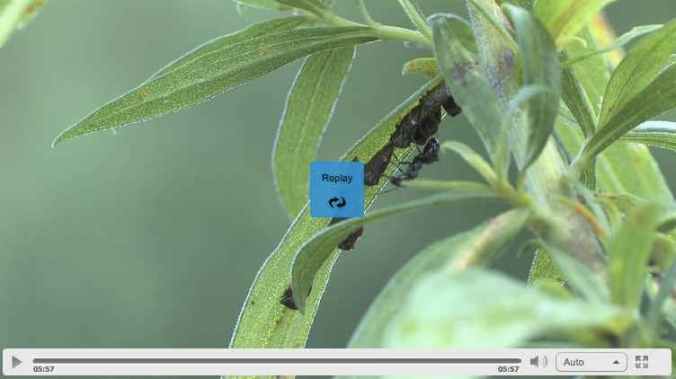
Cornell University’s social media outreach often includes topics we cover regularly on this site, this video being a standard example, so we share six minutes on a topic of relevance to several of Raxa Collective’s properties where immersion in learning about nature is our parallel universe equivalent of Professor Agrawal’s approach:

Nature as the Classroom: Goldenrod, Treehoppers and Ants

Classes in field biology are often very defined; go here, do that, measure this and come to this conclusion. Students in Anurag Agrawal’s field ecology course observe treehoppers in a field of goldenrod and devise their own study, then collect data to answer the questions. The approach comes much closer to how real field biology is actually done.

Learning Laboratories, Museums, And Art’s Future Venues

Jon Chase/Harvard Staff Photographer. Harvard Art Museums Director Tom Lentz (from left) moderated a discussion with MoMA Director Glenn Lowry, A.M. '78, Ph.D. '82, Elizabeth Cary Agassiz Professor of the Humanities Jennifer Roberts, and Paul Ha, director, List Visual Arts Center at MIT.

Jon Chase/Harvard Staff Photographer. Harvard Art Museums Director Tom Lentz (from left) moderated a discussion with MoMA Director Glenn Lowry, A.M. ’78, Ph.D. ’82, Elizabeth Cary Agassiz Professor of the Humanities Jennifer Roberts, and Paul Ha, director, List Visual Arts Center at MIT.

Thanks to the Harvard Gazette for this story about museums functioning as inclusive, modern learning laboratories:

In the 1970s, the Italian architect Renzo Piano was a young upstart with immense talent and brazen daring. It was then, still fairly early in his career, that Piano and his partner, the architect Richard Rogers, redefined the architectural landscape with their groundbreaking Pompidou Center in Paris. Continue reading

If You Happen To Be In New York City

website-header1

It is the sort of conference we are happy to see hosted by an MBA program:

MILLENNIALS RISING: WHAT’S NEXT FOR SUSTAINABILITY?

Friday, October 31, 2014

We are living in promising but turbulent times. Never before has there been such interest in harnessing innovation to find sustainable solutions for communities and the environment, but never have the problems been more urgent, complex or challenging.

While more business leaders are pursuing sustainable strategies, what can be done to accelerate this change and harness the talents of millennials as future sustainable leaders to ensure they realize this potential? What can be done to sustain interest in solving social and environmental issues, sustain funding for these efforts, and sustain the pipeline of social entrepreneurs leading these changes?

Join us at the 2014 Social Enterprise Conference by Columbia Business School and help spark the conversation on driving sustainable change beyond the new millennium:

Continue reading

A Conversation with Bill Gates

Screen Shot 2014-10-06 at 3.43.23 PMLast week, Bill Gates visited Cornell University for a question and answer session after attending the dedication of Bill & Melinda Gates Hall, the new Computing and Information Science building that was supported by a $25 million gift from the Bill & Melinda Gates Foundation. You can read a summary of Mr. Gates’s discussion here.

Tacacorí Rocks Birds

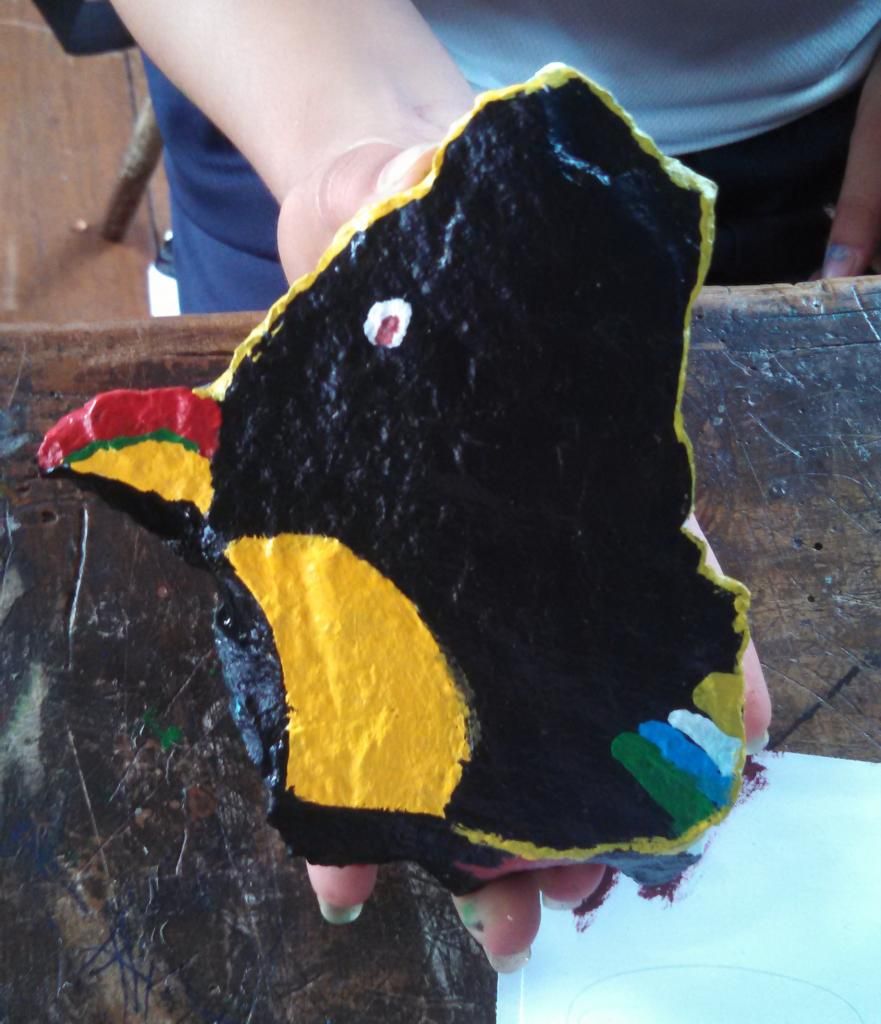
A sixth-grade creation

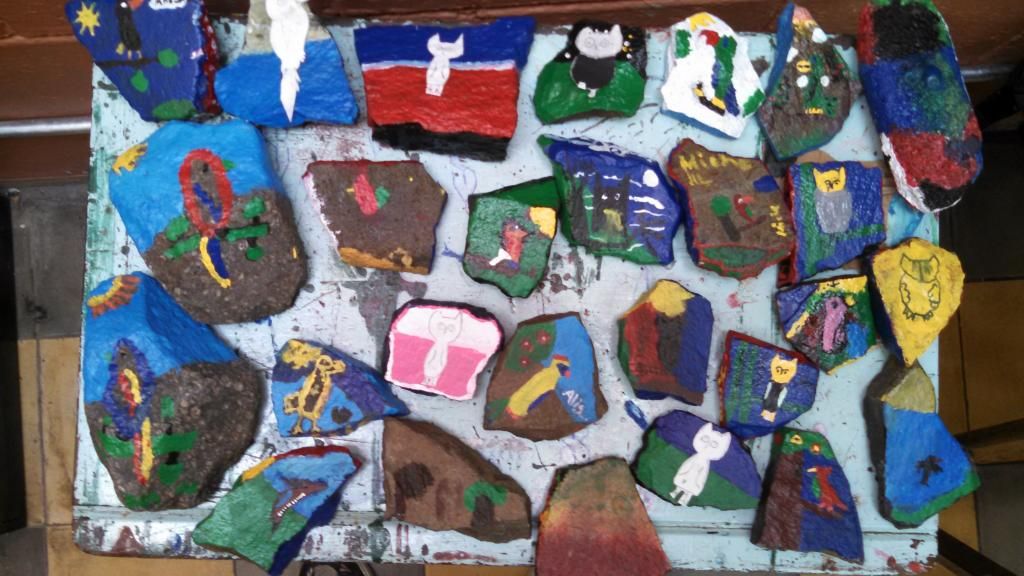
Starting last week, I began the next art project at the elementary school in Tacacorí. After learning that over time the papier-mâché creations succumbed to the Central Valley’s relative humidity and became difficult to preserve, I decided to find a more solid medium. I liked the idea of recycled plastic bottles from the hotel but I worried about the extensive use of scissors they’d require and all the sharp plastic edges that would be created in the process. Instead, I went with the option that, although not exactly recycled, at least doesn’t require industrially-created materials and is fairly abundant: rocks. And the best part is that stone is impervious to humidity (on the scale of time that we’re thinking about).

Fifth-grade creations — some kids pasted paper versions of their bird on the rock.

In the slideshow below, you can see some of the fifth- and sixth-graders’ works of art Continue reading

Documenting the Conservation Story, Part 2

Photo courtesy of Heena Metha

Photo credit: Heena Metha

As I mentioned earlier, the internship program for my school requires we do an Informational Interview with our supervisor. I wanted to share the interview here for other people who are interested in entrepreneurial conservation. The rest of the information from the interview will soon be in the updated About section of the site.

Informational Interview with Crist Inman, Founder of La Paz Group:

1. How does the partnership between environment and business work in the sustainable tourism industry?

The idea behind it is what we call the valorization of nature, paying for conservation through experiential services rather than exploiting nature for its extractive value. For example, you can cut down a tree only once, but you can monetize it by having people pay for a hike over and over again. It is a partnership between environment and business that engages people in conservation. Philanthropic conservation such as writing a check to WWF or The Nature Conservancy is good and important, but there is still a deficit of conservation.

The public sector plays an incredibly important role as well, but we are going to need more than philanthropy and public sector work because the world is losing more wilderness than all the philanthropies and governments in the world combined can protect. The intangibles of culture loss are harder to detect and comprehend but the world is losing too much cultural heritage as well. This is a business model that allows people to engage in conservation rather than just writing a check as a donation or in the form of tax. This allows people to participate and experience nature and culture in a way that makes business sense as much as it achieves conservation.

2. What is entrepreneurial conservation?

Usually these two words don’t get used in the same sentence. Together though, these words build something more valuable and effective than either could on their own. The premise underlying entrepreneurial conservation is that there are good economic reasons to preserve natural and cultural heritage. And when such good reasons present themselves, opportunity and need go hand in hand. Essentially, it is professionals developing and/or managing a business whose profits are invested in the conservation of natural and/or cultural patrimony. Continue reading

Technology Aids Access Of Classicists To Classics

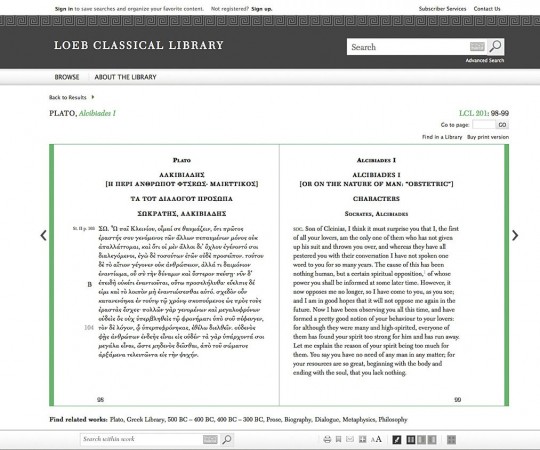
The Loeb classics, newly available online

The Loeb classics, newly available online

We do not know whether James has made his way to the library yet, but we imagine there are classical treasures in the vaults at Harvard University that can only be appreciated in person. But a scholar’s best friend will likely, increasingly be technology like this:

WHEN JAMES LOEB designed his soon-to-be-launched series of Greek and Roman texts at the turn of the twentieth century, he envisioned the production of volumes that could easily fit in readers’ coat pockets. A century later, that compact format is still one of the collection’s hallmarks. Beginning in September, however, the iconic books will be far handier than Loeb had hoped: users of the Loeb Classical Library (LCL) will have the entire collection at their fingertips. After five years of dedicated work on the part of the library’s trustees and Harvard University Press (HUP), which has overseen LCL since its creator’s death in 1933, the more than 520 volumes of literature that make up the series will be accessible online. Besides allowing users to browse the digitized volumes, which retain the unique side-by-side view of the original text and its English translation, the Digital Loeb Classical Library will enable readers to search for words and phrases across the entire corpus, to annotate content, to share notes and reading lists with others, and to create their own libraries using personal workspaces.  Continue reading

A Former Best Half Hour Of The Day Melted Further, For Reflective Fun

We recently noted two days in a row that it might be good to take half an hour or so each day to reflect; hinting that there is general tendency to not allot enough daily time for reading, for important ideas, etc.. Of course, sometimes when one reads such a thought, in hindsight it can sound heavy and dull and self-important and, well, probably boring.

Cheer up. The cartoon editor of the New Yorker insists on it, and he is good at getting his way:

I just finished a fascinating blog post by Joshua Rothman called “What College Can’t Do.” There are so many insightful points in the essay that it wouldn’t make sense for me to cite just a quote or two. Continue reading

Yesterday’s Best Half Hour Melted Into Today’s

Rothman-College-690x469-1407173630

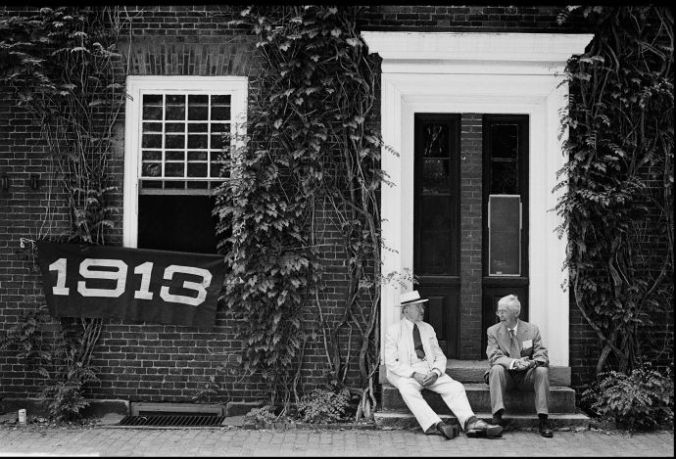
A pair of Harvard alumni on campus for commencement, in 1977. CREDIT PHOTOGRAPH BY CONSTANTINE MANOS/MAGNUM.

Just after this post had been published yesterday, starting with the acknowledgement of busy-ness and concluding that education plays a key, if mysterious role in character-building and communication capabilities, a kind of echo reverberated through the reading of this post by Joshua Rothman:

There’s a special joy in giving someone advice that’s sure not to be followed—“Wake up at the same time every morning”; “Don’t check your e-mail while on vacation”—and William Deresiewicz must have felt it when writing his recent cover story for The New Republic, “Don’t Send Your Kid to the Ivy League.” Hypercompetitive colleges, Deresiewicz wrote,  Continue reading

Shakespeare, Crown Toady?

Shakespeare

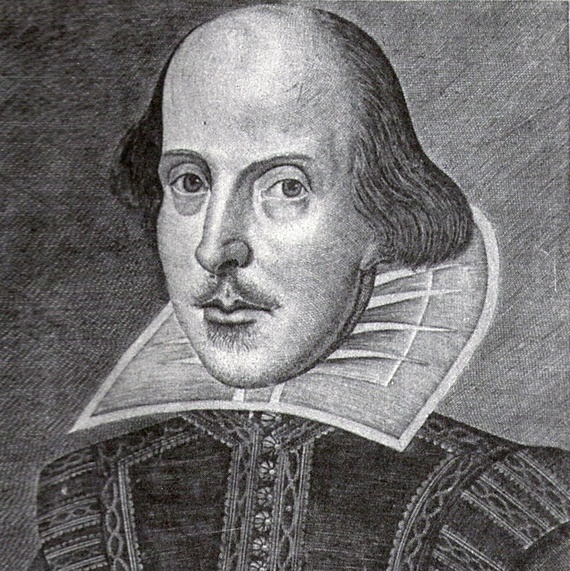
In honor of the departure of James from Xandari, we send him off with a blast of relative modernity. Shakespeare is certainly classic, but tres nouveau in terms of a classicist.

Little did any of the liberal arts majors among Raxa Collective contributors know that the image we have of a witty, well-versed but ultimately populist entertainer is confounded by a consistent streak of conservatism. But we are thankful for the enlightenment, that far from being an equal opportunity observer and critic of all forms of foible, the Bard was so unwilling to bite the hand that fed:

Ira Glass recently admitted that he is not all that into Shakespeare, explaining that Shakespeare’s plays are “not relatable [and are] unemotional.” This caused a certain amount of incredulity and horror—but The Washington Post’s Alyssa Rosenberg took the opportunity to point out that Shakespeare reverence can be deadening. “It does greater honor to Shakespeare to recognize that he was a man rather than a god. We keep him [Shakespeare] alive best by debating his work and the work that others do with it rather than by locking him away to dusty, honored and ultimately doomed posterity,” she argued. Continue reading

Laughing At, And With, Ancient Rome

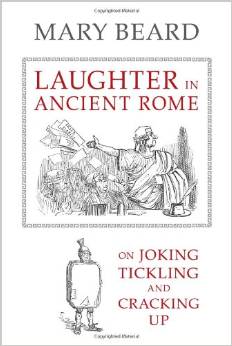
romelaughThis post is about as random as we get on this blog, but still, there is a mission-driven point. Along with all our work, there must also be reflection and communication; education in the classics strikes us as an excellent preparation, as excellent as any, for our line of work. In further honor of James during the last week of his work in person at Xandari, we share a book review to help us understand laughter in the olden days:

…Even a simple comic device can land us in deep water, psychologically speaking.

What, if anything, does Geng’s piece have in common with the movie Police Academy 2: Their First Assignment? What does either have in common with knock-knock jokes, or with Gilbert Gottfried’s famous performance of “The Aristocrats” a few weeks after September 11? These are not easy questions to answer, even for a culture we know from the inside. And the difficulties only multiply when we confront the humor of another time and language. It is that challenge that Mary Beard sets herself in Laughter in Ancient Rome, the printed version of her lectures as the 2008–2009 Sather Professor at Berkeley. Continue reading

Bird Fun (…and Aristotle?) around Tacacorí

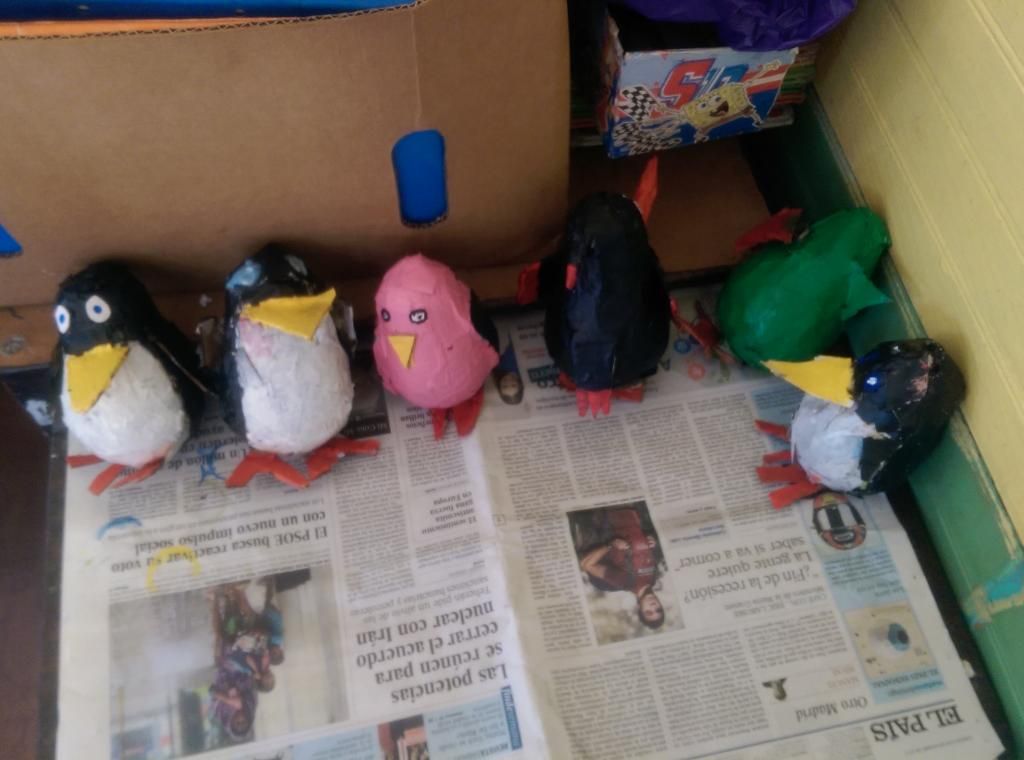
Papier-mâché penguins and other birds from the fourth grade class

In his recent post on our work at the local school in Tacacorí, Seth outlined our papier-mâché and painting ambitions with the third and fourth grades there. The second half of the week, Seth and I were split up because of the kids’ conflicting class schedules. I took fourth grade on the last few days, and he worked with third grade.

In his Poetics, Aristotle elaborates an aesthetic theory partly on the basis of μίμησις (mimēsis), or “imitation.” According to Aristotle, humans are “mimetic” beings, that is, disposed to imitate nature and other human beings. Art’s basis is precisely in Continue reading

Building Kerala’s Entrepreneurial Next Generation

Screen Shot 2014-06-22 at 11.50.48 AM

We hope it is both bark and bite (that the idea catches and results in young entrepreneurs getting the support they need in an an otherwise very old school economic culture that would definitely benefit from more startups) and will track it; but for now, fyi: Continue reading

Saving Species–One Paper, One Video, One Course, And One Initiative At A Time

saving-species-logo-long-small

We thank Stuart Pimm for his ongoing excellent contributions to conservation through science and education, as well as creative activism, and congratulate him and his colleagues for their most recent publication:

new scientific paper was published today in the prestigious journal Science and it has important findings for biodiversity. Though it reaffirms what we already know—that there is a global extinction crisis and it is worse than we believed—it also details how technology and smart decision-making are offering hope for endangered species and their habitats. Continue reading

Go Ahead, Laugh About Climate Change

climate-change-comedy-290I am not 100% certain that laughter is an antidote to anything, but every now and then it seems like the only option. HOW TO LAUGH AT CLIMATE CHANGE, by Michelle Nijhuis, had its intended effect on me:

Continue reading

Visualizing Carbon


Carbon, and what to do about it, has been a constant topic of interest to our readers since we began this site. The single most-read post, Carbon Emissions Series: Vacationers’ Diets is on this very topic. But how can we visualize carbon such that we care more about it? Thanks to the website of the magazine Conservation for this link, whose title says it all:

CARBON VISUALS: ANIMATING THE WORLD’S CARS

A short animated film from Carbon Visuals is being used to engage managers around the world about the fundamentals of sustainability, how sustainability is relevant to their role and its importance to business success.

Continue reading

“It’s Like A Travel Book”

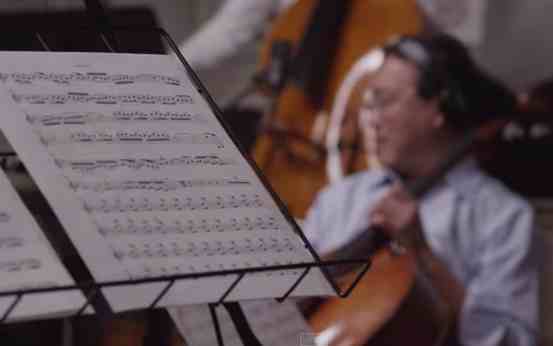
Music forms a type of universal memory the crosses cultures and continents, and Yo-Yo Ma’s Silk Road Ensemble that brings together musicians and composers from more than 20 countries is a lyrical example of what we hold dear at RAXA Collective. The 2,000 year old history of the Silk Road also coincides with the Spice Road, which is also a subject we take very personally.

The extent of exchange of art, ideas and innovations between cultural groups trading on the routes is illustrated by the eighth-century Shôsôin collection of artifacts. Culled by a Japanese emperor, it contains luxury goods from the Mediterranean, Persia, India, Central Asia, China, Korea and Japan…

Continue reading

If You Do Not Happen To Be In Monterey Bay, You Might Want To Be

This slideshow requires JavaScript.

Something is happening in the Bay Area, and it is worth a listen, or a quick read. National Public Radio (USA) has a podcast version of this story here:

Monterey Bay on California’s central coast rests atop one of the largest underwater canyons in the world. It’s deeper than the Grand Canyon, making it possible for lots of ocean life — including humpback whales, orcas, dolphins and sea lions — to be seen extremely close to shore. That is, given the right circumstances. Lately, the right circumstances have converged, and there’s more marine and wildlife in the bay than anyone’s seen in recent memory. Continue reading