Innovation In Humanities, Essential To Our Future

Image by Corbis Images.  Thomas Rowlandson’s view of the library of the Royal Institution in London, circa 1810

Image by Corbis Images.
Thomas Rowlandson’s view of the library of the Royal Institution in London, circa 1810

We have been monitoring Harvard Magazine and some of its kindred publications since the early days of this blog, as constant sources of interesting articles relevant to our interests; and now this:

Toward Cultural Citizenship

New gateways into the humanities for students “still fully molten as human beings” by Jonathan Shaw  May-June 2014

Continue reading

Field Trips-R-Us

Science teachers huddle over bacteria colonies at Chicago's Museum of Science and Industry. The museum plans to train 1,000 area educators to be better science teachers in the next five years. Linda Lutton/WBEZ

Science teachers huddle over bacteria colonies at Chicago’s Museum of Science and Industry. The museum plans to train 1,000 area educators to be better science teachers in the next five years. Linda Lutton/WBEZ

We are partial to field trips. Bravo to these educators for recognizing their value and putting their own two feet forward first (thanks to NPR, USA, for the podcast and published story):

In a classroom across from the coal mine exhibit at the Chicago’s Museum of Science and Industry, students are huddled around tables, studying petri dishes of bacteria.

But these aren’t school-age kids — these students are all teachers, responsible for imparting science to upper-elementary or middle-school students.

That’s a job that many here — and many teachers in grammar schools around the country — feel unprepared for. Continue reading

Birding’s Big Catch

The world of birding, it is safe to say, is growing. Occasionally we read about a noted person having established a passion for birdwatching and/or related conservation. Normally we do not take a humorist literally, but David Letterman, in announcing his retirement, seemed to give birds and in particular a newfound interest in bird identification a special credit in realizing he wanted to do something else with his time now:

…Letterman told the audience that people have always asked him how long he would continue to host. His answer is usually, “When this show stops being fun — I will retire 10 years later.”

Continuing his tale, Letterman said that he wanted to share an anecdote: Last fall, he went fishing with his 10-year-old son, Harry, and during the outing, they saw a giant, crazy-looking bird. So when Letterman got into work that following Monday, he spent the entire day making calls to bird societies, e-mailing the photo to his outdoorsy friends, and launching a full-scale investigation to find out what type of bird they saw. Continue reading

Professors, aka Heroes, Who Teach What Others Might Shun

Thanks to the New York Times for the weekly Tuesday Science section:

08CONV_SPAN-thumbStandardA CONVERSATION WITH

What Fish Teach Us About Us

Neil H. Shubin, the paleontologist who helped discover a fossil hailed as a missing link between sea and land animals, talks about his television series, “Your Inner Fish,” and why he teaches anatomy classes.

Pro-Environment Posters For WWF’s March 29 Earth Hour Initiative

Walk the Walk by Marina Willer for 29 Posters for the Planet

Walk the Walk by Marina Willer for 29 Posters for the Planet

We appreciate collaborative efforts to raise awareness about environmental issues, especially when they come from places where the focus is not normally on conservation. Design agencies are generally designed to sell more stuff. Publishers are generally designed to use ex-trees to communicate stuff. But some designers are on the other side of the consumer behavior-influencing fence. And some publishers use those ex-trees to publicize a more tree-centric future.  Ethics sometimes prevail over ambition. Education sometimes jumps the line.

Professional communities–whether design firms, publishers, hotel companies or take your pick–all have latent collective action lurking in their futures. We hope nature and culture are the beneficiaries. Thanks in particular at this moment to publisher Phaidon, which is in itself worthy of a post on its series of environmentally-friendly books and initiatives, for bringing this initiative of design firm Pentagram to our attention:

Pentagram’s carbon free foot print

Design agency works with Do The Green Thing charity on environmentally friendly posters

The gulf between our high-consumption lifestyles and the kind of sustainable world many of us hope to inhabit is vast. Yet the changes that could take us there aren’t unthinkable, as our recent book, The World We Made, makes clear. Continue reading

Mathematics & Community

Alexander F. Yuan/AP Images

Alexander F. Yuan/AP Images

This article, in the Atlantic, at first seemed to have nothing to do with our core themes of community, collaboration or conservation, but reading it to the end, we see that on the contrary there is a strong link. All three of those words are closely connected to education, which is closely connected to economic opportunity, which is closely connected to the feasibility of conservation, our deepest concern.  Plus, many in our realm can attest to childhood mathematical experiences, many unpleasant, that might not after all be required to develop aptitude and appetite for what is after all just another language:

The familiar, hierarchical sequence of math instruction starts with counting, followed by addition and subtraction, then multiplication and division. The computational set expands to include bigger and bigger numbers, and at some point, fractions enter the picture, too. Then in early adolescence, students are introduced to patterns of numbers and letters, in the entirely new subject of algebra. A minority of students then wend their way through geometry, trigonometry and, finally, calculus, which is considered the pinnacle of high-school-level math. Continue reading

The Canopy Is A Portal

When we first met Dr. Meg Lowman last year we were already familiar with the use of tree climbing techniques for forest biology research. But the pioneer of canopy ecology includes an additional dimension to her REU (Research Experiences for Undergraduates) by acknowledging that physical mobility has little to do with being an effective field biologist. “To explore the canopy we climb ropes not trees, and in the lab we use microscopes, computers and minds, which have no limits.”

The Baker University program had been open to eight students, half of whom had ambulatory disabilities. All eight students were professionally trained to ascend into the canopy to collect moss, lichen and leaves to measure the impact of the invertebrates like tardigrades (water bears) on the habitat. Continue reading

A Science Writer’s Public Service

41EWvquSk3L_SL500_AA300_.5095659_std

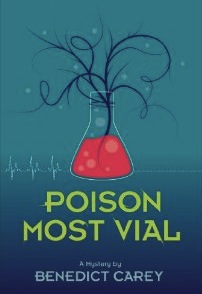
The famous forensic scientist Dr. Rama is dead – murdered – and suspicion has fallen on Ruby Rose’s father, the only family she has. Ruby is new to her school and is having enough trouble just making a friend; now she has far bigger problems. To save her father, she will have to solve the murder herself, relying for help on an elderly neighbor who used to be a toxicologist. But is this woman reliable? And is there enough time?

Benedict Carey is better known as a science reporter for the New York Times, but that is just his day job.  It certainly qualifies as public service, but in addition he moonlights on further public service. He explains his purpose:

Both books are adventures in which kids use science to save themselves and solve a mystery. It’s real science, accessible but not obvious, and builds understanding of some fairly advanced principles – transcendental numbers (among other things) in “Island of the Unknowns,” and mass chromatography in “Poison Most Vial.”

In a trailer park called Adjacent, next to the Folsom Energy Plant, people have started to vanish, and no one seems to care. At first Lady Di and her best friend, Tom Jones, barely notice the disappearances—until their beloved math tutor, Mrs. Clarke, is abducted, too. Mrs. Clarke has left them clues in the form of math equations that lead them and other kids all over the trailer park, through hidden tunnels under “Mount Trashmore,” and into the Folsom Energy Plant itself, where Lady Di and Tom Jones and a gang of other misfits uncover the sordid truth about what’s really happening there. That's Di on the left and Tom on the right.

In a trailer park called Adjacent, next to the Folsom Energy Plant, people have started to vanish, and no one seems to care. At first Lady Di and her best friend, Tom Jones, barely notice the disappearances—until their beloved math tutor, Mrs. Clarke, is abducted, too. Mrs. Clarke has left them clues in the form of math equations that lead them and other kids all over the trailer park, through hidden tunnels under “Mount Trashmore,” and into the Folsom Energy Plant itself, where Lady Di and Tom Jones and a gang of other misfits uncover the sordid truth about what’s really happening there. That’s Di on the left and Tom on the right.

Perfectly principled reality: if you had been restricted to Benedict Carey’s better known science reporting for the New York Times, that would be not such a bad thing. He also serves on the board of Edge, a non-profit which seeks to “arrive at the edge of the world’s knowledge, seek out the most complex and sophisticated minds, put them in a room together, and have them ask each other the questions they are asking themselves.” Again, not bad.

But we like in particular the effort to branch out further, reaching the next generation and aiding the mathematical and scientific efforts of educators who otherwise compete with entertainment of all sorts for the hearts and minds of youth.

That said, do not miss his reporting. He is a master at this trade, and improves the quality of conversation we are determined to engage in more often. His most recent article for the Times reviews the research into cognitive performance and aging and with humor and gravitas all at once he acknowledges why as we get older we tend not to be too interested in these findings: Continue reading

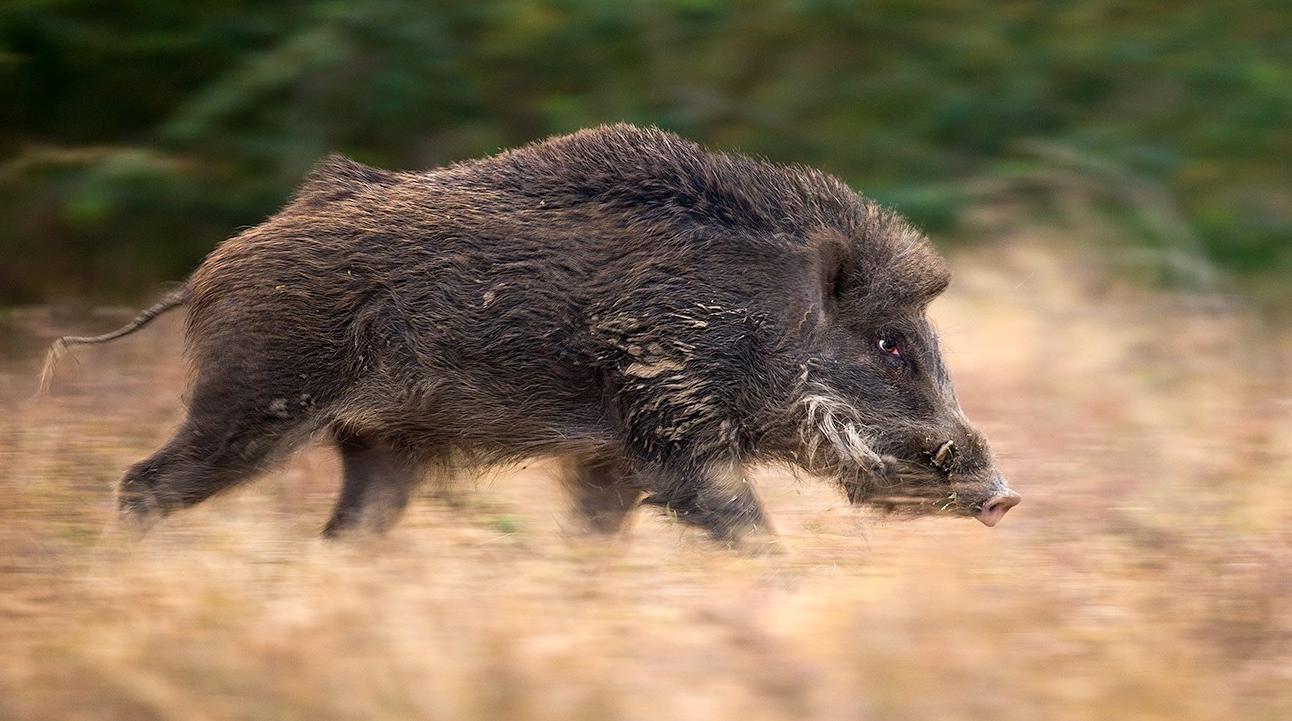
Boar on the Run

The Little Rann of Kutch in Gujarat is a nature photographer’s dream for capturing a range of wildlife as well as stunning landscapes. The wide open views are particularly good for panning shots. As a photographer you need to understand the impact of shutter speed on your images. If the image is static (no movement) then the shutter speed isn’t critical since it doesn’t have any impact (of course aperture will have). Continue reading

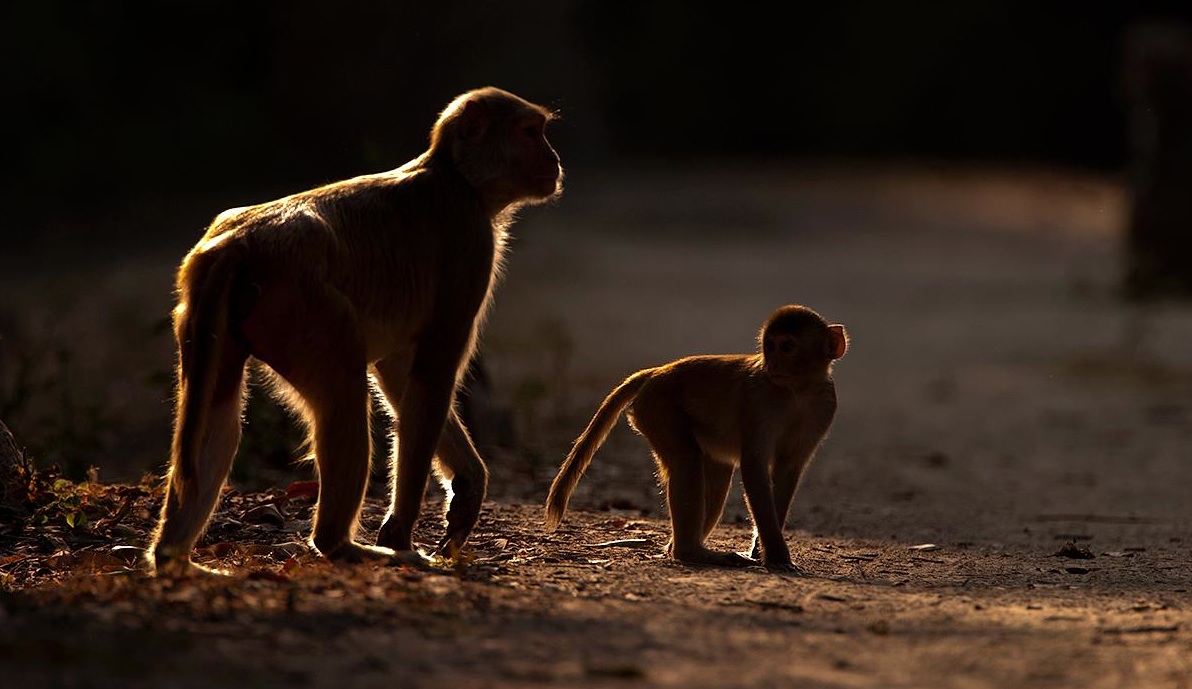
Rim Shot

Part of what I call the previsualization process in photography relates to lighting. A good photographic artist must be able to understand their equipment well enough to blend what they see through the viewfinder and visualize the framing from the lens+camera combination.

I was walking in this path at Bharatpur when I saw this group of Rhesus Macaques coming from behind me. I saw this light patch in front of me and stopped for the Macaques to cross that patch.

I knew I would get the image I visualized if any of the macaques stopped at that point. Continue reading

Disrupting Education’s Status Quo

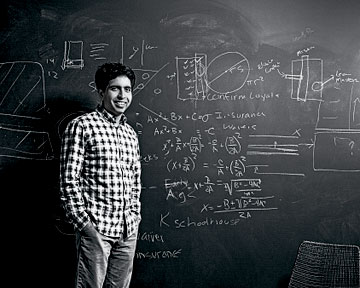
Harvard Business Review offers this interview with the founder of Khan Academy, a non-profit educational initiative that has been succeeding the way many dot-com businesses succeed–the difference being that all the benefits accrue to students and their educational attainment around the world. Bravo, Mr. Khan:

…In the traditional academic model, you’re passive. You sit in a chair, and the teacher tries to project knowledge at you; some of it sticks, some of it doesn’t. That’s not an effective way to learn. Worse, it creates a mind-set of “you need to teach me,” so when you’re on your own, you think, “I can’t learn.” Anyone in any industry will tell you there’s new stuff to learn every week these days. So you have to say, “What information and people do I have at my disposal? What questions do I need to ask? How do I gauge whether I’ve really understood it?” Khan Academy is designed to give students that agency. If you want to get more tangible, I would say learn how to program a computer, more about the law, and definitely statistics… Continue reading

Criss-Crossed Stripes

tigers

This photo of a tiger cub with its mother was taken at Tadoba Tiger Reserve. Composition is an art and it takes time, patience and perseverance to collect your thoughts and compose the image you’ve visualised.

There are guidelines for composition, but as the name implies, they are just guidelines to be aware of. In this photo I composed an image where the mother’s face isn’t seen, and the legs and majority of the tigers’ bodies are cropped out of the frame…but still, I feel this image has a strong visual impact. Continue reading

Bee-eater Behavior

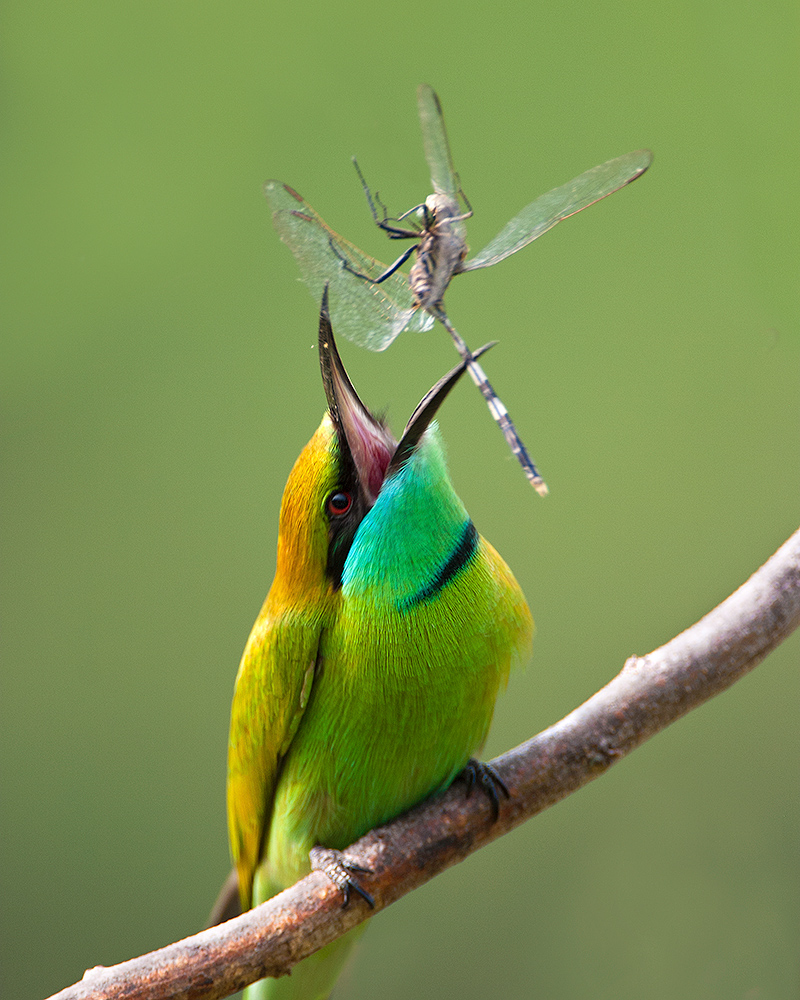
Green Bee-eater by Sudhir Shivaram - RAXA Collective

There are 4 key elements to be a better photographer.

1. Understand your subject.
2. Understand the fundamental concepts of photography, including composition aspects.
3. Understand your equipment and shooting techniques.
4. Have a good grasp of digital post processing.

Each of these are very tightly coupled with each other and it is important to have a good grasp on each of them. Continue reading

Sleuthing for Birds

Next to my Celebrate Urban Birds student work-desk at the Lab of Ornithology, team members of the inquiry-based science program called BirdSleuth are always busy developing new curriculum plans in avian education for K-12 students and instructors to learn more about birds and the local environment through citizen science and discovery driven by curiosity.

Photo © Shailee Shah / Lab of Ornithology

Originally called “Classroom BirdWatch,” the program provides training, kits, and other resources to encourage investigation and data collection among youth. Although it started in 2004 under a National Science Foundation grant in the US, about five years ago Continue reading

Monitoring Monitors

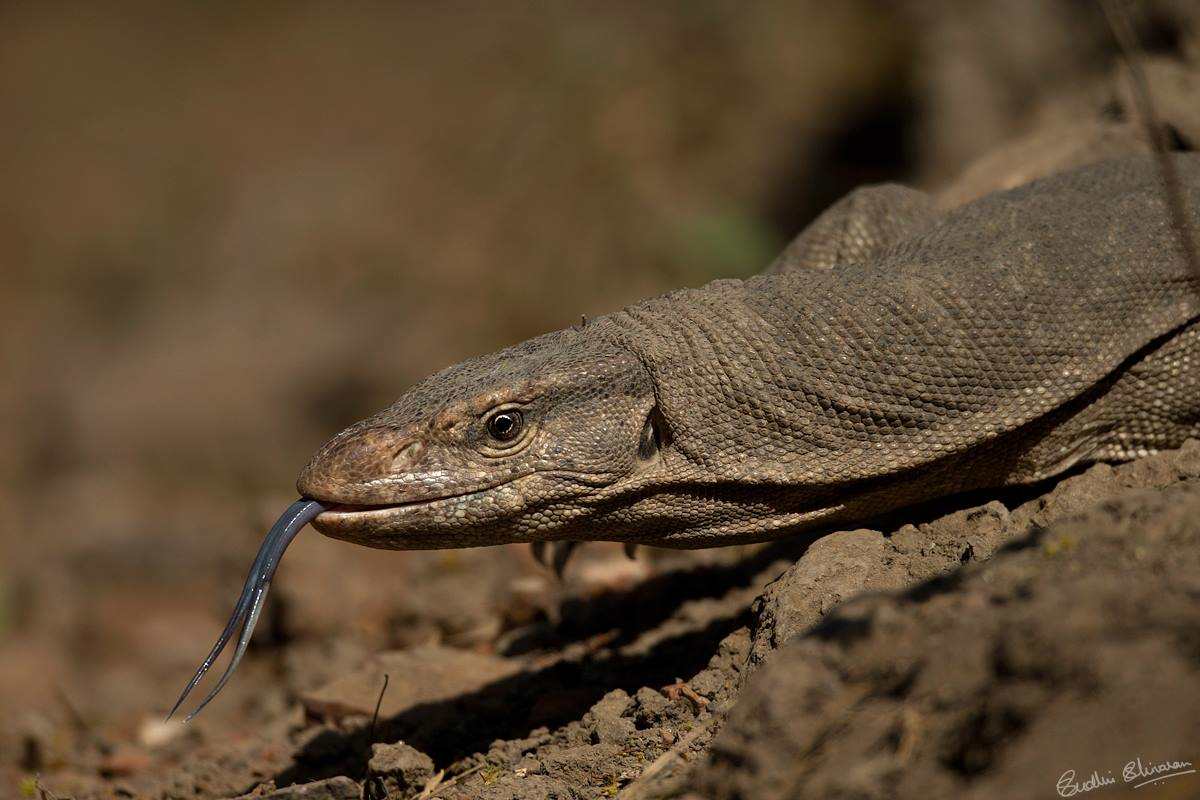
The Keoladeo Ghana National Park (also known as Bharatpur Bird Sanctuary) is home to numerous species including the Indian Monitor Lizard. They are quiet easy to photograph as they come out in the sun to bask. Continue reading

Getting Down and Dirty at Bharatpur

At my recent Bharatpur National Park workshop we were working on composing eye level shots. When choosing a tripod for wildlife photography avoid tripods with the centre column, as you can see you need to flatten up the legs for eye level.

I’ve never said getting great images in the wild is easy and the participants were willing to follow my lead to get the shots. They got some great eye level photos of the jackals here. Continue reading

Liking the Light

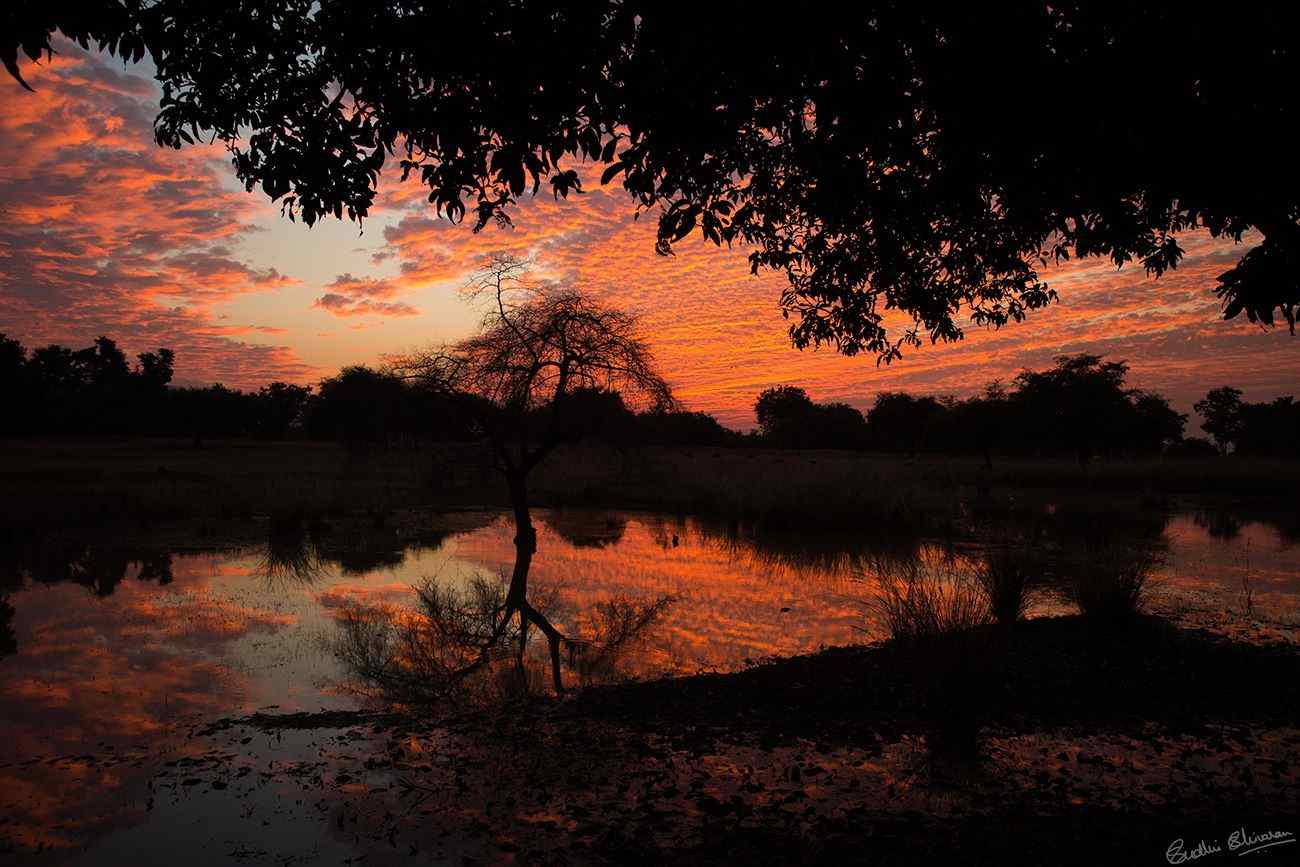
One of the most frequently asked question I receive is about what settings to use to photograph a sunset or sunrise.

This image was photographed at Satpura National Park – an amazing place to capture both due to the beautiful watery surroundings. The open grounds offer the added advantage of being the habitat of mammals like the spotted deer so I planned to capture them in silhouette against the magical sky. Continue reading

Sambar Waterplay

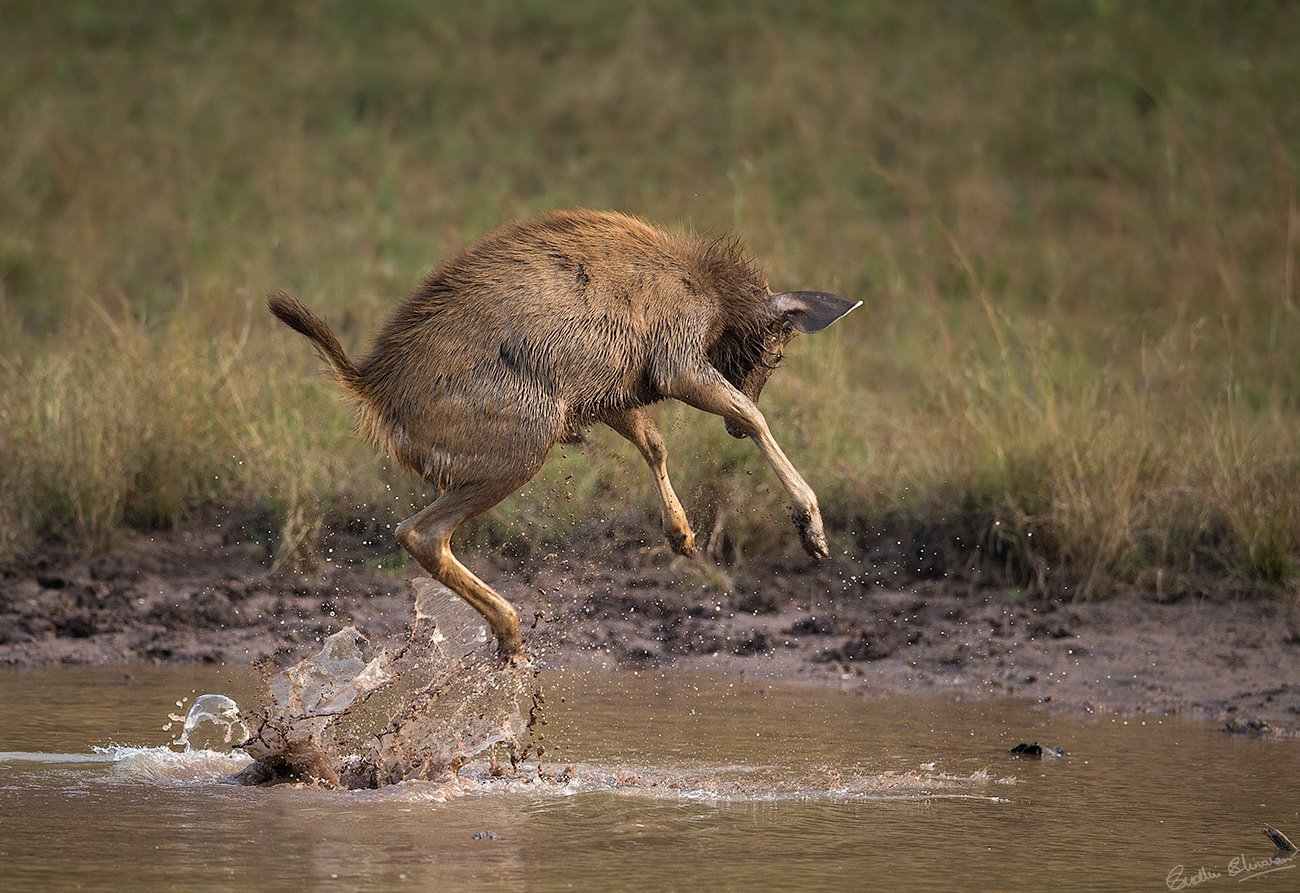
As a wildlife photographer and educator I have the privileged opportunity to give workshops in numerous national parks of India. At the Satpura National Park in Madhya Pradesh I witnessed this kind of behaviour from the Sambar Deer for the first time. It was playing by itself in the muddy water. It sunk its face in the mud, got up, ran around in the water and suddenly jumped. Continue reading

Blackbuck Photo Op

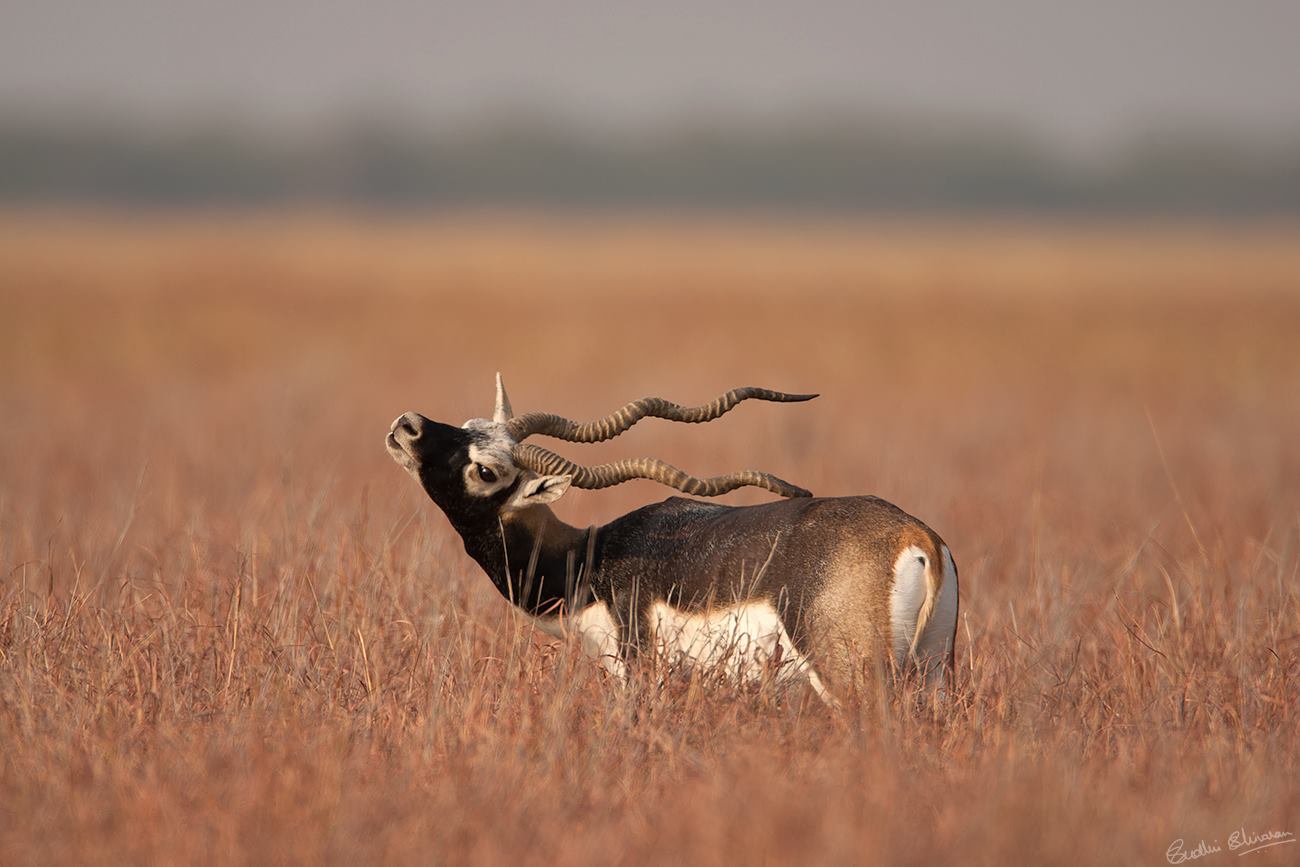
Blackbuck National Park at Velavadar in the Bhavnagar District of Gujarat is a paradise to photograph blackbucks in their natural habitat. They are photographer friendly and will pose for you.

Exposure is a complex area of photography, but in situations like these where the habitat is open it is a bit easy to use the standard “sunny f16 rule”. Continue reading

Exploration Invitations

During travel to national parks and wildlife areas, apart from concentrating on mammals, birds and local fauna, it’s always good to absorb and document the flora and habitat as well. Kanha is a very beautiful park and the habitat is what makes it special. The early morning mist especially provides a lot of opportunities to make creative images. Continue reading