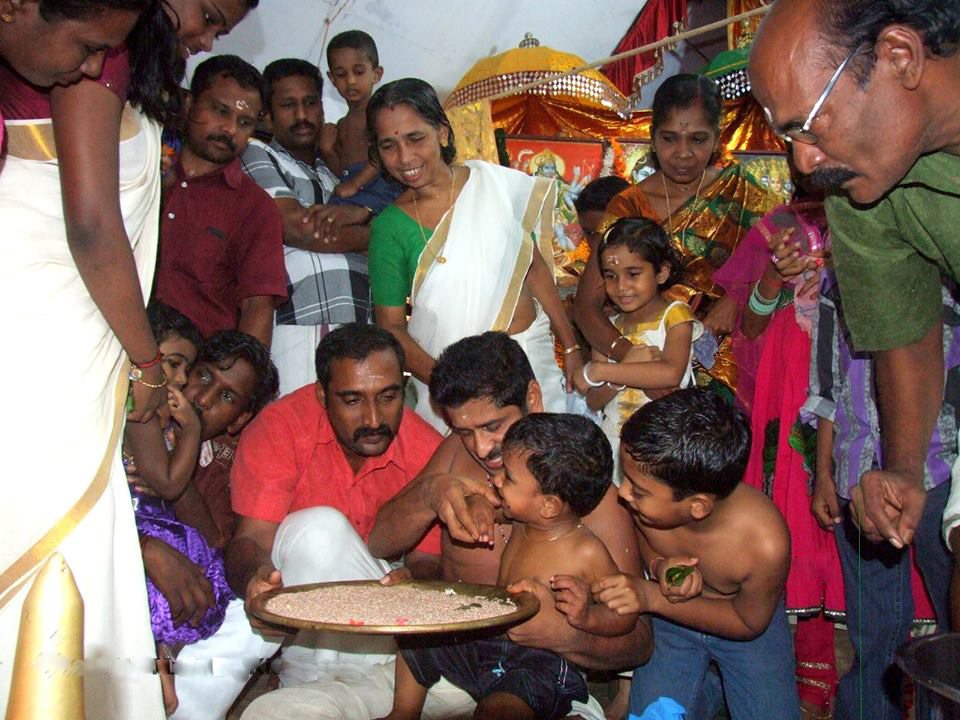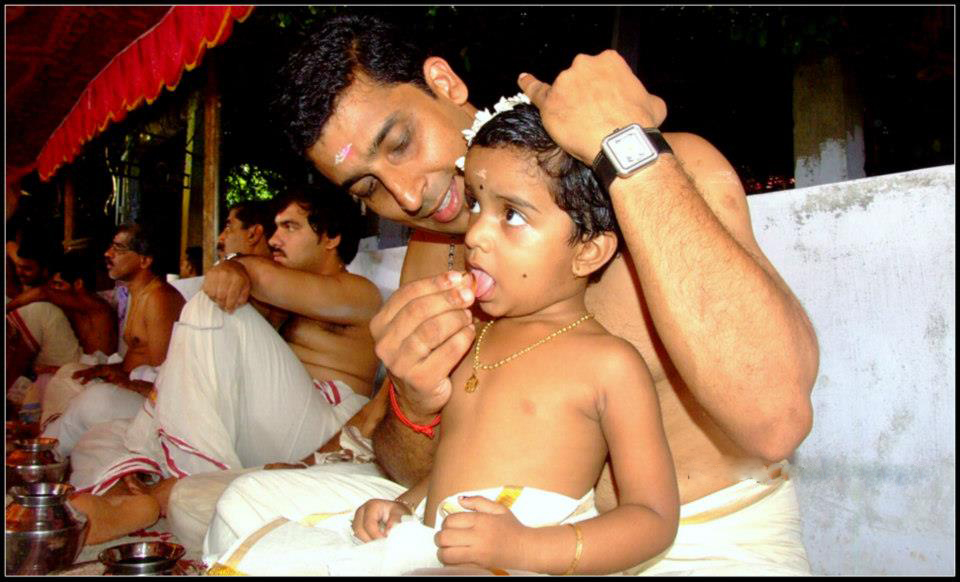
Vidyarambham is a traditional Hindu ritual conducted in the first week of October at the time of Navaratri, Vijayadshami day. Vidyarambham means the beginning of education. The Goddess Sarasvati is worshiped all over the country as the Goddess of learning. Continue reading
Education
Wildlife Week Parade in Kumily
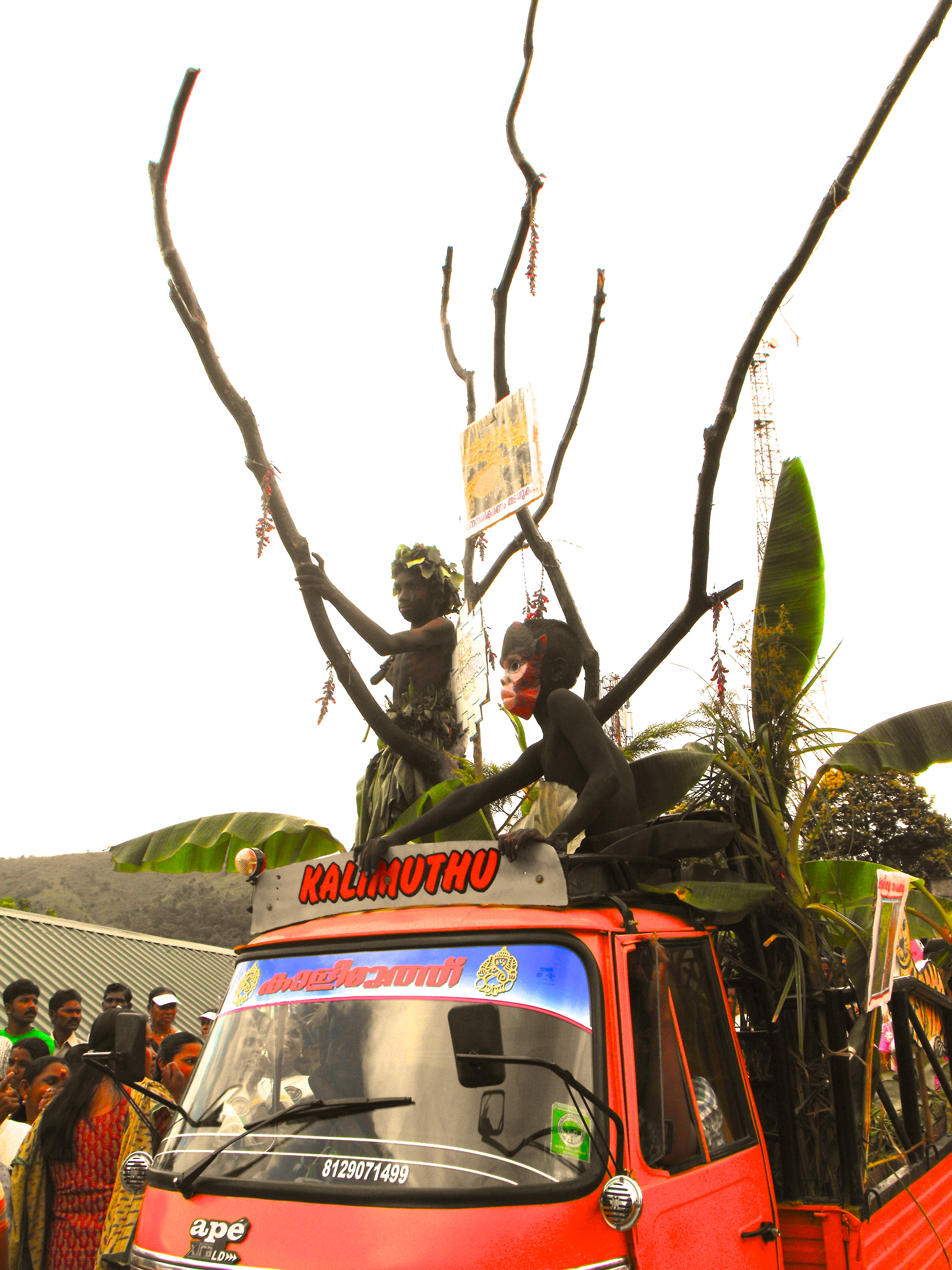
On the 8th of October Kumily held a parade in support of the Periyar Tiger Reserve and Wildlife Week. As an intern for Raxa Collective, I had the unique opportunity to participate in this procession. This was my first Indian parade, and in some ways it was very similar to the parades I had participated in the USA; the majority of people waited around in some confusion until someone with the knowledge of the lineup said to start walking, but what made this a very unique experience is I couldn’t understand the conversations of anyone besides my own party.
Education, Social Entrepreneurship, And The Next Wave Of Innovation
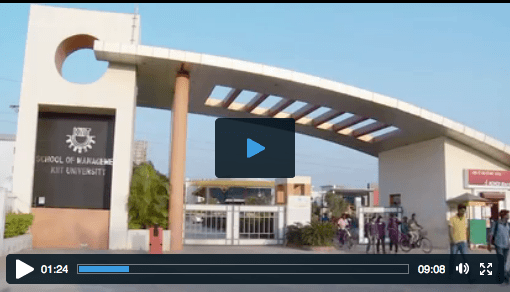
From the transcript of a segment on a PBS (USA public television) program some months back (click above to go to the video) that gets us thinking about our outreach programs in south India:
FRED DE SAM LAZARO: Here, education begins with meeting the most basic needs on an industrial scale and free of charge to the students.
ACHYUTA SAMANTA: Now they’re going for lunch.
FRED DE SAM LAZARO: How many students?
ACHYUTA SAMANTA: It is approximately now 8,000-plus are going for lunch. Continue reading
Action Capture
Each time I head into the field to photograph wildlife I watch their movements within the habitat patiently and then think about how best to tell that individual’s story. Frequently action is a dramatic part of it.
Shutter Speed is an important parameter of the “exposure triangle”. When photographing action you can freeze the image using a high shutter speed or can create motion blurr with slow shutter speed.
As a photographer you need to decide in advance how you want to capture the image, whether it’s a silky flow of water, panning shot, long exposure star trials, long exposure vehicle tail light trails etc. There is no one correct answer. Continue reading
Bringing Biology to Life
We may not be Science Geeks per se, but we’re clearly fans of that type of thing! Not to mention that some of “our own” being deeply involved in Citizen Science projects around the world…
So we say Kudos to the National Science Teacher’s Association for creating curriculum and publishing textbooks that are both real and engaging.
“Observing the life cycle of monarch butterflies and following their remarkable migratory journeys between Canada, the United States, and Mexico …
“Tracking climate change by recording the dates of first leaf, flower, and fruit of local trees, shrubs, flowers, and grasses …
“Discovering which bird species migrate, where they go, and when …
“Exploring life cycles and population dynamics of frogs, toads, and other animals in nearby ponds … Continue reading
Thinking, Communicating, Doing
From even just one brief interaction with students and faculty at Brown University, I might have predicted that a leader of that university would be so well suited to make this argument:
…we should embrace the debate about the value of the humanities. Let’s hear the criticisms that are often leveled, and do what we can to address them. Let’s make sure we give value to our students, and that we educate them for a variety of possible outcomes. Let’s do more to encourage cross-pollination between the sciences and the humanities for the benefit of each. Let’s educate all of our students in every discipline to use the best humanistic tools we have acquired over a millennium of university teaching—to engage in a civilized discourse about all of the great issues of our time. A grounding in the humanities will sharpen our answers to the toughest questions we are facing… Continue reading
Thekkady Nature in Focus
Thekkady-Kumily and the Periyar Tiger Reserve lie near the border between Kerala and Tamil Nadu. Periyar lake is an important watershed and a lifeline for wildlife in the region. The lake was created by the building of the Mullaperiyar Dam in 1895. What was started as a private game reserve became a wildlife sanctuary, and later the Periyar Tiger Reserve. While the area where the reserve is located is well-known as Thekkady, the town is named Kumily. It was a 5 minutes drive from our hotel to the PRT (Periyar Tiger Reserve) and from the entrance it’s a 500 meter walk to reach the boating jetty. From the jetty point, many visitors to the reserve take an hour-long boating safari where, with luck, the action along the bank can be viewed. For birders, most of the aquatic species can be expected, so luck is far less of an issue.
The evening of our arrival we had a workshop session during which our mentor gave us a good grip on exposure, metering, ISO and lots of inputs about the technical aspects of photography in general and wildlife photography in particular.
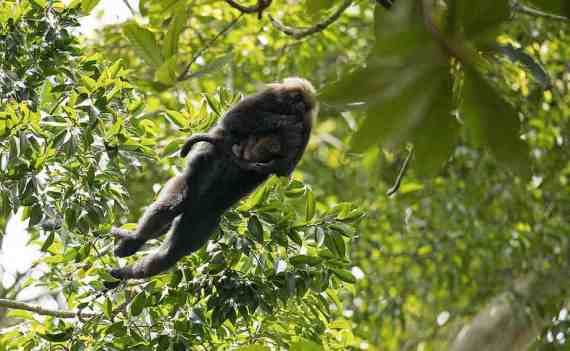
Early morning on the first day after a quick tea and snacks we headed out to PRT with all our gear. We were met by forest naturalists who were very well versed with the local conditions and the birding scene at that particular time of the year. We were given thick canvas knee-length “leech” socks which are dusted with tobacco powder, making them 100% leech resistant. We boarded a small raft driven by rope pulley to cross one of the many “fingers” of the many branched reservoir. After a brief time following the banks of the water we turned into the dense forest, where the penetration of morning sunlight was minimal. With such heavy equipment we really had to dodge the trees and hanging vines and made our way through the forest. The bird species sighted that first day were Malabar Trogon, White-bellied flycatcher, small blue kingfisher, spot-billed ducks, grey heron, Indian pond heron, little cormorant, white-cheeked barbet and a Malabar frog as an added bonus. It was a good 3 hr forest walk with birds chirping, frogs croaking and crickets making their presence felt. While just walking out of the PRT, we had a good sighting of a pair of grey Malabar hornbill with good photographic opportunity for all of us at close range. Our mammalian captures included a Malabar giant squirrel munching a nut and a group of Nilgiri langurs with young ones jumping around trees providing fantastic opportunities for dynamic shots. Continue reading
Our Gang, Thevara (Brother & Sister School Holiday Cricket Practice)
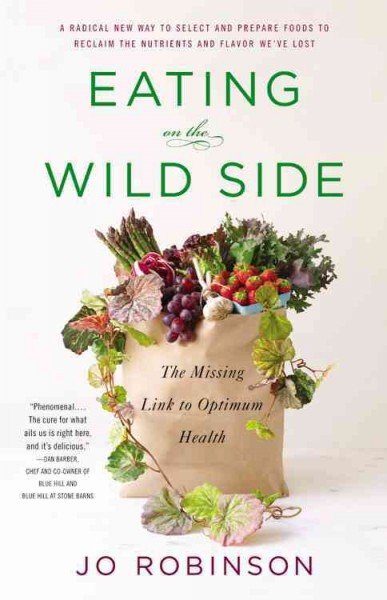
Eat Wild, Eat Well
As we start thinking through food programming at the two new properties we are working on here in Kerala, our attentions are scattered around the world, but eating wild keeps coming to us from all over. So when the great interviewer Dave Davies discusses this book with its author, podcast here, our attention is riveted:
In her new book, Eating on the Wild Side, Robinson argues that our prehistoric ancestors picked and gathered wild plants that were in many ways far more healthful than the stuff we buy today at farmers’ markets.
But this change, she says, isn’t the result of the much-bemoaned modern, industrial food system. It has been thousands of years in the making — ever since humans first took up farming (some 12,000 years ago, more or less) and decided to “cultivate the wild plants that were the most pleasurable to eat,” she writes. More pleasurable generally meant less bitter and higher in sugar, starch or oil.
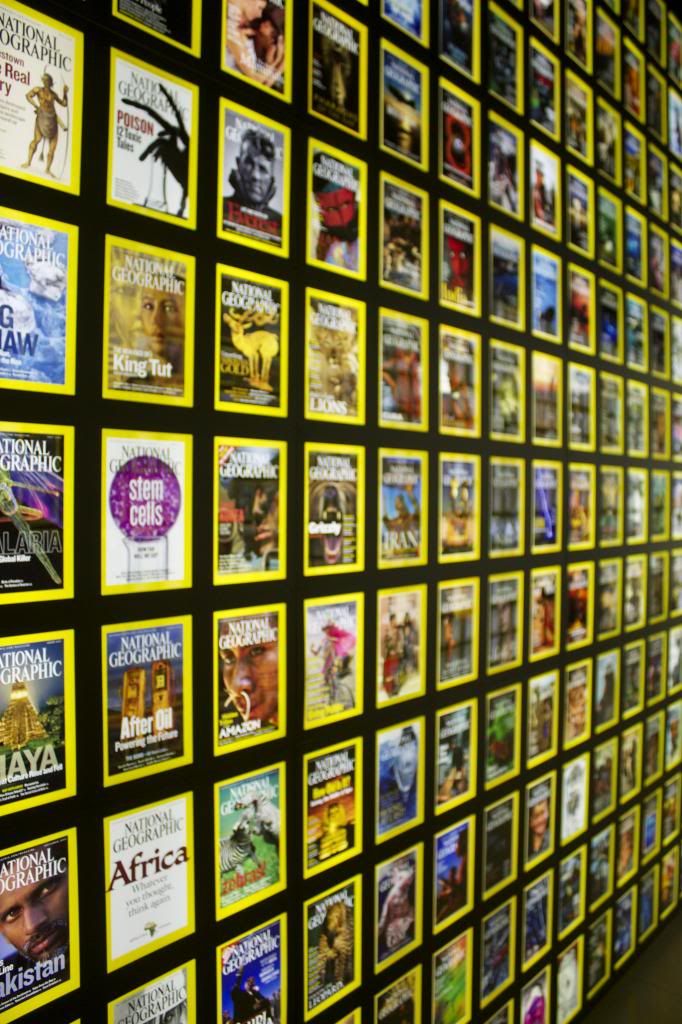
National Geographic Over the Years

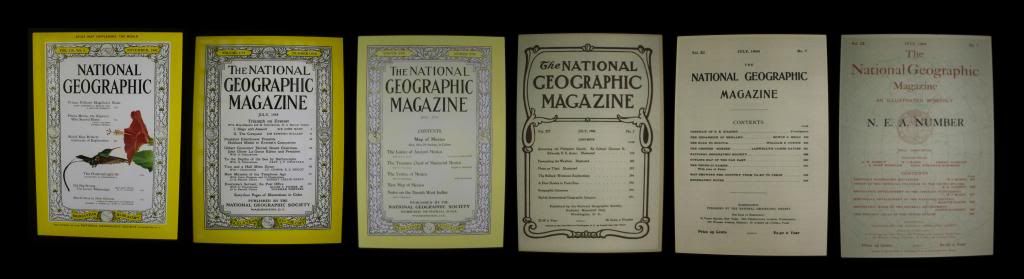
NatGeo’s magazine covers over the years, stitched together from individual photos I took at the National Geographic Museum in Washington, D.C.
As National Geographic celebrates its 125th year of journalism, it is interesting to see how small things, like the magazine covers and the information they conveyed, have changed. In the photo above, the November, 1960 issue (far left) was priced at $1.00; the July, 1954 issue (second from left) at 65¢; and from then backwards each magazine was a whopping 25¢. Today’s magazines don’t disclose their individual price, but a yearly subscription at $15 is not too shabby considering it was $8/yr in 1960, up from $6.50 in 1954.
The July, 1954 issue’s first featured article is titled, “Triumph on Everest,” and the last, “Everyone’s Servant, the Post Office”; July, 1898 (far right in the photo above), on the other hand, saw “American Geographic Education” and “The Geologic Atlas of the United States” as the first and last articles.
If You Happen To Be In New York
Last time we mentioned this library, it was to raise some important questions; on a previous occasion to recommend a lecture; this time we recommend what looks like an important exhibition curated by Leonard S. Marcus:
The ABC of It is an examination of why children’s books are important: what and how they teach children, and what they reveal about the societies that produced them. Through a dynamic array of objects and activities, the exhibition celebrates the extraordinary richness, artistry, and diversity of children’s literature across cultures and time. Continue reading
A Master Class For “Creative Business” Entrepreneurs
The Guardian continues its quest to creatively avoid the irrelevance and economic demise challenging all print-based journalism enterprises:
Overview
In a uncertain economic climate, many of us dream of setting up our own business – using our creative skills, while becoming our own boss. It could be a design studio, a series of events, a retail empire or a web venture – there are common challenges to meet and problems to solve. Continue reading
Congratulations Eesha Khare!
Another science fair-winner, again a young woman, has caught our attention (click the image to the left to go to the source):
Interest in nanochemistry research and energy storage led 18-year-old Eesha Khare, a senior at Lynbrook High School in San Jose, to develop a supercapacitor that could potentially be used in flexible displays and fabrics.
Her effort won her first prize at the Intel Science Fair and the Project of the Year award in the California State Science Fair’s senior division for 2013. Continue reading
Congratulations Elif Bilgin!
We have a particular interest in students on their way to university, in the middle of their university experience, or just on their way out. Today we celebrate the accomplishment of a young woman in Turkey with a science project that has been recognized as brilliant, as noted in this press release:
On Thursday, June 27, Elif Bilgin, 16, from Turkey, was declared the winner of the second annual Scientific American Science in Action Award, powered by the Google Science Fair. Continue reading
Cornell Tech Redefines “Industrial Complex”
When President Eisenhower warned of the rising power of the hyphenated industrial complex his concerns were clearly well-founded. Cornell NYC Tech, the upcoming Roosevelt Island campus of graduate high-tech education, is in the process of rehabilitating the concept of collaboration with industry with the development of its first “corporate co-location” building.
“Cornell Tech is radically rethinking how industry can collaborate with faculty, students and researchers, and corporate co-location is vital to making that a success,” Continue reading
“3 idiots”: a Bollywood must-see
One of the most memorable weeks of my childhood was during a summer holiday in Mauritius spent with my brother and cousins with no adult available to take us to the beach. We kept going back and forth to the video store because all there was on television were Bollywood movies with no subtitles. Since then I’ve been pretty biased against Bollywood movies, there’s only so much Shannen Doherty direct-to-video one can take, you know? So when I met friends from Bombay, I asked them for an outstanding Bollywood movie. They said: “You’ve got to see 3 idiots“. That same night a friend from Tanzania wrote on his Facebook wall: “Make your passion your profession.! #The 3 Idiots.” So it was written in the stars, I had to see this movie.
Artisanal Toys
In The New Yorker‘s book review last week, Alexandra Lange discussed Amy F. Ogata’s new book “Designing the Creative Child: Playthings and Places in Midcentury America,” focusing on the diverse materials and malleability of toy design over the past several decades.
With increasingly commercialized handmade, all-natural toys on the market, Lange asks, “Do toys need to be as artisanal as our food?”
Nearly two years ago now, Meg wrote about Tegu, wooden magnetic building blocks that support conservation and Hondurans in poverty. Tegu blocks seem to be a perfect blend of the artisanal qualities that wood bring to a toy, while the magnets inside add the opportunity for creativity that simple wooden rectangles and squares might not (unless they have the Lego-like studs that Mokulock does).
What about stone toys?
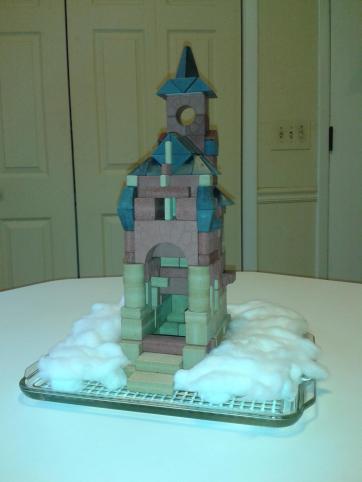
You don’t hear much about those, it seems to me. Heavy to carry around, more dangerous as projectiles, and requiring more machinery to produce, playthings built from stone might seem even more cumbersome and antiquated than wooden toys to a child brought up on shiny plastics and polymers. But the stone Anker/Anchor blocks (a box cover of which is pictured at the top of this post, and one of my own creations from these blocks is here to the right) made from quartz sand, chalk, linseed oil, and color pigment, are still able to merit $200+ asking prices on eBay, although part of their appeal comes from their relative–or perceived–antiqueness. Continue reading
Reflecting on My Time at Cornell
Moving is almost always a bittersweet experience.
Over the past week, my move from Ithaca back to California certainly erred more on the side of bitterness, and like many of my peers, I find it very difficult to believe that I am now a Cornell alumnus. But the four years have indeed come to an end, and I now sit in my room in Cupertino, wondering what graduating from the Hotel School would mean for me. In the process, I thought back to some of the advice that professors and mentors had given to me during my undergraduate career. It’s with great pleasure that I share some of that advice today with my fellow Cornell students and alumni.

Cornell central campus: a sight that I will dearly miss.
Sush, Future Tata Scholar & Cornellian, Made The Decision We Had Hoped For
Sush Krishnamoorthy, a student at Sardar Patel Vidyalaya, in New Delhi, is one of eight high school seniors around the world blogging about their college searches.
We have enjoyed watching the decision-making process of Sush and her fellow-bloggers on this site, and especially Sush’s decision to join Cornell where several of our Raxa friends are based:
Sush Krishnamoorthy, a student from New Delhi, is part of “The Choice” class that includes student-bloggers from Nairobi, Kenya; Topeka, Kan.; Seattle; Rogers, Ark.; Las Vegas; New York City; and Hunting Valley, Ohio. Her tenth post is below. — Tanya Abrams
After receiving a dream acceptance, I have chosen to enroll at Cornell University. Continue reading
Vidyarambham – The Beginning Of Learning
Vidyarambham means the beginning of education, or being initiated into the world of learning. As the auspicious day of Mahanavami approaches, devotees get ready to pray to Sarasvati, the Goddess of Knowledge and Education. On the eve of Mahanavami books and equipment associated with one’s vocation are placed before the Goddess to invoke her help in surmounting obstacles in the path of learning. The ritual of Vidyarambham is performed on the following day, Vijayadashami, which is the last day of the 9-day Navaratri festival. On the Vijayadashmi day from early morning hundreds of children between the ages of three and five are initiated into the world of education in various temples across the state. Continue reading