Really, China?

merlin_142564782_e9db5834-8efb-4fc8-8b50-16d6b83fad22-jumbo

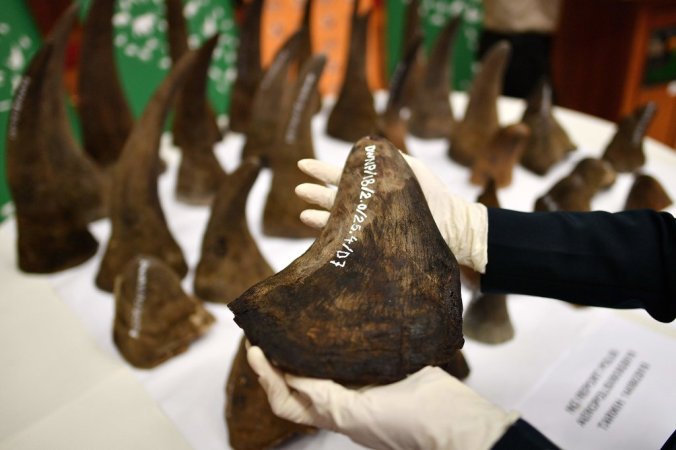
Seized rhinoceros horns and other animal parts at the Department of Wildlife and National Parks headquarters in Kuala Lumpur in August.CreditCreditManan Vatsyayana/Agence France-Presse — Getty Images

Javier C. Hernández shares this news from China, more frightening and more real than any Halloween horror story we can think of:

China Reverses Ban on Rhino and Tiger Parts in Medicine, Worrying Activists

BEIJING — The Chinese government, reversing a 25-year ban, announced on Monday that it would allow the use of rhinoceros horns and tiger bones in medicine, a move that environmentalists described as a significant setback for efforts to protect the animals from extinction.

The State Council, China’s cabinet, said in a policy directive that it would legalize the use of rhino horns and tiger bones for “medical research or in healing,” but only by certified hospitals and doctors, and only from rhinos and tigers raised in captivity, excluding zoo animals. While such remedies are highly profitable, they have no proven benefits to humans.

Environmentalists said the decision would likely help fuel a black market for wild rhino and tiger parts, which are revered in traditional Chinese medicine for supposed healing powers, and could lead to increased poaching of the fewer than 30,000 rhinos and 3,900 tigers still in the wild. Continue reading
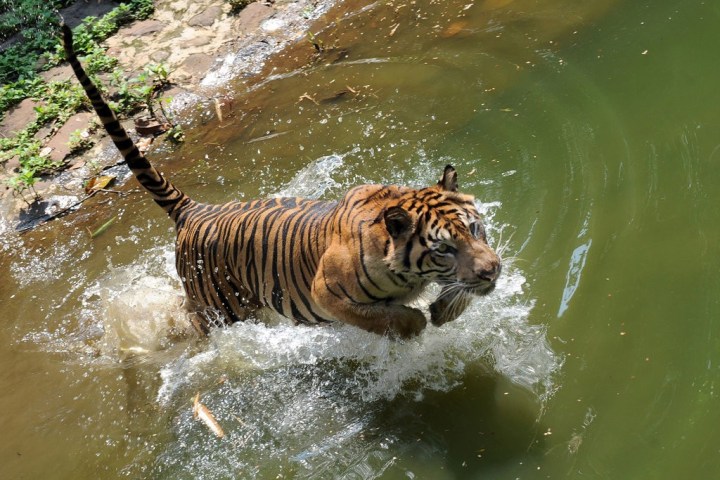
For The Last Tigers, What Is Next?

merlin_145827315_a41e80a9-2f6c-49c8-ba24-ea8c7f20d280-superJumbo.jpg

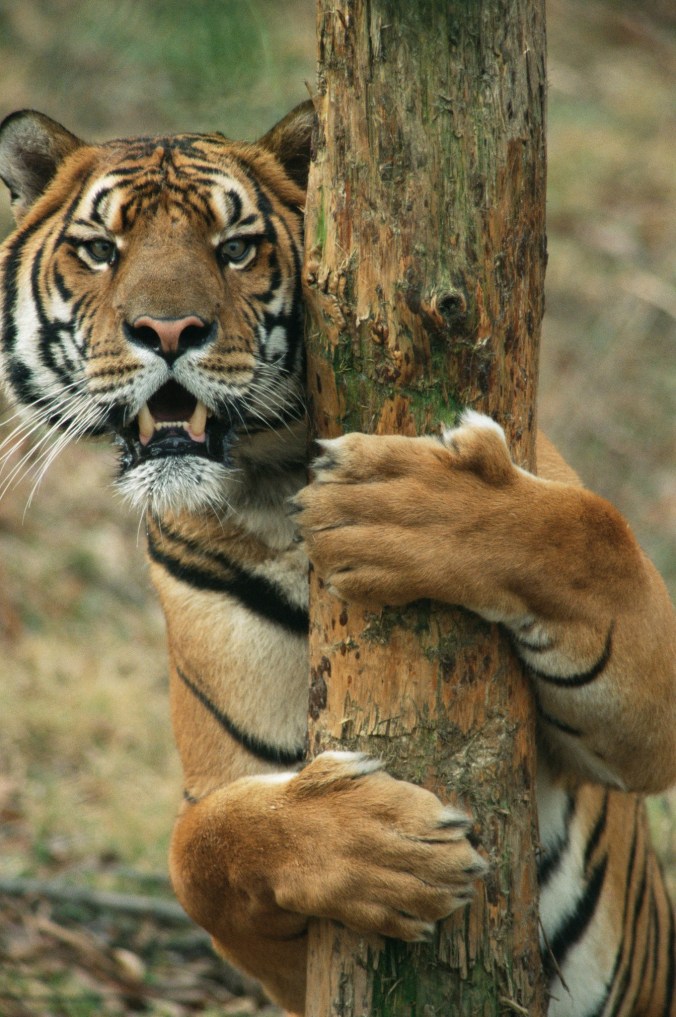
A South China tiger, a subspecies that only survives in captivity. Credit Francois Savigny/Minden Pictures

Some of these photos we have featured in earlier stories. That is a testament to the seriousness of the subject. Thanks to Rachel Nuwer for this:

Divide and Preserve: Reclassifying Tigers to Help Save Them From Extinction

Are there many subspecies of tiger, or only two? A correct accounting is the only way to preserve what is left of the animal’s genetic diversity, some scientists say.

26TIGERS4-jumbo.jpg

A Sumatran tiger at the Ragunan Zoo in Jakarta, Indonesia. Sumatran tigers were the first to evolve from all tigers’ common ancestor. Credit Romeo Gacad/Agence France-Presse — Getty Images

Fewer than 4,000 tigers remain in the wild. New research aims to give conservationists an improved understanding of their genetics in order to help save them.

After years of debate, scientists report in the journal Current Biology that tigers comprise six unique subspecies. One of those subspecies, the South China tiger, survives only in captivity.

“The results presented in this paper are important because they contradict the currently accepted international conservation classifications for tigers,” said Uma Ramakrishnan, a molecular ecologist at the National Center for Biological Sciences in Bangalore, India, who was not involved in the study. Continue reading

Charisma & Conservation

Steve-Pearlman-32_FLUXMAG_WEB

Botanist Steve Perlman rappels into the Kalalau Valley, a biodiversity hotspot on the Hawaiian island of Kauai. COURTESY OF BRYCE JOHNSON/FLUX HAWAII

Thanks to Janet Marinelli and the team at Yale e360 for a reminder that charisma is not all that matters in decisions about conservation:

Extreme Botany: The Precarious Science of Endangered Rare Plants

They don’t make the headlines the way charismatic animals such as rhinos and elephants do. But there are thousands of critically endangered plants in the world, and a determined group of botanists are ready to go to great lengths to save them.

B.insignis-outplanted-in-former-range-at-LImahuli-Garden-2_web

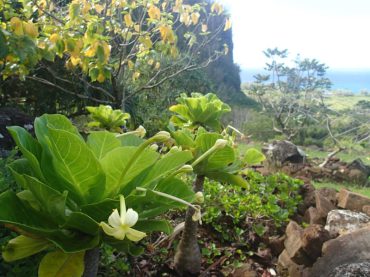
The plant known as cabbage-on-a-stick (Brighamia insignis) has been grown at Limahuli Garden & Preserve on Kauai, which is within the historic range of the species. SEANA WALSH

To save plants that can no longer survive on their own, Steve Perlman has bushwhacked through remote valleys, dangled from helicopters, and teetered on the edge of towering sea cliffs. Watching a video of the self-described “extreme botanist” in actio­­n is not for the faint-hearted. “Each time I make this journey I’m aware that nature can turn on me,” Perlman says in the video as he battles ocean swells in a kayak to reach the few remaining members of a critically endangered species on a rugged, isolated stretch of Hawaiian coastline. “The ocean could suddenly rise up and dash me against the rocks like a piece of driftwood.”

RS40032_Limahuli-Garden_Brighamia-insignis_Nov-8-2016-2_web

A botanist collects pollen from the flower of Brighamia insignis. NATIONAL TROPICAL BOTANICAL GARDEN

When he arrives at his destination, Perlman starts hauling himself up an impossibly steep, razor-sharp cliff 3,000 feet above the sea without a rope, his fingers sending chunks of rock tumbling down to the waters below. Finally, he reaches the plants and painstakingly transfers pollen from the flowers of one to those of another to ensure that the species can perpetuate itself. At the end of the season, he will return to collect any seeds they were able to produce. Continue reading

110 Million Years And Counting

16SCI-TURTLES2-jumbo

In a village near Watamu, Kenya, a sea turtle accidentally caught by a fisherman was turned over to Local Ocean Conservation. Credit Amy Yee

These creatures have been around forever, more or less. Survived everything that nature threw at them over the epochs. Until mankind and its addiction to plastic. And now it is clear their days are numbered, so any initiative anywhere that tries to slow the clock and keep the species going, we are happy to hear about it and share on this platform. Thanks to Amy Yee for bringing this to our attention:

Rescuing Sea Turtles From Fishermen’s Nets

An organization on the coast of Kenya tries to persuade local residents to help return the trapped reptiles to the ocean, rather than sell their meat and shells for a living.

merlin_145220637_c2a0c017-6041-44e3-9aef-e066644ccaa8-superJumbo

A green sea turtle trapped in a gill net. Scientists estimate the global green turtle population has declined 50 to 70 percent since 1900. Credit Jeff Rotman/Science Source

WATAMU, Kenya — The young hawksbill turtle was accidentally caught in a net in the Indian Ocean off Kenya’s coast.

The fisherman called Local Ocean Conservation, a nonprofit based in the town of Watamu that is the only turtle rescue and rehabilitation center on the East African seaboard. The hawksbill, critically endangered in this region, was a mere seven pounds; adults can weigh up to 160 pounds.

X-rays showed that the reptile’s intestinal tract was clogged with plastic. Hogaar, as Local Ocean named her, floated and couldn’t dive. Gas had built up in her innards after she had eaten small pieces of plastic mistaken for food such as jellyfish. Local Ocean staff members placed Hogaar in a rehab pool and gave her laxatives. She passed feces laced with shreds of packaging and had little appetite. After more than four months at Local Ocean, Hogaar died. A necropsy revealed her gut was also full of sharp shards of white, blue and pink plastic and tangles of blue and gray string.

Turtles are reptiles that have existed for at least 110 million years and survived the mass extinction that killed off dinosaurs. But today, sea turtles worldwide are threatened with extinction. And it’s estimated that only one of 1,000 turtle eggs laid survive to adulthood. Continue reading
The Picture From The Recent Climate Change Report Is Now More Clear

Chart_lg.gif

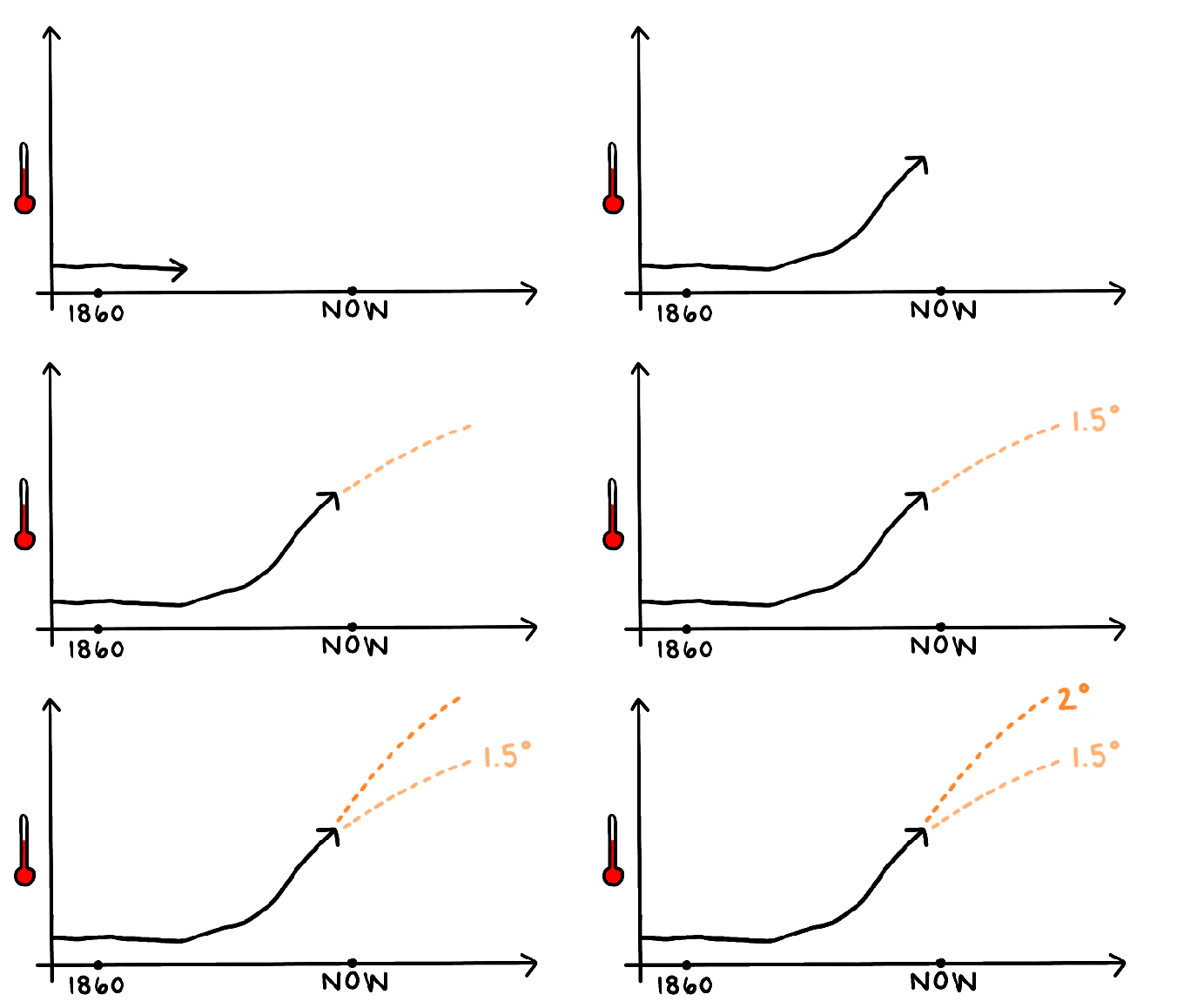
Deniers, we already know you will find a way to see this from some other perspective, and we have given up trying to understand why you do that. But for everyone else, there is still time to understand the implications of this science. And there is no shame in using props to help learn. Thanks to Brad Plumer and Nadja Popovich for making sure we get the point, with clear graphical illustration, about what this recent study is saying and why every one of us should care:

Heat

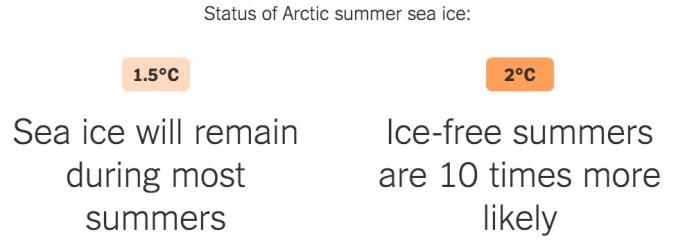
Extreme heat will be much more common worldwide under 2°C of warming compared to 1.5°C, with the tropics experiencing the biggest increase in the number of “highly unusual” hot days.

Read the rest of this graphics-rich story here.

Helping Coral Repopulate

lead_720_405 (3).jpg

Valérie Chamberland and Erik Houtepen look for signs of spawning in grooved brain coral colonies. EXPOSURE LABS

Thanks to Michelle Nijhuis, whose science writing we have been following since 2014 but up to now mostly in another magazine we source from; this is as fine as it comes:

b8f1093ff.jpg

EXPOSURE LABS

Valérie Chamberland swims like a dolphin, quickly and fluidly, and for most of the past hour she has been darting through the warm, shallow water off the Caribbean island of Curaçao. Now, she is dangling upside down, hovering above a pillow-sized brain coral. Her rubber fins twitch steadily overhead, and as she sips air from the aluminum tank on her back, a stream of bubbles rises from her regulator’s mouthpiece.

The reef spread below Chamberland isn’t one of those flashy, fluorescent gardens seen in calendar photos and nature documentaries. Only a few dozen yards from shore, it lies almost literally in the shadows of a stone jetty, a busy casino, and a Denny’s restaurant. The waters that surround it are murky, and most of its corals are brown and lumpy, sparsely accessorized with bright-purple vase sponges and waving, rusty-red sea fans. Continue reading
For The Love Of Baobab!

merlin_142358673_6ed9ddd5-d873-47cb-8191-7a0ab1b3f9b7-jumbo

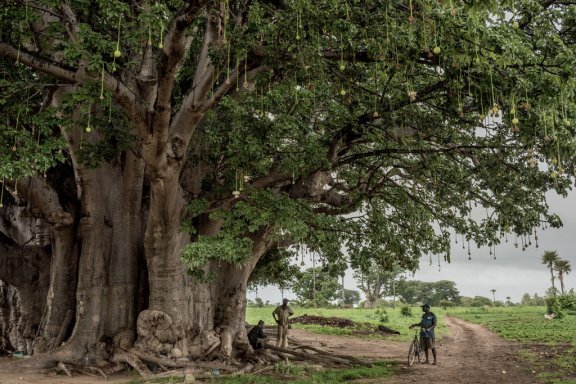
Selbe Dione and her sister harvesting baobab leaves to cook with couscous in the countryside of western Senegal.CreditCreditTomas Munita for The New York Times

Thanks to Dionne Searcey for reminding me of the first time I encountered one of these trees, which happened to be in Senegal (so why have we not featured Senegal more in these pages?) and was the location for the first field course I taught for Cornell focused on sustainable development. For the love of baobab, so to speak, I am more sensitive than ever to the ravages of palm oil plantations:

Across Senegal, the Beloved Baobab Tree Is the ‘Pride of the Neighborhood’

Baobabs have endured for centuries as essential cultural symbols. But increasingly, they are threatened by climate change, urbanization and a growing population.

merlin_142358517_50b1c5e5-ca69-478d-92ae-9cc754930e3d-jumbo

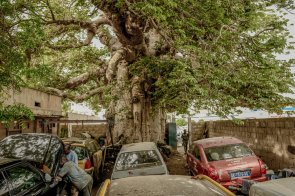
In Dakar, baobabs blend into the cityscape, like this one in the center of a taxi garage near a freeway on ramp. Credit Tomas Munita for The New York Times

DAKAR, Senegal — Wide, awkward baobab trees blend into the cityscape of Dakar, the busy capital of Senegal, almost without notice.

Drivers wash a fleet of taxis parked beneath one giant tree near a freeway on ramp. Rusting cars with open hoods are parked in a mechanic’s shop under the shade of another. A leathery trunk is a community billboard, with ads nailed to it for a plumber and an apartment for rent.

Aliou Ndour stood on a crowded corner, pulled out his phone and scrolled past the pictures of friends and family to another precious photo: the baobab in his home village.

merlin_142358277_052946e4-1f8f-4fe7-a85c-de8ec38cdb23-jumbo.jpg

One of the largest baobab trees in Senegal is in the Fatick region, southwest of the capital. Credit Tomas Munita for The New York Times

Fat baobabs, some more than half a millennium old, have endured across Senegal, passed over for lumber largely because their wood is too brittle and spongy for use in furniture. Baobab leaves are mixed with couscous and eaten, the trees’ bark stripped to make rope, their fruit and seeds used for drinks and oils.

Something else has helped preserve these giants: They are beloved.

“This,” said Adama Dieme, craning his neck to look up at the spread of branches of the baobab on his block, “is the pride of the neighborhood.”

merlin_142358064_adba030f-b0fd-4d1f-bf7e-501cb141f23c-jumbo.jpg

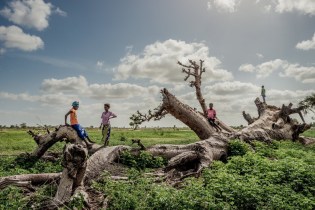
Children playing over a fallen baobab in southwestern Senegal. Credit Tomas Munita for The New York Times

But baobabs, like many of the region’s trees, are in jeopardy, threatened by the same forces upending numerous facets of society — climate change, urbanization and population growth.

West Africa has lost much of the natural resources once tied so closely to its cultural identity. Poaching has stolen most of its wildlife; lions, giraffes and desert elephants are sorely endangered.

Huge swaths of forest are being razed to clear space for palm oil and cocoa plantations. Mangroves are being killed off by pollution. Even wispy acacias are hacked away for use in cooking fires to feed growing families. Continue reading

Science Writing, A Genre That Keeps Improving, Is The Best Way To Explain A Conservation Paradox

1920 (2).jpg

Eric Nyquist

Two years of working in southern Chile taught me just enough about the complexity of this particular issue (among the many complex issues in our practice)to appreciate the article below by Emma Marris, who we already knew to be provocative, enough that she could challenge Bill McKibben two minutes into her TED talk, and does so convincingly. The primary reason I appreciate this article, is the same reason this platform has showcased the best of this genre of writers over the years. Scientists, translated into regular language we non-scientists can understand:

When Conservationists Kill Lots (and Lots) of Animals

Invasive species are sometimes trapped, poisoned, and shot in large numbers to save native species from extinction. Some scientists say the bloodshed isn’t worth it.

dcafc084c

Eric Nyquist

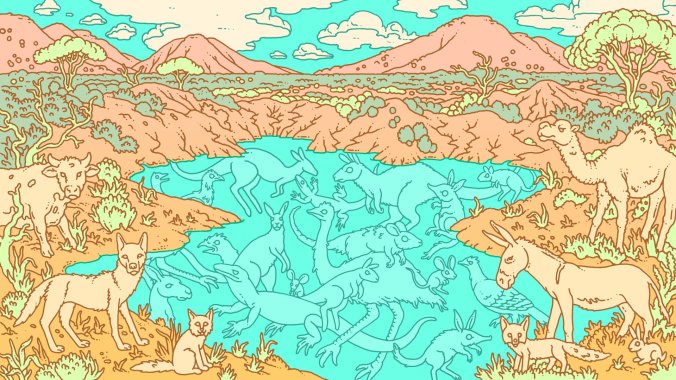
The desert of south-central Australia is crenellated with sandstone hills in shades of ivory, crimson, and apricot. The ground is littered with dead trees and tree limbs, big hunks of transparent mica, dried cow dung, and thousands of stone spearheads and blades made by the Aboriginal people who lived here for tens of thousands of years—and live here still. Around the few water holes are the doglike tracks of dingoes, wild canines that were brought to Australia thousands of years ago and are now the country’s top predators.

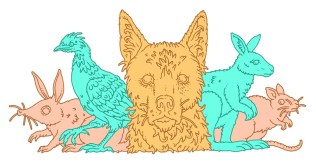
I have come to the Evelyn Downs ranch, on the famously remote highway between Adelaide and Alice Springs, to meet Arian Wallach, a conservationist who thinks there is too much killing in conservation. Wallach has come to this massive 888-square-mile ranch because it is one of the few places in Australia where people aren’t actively killing wild animals. Tough, outback Herefords share the landscape with kangaroos, wild horses, wild donkeys, camels, emus, cats, foxes, native rodents, dingoes, and very large antediluvian-looking reptiles called perenties. Of the animals on this list, dingoes, cats, foxes, horses, camels, and donkeys are all killed in large numbers throughout Australia—but not here. Wallach has convinced the owners to experiment with a more hands-off approach. Continue reading

World Elephant Day

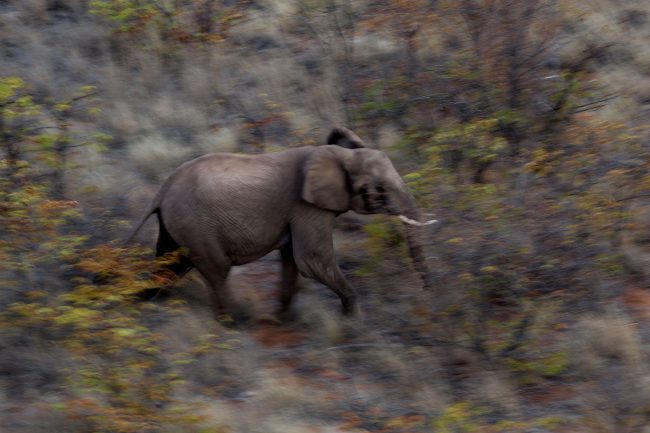
23 July 2018. Elephant Relocation from Venetia Limpopo Nature Reserve (South Africa) to Zinave Reserve (Mozambique). Picture: JAMES OATWAY

Our fascination with elephants is evident throughout the history of this site, and are heartened by actions taken toward increased conservation of these magnificent animals. Relocating large African mammals to new protected areas due to either habitat loss or overpopulation has successfully been done before, but the challenges continue.

Giants on the Move

Written by Patricia Sims, Co-Founder, World Elephant Day

Each year for World Elephant Day we put a lot of our elephant conservation attention toward the ivory poaching crisis threatening African elephants, and the tourism and captivity issues that the endangered Asian elephants face. Yet the larger conservation challenge of habitat loss for both African and Asian elephants is looming. Our increasing encroachment on elephant habitat throughout Africa and Asia is putting elephants at greater risk, resulting in human-elephant conflict issues, and the demise of elephant populations and the ecosystems that they, as a keystone species, maintain.

So what are the solutions? Can moving elephants – from one location where there isn’t enough space for them – to another location where there aren’t enough elephants, help solve this issue? At the heart of this critical elephant conservation conundrum is a partnership between the De Beers Group – the world’s leading diamond company – and Peace Parks Foundation, a leading not-for-profit organization focused on the preservation of large cross-border ecosystems. They have just completed the first phase of the largest and longest translocation of elephants ever recorded in South Africa. This translocation project is called “Moving Giants.

Continue reading
Spying On Whales, For Our Sake As Well As Theirs


Brannen-Reckoning-with-the-Almost-Satanic-Prospect-of-Twentieth-Century-Whaling

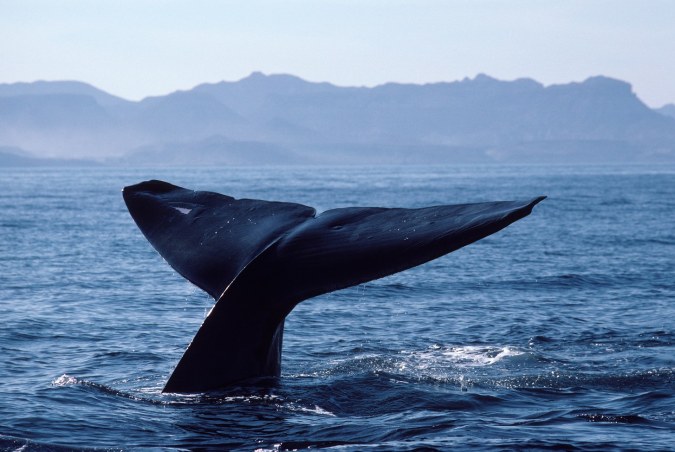
Whales are a powerful oceanographic force in their own right, one that begets even more life; many ecosystems are still straining to equilibrate from the effects of twentieth-century whaling. Photograph by Francois Gohier / VWPics / Redux

x400.jpgIt may be too late, but this is too important to pretend it does not matter. It is not too late to learn from our mistakes. Peter Brannen, a science journalist and the author of “The Ends of the World: Volcanic Apocalypses, Lethal Oceans, and Our Quest to Understand Earth’s Past Mass Extinctions” gets our thanks for this review in the New Yorker, titled We May Never Understand the Ocean-Wide Damage Done by Industrial Whaling:

A few months ago I learned that, as recently as 1972, General Motors was using sperm-whale oil in transmission fluid in its cars. I’m not sure why I was surprised to learn this. It took nearly another decade for much of the world to agree to ban commercial whaling, in 1982. (A handful of countries still ignore the ban.) But the detail about G.M. still struck me as anachronistic. The global pursuit of whales inescapably connotes the romance of nineteenth-century New Bedford and Nantucket: delicately embossed scrimshaw, Melville, oil paintings of stately twilit schooners setting out on the main. Not puke-green Chevy El Caminos. Continue reading
Bear Witness, Do Not Take A Cruise


Cruise.jpg

“We completely regret what happened,” a spokesman for the cruise company said, adding the bear was killed in self-defense.

Hapag-Lloyd Cruises is not the worst company in the world but it sure is trying hard.  And they are in a very dirty business. The lead photo in this story by Yonette Joseph is just too depressing to share here, so the map is shown instead. That photo requires viewing as an act of witness to the cruise industry’s lack of ethics, so read on and click through:

LONDON — A polar bear was shot and killed on Saturday after it attacked and injured a guard from a cruise ship that had stopped at an Arctic archipelago, the Norwegian authorities said.

The death of the bear at the hands of another cruise ship employee drew condemnation on social media, with some calling it “abhorrent” and others questioning killing the polar bear for “acting like a wild animal.” Continue reading

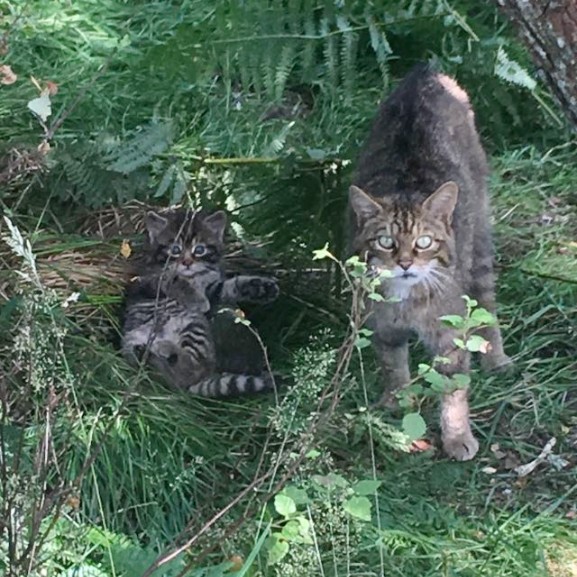
Kittens Born At Alladale Wilderness Reserve

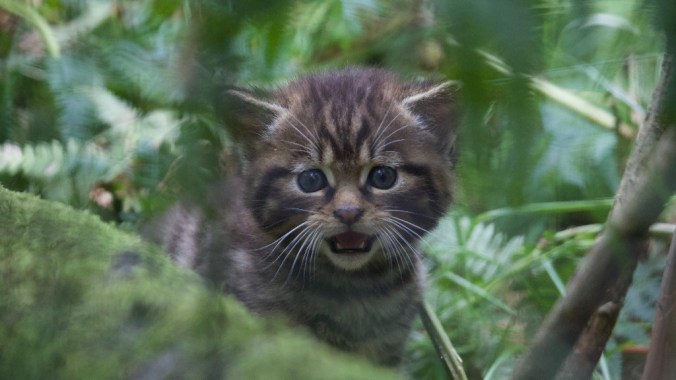
Kitten

Photographs © Innes MacNeill

Thanks to our friends at Alladale for sharing this with us yesterday. (to not disturb the kittens at this time, these photos by Innes MacNeill are from an earlier litter and further content will follow will about the new ones, so we recommend you subscribe here to their newsletter):

We have some wonderful news to share with you.

b29fcac2-a483-4917-b500-2d9b2f9167ef.jpeg

Photographs © Innes MacNeill

Conservation efforts for the critically endangered Scottish wildcat have had another boost as Alladale Wilderness Reserve welcomes the arrival of two kittens. These kittens, who are part of the captive breeding programme and whose parents were given the go-ahead for breeding following genetic testing by the Royal Zoological Society of Scotland (RZSS), have the potential to play a key role in the long-term conservation of this near-extinct native species.

Working together with RZSS, Scottish Wildcat Action and other wildlife conservation organisations across Scotland, Alladale Wilderness Reserve and The European Nature Trust (TENT) are supporting the development of effective, long term plans focused on wildcat recovery through reintroductions. This work follows other successful models of endangered cat conservation, like that of the Iberian lynx in Spain and Portugal whose population has been saved in recent years following numerous reintroductions. Continue reading

Fishing Brinksmanship

5025.jpg

Using purse seine nets to fish for bluefin tuna, Turkey. Two-thirds of species are overexploited in the Mediterranean. Photograph: Gavin Newman/Alamy

Thanks to Damian Carrington, Environment editor at the Guardian, for bringing this to our attention:

One in three fish caught never makes it to the plate – UN report

Global fish production is at record levels thanks to fish farming, says the UN FAO, but much is wasted and many species are worryingly overfished

One in three fish caught around the world never makes it to the plate, either being thrown back overboard or rotting before it can be eaten, according to the UN Food and Agriculture Organization. Continue reading

Using Canine Sense of Smell to Save Bees

Cybil Preston, chief apiary inspector for the Maryland Department of Agriculture, is expanding her canine detection program, training dogs to find traces of American foulbrood, a bacteria that can decimate beehives. Credit Andrew Mangum for The New York Times

There’s plenty of news about bees being under environmental threat, so we thank NYTimes contributor Tejal Rao for this story of harnessing a natural strength of one species to help save another.

With a Sniff and a Signal, These Dogs Hunt Down Threats to Bees

Ms. Preston seals dog toys in a plastic bag with foulbrood to saturate them with the scent. Credit Andrew Mangum for The New York Times

JARRETTSVILLE, Md. — Cybil Preston stretched her bare hands into a noisy beehive and pulled out a frame of honeycomb, its waxy cells filled with nectar, its surface alive with bees.

“This girl right here was just born,” she said, pointing out a bee with a silvery thorax. “See how her hair is still matted down like a teddy bear?”

Ms. Preston, the chief apiary inspector for the Maryland Department of Agriculture, was on a routine survey of registered colonies northeast of Baltimore. “I’m always looking for signs and signals,” she said, as she examined a worker bee with a misshapen wing. “It’s like ‘CSI.’” Continue reading
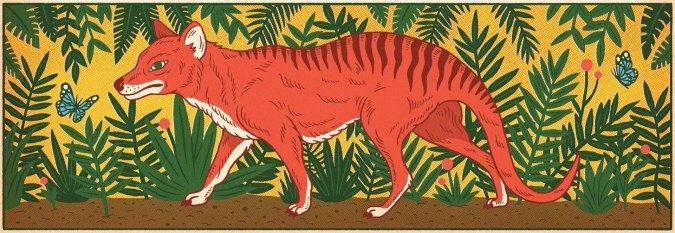
Tasmanian Tiger Tale

180702_r32368_rd.jpg

Like the dodo and the great auk, the Tasmanian tiger is more renowned for the tragedy of its death than for its life, about which little is known. Enthusiasts hope it will be a Lazarus species—an animal considered lost but then found. Illustration by Bene Rohlmann

We thank Brooke Jarvis for her reporting on this compelling tale:

The Obsessive Search for the Tasmanian Tiger

Could a global icon of extinction still be alive?

Andrew Orchard lives near the northeastern coast of Tasmania, in the same ramshackle farmhouse that his great-grandparents, the first generation of his English family to be born on the Australian island, built in 1906. When I visited Orchard there, in March, he led me past stacks of cardboard boxes filled with bones, skulls, and scat, and then rooted around for a photo album, the kind you’d expect to hold family snapshots. Instead, it contained pictures of the bloody carcasses of Tasmania’s native animals: a wombat with its intestines pulled out, a kangaroo missing its face. “A tiger will always eat the jowls and eyes,” Orchard explained. “All the good organs.” The photos were part of Orchard’s arsenal of evidence against a skeptical world—proof of his fervent belief, shared with many in Tasmania, that the island’s apex predator, an animal most famous for being extinct, is still alive. Continue reading
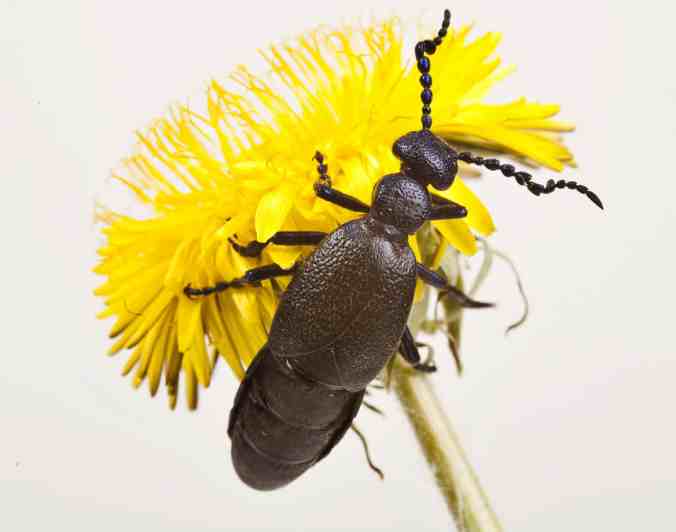
Insects, Underappreciated Often-Charismatic Fauna

4177.jpg

This article by Robin McKie, Observer science editor, will have you thinking differently about what are often called the pests of summer:

Where have all our insects gone?

There is a crisis in the countryside – and a massive decline in insect numbers could have significant consequences for the environment

4928 (1).jpg

A great yellow bumblebee. Its numbers have declined steeply in recent years. Photograph: Alamy

When Simon Leather was a student in the 1970s, he took a summer job as a postman and delivered mail to the villages of Kirk Hammerton and Green Hammerton in North Yorkshire. He recalls his early morning walks through its lanes, past the porches of houses on his round. At virtually every home, he saw the same picture: windows plastered with tiger moths that had been attracted by lights the previous night and were still clinging to the glass. “It was quite a sight,” says Leather, who is now a professor of entomology at Harper Adams University in Shropshire. Continue reading
Compassion, Conservation & Charisma

PRINT-yalee360-luisa-rivera_web

ILLUSTRATION BY LUISA RIVERA/YALE E360

Charismatic megafauna are impossible to resist caring about. Charismatic microfauna, or flora, less so. Yet more than two decades of experience in Costa Rica have taught us to appreciate the latter more than we did before. That is a function of science leading the way in conservation efforts in this small country, followed by a new form of tourism that we have been working in since the mid-1990s. That new form leveraged the skills of biologists as guides who provide interpretive experiences in the rainforest and other ecosystems, making a walk in the woods that much more interesting. So this story below catches my attention. It focuses on another small pioneering country that I have long studied from afar, admired, but not yet visited. Thanks to Brandon Keim and his colleagues at Yale Environment 360, for this story that motivates me to make that visit:

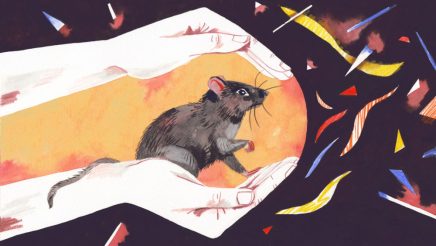
Do Conservation Strategies Need to Be More Compassionate?

Some scientists and ethicists are criticizing traditional conservation strategies, which they say focus on saving valued species while discounting the lives of less charismatic animals. Will these advocates of “compassionate conservation” point the way to new approaches, or are they simply being naïve?

NZDOC_Volunteers_menz-shed-pf2050-thumb_web.jpg

Volunteers for New Zealand’s Predator Free by 2050 campaign in front of predator traps, which are available for the public to borrow. NEW ZEALAND DEPARTMENT OF CONSERVATION

At a moment of best-selling animal intelligence books and headlines about songbird language and grieving elephants, it’s easy to forget that nonhuman minds were until recently considered — by most serious-minded scientists, anyway — to be quite simple.

Well into this millennium, animal consciousness was regularly dismissed as either nonexistent or profoundly dissimilar to our own. Animals were considered “conscious in the sense of being under stimulus control,” as the famed psychologist B.F. Skinner opined so neatly in 1974, expressing a conventional wisdom that dated to the zoological musings of Aristotle. The notion of animals as thinking, feeling beings was relegated to the edges of serious discourse.

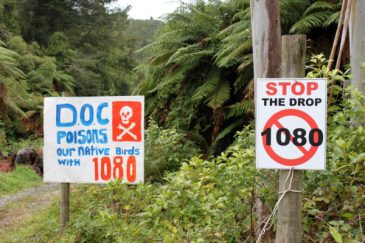
DOC_1080-Protest-Signs_EliDukeFlickr_web.jpg

Signs opposing New Zealand’s use of landscape-scale poisoning campaigns to eradicate non-native predators, such as rats and weasels. ELI DUKE/FLICKR

Those days are past, buried by an avalanche of scientific findings and history-of-science critiques. More people than ever worry about the welfare of farmed animals; pets are practically citizens; and wild animals too are increasingly regarded as beings with whom people share fundamental aspects of inner life. Yet in some places, that mind-denying legacy survives — including, say a small but vocal number of scientists, ethicists, and animal welfare activists, in conservation. In their eyes, the discipline devoted to protecting Earth’s life has a certain blind spot to the animals themselves. Continue reading
Food For Thought & Thought For Food

27stager-jumbo

Enzo Pérès-Labourdette

The food for thought is by way of Curt Stager, a professor of natural sciences, who celebrates citizen science in a powerful ominously-titled op-ed:

Why care about this new silence of the bugs? An across-the-board decline in flying insects, if true, means that an entire sector of the animal kingdom is in trouble, representing an immense diversity of life-forms, from butterflies and beetles to hoverflies and damselflies. The eminent biologist Edward O. Wilson, who has spent much of his life studying ants, has warned: “If all mankind were to disappear, the world would regenerate back to the rich state of equilibrium that existed ten thousand years ago. If insects were to vanish, the environment would collapse into chaos.”

And the thought for food is also from an op-ed:

Why You Should Be Drinking Weird Wines

By Jason Wilson

merlin_138630777_bd5bc3fe-d84f-4de8-a999-7c0568353414-superJumbo

Alicia Adamerovich

…For years, the global wine industry had been devolving toward a monoculture, with local grape varieties ripped out in favor of more immediately profitable, mass-market types. There are 1,368 known wine grape varieties, but nearly 80 percent of the world’s wine is made from just 20 kinds of grapes. Many of the rest face extinction. Continue reading

Moving Slowly & Avoiding Breakage

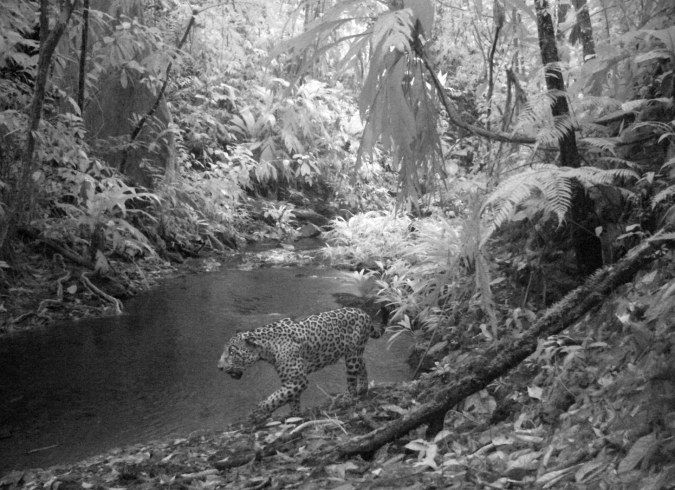
Preston-Ecological-expedition-Honduras-8

Panthera onca. The jaguar is the king of neotropical forests, where it is the largest of the cats. Its presence at the White City indicates an extensive, thriving ecosystem. © Washington State University, Panthera, Wildlife Conservation Society, Zamorano University, Honduran Forest Conservation Institute, Travis King, John Polisar, Manfredo Turcios

When the journalist Douglas Preston shared this story, I was in the process of closing up shop in India, where we had been in residence since 2010. Kipling-induced daydreaming notwithstanding, Amie and Milo (whose photos may be the most tangible representations of the dreaminess of those years) and I never had the illusion that there were lost civilizations or any such thing in India.

movefast (1)We did have the nonstop motivation of feline-fueled conservation initiatives, and some close encounters. Those provided us a perfect counterpoint to the seemingly irresistible catchphrase that described progress in the form of disruptive technology. Haste really does make waste when it comes to ecology, anthropology, and realms of life other than economic forward-marching.

When I read Mr. Preston’s story on the first day of last year I realized that our relocation to Central America, oddly enough since it is in the hemisphere called the New World, was full of potential for all kinds of discovery of “lost” things. And my own discoveries further sensitized me to the importance of moving slowly and avoiding breakage. My posts on this platform from February through July, 2017 are evidence of the richest ecological and anthropological observations of my lifetime (so far), and that makes Mr. Preston’s update post yesterday all the more wonderful to read:

Deep in the Honduran Rain Forest, an Ecological SWAT Team Explores a Lost World

Preston-Ecological-expedition-Honduras-1

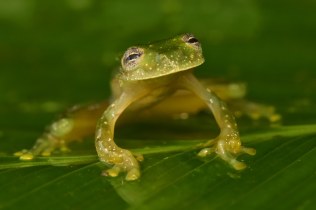
Sachatamia albomaculata. The inner organs of glass frogs are visible through their translucent bodies. Photograph by Trond Larsen / Conservation International

A little more than three years ago, I joined a team of archeologists on an expedition to La Mosquitia, a remote mountain wilderness in eastern Honduras. For centuries, the region had been rumored to contain a lost city, known as the City of the Monkey God or the White City, and now, thanks to a combination of luck and modern technology, an ancient settlement had been found. Although it was probably not the lost city of legend, it was a very real place, built by a mysterious civilization that flourished long before Columbus arrived in the Americas. Hidden in a densely forested valley, it had never been explored. Continue reading
Butterflies Bear Bucolic Benefits

merlin_138359769_63074afa-6c7c-4550-acd6-302cfc29161d-jumbo

Milkweed was first mentioned in these pages  so long ago I had forgotten their importance to Monarch butterflies, a seemingly perennial topic for our contributors. So thanks to Margaret Renkl for keeping that tradition going in her Monday op-ed, and reminding us in the process that while it is not all good news out there, it is also not all bad news:

Monarchs in My Garden, at Last

NASHVILLE — I was pretty proud of myself the spring I planted my first organic garden. It was the mid-1980s, and I was a first-year graduate student in creative writing, a program entirely unrelated to horticultural mastery. But I had taken a college course in environmental biology, and I knew the basics: The more chemicals you use in a garden, the more chemicals you’ll need in the garden. It’s a self-perpetuating cycle, more reliable than the seasons.
At my house, companion planting — marigolds in between the broccoli, tomato vines encircling the spinach — would repel bugs the natural way. Any lingering pests would be dispatched by beneficial insects like ladybugs and praying mantises. One evening I watched happily as cabbage white butterflies flitted over silvery broccoli leaves. Those little white butterflies pausing in the gloaming on the water-beaded broccoli made for a tableau of bucolic harmony. Continue reading