Keep National Parks Safe, Know Your Chocolate

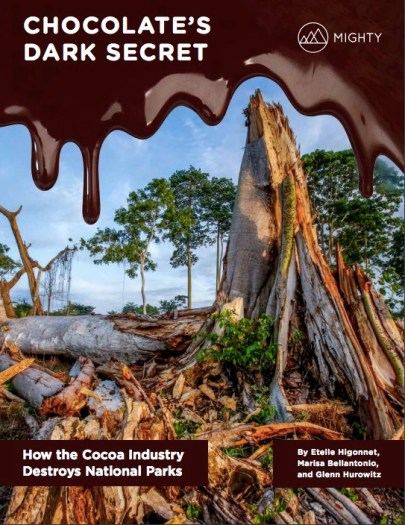
Choc.jpgI am now learning more about cacao, and its end use, the sweet we all adore. The rise in artisanal cacao farming, as we have noted on occasion, can have important implications for conservation. Whether you are a chocoholic or just a casual dabbler in the sweet bi-product of cacao, this report deserves your attention (click on the image to go to the source):
Chocolate is everywhere. It is the afternoon pick-me-up, the sensual indulgence, the accoutrement to seduction. Lovers gift truffles, skiers sip on rich hot chocolate, and connoisseurs savor the tiniest, richest bite of single origin dark chocolate. The ancient Aztecs believed that chocolate was an aphrodisiac, and the emperor Montezuma was reported to gorge himself on chocolate in advance of his trysts. Continue reading

Thanks, Trees

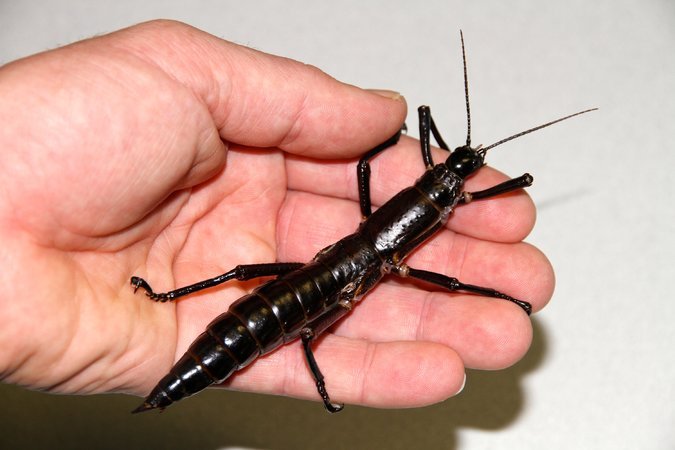
A female tree lobster specimen. Scientists have learned that the Ball’s Pyramid stick insect and the Lord Howe stick insect are variations of the same species. CreditRohan Cleave/Melbourne Zoo, Australia

Thanks to Joanna Klein and the Science section of the New York Times:

A Stick Insect. A Tree Lobster. Whatever You Call It, It’s Not Extinct

A genetic analysis showed that a stick insect found on another island was the same species as one that had been wiped out by rats on Australia’s Lord Howe Island.

The tree lobster, one of the rarest insects on Earth, has lived a rather twisted life story.

Scientifically known as Dryococelus australis, this six-inch-long stick bug with a lobster-esque exoskeleton once occupied Lord Howe Island in the Tasman Sea, between Australia and New Zealand. Continue reading

Unlikely Underdog Progress

05TB-TORTOISE1-master768

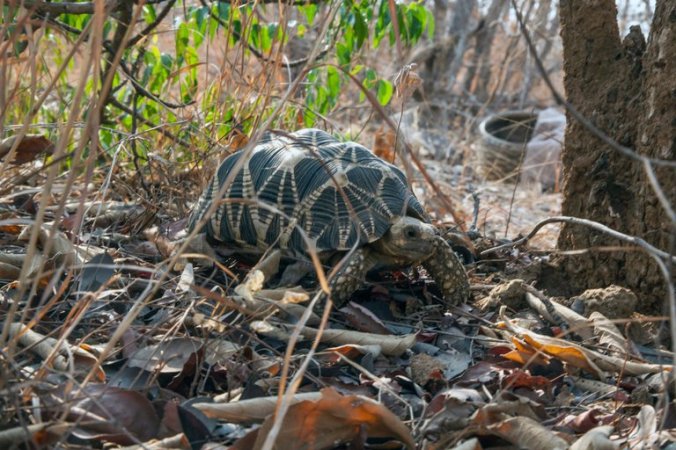
The Burmese star tortoise was declared functionally extinct in the early 2000s, but conservation efforts have helped the species make a comeback. Credit Eleanor Briggs

Thanks to Steph Yin for news out of Burma, of all places:

Slow and Steady, a Tortoise Is Winning Its Race With Extinction

The Burmese star tortoise was almost history.

By the early 2000s, the natives of central Myanmar’s deserts had dwindled to such low counts in the wild that ecologists declared them functionally extinct. Continue reading

Bison Awareness In Europe

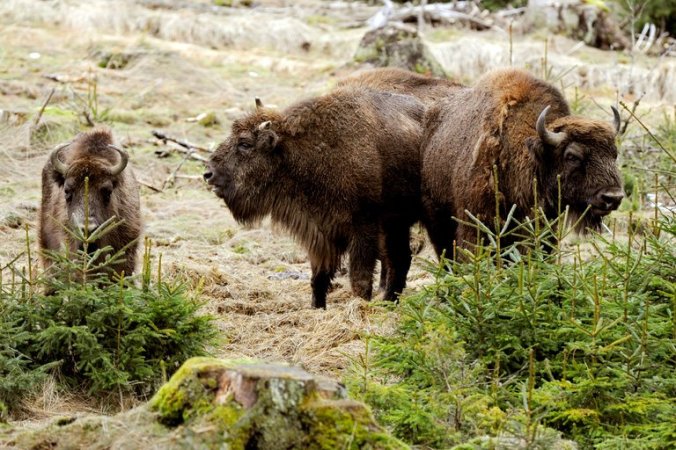
21xp-bison-master768

European bison near the town of Bad Berleburg, Germany, in 2013. Credit Marius Becker/Picture Alliance, via Associated Press

Bison in Europe have not been on our agenda for a while, though rewilding in Europe remains a topic we monitor and share here with regularity. Progress seemed more the rule than the exception; so this recent story from Germany takes us by complete surprise:

Last week, a rare wild bison was spotted wandering alone near the town of Lebus in eastern Germany. A local official, alarmed that the animal could be dangerous, ordered hunters to shoot it and one of them did, using a rifle to kill an animal that had not freely roamed Germany for several hundred years, conservationists say.

The killing of the mature male European bison on Sept. 14, which was first reported by local news outlets, set off an outcry among conservationists, who have worked to protect the species and increase its population. The World Wide Fund for Nature in Germany has begun a lawsuit against the local official who gave the order, Heiko Friedemann, setting off a state investigation before it goes to court. Continue reading

Conservation Tourism and Species Survival

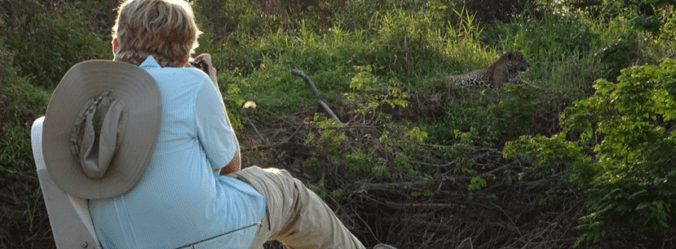
A recent study found that the value of jaguars to tourism (US$6,827,392) was far in excess of the cost to ranchers from depredation of their cattle (US$121,500)

The intersection between jaguar territory and tourism has been part of our work for decades, in both the Paraguayan Pantanal, Costa Rica’s Osa Peninsula and more recently in northwestern Belize.

We’ve seen the efficacy of species protection via conservation tourism when the economic value of species survival is quantified. This is good news for one of our favorite animals.

Curiosity saves the cat: Tourism helps reinvent the jaguar

From villain to hero, the jaguar (Panthera onca) stands at the cusp of a radical overhaul in its public image. As the largest cat in the Americas, the species commands a dominant role in the food chain of its native Pantanal – a vast swathe of tropical wetland that encompasses parts of Brazil, Paraguay and Bolivia. Once hunted for its fur, the jaguar’s appetite for the abundant prey in the Pantanal has led it into deadly conflict with ranchers in recent decades, casting it as the stalking menace of livestock and livelihood in a region where much of the land is reserved for cattle rearing. However, in a hopeful development for conservationists, researchers have revealed in a new study published in Global Ecology and Conservation that jaguars are worth 60 times more to tourism than the cost the big cats inflict on ranchers.

“The study represents a regional reality in the Pantanal,” said Fernando Tortato, research fellow at Panthera, the global wild cat conservation group that helped lead the study. “Where the jaguar brings in far more revenue than the potential damage it can cause.”

Jaguars once abounded from the southwestern U.S. to Argentina, but their numbers have fallen due to hunting and habitat loss. In the Amazon rainforest, deforestation is an ongoing threat, even while the dense foliage often precludes human encounters with jaguars. In the absence of benign tourism opportunities there is demand for jaguar teeth, paws and claws as souvenirs.

But jaguar’s predilection for lush and low-lying forest makes the Pantanal a stronghold for the species. The wetland’s web-like tributaries also open the wild cat’s home to human exploration, allowing tourists to share in their company.

In the Pantanal, the biggest threat to their survival is conflict with ranchers. Continue reading

Forest Pathways For Species Survival

22CORRIDORS2-master675

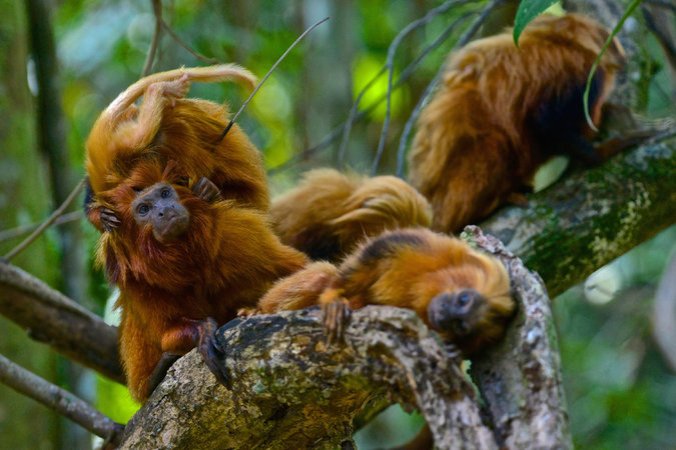
The golden lion tamarin has been observed passing through some of these corridors, an encouraging early sign for researchers. Credit Kike Calvo, via Associated Press

Thanks to Brad Plumer and the commitment of the New York Times to continue covering the complex topic of climate change in interesting, and sometimes hopeful ways:

Stitching Together Forests Can Help Save Species, Study Finds

In the 1980s, an ecologist named Thomas Lovejoy conducted an unusual experiment in Brazil’s Amazon rain forest. As loggers moved in with chain saws to clear trees for cattle pasture north of Manaus, he asked them to leave untouched several small “islands” of forest to see how the animals within them fared.

The results were unsettling. Continue reading

Scotland, Land Of Butterfly Resurgence

5151

For a second day in a row, a butterfly story catches our attention. Small stories of unexpected good fortune are always welcome:

Rare butterfly spotted in Scotland for the first time since 1884

Elusive and endangered white-letter hairstreak discovered in a field in the Scottish borders could become the 34th species to live and breed in the country Continue reading

Entomological Wonders Will Never Cease

Crane_Tiny-Parasite-Could-Save-Darwins-Finches

Galápagos finches, which helped inspire the theory of evolution, are under urgent threat. Will a controversial scientific technique be their deliverance? Photograph by Mint Images Limited / Alamy

Thanks to Brent Crane writing in the Elements section of the New Yorker’s website:

A Tiny Parasite Could Save Darwin’s Finches from Extinction

Five years ago, George Heimpel, an entomologist at the University of Minnesota, travelled to Trinidad in search of insect larvae. He was after several kinds in particular—Philornis downsi, a fly whose parasitic young feed on the hatchlings of tropical birds, and various minuscule wasp species whose own offspring feed on those of the fly. Continue reading

Caviar’s Alternative Harvesting Methods

img_2184_custom-de3f84c9c20acbf0d91cc689281e8d1548ca94b0-s1300-c85

Acadian Sturgeon and Caviar markets three types of caviar, one from the wild Acadian sturgeon, and two types — green and gold — from its farmed shortnose sturgeon. Nancy Matsumoto for NPR

Thanks to Nancy Matsumoto and the folks at the salt, over at National Public Radio (USA):

To Help Keep Sturgeon Sustainable, Farm And Fishery Work Together

It’s the end of only the first week of the official Atlantic sturgeon fishing season on the St. John River in New Brunswick, Canada. But the two fishermen who supply Cornel Ceapa’s Acadian Sturgeon and Caviar company have already landed close to half of the season’s catch. Continue reading

Some Climate Solutions Are Simple

20FOREST-master1050.jpg

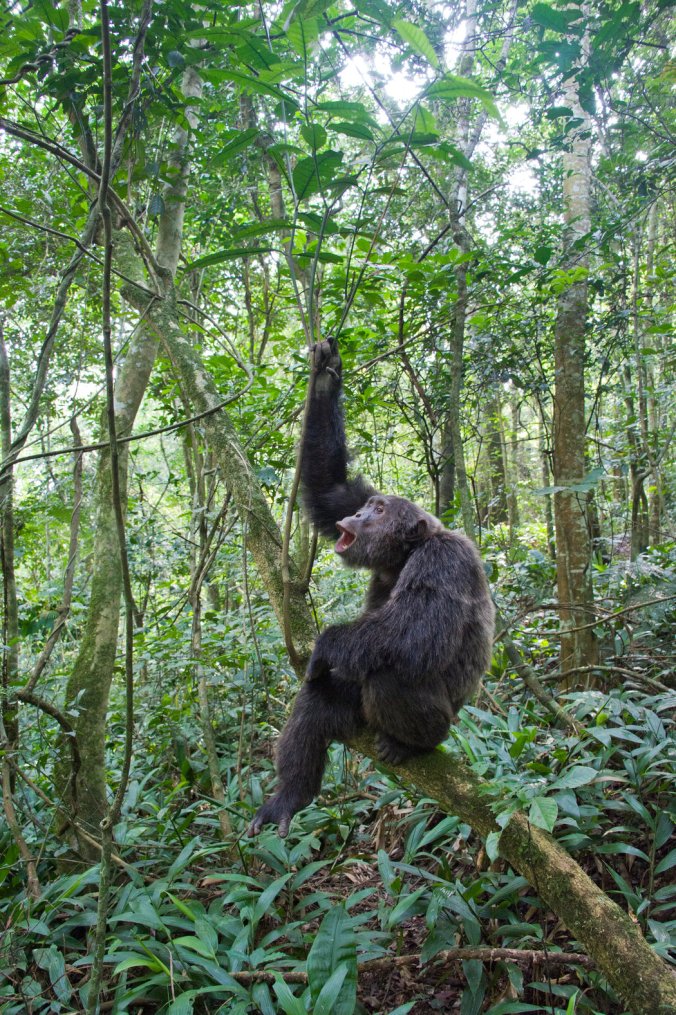
A male chimpanzee hooting in the wild forests of western Uganda. Deforestation in the country is occurring at some of the fastest rates on Earth, shrinking the habitat of this endangered species. Credit Suzi Eszterhas/Minden Pictures

Thanks to the New York Times for this refresher on the basics of climate change and what is needed that we can most easily do to counter its effects:

A Cheap Fix for Climate Change? Pay People Not to Chop Down Trees

By Brad Plumer

The tropical forests in western Uganda, home to a dwindling population of endangered chimpanzees, are disappearing at some of the fastest rates on Earth as local people chop down trees for charcoal and to clear space for subsistence farming.

Now, a team of researchers has shown that there is a surprisingly cheap and easy way to slow the pace of deforestation in Uganda: Just pay landowners small sums not to cut down their trees. Their study, published in the journal Science on Thursday, demonstrated this by conducting something all too rare in environmental policy — a controlled experiment. Continue reading

Elephants, Orangutans, Rhinos & Tigers–What Are They Worth To Us?

4256n.jpg

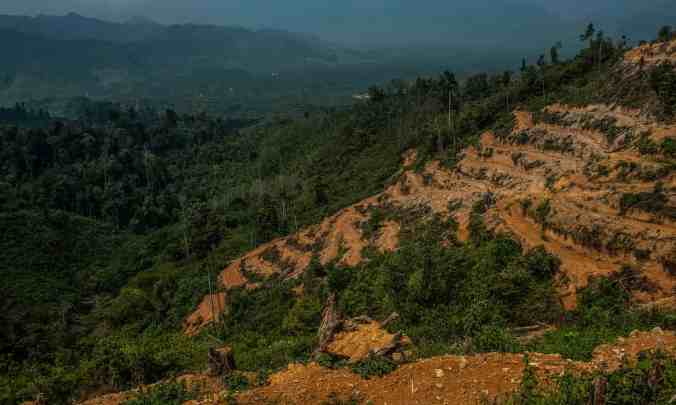
Deforestation in the Leuser ecosystem, one of the last homes to Sumatran elephants, orangutans, rhinos and tigers. Photograph: Sutanta Aditya/Barcroft Images

Thanks to the Guardian:

Pepsico, Unilever and Nestlé accused of complicity in illegal rainforest destruction

Palm oil plantations on illegally deforested land in Sumatra – home to elephants, orangutans and tigers – have allegedly been used to supply scores of household brands, says new report Continue reading

“Arks of the Apocalypse”

U.S. National Ice Core Laboratory, Lakewood, Colo. photo credit: Spencer Lowell for The New York Times

Thanks again to the New York Times for highlighting the global nature of this scientific “call to arms” to save not only data, but genetic and organic material as a back-up plan for future generations. From the Svalbard Global Seed bank in Norway, to sperm banks for coral, endangered wildlife, and even glacial ice – these archives are meant to provide both a life line to the future and answers about the past.

The fragility of each project is evident as Science itself has come under attack from current public policy, which doesn’t appear to see the irony of their denial in the face of facts about climate change.

It was a freakishly warm evening last October when a maintenance worker first discovered the water — torrents of it, rushing into the entrance tunnel of the Svalbard Global Seed Vault, a storage facility dug some 400 feet into the side of a mountain on a Norwegian island near the North Pole. A storm was dumping rain at a time of year when the temperature was usually well below freezing; because the water had short-circuited the electrical system, the electric pumps on site were useless. This subterranean safe house holds more than 5,000 species of essential food crops, including hundreds of thousands of varieties of wheat and rice. It was supposed to be an impenetrable, modern-day Noah’s ark for plants, a life raft against climate change and catastrophe.

A few Norwegian radio stations and newspapers reported the incident at the time, but it received little international attention until May, when it was becoming clear that President Trump was likely to pull the United States out of the Paris climate agreement. Suddenly the tidings from Svalbard were everywhere, in multiple languages, with headlines like “World’s ‘Doomsday’ Seed Vault Has Been Breached by Climate Change.” It didn’t matter that the flood happened seven months earlier, or that the seeds remained safe and dry. We had just lived through the third consecutive year of the highest global temperatures on record and the lowest levels of Arctic ice; vast swaths of permafrost were melting; scientists had recently announced that some 60 percent of primate species were threatened with extinction. All these facts felt like signposts to an increasingly hopeless future for the planet. And now, here was a minifable suggesting that our attempts to preserve even mere traces of the bounty around us might fall apart, too.

Continue reading

Pines, Beetles & Grizzlies

15mcnamee-master768

Zoe Keller

Thanks to Thomas McNamee for his opinion on these matters:

The Government Is Now the Yellowstone Grizzly’s Biggest Threat

In March 2016, the United States Fish and Wildlife Service proposed removing the Yellowstone grizzly bear population from the list of threatened species. The uproar was ferocious. Conservationists, scientists, 125 Indian tribes and some 650,000 citizens expressed concern about the move.

Now the government has gone and done it anyway. Continue reading

Maternal Instinct vs Species Survival

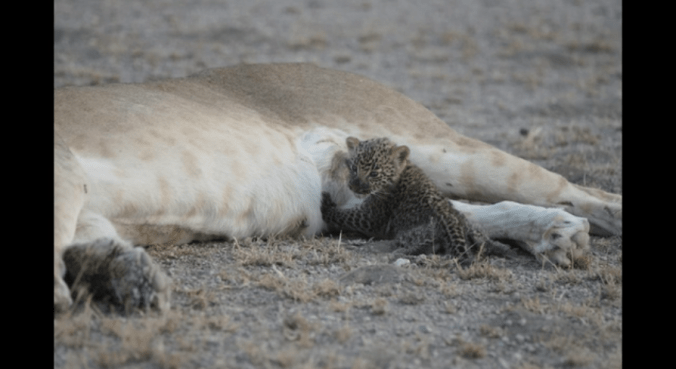
©JOOP VAN DER LINDE/NDUTU LODGE

The more time we spend at Chan Chich Lodge the more we see the seasonality of birth patterns in the wild. There clearly seems to be a “baby season”, that starts with the cats and moves down the food chain to their mammalian prey, as well as birds. Although no photo captures, several jaguar cubs were sighted earlier in the year, followed by dozens of fawns and baby collared peccary. Even the Gallon Jug Farm has welcomed 4 baby horses to the fold, with a fifth on the way…but we’ll talk about that another day.

This unusual news from Panthera.org, an important Big Cat Conservation NGO who uses our 30,000 acres as part of their Jaguar Corridor research, perhaps makes a little bit of sense within the context of those patterns.

We thank Susie Weller Sheppard for sharing these field notes.

Earlier this week, Panthera President and Chief Conservation Officer Dr. Luke Hunter received photos from our partners at KopeLion with some astonishing content: the first-ever evidence of a wild lioness nursing a leopard cub.

Taken on Tuesday by a Ndutu Lodge guest in Tanzania’s Ngorongoro Conservation Area, the images show a 5-year-old lioness, known locally as ‘Nosikitok,’ suckling a leopard cub estimated to be just 3 weeks old. Continue reading

Keeping Species Populations Healthy


lead_960x.jpg

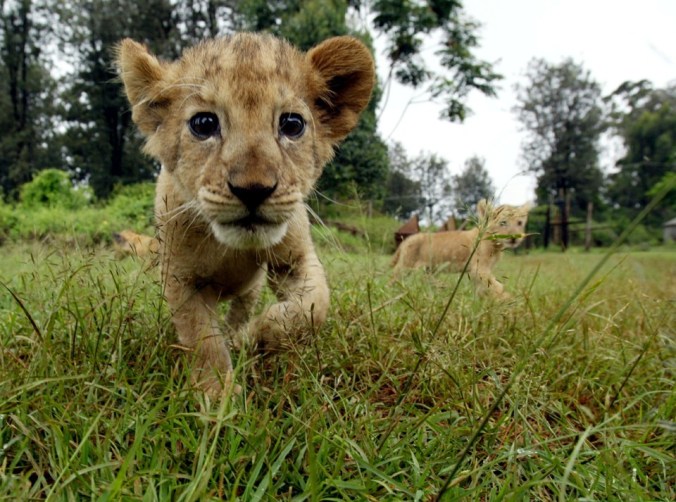
Lion cubs in Kenya. Radu Sigheti / Reuters

At Chan Chich Lodge we are aware that the half million acres of forest surrounding us are essential habitat not just for the specific jaguars, pumas, ocelots, margays and jaguarundis we have the good fortune to see with some frequency. Rather, that scale of acreage is essential for species survival. We are in a large forest corridor that is increasingly rare and unfortunately fragile in other locations throughout the Americas where they still exist. We do what we do with that in mind. Thanks to Ed Yong, at the Atlantic, for this context on extinction:

Imagine if every animal and plant on the planet collapsed into a single population each, says ecologist Gerardo Ceballos. If lions disappeared except from one small corner of Kenya, the prey they keep in check would run amok everywhere else. If sparrows were no more except in one Dutch forest, the seeds that sparrows disperse would stay in place everywhere else. If honeybees became isolated to one American meadow, the flowers that they pollinate would fail to reproduce everywhere else. None of those species would be extinct per se, “but we’d still be in very bad shape,” says Ceballos. Continue reading

Collaborating In Nepal For Wildlife

Thanks to EcoWatch for bringing this to our attention:

This fall, rangers protecting rhinos, tigers and other endangered wildlife in Nepal’s famous Chitwan National Park will get a solar system that powers one of their isolated stations deep in the jungle. At the same time, local women will get the training and tools they need to sell low-cost clean energy technologies to people living in the buffer zone that surrounds the park. Continue reading

Thanks Again, China

Canby-China-Closing-Ivory-Trade-1-1-800

It is always worth celebrating when China takes action against elephant poaching. Let’s hope one or more of these numerous actions has an impact. We are happy to read this news, and the hope trudges on:

On the last day of March, the State Forestry Administration, the Chinese agency that monitors the trade in elephant ivory, closed sixty-seven ivory factories and retail outlets across the country. Continue reading

Sea Shepherd & Cuvier’s Beaked Whales

It has been a long while since our last link to Sea Shepherd news, shame on us, but today we rectify it with news from Seth and Jocelyn’s neighborhood–actually on the Pacific side of Mexico’s Baja California Sur but as close as most people get:

Sea Shepherd Records Never Before Seen Footage of Rare Cuvier’s Beaked Whales During Expedition in Mexico

Sea Shepherd’s research vessel the R/V Martin Sheen returned to Mexico’s Guadalupe Island to continue its study of Cuvier’s beaked whales, capturing never before seen drone footage of these rare and elusive cetaceans.

During the two-week expedition, Mexican lead-scientist Gustavo Cardenas Hinojosa and American collaborator Jenny Trickey, deployed various acoustic devices to compare their effectiveness. The scientists will return and leave these devices for a longer period of time. Continue reading

Sometimes Less Is More

Nijhuis-The-Many-Meanings-of-Biodiversity_01-640.jpg

In a new paper, researchers argue that oddball animals like the Cuban solenodon should be more aggressively protected. COURTESY NEW YORK ZOOLOGICAL SOCIETY / WIKIMEDIA COMMONS

Our focus is on developing and managing entrepreneurial opportunities to protect natural areas. More protection is better than less, we naturally assume. That is why we are intrigued by this blurb about a new scientific finding: “a small but strategic increase in protected lands could triple the amount of bird and mammal species preserved worldwide.”

The headline to this short item–CONSERVATIONISTS COULD BE SAVING MORE BIODIVERSITY IN LESS SPACE–has us clicking, and we thank the New Yorker’s commitment to science writing, and specifically Michelle Nijhuis for it:

If You Eat Canned Tuna, Consider This

TunaRank.jpg

We check in with EcoWatch regularly, and from time to time Greenpeace has a surprising piece of content featured, like this 20 Canned Tuna Brands Ranked: How Sustainable Is Your Brand?

StarkistWarn.jpgWhat is surprising to me is this pop up call to action, which echoes back at least three decades for me to the first time I heard of Greenpeace, which was also the first time I heard of any issues related to canned tuna, which was also the first time I looked on a map to see where the Gulf of California, and Baja California Sur were situated. It is surprising because on the ranking above, this same tuna is not the absolute worst of the worst. Even more surprising, in its own way, is that Trader Joe’s is even worse in this ranking. Go figure. Anyway, thanks to David Pinsky, Greenpeace, and EcoWatch for this: Continue reading