US to Build First Offshore Wind Farm off R.I.

A GE Renewable Energy offshore wind turbine off the coast of Belgium. Photo © GE via Wired.com

Wind power is a recurring subject here, and although there are thousands of turbines across the United States, none so far have been built collectively along the coast. Since so much of the US population is collected in coastal areas, having electricity produced closer to them is key to reduce loss via transportation. Brendan Cole reports for WIRED about the upcoming wind farm in Rhode Island:

BUILDING IN RHODE Island isn’t easy. Hurricanes and tropical storms barrel through its quaint coastline towns, interrupting perfect summer weekends. Freezing winters bring blizzards that can shut down the entire state. And every season features corrosive salty winds, biting at the coast as if sent by a Britain still seething at the first American colony to declare independence.

Continue reading

Cornell Research on Capturing Carbon to Generate Electricity

Architectures of metal/CO2 electrochemical cells as capture systems. (A) Secondary metal/CO2 electrochemical cell where CO2 is concentrated by recharging. (B) Primary metal/CO2 electrochemical cell where captured CO2 is concentrated or converted to Cn (n ≥ 2) valuable products. Image and caption from Science Advances, W.I. Al Sadat and L.A. Archer

Several of our contributors have a Cornell background, and this new technology that can convert carbon dioxide to electricity through a simple series of chemical reactions is the product of a couple researchers at the School of Chemistry and Biomolecular Engineers. Prachi Patel reports for Conservation Magazine:

A new technology offers a one-two punch against carbon pollution. Researchers have made an aluminum-based battery cell that captures carbon dioxide and simultaneously generates a large amount of electricity. That means a way to mitigate carbon emissions while meeting increasing demand for energy.

Continue reading

Engineering Solutions to Disease

We haven’t feature lyme disease much here, although it’s a highly problematic pathogen that will become more common with a warming climate. The exact same goes for Zika, a much newer danger in the United States. This week in the New York Times, an article by Amy Harmon covers the idea of changing the gene pool in white-footed mice in Nantucket to fight Lyme disease, and a video explains how infecting the Aedes aegypti mosquito may help stop the spread of Zika. Below, the article:

Can genetically engineered mice save Nantucket from the scourge of Lyme disease?

If the 10,000 residents of the Massachusetts island did not have such a soft spot for deer, they might not be entertaining the prospect, which could provide the groundwork for an even more exotic approach to controlling tick-borne diseases on the mainland.

Continue reading

Hydropeaking Dams = Fewer Insects

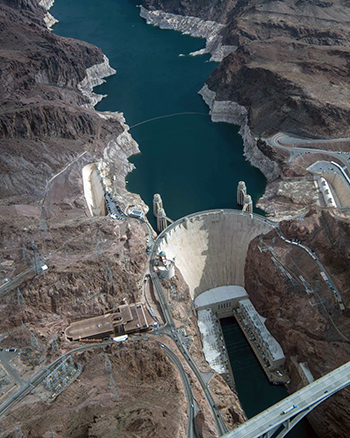
Hoover Dam, photo © US Bureau of Reclamation

Although we’ve heard of dams causing environmental and community problems before, we’ve also seen how they can be beneficial to society, and it’s clear that they’re a double-edged sword. Most recently on the topic, we learned that with proper planning and design, hydropower can be less of an enemy to conservation. Now, research highlighted in Conservation Magazine displays the possibility of helping native river-reliant insect populations by adjusting how dams “hydropeak,” or change river flow to compensate for electricity demand. Sarah DeWeerdt reports:

Scientists know that hydropower dams often decrease the abundance and diversity of aquatic insects downstream. But until now it wasn’t clear why—after all, dams cause a range of environmental stressors such as alterations in water flow, temperature, and sedimentation.

A massive new study led by the U.S. Geological Survey lays much of the blame on hydropeaking, the practice of varying river flows below a dam depending on electricity demand. Because of hydropeaking, the amount of water released from a dam can vary by as much as ten-fold throughout the day, creating an artificial intertidal zone that propagates for hundreds of kilometers downstream.

Continue reading

Hydropower by Design

Itaipu Dam, a binational hydroelectric dam on the Paraná River located on the border between Brazil and Paraguay. The dam is the largest operating hydroelectric facility in terms of annual energy generation. Photo/caption © Erika Nortemann/The Nature Conservancy

Dams, although greener in some senses than coal factories in terms of their electric output, almost always have other serious environmental repercussions in the form of habitat destruction and river flow interruptions that adversely affect fish species. Hydropower from giant dams on rivers has been described as a brute force technology, and the construction of new dams can create public outcry as well as political issues in water distribution. The publication of new research, in part by The Nature Conservancy, shows how hydroelectric projects, often so destructive, can be less harmful if planned thoroughly beforehand to take the whole river basin and water system into account, rather than just a small tract of river. Jeff Opperman reports for TNC in a blog article that describes the elements of concentration, confrontation, and collaboration involved in pairing new hydropower with river conservation:

Concentration.

That’s what makes rivers so valuable — both for fish and for energy.

A river is the concentrated water of a whole region as rain and snow across an entire basin becomes runoff, is funneled into cataracts, creeks and canyons, and collected into the narrow ribbon of a river channel (narrow in a relative sense — even a river channel several kilometers wide is incredibly narrow compared to its basin which may be hundreds of thousands of square kilometers in area).

Continue reading

Geothermal Engineering, Radical Solutions

NAS_Clouds_courtesy-Flickr-user-Janne-Morem

Photo by Janne Morem/Flickr. Could global warming be overcome by releasing light-reflecting chemicals into the atmosphere? With safety and efficacy at the forefront of debate, David Keith discusses the moral and political quandaries surrounding the science of geoengineering.

We have mentioned geothermal engineering on and related topics on than one occasion, but there is a more radical branch of engineering the thermal options at our disposal, with special regard to the climate change “solutions” debate. Thanks to Harvard Gazette for this informative interview on the topic:

Climate engineering: In from the cold

Keith says new reports will likely boost deeper look at geoengineering concepts

When the National Academy of Sciences (NAS) released a pair of reports this month on geoengineering, which involves deliberately intervening in the climate system to counter global warming, discussion of the controversial topic moved into the mainstream science community. The reports concluded that geoengineering is no silver bullet, and that further research is needed. Continue reading

21st Century Alchemy

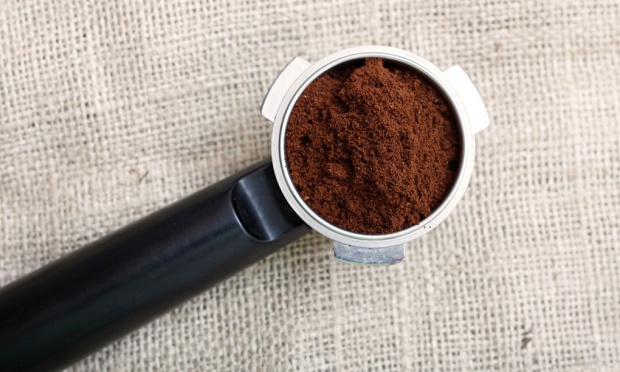
Scientists at the City University of Hong Kong can turn coffee grounds and stale bakery goods into a sugary solution that can be applied to manufacture plastic. Photograph: Alamy

Scientists at the City University of Hong Kong can turn coffee grounds and stale bakery goods into a sugary solution that can be applied to manufacture plastic. Photograph: Alamy

We frequently talk about the recycling on these pages, with an eye toward the developing awareness that the concept is no longer limited to inorganic, static materials. This recent article in the Guardian indicates that plant cellulose based plastic is just the tip of the iceberg in the possible ways to convert the mountains of food waste in many parts of the world into materials with environmental benifits.

Scientists at the City University of Hong Kong have found that they can turn coffee grounds and stale bakery goods – collected from a local Starbucks – into a sugary solution that can be used to manufacture plastic. The food waste was mixed with bacteria and fermented to produce succinic acid, a substance usually made from petrochemicals, that can be found in a range of fibres, fabrics and plastics. Continue reading

Heroic Termites

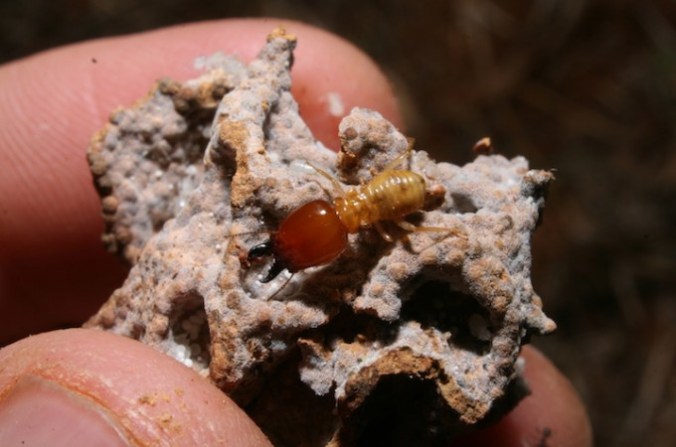
Termite on a fragment of its nest. Credit: Photo by Robert Pringle, Princeton University Department of Ecology and Evolutionary Biology.

Termite on a fragment of its nest. Credit: Photo by Robert Pringle, Princeton University Department of Ecology and Evolutionary Biology.

Conservation, on hiatus while they rethink their approach to a constantly rapid-fire changing media landscape, still provides the daily summaries of important environmental news to which we have become accustomed:

TERMITES EMERGE AS UNLIKELY CLIMATE HEROES

In the past several years, designers have looked to termite nests, earthen mounds that dot grasslands throughout the tropics, as a model for energy-efficient dwellings. Now, a study suggests that these mounds may also make their own landscapes more resilient to climate change, preventing savannas from turning into deserts during periods of drought. Continue reading

The Gears in Planthopper Nymph Legs

Igor Siwanowicz’s image of planthopper nymph gears won 9th place in the Olympus BioScapes International Digital Imaging Competition. Photo by Igor Siwanowicz, HHMI Janelia Research Campus, Ashburn, Virginia. Via Science Friday.

In September of 2013, Science published a paper by Malcolm Burrows and Gregory Sutton titled, “Interacting Gears Synchronize Propulsive Leg Movements in a Jumping Insect.” The two British biologists were discussing the fascinating structures they had found in the legs of small insects called planthoppers. At the top joints of each pair of legs, the tiny jumping insects had gears with interlocking teeth that synchronized the kicking motion between the two appendages, so that the planthoppers could jump straight rather than slightly to the left or right if one leg had acted even slightly before the other.

Covering the story back in September, Joseph Stromberg wrote for Smithsonian Magazine that:

To the best of our knowledge, the mechanical gear—evenly-sized teeth cut into two different rotating surfaces to lock them together as they turn—was invented sometime around 300 B.C.E. by Greek mechanics who lived in Alexandria. In the centuries since, the simple concept has become a keystone of modern technology, enabling all sorts of machinery and vehicles, including cars and bicycles.

Continue reading

Rainwater Harvesting, Try This At Home

rainhouse

Thanks to Conservation for this reference to a concept, a design, and a design firm which all catch our full attention:

THIS ENTIRE HOUSE IS A WATER FILTER

Hungarian design firm IVANKA is an avant-garde concrete company. Over the past decade, they’ve developed unexpected ways to incorporate this utilitarian material into everything from designer handbags to BMW concept cars. Lately, though, the company is focusing not just on luxury goods but on the most basic of everyday resources: clean water. Their new “bio-concrete” could turn houses, schools, and factories into giant water filters to produce drinking water from rain. Continue reading

Robo-bees

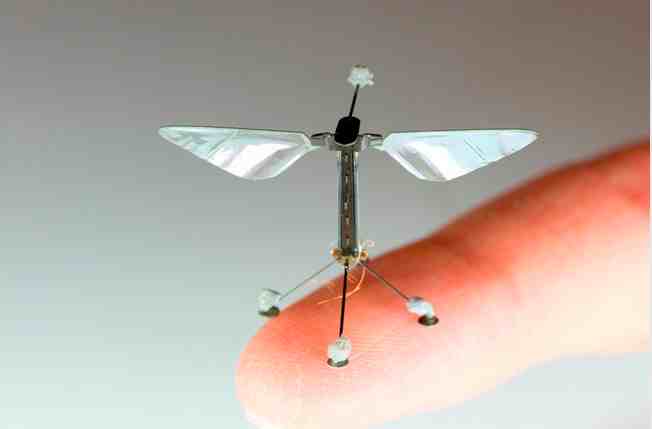
PHOTO COURTESY OF KEVIN MA AND PAKPONG CHIRARATTANANON

PHOTO COURTESY OF KEVIN MA AND PAKPONG CHIRARATTANANON

At RAXA Collective we’re often writing about the birds and the bees within the context of ornothological and entomological biodiversity, as well as the agricultural health of the planet. The impact of CCD, or colony collapse disorder, is significant enough that the Obama administration has challenged scientists with the same force of urgency as Kennedy’s 1962 appeal for a moon landing before the decade was over.

Food attorney and National Geographic contributor Mary Beth Albright writes:

To stay optimistic on this planet I have to believe that most agree that saving honeybees is vastly preferable to replacing them but an interesting alternative is coming out of Harvard. On its website a research team led by engineering professor and National Geographic Emerging Explorer Robert Wood states “we do not see robotic pollination as a wise or viable long-term solution to Colony Collapse Disorder. If robots were used for pollination—and we are at least 20 years away from that possibility—it would only be as a stop-gap measure….”

Continue reading

More On Tesla’s Mr. Musk

Photograph by Dario Cantatore/Getty.

Photograph by Dario Cantatore/Getty.

We like him more the more we hear of him, and while we do not know enough to gush, nor to promote his automotive products, we pass along this interesting news as recorded on the New Yorker‘s website:

Yesterday, one of the more interesting people in Silicon Valley did one of the more interesting things that the car industry has seen in a while. Elon Musk, the C.E.O. of Tesla, opened up all of his patents. “Tesla will not initiate patent lawsuits against anyone who, in good faith, wants to use our technology,” he wrote in a blog post. Tesla’s competitors can now freely take advantage of its batterieschargers, or sunroofs. Continue reading

Energy, Development and the Global Environment

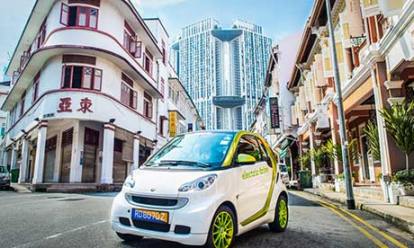
Bosch is testing the viability of electric cars in Singapore. Photograph: Samuel He/Bosch

Bosch is testing the viability of electric cars in Singapore. Photograph: Samuel He/Bosch

Normally we avoid articles that look strictly like press releases promoting a PR firm’s client.  However, in this case, a couple of exceptions were allowed.  First, we like the storyline because of its relevance to three years’ worth of posts on our site.  Second, there is not one iota of obnoxious flimflam, which is what normally forces us to avoid press releases.

But, an additional component to this one really made the difference. Nearly one year ago two of Raxa Collective’s contributors had the opportunity to visit Duke University and sit in the office of the founder and director of their Center for Energy, Development and the Global Environment. A conversation that was meant to last 15 minutes continued for hours that day, because of the credible commitment that Center and its leadership are making to ensure that future business leaders see sustainability as serious business. So, we gladly pass this newsworthy article on:

When it comes to sustainability ambitions, Singapore might take the prize. The island nation, which currently relies on neighboring Malaysia for its water, is aiming for water self-sufficiency by 2050, with 55% of its water needs met via recycled water and 25% from seawater desalination. Continue reading

Fact-Checking Walter Isaacson

Walter Isaacson has done some remarkable things (according to his present byline he is “CEO of the Aspen Institute. Author of biographies of Steve Jobs, Albert Einstein, Benjamin Franklin, and Henry Kissinger. Former editor of Time, CEO of CNN”).  Little reason for him to doubt his own authority, on anything.  But he invites you to fact check the book he is currently working on, starting with a draft of a chapter published in Medium.  I appreciate the creative spirit of collaboration, and his faith in the wider community to get his facts both straight and full of color:

The Culture That Gave Birth to the Personal Computer

I am sketching a draft of my next book on the innovators of the digital age. Here’s a rough draft of a section that sets the scene in Silicon Valley in the 1970s. I would appreciate notes, comments, corrections

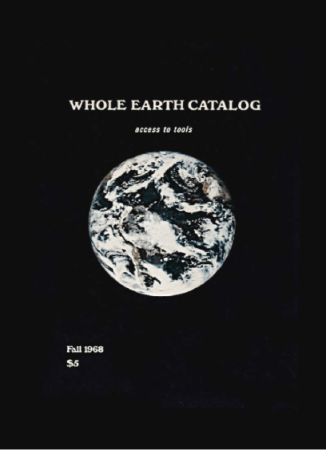
In that draft he makes reference to the starting point of the Whole Earth Catalog, and the meme that came with it of using an image of the earth from space to communicate its fragility and limitations as much as its wondrousness; which, along with the rest of the draft (as if you needed convincing) makes the book sound worth the wait: Continue reading

A Different Kind Of Travelogue

10-08discovery_full_380We are unabashedly in favor of reading, thinking and decision-making in advance of travel, during travel, and after travel. We are also in favor, when the fancy strikes, of just hitting the road without knowing why, where to, or for how long. On our pages you will find posts for either end of the spectrum from meticulously planned to wanderlust journeys.  It is about  discovery.  So this book caught our attention. Nothing to do with hobbits, as reviewed by the Monitor (click the book image to the left to go to the source) it sounds like the perfect prelude, accompaniment or postscript for travel in a part of the world we have not been covering in our pages as much as we maybe should:

…In “The Discovery of Middle Earth,” Robb sets out to establish the momentous contributions made to the arts of cartography and communication by the once-great Celtic peoples, who at various points in history spread all the way from modern-day Turkey to Ireland. In the process, he consults old documents, interviews experts, examines artifacts, and bicycles more than 26,000 kilometers across France, taking his readers along with him… Continue reading