REMOC: Behind the Seams

This one was actually made by Ana's daughter Meli - it must be a family tradition!

I don’t know what I was expecting when Ana Teresa invited me to take a look at her studio. On the one hand, I’d seen the quality of the products on the shelves in REMOC, and thus knew that the craftswomen were not amateurs; but I also knew that many of them didn’t have high incomes or hours to invest in their business – one of the challenges of the trade, for them, is that they are making a living while maintaining a home for their families and fulfilling their duties as a wife and mother. So, despite knowing that the work they produce is ‘serious’, I was still impressed when Ana ushered me through a door I’d thought led to a garage, and I found myself in a real, fully equipped artisan’s workshop. Continue reading

Shark-Free Shark Fin Soup

The hot hand remains hot.  One of the horrible culinary traditions that persists around the world, even though it is repugnant from an environmental perspective, is the harvesting of fins from sharks to make soup. Click the image to the left for but one small data point in the effort to end the illegal harvesting and sale of shark fins.

Better yet, don’t click that. Continue reading

Flourishing Fynbos


Although it may seem counterproductive to conservation, there are quite a few plant and tree species that require the heat of fire to allow their seeds to germinate.  The Lodgepole Pine is one such example, where the heat of the fire burns off the resin that normally seals the seed laden cones.

The South African Fynbos is another.   Continue reading

Paper Patrol

Guest Author: Aby Thomas

This slideshow requires JavaScript.

Last week I wrote about the ladies of the Mannakkudy EDC and the success and quality of their bag production.

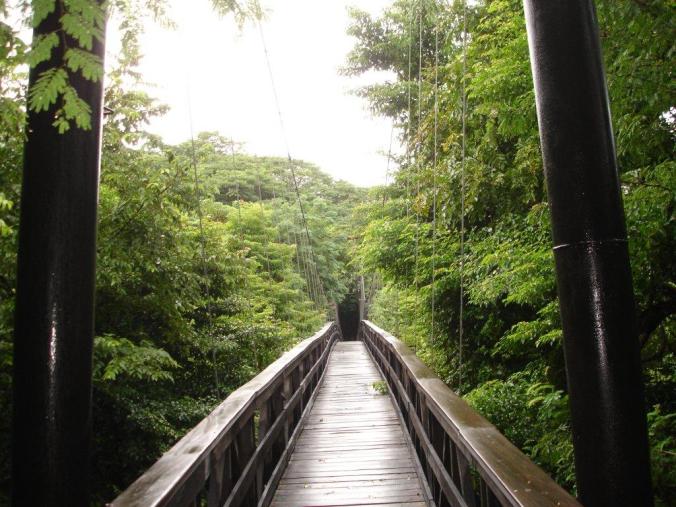
Now I’d like to tell you a bit more about the Vanasree Auditorium ladies and their Forestry Department responsibilities. If you notice that the ladies’ clothing is different from their counterparts in the Mannakkudy section of the EDC, you are correct. Part of the Vasanta Sena (or Green Army), these women help with both forest patrols against poachers and illegal logging, and as guides for the Cloud Walk Trek as well.  And since they pick up plastics and other non-biodegradable waste along the way, they understand the need for a plastic free national park all the more. Continue reading

Leveraging Irrationality


Dan Ariely explains in a series of captivating short videos how frequently irrational tendencies can lead to optimal outcomes.  The Edison-Tesla example in the video above is about the tendency called “not invented here syndrome,” and the key point as he summarizes at the end is a familiar one: understood, this irrational tendency can be very useful.

Continue reading

From Reliable Sources

Today major news organizations are reporting that, according to the IUCN, the Western Black Rhino is officially extinct.  The BBC, CNN and others must have received a press release that is not yet available on the IUCN website (as of my writing and posting this), but if you search on the terms IUCN and rhino you will find a link to the following video that provides a good visual definition of melancholic beauty:

When I see news like this, I fight the natural inclination toward depression and channel the emotional energy as best I can, using the news as a reminder of how slowly we are working at the various tasks mentioned in a string of earlier posts.  It is another example of the feeling I seem to have with increasing frequency: being late.

Continue reading

Glassy Eyed

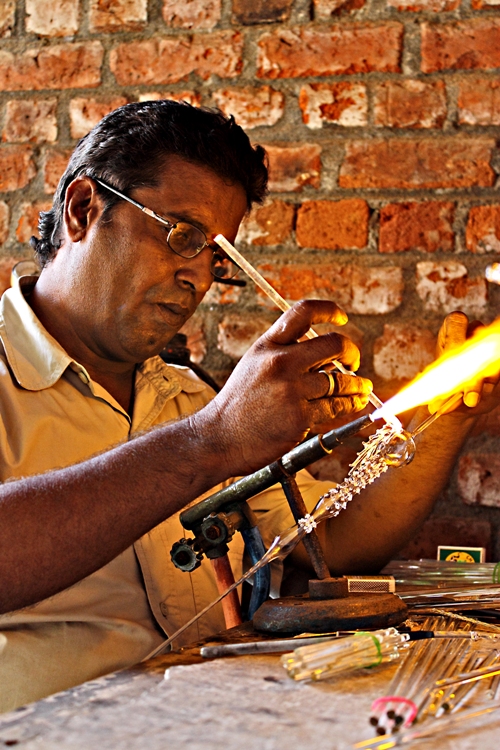
While in Chennai about a week ago, I visited a cultural center, somewhat like a living museum, about an hour outside the city. Dakshinchitra, the name of the display, means “picture of the South” – and it lives up to its name. In addition to being a window to the past, the center, supported by an NPO, supports local artists who set up small stalls on the premises, selling their crafts directly to the buyer, eliminating dealers and price-cranking middlemen. One such artist is Mr. V. Srinivasa Raghavan – a glass blower born and bred in Tamil Nadu.

While I at first felt that the blowtorch-wielding artist was out of place in the century-old surroundings of the compound, I was soon thinking back to my historical education, remembering that glass was being manipulated as far back as the Roman Empire. The means in this case justifies the ends – perhaps the trade’s Continue reading

Supporting Great Smoky Mountains National Park

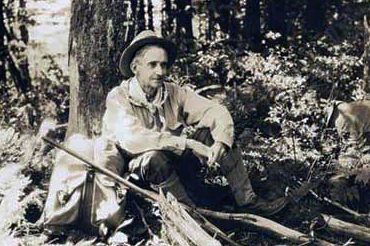
Horace Kephart is, or should be, in the pantheon of anyone working on entrepreneurial conservation initiatives in or near wilderness areas.  Particularly if you have ever been lucky enough to camp in the Great Smoky Mountains National Park.  Even more so if you have also walked through Cornell Plantations.  The book that Kephart wrote, Camping and Woodcraft, has supported both of those amazing places financially.  You could take a look at the contents of this book here or here for a free ride.  But according to this article the royalties from the book were originally donated by Kephart’s descendants, several of whom attended Cornell, to the Plantations.  The article (from which the photos here are rendered) also states that proceeds…

…from the new edition benefit the Great Smoky Mountains National Park.

We will have to investigate further how that works, since Amazon offers a new edition that does not look like the one mentioned in that article.   If you have any information to share on this, please post a comment here.  Meanwhile, anyone who would aptly describe their life as biophilia-driven might understand why this man spent his Continue reading

A Well-Rounded Adventure

“Mists, ah, very problem!”

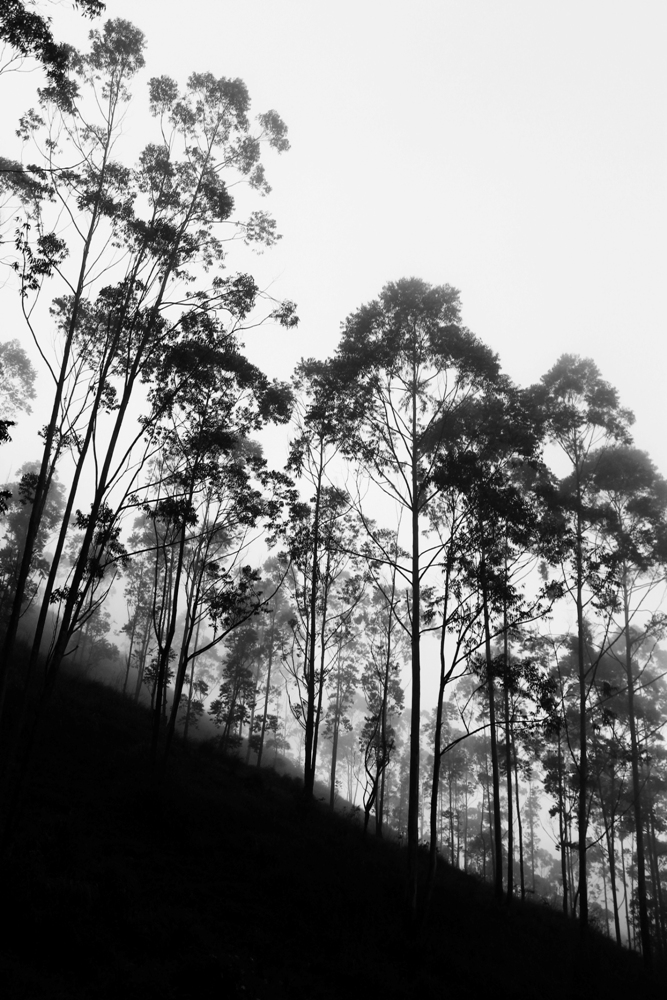
I glanced sideways at the boisterous Mallu man driving the jeep along the winding mountain road. Like his passengers, he was peering out of the vehicle at the steep slopes around us, scanning them for wildlife, abetted by the pre-dawn lighting and the heavy mists.

If any elephants or bison were grazing upon the high hills we drove through, they were impossible to see thanks to the cotton-thick mists blanketing the tall grass and trees that covered the terrain. As the vehicle banged and clunked over potholes at high speeds, I held determinedly onto the railing for dear life, occasionally risking freeing my hands for a photograph of the scenery speeding past.

Some ways down the road, once the sun had risen above the horizon, the jeep rolled to a stop under a densely canopied corridor. My eyes began to search the trees for the reason of our stop to no avail – the driver pointed to what I had previously taken for a pile of rocks, proclaiming it to be a tribal temple. Upon a second look, I realized that the blocks of granite were hewn into rough rectangles, and while in no particular order, they were indeed surrounding a small garlanded icon. Continue reading

Iguana Charisma

The lovely finch tells a story, aesthetic and scientific, that most of us accept as the gospel truth, about adaptation and evolution.  A good interpretive guide can help the average lay person understand the story.  Charles Darwin penciled out some of the first notes that guides use to explain why finches vary in color, beak size, behaviors, etc. and plenty of very smart people have contributed to the evolution of those explanations.  So we continue to learn.

This slideshow requires JavaScript.

A visit to the Galapagos Islands should include attention to the finch, considering the role they played in the ability we now have to understand some of the mysteries of the natural world.  Continue reading

Eight Year Echo Of Hope

When I described, a couple weeks ago, the echo of hope emanating from the Gulf of California it is fair to say I was pleasantly surprised.  That may be putting it too mildly, especially in hindsight now that I have seen a major new entrepreneurial initiative come to life there.  I will be writing more about that in the coming days.

But for now, I am in the Galapagos Islands and another echo is resonating.  In this case, for me, the echo is an eight year feedback.  As mentioned in this earlier post I had worked here on and off over several years, and the last time I was here there were some challenges that seemed intractable.  Today, upon arrival and for the remainder of the day, I had the opposite feeling of the last time I was here.  The photos below show the first thing I did with Reyna and Roberto after leaving the airport.  In the first photo you can see, as I did, just a simple conversation between them and one of the workers; then slowly a parade of otherworldly creatures crept into the photos…

This slideshow requires JavaScript.

Continue reading

Putting Kashmir On The Map

Guest Author: CJ Fonzi

I recently received this link from a Facebook friend.  One of those Facebook friends that you meet on an adventure somewhere, instantly bond with, keep in touch with forever.  This particular guy is an oil engineer from Norway- an unlikely friend of a sustainable business consultant in New York City.  But that is what travel and exploration are all about.

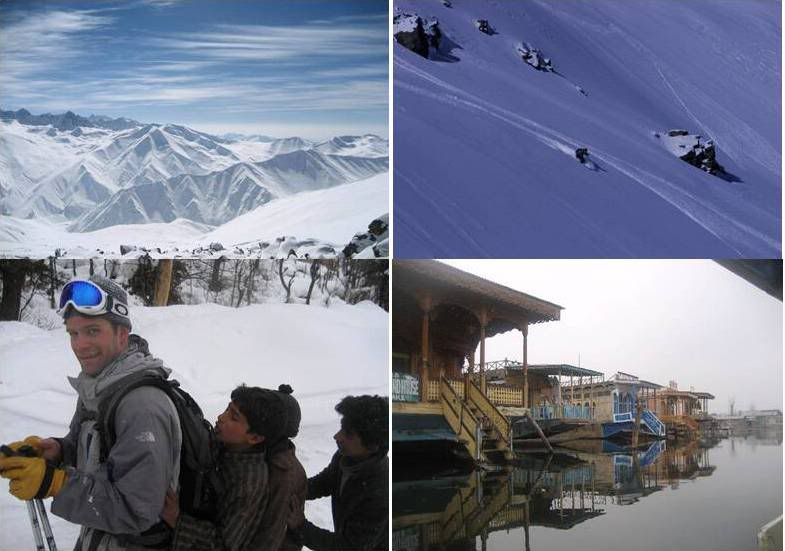
Kashmir- the name brings images of war, struggle, and International politics.  But to those of us who have been there the images that come to mind are more like the ones shown here.

The village is called Gulmarg and it hands down has the best skiing in the world.  Continue reading

Mission-Driven Development in Baja California Sur

In the first third of the 17th Century the Spanish crown sent Jesuit priests to establish missions in what is now Baja California Sur.  The fourth of these–Misión San Francisco Javier Vigge Biaundó–was active from 1699-1817.  What is amazing is that the installation has remained intact even centuries after its last priest left (abandoning the missions at the gun-pointing insistence of the crown as independence movements fomented, which is a story worthy of your further investigation).  Having found this particular oasis in the last third of the 17th Century, the priests cultivated grapes, dates, olives and other produce which, remarkably, still grow here today.

This slideshow requires JavaScript.

It is visually and olfactorally stunning to be in a place with the cactus and other desert flora native to the region Continue reading

La Giganta, Baja California Sur

As noted in the first and second posts on this topic, the question at hand is whether there is a formulation that can effectively bring thousands of hectares of private lands into a conservation area that is supported by entrepreneurial activity.  That activity puts conservation and social welfare of the local communities as the top priorities–the motivation for bringing conservation-minded travelers to valorize these protected areas.

This slideshow requires JavaScript.

Continue reading

Gulf Of California

I had not been exposed to the corridor known as La Giganta, which you can see in the background of the above photo, when I carried out my work on behalf of WWF several years ago.  Now that I have, over the last week, I can only say that it had such an impact on me that I am still processing it.  It is partially the geology of this portion of the peninsula known as Baja California Sur.  It is partially how that geology intersects with the marine ecosystem. But it is mostly–and here I refer to the impressions I am still processing–the intersection of local people with those two natural wonders that really got to me.  The photo above looks from the back of a panga (the type of boat local fishermen use) as we departed a property that is best described as an oasis. Continue reading

New Energy From The Amazon

Guest Author: Tyler Gage

Crist asked if I would share some of our experience starting up Runa because, as a social enterprise, we are working in some of the same space–environmental and social responsibility being centerpieces of our business model–as other businesses that Raxa Collective showcases on this site.  We agreed that a good place to start would be with some questions we encounter frequently.  If there is interest in hearing more, I will be back to tell more of the story in finer detail.

Your website says Runa does not actually farm Guayusa. What do you do and why should people care about Guayusa?

Runa is creating markets for beverages created with Guayusa (“gwhy-you-sa), a native Amazonian tree leaf that contains more caffeine and double the antioxidants of any tea. With a flavor that is smooth and clean, guayusa offers a new kind of energy what the indigenous Kichwa people call “mental strength and courage”. Continue reading

A Four Year Echo Of Hope

For all of the challenges facing the Gulf Of California region ecologically, global trends in sustainable tourism offer potential solutions.  Broadly speaking, the mass tourism model propagated on the most accessible coastal regions of the world—particularly those visited by European and North American travelers—has been challenged by this alternative model.

Still, the mass tourism model has its advocates, in Mexico as in other parts of the world, and creeps into the planning models of destinations where sustainable development is the nominal platform. This happens because for at least half a century the notion of success or failure in tourism development has been defined according to this older model.  If WWF is to have an effective strategy for conservation in the GOC region, then a clear definition of competitiveness vis a vis sustainability must be established.

Those words opened the first draft of a report submitted four years ago . Continue reading

Walton Ford, Come To India!

In my last post, I walked along a border–the one separating the land of nostalgia from the land of meaning–and am still not sure which side of the border I was on.  One person’s memory lane is full of madeleines, and another’s may have no particular there there (so be it, glass houses and all).  The link to Brother Blue is the puzzle.  Can anyone, out of context, realize who that man was and what he accomplished from that little bit of Lear jive?  I do not know.  But recycling is an ethos that India is instilling, so I go with it.

The thread linking Thoreau and Brother Blue for me the other day kept un-spooling, and led me back to my favorite living artist: