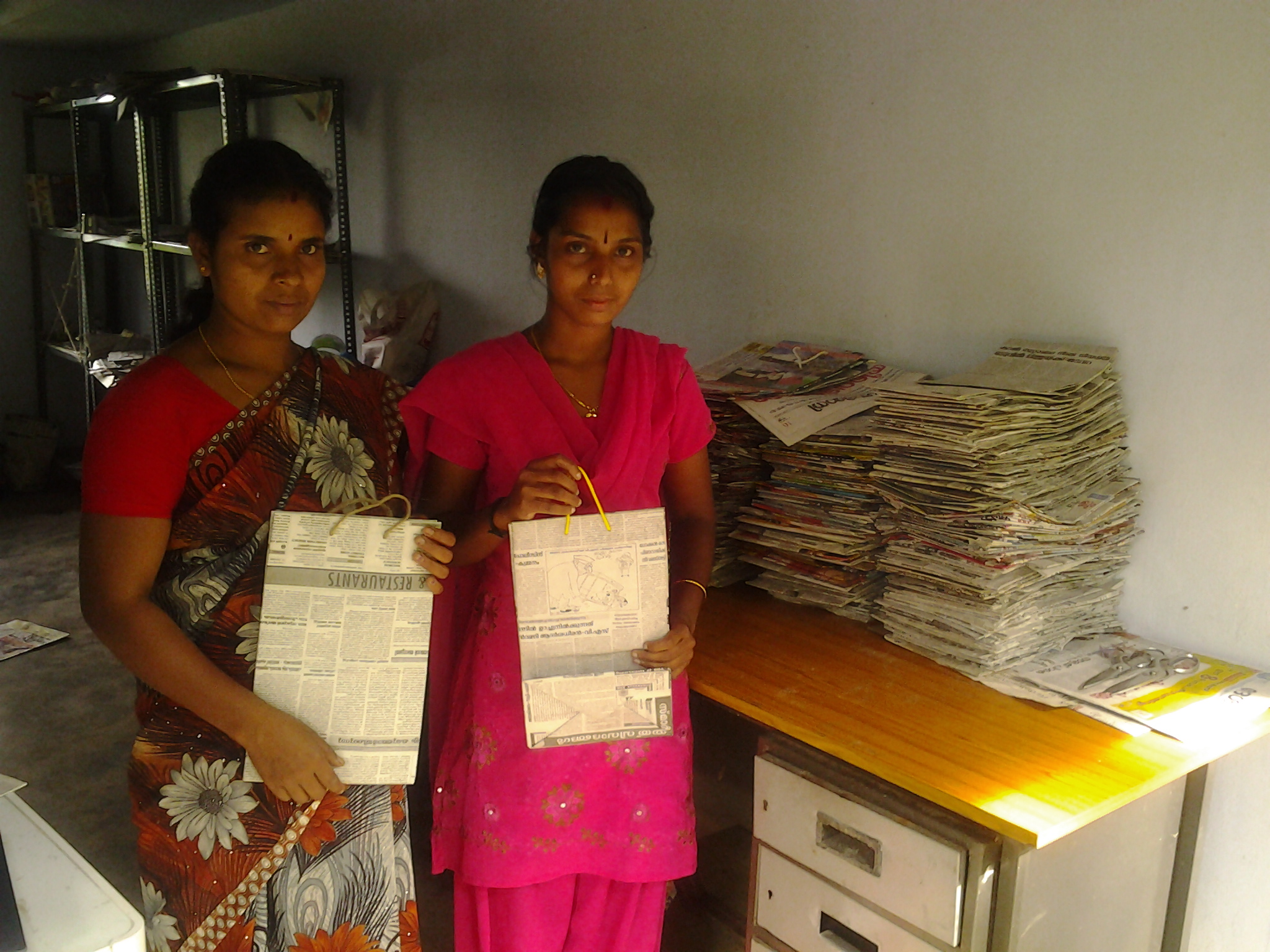
Rama Ponraj (left) and Soumya, 2 members of Mannakkudy EDC
The harvest has been good. Quality, exceptional. The dream? To be known as the best producers in the world of this variety.
Rama Ponraj (left) and Soumya, 2 members of Mannakkudy EDC
The harvest has been good. Quality, exceptional. The dream? To be known as the best producers in the world of this variety.
A few weeks ago, I attended a Rotary Club meeting on tourism development in South Sudan. Bishop Lanogwa and Mr. Olindo Perez of South Sudan’s Ministry of Wildlife Conservation and Tourism led an exciting conversation and inspired all of us in the room to think of South Sudan’s tourism potential. As a new nation reliant on oil as its main economic engine, the ministry believes tourism can be South Sudan’s second economic pillar. South Sudan boasts six national parks and thirteen reserves. The nation has arguably the largest wildlife migration in Africa. Although the second Civil War (which lasted over two decades) negatively affected wildlife, South Sudan is still home to large populations of beautiful kobs, giraffes, elephants, chimpanzees, and other wildlife.
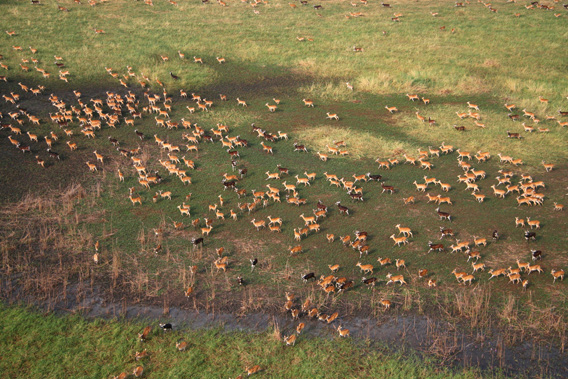
Kob Migration in South Sudan
I believe tourism is a very powerful economic tool; however, its social and environmental consequences can be both negative and positive. Continue reading
Over ten years ago South African designer Marisa Frick-Jordaan literally wove together two of her apparently disparate passions : Socio-economic development and contemporary craft and design. A BA Honors degree in Politics and Fine Arts at the University of Natal and a Fashion Design Diploma at Natal Technikon was followed by 6 months at the Cité Internationale des Arts, a residential arts cooperative in Paris, similar to London’s Cockpit Arts.
A long time interest in African art forms took her from a clothing line that incorporated Zulu beadwork to a telephone wire weaving project that blends traditional craft with avant-guard, award winning design. Weaving is an ancient art around the world and in addition to the use of grasses, the decorative use of wire in Southern Africa dates back hundreds of years. Color coated copper telephone wire came with modernization and the rural to urban migration created access to these new industrial materials. Continue reading
Guest Author: CJ Fonzi
I recently received this link from a Facebook friend. One of those Facebook friends that you meet on an adventure somewhere, instantly bond with, keep in touch with forever. This particular guy is an oil engineer from Norway- an unlikely friend of a sustainable business consultant in New York City. But that is what travel and exploration are all about.
Kashmir- the name brings images of war, struggle, and International politics. But to those of us who have been there the images that come to mind are more like the ones shown here.
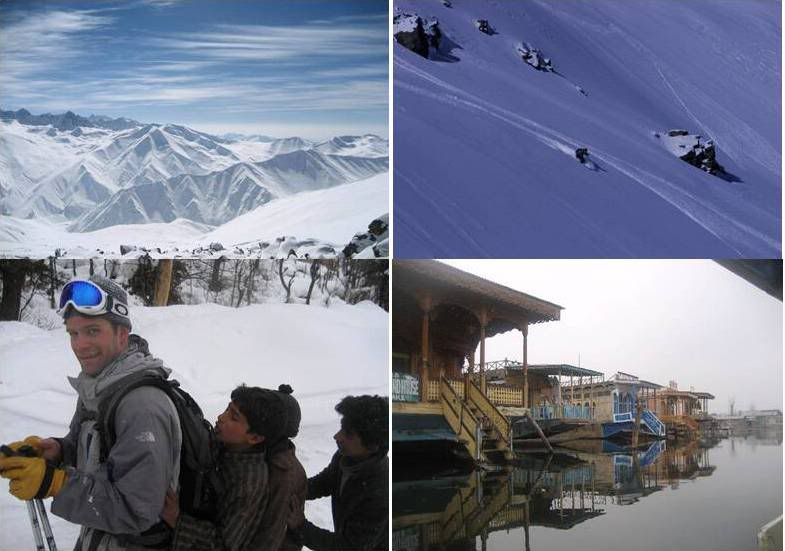
The village is called Gulmarg and it hands down has the best skiing in the world. Continue reading
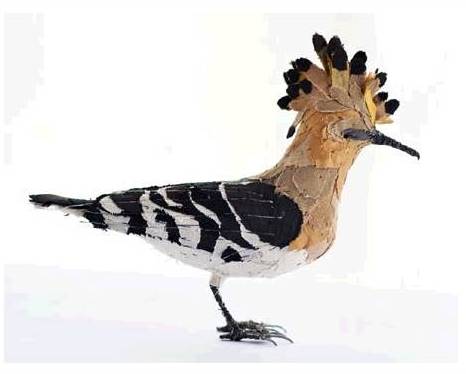 Hoopoo by Textile Artist Abigail Brown
Question: What would a Natural History Museum look like in Wonderland?
Answer: Abigail Brown’s studio.
The Victorians were avid collectors, and there’s something deliciously Victorian about the detail and precision with which textile artist Abigail Brown practices her craft, bringing the winged world to life with bits and pieces of cloth that each carries their own history. Continue reading

Hans Gigginger photo from The New Yorker
I consider myself a pretty adventurous eater. In fact, I will easily go so far as to call myself a “foodie”. I’ve spent my adult life living on various continents, trying to understand the history and culture of the cuisine wherever I was living. I’ve patiently explained my dinner party plans to vendors at Parisian fromageries (in hopes they will approve and allow me to complete my purchase). I’ve “mastered” what I like to call Kitchen Croatian, or a knowledge of food nouns in that language, to be able to market and somewhat communicate recipes to kitchen staff while living there. Malayalam still totally eludes me, but it is one of the world’s most difficult languages after all, so please don’t hold that against me.
But to the best of my knowledge, I’ve never eaten a bug Continue reading
Guest Author: Diwia Thomas
While asking around for newspaper donations, I often meet with reluctance and wondered why? Ten years ago a kilo of old newspaper fetched only a meagre Rs 3/- , today the raddi-wala (the guy down the road who buys scrap) pays an enticing and irresistible Rs 7/- per kg. I promptly made a trip down there to broker a deal with him for a steady supply of newspaper for our paper bags. He tells me that newsprint companies in India have begun to recycle old newspaper into newsprint. In the past newspaper was recycled into boards or brown coloured paper for packaging and boxes because recycled newsprint turns a dull greyish colour unsuitable for printing. Indian newspaper companies have found ways to deink newsprint pulp and retain its brightness for printing purposes. Mammoth deinking machines do this job. Featured here is a small one, just to demonstrate the process. Continue reading
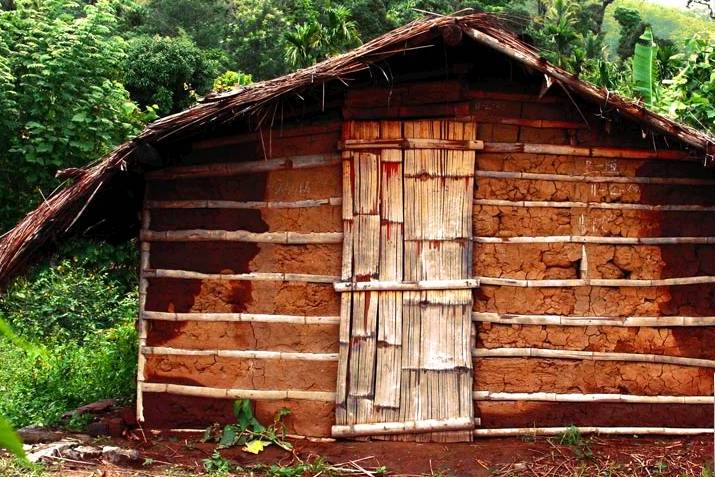
Despite the fact that this post makes me look like a “one trick pony” I have to share yet another recycling innovation that involves, well, you know…
The Canadian company Knowaste has opened several facilities in the U.K. that are making a significant dent in the nearly 800,000 tons of disposable nappies and other “absorbent hygiene product” waste that would normally go directly to landfills annually.
The company has pioneered a system that, after heat sterilization, converts the plastics in the products into items such as roof shingles and plastic tubing, with the waste from that processing used to generate heat and power for the plant itself. Continue reading
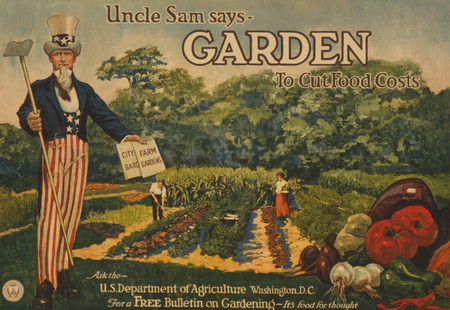
As innovative and “hot topic” as they are, the concept of urban and suburban community gardens is not actually new, nor a USA phenomenon. Just a seemingly “modern” and “developed economy” phenomenon. Innumerable acres of public and private land across the USA, U.K., Canada and Germany were being used for small scale agriculture during WWI and WWII. London’s Hyde Park, San Francisco’s Golden Gate Park and New York City’s Riverside Park (not to mention Eleanor Roosevelt’s White House lawn) all had plots for cultivation in order to mitigate the costs of growing and transporting produce during wartime. A Victory Garden campaign during WWI is said to have influenced the creation of over 5 million gardens in the USA alone. Continue reading
 We have been beta on a service that allows an actual taste of the places where we work. Coffee, from our friends in Nicaragua; honey, wild-hunted in India, Africa and South America; the salt that Ghandi promoted; and the pepper that we have written about more than once. And so on. The point is that you can taste the difference of a food or a beverage based on where it comes from, and that is evocative. For example, coffee grows all over the world, and not only the growing conditions vary but so do the post-harvest traditions:
I head off to attend a friend’s wedding in India. It happens to be at the same time as the beginning of the monsoon season so I can’t resist the temptation of organizing to visit the coffee monsoon processing town of Mangalore on the Malabar coast. It is the only place in the world where this most unique of coffees is processed: Monsoon Malabar
I land at the new Bangalore airport which is now world-class, slick, big and impressive. It is so far removed from the old Bangalore airport I last visited sixteen months ago where you were jolted into a profound awareness that you were in a foreign country for real: with hordes of people lining the exit ramp and traffic going in six directions at once and a cacophony of horns, calls and mass humanity pressing on all sides. The new airport is much more sedate and orderly and the immersion into the wonderfully varied and exotically, pungent Indian culture is now a little more gradual. Continue reading
Despite the now ubiquitous use of the internet to follow both local and world news, newspapers continue to exist for many people as their daily connection to current events. In many countries that’s not their only use of course. We’ve written about the recycling initiatives of newspaper bags and baskets, as well as their use as wrappers and packaging in markets around the world. But used for fueling our cars? Now that’s news!

Tulane University associate professor of cell and molecular biology Dr. Mullin and his team have just applied for a patent for a method to produce the biofuel butanol from organic material. Continue reading
Even if the jury is still out comparing the environmental impacts and carbon footprints of cloth vs. disposable nappies, it’s clear that standard disposables are a landfill problem. As in, a space problem if nothing else. Being a petroleum-based product, they pose other problems as well.

But since the main component of these stubbornly indispensable items is cellulose, and mushrooms are nature’s cellulose-eating machines, Mexican scientist Alethia Vázquez-Morillas of The Autonomous Metropolitan University in Mexico City has found a solution. Continue reading
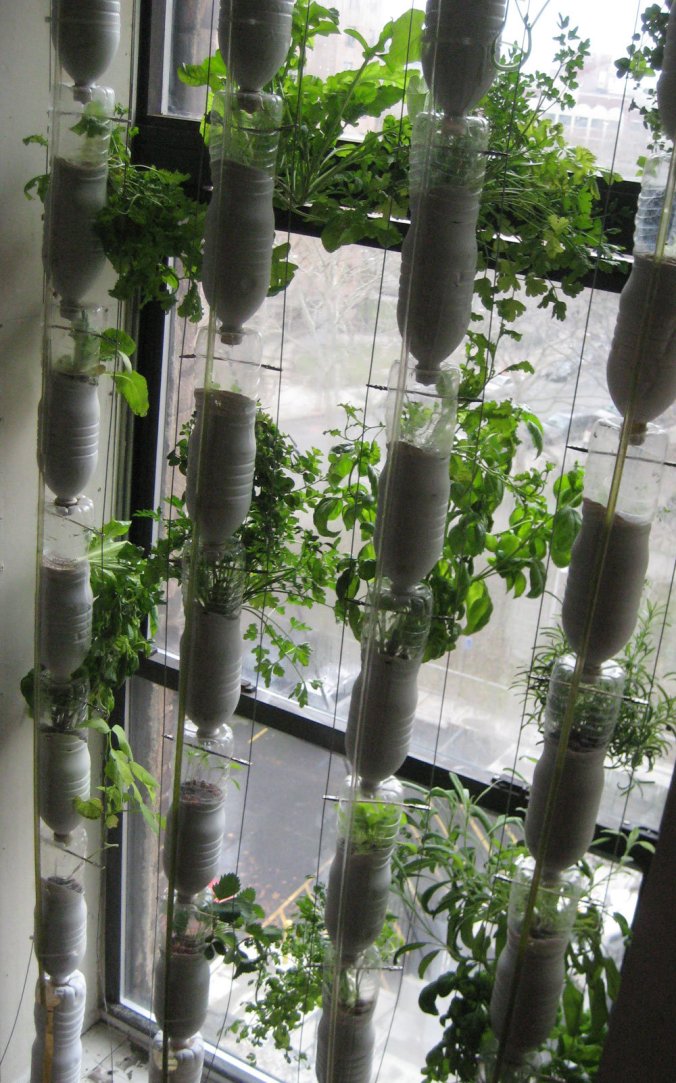
In one of my earlier posts, I discussed some of the basics of hydroponics, one of the less popular but more efficient forms of urban gardening. Today I won’t discuss the technical aspects of hydroponic gardening, but display an example of an entrepreneurial venture taking advantage of the underdeveloped market. Most people with hydroponic gardens are either aficionados or professionals – very few grow soil-less produce casually.
Windowfarms, an American open-source project concerning itself with urban agriculture, not only offers the blueprints for solar window-contained hydroponic gardens, but also the option of purchasing a kit of varying dimensions (for those less comfortable with the technical specifications). In addition to its mission of reducing urbanites’ carboon footprints by enabling them to grow their own produce, Windowfarms are being used to educate schoolchildren on the benefits and ease of urban farming.

When Horace Greely (well, actually John B. L. Soule) said “Go West, young man, and grow up with the country!” he was speaking from the perspective of limitless possibilities. The Lewis and Clark Expedition had helped map out the west and many young men, and later women, answered the call.
With wilderness in peril, that same entrepreneurial spirit has opened up a new world of empowerment and possibilities for later generations. The California Conservation Corps and Southwest Conservation Corps have teamed with the non-profit Veterans Green Jobs in a win-win program to support both the country’s military veterans and the country’s national parks. Continue reading
Yes, Plastics. That ubiquitous, universal petroleum product that no one but a Hottentot can pass a day without touching.
It’s impossible to conceive of a world completely devoid of plastics, but we certainly can conceive of alternatives to at least some of its uses. Forums such as Fortune’s Brainstorm Green bring together innovators and day dreamers with tangible results.
Eben Bayer and Gavin McIntyre, co-founders of Ecovative Design, aren’t much older than Benjamin Braddock * was when he received that erstwhile advice. Continue reading
Hydroponic gardening isn’t for everyone: the handiwork, plant nutritional knowledge, and electrical setup can be daunting to beginners. When I set out to create my very first hydroponic setup, I had essentially zero knowledge in any of those fields. Nonetheless, with a very small budget, I was able to establish a functioning hydroponic garden within a few days.
A friend of mine told me about a shop outside the center city of Nairobi that I had to check out. Anyone who knows me knows I’m a bit of a shop-a-holic, so I took a taxi over to Amani Ya Juu. To my delight, Amani Ya Juu is so much more than a store; it is a reconciliation project, a gathering center for marginalized woman, a place of hard work, and an entrepreneurial dream realized. Amani started in a garage with three eager refugee women, two from South Sudan and one from Mozambique. They used their stitching skills to develop a training program and a “fair trade” business. At Amani, fair trade means the women are paid not only a living wage, but enough to send their children to school, and provide for adequate housing and basic healthcare needs. They also value local culture, traditions, and procure materials locally. Now fifteen years later, Amani Ya Juu exports to the US, staffs over seventy marginalized women, and proves to be a self-sustaining and profitable project.
From the exterior, the shop looks like an adorable guest house with a quaint outdoor garden café to its right. Upon stepping into the shop, I’m greeted by a woman in the back sewing a mushroom pattern on a canvas pillow. She welcomed me and asked if I’d like a tour of the production center. Continue reading
The wooden block is probably one of the simplest and most played with toys. However, this iconic block did something unexpected: it has been promoted amongst the complex toys of this generation and sure to last for many generations. With a little entrepreneurial conservation, Tegu has created a block that surpasses most expectations of a toy. It is educational and stimulates children’s creativity and unscripted play (as I mentioned in one of my previous posts), is heirloom quality, helps the planet and its citizens, and is so much fun that adults sneak off and play with them.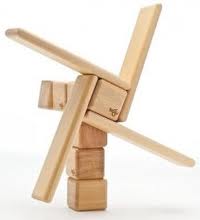
Tegu’s magnetic blocks are built to leave a legacy. They are complex, yet they don’t require any batteries or instruction manuals, just an imagination. The uniqueness of this toy is not just the functional (and inaccessible to children) magnet, but the series of events that follow each block purchase, called the Tegu Effect. Tegu gives every buyer the choice to either donate dozens of trees or donate schooldays for Honduran children. But it is not only the environment and children that benefit; as Tegu grows, the company creates living wage jobs for the Honduran factory workers, and with 65% of the population living currently below the poverty line Tegu offers the people a great opportunity. Continue reading
This afternoon I visited my favorite newspaper bag unit in Kumily to check in on the progress since Sunday and to clarify the structure they had set-up on Sunday morning, mostly in Malayalam. Here’s my report, which is heavy on details and light on style.
Each of the producers was previously associated with an Eco-Development Committee (EDC). These committees have been established by the Forest Dept. over the last fifteen years, and are divided by location, or in the cases of the Mannan and Peliyan, by heritage. Current participants represent nine different EDCs: Mannakkudy, Paliyakuddy, Korishomala, Kollampottada (divided into three), Vasanthasena, Spring Valley, and Mullayar. Each has put forth a representative, who will serve to facilitate communication among them. They have, for now and for the most part, elected to retain the division of these committees, perhaps partially out of habit, but certainly for convenience’ sake. EDCs exist in neighborhoods within 5km of the forest’s edge. Though we held the workshop in Vanasree auditorium, just around the corner from Cardamom County and in the same building as the office of the Eco-Development Range Officer, Sanjayan, and some have chosen to continue working there, some from more distant locations prefer to base their operations out of EDC offices nearer to their homes. I don’t know who will administer supplies to these offices, or how, when the operation becomes more complex. The Vasanthasena committee formerly created a newspaper bag unit, and a few of its members have prior experience and know-how. It has been proposed that all the producers unite under the auspices of this group, but they have yet to ratify this motion officially.
Those in attendance on Sunday morning elected three officers to govern the unit: a Convener, a President, and a Secretary. They will receive assistance from two ex officio secretaries and a ‘facilitator,’ all of whom are employed by the Forest Dept. The elected officials alone have access to the finances. Sasi Kumar, one of the ex officio secretaries, currently is charged with maintaining the registers. When I asked what policy regarding the registers they would pursue in the future, Shymala, the ‘facilitator,’ told me they had not yet concerned themselves with the specifics. Abie, who was translating for me, used the phrase “baby steps” to convey the meaning of her answer. Continue reading
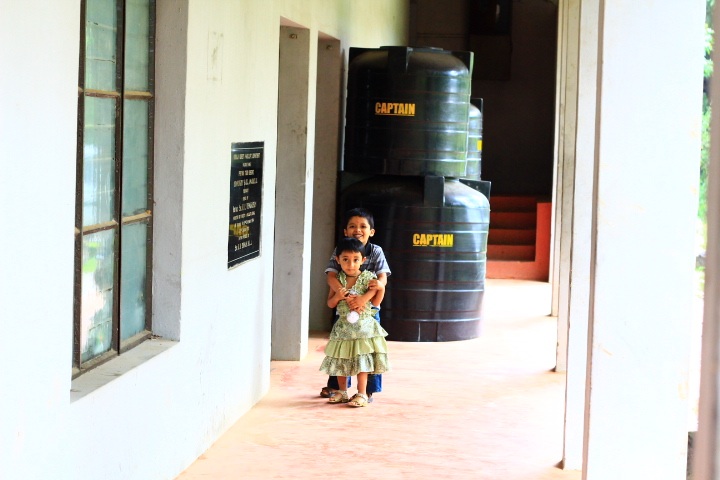
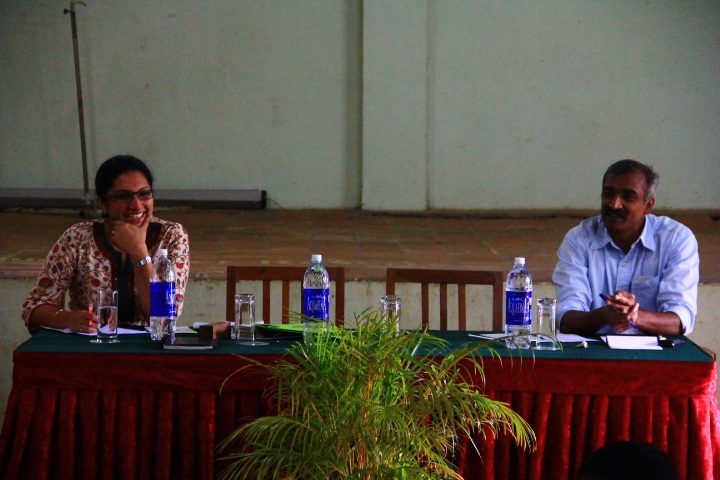
The end of a remarkable weekend. A plan realized, an organization kick-started, exceptional levels of eagerness and dutifulness, and a very healthy dose of fun. Tomorrow I’ll post in detail about what was achieved this weekend, where the project will go from here, and my other general impressions. But until then, I have to admit that I’m riding a high, for the first time having been part of such a fruitful and meaningful collaborative project. Here are some pictures from today’s meeting, during which logistical concerns were ironed out and questions about printing and creasing were answered:
 Organikos