If You Happen To Be In New York City

website-header1

It is the sort of conference we are happy to see hosted by an MBA program:

MILLENNIALS RISING: WHAT’S NEXT FOR SUSTAINABILITY?

Friday, October 31, 2014

We are living in promising but turbulent times. Never before has there been such interest in harnessing innovation to find sustainable solutions for communities and the environment, but never have the problems been more urgent, complex or challenging.

While more business leaders are pursuing sustainable strategies, what can be done to accelerate this change and harness the talents of millennials as future sustainable leaders to ensure they realize this potential? What can be done to sustain interest in solving social and environmental issues, sustain funding for these efforts, and sustain the pipeline of social entrepreneurs leading these changes?

Join us at the 2014 Social Enterprise Conference by Columbia Business School and help spark the conversation on driving sustainable change beyond the new millennium:

Continue reading

Via Kerala = Kerala

Via Kerala uses Malayalam as a motif to bridge the gap between the traditional and the contemporary

Via Kerala uses Malayalam as a motif to bridge the gap between the traditional and the contemporary

Our friends at Thought Factory and Via Kerala are important members of our collaborative tribe, so of course we were thrilled to read this article highlighting their efforts. We manage their flagship store in Thekkady at Cardamom County, and the new RAXA Shop at Spice Harbour also showcases some of their iconic products.

Malayalam alphabet and the Malayali’s personality have some things in common. Just as the rounded letters, we, as a people, are not aggressive and have rounded personalities. We are a bit complicated, too. Theresa J. George uses Malayalam typography as a metaphor for our culture and the very essence of being Malayali.

Her company Via Kerala uses Malayalam as a motif to bridge the gap between the traditional and the contemporary. “We are proud of our roots, yet there is a slight disconnect between it and the younger generation,” she says. Continue reading

Superlative Sharing

India Republic Day Doodle

India Republic Day Doodle

Although the “Google Doodle” above was published to commemorate the day the Indian Constitution came into force, it seems appropriate to reshare it for Indepence Day as well. That spirit of sharing is evident in the internet giant Google’s launching of the Google Impact Challenge in India. Nikesh Arora, Google’s senior vice president and chief business officer, wrote

On the eve of India’s Independence Day, we’re celebrating the spirit of creativity and entrepreneurship of the world’s largest democracy by spotlighting the best local nonprofits that are using technology to make the world better. Continue reading

Trashy bags : social and environmental entrepreneurship inspiration from Ghana

How we do business and perceive the world has been informed for many years by the concepts of Recycling and Upcycling. So our first introduction to Trashy Bags during a trip to Accra was exciting to say the least.

Trashy Bags is a social enterprise that makes recycled eco-friendly bags and gifts from plastic trash. They employ over sixty local people to collect, clean and stitch plastic trash into bags and other products. Packaging and “billboard flex film” waste is a huge problem worldwide, not just in Ghana. But a growing issue in parts of world where clean drinking water isn’t readily available is the build-up of spent “water sachets”—non biodegradable plastic water pouches.

It is estimated that in Ghana, waste produced from plastic packaging amounts to 270 tonnes per day; most of it non-biodegradable.  That adds up to over 22,000 tons of plastic in one year.

This figure has risen in just ten years by about 70%. Despite this rise, it is estimated that only 2% of plastic waste is recycled. You may ask what happens to the remaining 98%.   Continue reading

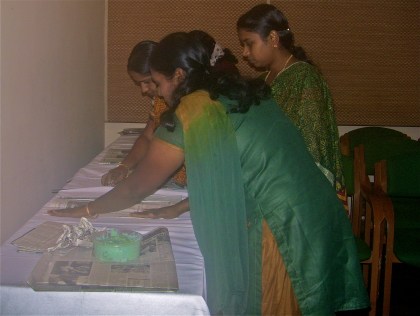
Training session at the newspaper bag unit

Our newspaper bag unit is a permanent, exciting work-in-progress. Using upcycled newspapers provides us with an alternative  to plastic bags in our two shops at Cardamom County– the Raxa Collective store and the via kerala shop. It is also a way to work with more people in our community. We have been working at making this unit a sustainable entreprise with many collaborators since the beginnings of Raxa Collective in 2011.

Newspaper bag training unit - Raxa Collective Continue reading

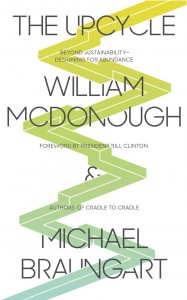
“The Upcycle”, the sequel to “Cradle to cradle”

If you’ve read “Cradle to Cradle” and you come here regularly, chances are you’ll be as excited as I am to learn about the sequel : ‘The Upcycle”.

10 years ago William McDonough and Michael Braungart published one of the most important environmental manifestos of our time.

Based on biomimetics, Cradle to Cradle design is an approach to the design of products and systems. It models human industry on nature’s processes viewing materials as nutrients circulating in healthy, safe metabolisms. The book states that:

“All products can be designed for continuous recovery and reutilization”.

Every product can and should be conceived with the reuse of its materials in mind and every material can and should be conceived to be used again. Just like in nature, nothing goes to waste.

If you have not read it, McDonough’s TED talk Cradle to Cradle design will probably make you want to give it a go.

In their newest book  The Upcycle: Beyond Sustainability – Designing for Abundance,  McDonough and Braungart go further than ‘Cradle to cradle’ saying that we should be ambitious about our role on this planet.

“Industry can do better than “do no harm”: it can actively improve everything with which it comes into contact.” Continue reading

WED 2013: The Fourth “R”

WED 2013 - Raxa Collective

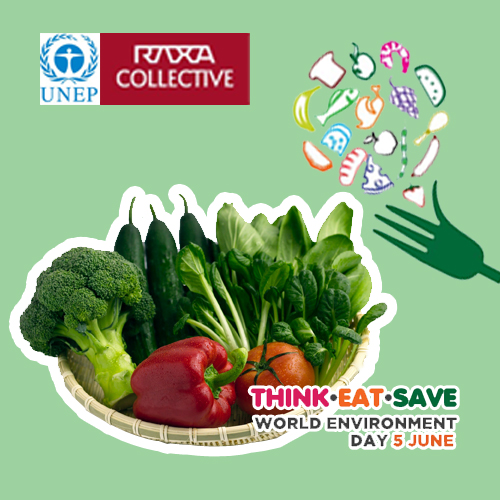
On June 5, we’ll celebrate World Environment Day. This year UNEP focuses on the theme Food waste/Food Loss. At Raxa Collective we’ll be carrying out actions and sharing experience and ideas. Come and join us with your ideas and tips to preserve foods, preserve resources and preserve our planet.

Recently when thinking about the universal recycling symbol it occurred to me that many of our expectations on how basic human needs are met can be influenced by the three concepts of Reduce, Reuse and Recycle.

Continue reading

Everything is good in a banana

My colleague Vinod is an expert on sustainable tourism in India, he has studied the alternatives to plastics. He explained to me that after Brazil, India is the largest producer of bananas in the world… Continue reading

Malayalam font: research and reinvention at Thought Factory Design

One of the things you notice first when you arrive Kerala is the beautifully curvy and mysterious script. The Malayalam alphabet consists of 56 letters. Its rounded form comes from the fact it was primarily handwritten with a sharp point on dried palm leaves. Continue reading

Extreme recycling: Haathi Chaap, paper made from elephant dung

Stationery made of elephant dung. Among the entrepreneurial ventures I discovered while browsing through the sustainable products distributed by Raxa Collective at Cardamom County, this one must be my favorite. I had seen goat dung dried and then mixed with dirt to build houses in Masai villages in Kenya, but I had never seen tools or products made out of dung.  Continue reading

Job #43 – Sailing the World for Food

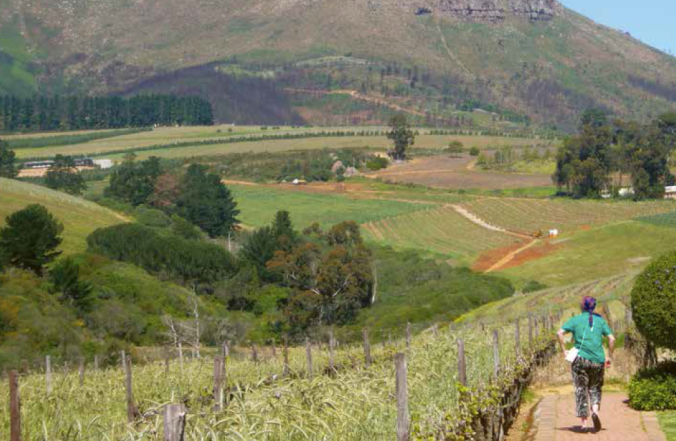
Barbara following a footpath in the wine country of Stellenbosch, South Africa - during one of her many adventures

Barbara following a footpath in the wine country of Stellenbosch, South Africa – during one of her many adventures

There is a book called “150 Good Food Jobs” and I’ve had 43 of them. This means I’m either really old, I can’t keep a job or I get distracted and curious by shiny objects. But basically, these have been encapsulated within two long-term careers, one in Napa Valley as a winery culinary director and the other at Cornell University and in Ithaca.

Two-and-a half years ago, I “retired” from my 20-plus years at the Hotel School. After some years teaching about wines and later restaurant management and co-owning an Ithaca restaurant, I served as an academic and career advisor to “hotelies” – some of the most entrepreneurial, engaging, smart young adults around. After a serious cancer scare I retired at age 55 and went rogue, looking for a new career combining my love of travel, food, culture and service.

A SEMESTER AT SEA

I found my calling in fall 2011, as the adult lifelong-learning coordinator for the University of Virginia’s Semester at Sea program. With my husband Dave, 500 undergraduates, 60 adult learners, the faculty and the crew, I sailed from Montreal to Casablanca, Morocco; Accra, Ghana; Cape Town, South Africa; Port Louis, Mauritius; Chennai, India; Penang, Malaysia; Ho Chi Minh City, Vietnam; Hong Kong and Shanghai, China; Kobe, Japan; Hilo, Hawaii; Puntarenas, Costa Rica; and Coxen Hole, Honduras before docking in Fort Lauderdale at the end of 120 days. students getting a semester’s credit while circling the globe, making 14 stops in 120 days.

My job was to keep the adults (“the Salty Dogs”) happy and occupied. A perk of the job was the opportunity to chaperone field food programs, which I often did, including a Tropical Spice Garden in Penang Pang, Malaysia; a cooking class in Capetown, South Africa; and a coffee plantation tour in Mercedes, Costa Rica.  This freedom in ports allowed my husband Dave and me to explore each host country independently for three to six days at a time. I spent that time focused on food; food in the markets, restaurants, and the street (which caused a bit of food poisoning and worse, two days in ship’s quarantine). Continue reading

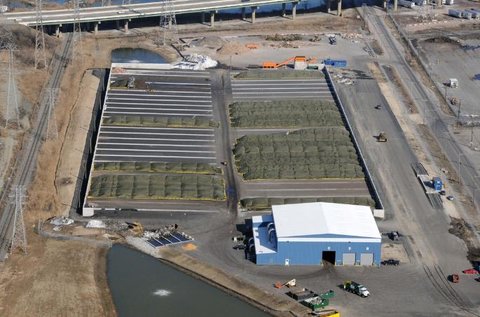
Composting, Scaled For The Big Leagues

Corrado Construction. The Wilmington Organic Recycling Center in Delaware now produces some 75,000 tons of compost a year.

Corrado Construction. The Wilmington Organic Recycling Center in Delaware now produces some 75,000 tons of compost a year.

Thanks to Green Blog for coverage of the progress made getting this process in line with market forces:

Is it possible to make a living by turning rotting food into usable compost while also helping to curb greenhouse gas emissions and reduce landfill disposal costs?

The Peninsula Compost Company of Wilmington, Del., thinks so. Since 2009 it has been taking in growing quantities of spoiled food from supermarkets, restaurants, schools, and other sources and converting it in a matter of weeks into dark, moist, friable compost for use by landscapers, farmers and private gardeners. Continue reading

Linking Locavores

Click the image above for a journalistic description of a utilization of new technology to conserve valuable traditions and provide more efficient access to healthy, tasty food.  Or, after the jump, a short video of the same.

Continue reading

Cottage Industry

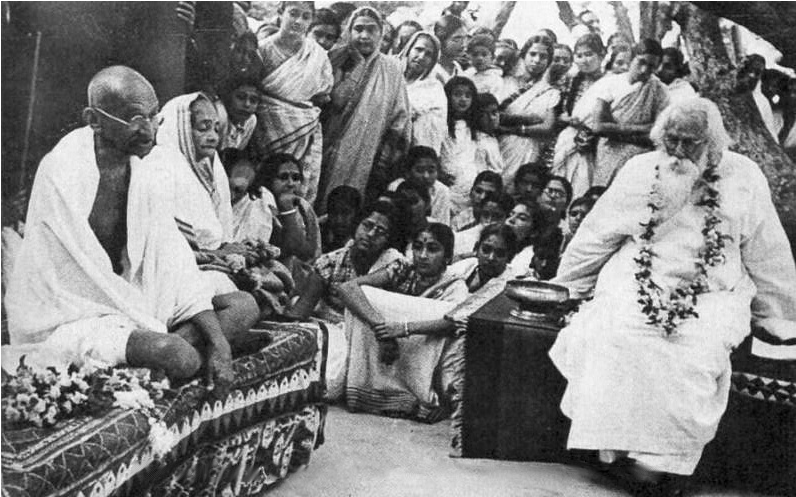
Nobel Laureate Rabindranath Tagore founded Shanti Niketan (meaning an Abode of Peace) laying the foundation for what is today known as Vishva-Bharati University, home of one of the best art colleges in the world. In 1922 Mohandas Karamchand Gandhi visited Santiniketan and met Sushen Mukherjee, a young man inspired by the movement for Indian Independence. The meeting influenced Mukherjee to set up Amar Kutir “my cottage” in 1927, establishing a rudimentary cottage industry for sari printing, handloom, and leather craft production 15 miles away from Santineketan on the banks of the Kopai River near West Bengal. Continue reading

Bright Ideas

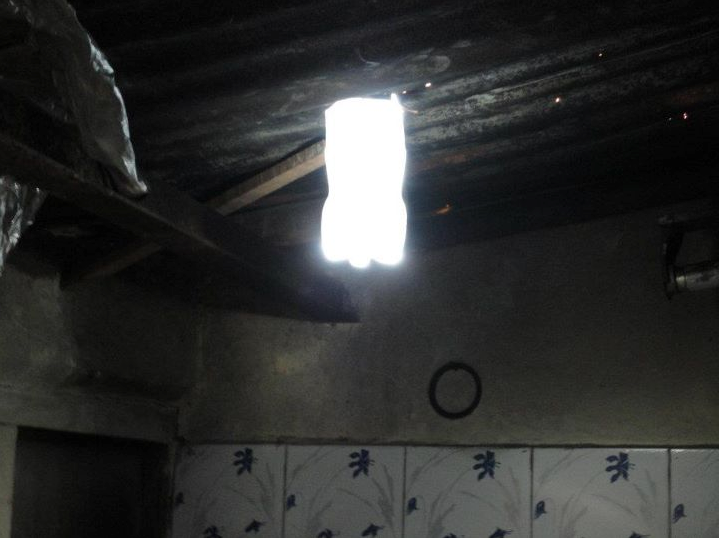
Ingenuity can go a long way in meeting people’s essential needs with the simplest of materials.

The recipe: Start with students from the Massachusetts Institute of Technology (MIT), add basic materials destined for dumps and landfills around the world, mix with filtered water and bleach, install, expose to sunlight. And voilà!–a light that will last for 10 years!

The Solar Bottle Bulb is based on the principles of Appropriate Technologies – a concept that provides simple and easily replicable technologies that address basic needs in developing communities.

Continue reading

REMOC: Behind the Seams

This one was actually made by Ana's daughter Meli - it must be a family tradition!

I don’t know what I was expecting when Ana Teresa invited me to take a look at her studio. On the one hand, I’d seen the quality of the products on the shelves in REMOC, and thus knew that the craftswomen were not amateurs; but I also knew that many of them didn’t have high incomes or hours to invest in their business – one of the challenges of the trade, for them, is that they are making a living while maintaining a home for their families and fulfilling their duties as a wife and mother. So, despite knowing that the work they produce is ‘serious’, I was still impressed when Ana ushered me through a door I’d thought led to a garage, and I found myself in a real, fully equipped artisan’s workshop. Continue reading

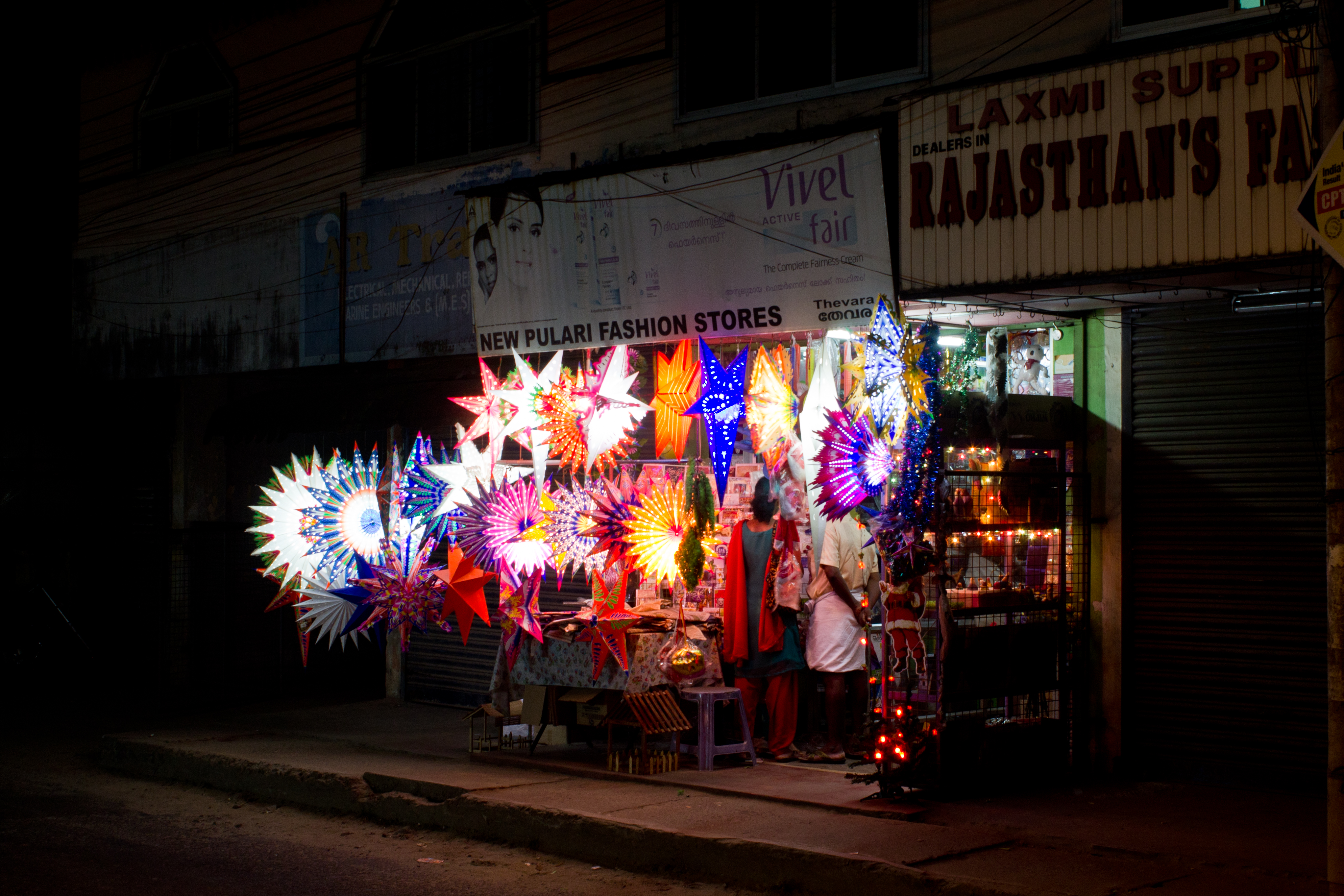
Kerala’s Stars

The colorful stars that begin to grace Kerala buildings in December from homes, to businesses, to places of worship have humble beginnings despite their current flashy status.  The were originally a simple white 7 point star that correlated with the beacon leading to the Christmas manger.

Many of these folded and cut paper stars are the handiwork of a group of women in a fishing villages around the southern Kerala city of Kollam. Continue reading

Community Development in Ecuador

Guest Author: Denzel Johnson

Ecuador today doesn’t seem to have industries that might make you think it could be a strong world contender, especially when it comes to foods.  Little known to the outside world though, is the small village of Salinas de Guaranda which sits several hours south from the capital Quito. Salinas used to be one of Ecuador’s small mining villages but today represent a booming industry which began due to community run initiatives that are now templates for other parts of Ecuador.

My time in Salinas was unplanned, suggested by some professors at one of Quito’s top Universities, USFQ. Continue reading

“Work from Home”

There are countless number of individuals (myself including) who might easily punch these key words on Google search in the fervent hope of finding a solution to earning a legitimate income. And in return one may find many a solution but none that are particularly practical. There are many of these ads which range from data entry, to doing surveys, making online submissions…the list seems to be endless.

Last Saturday I was fortunate enough to participate in a workshop conducted by Diwia Thomas who is the organizer of PaperTrail – a  not-for-profit organisation that makes newspaper bags and paper products from donated newspaper, ensuring a livelihood for women from all backgrounds.  Continue reading

Gnarly, Radical & Tubuluar: Surf Industry Innovation

Guest Author: Nicole Kravec

After watching Garret McNamara set the world record for riding a 90 (NINETY!) foot wave (aka 27.4 meters) in Praia do Norte, Portugal, I can’t help but wonder where he’ll go next – and what his ride implies for the surf tourism industry – an industry with between 25-50 million participants around the world with yearly growth around 15%, that can unfortunately oftentimes have unsustainable impacts.

McNamara, along with other Big (an understatement) Wave Surfers like Laird Hamilton and Mike Parsons, use a technique called “Tow-In Surfing.”  The process uses artificial assistance to literally tow a surfer into a breaking wave by a partner driving a personal watercraft like a Jet Ski or a helicopter with a tow-line attached.  Tow-In Surfing is what helped get McNamara his wave, as it is used when the wave is uber large and/or where positioning within the wave is critical.  There is some controversy associated with Tow-In Surfing, as it creates a lot of noise and exhaust that can certainly harm the local ecosystems. Continue reading