This object will self-destruct in… Shouldn’t the life span of a product be on the package ?

The adaptor for my very sleek, efficient and trendy computer broke down and I am a thousands of kilometers away from the brand store. It was a second-hand computer, I’m a vintage kind of gal you see, so I was not exactly shocked that after 4 years the computer may need care. I  soon realized though that the local resellers did not have a replacement for the plug, only a newer bigger version for a computer no one has yet. So I tried to have the adaptor fixed. It turned out the white well-rounded adaptor was not made to be fixed.

That’s what planned obsolescence is about : designing objects for the bin, if you want to know more about this industrial method you should watch The Story of Stuff.

Are there solutions to shift to a less wasteful consumption ? Governments, France and the European Union included, are currently at work on laws to implement longer guarantee periods, to encourage companies to offer replacement parts for 10 years after manufacture and to inform consumers on the expected longevity of the product.

And the corporate sector ? A growing number is getting organized in a circular economy :

Everything is good in a banana

My colleague Vinod is an expert on sustainable tourism in India, he has studied the alternatives to plastics. He explained to me that after Brazil, India is the largest producer of bananas in the world… Continue reading

TED talk Majora Carter : Greening the Ghetto, how entrepreneurial conservation and urban regeneration lead to more social justice

This seminal talk from 2006 by Majora Carter, founder of the Majora Carter Group, introduced me to entrepreneurial conservation. So you can say it kind of led me here.

It is unfortunate how the reputation of a neighbourhood may reflect on its inhabitants. In french the silly expression “C’est le Bronx” refers to a messy room. People from the Bronx, Majora Carter included, decided to change this image. In fact, they decided to reclaim their rivers, their air, their land while creating jobs, leisure activities for local families, a safer gentler environment for children to grow up in.

It’s a story I’d like to hear about in many neighbourhoods around the world.

Getting It Done, With Attitude

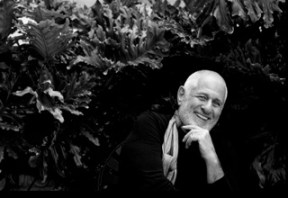
Richard_Saul_Wurman2

Harvard Magazine writes about a man we have appreciated since hearing him interviewed on a show whose podcasts with some of our heroes we have mentioned in previous posts.  It is easy to perceive Wurman as a world class pain in the neck. Listen to the end of that podcast and you learn that he is self-aware of this. For those who know ourselves to come across as unreasonable, contentious, etc. Wurman is an inspiration worthy of the pantheon:

Described by Fortune magazine as an “intellectual hedonist with a hummingbird mind,” Wurman created and chaired the TED conference from 1984 through 2002, bringing together many of the world’s pathbreaking thinkers to share their ideas and spark discussion.  Continue reading

For Foodie Friends

This is the third of the “From Scratch” entrepreneurship-focused podcasts we have sampled, and each one so far has been excellent. The first two had a very strong connection to conservation, which explains why we sampled them first.  This one has no connection to conservation, but there is a great spirit of community embedded in everything Keller says. He is notably clear-headed in acknowledging the role his family played in his development, and how his eventual success was due to people who might not have been expected to support him.  Click the image above to go to the podcast.

Continue reading

A Look Back at AguaClara

Pure nostalgia. That’s how I felt when I looked through the photos on my computer of my trip to Honduras two years ago. I was reminded by a previous post about my experience with AguaClara, a Cornell project team that designs and builds water treatment plant for impoverished communities in Honduras. The team has grown in size and prestige ever since I left, and it’s garnered multiple awards (from the EPA and Katerva, most recently).

AguaClara team members walking across a narrow suspension bridge in rural Honduras.

Continue reading

Good Conservation Personified

DougTompkins

Doug Tompkins, Co-Founder, North Face

Click the image to the left for a podcast interview worth listening to. If you are a fan of this man, chances are you are also a fan of this man, who has carried out more tangible action for deep ecology than anyone, perhaps ever:

Entrepreneur, conservation philanthropist, and documentary filmmaker are some of the titles that Doug Tompkins has possessed over his career. Doug’s love of mountaineering led him to start North Face, the outdoor apparel company. He then cofounded the international clothing giant, Esprit, which he later sold. Doug has spent the last few decades focusing his energies on sustainable farming, land conservation and biodiversity preservation in Chile and Argentina. With the purchase of more than 2 million acres of land in South America, Doug has pioneered one of the largest private conservation efforts in the world.

Doug speaks to Jessica about his journey from selling dresses out of a van to conserving South America’s natural environment, from scratch.

Good Entrepreneurship Personified

We recently discovered this podcast about entrepreneurship, and a few of the interviewees are among our most admired. For example, click the image to the left to go to the interview with our all time favorite:

Yvon Chouinard

Founder, Patagonia Continue reading

One Man Brand

TataEntp

We sometimes think we see his family name in too many places in India–it is impossible to go through a day without seeing the name stamped everywhere you look: on tea bags, tea cups and tea spoons; telephones on up to tipper lorries; enough!  But when attached to this man, we are always delighted to see the name one more time. Click the image above to go to the video, which runs for just under one hour.

What’s The Problem? The Key Question Of Entrepreneurship

Click the image above to watch this brief, powerful statement on entrepreneurship from Cornell’s 2012 Entrepreneurship Summit in New York last October. Between the fourth and fifth minute Jay Walker lays out in his own words the promoted purpose of the Summit:

BREAKING APART PROBLEMS.
TO FIND BETTER SOLUTIONS.

Every entrepreneur is pushed forward by the drive to fill an unmet need. Finding solutions to real-world problems is why we invent, build, and grow. At the first annual Cornell Entrepreneurship Summit, some of the world’s most innovative minds will share their experiences addressing complex challenges and paving new solutions. They will provide insights from their own achievements, as well as looking ahead to the problems we must tackle next.What are you solving?

Ideas Shopping

It is a snappy idea: selling ideas in the market place.  If they are worth something, how will we know?  They will be sold out (hopefully in a good way).

Bibliotherapy?   Never heard of it until now.  Snappy, again.

We do not normally pass along commercial messages, but on occasion we make an exception, as we do now; here is what the School of Life says about itself:

The School of Life is a new enterprise offering good ideas for everyday life. We are based in a small shop in Central London where we offer a variety of programmes and services concerned with how to live wisely and well.  Continue reading

Go, Marcus!

In case you missed my earlier post on the topic, you may want to listen to that podcast before reading this more straightforward “business wunderkind” story in today’s Sunday New York Times.  Still, the closing paragraphs of the story circle around to why this fellow has our attention.  Great food interests us, yes; entrepreneurship, yes; but even more so this sense of community:

He often seeks interaction with the broader community, whether at his restaurants, through the Internet, or on his daily subway ride. In Harlem, he has held free cooking classes for children and has helped expand the farmer’s market in the area. More than 70 percent of Red Rooster employees are local residents, many of whom had little experience with fine dining. The restaurant hired additional managers to get the employees up to speed.
“When you look at strategy, it’s not set up to be a pure moneymaking machine,” says Derek Evans, the media adviser for the Marcus Samuelsson Group. “It’s a passion machine.”