Disrupting Education’s Status Quo

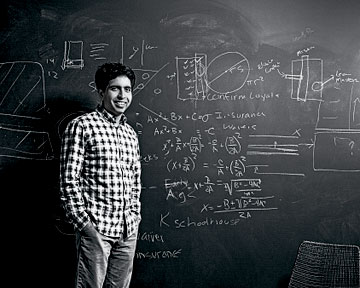
Harvard Business Review offers this interview with the founder of Khan Academy, a non-profit educational initiative that has been succeeding the way many dot-com businesses succeed–the difference being that all the benefits accrue to students and their educational attainment around the world. Bravo, Mr. Khan:

…In the traditional academic model, you’re passive. You sit in a chair, and the teacher tries to project knowledge at you; some of it sticks, some of it doesn’t. That’s not an effective way to learn. Worse, it creates a mind-set of “you need to teach me,” so when you’re on your own, you think, “I can’t learn.” Anyone in any industry will tell you there’s new stuff to learn every week these days. So you have to say, “What information and people do I have at my disposal? What questions do I need to ask? How do I gauge whether I’ve really understood it?” Khan Academy is designed to give students that agency. If you want to get more tangible, I would say learn how to program a computer, more about the law, and definitely statistics… Continue reading
Successful Women Writers, Entrepreneurial Exemplars

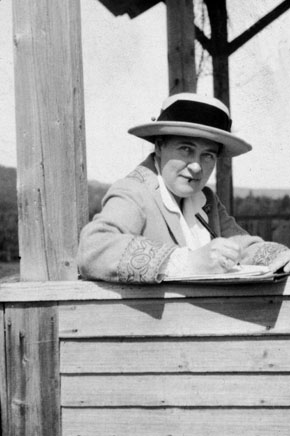
circa 1923:  American author Willa (Sibert) Cather (1873 - 1947) uses a ledge while writing outdoors during a vacation in New Hampshire.  (Photo by New York Times Co./Getty Images)

circa 1923: American author Willa (Sibert) Cather (1873 – 1947) uses a ledge while writing outdoors during a vacation in New Hampshire. (Photo by New York Times Co./Getty Images)

Writing in the New Yorker‘s website section titled Page-Turner, Joan Acocella posted recently about the tendency of women writers, historically, to begin their writing careers later than their male counterparts.  She uses Willa Cather’s case as an example and draws a conclusion that could  as easily be applied to entrepreneurship (bold added below to highlight the conclusion):

…By her thirties, she had acquired a very good job, as the managing editor of McClures, an important New York magazine. She got to go to Europe and meet famous writers. But secretly she herself wanted to be a writer. She was sure she could not be. The most honored novelist of that time, the nineteen-tens, was Henry James: refined, complicated, urban. Cather, meanwhile, was still kicking the dust of Red Cloud off her shoes. Finally, at thirty-seven, in what must have been a wrenching act Continue reading

Entrepreneurship In India

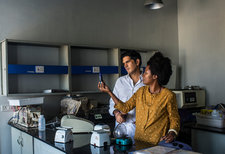
Atul Loke for The New York Times. Rahoul Mehra and his wife, Glennis Matthews Mehra, started Saf Labs, a biotechnology trading company in Mumbai.

Atul Loke for The New York Times. Rahoul Mehra and his wife, Glennis Matthews Mehra, started Saf Labs, a biotechnology trading company in Mumbai.

India Ink closes out 2013 with a story near and dear to the hearts of all entrepreneurs in India at this moment, and Raxa Collective appreciates the coverage (even if we are not exactly an American-style start-up, we can relate):

American-Style Start-Ups Take Root in India

In a nation with a reputation as a tough place to do business, American tech entrepreneurs are importing the Silicon Valley mind-set. Continue reading

An Entrepreneur’s Entrepreneur

The video above captures some of the spirit and personal style of a lesser-known but behind the scenes very influential entrepreneur in the hotbed of entrepreneurship. Better yet. listen to this interview with Nolan Bushnell to appreciate more fully what the early days of Silicon Valley were like, from one of Steve Jobs’s confidants:

Nolan is considered one of the pioneers of the video game industry. Nolan developed the first coin operated game (Computer Space), as well as Atari’s popular debut game, Pong.  Nolan also founded Chuck E. Cheese’s, a game centric restaurant chain.   Continue reading

Fact-Checking Walter Isaacson

Walter Isaacson has done some remarkable things (according to his present byline he is “CEO of the Aspen Institute. Author of biographies of Steve Jobs, Albert Einstein, Benjamin Franklin, and Henry Kissinger. Former editor of Time, CEO of CNN”).  Little reason for him to doubt his own authority, on anything.  But he invites you to fact check the book he is currently working on, starting with a draft of a chapter published in Medium.  I appreciate the creative spirit of collaboration, and his faith in the wider community to get his facts both straight and full of color:

The Culture That Gave Birth to the Personal Computer

I am sketching a draft of my next book on the innovators of the digital age. Here’s a rough draft of a section that sets the scene in Silicon Valley in the 1970s. I would appreciate notes, comments, corrections

In that draft he makes reference to the starting point of the Whole Earth Catalog, and the meme that came with it of using an image of the earth from space to communicate its fragility and limitations as much as its wondrousness; which, along with the rest of the draft (as if you needed convincing) makes the book sound worth the wait: Continue reading

Be, Cause (Simon Pearce)

This slideshow requires JavaScript.

He is an entrepreneur, so we find him interesting.  As with some other entrepreneurs featured on this podcast, we find him more interesting because of a higher calling in his business model.  He starts with excellence as defined by a few keywords–simplicity, quality, clarity, individuality, functionality–but he clearly cares about family and others outside his business. We find him most interesting because Simon Pearce contributes to the common good.  It is these ethics, not revealed directly in the From Scratch interview, but visible (though not “in your face” visible) on his company’s website, that make him worthy of more attention:

KP LoveYourBrain Bowl

Simon Pearce will DONATE 100% of THE PROFITS from the sales of the KP LoveYourBrain Bowl to the Kevin Pearce Fund.

Continue reading

The New Social Work, A Bangalore Innovation

Courtesy of Flavy Shankar. Deena Pinto, extreme left, with her friends during a Sunday brunch meeting in Bangalore, Karnataka.

Thanks to India Ink for this coverage of Bangalore’s social scene intersecting with its entrepreneurial innovation:

Deena Pinto, in her 30s and single, is much sought after in some social circles in Bangalore. Continue reading

Trashy bags : social and environmental entrepreneurship inspiration from Ghana

How we do business and perceive the world has been informed for many years by the concepts of Recycling and Upcycling. So our first introduction to Trashy Bags during a trip to Accra was exciting to say the least.

Trashy Bags is a social enterprise that makes recycled eco-friendly bags and gifts from plastic trash. They employ over sixty local people to collect, clean and stitch plastic trash into bags and other products. Packaging and “billboard flex film” waste is a huge problem worldwide, not just in Ghana. But a growing issue in parts of world where clean drinking water isn’t readily available is the build-up of spent “water sachets”—non biodegradable plastic water pouches.

It is estimated that in Ghana, waste produced from plastic packaging amounts to 270 tonnes per day; most of it non-biodegradable.  That adds up to over 22,000 tons of plastic in one year.

This figure has risen in just ten years by about 70%. Despite this rise, it is estimated that only 2% of plastic waste is recycled. You may ask what happens to the remaining 98%.   Continue reading

Student Innovation Helping Make a Better World

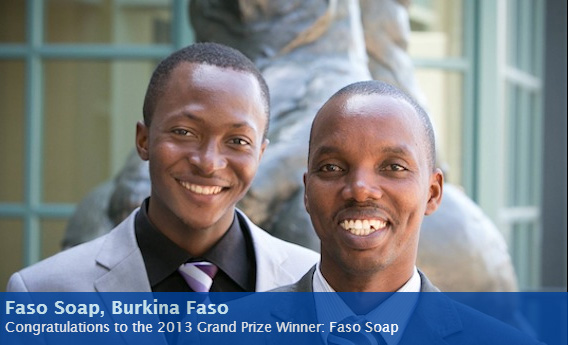
Fasoap Founders Photo courtesy of gsvc.org

Moctar Dembele and Gerard Niyondiko are this year’s grand prize winners of Global Social Venture Competition, an annual competition that awards young entrepreneurs for ideas that can have a positive impact on the world. Their idea “Fasoap” hopes to help prevent the contraction of malaria, a disease that Johns Hopkins Research Institute states over 40% of the world is at risk for, including parts of Africa and India. Malaria a disease that is contracted through bites of infected mosquitoes. Once contracted the medical treatment for the malaria can be very costly, and many of the people who contract it have trouble seeking and paying for such medical care. Continue reading

Communities Acting Collectively With Entrepreneurial Leadership

Screen Shot 2013-07-08 at 9.50.42 AM

Thanks to this interview podcast on Fresh Air, we learned about Ava DuVernay and through her we learned about @AFFRM (click the banner above to go to their site, and be sure to read her interview with Director Spike Lee). DuVernay is a cultural entrepreneur, par excellence, and we salute her sense of community and collaboration:

Before she started making movies a few years ago, DuVernay made a name for herself through her marketing and publicity firm DVA Media + Marketing, which has handled films by brand-name directors like Clint Eastwood and Steven Spielberg. Continue reading

A Master Class For “Creative Business” Entrepreneurs

Pip Jamieson, Jeff Lyons, Danny Miller

Pip Jamieson, Jeff Lyons, Danny Miller

The Guardian continues its quest to creatively avoid the irrelevance and economic demise challenging all print-based journalism enterprises:

Overview

In a uncertain economic climate, many of us dream of setting up our own business – using our creative skills, while becoming our own boss. It could be a design studio, a series of events, a retail empire or a web venture – there are common challenges to meet and problems to solve. Continue reading

Seasteading, Self-Reliance Utopia, And Our Shared Future

An article recently published in n+1 examines a utopian futurist form of an idea that seems oddly symmetric with Seth’s posts about the history of exploration using Iceland as a case study. Looking back, we see much in common with explorers, pioneerspilgrims and adventurous thinkers of all sorts.  Looking forward, we are inclined to embrace smart, creative, enthusiastic group efforts to resolve seemingly intractable challenges. Especially when they involve living on boats. We recommend reading the following all the way through:

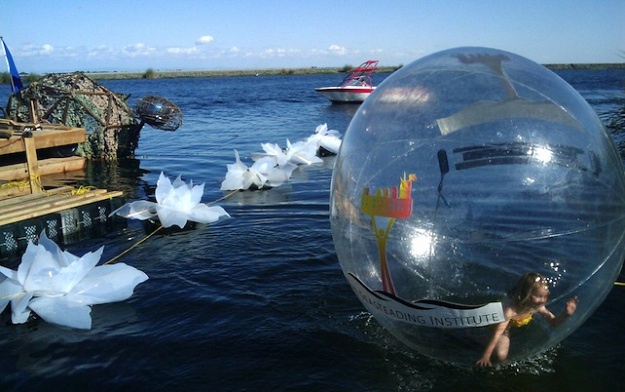
To get to Ephemerisle, the floating festival of radical self-reliance, I left San Francisco in a rental car and drove east through Oakland, along the California Delta Highway, and onto Route 4. I passed windmill farms, trailer parks, and fields of produce dotted with multicolored Porta Potties. I took an accidental detour around Stockton, a municipality that would soon declare bankruptcy, citing generous public pensions as a main reason for its economic collapse. After rumbling along the gravely path, I reached the edge of the Sacramento–San Joaquin River Delta. The delta is one of the most dredged, dammed, and government subsidized bodies of water in the region. It’s estimated that it provides two-thirds of Californians with their water supply.  Continue reading

False Starts, Heroic Conclusions

ESSAY: A Different River Every Time
What is ‘smart’ and how does it fit our consciousness? Is there just one way to it? Are smarter people happier, richer? The answers may not always be that obvious. by SANDIPAN DEB

…Which, of course, brings us to that common capitalist question: “If you’re so smart, why aren’t you rich?” There is something abhorrent about this query. Of course, Mukesh Ambani is super-smart, but so was Jagadish Chandra Bose, who invented wireless communication at least a couple of years before Guglielmo Marconi, who received the Nobel prize for the breakthrough (It is now established that Marconi met Bose in London when the Indian scientist was demonstrating his wireless devices there, and changed his research methods after that meeting). Bose also invented microwave transmission and the whole field of solid state physics, which forms the basis of micro-electronics. Bose’s contributions are all around us today, from almost every electronic device we have at home to the most powerful radio telescopes in the world. But he steadfastly refused to patent any of his inventions, or to license them to any specific company. Some 70 years after Bose’s death, the global apex body, Institute of Electrical and Electronics Engineers, officially acknowledged Bose to be the father of wireless communication.

This is an excerpt whose catchy question pervades an essay worth reading in full. Intelligence, specifically smart Indian people, is the subject of a whole special issue of Outlook magazine. We have pondered amazing people from India on occasion in the past, and if the brief tale above intrigues you then see this post about Tesla versus Edison, but for now Continue reading

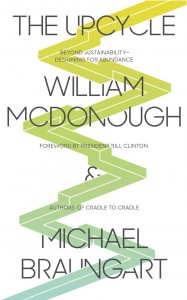
“The Upcycle”, the sequel to “Cradle to cradle”

If you’ve read “Cradle to Cradle” and you come here regularly, chances are you’ll be as excited as I am to learn about the sequel : ‘The Upcycle”.

10 years ago William McDonough and Michael Braungart published one of the most important environmental manifestos of our time.

Based on biomimetics, Cradle to Cradle design is an approach to the design of products and systems. It models human industry on nature’s processes viewing materials as nutrients circulating in healthy, safe metabolisms. The book states that:

“All products can be designed for continuous recovery and reutilization”.

Every product can and should be conceived with the reuse of its materials in mind and every material can and should be conceived to be used again. Just like in nature, nothing goes to waste.

If you have not read it, McDonough’s TED talk Cradle to Cradle design will probably make you want to give it a go.

In their newest book  The Upcycle: Beyond Sustainability – Designing for Abundance,  McDonough and Braungart go further than ‘Cradle to cradle’ saying that we should be ambitious about our role on this planet.

“Industry can do better than “do no harm”: it can actively improve everything with which it comes into contact.” Continue reading

The Wild5Five collection : drawing from Nature

via kerala‘s Wild 5 Five collection was designed to raise awareness about the fauna of the Periyar forest by setting forth 5 wildlife ambassadors. To decide which 5, the team of designers at Thought Factory carried out thorough research on the fauna of the Periyar Tiger Reserve in online journals and books, blogs and libraries. Continue reading