Drinkwell: A Pioneer of Potable Water

Photo credit: Drinkwell

Water is the essence of all life on Earth, and access to potable water is an absolute human right. To resolve the global arsenic water crisis that affects over 200 million people across 70 countries, Drinkwell is pioneering an alternative method for providing potable water to affected communities by transforming existing arsenic-affected tube wells into local profitable water enterprises. The organization provides affected villagers with water filtration technology and business tools, and in turn, the villagers become entrepreneurs of these mirco-water businesses.

Drinkwell filtration systems extract the arsenic and do it efficiently. “Whereas current solutions use Reverse Osmosis technology that wastes 40%-60% of input water, Drinkwell wastes only 1% of water,” their website explains. The polymers, or resin beads, are infused with nanoparticles which extract arsenic from water flowing through them. These polymers are regenerable and can filter water for years.

Continue reading

Peddle-Powered Phone Juice

bikecharger3

Thanks to EcoWatch for this article that, in a place like India where bicycles are a mode of common transport, and mobile phones are ubiquitous, is pointing us to a practical green innovation:

Charge Your Battery While You Bike to Juice Up Your Phone

Lorraine Chow

Who needs a power outlet when you have a bike? The Ride-A-Long charges your electronics as you pedal, providing a portable renewable energy source for bike-enthusiasts.

Biking is already pretty environmentally friendly, but this takes it to the next level.

Created by Siva Cycle, the product can juice up any USB-powered device such as smartphones and cameras whenever and wherever you’re biking. Simply mount the Ride-Along to any standard bicycle’s back wheel, and as you ride, the wheel delivers juice to the integrated generator and charges its 1650 mAh battery, kind of like a hand-cranked radio. Continue reading

Collective Roots

Attention to detail is a highly prized attribute in all aspects of the work we have been doing in India since 2010, and we hope it doesn’t seem pedestrian to extend that concept to something as commercial as shopping. Some people may beg to differ, but there are many cases where the “consumer transaction” is so much more.

We’ve spent many happy hours in exploration to find sustainably produced, cottage industry items. A trip to Gujarat led us to the Kala Raksha Trust. Walks in Cochin led us to the Vimalalayam Convent School, and the NGO A Hundred Hands has introduced us to many of the wonderful craftswomen whose products we highlight, including designer Usha Prajapati from Samoolam.

We’ve been great fans of the results of her work with the women of Bihar from the moment we saw it, and hearing her personal story adds a beautiful dimension to the concept of “self-help”. Thanks to FvF (Freunde von Freunden) for their inspiring online interview.

Samoolam, Usha’s design collective, which is making a name for its beautiful hand-crocheted lifestyle products, is incredible not just because its founder is young, talented and inspiring, but because its process of creation is held together by a network of strong and talented women much like her – women who make things happen, who are changing their worlds, one crochet bead at a time.

Continue reading

Kathryn Schulz, Come To Kerala

Screen Shot 2015-04-10 at 6.14.56 AM

Past invitations have been sent to environmentally-oriented illustrators, to entrepreneurial conservation artists, to sandplay free spirits, to wildlife management scientists, and to food prodigies; but not enough attention has been paid, in our invitations, to word specialists. So, moving right along, Kathryn please be our guest. We would love to host you here and/or here and/or here.

We have not read the book in the link above, nor even a review of the book, but we are linking to its homepage because there you will find not only information about her book but also links to the two TED talks given by the author, whose profession is listed as Wrongologist. Catchy titles are not what catch us. Scintillating writing on the meaning of words does. For that, you could not do much better than starting here, which will also justify our invitation, as wordplay appreciators, to one of the best:

What Part of “No, Totally” Don’t You Understand?

BY KATHRYN SCHULZ

Not long ago, I walked into a friend’s kitchen and found her opening one of those evil, impossible-to-breach plastic blister packages with a can opener. This worked, and struck me as brilliant, but I mention it only to illustrate a characteristic that I admire in our species: given almost any entity, we will find a way to use it for something other than its intended purpose. We commandeer cafeteria trays to go sledding, “The Power Broker” to prop open the door, the Internet to look at kittens. We do this with words as well—time was, spam was just Spam—but, lately, we have gone in for a particularly dramatic appropriation. In certain situations, it seems, we have started using “no” to mean “yes.”

Here’s Lena Dunham demonstrating this development, during a conversation with the comedian Marc Maron on his podcast “WTF.” The two are talking about people who reflexively disparage modern art: Continue reading

Disrupting The Odds

An entrepreneur uses his laptop near graffiti-decorated walls at Hubspace in the Khayelitsha township. Emily Jan/NPR

An entrepreneur uses his laptop near graffiti-decorated walls at Hubspace in the Khayelitsha township. Emily Jan/NPR

Entrepreneurship always catches our attention, especially when the odds appear long from the standard perspective:

Far From Silicon Valley, A Disruptive Startup Hub

EMILY JAN & ADAM SEGE

Starting a business is tough anywhere.

But when you live in a place where many people lack basic services, such as electricity and toilets, it’s even harder.

These are the obstacles facing new business owners in South Africa’s townships — sprawling communities designated for nonwhites during apartheid. Apartheid may be history, but two decades into democracy, townships remain overwhelmingly disadvantaged.

Internet service and office space are difficult to come by. There are few sources of investment from within the community, and if you manage to interest a potential funder who is an outsider, you have to hope you can manage to travel to a meeting.

Continue reading

Waste Less, Want Less, Lean In, Pop Up

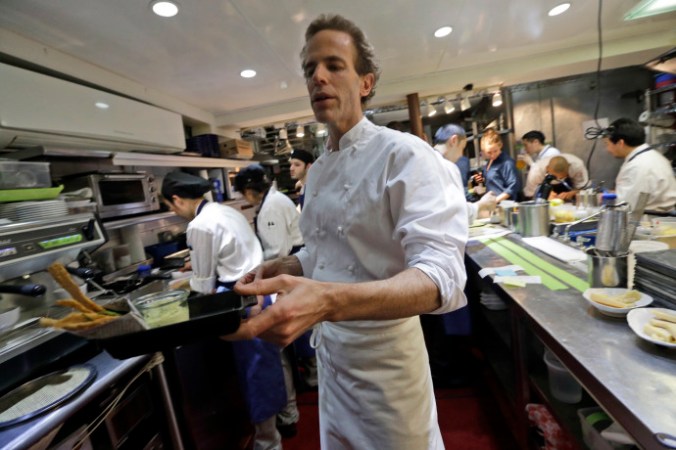
In this Thursday, March 19, 2015 photo, chef Dan Barber hands a waiter an order of fried skate wing cartilage with smoked whitefish head tartar sauce at WastED in New York. Dishes using scraps and other ignored bits comprise the menu at chef Dan Barber's WastED, a pop-up project at one of his Blue Hill restaurants intended to shed light on the waste of food. (AP Photo/Mary Altaffer)

In this Thursday, March 19, 2015 photo, chef Dan Barber hands a waiter an order of fried skate wing cartilage with smoked whitefish head tartar sauce at WastED in New York. Dishes using scraps and other ignored bits comprise the menu at chef Dan Barber’s WastED, a pop-up project at one of his Blue Hill restaurants intended to shed light on the waste of food. (AP Photo/Mary Altaffer)

Thanks to Hannah Goldfield for this post:

The other night, as I ate a salad at Blue Hill, in the West Village, a server approached my table with an iPad. “Have you seen this?” she asked. “Chef wanted you to see this.” By “Chef,” she meant Dan Barber, the man behind Blue Hill and Blue Hill Stone Barns, a sister restaurant and farm upstate. By “this,” she meant a photograph of a dumpster, into which a chute was depositing an enormous quantity of multi-colored scraps of fruit and vegetables—the runoff from a commercial food processor. The experience felt something similar to being shown a picture of what would happen to a sad-eyed old horse if you didn’t save it from the glue factory. Sitting in a small, enamel casserole dish in front of me were fruit and vegetable scraps that Barber had rescued, just like the ones in the photo. Arranged in an artful tangle, bits of carrot, apple, and pear were dressed with a creamy green emulsion, studded with pistachios, and garnished with a foamy pouf that turned out to be the liquid from canned chickpeas, whipped into haute cuisine. Continue reading

A River Runs Through It, In Ethiopia

One of Ethiopia's many excellent national parks

One of Ethiopia’s many excellent national parks

This is not the post promised. It is a taste of why I must post, as promised. This canyon, this river, this view came early in our expedition and is among the strongest in my visual memory. It seemed fortunate, at the time, to catch this view at sunset but the more I think about it the more I am convinced that the place is worthy of a snapshot any time of the day. And it is worth making future visits, so next time I intend to navigate downriver (from the right in this photo), arriving at the place where I snapped this photo after hiking up the canyon. Continue reading

Lovely Things Pedaled To A Place Near You

trailhead650

Several contributors to this site descend from a man from the mountains north of Sparta, who sailed from Greece to New York City more than a century ago, and had a pushcart that earned him enough money to return to his village and become a prosperous olive farmer.

Good things come in, and from, pushcarts. We like the bike design as much as anything else in the photo above, and speaking of aesthetics the last photo below will help understand why we absolutely had to post this. As for pedal-powered treats on wheels, we will do something to extend the reach of 51 in Fort Kochi, so stay tuned… Thanks to Ecowatch.com for this:

Riding your bike to work is gaining momentum as more cities adopt or expand bike-sharing programs, but what about ordering your morning latte or lunch from a bike? With more and more food bikes popping up in cities across the country, finding more meals on wheels (without the truck) might soon be an option. Continue reading

Craft Ascendant

Local Habit, in San Diego, offers a variety of California craft beers. Beer has become as much a part of the San Diego identity as surf and sun. CREDIT PHOTOGRAPH BY EROS HOAGLAND/THE NEW YORK TIMES/REDUX

Local Habit, in San Diego, offers a variety of California craft beers. Beer has become as much a part of the San Diego identity as surf and sun.
CREDIT PHOTOGRAPH BY EROS HOAGLAND/THE NEW YORK TIMES/REDUX

As admirers of well-crafted beer, and of small-scale businesses, we appreciate this post by Tim Wu:

Consider a few surprising and optimistic facts for the new year: nationwide, independent bookstores have grown by about twenty per cent since 2009; meanwhile, American craft breweries collectively now sell more than 16.1 million barrels of beer annually, outpacing, for the first time, Budweiser. This isn’t the only evidence that small-scale businesses are making a comeback. Over the last ten years, the long-running decline of small farms has levelled out, and more than three billion dollars was spent last year on more than four thousand independent feature films. Over all, since 1990, small businesses (with, generally, fewer than five hundred employees or less than $7.5 million in annual receipts) have added millions of employees, while big businesses have shed millions.

None of these developments has individually transformed the American economy, but taken together they represent something. Continue reading

Chinese Fishing Nets, Kerala

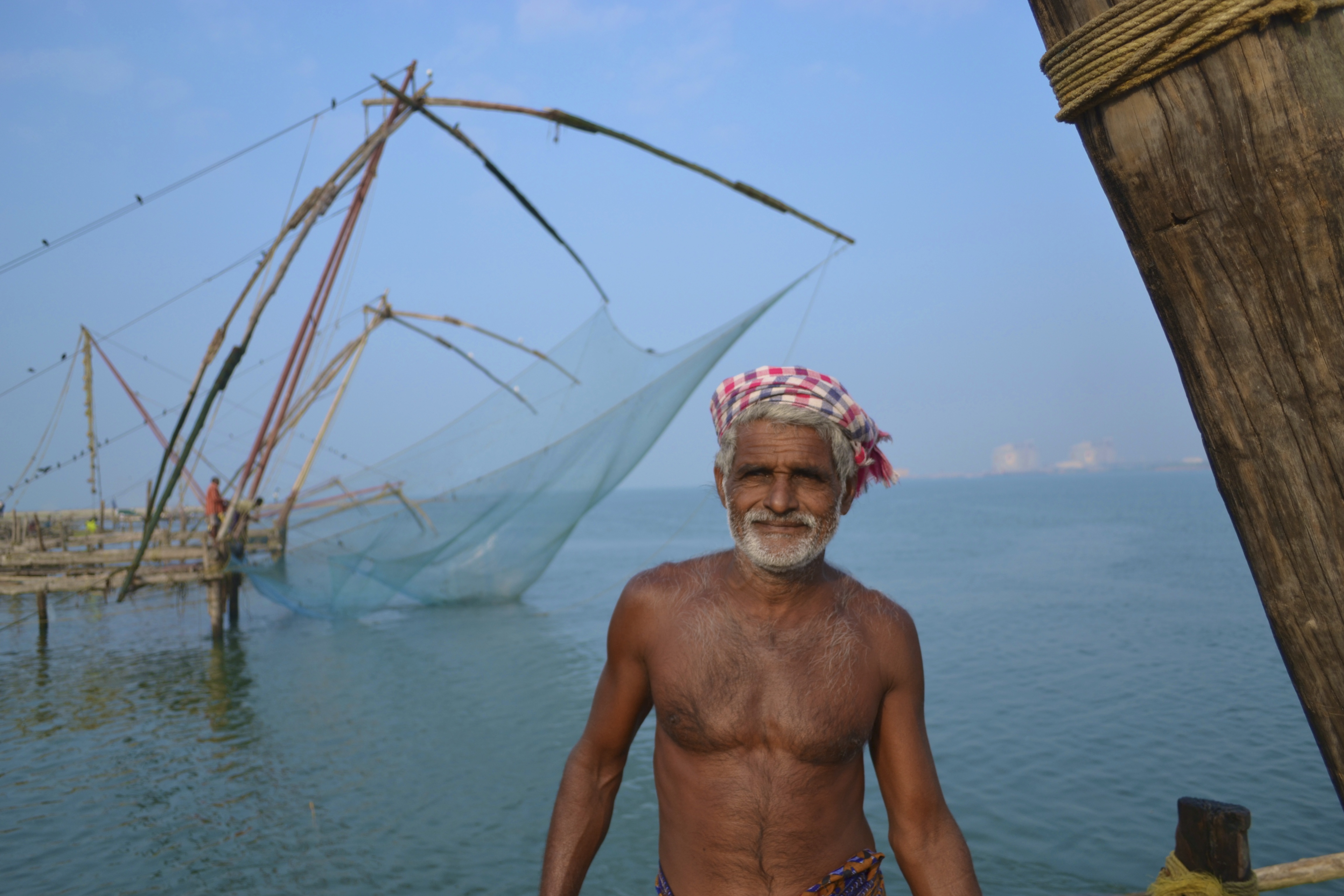
Marconi in front of of the nets in Fork Kochi

Marconi

Marconi is an original decedent of the Mongolian people (a Chinese state at the time) who were the creators of the “Chinese Fishing Nets” in Kerala, India. These structures are at least 30 ft high and the nets stretch out more than 50 ft across the water! It takes half a dozen people to even attempt to heave the nets which work on a pulley system with GIANT boulders hanging from the opposite side to counteract the weight. Continue reading

A Reflection On My Summer In Kerala

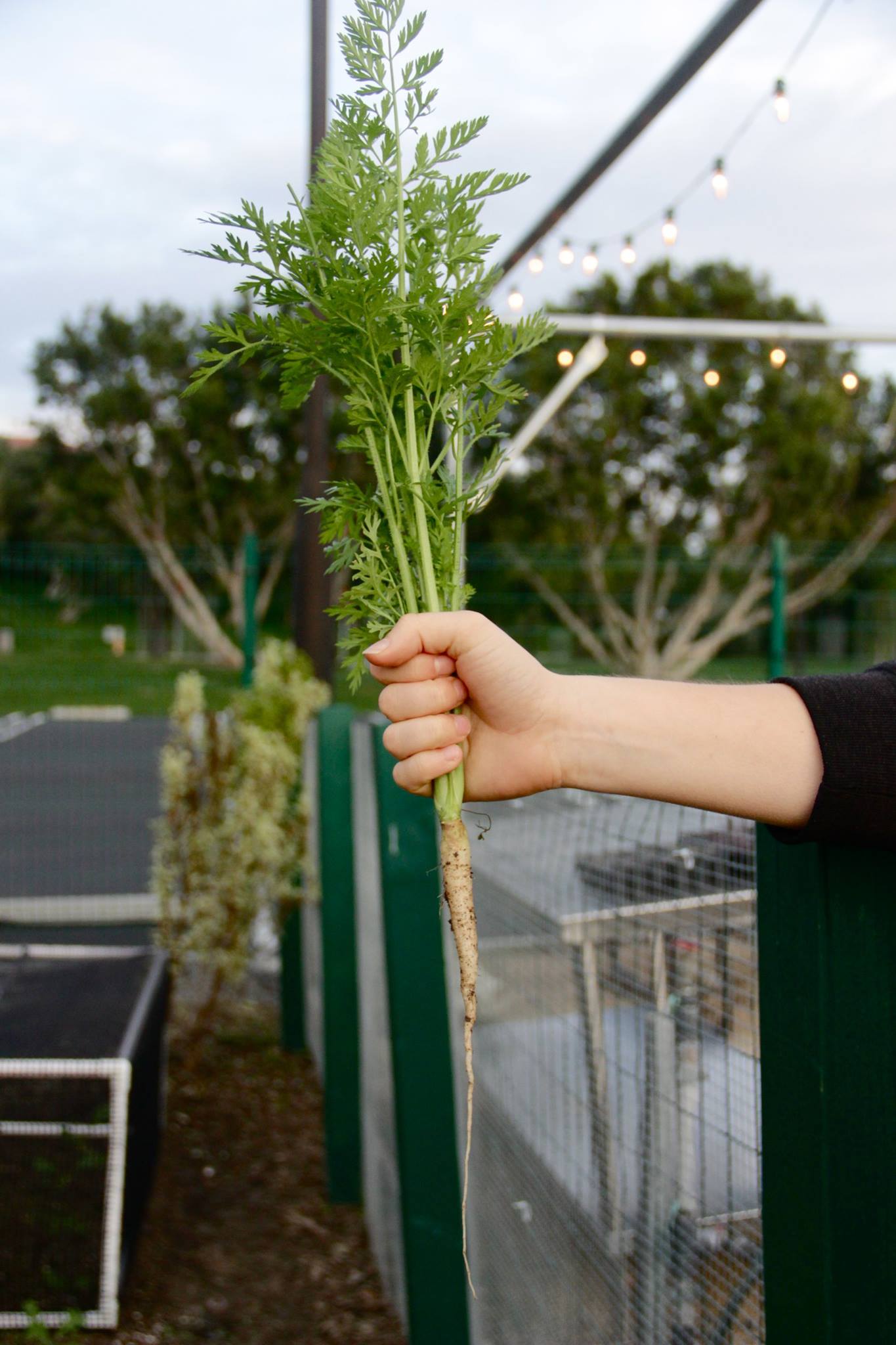
Soka Instructional Garden, photo courtesy of Nina Boutin

Soka Instructional Garden, photo courtesy of Nina Boutin

It has been a little over 4 months since I finished my internship, which has given me a lot of time to integrate and reflect on what I learned at Raxa Collective. I spent my first month in Thekkady at Cardamom County and my second month in Cochin at Spice Harbour. I am deeply grateful for this experience because it has informed my personal growth and career path in ways that are hard to articulate, but- I will try.

The month before coming to India, I walked part of the Camino de Santiago, a pilgrimage in Spain. If that wasn’t exhausting enough, I promptly went to India, and when I got to Raxa Collective, I hit the ground running, trying to figure out how I could best be of service and learn as much as possible. I expected for it to be difficult, but I didn’t know how it would be (though I was forewarned about the monkeys).

I’m working towards an environmental studies liberal arts degree at Soka University. A liberal arts degree is interdisciplinary, therefore I’m always looking for the intersection between things people think are separate. Profit and conservation are definitely things people usually think are separate.

I got to look deeply into the way those can intersect when I interviewed Crist about the path they have taken up until now. That interview has been so valuable for me in planning a business model that incorporates environmental and cultural conservation. Now, I think I want to start a restaurant that incorporates my passion for local food, biodiversity, sustainability, agriculture, and community. Continue reading

Words Forming A Name, Becoming A Brand

Illustration by Paul Sahre

Illustration by Paul Sahre

We spent much of the first half of 2011 poring over dictionaries. Mostly Sanskrit to English dictionaries, but also Malayalam to English, and also just English dictionaries with the occasional thesaurus to inspire.

We thought a lot about a company that two of us had formed that had done a lot of projects relevant to, and some interestingly different from, the new enterprise that would re-brand the hospitality portfolio of a major business group based in Kerala, India. We recorded a few facts about that naming process at the time this blog went live. This article not only brings back memories of those days, weeks, months of name-pondering, but gets us thinking about the meaning of Raxa Collective now versus what we thought then:

The Weird Science of Naming New Products

To find the perfect brand, leave no word unturned.

Entrepreneurship In The New India

Recasting India How Entrepreneurship Is Revolutionizing the World's Largest Democracy by Hindol Sengupta Hardcover, 249 pages

I argue that in India you cannot be against the state. That would be madness … But the state should not be running five-star hotels, which it is still doing. – Hindol Sengupta

Thanks to NPR z(USA) for this review of a book that helps those of us working in India get a better grip of what we see around us. It is likewise an invaluable guide for those observing from afar the vibrant new economics of this ancient mix of cultures, all wrapped up in the largest democracy on earth:

It takes almost a month to get permission to start a business in India — a feature of the country’s four-decade experiment with centralized, state-controlled economic planning.

India began moving away from its old policies and opening up to outside investment in the early ’90s — but that movement towards a free market economy has happened in fits and starts, and is far from complete.

Hindol Sengupta is an editor-at-large with Fortune India, the magazine’s India arm, and he’s written a new book about the policy shift: Recasting India. 

When I sat down with him in New Delhi, he told me that India’s greatest economic battles “are being recast, the debate is being reframed” away from the longstanding idea that India’s protracted problems can only be solved by its government.

Continue reading

Foodpreneurship

Revolution Foods makes healthy kids meals for both schools and stores. Co-founder Kristin Richmond says mentoring and support have been key to the success of her business. Shelly Puri/Courtesy of Revolution Foods

Revolution Foods makes healthy kids meals for both schools and stores. Co-founder Kristin Richmond says mentoring and support have been key to the success of her business. Shelly Puri/Courtesy of Revolution Foods

In the past year, with conceptualization and then food trials that led to the opening of 51, this story catches our attention and interest. Thanks to the salt, over at National Public Radio (USA) for the new vocabulary:

Culinary Institute’s School For ‘Foodpreneurs’ To Cook Up Innovation

The Culinary Institute of America may be best known for churning out chefs. And some of its graduates — from Grant Achatz to Roy Choi to Anthony Bourdain — have succeeded in entertaining and inspiring a new generation of foodies.

But not all CIA graduates don chef toques. Continue reading

Going Crazy The Best Way We Know

9781591846642M

Myths about entrepreneurship are dragons we need to slay every day, just about, and this book is a support.

Listen to the podcast conversation with its author here, and take a look at what the publisher has to say here:

OVERVIEW

“If people aren’t calling you crazy, you aren’t thinking big enough.”

These days taking chances isn’t just for college dropouts in hoodies. Whether you work at a Fortune 500 company, a nonprofit, or a mom-and-pop, everybody needs to think and act like an entrepreneur. We all need to be nimble, adaptive, daring—and maybe even a little crazy—or risk being left behind.But how do you take smart risks without risking it all? That’s Linda Rottenberg’s expertise. As the cofounder and CEO of Endeavor, the world’s leading organization dedicated to supporting fast-growing entrepreneurs, she’s spent the last two decades helping innovators think bold and execute smart.

Continue reading

Breakthroughs In Nutrition Via Entrepreneurial Conservation

Exo's peanut butter-and-jelly bar contains about 40 ground-up crickets and has a familiar nutty, sweet flavor. Meredith Rizzo/NPR

Exo’s peanut butter-and-jelly bar contains about 40 ground-up crickets and has a familiar nutty, sweet flavor. Meredith Rizzo/NPR

Thanks to National Public Radio (USA)’s food-focused program, The Salt, for another story on unexpected breakthroughs in nutrition:

…”Insects are probably the most sustainable form of protein we have on Earth,” Bitty Foods founder Megan Miller, who spoke passionately about eating bugs at a TEDx Manhattan event earlier this year, tells The Salt. “The only real barrier to Americans eating insects is a cultural taboo.” Continue reading

Following the Paper Trail, Redux

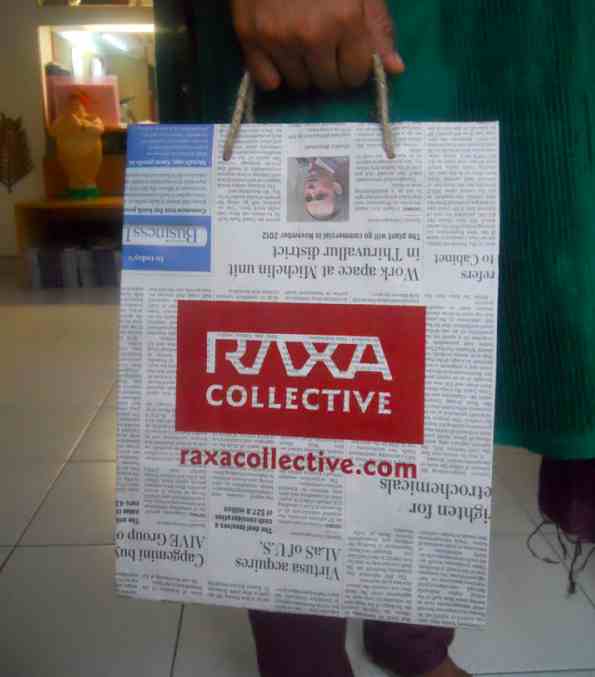
raxa collective bagI have been following the Paper Trail since I got here as an intern and got involved in this social entrepreneurship project Raxa Collective has been working on! There are some types of environmental action that focus on being inherently low-impact from the original design while other methods focus on closing loops from more poor designs that leave good material wasted, such as newspapers. Something is sustainable when it meets the triple bottom line: environmental, economic, and social. RAXA Collective has been meeting this triple bottom line with its newspaper bag initiative! Working with the group, PaperTrails, they have been able to provide a livable income for local people who are unable to get work for whatever reason. They have work based on creating useful bags or envelopes out of recycled newspaper. Paper Trails has been providing bags and envelopes for Raxa Collective’s properties from newspapers and other recycled material. Now, we are taking the newspaper bag initiative to the next level. Continue reading

Building Kerala’s Entrepreneurial Next Generation

Screen Shot 2014-06-22 at 11.50.48 AM

We hope it is both bark and bite (that the idea catches and results in young entrepreneurs getting the support they need in an an otherwise very old school economic culture that would definitely benefit from more startups) and will track it; but for now, fyi: Continue reading