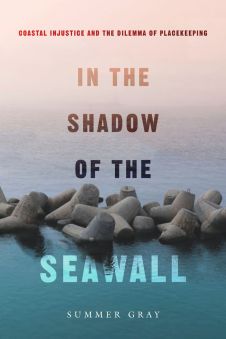
Understanding Seawalls, Their Promise & Their Limits

Daniel A. Gross does some heavy lifting on behalf of all of us, especially those in coastal areas. This technology is foreign to most of us, except the Dutch. We can hope all we want, but now might be a good time to start thinking more seriously about whether this technology is fit for the task:

Can Seawalls Save Us?

Huge coastal barriers could protect the world’s cities. But they’ll have unexpected costs.

Pacifica, California, just south of San Francisco, is the kind of beachfront community that longtime residents compare to Heaven. One of its streets is called Paradise Drive; local fishermen brag that Pacifica Pier is among the state’s best places to catch salmon, striped bass, and crab. Every few years, a superbloom blankets the coast with golden wildflowers. When the sun cuts through the region’s famous fog, the sky sometimes glows, as in a Turner painting.

Some of Pacifica’s most dramatic views could be found on Esplanade Drive, where mid-century developers built bungalows on top of a cliff. For almost fifty years, residents gazed out from their back yards to see whales splashing in the Pacific. Then, in 1998, a group of homeowners gathered to say goodbye. “I cannot express how spectacular it has been living here,” one of them, Joe Parker, said at the time. “I’ve seen dolphins out there. I recognize all the seabirds.” Beverly Axelrod, who had spent fourteen years on Esplanade Drive, recalled how her ocean view had “healed everything.” Continue reading
Frightening Future Facts For All Hallows’ Eve

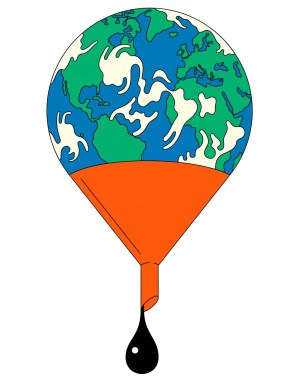
Faced with climate change on the one hand and the material demands of new energy infrastructure on the other, humanity had better figure out how to reuse the resources it has already dug up. Illustration by Laura Edelbacher

Not to rain on the parade of the candy and costumes fun of October 31, but to heighten the mood of the day with some sobering truths facing all of us, our thanks as always to Elizabeth Kolbert for getting our attention pointed where it needs to go:

The Real Cost of Plundering the Planet’s Resources

Our accelerating rates of extraction come with immense ecological and social consequences.

The town of Spruce Pine, North Carolina, doesn’t have a lot to say for itself. Its Web site, which features a photo of a flowering tree next to a rusty bridge, notes that the town is “conveniently located between Asheville and Boone.” According to the latest census data, it has 2,332 residents and a population density of 498.1 per square mile. A recent story in the local newspaper concerned the closing of the Hardee’s on Highway 19E; this followed an incident, back in May, when a fourteen-year-old boy who’d eaten a biscuit at the restaurant began to hallucinate and had to be taken to the hospital. Without Spruce Pine, though, the global economy might well unravel. Continue reading
Removing Environmental Protections Will Not Seem So Clever In Hindsight

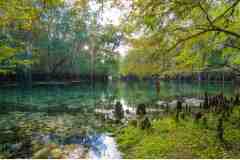
Sunset in the trees at Manatee Springs, Florida. Photograph: Michael Warren/Getty Images/iStockphoto

Oliver Milman, again, brings our attention to an environmental activism that deserves attention, this time for all the wrong reasons:

Experts fear half of the 290m wetland acres have lost federal protection and could be at risk from developers

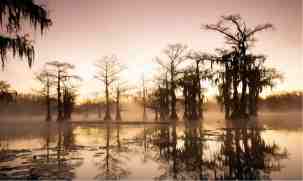
Lake Caddo, on the border between Louisiana and Texas, is a beautiful cypress swamp. Photograph: wanderluster/Getty Images

Often dismissed as dismal wet bogs and rampantly cleared since European arrival in the US, the underappreciated importance of wetlands has been placed into sharp relief by a supreme court ruling that has plunged many of these ecosystems into new peril.

The extent of wetlands, areas covered or saturated by water that encompass marshes, swamps and carbon-rich peatlands, has shrunk by 40% over the past 300 years as the US drained and filled them in for housing, highways, parking lots, golf courses and other uses. Globally, wetlands are disappearing three times faster than forests are. Continue reading

Hurricane Otis & A Gut Punch


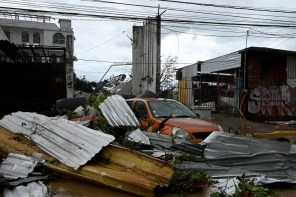
Acapulco shows signs of Hurricane Otis’s devastation on Wednesday.Photograph by Francisco Robles / AFP / Getty

While Acapulco got pummeled, a climate denier was elected to lead the majority party in the US House of Representatives, a different kind of gut punch. Thanks to Elizabeth Kolbert for this juxtaposition of facts:

Hurricane Otis and the World We Live in Now

The unexpected Category 5 storm is just the latest in a series of unprecedented climate disasters this year.

In the wee hours of Wednesday morning, Hurricane Otis crashed into the western coast of Mexico, just north of the resort city of Acapulco. Continue reading
Rishi Doubles Down On Awful

Prime Minister Rishi Sunak announcing last month that the U.K. will delay the phaseout of gasoline and diesel cars. JUSTIN TALLIS / POOL VIA AP

When leadership is most needed, the special relationship between the UK and the USA should count for something, but so far no sign of the USA pressing back on the UK’s awful reversal on their already tepid recent leadership on climate. We knew that leadershsip was lacking in the UK. The Orwell-worthy podium messaging in the photo to the left says all you need to know about efforts to obfuscate, but read Fred Pearce‘s account in Yale e360 anyway:

Demonstrators in Edinburgh protest the government’s recent approval of drilling in the Rosebank North Sea oil field. PRESS ASSOCIATION VIA AP IMAGES

Why Is Britain Retreating from Global Leadership on Climate Action?

While Britain has long been a leader in cutting emissions, Prime Minister Rishi Sunak is now implementing a stunning reversal of climate-friendly policies, with new plans to “max out” oil production. Business leaders have joined environmentalists in condemning the moves.

In 1988, British Prime Minister Margaret Thatcher became the first world leader to take a stand on fighting climate change. Continue reading

Not Just Not A Good Look

By identifying the malpractice of a group of businesses, this report highlights the concept of perverse incentives. It looks bad, and it seems fair to say that it is bad:

PRIVATE EQUITY PROFITS FROM DISASTER at the Expense of Workers, Communities, and Climate

Executive Summary

As climate change accelerates and impacts more communities around the world, the need for skilled labor in the disaster restoration industry grows. Increasingly, private equity firms seeking high returns for themselves have come to dominate the disaster recovery sector, reducing workplace standards, overcharging communities and exploiting disasters to extract fees and profits without regard to the workers and communities harmed by their practices. Continue reading

The Price Is Not Right For Groundwater

Not all natural resource utilization problems are simply a matter of pricing the resource correctly. But clearly it matters. Water hogging is apparently more widespread than we thought, and the price is clearly not right on this resource. This first in a series on the causes and consequences of disappearing water, by Mira Rojanasakul, Christopher Flavelle, Blacki Migliozzi and Eli Murray, has excellent interactive features to help understand these challenges:

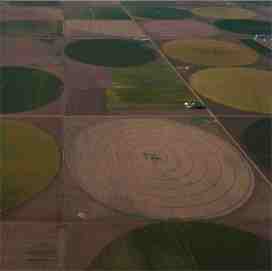
Center-pivot irrigation. Farming is a major groundwater user. Loren Elliott for The New York Times

America Is Using Up Its Groundwater Like There’s No Tomorrow

Overuse is draining and damaging aquifers nationwide, a New York Times data investigation revealed.

GLOBAL WARMING HAS FOCUSED concern on land and sky as soaring temperatures intensify hurricanes, droughts and wildfires. But another climate crisis is unfolding, underfoot and out of view.

Most American communities also rely on wells for tap water. Rebecca Noble for The New York Times

Many of the aquifers that supply 90 percent of the nation’s water systems, and which have transformed vast stretches of America into some of the world’s most bountiful farmland, are being severely depleted. These declines are threatening irreversible harm to the American economy and society as a whole.

The New York Times conducted a months-long examination of groundwater depletion, interviewing more than 100 experts, traveling the country and creating a comprehensive database using millions of readings from monitoring sites. Continue reading

Water Hogs & Fire

A huge field of pineapples in Maui, Hawaii. The extensive use of pesticides on Maui’s pineapple fields poisoned nearby water wells. Photograph: David Olsen/Alamy

In addition to helping understand how fire came to ravage a Hawaiian island, this article’s highlighting of water hogs makes the case obvious that water is an underpriced, therefore undervalued natural resource, so it gets wasted:

A sugar mill in Hawaii. Photograph: University of Southern California and California Historical Society

Land privatization and water depletion set the stage for the Lahaina fire 150 years ago. Now, land companies may benefit even more

In the late 18th century, when the Hawaiian Kingdom became a sovereign state, Lahaina carried such an abundance of water that early explorers reportedly anointed it “Venice of the Pacific”. A glut of natural wetlands nourished breadfruit trees, extensive taro terraces and fishponds that sustained wildlife and generations of Native Hawaiian families. Continue reading

Birds Tell It As They See It

A moment of truth as absurd comedy:

Our cartoonist on capturing the environmental crisis

How to illustrate mankind’s environmental folly

Under the pen name KAL, Kevin Kallaugher has been drawing for The Economist for 45 years. Here, our cameras capture how his cartoons have become ever more strident in trying to illustrate the global environmental crisis that humanity faces…

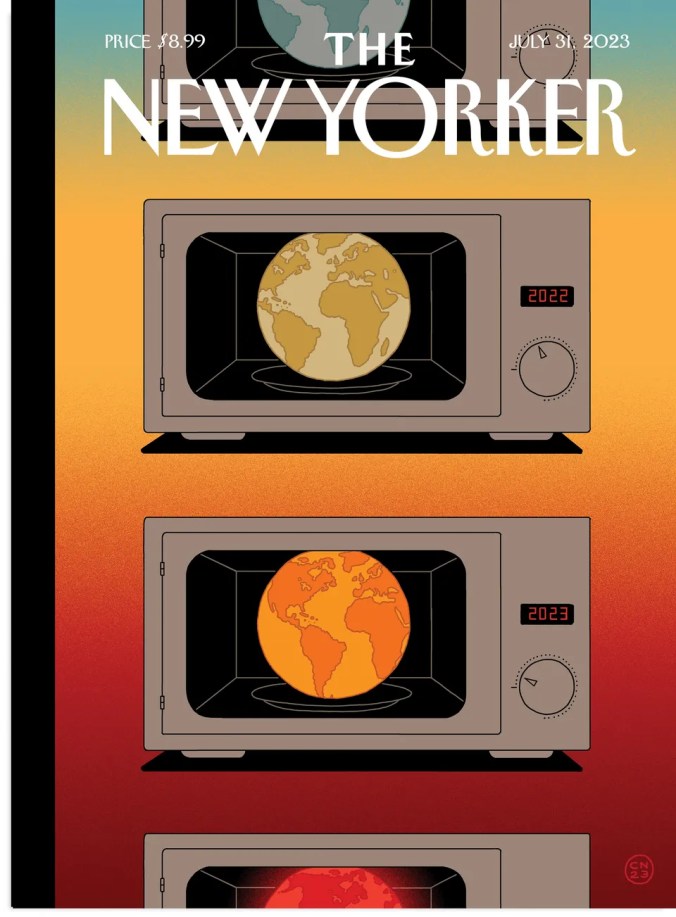
Niemann On Earth

We have referenced Françoise Mouly once before, but the art of Christoph Niemann many more times. This one is not fun, more of a gut punch; but at the source scroll down and see all the other covers on the same theme:

Christoph Niemann’s “Recipe for Disaster”

The artist expresses his sense of urgency about the emergency unfolding all around us.

News cycles, by nature, tend to document crises as discrete events. Suffusive emergencies—like the climate crisis—are captured mostly in the accelerating pace and frequency of such coverage. Continue reading

Climate Optimism, Part 2

Hilary Swift for The New York Times

Bill McKibben’s occasional optimism notwithstanding, he and Al Gore are the two most visible alarmists on climate change. Even in the worst of circumstances both find reason to point out our remaining options for actually doing something.

Our thanks to David Gelles and the New York Times for rounding out the doom and gloom with a bit of hope:

Al Gore on Extreme Heat and the Fight Against Fossil Fuels

The past few weeks have him even more worried than usual.

It’s been 17 years since former Vice President Al Gore raised the alarm about climate change with his documentary, “An Inconvenient Truth.” Since then, he’s been shouting from the rooftops about the risks of global warming more or less nonstop. Continue reading

Climate Optimism Part 1

Illustration by João Fazenda

Bill McKibben acknowledges in his most recent newsletter that in spite of all his efforts over the decades, he and we all are failing on climate change mitigation. But he has not given up hope:

Big Heat and Big Oil

A rapid end to burning fossil fuel would arrest the heating that has caused extreme damage in recent weeks; and that rapid end is possible.

In the list of ill-timed corporate announcements, historians may someday give pride of place to one made by Wael Sawan, the new C.E.O. of Shell, the largest energy company in Europe. In 2021, Shell said that it would reduce oil and gas production by one to two per cent a year up to 2030—a modest gesture in the direction of an energy transition. Continue reading

Why Are We Not More Afraid Of The Heat?

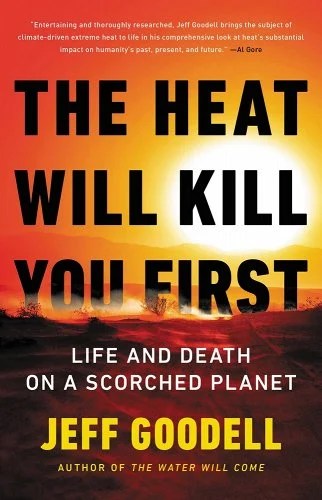
Jeff Goodell shares his opinion in the newspaper of record in the USA. It will serve as a preview of his book to the right, reviewed here. He has also spoken about this topic. There is no pleasure to be had here. Only awareness, and the question why we are not doing more:

In Texas, Dead Fish and Red-Faced Desperation Are Signs of Things to Come

In 2019, I happened to be visiting Phoenix on a 115-degree day. I had a meeting one afternoon about 10 blocks from the hotel where I was staying downtown. I gamely thought I’d brave the heat and walk to it. How bad could the heat really be? I grew up in California, not the Arctic. I thought I knew heat. I was wrong. After walking three blocks, I felt dizzy. After seven blocks, my heart was pounding. After 10 blocks, I thought I was a goner. Continue reading

Stop Digging

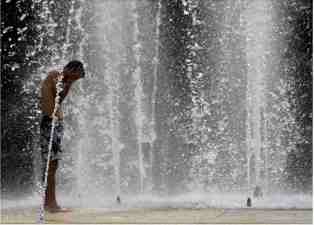
A man cools off by a fountain during a heat wave in Seville, Spain, on July 10th. Photograph by Cristina Quicler / AFP / Getty

It is difficult to imagine, from where I sit in cool weather in the mountains of Costa Rica’s central valley, what that heat would feel like. But it is not difficult to imagine all the possibilities for doing something about it. When you are in a hole that you do not want to be in, stop digging:

Is It Hot Enough Yet for Politicians to Take Real Action?

The latest record temperatures are driving, again precisely as scientists have predicted, a cascading series of disasters around the world.

We’ve crushed so many temperature records recently—the hottest day ever measured by average global temperature, the hottest week, the hottest June, the highest ocean temperatures, the lowest sea-ice levels—that it would be easy to overlook a couple of additional data points from this past weekend. But they’re important, because they help illuminate not just the size of our predicament but the political weaknesses that make it so hard to confront. Continue reading

Rewilding On The Beara Peninsula

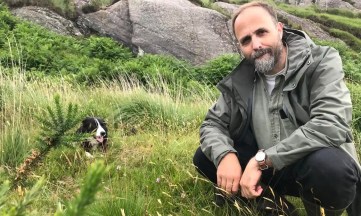
Eoghan Daltun with his dog on his farm, where native trees such as sessile oak, rowan and downy birch have self-seeded. Photograph: Rory Carroll/The Guardian

Rewilding remains one of our favorite topics to read about, and we share accordingly. Thanks to Rory Carroll for this article in the Guardian:

‘The result was amazing’: one man’s mission to reforest a barren Irish hillside

Eoghan Daltun has spent 14 years rewilding part of Beara peninsula into a showcase of diversity

Eoghan Daltun stood on a slope and pointed to a distant vista of verdant fields, craggy hills and conifer trees across the Beara peninsula in west Cork. Continue reading

The Downside Of Dry

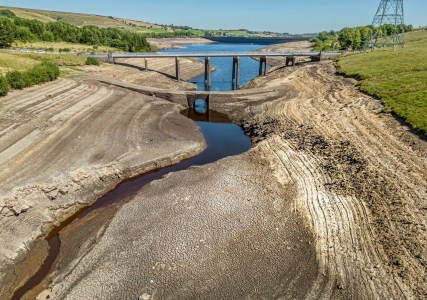
Baitings reservoir in Ripponden, West Yorkshire, in summer 2022, when the total stock of water in England’s reservoirs was at its lowest level since 1995. Photograph: Danny Lawson/PA

We do not favor panic button words in headlines; but when the cap fits, wear it:

‘Drought is on the verge of becoming the next pandemic’

While the world becomes drier, profit and pollution are draining our resources. We have to change our approach

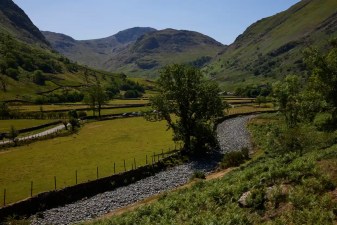
The River Derwent in Cumbria has run dry in parts of the Borrowdale valley for the third consecutive year. Photograph: Christopher Thomond/The Guardian

During the summer months in the Oxfordshire town where I live, I go swimming in the nearby 50-metre lido. With my inelegantly slow breaststroke, from time to time I accidentally gulp some of the pool’s opulent, chlorine-clean 5.9m litres of water. Sometimes, I swim while it’s raining, when fewer people brave it, alone in my lane with the strangely comforting feeling of having water above and below me. I stand a bottle of water at the end of the lane, to drink from halfway through my swim. I normally have a shower afterwards, even if I’ve showered that morning. I live a wet, drenched, quenched existence. But, as I discovered, this won’t last. I am living on borrowed time and borrowed water. Continue reading

Taking Better Care With Help From Kate Raworth

What? We never posted on this book or its economist author before? We correct that now with Hettie O’Brien’s article in the Guardian :

The planet’s economist: has Kate Raworth found a model for sustainable living?

Her hit book Doughnut Economics laid out a path to a greener, more equal society. But can she turn her ideas into meaningful change?

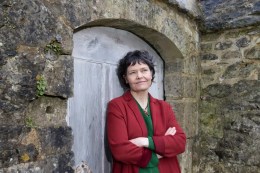
Raworth in Oxford. Photograph: Graeme Robertson/The Guardian

Consider the electric car. Sleek and nearly silent, it is a good example of how far the world has progressed in fighting the climate crisis. Its carbon footprint is around three times smaller than its petrol equivalent, and unlike a regular car, it emits none of the greenhouse gases that warm the planet or noxious fumes that pollute the air. That’s the good news. Then consider that the battery of an electric car uses 8kg of lithium, likely extracted from briny pools on South America’s salt flats, a process that has been blamed for shrinking pasturelands and causing desertification.

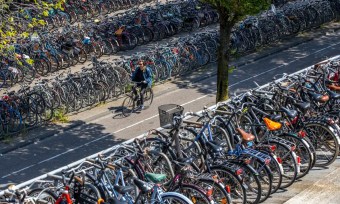
A bike park in Amsterdam which offers free parking for more than 2,500 bicycles. Photograph: Jochen Tack/Alamy

The 14kg of cobalt that prevent the car’s battery from overheating have probably come from the Democratic Republic of the Congo, where cobalt mines have contaminated water supplies and soil. As the demand for electric vehicles grows, the mining and refining of their components will intensify, further damaging natural ecosystems. By 2040, according to the International Energy Agency, the global demand for lithium will have increased more than fortyfold. Continue reading

About That Rocking Chair

There’s been no enormous hurry in Washington to do much about the greatest threat that humans have ever faced. Photograph by Kevin Dietsch / Getty

Thanks, as always, to Bill McKibben for a perspective on otherwise difficult-to-make-sense-of events:

Looking at the White House Through Wildfire Smoke

This week, elected officials can see for themselves why they must get serious about climate change.

I’m sitting on a rocking chair just outside the White House fence on Thursday afternoon, and I can more or less make out the seat of American executive power through the haze. In the morning, the local government announced that the air-quality index for the District of Columbia had reached Code Purple (“very unhealthy”), because of the level of particulate pollution, which has never happened before. Continue reading

Chilekwa Mumba, 2023 Goldman Environmental Prize Winner

https://youtu.be/8TG_1ILhxcU

The 2023 Goldman Prize goes to this man:

Alarmed by the pollution produced by the Konkola Copper Mines operation in the Copperbelt Province of Zambia, Chilekwa Mumba organized a lawsuit to hold the mine’s parent company, Vedanta Resources, responsible. Chilekwa’s victory in the UK Supreme Court set a legal precedent—it was the first time an English court ruled that a British company could be held liable for the environmental damage caused by subsidiary-run operations in another country. This precedent has since been applied to hold Shell Global—one of the world’s 10 largest corporations by revenue—liable for its pollution in Nigeria.

Our thanks to Jocelyn C. Zuckerman for this conversation with him:

The Nchanga copper mine, operated by Konkola Copper Mines, in Chingola, Zambia. WALDO SWIEGERS / BLOOMBERG VIA GETTY IMAGES

This Zambian Took on a U.K. Mining Giant on Pollution and Won

Chilekwa Mumba led a court battle to hold a U.K.-based company responsible for the gross pollution from a copper mine it owns in Zambia. In an interview, he talks about how he and local villagers faced arrest to overcome long odds and finally win a landmark legal victory.

The southern African nation of Zambia is home to a wealth of minerals — in particular, lots of the copper and cobalt that the world will require to power a green economy. Continue reading

Viewed From Above, Our Most Important Leaks

Illustration by Ard Su

David W. Brown offers this updated look at the use of satellite technology for a key metric:

A Security Camera for the Planet

A new satellite, funded by a nonprofit, aims to pinpoint emissions of methane—a gas that plays a major role in global warming.

When his phone rang, Berrien Moore III, the dean of the College of Atmospheric and Geographic Sciences at the University of Oklahoma, was fumbling with his bow tie, preparing for a formal ceremony honoring a colleague. He glanced down at the number and recognized it as nasa headquarters. This was a bad sign, he thought. In Moore’s experience, bureaucrats never called after hours with good news.

It can see large methane concentrations along its orbital path, but can’t pinpoint emissions sources. Illustration by Ard Su

For roughly six years, Moore and his colleagues had been working on a space-based scientific instrument called the Geostationary Carbon Cycle Observatory, or GeoCarb. nasa had approved their proposal in 2016; it was now 2022, and GeoCarb was being built by Lockheed Martin, in Palo Alto, California. Once it was in space and mounted to a communications satellite, GeoCarb would scan land in the Western Hemisphere continuously in strips, taking meticulous measurements of three carbon-based gases: carbon dioxide, carbon monoxide, and methane. It would give scientists a detailed view of the carbon cycle—the process by which carbon circulates through the Earth’s forests, lakes, trees, oceans, ice, and other natural features. Continue reading