Across Waters to the Mississippi River Adventure

Guest Author: Rania Mirabueno

Image

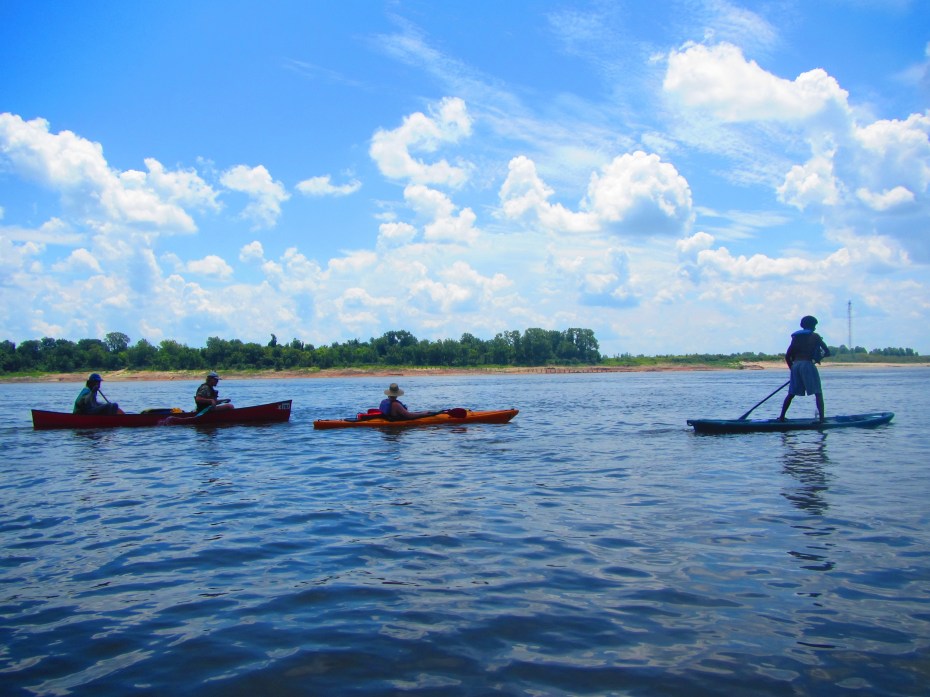
Adventurers canoeing 2320 miles of the Mississippi River.

As I recall my beautiful houseboat experience in the backwaters of Kerala with River Escapes, I cannot help but think across waters to four adventurers, who are embarking on a journey with two canoes and 2320 miles of rafting across 10 US states on the Mississippi River. Continue reading

News From Rio

After more than a year of negotiations and a 10-day mega-conference involving 45,000 people, the wide-ranging outcome document – The Future We Want – was lambasted by environmentalists and anti-poverty campaigners for lacking the detail and ambition needed to address the challenges posed by a deteriorating environment, worsening inequality and a global population expected to rise from 7bn to 9bn by 2050.

Click the image above for the coverage in The Guardian.

Mapping Africa’s Glaciers

The Guardian recently ran this piece, whose surprise starts in the title (glaciers in Africa?) and continues on from there:

Ptolemy thought they were the source of the Nile and called them theMountains of the Moon because of the perpetual mists that covered them; Stanley claimed to be the first non-African to see their icecap; and the many thousands of subsistence farmers who today live on the slopes of the fabled Rwenzori mountains in Uganda and the Democratic Republic of the Congo fear that warming temperatures are devastating their harvests.

This slideshow requires JavaScript.

Fish-Eater’s Dilemma

Click the image above to go to the story in Dot Earth:

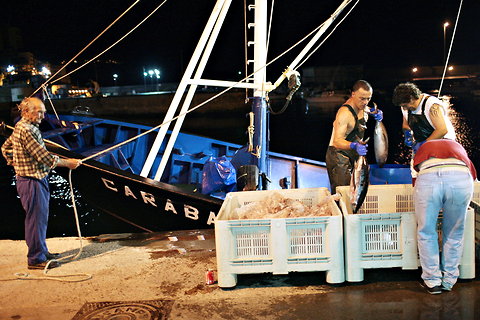
Talk about timing. As American and European fisheries officials met this week in Brussels to talk about, among other things, the problem of illegal and unregulated fishing, Chinese boats were illegally in the Mediterranean, making a mockery of efforts to manage the bluefin tuna fishing season.

Environmental Photography Award

Thanks to The Guardian‘s coverage of and link to the Chartered Institution of Water and Environmental Management (CIWEM) which

has a history of working in environmental management dating back to 1895. In the succeeding decades, engineers, scientists and other professionals came together to combine their expertise across a broad range of environmental disciplines. The present day Institution was formed in 1987 when the Institution of Public Health Engineers merged with the Institution of Water Engineers and Scientists and the Institute of Water Pollution Control to form the Institution of Water and Environmental Management.The Institution was granted a Royal Charter in 1995 and was proud to celebrate its centenary in the same year.

We will investigate further.  For now our attention is brought by The Guardian to CIWEM’s annual awards for great environmental photography.  There is an Under 21 category which we hope some of our more youthful collective members (e.g. 1, 2, 3, 4  come to mind) might considering an entry to…

This slideshow requires JavaScript.

The 2012 Iscol Environmental Lecture

The David R. Atkinson Center for a Sustainable Future at Cornell University hosts (click to the left):

Peter Matthiessen takes us on a journey to Arctic Alaska, where climate change is the new reality. In this fragile ecosystem, potentially severe negative effects of large-scale fossil fuel development—especially offshore prospecting and drilling—are already taking their toll on the Arctic sea ice and permafrost, on Arctic wildlife, and on indigenous peoples such as the coastal Inupiat and the Gwich’in Dene (“caribou people”).

Forests Need People

The premise underlying entrepreneurial conservation is that there are good economic reasons to preserve natural and cultural heritage.  And when such good reasons present themselves, opportunity dances with need. With natural heritage in particular, in the interest of introducing the dance partners with neither too much fanfare nor scowling, we have taken a light approach to the concept of biophilia, making reference from time to time.

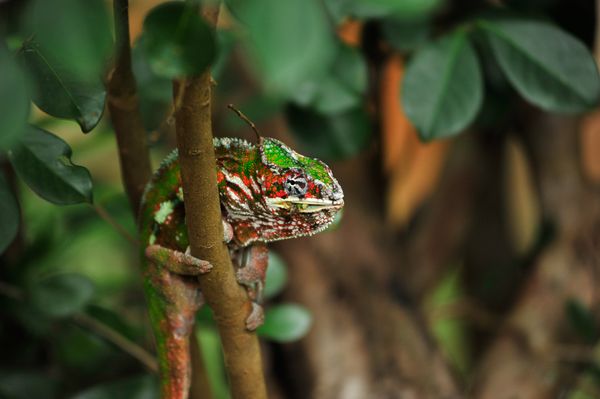
Click the photograph above, by Raul Touzon, to go to National Geographic‘s online coverage of forests under threat, which we link to with entrepreneurial intent.  A bit of fanfare (just look at that creature!) and a hint of scowl are inevitable when you read the sampling in this series: Continue reading

I Belize I Can Fly

Guest Author: Robert Frisch

The tiny islands or “cayes” off the coast of Belize sit in the middle of beautifully serene coral atolls and are surrounded by the world’s second largest barrier reef.  Like shallow lakes in the middle of the ocean, the atolls host several UNESCO world heritage sites and some of the best snorkeling and scuba diving in the world.  My team, consisting of three Johnson  students and an MPA student from the Cornell Institute of Public Affairs, found itself tasked with providing consulting services and business advice for the owners of one of these cayes in what turned out to be the most unique spring break of my life. Continue reading

“I Will!”

What began as a WWF Australia project to focus public attention on climate change has turned into an international movement that has become the largest voluntary action ever witnessed, reaching 1.3 billion people across the globe.

In the best possible way the movement has gone viral, expanding exponentially, bringing people together in a celebratory atmosphere that represents the power of social media and a good idea. Continue reading

Thekkady, Through an Old Camera’s Lens

“We have fallen heirs to the most glorious heritage a people ever received, and each one must do his part if we wish to show that the nation is worthy of its good fortune.” –Theodore Roosevelt

We have commented elsewhere on the counterintuitive observation that hunters and fishermen are sometimes, perhaps even often, the best conservationists. (See Seth Inman’s posts from last autumn.) At least in the “North American Wildlife Conservation Model” established in the early 20th century it can be understood that way. Some environmentalists would call the slope between the two concepts a “slippery” one.

Theodore Roosevelt, the 26th President of the United States was a very public example of this. Approximately 230,000,000 acres of wilderness, including deserts, mountains, wetlands and forests were placed into the public trust under his presidency. I wrote about his importance to the early conservation movement in the U.S. in a post called The Natural. At the time I wrote that post I purposefully avoided using the archival photographs that portrayed Roosevelt’s long history of hunting, assuming it wouldn’t fit with our Conservation point of view. Continue reading

Really, Monsanto?

We try to be careful consumers of information, and link out to stories that match our interests and have relevant factual content.  Not everything that every government says passes the “truthiness” test, but we are reflexively interested in the views and findings of a group like this:

PEER is a national non-profit alliance of local, state and federal scientists, law enforcement officers, land managers and other professionals dedicated to upholding environmental laws and values.

Reflexive does not mean blindly accepting of everything they say, but we are inclined to pay attention to scientific findings related to the environment.  When they raise issues like this related to wildlife refuges then the inclination transforms into something stronger and more urgent: Continue reading

Canopy Capture

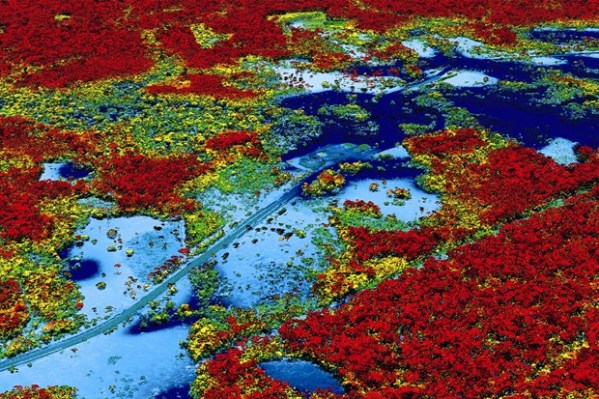
Click the image above to go to a story covered in Wired about a novel approach to mapping threatened rainforest, using existing technology in an innovative manner:

A small, twin-propeller plane flies over the Amazon rainforest in eastern Peru. The scale of the vegetation is extraordinary. The tree canopy stretches as far as the eye can see — an endless array of broccoli florets bounded only by haze and horizon. Greg Asner, 43, has seen the rainforest from this vantage point many times before, but he still stares out of the window in rapt fascination.

Continue reading

Optimism and Opportunity

Many of my posts reflect my outlook to err on the upside of life’s circumstances.  I try to drown out my inner (and often powerful) pessimism by surrounding myself with positivity and optimism.  I find that this is a careful balance of being hopeful while remaining realistic.  Today, when I was taking a break from my coursework, or the slightly negative part of my day, I watched an encouraging Ted Talk that I think demonstrates hopeful realism.

Johan Rockstrom suggests that the earth is at a point where major transformation must occur.  He optimistically recommends that we use and continue to use crises as opportunities and local initiatives to transform and sustain life.  Also, he makes a realistic statement that climate change is not our biggest problem only a symptom of our land use.

I found this talk engaging and thought-provoking.  I agree that I transformation is soon to happen and I look forward to being a part of it.

Universities Pushing Boundaries

The University of Minnesota has a website devoted to environmental issues, and we immediately enjoy its spirit and perspective.  Click the image to the left to go to one brief article in a series titled “What would it take?”, in this case featuring an interview with Solomon Prakash.  He is asked a series of questions around the specific theme “What would it take for social entrepreneurship to make inroads to poverty?”  His answers conclude with:

I think the next 10 years will be the decade of social entrepreneurs. I see lots of talented people who want to solve social problems making serious career changes. Some mainstream design firms have actually set up a whole branch around social innovation. Consulting companies are looking at hybrid models of social change. Increasingly, companies are saying it’s no longer possible to look at customers just as consumers. More and more people understand that social change is no longer a marginal activity. The opportunity is huge to solve problems and to come up with interesting commercial models that can be sustainable.

Continue reading

Needing Mr. Miyagi

Anyone who has ever been to ski slopes may have experienced small, pint-sized, infant skiers buzzing down the hills.  As a veteran skier of 18-years, I proudly proclaim that I was once one of these daring children.  However, I learned this past weekend that through the years I have lost this fearlessness when I was challenged to try snowboarding.  I would love to boast that my first run was very similar to this video, but the aching of my entire body keeps me truthful as if to say, “Ha!  You wish, Meg!”

Several times I met the side of the mountain and regardless of the many parts of my body that hit, the solid surface was resilient to my attacks; in fact, the bruises that continue to surface would argue that it fought back with increasing firmness.  The absence of soft, powdery snow brought my awareness to this season’s lack of typical winter weather, and it drew my attention to the resort’s snow-making cannons.  Continue reading

Ideas About Why To Hug A Tree

In several earlier posts Seth highlighted the evolution of environmental philosophy in readings for a course he was taking at Cornell University.  For those of us not lucky enough to be in a course like that, there is a magazine whose current issue covers some of the same terrain.  From one of the articles in that issue (click the image above to go directly to the source):

Leopold argued for the extension of what we see as worthy of our respect from the human community to include animals and the natural world, or what he referred to as ‘the biotic community’. His famous principle, briefly expressed, was, ‘A thing is right when it tends to preserve the integrity, stability and beauty of the biotic community. It is wrong when it tends otherwise’.

Continue reading

Wild Things Lurk In Tranquil Places

Two of Milo’s recent posts–one about appetites and the other about maternal instincts–provide reminders that as beautiful as nature is, there are situational downsides. In an earlier post we mentioned Walton Ford, and it is interesting to consider Milo’s photographic observations in light of Ford’s work.  And since Milo was writing from India, perhaps even in conjunction with the musical encounter below.

This slideshow requires JavaScript.

Do not let Milo’s fearsome photography, nor Walton Ford’s phantasmagorical extrapolations, lead you astray. Continue reading

Europe’s Green Capital

So I’ve left behind the wild, lush landscape of the Costa Rican rainforest and arrived in Strasbourg, France, to find a completely different kind of green.

Costa Rica is one of those countries the climate change debate focuses on – it’s the epitome of natural diversity and everywhere you turn there is some species or habitat that could be gone in 20 years’ time. Or 10 years’ time. From the rainforests I hiked through to the sloth sanctuary my mum and I visited, everything there seems at once so wild and so fragile. The conservation efforts we see there are direct, tackling the specific problems the land faces: protected areas are being designated, turtle-watching programmes are being set up to monitor and protect the species, and the people at Aviarios sloth sanctuary provide education for locals as well as caring for the animals.

Places like the Manuel Antonio National Park have to concentrate on the effects of climate change.

Continue reading