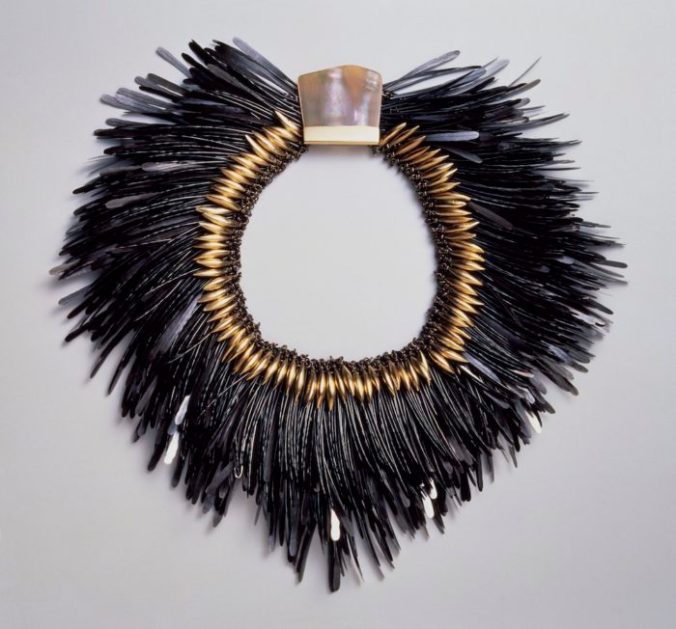
Necklace, designed by Tone Vigeland (Norwegian, born 1938)

Book, Histoire naturelle des oiseaux de paradis et des rolliers: suivie de celle des toucans et des barbus (Natural History of Birds of Paradise and Rollers: Followed by that of Toucans and Barbets), Volume 2; 1806; Written by François Levaillant (French, 1753–1824); Illustrated by Jacques Barraband (French, 1767–1809); Smithsonian Libraries, QL674.L65 1806
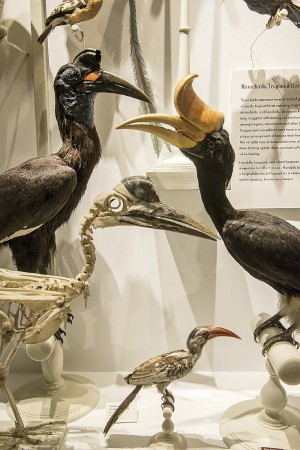
An exhibit at the Cooper Hewitt comes to my attention thanks to Dylan Kerr, whose essay The Mandarin Duck and Avian Art at the Cooper Hewitt makes an interesting link between the choices Rebeca Mendez made as a curator and a recent unusual bird sighting in New York City:
For the past several weeks, New Yorkers have been abuzz over a mysterious visitor. A mandarin duck, an intricately colored waterfowl native to East Asia, has taken up residence alongside the mallards in the Central Park Pond, drawing crowds and inspiring memes, dog costumes, and a Twitter account (bio: “I’m not from around here”). Pundits have argued that the frenzy betrays a desire for good news. But perhaps, the Mexico City-born designer Rebeca Méndez suggested the other day, something deeper is at play. “In our own normal life, we have patterns that we are so used to.
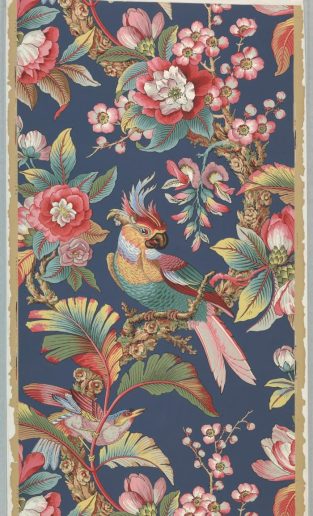
Sidewall; 1905–13; Manufactured by Zuber & Cie (Rixheim, Alsace, France); Block-printed on paper; Gift of James J. Rorimer, 1950-111-10
My immediate reaction is yes. We are bombarded with more negative information more quickly, more constantly than ever in my lifetime. We need relief, and nothing like an exotic bird coming to town to bring it:
When something”—an anatine interloper, say—“comes in and breaks that, it’s incredibly exciting,” she said. “The world suddenly collapses—it’s like a wormhole from far-east Asia to Manhattan.”
Méndez recently curated an exhibition of avian art at the Cooper Hewitt, Smithsonian Design Museum, across the street from the Park. It’s part of the “Selects” series, in which the museum invites a guest to put together a show from objects in its collection. Continue reading





 Although neither the BBC nor the British Museum is maintaining the website, it is still there. I recommend getting ahold of the


 Organikos