A Day in the Cockpit

Out of the several hours of video that we took during our first month of the Jamaican Golden Swallow Expedition, Justin has condensed the cream of the crop into a fifteen-minute compilation that flows from sunrise to moonlight, with lots of birds, scenery, and other life in between.

Watching the video above, you can  Continue reading

Status of the Critically Endangered Jamaican Golden Swallow (summary)

Justin Proctor, Department of Natural Resources, Cornell University, Ithaca, NY

Seth E. Inman, Cornell Laboratory of Ornithology, Ithaca, NY

John M. Zeiger, Cornell Laboratory of Ornithology, Ithaca, NY

Gary R. Graves, Smithsonian Institution, Washington, D.C.

Screen Shot 2015-04-30 at 11.10.57 AM_zpsskyyrz9u (1)

Hispaniolan Golden Swallows in Parque Valle Nuevo, Dominican Republic. (From left to right) Adult in flight; adult perched overtop of artificial nest-box; 25-day-old chicks in nest-box, one day prior to fledging.

The Golden Swallow (Tachycineta euchrysea) is an aerial insectivore and obligate secondary cavity-nester known exclusively to the Caribbean islands of Jamaica and Hispaniola. The Hispaniolan subspecies (T. e. sclateri) was first described in 1866 by the American ornithologist, Charles Barney Cory, and though considered common in the early 1900s, it has become an increasingly rare resident of the highlands of Haiti and the Dominican Republic. The subspecies is currently categorized as vulnerable by the International Union for Conservation of Nature (IUCN). Researchers have been studying the life history and breeding biology of the Hispaniolan subspecies since 2012, and initial conservation efforts are currently underway. The nominate Jamaican Golden Swallow race (T. e. euchrysea) was first described in 1847 by the English naturalist, Philip Henry Gosse, and was always considered uncommon, locally distributed, and endemic to Jamaica. Sadly, the Jamaican Golden Swallow subspecies has not been unequivocally observed since the late 1980s. Continue reading

The Rufous-throated Solitaire

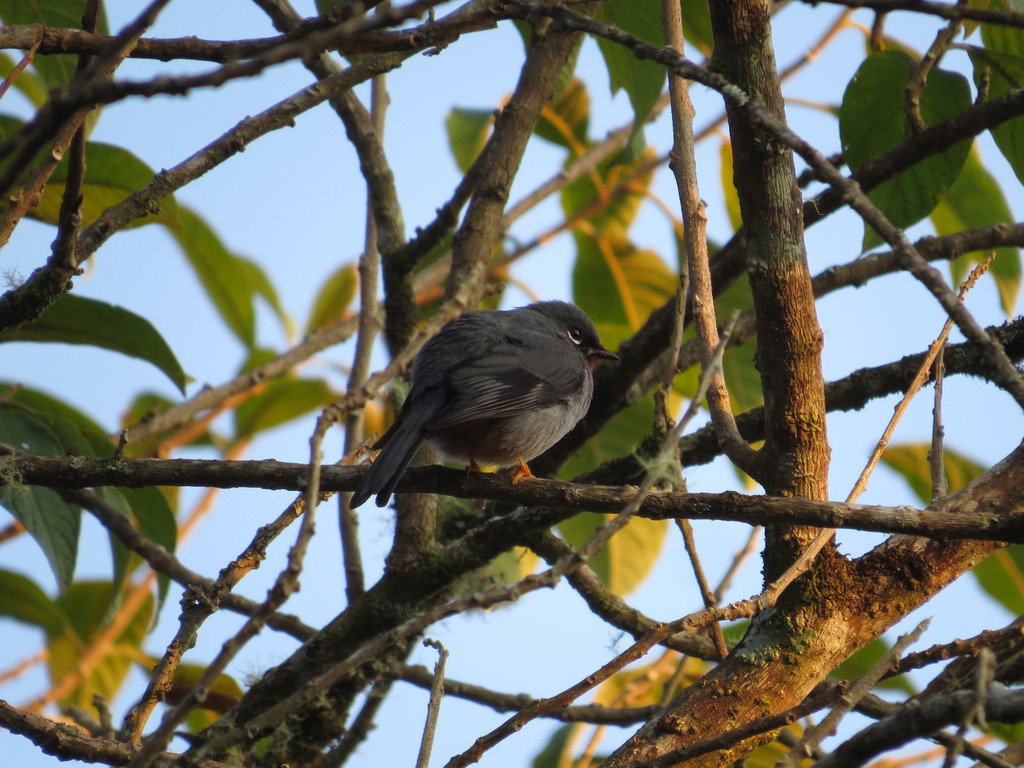
Back when I wrote about our ascent of Blue Mountain Peak, I mentioned that the Rufous-throated Solitaire is a bird that can be pretty tough to spot.

In that prior post, I had a picture of the same individual featured in the video above. If you turn the volume up, you can hear all the shrill details of the bird’s call, and imagine sounds like those echoing through the misty hills — the guidebook to Jamaican birds actually describes the vocalizations as “ventriloquial,” which we found to be accurate.  Continue reading

The Great Golden Swallow Gear Review: Part 3

Seth displaying his catch. Photo by Justin Proctor.

Thermarest Prolite Plus sleeping pad:

Seth: Comfortable and light, these pads kept us insulated and padded even on cement floors, but the compression sack that is supposed to store the pad is far too small. I don’t recommend sleeping on these on a hot, humid day at around noon.

Justin: This is the first thermarest I’ve used in my life. I’ll probably never have to buy another. I slept comfortably on this thermarest every night, whether it was lying on concrete, a tiled floor, or a more forgiving forest floor. I threw out the ludicrously small sack that came with this otherwise good product on the second day.

John: Don’t ask me, I just sleep on an old yoga mat. I should also point out that it took Seth and Justin a few minutes to deflate and roll these up every morning.


ExOfficio Men’s Boxer, Curfew, medium: (worn by Seth – see photo)

Seth: These highly expensive pairs of underwear are fast drying, don’t retain bad odors, and are quite breathable. Their only downside is that there’s a bit too much fabric in the seat, so they can be wedgie-prone.

Justin: I think Seth just wanted to beat me on the pricing of luxury undies.

John: What’s underwear?


Continue reading

The Great Golden Swallow Gear Review: nākd edition

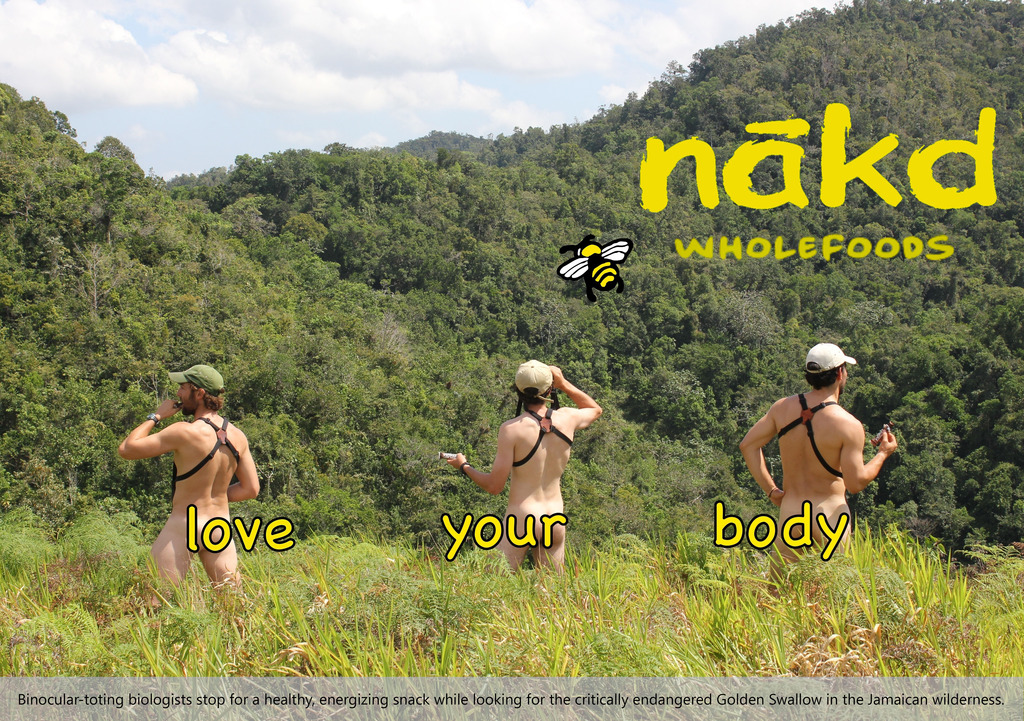
Given the photo above, perhaps this post would have been better suited to April Fools’ Day. However, since April 1st was the first day we had back in Ithaca, the precise editing required to keep the photo PG-rated would have been rushed and the result would have been, shall we say, sloppy. Although it may seem like a strange way of saying thanks, this post — and especially the header photo — are a token of our great appreciation for the folks at nākd (Nature Balance Foods), particularly for Traci in US operations, who coordinated everything with us! I should clarify that we created the photo above of our own volition and without any explicit sponsorship — it is not a nākd photo shoot, it’s just a naked photo shoot.

On the trail up to Blue Mountain Peak, the highest summit in Jamaica.

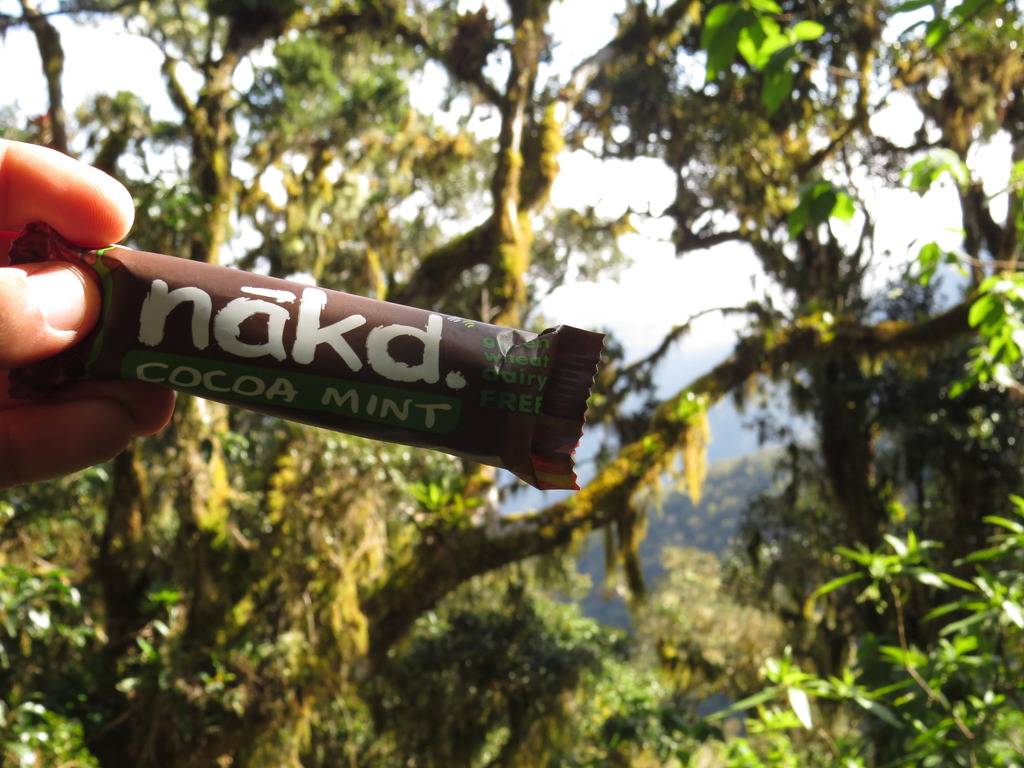
We had mentioned long ago that we were receiving lots of nākd bars to help us through our expeditions, and no amount of expressed gratitude can reflect the true value of these snacks to our diet during the past three months. The best part is that we could eat as many as we felt like it since they have no added sugar or artificial ingredients, and are basically just a combination of 1) dates and/or raisins, 2) almonds, cashews, or pecans, and 3) spices or natural flavoring like cocoa powder or coffee.

Continue reading

The Great Golden Swallow Gear Review: Part 2

MSR Whisperlite International Stove V2:

Justin:  Referring to just the stove:  The whisperlite international is a darn good stove.  Lightweight, folds up nicely, and is relatively easy to set-up, maintain, and clean.  I purchased this stove because it can burn almost any flammable gas or liquid.  That’s imperative when you are traveling internationally.  The only change I would make would be to upgrade the ‘teeth’ on the three stands that hold your cookware so as to create more friction and lessen the likelihood of a pot or pan slipping off the stove.


MSR Standard Fuel Pump:

Justin:  This is an easy to use pump, but it requires more maintenance than one would desire.  Though the pump syringe never broke, it always felt weak to the touch.  The pump cup attached to the inner end of the syringe does not attach well to the syringe, while it also dries out over the course of several days.  Without lubrication and vigilance, that pump cup will slip off and/or rip if you’re not careful.  Once the cup has ripped, it will be impossible to build up pressure in the MSR bottle. Accessing the innards is also difficult, and requires at least four hands pushing and pulling at different pressure points at the same time.  Be sure to purchase the Whisperlite International service kit because you will need the spare parts.  After two solid months of use, I am thinking that I will now have to replace this unit entirely.  Continue reading

The Great Golden Swallow Gear Review: Part 1

A sea cave on the northern coast of Jamaica, where Cave Swallows nest.

We’ve finally put our heads together and written all our thoughts on the various articles of gear we brought with us to Jamaica for two months! Overall we were pretty pleased with everything we used, and would recommend them to the average backpacker except where it’s clear that we weren’t very satisfied.

GSI Outdoors Pinnacle Dualist Cookware Set:

Justin:  This cookware set has some big pro’s and some big con’s.  The fact that everything fits nicely together, and the entire unit is lightweight is definitely a plus.  However, a rogue surge of flame from our stove one night that came up high on the sides of the pot caused the pot to warp in shape (which is surprising because of its constant tolerance to high heat from below).  Therefore the lid never fit correctly again.  The bowls are solid and the two that come with a foam/elastic band around them are effective in keeping you from getting burned from hot contents within.  The folding handle of the pot is hazardous – perhaps there is a locking mechanism that we are unaware of or did not receive.  The two retracting sporks that come with the set are complete garbage.  The minute you attempt to ‘pierce’ a piece of food, the spork will retract and become useless.  Best to pawn these sporks off as a gift to a friend that you really don’t like much.

John: Hey, Seth, want a spoon?

Seth: Heck yeah! … … … hey, Justin, want a spoon?

Continue reading

Golden Swallow Expedition Back in Ithaca

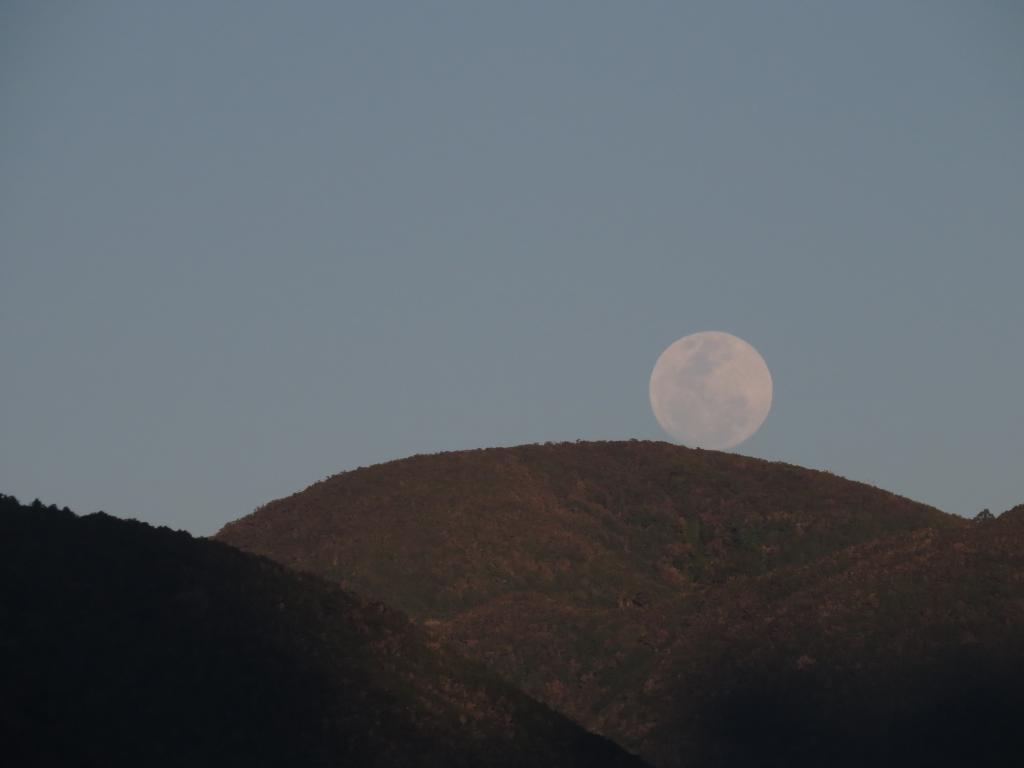
A moon rises in the Blue Mountains

Photo by Justin Proctor

It’s been a while since you last heard from us, but not because we’re lost in the Jamaican wilderness!

We arrived back in Ithaca, NY a week ago, and have been hard at work processing our data, photos, videos, and thoughts from this past trip to the Blue Mountains. In addition, we’ve had to analyze our data from both trips combined, trying to seek out patterns in aerial insectivore sightings and making maps of all our point counts with different species seen in both Cockpit Country and the mountainous eastern portion of the island.

We’re also looking up references to all information on Cave Swallows, Antillean Palm Swifts, and White-collared Swifts in either Jamaica, the Caribbean, or the world, depending on what kind of journal articles have been published about them in the past. Other research we’ve been doing involves Barn Owls and Turkey Vultures, which will be the subject of spin-off Continue reading

Blue Mountain Peak

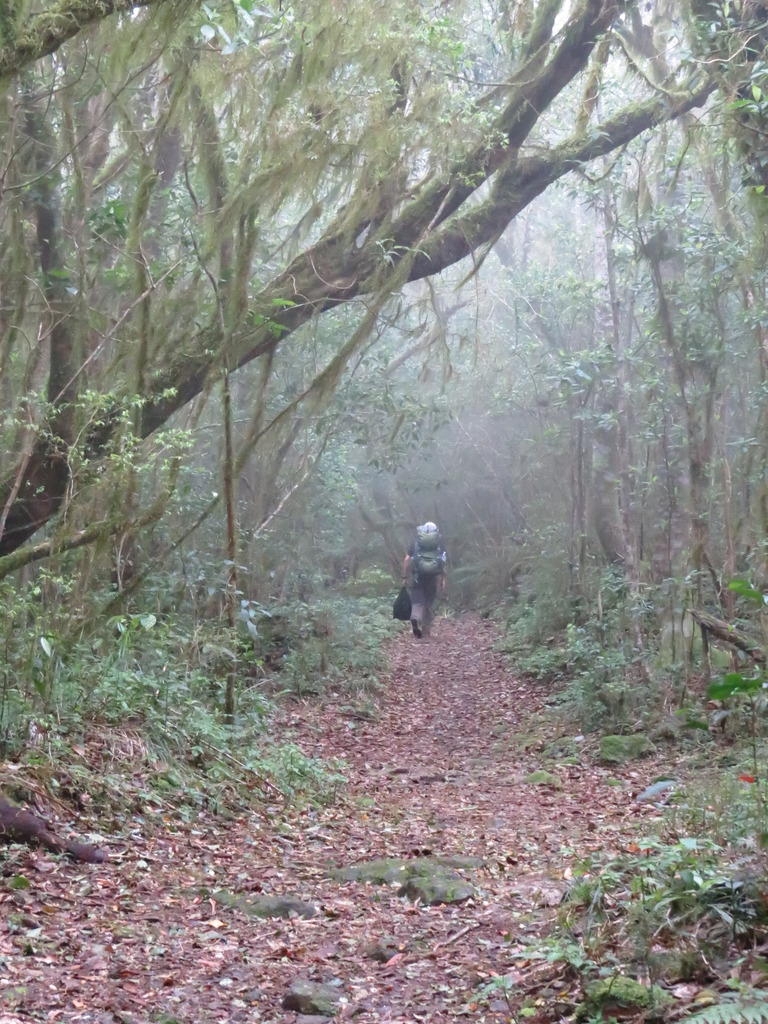
John walking down the mossy forest path

Last week, we hiked up to Blue Mountain Peak, the highest point in Jamaica. To reach the summit, you have to go through Portland Gap, a saddle between Mossman’s and Blue Mountain Peaks and a good point for camping out if you want to do the hike in the morning. Starting with all our camping gear on our backs at the trailhead around 4,185ft, we took a brisk hour’s hike to Portland Gap, gaining 1,356ft of elevation in the process. We set up our tents at Portland Gap, an area with the most Rufous-throated Solitaires we’ve seen so far – they’re very shy birds and are most often only heard, their haunting whistles echoing eerily over valleys and through the forest.

An elusive Rufous-throated Solitaire at Portland Gap

The Gap also ended up being a great spot to see Continue reading

The Simple Things

When we find ourselves absolutely overwhelmed by the complexities, demands, and irrational expectations surrounding field work, it’s really nice to remember the simple things – and within them, find peace of mind, stability, and renewed strength.

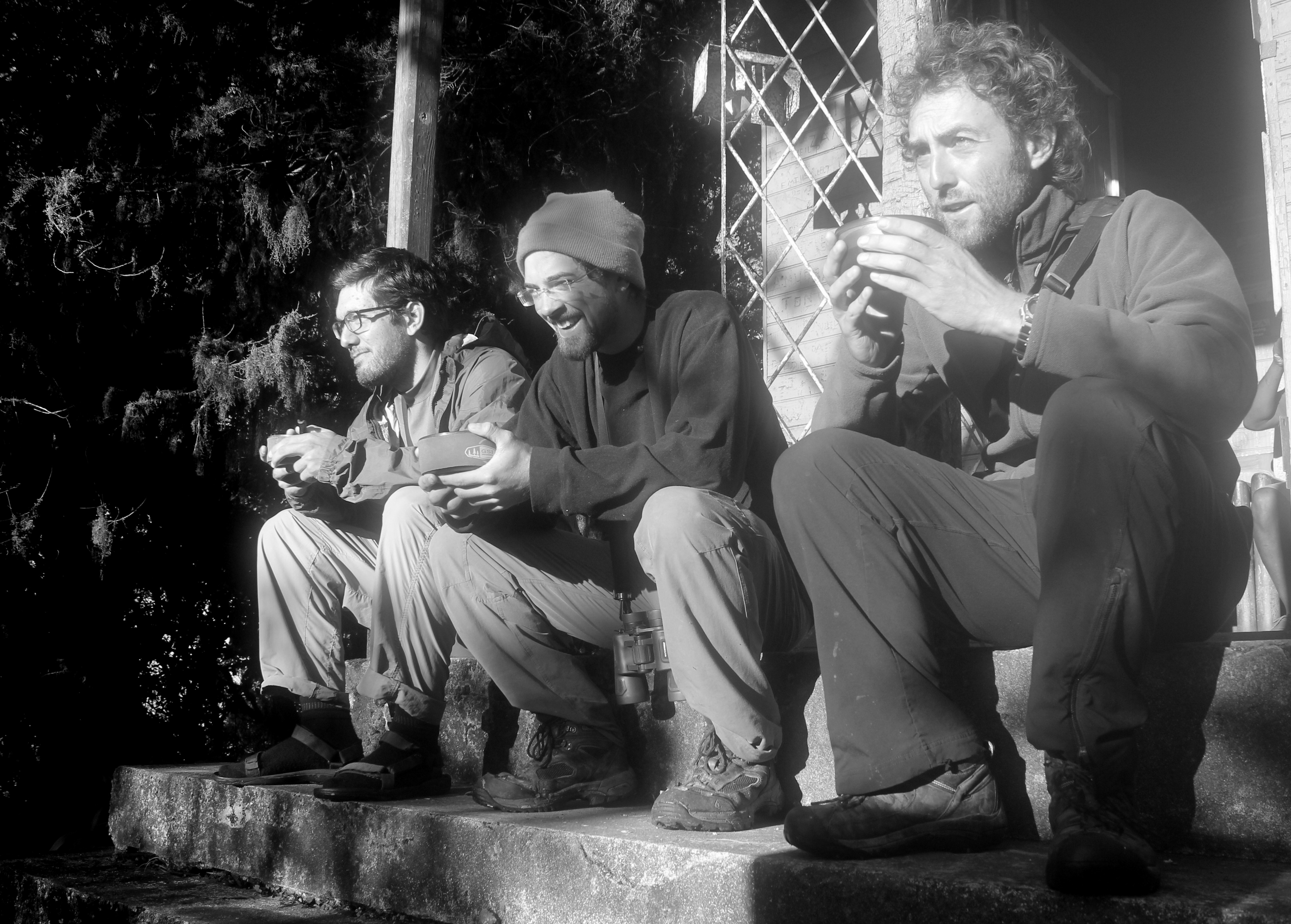
Waking up early enough so as not to have to rush through a French-press filled with Blue Mountain coffee is a must.  It’s 10 minutes of tranquility, when one can sit with friends, contemplate the day’s tasks, and appreciate the scenery you’ve missed while rushing from one place to the next.

And what about those incredibly infrequent times that the birds come to you?   Continue reading

Ambassabeth

Photo credit: Seth Inman

The Ambassabeth Ecolodge can be found tucked into the southeast corner of the Rio Grande Valley, at the meeting place of the southern end of the John Crow Mountains and southeastern end of the Blue Mountains. It’s a beautiful, lush nook filled with towering Tree Ferns (Order Cyatheales), fast-flowing tributaries thundering off the valley sides down into the Rio Grande River, elusive Giant Swallowtail butterflies (Papilio homerus), and a healthy mix of Jamaican avifauna.

A recent bridge collapse about a mile and half from the ecolodge, inhibiting the arrival of guests by vehicle, has further amplified the serenity, isolation, and rustic ambiance surrounding this naturalist’s paradise. For us, Ambassabeth provided a base location from which to hike and survey two distinct foot-trails that meander up out of the valley and continue down the other side towards the southeastern coastline of the island. Continue reading

Cinchona Botanical Gardens

a view of the valleys and Westphalia in the shadows of Portland Gap and some Blue Mountain peaks above

Since my last post, we’ve been several places and seen lots of things, but none of the areas we’ve visited have been so naturally “post-worthy” as the Cinchona Botanical Gardens above Westphalia, in the mountains of St. Andrew Parish. Somehow we had gathered from several people’s hearsay that we should practically expect ancient ruins, with perhaps some scattered floral gems growing feral among old dilapidated structures and a few exotic trees towering over the grounds. As you can see from the photo below, these vague rumors were partially true.

the old Garden Commissioner’s house/office, in need of some minor remodeling


Continue reading

A River Runs Through It, In Ethiopia

One of Ethiopia's many excellent national parks

One of Ethiopia’s many excellent national parks

This is not the post promised. It is a taste of why I must post, as promised. This canyon, this river, this view came early in our expedition and is among the strongest in my visual memory. It seemed fortunate, at the time, to catch this view at sunset but the more I think about it the more I am convinced that the place is worthy of a snapshot any time of the day. And it is worth making future visits, so next time I intend to navigate downriver (from the right in this photo), arriving at the place where I snapped this photo after hiking up the canyon. Continue reading

Jamaican Golden Swallow Expedition Part Two: Into the Blue Mountains

IMG_2880_zpsyzulvsiy

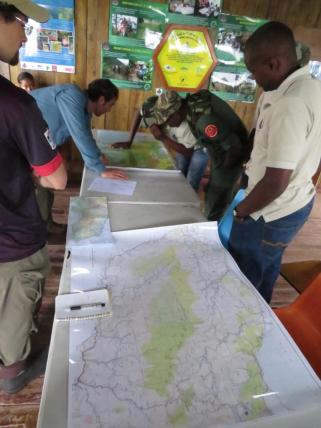
We’re back in Jamaica and now in the second portion of our trip, where we explore the Blue Mountains and John Crow Mountains National Park looking for any signs of the Jamaican Golden Swallow. We arrived at the main visitor center for the park in Holywell yesterday, where we met with park rangers as well as representatives of the Jamaican Conservation and Development Trust, the organization that runs the park. We introduced everyone to our project using an adaptation of the standard slideshow that Justin uses to explain his masters research in Hispaniola to people, and then opened the table for a discussion of the best possible areas to hike and survey.

IMG_2722_zpsvhhlep1v

Map exploration with representatives of the Jamaican Conservation and Development Trust

The park rangers had many helpful suggestions for certain regions that they thought best matched the type of habitat and un-birded nature that we’re looking for, and thanks to their help while poring over our maps we have a much better idea of where to go from here. The national park is simply so massive that any head start we can get on the right places to survey is a great help.

Today, we enjoyed some beautiful weather – blue skies and quite refreshing temperatures comfortably between the wind-chilled -10°F of Ithaca and the muggy 90°F of Cockpit Country. From our short hikes around the park so far we all agree that it’s an amazing area with stunning views and lots of potential for the Golden Swallow.

Continue reading

Potoo Dreams

moon

As the sun drifts below the horizon and the Jamaican bush is lit up with stars, the Northern Potoos begin to duet. QUAAAA-QUA-QUA-QUA-QUA QUA screams one into the night. Its neighbor responds in kind. As darkness settles over our tents, we fall asleep listening to their song.

2

Potoos are very odd birds. (This group of near passerine birds are related to frogmouths and nightjars.) During the day, they are practically impossible to spot, due to their legendary camouflage. They generally freeze at the end of a branch, and their streaky brownish and grayish plumage resembles an extension of their perch. Although we checked many snags while in Jamaica, we could never find a potoo in the daytime.

At night it was another story. Potoos are nocturnal, or active at night, and they like to hunt in open fields at the edge of the forest. They have huge eyes, which glow bright orange when light is shined in their direction. With headlamps, we were able to spot potoos perched on posts hundreds of feet away. Continue reading

Preparing for the Blue Mountains

A friendly caterpillar I found crawling around my tent’s rainfly on one of the last days in Jamaica.

We just finished our first week back in Ithaca, where temperatures have stayed below 0ºF most of the time and therefore we have stayed indoors most of the time. Mostly we’ve been writing up all our observations from the first expedition, digitizing our paper field notes and organizing our photos and videos; playing around with bird data in Excel, eBird, and ArcGIS (a mapping-data program); and looking at maps of the Blue and John Crow mountain ranges.

Continue reading

Melton West

Melton

Note:  Hey I’m John, a new author with Raxa Collective. I am working as a field technician on an expedition studying the Jamaican Golden Swallow with Justin Proctor and Seth Inman.

While traveling in the Jamaican bush, local people would often pleasantly surprise us. While passing us deep in the bush on a donkey with a pack saddle brimming with yellow yams, a local farmer with a ragged hat and torn work shirt told us about how he just spend the last week in Toronto with his Canadian girlfriend. A group of illegal mahogany loggers, upon seeing our camera equipment, enthusiastically asked us to help them film a music video. But by far, our favorite encounter was with Melton Manuel West.

We met Melton as we set up our camp in the late afternoon near BBQ Bottom Rd. He was walking from his home in the bush to go to the market in nearby Campbells. Like most people we met, he asked us about what we were doing. Intrigued by our project, he declared he would take us to the best places in the bush to see swallows. Then he sat down nearby and just hung out near our camp. At first we were suspicious, and it was a little disconcerting. Yet before he left, we agreed that he could guide us into the hills the next day. Continue reading

Dear Bob, Thanks For All Of It

Arba Mintch

As coincidences go, this one is nothing but typical: Seth’s post about wrapping up the first leg of his scientific expedition in Jamaica is there to be read; this song is coming through the earbuds (do yourself a favor and find it; do the estate of the artist a favor by finding a legal copy to ensure royalties go where they belong); I am looking out over the most fertile lands in Ethiopia, getting ready to board a boat to pass by the hippos and 7-meter long crocodiles that live in the water in the distance (in the photo above) and then climb the hills to where the zebras roam, to see what we can see. And then perfectly, as I glance at the news, a small feature catches my attention:

When people ask where I live and I say Jamaica, it’s almost a given that someone will then randomly say “ah, Bob Marley” in response. It can grate that one man can define an entire country, but this man was that most rare of individuals, an icon, the man who introduced reggae to the world and who drove an equally iconic vehicle, a Series III Land Rover.

I care nothing about cars, but at the moment the story catches my attention I am deeply immersed in the earliest recordings of Bob Marley as preparation for the exploration of Ethiopia. So I read on about this car in Jamaica. And the playlist continues, now Chances Are (again, find it; from when the artist was living in the USA, but this was not released until years later and never got the airplay it deserved) makes me want to know even more about this Land Rover before getting into that boat. Thanks, Bob, for prepping me for the beauty of Ethiopia, and sending me on my way today in good spirits.

Continue reading

Jamaican Columbids

Cockpit Country from “the Alps”

In rural Jamaica there appears to be a traditional pastime of hunting pigeons and doves (scientifically known as the family Columbidae). There are a total of twelve species on the island, of which seven or eight can be expected in Cockpit Country.

So far we’ve seen six of those species, and although we’d like a closer look at some like the Crested Quail-dove, we’re pretty satisfied with our luck so far. Continue reading

Roads and Trails Through Cockpit Country

A Turkey Vulture is king of the power tower

As I mentioned in my previous post, we’ve been traveling around Cockpit Country over the last week and a half by driving around from town to town and finding trails to lead us into the bush. Sometimes these trails are old roads that are clearly still sometimes used by SUVs and donkeys; often they are even older tracks that are for single-file passage and no longer pack-animal-friendly.

Justin on one of the “karstier,” more rugged valley trails

We started out our trip to Jamaica hiking some of these latter types of paths, accurately predicting that they would take us to places few people have birded and naively hoping that they would offer us views of hidden valleys or even the sky. They ended up being difficult to traverse and, as far as we can tell, not the right type of habitat for swallows. Continue reading