Better Fruit For Harsher Realities

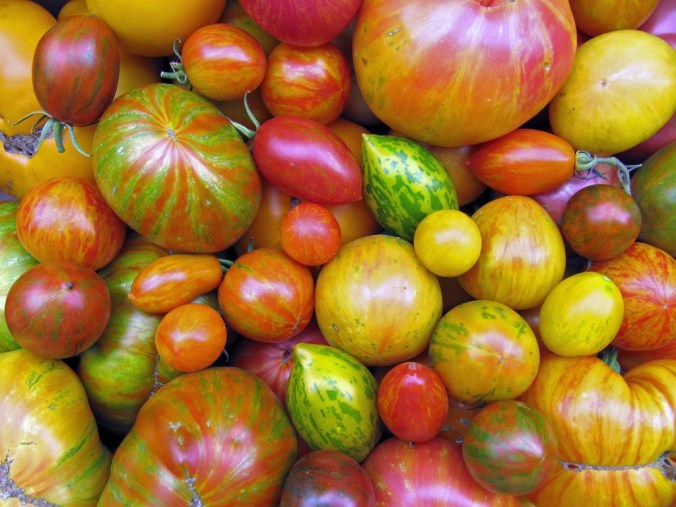
Mr. Gates sells about 60 of his own open-pollinated varieties, many with especially bright colors and unusual shapes, and shares growing tips online. Credit Wild Boar Farms

From our perspective, many agricultural “developments” deserve quotations. The Agricultural Industrial Complex of Monsanto and their ilk more frequently serve to further their own economic gain rather than preserve species or better the health and livelihoods of the farmer or consumer.

Preserving the genetics of fruit and vegetable species down to their paleo-botanical ancestry is an entirely different story, and may be our best chance to overcome the obstacles of harsher and harsher weather conditions.

Reinventing the Tomato for Survival in a Changing World

Like other small farmers and researchers, Brad Gates is trying to ensure a future for the tomato by breeding hardier varieties and persuading more Americans to grow their own.

NAPA, Calif. — In a borrowed van, Brad Gates of Wild Boar Farms sped south on Interstate 680 with hundreds of fuzzy tomato seedlings bumping around in the back, their trembling leaves, warmed by the sun, filling the cab with the smell of summer. It was one of a half-dozen deliveries on his to-do list.

Born and raised in Northern California, Mr. Gates has been organically farming tomatoes in the region for 25 years, working on small leased plots and introducing new varieties with cult followings, like the dark, meaty Black Beauty and the striped, rosy-pink Dragon’s Eye.

For most of that time, he sold his tomatoes to top restaurants, including Chez Panisse in Berkeley. But a few years ago he completely rethought his work. Galvanized by climate change, he joined a growing number of farmers who are trying to find a future for their threatened crops — in his case, the queen of the farmers’ market.

As Mr. Gates bred tomatoes, he noticed that many of his orange and yellow varieties were unusually heat-tolerant. Credit Wild Boar Farms

Mr. Gates now grows thousands of tomato plants each year, selling the young ones to local shops and the seeds all over the country through his website and catalogs, encouraging people to grow their own at home. He believes that the tomato’s survival and continued deliciousness depend on the plant’s diversity, and he considers breeding hardy, cold-tolerant and heat-tolerant varieties an essential part of his work — not just to provide food, but also to expand the number of places where the plant can flourish. Continue reading

Regeneration & Food Futures

tnc_67697146_preview-1260x708.jpg

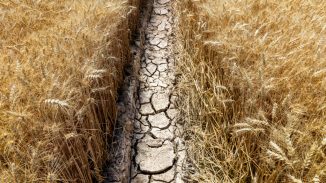
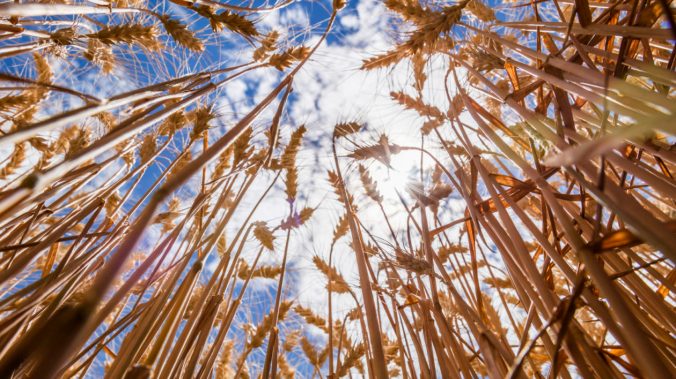
A view of wheat grown on Meaker Farm, Montrose, Colorado. Photo © Ken Geiger/TNC

While on the topic of food, thanks to Dustin Solberg and Cool Green Science for this:

Dirt to Soil: A Farmer’s Tell-all Puts Soil First

tnc_92212427_preview-1260x708.jpg

Circle irrigation tire tracks remain in the challenging soil conditions on a wheat farm in Colorado. Photo © Ken Geiger/TNC

Quite a few years back, while working the wheat harvest in the middle of Oklahoma, I met a leathery skinned farmer. He lived through the dusty, hardscrabble, droughty years of the Great Depression, and experience had taught him plenty. I still recall his silver belt buckle, his straw cowboy hat, and the funny joke he told me about the buffalo on a buffalo nickel, which I can’t repeat here. He wanted me to know, and so told me in no uncertain terms, that there’s one way, and one way only, to plow a field.

We were standing then in the fresh golden stubble of a wheat field. It was hot. We’d just finished combining and after a day of steady motion we were finally still, the diesel engines at rest. I can still recall the animated force in his muscly hands – he made his fingers into the tines of a chisel plow – to make his point as vividly as I recall what he said: “You’ve got to set the plow deep.”

The trouble was, he was wrong.

Continue reading
Getting The Food Puzzle Solved


http___com.ft.imagepublish.upp-prod-us.s3.amazonaws

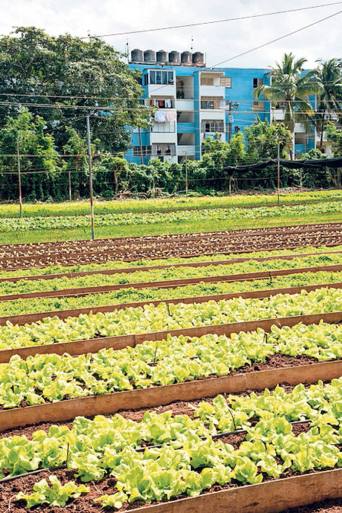
Green: an organic farm in Cuba © Getty

Thanks to FT’s Sarah Murray for this story–Organic farming’s growth only part of answer to food sustainability:

The approach has an impact far beyond its scale but questions remain over yields

While only a tiny proportion of the world’s agricultural land is devoted to organic farming, some argue that it punches above its weight in contributing to more sustainable farming practices. “Its influence goes far beyond the 1 per cent of land that is managed organically,” says Verena Seufert, assistant professor at the Institute for Environmental Studies at VU University Amsterdam. “It is influencing the debate by highlighting food sustainability and how big an impact the food we eat has on many of our environmental problems,” she says. Yet while some believe that organic agriculture could play a bigger role in helping feed the world, environmental advocates see it as one option in a number of more sustainable approaches to farming. Continue reading

Adaptation & South-South Cooperation

Ethiopia_Wheat_23496722552_5868e72816_k_web

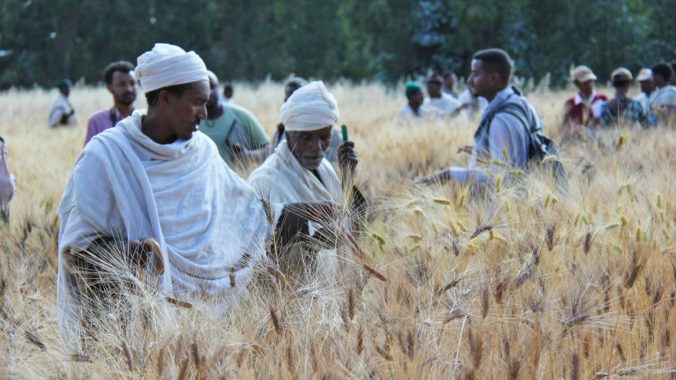
Ethiopian farmers examine the results of a trial of wheat varieties. BIOVERSITY INTERNATIONAL

The bread we eat in the not so distant future may depend on the type of cooperation described below. Thanks to Yale e360 and Virginia Gewin for this story:

How Crowdsourcing Seeds Can Help Farmers Adapt to Climate Change

In Ethiopia and other developing nations, scientists are working with small-scale farmers on trials to see which seed varieties perform best in changing conditions. These initiatives are enabling farmers to make smarter crop choices in the face of rising temperatures, drought, and more extreme weather.

Ethiopia_Wheat_23605266175_c076fa1be7_k_web.jpg

Durum wheat varieties grow in trial plots in Ethiopia’s Amhara region. Thousands of farmers participated in the project, testing how various wheat strands performed under changing climatic conditions. BIOVERSITY INTERNATIONAL

In Ethiopia’s undulating, high-elevation grasslands, farmers — most of them working parcels of only two to three acres — produce more wheat than anywhere else in sub-Saharan Africa. They accomplish this feat in the face of chronically short supplies of high-quality seed. Still, Ethiopia’s record harvest of 4.6 million metric tons in 2017 didn’t satisfy the country’s needs, forcing it to import an additional 1.5 million tons of wheat. Continue reading
Part Of The Solution

06CLI-AGRICULTURE1-jumbo.jpg

Harvesting soybeans in Mato Grosso, Brazil. Credit Yasuyoshi Chiba/Agence France-Presse — Getty Images

Thanks to Brad Plumer, whose reporting on environmental issues has been illuminating, for this fifth feature in our links out to stories that help us understand what we might do to be part of the solution:

Can We Grow More Food on Less Land? We’ll Have To, a New Study Finds

06CLI-AGRICULTURE2-jumbo

A farm in the Pays de la Loire region of France. Cows have an especially large environmental footprint. Credit Loic Venance/Agence France-Presse — Getty Images

WASHINGTON — If the world hopes to make meaningful progress on climate change, it won’t be enough for cars and factories to get cleaner. Our cows and wheat fields will have to become radically more efficient, too.

That’s the basic conclusion of a sweeping new study issued Wednesday by the World Resources Institute, an environmental group. The report warns that the world’s agricultural system will need drastic changes in the next few decades in order to feed billions more people without triggering a climate catastrophe.

The challenge is daunting: Agriculture already occupies roughly 40 percent of the world’s land and is responsible for about a quarter of humanity’s greenhouse gas emissions. But with the global population expected to grow from 7.2 billion people today to nearly 10 billion by 2050, and with many millions of people eating more meat as incomes rise, that environmental impact is on pace to expand dramatically. Continue reading
Spare, Share, Protect

CoffeePlantation_Indonesia_CIFOR_web.jpg

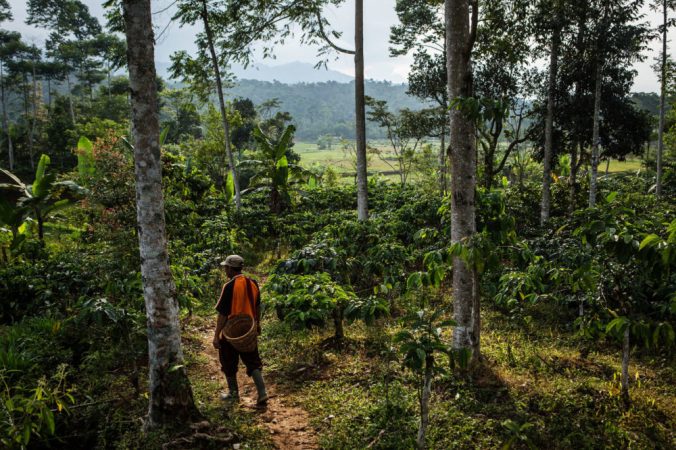
A farmer walks through his coffee plantation, which is integrated into the forest, in Lampung province, Indonesia. ULET IFANSASTI/CIFOR

Our work has required occasional philosophical reflection to get our bearings on the choices we have made on how to approach conservation. Share approaches such as the duck farming mentioned here, or the coffee farming mentioned here are equally as common as the spare approaches in our practice. I had not encountered these two terms until now, so thanks to Fred Pearce for this expansion of my vocabulary:

Sparing vs Sharing: The Great Debate Over How to Protect Nature

What is the best way to save nature – to cordon off areas for parks and open space or to integrate conservation measures on working lands? Recent research makes a case for each of these approaches and has reignited a long-standing debate among scientists and conservationists.

Vietnam_agriculture_CIFOR_web.jpg

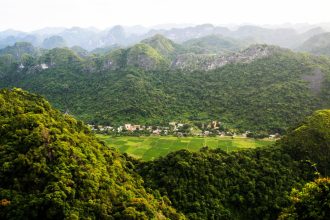
A farming village surrounded by undeveloped forests in the province of Quang Ninh, Vietnam. TERRY SUNDERLAND/CIFOR

It is one of the biggest questions in conservation: Should we be sharing our landscapes with nature by reviving small woodlands and adopting small-scale eco-friendly farming? Or should we instead be sparing large tracts of land for nature’s exclusive use – by creating more national parks and industrializing agriculture on existing farmland?

Wildebeest_Migration_in_Serengeti_National_Park_Tanzania_web.jpg

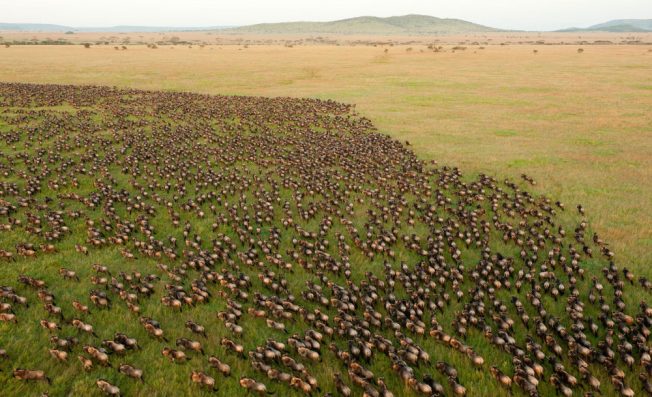
More than 1.5 million wildebeest migrate annually across Tanzania’s Serengeti National Park, which covers 5,700 square miles. DANIEL ROSENGREN / WIKIMEDIA

The argument between “sparing” and “sharing” as a conservation tool has been raging since researchers first coined the terms more than a decade ago. Arguably it began almost half a century before when Norman Borlaug, the father of the Green Revolution of high-yielding crop varieties, declared that “by producing more food per unit of cultivated area, more land would be available for other uses, including recreation and wildlife.”

LRivera_SparingSharing-print_web.jpg

LUISA RIVERA FOR YALE E360

E.O. Wilson’s 2016 book Half-Earth upped the ante by calling for us to extend protected areas from the current 15 percent of the earth’s land surface to 50 percent. Research studies and critiques have flourished on both sides. Continue reading

Eliot Coleman’s New Organic Grower At 30

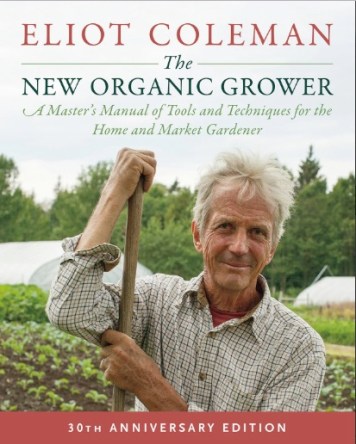
UrbFarm.jpgI have been linking to stories about urban farming more frequently, and it has been an interest since Milo first posted this during our second year living in India. A resource I have for staying attuned is the Urban Farm podcast. The most recent episode is about one of the pioneers of organic farming, and depending on your interests may be worth a listen. The images in the video above will help you decide whether listening to the podcast is a good investment of time. Click the image of the book, which he talks about in this episode, to go to the publisher’s description and click the banner immediately below to go to the farm’s website:

OrgGrowF.jpg

OrgGrow

Eliot has over fifty years’ experience in all aspects of organic farming, including field vegetables, greenhouse vegetables, rotational grazing of cattle and sheep, and range poultry. He is the author of The New Organic GrowerFour-Season Harvest,The Winter Harvest Handbook and an instructional workshop DVD called Year-Round Vegetable Production with Eliot Coleman – all published through our friends at Chelsea Green.

Eliot and his wife, Barbara Damrosch, operate a commercial year-round market garden and run horticultural research projects at their farm called Four Season Farm in Harborside, Maine.

In This Podcast:

In 1988, Eliot Coleman literally wrote the book on being an organic grower and has been an invaluable resource for organic gardeners and farmers for three decades. He only started growing food because it sounded like an adventure; and he learned how through books and making friends with farmers around the world. We learn who inspired and taught him, how he uses livestock on his farm, how he virtually moved his farm 500 miles to the south for the winter, and more. Continue reading
Urban Farming Meets Upmarket Retail

merlin_144673629_88cac911-5145-4958-a6d9-886fabf52da5-jumbo.jpg

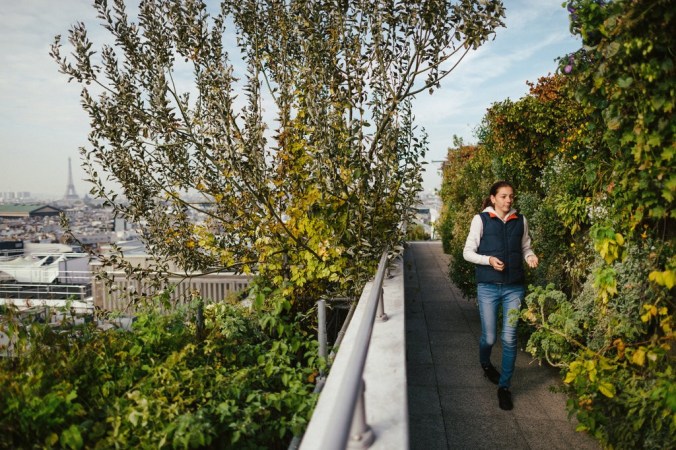
Delia Danciu, 24, a gardener, works at the Galeries Lafayette department store rooftop in Paris. Credit Dmitry Kostyukov for The New York Times

In our quest to brighten up each day with a story, a picture, or personal observation that helps us better understand the world around us, Doreen Carvajal is our source for this story in the New York Times from the former hometown of several of our long-time contributors:

Rooftop Gardens Are Turning the Urban Shopping Scene Green

merlin_144673632_dfabac81-c188-4367-b046-3873ebcf1817-jumbo

Galeries Lafayette rooftop garden is part of a plan to transform city farming into a deluxe shopping attraction. Credit Dmitry Kostyukov for The New York Times

PARIS — It’s a swift ride by elevator from Galeries Lafayette’s perfume section to the grand department store’s 10th-floor luxury farm with its signature scent of sage, rosemary and compost.

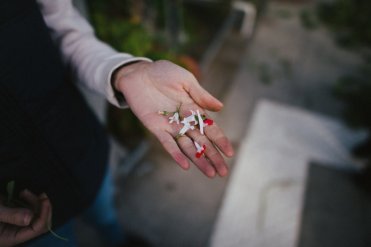
The rooftop garden, lush with climbing plants, tomatoes, marigolds and strawberries, is part of a plan to transform city farming into a deluxe shopping attraction for customers yearning for an exclusive green refuge — and perhaps a taste of beer brewed from the store’s homegrown hops. Continue reading

Who Will Farm In The Future?

101618_mb_FarmSuccession_EmmaTransplanting_0

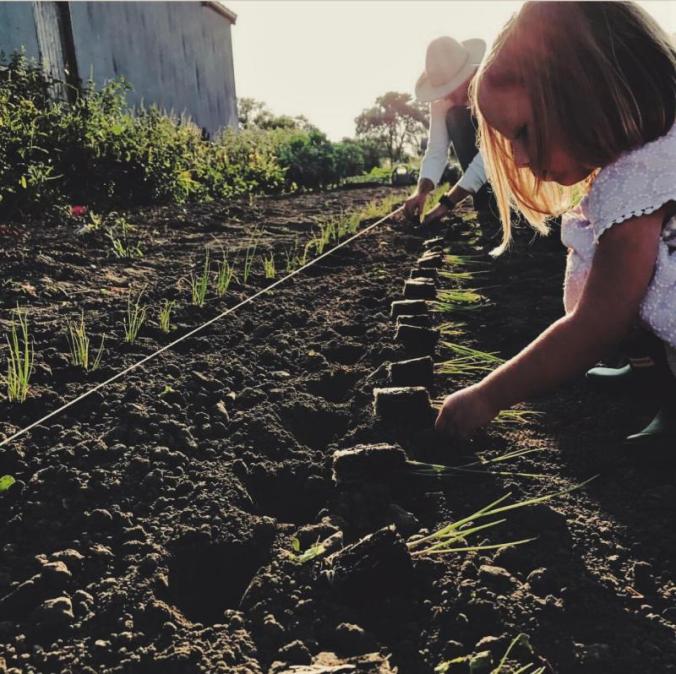
Four-year-old Emma is already helping out at Field and Farm Co., doing things like transplanting onions. SNARE FAMILY / FIELD AND FARM CO.

Thanks to Madelyn Beck:

Handing Off: The Reality Of Land Transfer Between Older, Younger Farmers

101618_mb_FarmSuccession_CurryFamilyFarm

This farm near Springfield, Illinois, has been in the Curry family since 1886, though Kim Curry only moved there in 2008 when her father was dying of cancer. She, her sister and her niece grow and sell pigs, piglets, chickens and cows.
CREDIT MADELYN BECK / HARVEST PUBLIC MEDIA

As life expectancy increases, farmers are staying in the business, but there’s still a need to plan for what happens when they die. At the same time, young farmers who come from non-farming backgrounds are looking for the space to grow their own careers.

A land transfer may seem simple, but challenges abound: How do retiring farmers connect with beginning farmers? When does a farmer confront death? How can smaller farm organizations fit into the ever-growing 1,000-acre farm scene?

101618_mb_FarmSuccession_Curry

Formerly a biochemist in Michigan, Curry now works in disability claims for the state of Illinois on top of helping run the family farm. She said dinnertime often comes late, about 8 or 8:30 p.m.
CREDIT MADELYN BECK / HARVEST PUBLIC MEDIA

Past the likeness of Western movie icon John Wayne etched in stone, a ways down North John Wayne Road and at the end of a long dirt driveway is Kim Curry’s place. A few of the farm’s seven dogs meander up to the gate to bark at anyone who pulls up, while chickens and occasional escapee piglet scrounge for food around the yard.

The Curry Family Farm is near Springfield, Illinois, but unlike most of that area, it has green, rolling hills, a few creeks and a few ponds. It’s been in the family since 1886.

“It’s just so restful and relaxing out here. We’ll have to show you the pigs,” Curry said. “They’re all eating.”

The 59-year-old lives there with her sister and niece, but the three of them can’t keep up with it all, especially because she has a full-time state job working with disability claims.

So, she is selling about 80 acres, which she said “really has potential with someone with younger, more energy.”

And that’s where it gets tricky for people trying to offload land in Illinois, which doesn’t have an online system like several other states — Iowa, Nebraska and Montana, for example — that specifically links older farmers with newer ones looking for land.

Continue reading

Riverford, A Model Of Organic Farming In The UK

We first heard the name of the farmer on a favored music-oriented podcast, and then the name of his farm. After listening to his story, and his musical tastes, we had to learn more:

guy-singh-watson-4.jpgSelf-confessed veg nerd, Guy Singh-Watson has over the last 30 years taken Riverford from one man and a wheelbarrow delivering homegrown organic veg to friends, to a national veg box scheme delivering to around 50,000 customers a week.

Guy is an inspirational, passionate, opinionated and admired figure in the world of organic farming, who still spends more time in the fields than in the boardroom. Continue reading

Sustainability & Land-Use Choices

e5ff336b-bd2f-4ce2-a2ba-2b4dfcc82edc-3944c6eeace218b5f8c8a63c4fa8191550f3f63c-s1400-c85.jpg

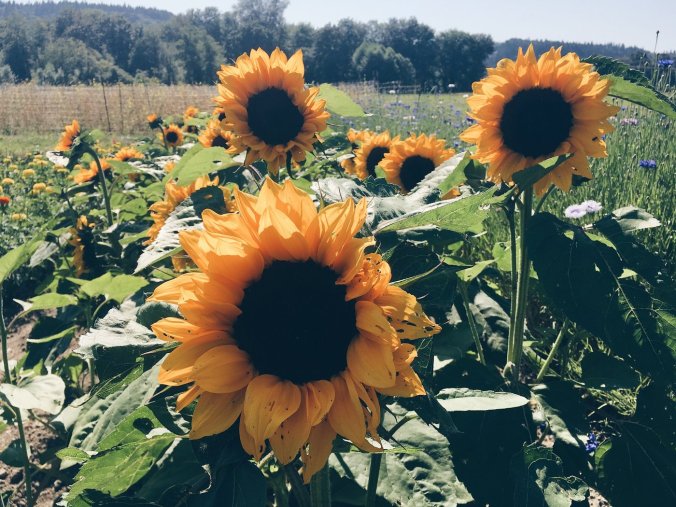
Along the back of this field of sugar snap peas, sunflowers and bachelor buttons at Oxbow Farm & Conservation Center is a buffer of maturing big-leaf maples and red-osier dogwoods. It’s a combination of forest and thicket that the farm has left standing to help protect water quality in the river and aquifer. Oxbow Farm & Conservation Center

Another day, another sunflower because, why not? But this story is about much more than the overwhelming attractiveness of sunflowers:

Which Vision Of Farming Is Better For The Planet?

OxbowFarmers face a growing dilemma. Specifically, a food-growing dilemma.

How do you feed an increasing number of people without harming the environment?

As it turns out, growing as much food as possible in a small area may be our best bet for sustainably feeding the world’s population, according to new research.

It all comes down to how we manage greenhouse gases and climate change. Continue reading

Stopping To See Sunflowers

merlin_141972309_652df777-9da1-4260-b78c-4c5e693a97cd-jumbo.jpg

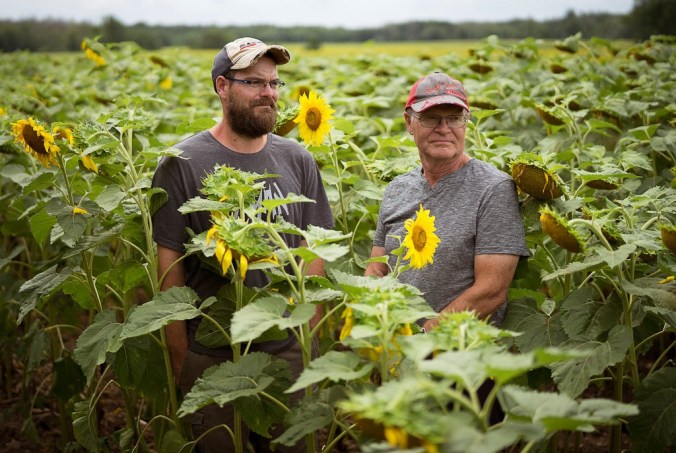
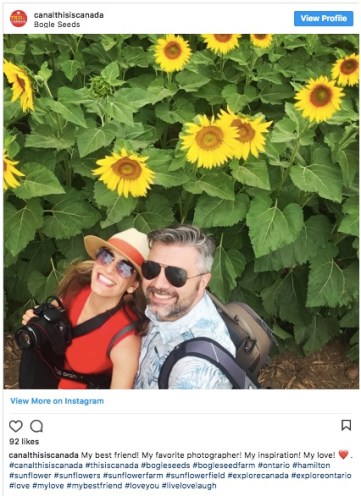
Brad Bogle, left, and his father, Barry Bogle, standing in their sunflower field in Hamilton, Ont. They were forced to close their farm to visitors last weekend after selfie-taking tourists crowded roads.Credit J.P. Moczulski

Thanks to Laura M. Holson for this, specifically for making our Saturday a bit brighter:

A Sunflower Farm Invited Tourists. It Ended Up Like a ‘Zombie Apocalypse.’

Sunflower.jpgThis is a story about a good idea gone awry.

Two weeks ago, a Canadian seed farm in Hamilton, Ontario, opened its gates to visitors, allowing them to wander through 70 bucolic acres of towering, buoyant sunflowers. Provence may have its pastoral lavender fields. But Hamilton, which is an hour outside of Toronto, has its picturesque bloom too.

“For years, we’ve had people stopping alongside the road to take pictures,” said Brad Bogle, who, along with his parents, harvests sunflower seeds for bird food on their farm, Bogle Seeds. In the summer of 2015, the Bogles invited tourists to roam through the fields. They had such a swell time — and it was such a success — the family decided to welcome guests for a visit last month.

What could go wrong? Continue reading

Dairy, Feed & Food

BrealeyFarm.jpg

Yesterday, in our continued quest to consider the future of a family dairy farm, we visited what must be the largest such farm in central Costa Rica. At 7,545 feet above sea level overlooking the valley from the northern slope, it may also be the highest.

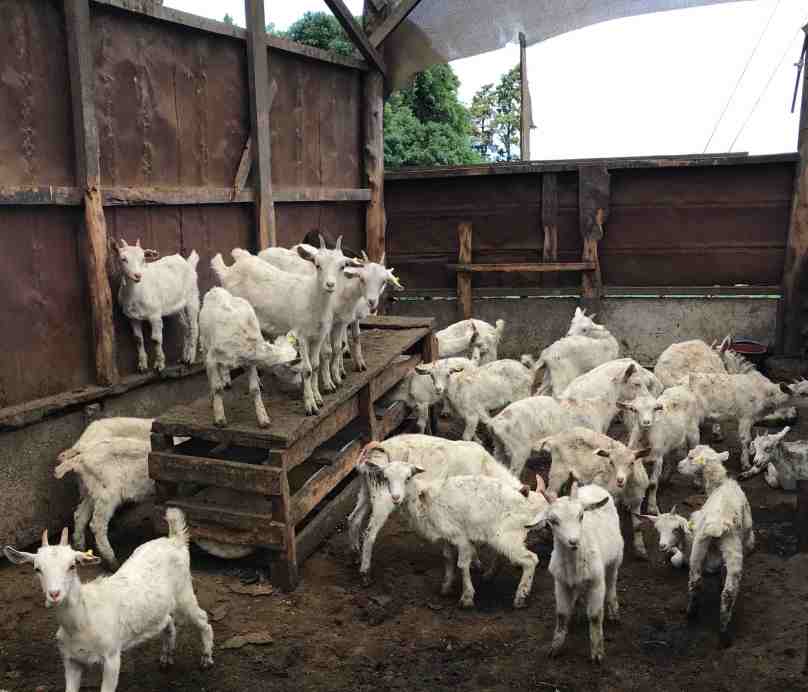
BrealeyGoats.jpgIt has eight times the land and double the cows compared to where we are based, 10 miles north and about 1,000 feet lower in altitude. That farm also has dairy goats. More on other implications of the visit later. Here, a quick note on feed. We had noticed on the dairy where we live that pineapple is part of the diet of the cows.
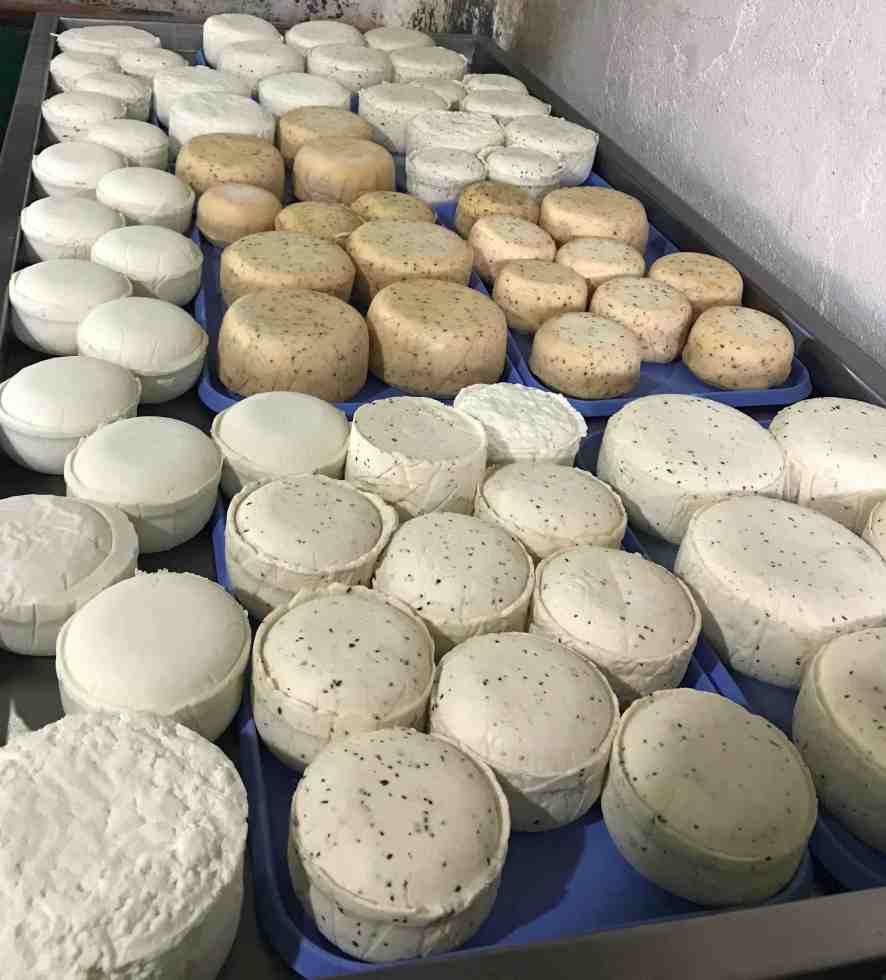
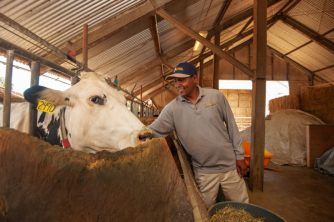
BrealeyCheese.jpgThe dairy manager had explained that this is an important part of the nutritional mix. Despite our surprise we had not asked more about it. Yesterday we did, and the answer was another surprise. Milk production rises 10% or more with the pineapple added to the feed. The animals are healthier because of the fiber content of the fruit, compared to cows eating grains such as corn or soy. Plus, the methane bi-product is significantly decreased. Food produced in a dairy making this dietary change represents one small step toward reducing greenhouse gas emissions.
In the type of coincidence I never expect, but always enjoy, this article was near the top of my news feed today. Thanks to Judith Lewis Mernit and colleagues at the Yale School of Forestry & Environmental Studies for take my yesterday’s lesson and adding some important detail:

How Eating Seaweed Can Help Cows to Belch Less Methane

Emissions from the nearly 1.5 billion cattle on earth are a major source of methane, a powerful greenhouse gas. Now, researchers in California and elsewhere are experimenting with seaweed as a dietary additive for cows that can dramatically cut their methane production.

HolsteinCowsMercedCalifornia_MarmadukeStJohnAlamy_web

Holstein cows feeding at a dairy farm in Merced, California. MARMADUKE ST. JOHN / ALAMY

The spring morning temperature in landlocked northern California warns of an incipient scorcher, but the small herd of piebald dairy cows that live here are too curious to care. Upon the approach of an unfamiliar human, they canter out of their barn into the already punishing sun, nosing each other aside to angle their heads over the fence. Some are black-and-white, others brown; all sport a pair of numbered yellow ear tags. Some are more assertive than others. One manages to stretch her long neck out far enough to lick the entire length of my forearm.

UCDavis_20180508-seaweed-cow-8157_web

Scientist Ermias Kebreab has studied how to reduce cow methane emissions for more than a decade. GREGORY URQUIAGA/UC DAVIS

“That’s Ginger,” explains their keeper, 27-year-old Breanna Roque. A graduate student in animal science at the University of California, Davis, Roque monitors everything from the animals’ food rations to the somatic cells in their milk — indicators of inflammation or stress. “The interns named her. She’s our superstar.” Continue reading

Agroecology, A Guiding Principle For Food Entrepreneurship

Ryan Donnell for The New York Times

Our attention has been on food entrepreneurship recently, and here we continue the thread. With agroecology, a new word and robust concept, we have new food for thought. And for that we thank one of our favorite food writers, who we have relied since the first year of this platform. Many of the food stories we have linked to over the years have been authored by him. A year ago we linked to this story, which marked the first time we noted him as an activist. We expect, after reading Bringing Farming Back to Nature, which he co-authored with Daniel Moss, that he has found his new calling:

Workers in a paddy field in the state of Andhra Pradesh, India. Credit Noah Seelam/Agence France-Presse — Getty Images

Farming the land as if nature doesn’t matter has been the model for much of the Western world’s food production system for at least the past 75 years. The results haven’t been pretty: depleted soil, chemically fouled waters, true family farms all but eliminated, a worsening of public health and more. But an approach that combines innovation and tradition has emerged, one that could transform the way we grow food. It’s called agroecology, and it places ecological science at the center of agriculture. It’s a scrappy movement that’s taking off globally. Continue reading

Rewilding The Farm, An English Experiment In Entrepreneurial Conservation

7360.jpg

Starting in May, Amie and I have been living on a dairy farm in the mountains on the northern side of Costa Rica’s Central Valley. We will be here until at least the end of July, brainstorming about the dairy’s future. There is already much to say about that, but we will share that soon enough. For today, just a shout out to fellow brainstormers across the Atlantic. When we first learned of Paul Lister’s initiative, it sounded like a far-fetched experiment. Now we see another experiment further south on the same island:

The magical wilderness farm: raising cows among the weeds at Knepp

You can’t make money from letting cows run wild, right? When Patrick Barkham got access to the sums at a pioneering Sussex farm, he was in for a surprise.

7360 (1)

Wild ponies at dusk. Photograph: Anthony Cullen for the Guardian

Orange tip butterflies jink over grassland and a buzzard mews high on a thermal. Blackthorns burst with bridal white blossom and sallow leaves of peppermint green unfurl. The exhilaration in this corner of West Sussex is not, however, simply the thrilling explosion of spring. The land is bursting with an unusual abundance of life; rampant weeds and wild flowers, insects, birdsong, ancient trees and enormous hedgerows, billowing into fields of hawthorn. And some of the conventional words from three millennia of farming – ‘hedgerow’, ‘field’ and ‘weed’ – no longer seem to apply in a landscape which is utterly alien to anyone raised in an intensively farmed environment. Continue reading

Karen Washington, Food Activist

2560

‘When we say ‘food apartheid,’ the real conversation can begin.’
Illustration: Daniel Chang Christensen

Thanks to Anna Brones for bringing this article, and its subject, to our attention in the Guardian, as a reprint of an essay originally published in Guernica:

Food apartheid: the root of the problem with America’s groceries

Food justice activist Karen Washington wants us to move away from the term ‘food desert’, which doesn’t take into account the systemic racism permeating America’s food system

America’s sustainable food movement has been steadily growing, challenging consumers to truly consider where our food comes from, and inspiring people to farm, eat local, and rethink our approaches to food policy. But at the same time, the movement is predominantly white, and often neglects the needs and root problems of diverse communities. Continue reading

Indonesian Seaweed Farming

Seaweed-harvesting-Takalar-4-e1518046448442-1260x708

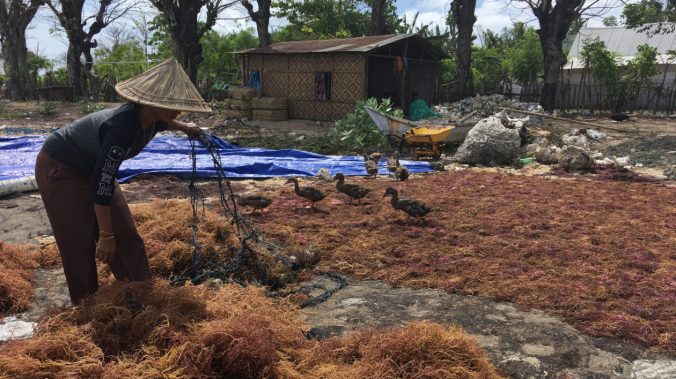
Seaweed harvesting in Takalar, Indonesia. Photo © Tiffany Waters / The Nature Conservancy

The subject of seaweed farming, which we sometimes refer to as kelp farming, is of keen interest to us because of the relationship to conservation; our thanks to Tiffany Waters at Cool Green Science:

Seaweed Farming: A Gateway to Conservation and Empowerment

Seaweed-seedlings-Takalar-2-1260x708

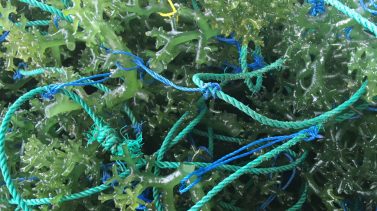
Seaweed seedlings. Photo © Tiffany Waters / The Nature Conservancy

“What does your husband do while you’re working on the seaweed lines?”, we ask. She laughs and says in Bahasa, “He does the cooking and the cleaning.”

It’s day 6 of our field visit to Indonesia and we’re in Takalar visiting our fifth island and third seaweed farm of the trip. On the brink of the ‘extreme season,’ stifling hot is an understatement, but the light breeze from the Flores Sea provides a welcome break from the three flights and 2-hour van trip that brought us here. Continue reading

Big Time Culinary Hydroponics

10farm1-jumbo (1)

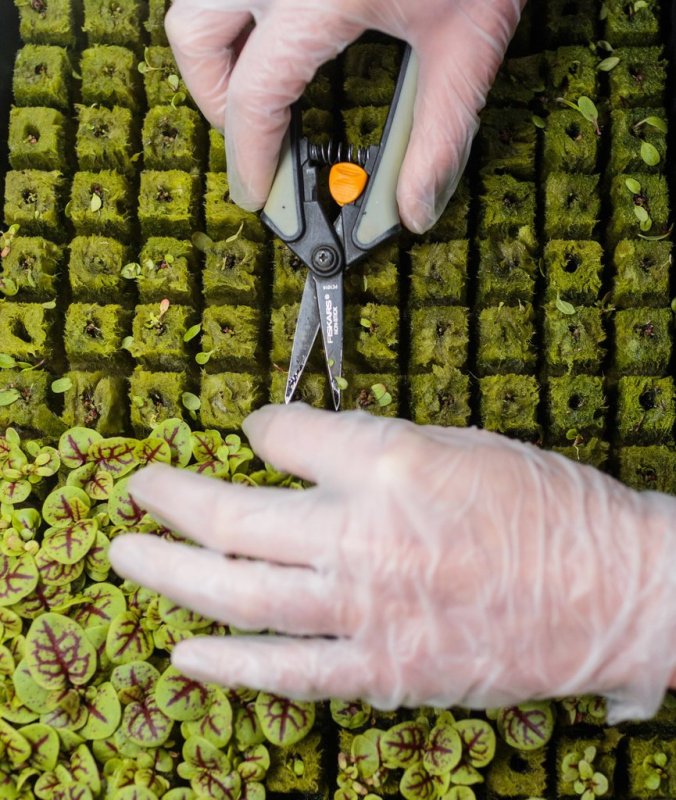
At Farm.One, a hydroponic garden in TriBeCa, red-veined sorrel is prepared for a delivery. Credit Sarah Blesener for The New York Times

We have posted on urban farming and related topics numerous times since 2011, and hydroponics as its own topic of interest plenty of times as well. Culinary and/or gastronomic topics as related to agriculture are a magnitude of order more represented in these pages. Finally, they are combined for us in one amazing article, thanks to Alyson Krueger. If you only have time to look at the photos, those alone are worth the click:

Herbs From the Underground

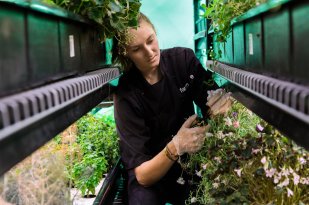
Farm.One just opened an indoor rare herb and flower garden in a TriBeCa basement, and many prominent chefs are flocking to it.

10farm2-superJumbo

Katherine Chester, a farm hand at Farm.One, harvests for a morning delivery. Credit Sarah Blesener for The New York Times

In the basement of a loft-style building in TriBeCa that houses a vet, a dog swimming pool, an eye-and-ear infirmary, and a two-Michelin-starred restaurant, there is a working farm.

Farm.One is a hydroponic facility, which means that the plants do not grow in soil. Many of these farms are located indoors, in controlled environments, with artificial lighting.

merlin_130952510_55f499d3-d3da-473e-9c9b-329337b217c5-master675

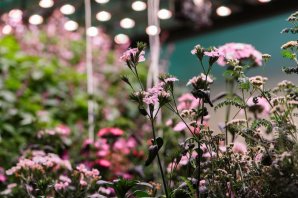
Amazon neon cherry dianthus and neon rose magic dianthus. Credit Sarah Blesener for The New York Times

The new two-room space, which opened in November in a former cycling studio for high-altitude training and an old storage area, is only 1200 square feet. There is no fresh air or natural light; there is not even a window. Yet the venue can grow around 580 varieties of rare herbs and flowers (200 at a time) that supply New York’s top restaurants. Le TurtleLe CoucouMission Chinese Food, and The Pool get regular deliveries from Farm.One, sometimes several times a week. Continue reading

Real Food, Silicon Valley-Style

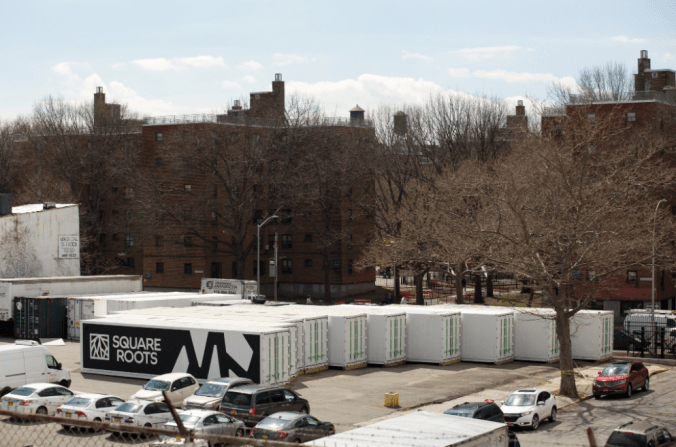
Square Roots, on the site of the former Pfizer building in South Williamsburg, Brooklyn, where produce is grown in 10 shipping containers using only enhanced water and LEDs. Credit Benjamin Norman for The New York Times

Ruffled feathers of slow food pioneers aside, Kimbal Musk’s projects focus on the link between food and community and his passion to make real food accessible to more people.

Kimbal Musk, 45, got rich working in tech alongside his older brother, Elon. Now he wants to do for food what his brother has done for electric cars and space travel.

Although Mr. Musk has food ventures humming along in Colorado, where he lives, as well as in big cities like Chicago and Los Angeles, he has become enamored of places like Tennessee, Indiana and Ohio — parts of the country he believes are the ripest for a revolution in eating and agriculture…

Mr. Musk is promoting a philosophy he calls “real food,” which nourishes the body, the farmer and the planet. It doesn’t sound much different than what writers like Michael Pollan and everyone who has ever helped start a farmers’ market or community garden have preached for years.

But Mr. Musk has big ideas about what the Silicon Valley crowd likes to call the food space, which is as exciting to him as the internet was in 1995. “We’ve never seen this kind of innovation around food,” he said.

In short, he wants to create a network of business, educational and agricultural ventures big enough to swing the nation’s food system back to one based on healthy, local food grown on chemical-free farms.

“Food is this beautiful gift we give each other three times a day,” he’ll often tell a crowd, “but you couldn’t design a worse food system than what we have.”

Continue reading

Salt Pond Farming

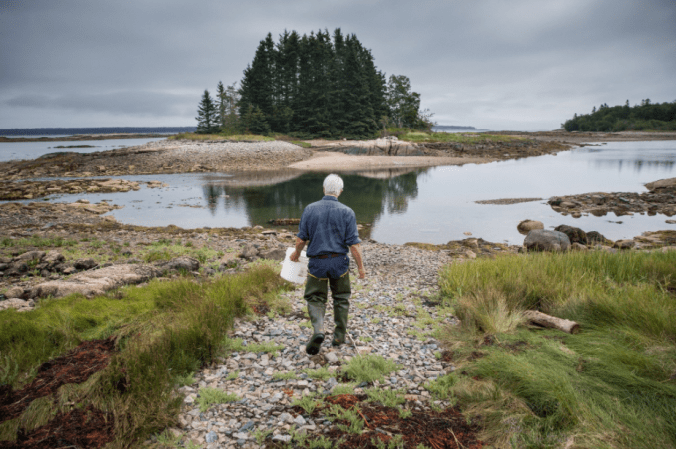
Families in small town, coastal Maine have been fisherfolk for generations, but waters warm and fish patterns change, many are looking at alternative livelihoods. Joe Young, pictured above, is diversifying into oyster and kelp farming in addition to his dockside cafe that where he sells lobster rolls, lobster dinners and, now, his homegrown oysters.

A FISHERMAN TRIES FARMING

COREA, Me. — The boats start up around 3:30 in the morning, stirring the village with the babble of engines before they motor out to sea. They will return hours later, loaded with lobster.

Joe Young’s boat has not gone out lately. Instead, he puts on waders and sloshes into the salt pond behind his house, an inlet where water rushes in and out with the tides. After a lifetime with most of his income tied to what he finds in the sea, this lobsterman — and sixth-generation fisherman — is trying his hand at something new. He is farming oysters. Continue reading