Kitchen Collaboration

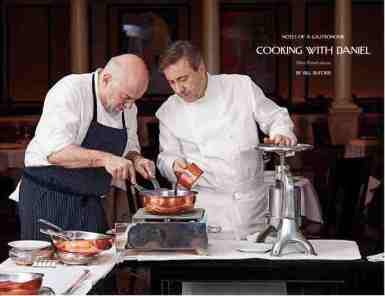
Kitchen Confidential juggled with foodies’ fascinations in new and unusual ways, and since then reality television seems to be the appropriate new home for that side show.  Oddly, it began in 1999 with an article in the New Yorker. So it is only fitting that the magazine has been balancing those dynamics with the work of less celebrity-oriented writers ever since.  None better than Bill Buford, who gets out there, and in there, like a citizen scientist for the story (though he is not shy of carny, either). Here what catches my attention is the collaboration, but plenty on the ethos of an artisan, the farm as the garden of eden, and last but not least the role of food in heritage and heritage in food (click the image above to go to the article):

Two years ago, during the summer of 2011, Daniel Boulud, the New York-based French chef, told me he had been thinking about a project that we might do together. We were both in France at the time. I was living in Lyons—I had moved there in order to learn French cooking—and Boulud was visiting his family in Saint-Pierre-de-Chandieu, a nearby village on a wooded ridge in the open countryside. Continue reading

Crossing the Border: From Kerala to Tamil Nadu

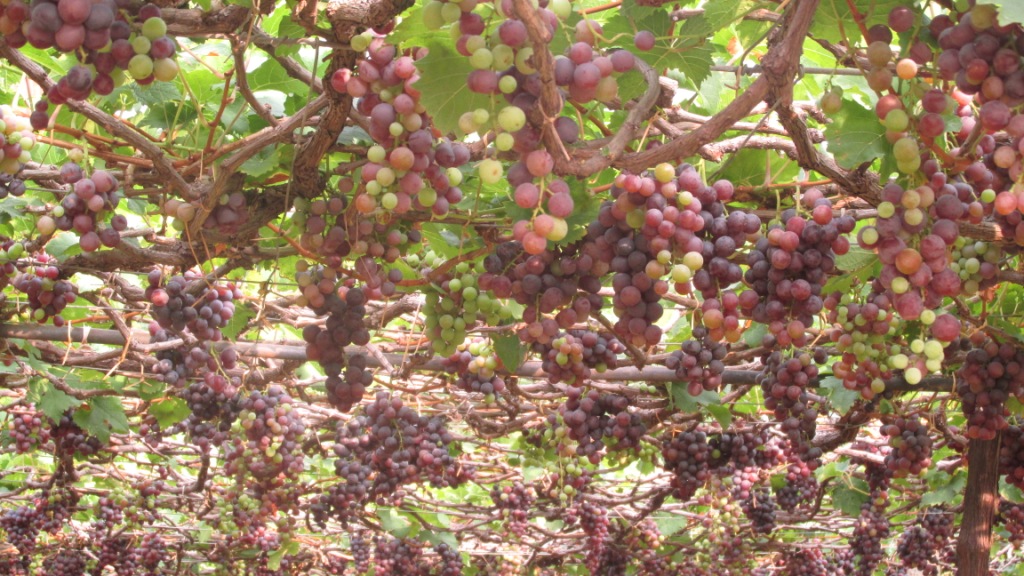
Grapes ready for harvest

The first thing that I noticed about Tamil Nadu was the juxtaposition to the Kerala landscape to which I am now accustomed. Unlike the mountainous western Kerala, where during monsoon rain is plentiful and direct sunlight a rarity, just across the border in Tamil Nadu the land is flat, and during monsoon the air is dry and the sun shining. It is a shockingly fast transition that you can see as soon as you are at the base of the mountains. I knew this part of Tamil Nadu was flat, but I thought it would all be made up of lush green farm land, but instead what I encountered resembled central Texas, dry and rocky. In fact, it made me feel quite at home.

After seeing the landscape it was not surprising to hear from a local organic farmer, that most of the water in Tamil Nadu comes from the Periyar River in Kerala via the Mullaperiyar Dam. The farm boasted many types of fruits, including grapes and pomegranates.  It was well worth the trip to see a farm in action and to see how and where some of the local fruits are grown.  Continue reading

Seasteading, Self-Reliance Utopia, And Our Shared Future

An article recently published in n+1 examines a utopian futurist form of an idea that seems oddly symmetric with Seth’s posts about the history of exploration using Iceland as a case study. Looking back, we see much in common with explorers, pioneerspilgrims and adventurous thinkers of all sorts.  Looking forward, we are inclined to embrace smart, creative, enthusiastic group efforts to resolve seemingly intractable challenges. Especially when they involve living on boats. We recommend reading the following all the way through:

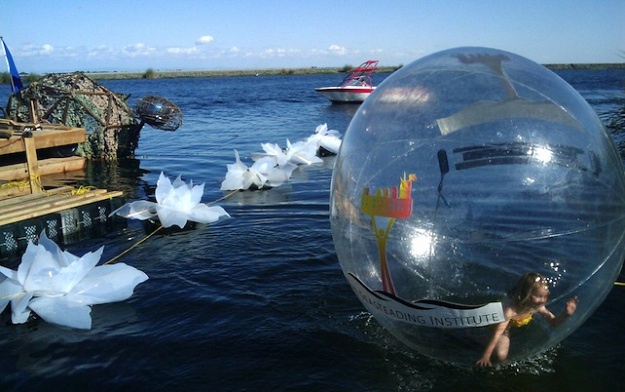
To get to Ephemerisle, the floating festival of radical self-reliance, I left San Francisco in a rental car and drove east through Oakland, along the California Delta Highway, and onto Route 4. I passed windmill farms, trailer parks, and fields of produce dotted with multicolored Porta Potties. I took an accidental detour around Stockton, a municipality that would soon declare bankruptcy, citing generous public pensions as a main reason for its economic collapse. After rumbling along the gravely path, I reached the edge of the Sacramento–San Joaquin River Delta. The delta is one of the most dredged, dammed, and government subsidized bodies of water in the region. It’s estimated that it provides two-thirds of Californians with their water supply.  Continue reading

Vineyards – Cumbum, Tamil Nadu

Cumbum Valley is situated about 15 km from Thekkady across the border into Tamil Nadu. Now famous for growing grapes, there are a 1000 acres of vineyards covering the lowland plains. The grapes are mainly used for making wine, juice and jam as well as eaten raw. Continue reading

First Week Of Shade Coffee Research, Ecuador

Typical landscape mosaic of Barrio Nuevo

Typical landscape mosaic of Barrio Nuevo

Isabel and I arrived safe and sound to Barrio Nuevo, Pichincha, Ecuador (0.224063°, -78.559691°) on May 21 to begin our study on a shade coffee agroforestry initiated seven years ago (see my blog for background info). We moved into the home of Juan Guevara, the local coffee promoter, and his family. It’s a simple concrete house with a kitchen and three bedrooms.After settling in, we spent a day with Juan going to the homes of various farmers growing coffee to introduce ourselves.

We spent the next three days conducting surveys with the coffee producers as well as visiting, evaluating, and mapping their coffee plots. As I expected, we quickly learned a lot about the problems with the shade coffee project that was implemented about seven years ago. Continue reading

WED 2013 : Taste the waste… of water

WED 2013 - Raxa Collective

On June 5, we’ll celebrate World Environment Day. This year UNEP focuses on the theme Food waste/Food Loss. At Raxa Collective we’ll be carrying out actions and sharing experience and ideas. Come and join us with your ideas and tips to preserve foods, preserve resources and preserve our planet.

image_gallery_close_up

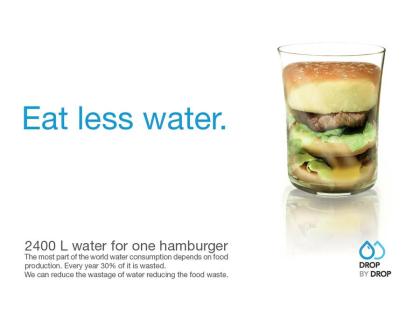
 Most part of the world water consumption depends on food production. Every year 30% of it is wasted. We can reduce the wastage of water reducing the food waste. The Stockholm International Water Institute (SIWI) has released a short documentary titled ‘Taste the Waste of Water’ Continue reading

Who am I and what am I doing in Ecuador?

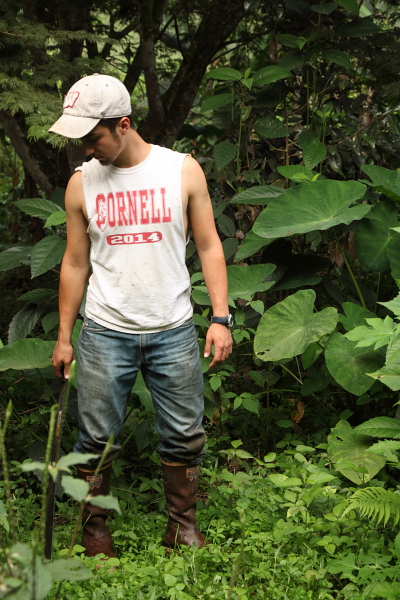
I ask myself that every so often. My name is Evan Barrientos, I was raised in suburban Wisconsin and I go to school at Cornell University in upstate New York. So why am I on a farm in Ecuador right now? The short answer is that I’m about to begin a study on sustainable agriculture and I thought the readers of Raxa Collective might like to hear about it.

Farmer Evan

Farmer Evan

I’m interested in large-scale conservation solutions that make big impacts. There’s nothing wrong with small changes, I’ve just always been a big-picture kind of person. Continue reading

Integrated Pest Management (IPM)

Photo by Milo Inman, India

During my last post I mentioned this agricultural strategy in passing, and I’m actually fairly surprised that the topic hasn’t come up anywhere on the blog before. After all, IPM is an increasingly effective and interdisciplinary way to curb economic losses in crops around the world, and one that often attempts to reduce reliance on environmentally unfriendly chemicals like pesticides.

Completely eliminating an agricultural pest is not the ultimate goal of IPM. In fact, due to ecological intricacies and the risks of removing certain species from an ecosystem, merely lowering the number of pests to numbers that do not cause significant economic damage is more advisable. Achieving this reduction in pest populations “requires an understanding of the ecology of the cropping system, including that of the pests, their natural enemies, and the surrounding environment,” according to Professor Anthony Shelton of the Entomology Department at Cornell University. For example, knowing that a certain pest caterpillar species has certain predator species, a farmer might introduce some of the natural predators into his crop to prey on the harmful caterpillars. If the farmer also physically removes the caterpillars by hand and the pest population dwindles to zero, the natural predators might turn to a beneficial insect, like a pollinator, or even attack the crop itself. This is a very vague and hypothetical example but one that reflects the need to understand causes and effects in an ecosystem if one is planning to employ IPM effectively.

Continue reading

Bog

Photo credit: BU Dining Services

Earlier this week I wrote about an entirely different sort of swamp. This brief post is about a topic much more in tune with the holiday season: cranberries. Grown in bogs with layers of peat, sand, gravel, and clay, cranberries are native to North American wetlands (our readers across the pond will probably know the European variety of the fruit as lingonberries). In the United States they are primarily grown in Massachusetts, New Jersey, Oregon, Washington, and Wisconsin (ordered alphabetically, not by output). Something not many people may know is that these cranberry bogs are cyclically flooded with vast amounts of water every season; some might worry over the constant waste of this precious liquid in areas of major cranberry production, or the contamination of water tables with pesticides and fertilizers common to agricultural use.

But I am about to tell you about some of the advantages cranberry-growers have over other industrial agriculturalists in terms of their water utilization. Why will I share this with you? Well, cranberry sauce features prevalently in the traditions of recent holidays, namely Thanksgiving and Christmas (and was thus probably consumed in an overwhelming majority of American households at least once in the past 60 days), plus my grandparents swear by cranberry juice, but I also recently found out that cranberries–and the water they are flooded with for harvesting–make for excellent art, or sport. What I never would have guessed is that Red Bull would be the one to show me this; just watch the video below:

Continue reading

Quagmire

In his environmental history of the Mejong River Delta in Vietnam, David Biggs analyzes the influential trend of forced—and often failed—attempts to control the water and earth of the landscape, with various effects on local populations. Looking back even farther than the mid-19th-century colonization of the area by the French, Biggs considers the traditional identities of human “improvements” of the delta such as dikes, canals, and dams essential to habitation and agriculture. The imposed land and water use projects enforced by the French colonists, with their newer, large-scale technologies, expanded what Biggs calls the colonial grid, which colonial officials endeavored to push beyond inhabited areas in ways often contrary to Vietnamese custom or ecological wellbeing.

Canal-digging, road-building, railroad-setting, river-dredging, forest-clearing, and swamp-draining, all part of the colonizing and pioneering process, were frequently carried out without fully considering the ecological and political effects such “nation-building” would have on the Vietnamese people and landscapes, or their relationships to each other. Although the environmental consequences for these earlier projects are not quite as severe as his case studies, Paul Josephson might label these activities as milder brute force technologies—if not these earlier efforts then perhaps those pushed forth by American agencies later in the 1960s and 1990s. The planting of methods tried and tested in quite different locations from the Mekong River Delta, and the frequent disregard or ignorance of the diverse intricacies in ethnic groups or soil and water types, impacted how effective the colonial and post-colonial programs of hydroagricultural reform were. Unlike Johnson, however, Biggs does not represent these technologies as overwhelmingly or constantly negative for the environment.  Continue reading

Cumbum Vegetable Market (Tamil Nadu)

Cumbum is located about 25km away from Thekkady and is famous for its weekly fresh vegetable market. People from Kerala and Tamil Nadu buy their produce here both in wholesale and for domestic use. Garlic, Onion, Tomato, Okra, Beans, Carrot and Green chilies are the popular vegetables from this market.

Farming, Biodiversity & Cooperative Conservation

All over the world farmers like Bishnu Maya (in Nepal) are the main custodians of agricultural biodiversity through the conservation, use and improvement of plant genetic resources on-farm

Click the image above to go to the source of this interesting look at the relationship between farming, biodiversity and conservation:

The study ‘Flows under stress: availability of plant genetic resources in times of climate and policy change’ describes how eight members of the CGIAR Consortium, whose research is focused on plant genetic resources, are (re)organizing their conservation and improvement activities in light of climate change adaptation. Continue reading