Shark-Free Shark Fin Soup

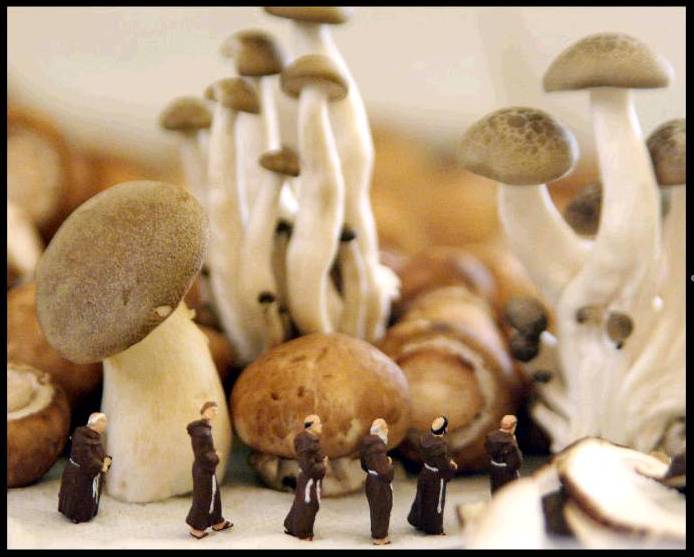
The hot hand remains hot.  One of the horrible culinary traditions that persists around the world, even though it is repugnant from an environmental perspective, is the harvesting of fins from sharks to make soup. Click the image to the left for but one small data point in the effort to end the illegal harvesting and sale of shark fins.

Better yet, don’t click that. Continue reading

Community Development in Ecuador

Guest Author: Denzel Johnson

Ecuador today doesn’t seem to have industries that might make you think it could be a strong world contender, especially when it comes to foods.  Little known to the outside world though, is the small village of Salinas de Guaranda which sits several hours south from the capital Quito. Salinas used to be one of Ecuador’s small mining villages but today represent a booming industry which began due to community run initiatives that are now templates for other parts of Ecuador.

My time in Salinas was unplanned, suggested by some professors at one of Quito’s top Universities, USFQ. Continue reading

The Circle of Life

During my five day safari, I snapped over 1,600 photos. I became obsessive and treated each sighting like a magazine photo shoot. At every encounter, my right eye was glued behind my camera’s view finder. Nearing the end of my trip, I realized I needed to simply enjoy the view and action, not just capture the scene. But as the safari progressed, I became selfish; not only did I want to see the animals but I also wanted to see them in action. Fortunately, that’s what I got.

This slideshow requires JavaScript.

In the middle of the day, you don’t really expect to see much predator wildlife since the weather is so hot; Continue reading

Life Mein Ek Baar, Featuring River Escapes

Every minute of this is fun.  The 35th minute is particularly fun for those of us based in Kerala because members of our organization join the stage with the stars of this show.

About five months ago we were approached by a film production company about a show they were filming for National Geographic Channel.  They told us that River Escapes was recommended to them as having the best houseboats in the Kerala backwaters (a bit of music to our ears).  Then they proposed that their Kerala episode should be based on our houseboats (we danced to that music).

Continue reading

Forbidden Fruit

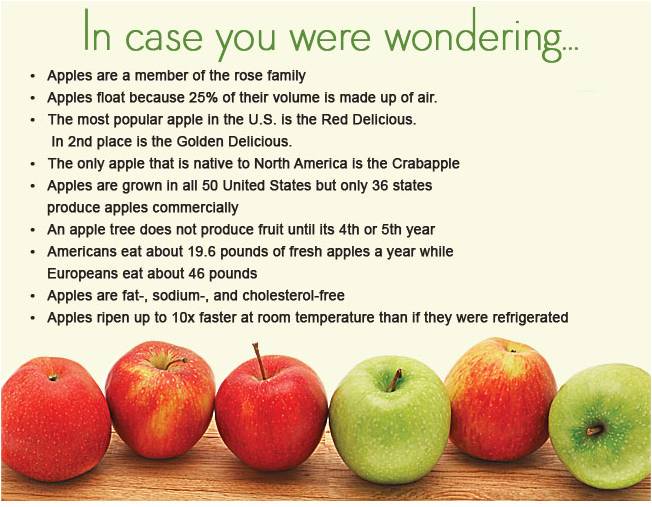
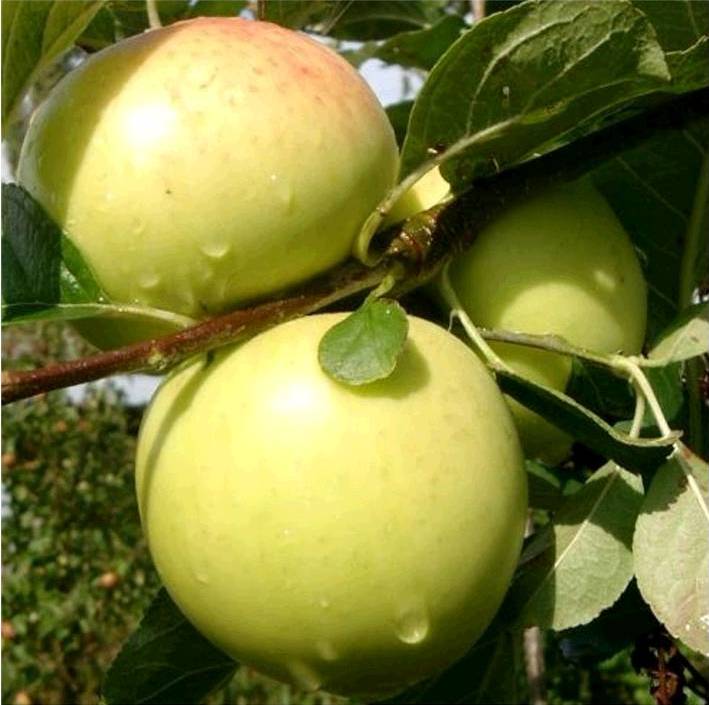
Second only to bananas, apples are one of the most popular fruits in many parts of the world. Yet when domesticated and planted in monoculture production, they run the risk of falling into the same trap as their “homecoming king” cousins, i.e. susceptibility to pests that requires a great deal of chemical hand holding.

A member of the rose family, there are believed to be 7,500 cultivars of Malus domestica, stemming from their original Western Asian ancestors.  In fact, the apple is believed to be the earliest tree to be cultivated, beginning in what is now southern Kazakhstan and eastern Turkey. The fruit has played a staring role in mythology and folk tales, from the Greeks to the Germanic and northern European cultures, and finally taking center stage in Renaissance depictions of Biblical lore in the 15th Century CE. Continue reading

What The World Needs Now

Click the image above to go to the story.  Better yet, don’t.  This might already well be called the era of weaponized foodstuff (witness all that pepper spray), so a story about the goal of breeding the hottest chili pepper in the world (all in good fun, of course) does not bode well.

Continue reading

Culinary Landscapes

Matthew Carden

In this season of Thanksgiving and other food focused festivals, it seemed appropriate to highlight the artist Matthew Carden.  He and his wife Jennifer Carden clearly have a loving relationship with food that doesn’t take itself too seriously. Continue reading

The Meaning(s) Of Organic

At first glance, this article and others on this website appeared to be of the “denier” variety, but on close read of this particular item (click the banner below to go to the article) it seems clearly of the educational clarification variety.

According to Rodale and his acolytes, products created by—and processes carried out by—living things are fundamentally different from lab-based processes and lab-created products. The resurrection of this prescientific, vitalistic notion of organic essentialism did not make sense to scientists who understood that every biological process is fundamentally a chemical process. In fact, all food, by definition, is composed of organic chemicals.

Continue reading

Replete With Thankfulness

This morning at 8am, India Standard Time, our Thanksgiving turkey arrived at our flat. With a little help from friends it was surprisingly easy to come by. Unlike chickens, which can be seen running around every yard or patch of untended land, or ducks, which are pretty ubiquitous in Kerala’s watery byways, turkeys are just not that common here in India. So when I saw a few milling around someone’s yard while Milo and I were kayaking on the backwaters some time back I just had to ask our friend (who happens to own the neighboring property) to see if they might sell one to me.  The rest is history, as they say. Continue reading

Portland’s Food & the Local Ideal

Having posted an item or two in the past about food, I am newly inspired to indulge my interest; inspired by a recent visit to Portland, Oregon. It was my first time to this city, a city that seemed to care more about its food than any other city I’d been to. (A bold statement I qualify with the varied ways in which a people can “care” about its food.)

Good food is a social backbone of many a metropolis.
They cultivate their gardens of superstar restaurants, or food trucks, whatever the case may be. The big and advanced cities have their bevies of bloggers and critics, evaluating the experience that comes with each bite. Each person I’ve met in each town I’ve been to, no doubt, cares to a certain extent about their food, but only in Portland did I feel the caring resemble something like the way a person cares about family. Like a pet-owner, plant-keeper, or passionate professional, the people of Portland appeared to feel invested in their food as an essential way of being good not only to themselves, but to some “other.” Continue reading

What the Trees Read

Without question, the section of Cayuga Lake’s Inlet that receives the most traffic is a small area of shoreline at the corner of the second tendril extending east from the Inlet into Ithaca. Community members and college students are attracted to this little spot on the Inlet, known as Steamboat Landing, because the Ithaca Farmer’s Market spends its weekends there, sheltered under a long wooden pavilion topped by a green metal roof. Dozens of stalls are laden with earthly, culinary, and artistic crafts; more than a couple hundred people a day visit each of them to browse and purchase these locally produced goods.

This quaint market is surrounded by a mixture of modern development and natural shoreline that I could not have noticed from the Inlet’s waters—only by walking around Steamboat Landing was I able to understand the spot’s significance to the Ithaca community, and connect elements of Henry David Thoreau’s and Aldo Leopold’s writings with the history of the place. Continue reading

Progress Back And Forth

We have noted before the intriguing coincidences that link the “old world” to the “new world”–not least the desire to establish trade with what is now Kerala and the accidental discovery of somewhere else; and other links in both directions.  “Old” and “new” become fuzzy qualifiers when considering “modern” European travelers of the 15th century sailing to “ancient” India and instead encountering people we now call Pre-Columbians.  Seth has posted on the environmental impacts of people from that so-called old world as they settled in the new world and brought their definitions of progress with them.  Now, thanks to an article in Smithsonian Magazine our attention is brought to a book and a man who broaden our horizons back to the old world from which those people came. Continue reading

The Tale of Two Pomegranates

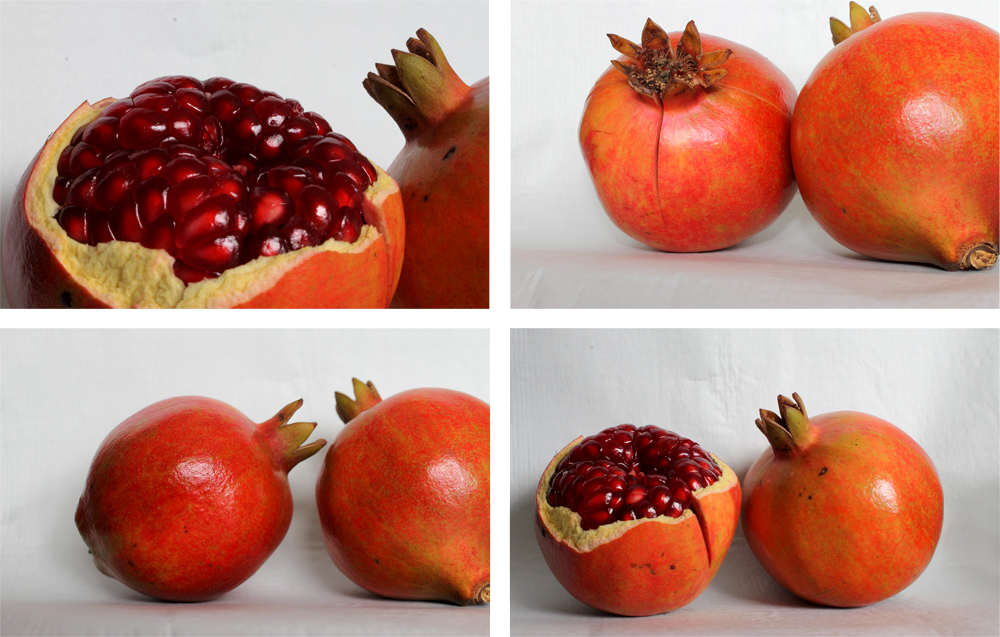
The color red defines the current fruit season in India.  (Bananas don’t count because they are always in season, and yes there are indeed red bananas…)  The fruit stalls are piled with apples and pomegranates.  What lacks in variety is made up in abundance, as well as the flair for display.

But this season pomegranates reign.  Native to Iran (culturally Persia), the fruit traveled through India, mostly in the north of the country (Pune is famous for pomegranate production), but also in our southern state of Kerala.  The Middle East, Mediterranean and southern Europe were also fertile ground for the Punica granatum, and when the Spanish brought it to the “New World” it completed the global circuit nicely. Continue reading

Different Tastes, Together

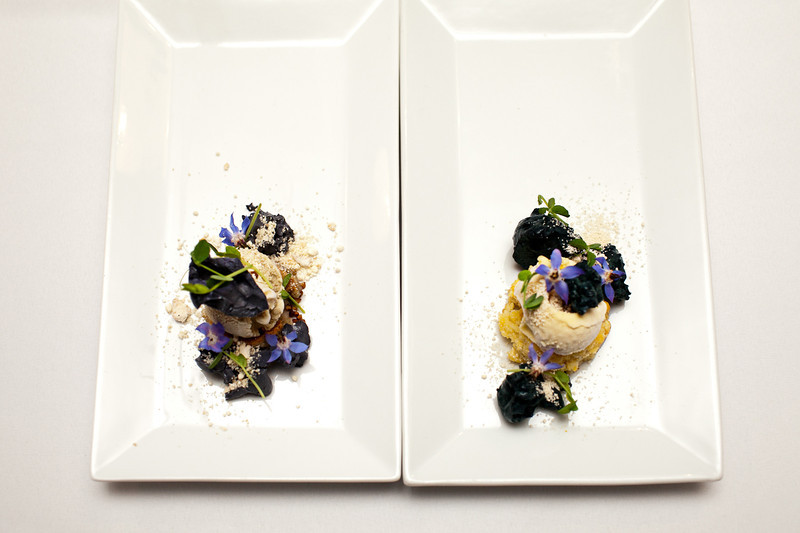
I had a thought once about couples where one person was a vegetarian and the other was a meat eater. It seemed like they could really never share a meal and have the same experience without one person–usually the omnivore–compromising to suit the mutually agreeable meal. To a normal, well adjusted human being, this is a totally banal observation that wouldn’t warrant losing sleep over.

But to us at Studiofeast, we thought it’d be cool to do a meal where an omnivore and a vegetarian could both share the same meal without the former forgoing meat or the latter having to try flesh. That was the seed of an idea that grew into our most recent dinner: a 7 course meal with an omnivore and vegetarian option where each corresponding course looked identical across the meat/vegetable line. And on July 17th, we seated 40 guests–20 omnivores on one side of the table, 20 vegetarians sitting opposite them–and served them our Doppelganger Dinner.

This slideshow requires JavaScript.

See the whole story hereContinue reading

Eight Year Echo Of Hope

When I described, a couple weeks ago, the echo of hope emanating from the Gulf of California it is fair to say I was pleasantly surprised.  That may be putting it too mildly, especially in hindsight now that I have seen a major new entrepreneurial initiative come to life there.  I will be writing more about that in the coming days.

But for now, I am in the Galapagos Islands and another echo is resonating.  In this case, for me, the echo is an eight year feedback.  As mentioned in this earlier post I had worked here on and off over several years, and the last time I was here there were some challenges that seemed intractable.  Today, upon arrival and for the remainder of the day, I had the opposite feeling of the last time I was here.  The photos below show the first thing I did with Reyna and Roberto after leaving the airport.  In the first photo you can see, as I did, just a simple conversation between them and one of the workers; then slowly a parade of otherworldly creatures crept into the photos…

This slideshow requires JavaScript.

Continue reading

Olives In October

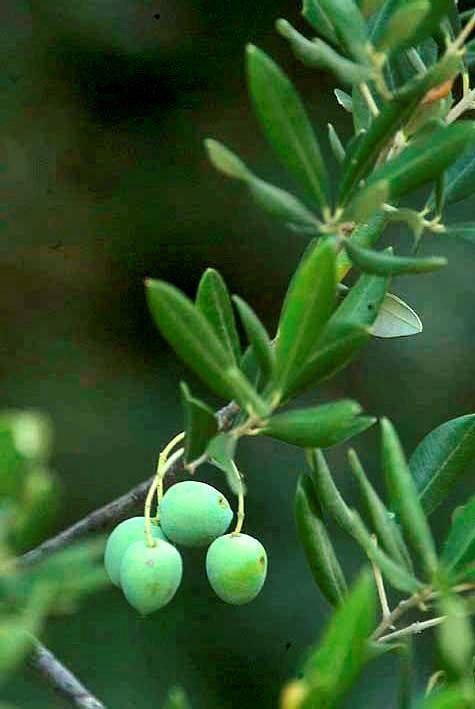
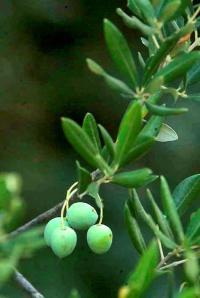
October is the month for harvesting olives in Croatia. I thought about this recently when cooking in my Kerala kitchen as I opened a jar of imported olives, knowing in advance that they would never hold a candle to the  quality of artisanal food. When we lived in Paris one could buy olives by the kilo at the marché, with numerous varieties to choose from. But here in southern India I have to settle for rather industrial Spanish imports at the table and memories of unparalleled flavor in my mind.

In reality, there are two harvests—one for olives that will be cured, and one for olives that will be pressed for oil. On smaller islands the frenzy of activity is much more evident for the latter—perhaps because fewer people cure olives anymore. The island people found me to be quite the curiosity. Here I was, a newcomer, trying to do all the traditional things that most young people were attempting to abandon.

There was no commercial production or agriculture on Koločep, one of smaller of the 5 Elafiti Islands, that sit like an extended constellation from the city of Dubrovnik. All gardens and orchards are for personal use, but there are people who certainly had large amounts of land in one sort of production or another. Our very overgrown home garden was a small example—there were figs, pomegranates, mandarinas, plums, carobs and of course, olives—none of which have been pruned  for what looked like decades. Continue reading

Crunch

Hans Gigginger photo from The New Yorker

I consider myself a pretty adventurous eater.  In fact, I will easily go so far as to call myself a “foodie”.  I’ve spent my adult life living on various continents, trying to understand the history and culture of the cuisine wherever I was living.  I’ve patiently explained my dinner party plans to vendors at Parisian fromageries (in hopes they will approve and allow me to complete my purchase).  I’ve “mastered” what I like to call Kitchen Croatian, or a knowledge of food nouns in that language, to be able to market and somewhat communicate recipes to kitchen staff while living there.  Malayalam still totally eludes me, but it is one of the world’s most difficult languages after all, so please don’t hold that against me.

But to the best of my knowledge, I’ve never eaten a bug Continue reading

Yes! We Have No Bananas!

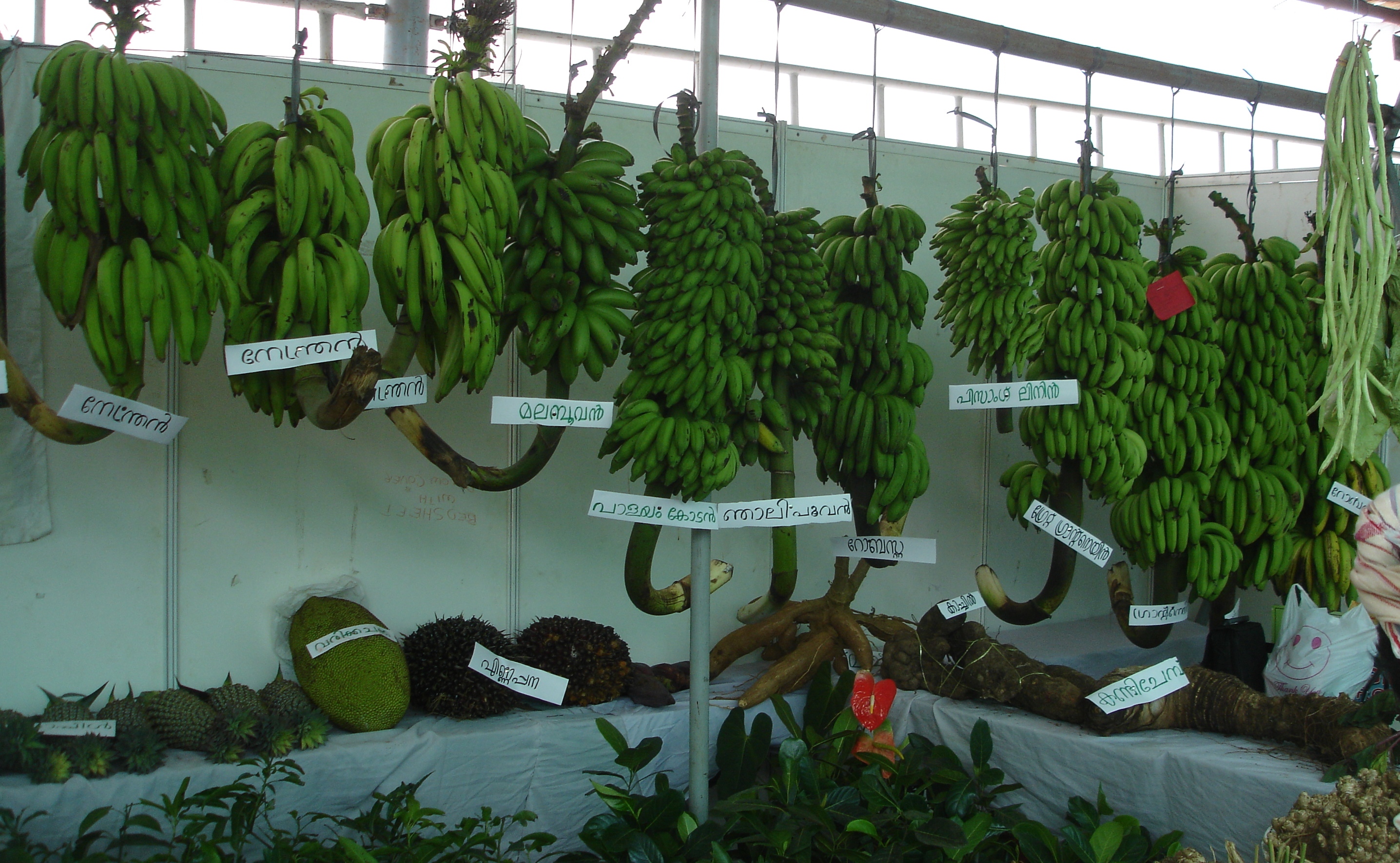
Banana Varieties On Display at the Cochin Flower Show (Names in Malayalam)

There are bananas for eating and bananas for cooking.  Bananas for boiling and bananas for frying. There are bananas with exotic sounding names: Cuban Red, Blue Java, Lady Finger, Orinico, Poovan, Rasthali, Manzana (which does, indeed, taste more like an apple). I wish I knew (and could taste!) all of them, because there are more than a thousand varieties. Somewhere there must be a database of all those names, all those varieties, hopefully all those genomes.  Continue reading