Throwback Thursday: A Fruit Most Treasured


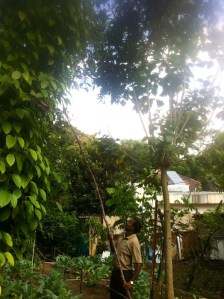
Pomegranate tree at Harvest Fresh Farm. Photo credit: Kayleigh Levitt

Pomegranate tree at Harvest Fresh Farm. Photo credit: Kayleigh Levitt

With Kayleigh stationed at Cardamom County we’re currently exploring ways to make our organic garden more productive, despite the challenges posed by local wildlife. With that goal in mind we visited a colleague’s farm in Tamil Nadu, in an area where they don’t face monkey challenges, but some of their produce requires special netting to protect against birds and bats.

While there we enjoyed a farm tour that included harvesting a few different species of pomegranate, which happens to be part of my daily menu for many years. (Frequent guests at 51 will notice the healthy and delicious seeds making an appearance in many ways.) Continue reading

Notes from the Garden: Mango Hunting

photo 4

The mango has its ancestral roots in India, so something felt really right about shaking mangoes out of the trees today in Cardamom County. Right now I’m reading this delicious book called The Fruit Hunters, written by Adam Leith Gollner. Since I have started it, I have had a whole new context to put my experience of fruit in! Turns out there are over 1,100 varieties of mangoes. The ones I know and love from supermarkets back in the United States are the Tommy Atkins mangoes, which are more common in international commerce.

photo 2Indian mangoes apparently weren’t allowed into the states for almost thirty years due to “pest concerns.” Actually, it was more like, nuclear trade concerns. India and Canada had a nuclear trade relationship in which Canadian nuclear reactors were being used to build a nuclear arsenal. In 2007 though, India signed a nuclear treaty with the United States, only under the condition that India’s mangoes be allowed back in the states. Later when President Bush flew to India to discuss the deal, he announced, “the U.S. is looking forward to eating Indian mangoes.” Continue reading
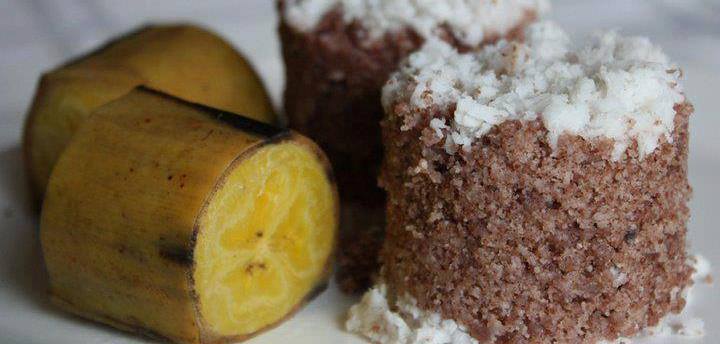
Boiled Banana

Photo credits : Shymon

Photo credits: Shymon

When bananas are so ubiquitous here in the tropics, it’s good to have a variety of ways for eating the fruit. For Western readers, boiling bananas might seem strange, but it is quite common in India. Boiled banana is considered an excellent food for infants and children in Ayurveda. In Kerala, cuisines like puttu and rava uppuma (a savory south Indian breakfast dish) are perfectly matched with boiled bananas.  Continue reading

Monkeying around in Cardamom County

Monkey mischief at the Periyar Tiger Reserve, neighbor of Cardamom County

I have never had to take monkeys into consideration when gardening before.

I am at this jungle-like Raxa Collective property in Thekkady, India. I am here to work as an intern to help with creating a more farm-to-table relationship in the restaurant at Cardamom County. There is an organic garden here that is already providing the restaurant with a decent percentage of their staple foods. However, we face a little problem with some main ingredients such as tomatoes, eggplants, and actually anything sweet that we might like to grow such as grapes or pomegranates.

Monkeys. Continue reading

Jackfruit

Photo credits : Shymon

Photo credits: Shymon

Jackfruit is known as chakka in Malayalam, and is mostly consumed as ripened fruit. That might seem like stating the obvious, but since jackfruit is so abundant in Kerala, most households make different varieties of traditional dishes from both ripened and unripened fruit. Some examples include chakka puzukku (unripe jackfruit curry), chakka yappam (steamed jackfruit rice cakes), chakka payazam (jackfruit pudding) and chakka chips. Jackfruit trees are cultivated in the Western Ghats of India. Continue reading

There Might Never Have Been A Better Time To Visit India

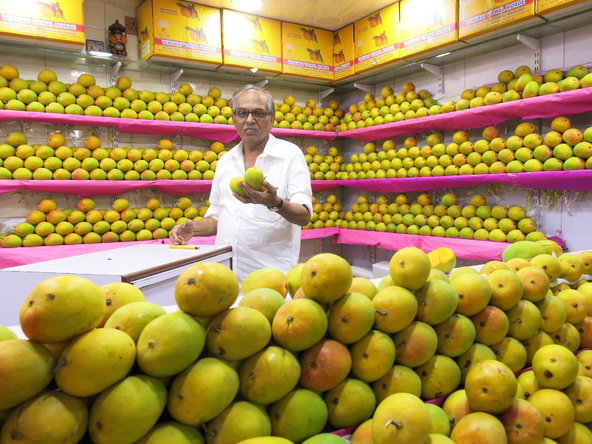
Neha Thirani Bagri Arvind Morde, a mango retailer and exporter, at the Crawford market in Mumbai, Maharashtra.

Photo credit: Neha Thirani Bagri. Arvind Morde, a mango retailer and exporter, at the Crawford market in Mumbai, Maharashtra.

Europe’s loss may be the gain for those of us who find ourselves living in India. That includes 1.2 billion locals and a few more of us who now have a few more of the most amazing edibles on this planet (thanks to India Ink for the story):

Alphonso Mangoes Flood Indian Market After E.U. Ban

MUMBAI, India — The Indian mango, and in particular the Alphonso, is a much-coveted and much-fetishized fruit by Indians, loved as much for its flavor as for its scarcity. Continue reading

Jack Fruit, Again

Jackfruits grow on the branches and trunks of tall trees. You don't wait to harvest until they drop of their own accord — by that time, they'd be overripe. iStockphoto

Jackfruits grow on the branches and trunks of tall trees. You don’t wait to harvest until they drop of their own accord — by that time, they’d be overripe. iStockphoto

We recently started noticing interest in our hometown fruit, and here is some more courtesy of the Salt program on National Public Radio (USA):

It’s not every fruit that gets its own international symposium.

Then again, the jackfruit is not your typical fruit. It’s got a distinctive, musky smell, and a flavor that some describe as like Juicy Fruit gum.

It is the largest tree fruit in the world, capable of reaching 100 pounds. And it grows on the branches — and the trunks — of trees that can reach 30, 40, 50 feet. (Trunk-growing is a good thing because it reduces the odds of a jackfruit bopping you on the head.) Continue reading

Flavours Of Kerala – Mambazha Pulissery

Photo credits : Jithin

Photo credits: Jithin

Mambazha Pulissery is a classic Kerala sweet and sour ripe mango curry. Traditionally it’s made using ripe, small mangos cooked in their own juice. The main ingredients are small mango fruit, turmeric powder, red chili, grated coconut, green chili, cumin seeds, coconut oil and curd. Continue reading

Things We Know That Bear Repeating–Nuts, Beans, Vegetables & Fruits Edition

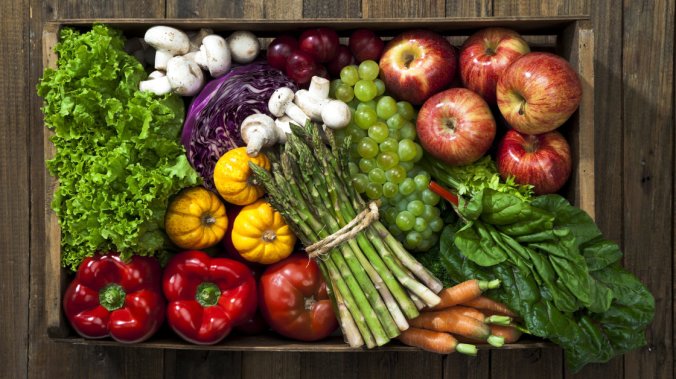
A new study linking animal protein-rich diets to increased mortality in middle age adds fuel to the controversy over how much protein — and from what sources — is ideal for health. One thing that seems pretty clear: It doesn't hurt to go heavy on the greens. iStockphoto

A new study linking animal protein-rich diets to increased mortality in middle age adds fuel to the controversy over how much protein — and from what sources — is ideal for health. One thing that seems pretty clear: It doesn’t hurt to go heavy on the greens. iStockphoto

For most of us, most of the time, less animal protein in our diet is a good thing. For some of us, some of the time, more vegetable protein is a particularly good thing. The takeaways from this short item at The Salt (National Public Radio, USA) are worthy quick dietary recommendations:

…In the new study, Longo and his colleagues found that high-protein foods derived from plants, such as beans and nuts, did not have the same effect on mortality as did high-protein foods from animals… Continue reading

Taste Of Kerala – Star Gooseberry

Photo credits : Renjith Rajan

Photo credits: Renjith Rajan

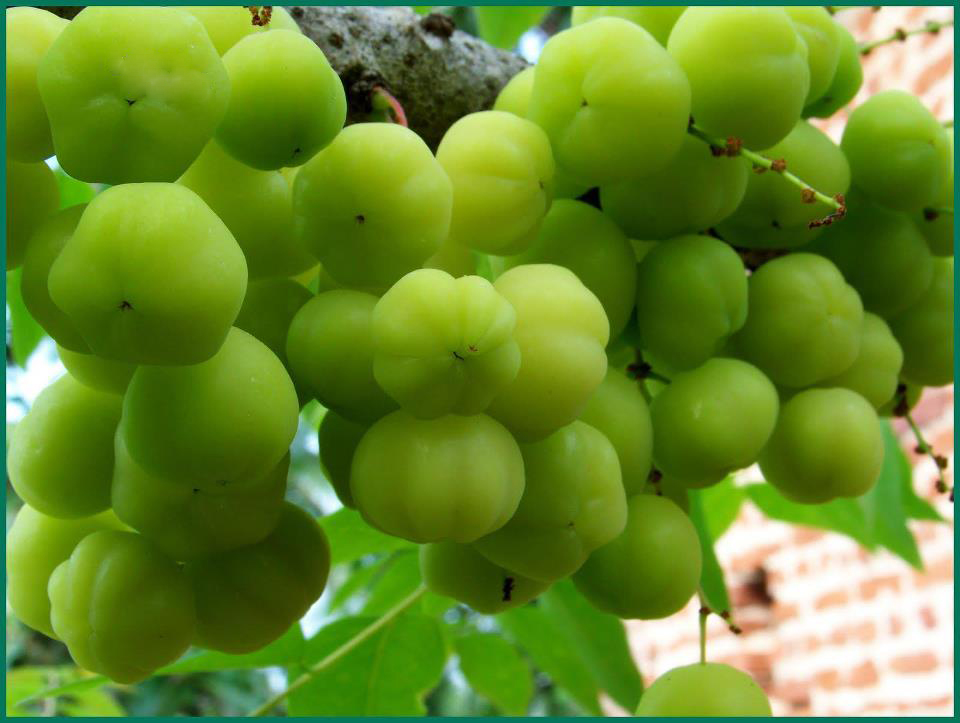
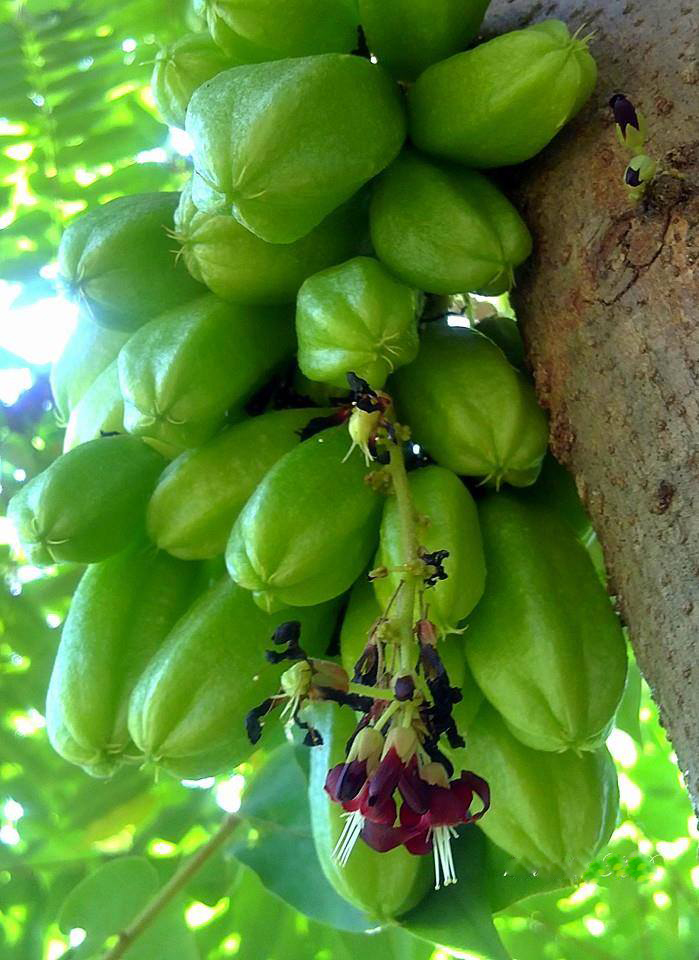
Star Gooseberry is native to the Malay Islands and Madagascar. The small deciduous tree can grow up to 25-30 feet height. Abundantly found in Kerala for its acidic fruits that are mainly used for pickling and for the preparation of preserves. Although it also makes excellent jam, star  gooseberries are also used in traditional medicines.

Taste of Kerala – Bilimbi Fruits

Photo credits : Kannadas KD

Photo credits: Kannadas KD

Bilimbi is an evergreen tree native to tropical Asia, grown for its edible fruits. The trees are commonly found in the high ranges of Kerala and the fruits are mainly used in making pickles, soups, sauces and curries. Continue reading

Chakkayappam – Flavours Of Kerala

Chakkayappam (jackfruit dumplings) is a popular seasonal and authentic snack from Kerala. The main ingredients and preparations for Chakkayappam are a smooth paste made from chopped Jackfruit flesh incorporated with rice flour, grated coconut and jaggery mixed together to prepare a dough. This dough is then wrapped in fresh green bay leaves shaped into cones and steamed. The flavour of bay leaves and jackfruit together creates a deliciously unique taste. Continue reading

Fruit, Every Day, Everywhere


We appreciate the reminder provided by one of the Atlantic’s many talented writers, about a topic we have had more than passing interest in for the last couple years. Our own previous mention of this film, and the phenomenon make this article no less interesting:

There are more than a thousand banana species in the world, but you’ve probably only ever tasted one. The Cavendish banana is the one we know and love. It’s the one the international banana economy is based on–the only species that’s exported from one country to another, anywhere in the world. But its extinction is coming… Continue reading

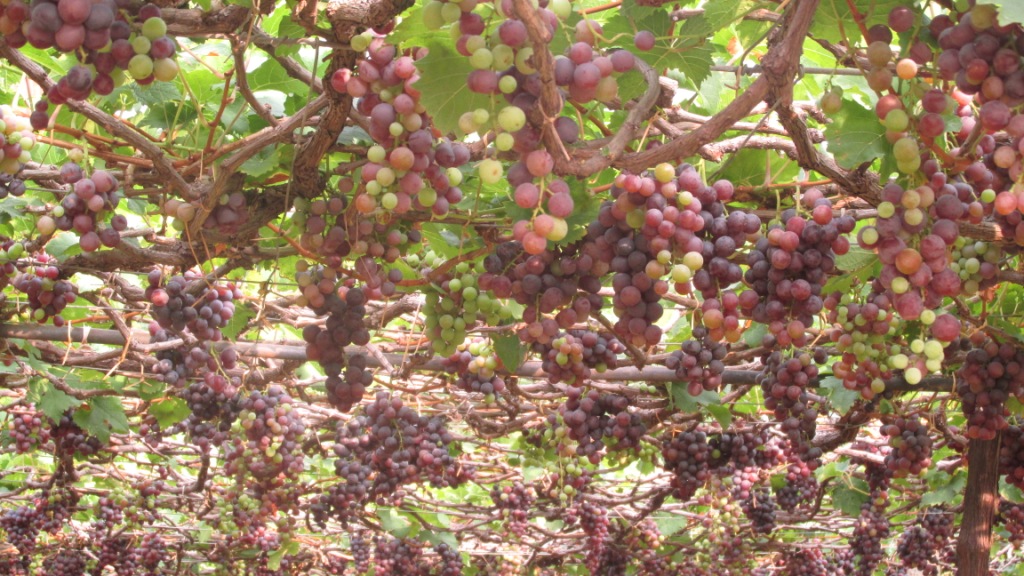
Vineyards – Cumbum, Tamil Nadu

Cumbum Valley is situated about 15 km from Thekkady across the border into Tamil Nadu. Now famous for growing grapes, there are a 1000 acres of vineyards covering the lowland plains. The grapes are mainly used for making wine, juice and jam as well as eaten raw. Continue reading

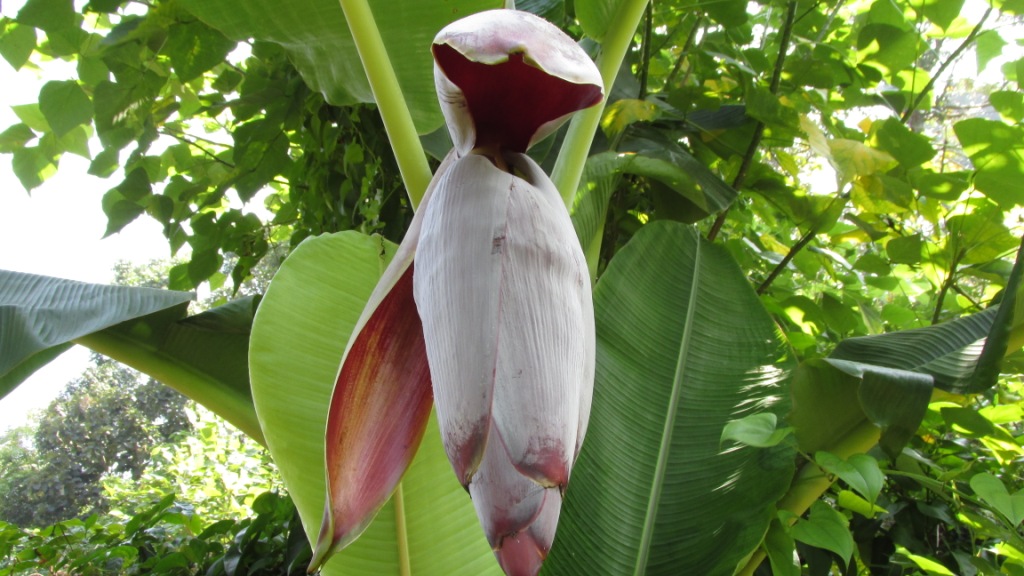
Everything is good in a banana

My colleague Vinod is an expert on sustainable tourism in India, he has studied the alternatives to plastics. He explained to me that after Brazil, India is the largest producer of bananas in the world… Continue reading

Elderberry – Sambucus nigra

Native to the sub-tropical regions of Europe and Australia, Elderberry grows widely in Kerala’s Hill Range gardens above 1000 meters. The clustered berries are an important food for many birds and the flowers are a favorite for honey bees and other pollinating insects.  Continue reading

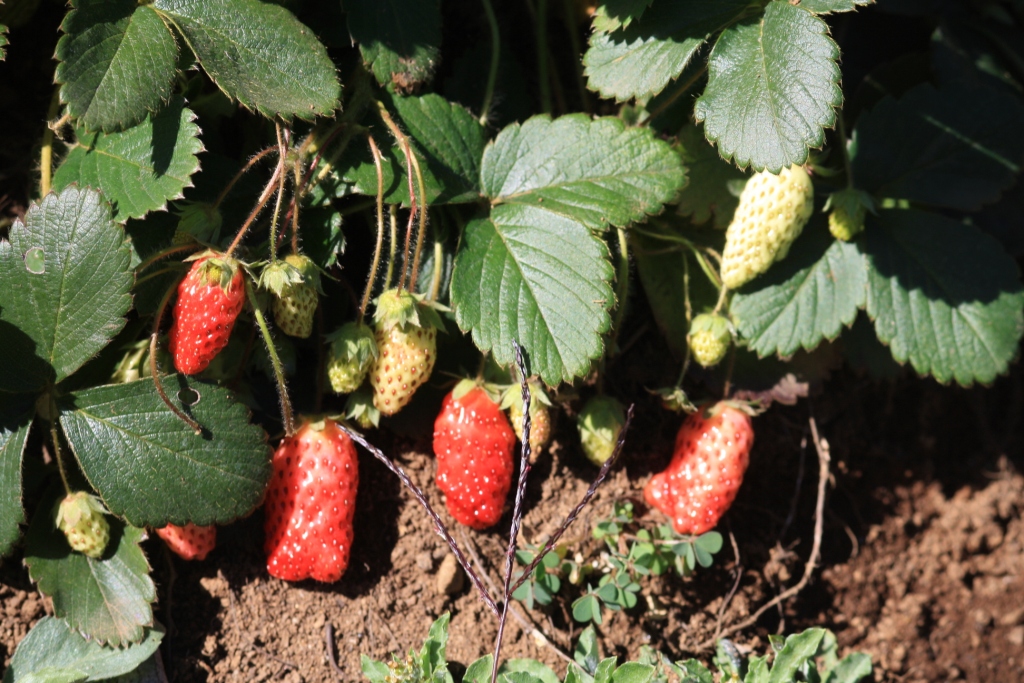
Strawberry – Munnar

Strawberries belong to the family Fragaria ananassa, a genus of flowering plants in the rose family or Rosaceae.  The popular fruit are cultivated worldwide. Continue reading

Mango Flowers


In South India mango trees start to bloom from December onward.  A native of South Asia and the national fruit of India, mangos  grow widely in the tropical and sub-tropical regions of the country. Continue reading

Integrated Pest Management (IPM)

Photo by Milo Inman, India

During my last post I mentioned this agricultural strategy in passing, and I’m actually fairly surprised that the topic hasn’t come up anywhere on the blog before. After all, IPM is an increasingly effective and interdisciplinary way to curb economic losses in crops around the world, and one that often attempts to reduce reliance on environmentally unfriendly chemicals like pesticides.

Completely eliminating an agricultural pest is not the ultimate goal of IPM. In fact, due to ecological intricacies and the risks of removing certain species from an ecosystem, merely lowering the number of pests to numbers that do not cause significant economic damage is more advisable. Achieving this reduction in pest populations “requires an understanding of the ecology of the cropping system, including that of the pests, their natural enemies, and the surrounding environment,” according to Professor Anthony Shelton of the Entomology Department at Cornell University. For example, knowing that a certain pest caterpillar species has certain predator species, a farmer might introduce some of the natural predators into his crop to prey on the harmful caterpillars. If the farmer also physically removes the caterpillars by hand and the pest population dwindles to zero, the natural predators might turn to a beneficial insect, like a pollinator, or even attack the crop itself. This is a very vague and hypothetical example but one that reflects the need to understand causes and effects in an ecosystem if one is planning to employ IPM effectively.

Continue reading