Are We Anthropocenic Or Not?

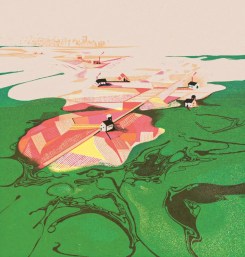
Art works by Aletheia Casey

Thanks, as always, to Elizabeth Kolbert for illumination on this mystery:

The “Epic Row” Over a New Epoch

Scientists, journalists, and artists often say that we live in the Anthropocene, a new age in which humans shape the Earth. Why do some leading geologists reject the term?

A few months into the third millennium, a group called the International Geosphere-Biosphere Programme (I.G.B.P.) held a meeting in Cuernavaca, Mexico. Among the researchers in attendance was Paul Crutzen, an atmospheric chemist best known for his research on ozone-depleting chemicals, such as chlorofluorocarbons. Continue reading

Holocene Age Prevails

Four people standing on the deck of a ship face a large, white mushroom cloud in the distance.

In weighing their decision, scientists considered the effect on the world of nuclear activity. A 1946 test blast over Bikini atoll. Jack Rice/Associated Press

Yesterday we learned that scientists declined the invitation to officially declare us in a new age:

A panel of experts voted down a proposal to officially declare the start of a new interval of geologic time, one defined by humanity’s changes to the planet.

The Triassic was the dawn of the dinosaurs. The Paleogene saw the rise of mammals. The Pleistocene included the last ice ages.

Is it time to mark humankind’s transformation of the planet with its own chapter in Earth history, the “Anthropocene,” or the human age?

Not yet, scientists have decided, after a debate that has spanned nearly 15 years. Or the blink of an eye, depending on how you look at it. Continue reading

Lithium From A Well

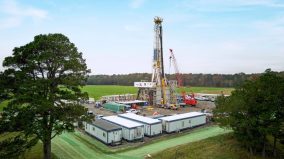
The drilling rig at ExxonMobil’s first lithium well, in southwest Arkansas. EXXONMOBIL

Thank you, Fred Pearce. It is not easy to trust ExxonMobil or any other petroleum company to do the right thing, but this sounds better than most of what we hear about their common practices:

In Rush for Lithium, Miners Turn to the Oil Fields of Arkansas

The Smackover Formation in southern Arkansas was once a major oil producer. Now, companies hope to extract lithium — a key metal for electric vehicle batteries — from its underground brines using technologies they say could reduce mining’s carbon emissions and water use.

The town of Smackover, Arkansas, was founded a hundred years ago when a sawmill operator got lucky: his wildcat oil well yielded a gusher. Continue reading

We Are Stardust, Spreading Rock Dust

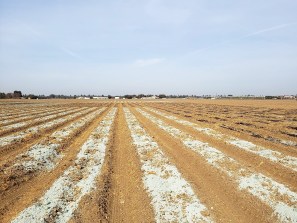
Rock dust applied to farmland in California. IRIS HOLZER

It is a concept we have heard about a couple of times previously and the science is catching up. Our thanks to Yale e360 for sharing news of it:

Spreading Rock Dust on Farmland Has Potential to Draw Down Huge Sums of Carbon Dioxide

Adding volcanic rock dust to cropland could help the world reach a key carbon removal goal, a new study finds. Continue reading

Anthropocene Representative Location

A wide view of a lake with trees surrounding it and blue sky with clouds in distance. We now have a place to match to the name for our epoch:

The Human Age Has a New Symbol. It’s a Record of Bomb Tests and Fossil Fuels.

A scientific panel has picked Crawford Lake, Ontario, to represent the Anthropocene, a proposed, and hotly contested, new chapter in geologic time.

For almost 15 years, a panel of scholars has been chewing over a big question: Has our species transformed the planet so much that we have plunged it into a new interval of geologic time? Continue reading

Anthropocene’s Marker

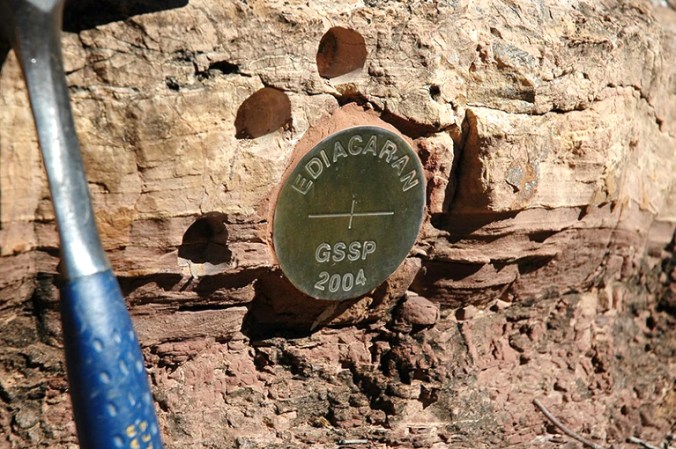
The Ediacaran Period, which ended some 540 million years ago, is marked by a gold spike in the Flinders Ranges of South Australia. JAMES ST. JOHN

We do not love the word Anthropocene, but we appreciate the marker it represents. And until now we did not know there would be a physical counterpart, a marker that will be placed in a representative location:

A Golden Spike Would Mark the Earth’s Next Epoch: But Where?

Before the Anthropocene can be officially proclaimed, a scientific working group must select a single site that permanently captures the new human-influenced epoch. Nine candidate sites — from California to China to Antarctica — are under consideration, with a decision expected soon.

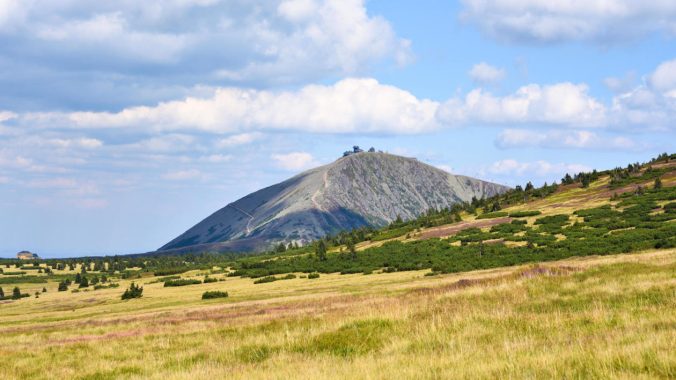
The peatland below Poland’s Mount Śnieżka contains contaminants from burning fossil fuels, nuclear testing, and other human activities. MYSTICWALKER / ALAMY STOCK PHOTO

At first glance, these nine sites scattered across the globe seem unremarkable. Continue reading

Phosphogeddon, Peecycling & Other Modern Portmanteaus

Addressing the problem, some scientists believe, may require reimagining agriculture from the ground up. Illustration by Juan Bernabeu

Stephen Porder is Professor of Ecology and Evolutionary Biology, a Fellow in the Institute at Brown for Environment and Society, and the Assistant Provost for Sustainability at Brown. Elemental is his new book looking at how life shapes Earth using basic elements we may take for granted. Read on to learn more about the book, and its wider relevance to other books now being published that discuss phosphorous.

Thanks, as always, to Elizabeth Kolbert for her book reviews, and in this case a nod to the Rich Earth Institute:
Phosphorus Saved Our Way of Life—and Now Threatens to End It

Fertilizers filled with the nutrient boosted our ability to feed the planet. Today, they’re creating vast and growing dead zones in our lakes and seas.
In the fall of 1802, the German naturalist Alexander von Humboldt arrived in Callao, Peru’s major port, just west of Lima. Humboldt had timed his visit to coincide with a transit of Mercury, which he planned to observe through a three-foot telescope, in order to determine Lima’s longitude. He set up his instruments atop a fort on the waterfront, and then, with a few days to kill before the event, wandered the docks. A powerful stench emanating from boats loaded with what looked like yellowish clay piqued his curiosity. From the locals, Humboldt learned that the material was bird shit from the nearby Chincha Islands, and that it was highly prized by farmers in the area. He decided to take some home with him. Continue reading

Embracing Anthropocene

Image credits: Alamy; David Guttenfelder for The New York Times; Getty Images; Ashley Gilbertson for The New York Times; Michael Probst/Associated Press; Getty Images; NASA

We have been using this terminology already for more than a decade, thinking it was apt enough to be official:

For Planet Earth, This Might Be the Start of a New Age

A panel of experts has spent more than a decade deliberating on how, and whether, to mark a momentous new epoch in geologic time: our own.

The official timeline of Earth’s history — from the oldest rocks to the‌ dinosaurs to the rise of primates, from the Paleozoic to the Jurassic and all points before and since — could soon include the age of nuclear weapons, human-caused climate change and the proliferation of plastics, garbage and concrete across the planet. Continue reading

Thwaites & Us

Probes beneath the ice could shed light on the fate of the world’s coastlines. Illustration by Owen D. Pomery

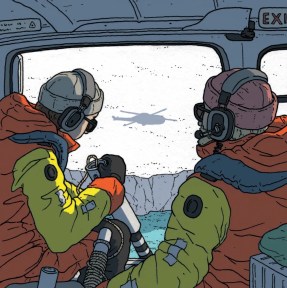
Most of us do not spend much time thinking about what is happening there, but Antarctica’s future is now very much entwined with the future of the rest of the planet.  All of us. So, thanks to David W. Brown for this travelogue:

Journey to the Doomsday Glacier

Thwaites could reshape the world’s coastlines. But how do you study one of the world’s most inaccessible places?

I first saw our icebreaker, the RV Araon, when we were due to leave for Antarctica. The largest icebreakers are more than five hundred feet long, but the Araon was only the length of a football field; I wondered how it would handle the waves of the Southern Ocean, and how it would fare against the thick sea ice that guards the last wilderness on Earth. Continue reading

Carbon Burial Venturing

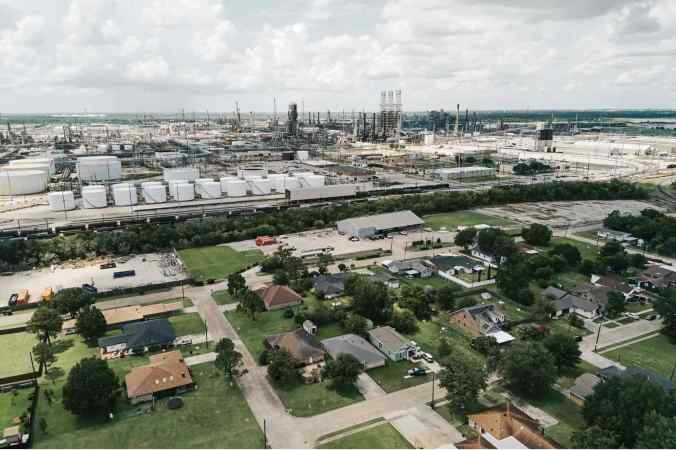
Port Arthur’s Motiva Oil Refinery.PHOTOGRAPH: KATIE THOMPSON

The capturing of carbon is a concept we have been working to understand, but questions about where it goes  and how it is stored, have been fuzzy until now (thanks to Jeffrey Ball at Wired):

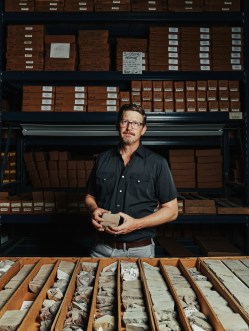
Tip Meckel holds a sandstone sample. PHOTOGRAPH: KATIE THOMPSON

The Big Business of Burying Carbon

The porous rock beneath the Gulf Coast launched the petroleum age. Now entrepreneurs want to turn it into a gigantic sponge for storing CO2.

SOMETIME AFTER THE dinosaurs died, sediment started pouring into the Gulf of Mexico. Hour after hour the rivers brought it in—sand from the infant Rockies, the mucky stuff of ecosystems. Year after year the layers of sand hardened into strata of sandstone, pushed down ever deeper into the terrestrial pressure cooker. Continue reading

Innovative Illustration & Atmospheric Pressure

Source: Geophysical Research Letters.

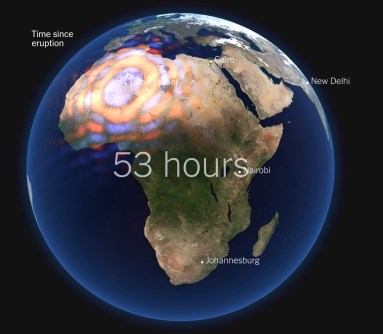
Whenever we see advances in innovative illustration to better our understanding of phenomena, natural or otherwise, we note it here. Atmospheric pressure is something most of us have heard countless times, but not necessarily stopped to think what it is. Among other things, it is important. Also, it is understandable. If you have a couple minutes, watch this accessible animation of a natural phenomenon that does not get enough attention, and read the accompanying text:

‘It’s Super Spectacular.’ See How the Tonga Volcano Unleashed a Once-in-a-Century Shockwave.

By Aatish Bhatia and Henry Fountain

Produced by Aatish Bhatia and Sean Catangui

As shown in this visualization, based on a simulation created by Ángel Amores, a physical oceanographer at the Mediterranean Institute for Advanced Studies in Majorca, Spain, the shockwave took about 36 hours to circumnavigate the globe, spreading out in concentric rings from the volcano known as Hunga Tonga-Hunga Haʻapai and traveling at the speed of sound. The simulation was published in the journal Geophysical Research Letters in March. Continue reading

Barefoot In The Park A Long, Long Time Ago

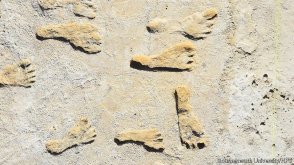
The Economist brought this to our attention with a brief mention that An old lake bed reveals evidence of America’s first inhabitants – They walked there at least 23,000 years ago. We followed that up with a search on the topic that led to this further detail in the Cornell Chronicle:

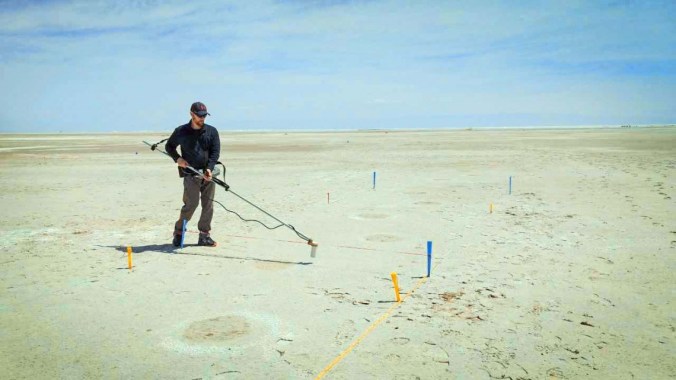
David Bustos/Provided. Thomas Urban conducts magnetometer survey of mammoth footprints at White Sands.

Earliest evidence of human activity in the Americas found

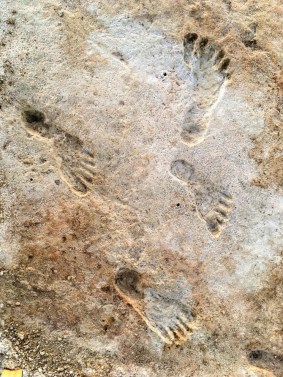
Provided. Footprints found at White Sands National Park in New Mexico, providing the earliest evidence of human activity in the Americas.

Footprints found at White Sands National Park in New Mexico provide the earliest unequivocal evidence of human activity in the Americas and offer insight into life over 23,000 years ago.

The footprints were formed in soft mud on the margins of a shallow lake that now forms part of Alkali Flat, a large playa at White Sands. Researchers from the U.S. Geological Survey dated these tracks using radiocarbon dating of seed layers above and below the footprint horizons. The dates range in age and confirm human presence over at least two millennia with the oldest tracks dating from around 23,000 years ago, Continue reading

Digging Deeper

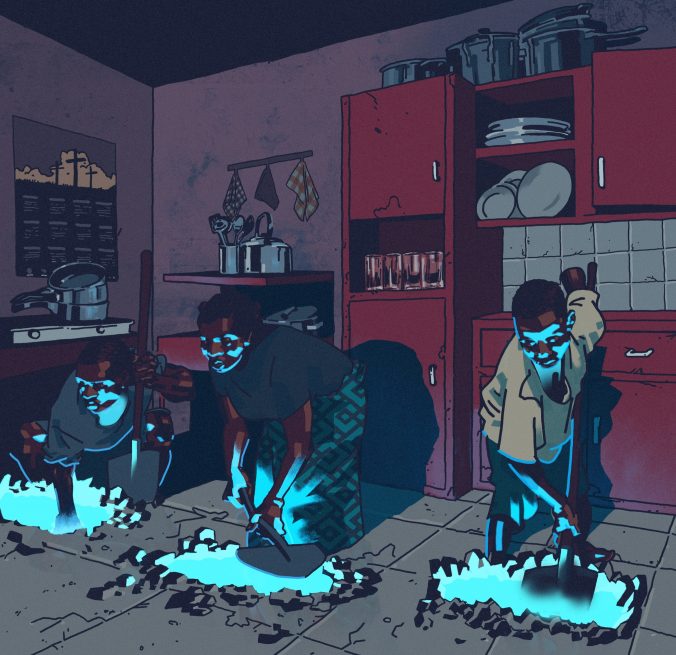
After cobalt was discovered beneath one neighborhood, Congolese began digging under their houses. Some tunnels extended into neighbors’ properties. Illustration by Pola Maneli

Nicolas Niarchos appeared in our pages in 2017 with two short form and inherently pleasant stories. Now he is in full force with a longform account of the impacts new technologies are having on the ground, or rather in the ground, in one of Africa’s more fragile countries:

The Dark Side of Congo’s Cobalt Rush

Cell phones and electric cars rely on the mineral, causing a boom in demand. Locals are hunting for this buried treasure—but are getting almost none of the profit.

In June, 2014, a man began digging into the soft red earth in the back yard of his house, on the outskirts of Kolwezi, a city in the southern Democratic Republic of the Congo. As the man later told neighbors, he had intended to create a pit for a new toilet. About eight feet into the soil, his shovel hit a slab of gray rock that was streaked with black and punctuated with what looked like blobs of bright-turquoise mold. He had struck a seam of heterogenite, an ore that can be refined into cobalt, one of the elements used in lithium-ion batteries. Among other things, cobalt keeps the batteries, which power everything from cell phones to electric cars, from catching fire. As global demand for lithium-ion batteries has grown, so has the price of cobalt. The man suspected that his discovery would make him wealthy—if he could get it out of the ground before others did. Continue reading

Choices For Mining Lithium

The Salton Sea is one of numerous new mining proposals in a global gold rush to find new sources of metals and minerals needed for electric cars and renewable energy.

Thanks to the New York Times for this coverage of the choices surrounding how and where to mine a key ingredient of more efficient batteries–a consequential environmental question:

The Lithium Gold Rush: Inside the Race to Power Electric Vehicles

A race is on to produce lithium in the United States, but competing projects are taking very different approaches to extracting the vital raw material. Some might not be very green.

“This is the most sustainable lithium in the world, made in America,” Rod Colwell, the chief executive of Controlled Thermal Resources, said. “Who would have thought it? We’ve got this massive opportunity.”

Atop a long-dormant volcano in northern Nevada, workers are preparing to start blasting and digging out a giant pit that will serve as the first new large-scale lithium mine in the United States in more than a decade — a new domestic supply of an essential ingredient in electric car batteries and renewable energy.

The mine, constructed on leased federal lands, could help address the near total reliance by the United States on foreign sources of lithium.

But the project, known as Lithium Americas, has drawn protests from members of a Native American tribe, ranchers and environmental groups because it is expected to use billions of gallons of precious ground water, potentially contaminating some of it for 300 years, while leaving behind a giant mound of waste. Continue reading

Iconic Geological Formations

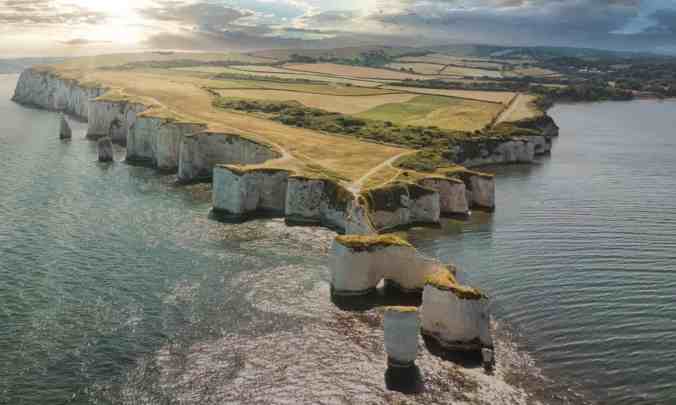
Old Harry Rocks in Dorset. Photograph: Adam Wearing/Getty Images/500px

Thanks to the Guardian for this long read on rocks and the people who dedicate their lives to studying them, and informing we lay people about them:

Rock of ages: how chalk made England

Swathes of England’s landscape were shaped by the immense block of chalk that has lain beneath it for 100 million years. For a long time, even geologists paid it little heed – but now its secrets and symbolism are being revealed

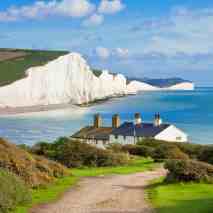
The Seven Sisters cliffs in East Sussex, England. Photograph: eye35.pix/Alamy

On the British Geological Survey’s map, chalk is represented by a swathe of pale, limey green that begins on the east coast of Yorkshire and curves in a sinuous green sweep down the east coast, breaking off where the Wash nibbles inland. In the south, the chalk centres on Salisbury Plain, radiating out in four great ridges: heading west, the Dorset Downs; heading east, the North Downs, the South Downs and the Chilterns. Continue reading

Under The Southern Ice

Antarctica has not featured in these pages as much as tropical places, where we mostly work. The closest my work has come to Antarctica was between 2008-2010 when I worked with entrepreneurs in the Magallanes region of Chile, which includes Antarctica. Even then, the portions of my work in Tierra del Fuego were still 600+ miles from the northern most point of the Antarctic Peninsula. By contrast my work in Yakutia took me within the Arctic Circle. But in both places my work was always above ground, and never brought me close to the scientists working below ice shelves. So, thanks to Mother Jones for this:

Antarctic Stunner: Mysterious Creatures Discovered Under a Half Mile of Ice

Scientists taking sediment samples found animals nobody thought could survive there.

Bivouacked in the middle of the Filchner-Ronne Ice Shelf—a five-hour flight from the nearest Antarctic station—nothing comes easy. Even though it was the southern summer, geologist James Smith of the British Antarctic Survey endured nearly three months of freezing temperatures, sleeping in a tent, and eating dehydrated food. The science itself was a hassle: To study the history of the floating shelf, he needed seafloor sediment, which was locked under a half mile of ice. Continue reading

Heavenly Particles Made Visible

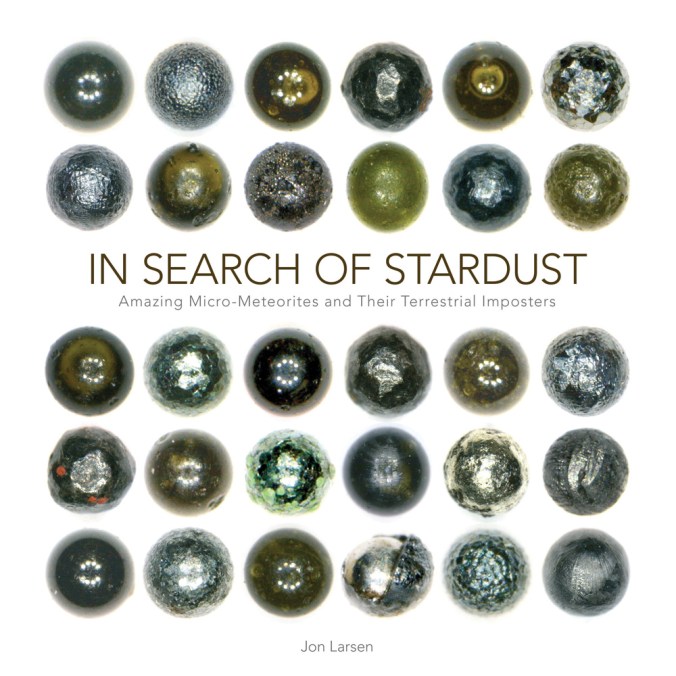
9780760352649This is among the more unusual book reviews in a while, thanks to the Science section of the New York Times, and William J. Broad. We appreciate a radically new perspective every now and then:

14SCI-STARDUST-COMP01-master1050.jpg

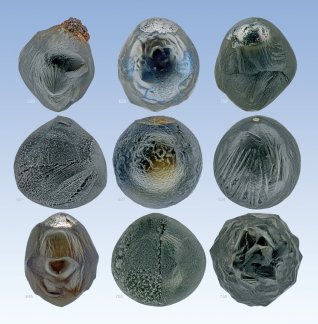
Varieties of space dust, barely the width of a human hair. These photomicrographs were made with a special camera setup that magnifies the dust grains nearly 3,000 times. CreditJan Braly Kihle/Jon Larsen

After decades of failures and misunderstandings, scientists have solved a cosmic riddle — what happens to the tons of dust particles that hit the Earth every day but seldom if ever get discovered in the places that humans know best, like buildings and parking lots, sidewalks and park benches.

The answer? Nothing. Look harder. The tiny flecks are everywhere.

An international team found that rooftops and other cityscapes readily collect the extraterrestrial dust in ways that can ease its identification, contrary to science authorities who long pooh-poohed the idea as little more than an urban myth Continue reading

Lost & Found, Continental Edition

rexfeatures_1617558h-800x533.jpg

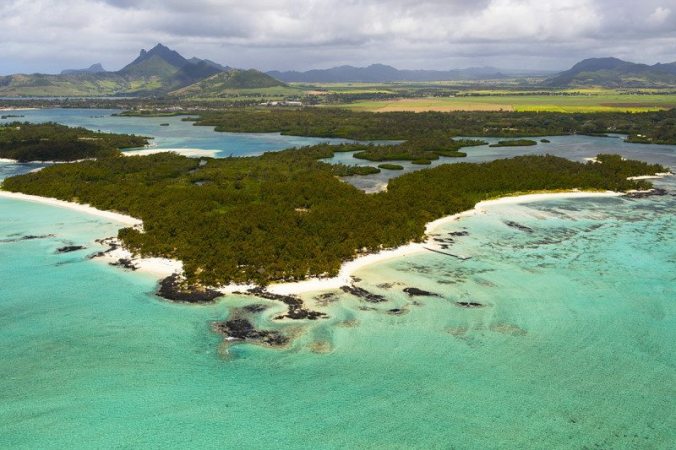
Mauritius sits on part of an ancient continent. Keystone USA-ZUMA/REX/Shutterstock

Long-lost continent found submerged deep under Indian Ocean

An ancient continent that was once sandwiched between India and Madagascar now lies scattered on the bottom of the Indian Ocean.

The first clues to the continent’s existence came when some parts of the Indian Ocean were found to have stronger gravitational fields than others, indicating thicker crusts. One theory was that chunks of land had sunk and become attached to the ocean crust below.  Continue reading

Spanish Speleological Speculation

CJ-3_1.jpg

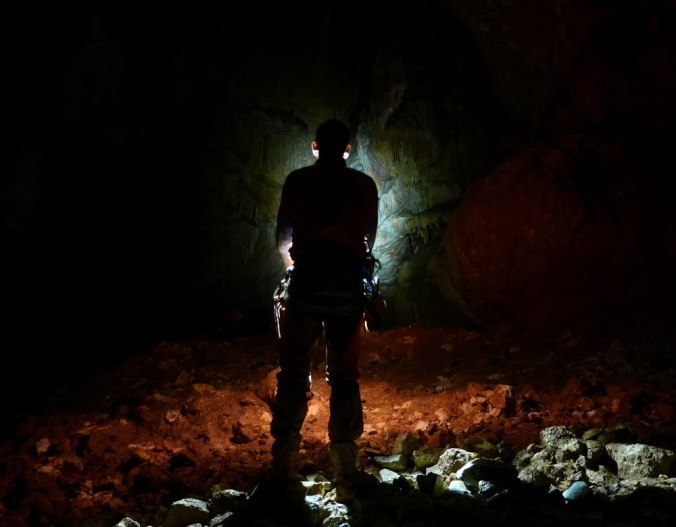
Raul Perez Lopez peers into the darkness of CJ-3, a cave that’s mysteriously losing its oxygen. (Credit: Antonio Marcos Nuez)

Discover Magazine’s blog has a post by Anna Bitong, who offers a few clues to help us understand what is happening in the deep recesses of a cave in Spain:

…A sign at the entrance warns visitors not to enter. Continue reading

Walden Pond’s Enduring Lessons

08stager-master768.jpg

Kevin Hooyman

When a professor does years of research and teaching on a topic related to this particular pond, and then takes the additional effort to share his observations in cogent form as an op-ed, we believe it is worth at least 5-10 minutes of reading time:

What the Muck of Walden Pond Tells Us About Our Planet

By

In 1845, Henry David Thoreau repaired to a cabin in the woods beside Walden Pond “to front only the essential facts of life, and see if I could not learn what it had to teach.” During the last two years, my students and I have come to that same pond to see what we could learn from the sediments beneath it. Continue reading